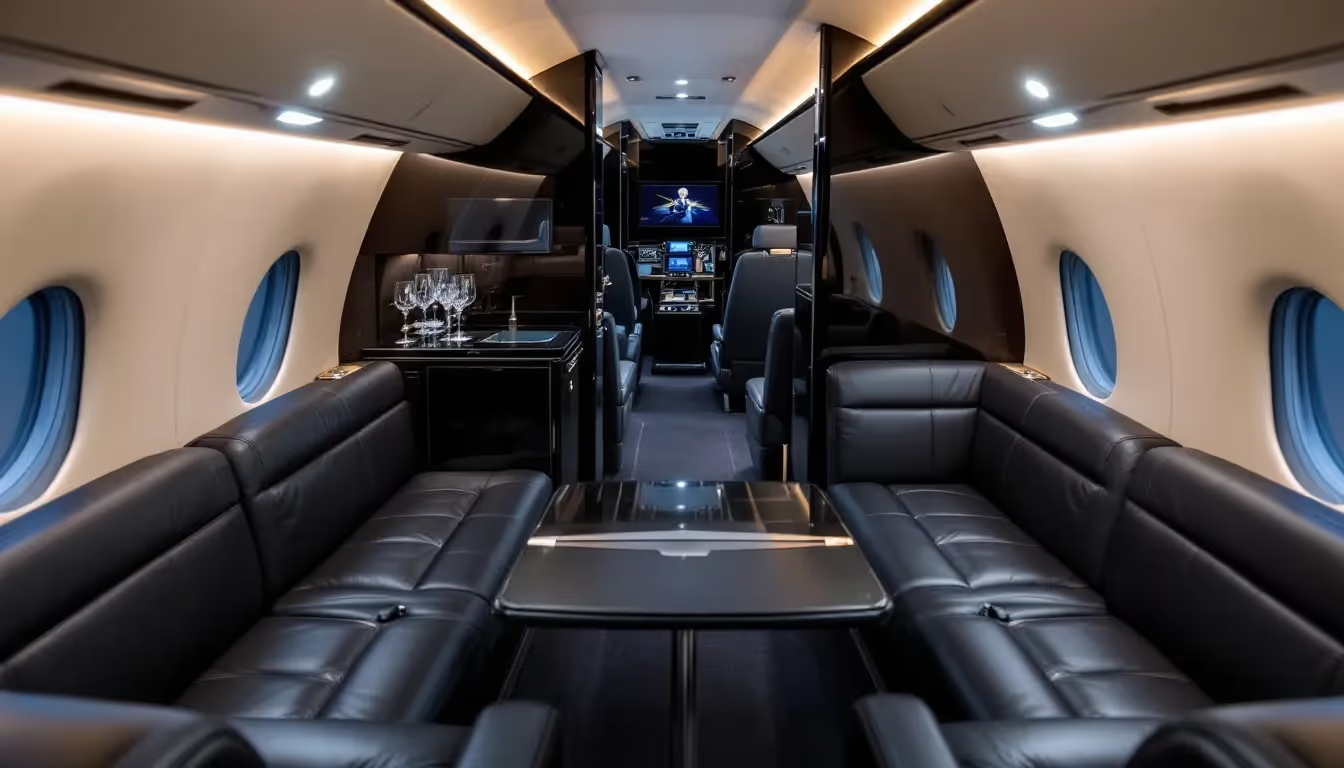
Private aviation transforms travel from a necessary inconvenience into a refined, productive experience that aligns with your schedule rather than forcing you to conform to commercial airlines’ limitations. With over 20,000 private jets worldwide, selecting the perfect jet for your needs requires understanding the distinct advantages each category offers.
The landscape of private jet options has evolved dramatically, offering unprecedented choice in aircraft size, range, and luxury appointments. Whether you’re planning a quick regional business trip or an intercontinental journey requiring maximum comfort and privacy, understanding these options ensures you make the optimal selection—and find the perfect jet for your specific travel requirements.
This comprehensive guide examines every category of private aircraft available today, from cost-efficient very light jets to ultra-long-range jets capable of non-stop global travel. We’ll explore the technical capabilities, luxury amenities, and practical considerations that distinguish each category, helping you navigate the complex world of private aviation with confidence.
Key Takeaways
Understanding Private Jet Categories
The private aviation industry categorizes aircraft into eight distinct classes, each engineered for specific mission profiles and passenger requirements. These categories represent a carefully designed spectrum from economical regional transport to flying private residences capable of intercontinental travel. Turboprop aircraft are a prime example of cost-effective and flexible alternatives for short- to medium-range regional travel.
Aircraft certification ensures that all private jets meet rigorous safety standards regardless of category. The Federal Aviation Administration and international regulatory bodies mandate comprehensive testing, maintenance protocols, and crew training requirements that apply uniformly across all private aircraft categories.
Cost considerations vary dramatically between categories, with operating expenses ranging from $2,000 per hour for very light jets to $10,000 per hour for ultra-long-range jets. These costs encompass fuel consumption, crew salaries, maintenance requirements, and airport fees that scale with aircraft size and complexity. For certain travel needs, such as short-to-medium-range flights, super light jets can be an economical choice, offering cost-effectiveness and efficiency.
Grasping these core distinctions allows for well-informed choices when selecting charter aircraft or evaluating options for aircraft ownership. Each category serves distinct travel patterns, from quick regional hops to extended international journeys requiring multiple crew members and comprehensive passenger amenities.
Very Light Jets: Efficient Regional Travel
Very light jets represent the most economical entry point into private aviation, designed specifically for trips under three hours with four to six passengers. As the smallest category of private jets, these aircraft excel at accessing smaller airports and private airstrips that commercial flights cannot reach, providing unmatched flexibility for regional business travel.
The HondaJet Elite S exemplifies this category’s innovation, featuring a unique over-the-wing engine configuration that reduces cabin noise while maximizing fuel efficiency. The Cessna Citation M2 and Embraer Phenom 100EV round out the most popular models, each offering single-pilot operation capabilities that reduce operational costs.
Typical amenities in very light jets include a basic enclosed lavatory, limited baggage space averaging 57 cubic feet, and no dedicated flight attendant service. These jets typically accommodate four to seven passengers, offering configurations that allow for more baggage, providing added flexibility for travelers. While luxurious appointments are minimal compared to larger aircraft, these jets prioritize operational efficiency and airport accessibility over passenger amenities.
Operating costs for very light jets range from $2,000 to $3,000 per hour, making them the most cost-efficient option for frequent regional travelers. Their ability to operate from shorter runways opens access to thousands of airports unavailable to larger aircraft, often placing you closer to your final destination than commercial alternatives.
Weather conditions and passenger comfort during longer flights represent the primary limitations of very light jets. Their smaller size makes them more susceptible to turbulence, and limited cabin space restricts passenger movement during flight. However, for the right mission profile, these aircraft deliver exceptional value and convenience.
Light Jets: Business Travel Essentials
Light jets bridge the gap between basic transportation and genuine luxury, accommodating up to eight passengers for flights lasting two to four hours. These aircraft typically feature stand-up cabin height for most passengers and provide enclosed bathrooms and refreshment capabilities essential for productive business travel. Their range typically spans 1,500 to 2,000 nautical miles, making them versatile for various travel needs.
The Cessna Citation CJ4 leads this category with its reputation for reliability and operational flexibility, while the Embraer Phenom 300E offers superior speed and range performance. The Pilatus PC-24 stands out for its unique ability to operate from unpaved runways, expanding destination options significantly.
Standard amenities include an enclosed lavatory with running water, a dedicated refreshment center, and Wi-Fi capability for maintaining connectivity during flight. Baggage capacity increases substantially compared to very light jets, with most aircraft offering 70 to 90 cubic feet of storage space for extended trips.
Light jet operating costs range from $3,000 to $4,500 per hour, providing reasonable economics for regular business travelers who require more space and amenities than very light jets offer. For travelers seeking a cost-effective, versatile, and convenient private jet travel experience, light jets are a preferred economical option. Their enhanced weather capabilities and improved passenger comfort make them suitable for longer regional flights where productivity during travel becomes important.
Airport accessibility remains excellent, with most light jets requiring runway lengths of 4,000 feet or less. This capability ensures access to convenient regional airports while providing the cabin space and amenities necessary for comfortable business travel across multiple time zones.
Super Light Jets: Enhanced Comfort and Range
Super light jets occupy a specialized niche between traditional light jets and midsize aircraft, offering enhanced comfort and extended range capabilities up to 2,500 nautical miles. These aircraft can carry up to nine passengers, providing an optimal balance of operational efficiency and passenger amenities for longer regional flights.
The Bombardier Learjet 75 Liberty represents the pinnacle of super light jet design, featuring a spacious cabin with conference seating options and advanced avionics systems. The Citation CJ3+ and Phenom 300E complete this category’s leading models, each offering distinct advantages in speed, range, or cabin configuration.
Upgraded interiors distinguish super light jets from their smaller counterparts, with many featuring club seating arrangements that facilitate business meetings during flight. Enhanced soundproofing and improved climate control systems create a more comfortable environment for productive work or relaxation.
The value proposition for super light jets becomes compelling for travelers requiring more space than light jets provide but not needing the full amenities of midsize aircraft. Their extended range capabilities eliminate fuel stops on many routes that challenge smaller jets, reducing total travel time significantly. Additionally, super light jets can operate from short runways, providing access to a wider range of airports and increasing travel flexibility.
Operating costs for super light jets range from $4,000 to $5,500 per hour, positioning them as a premium option within the light jet category. For travelers who frequently undertake longer regional flights or require enhanced cabin space for business purposes, these aircraft deliver substantial value improvements over smaller alternatives.
Mid-Size Jets: Balanced Performance and Luxury
Midsize jets represent the optimal choice for three to five-hour flights, accommodating six to nine passengers in true stand-up cabins with comprehensive amenities. With an average range of 2,200 nautical miles, these aircraft deliver the perfect balance of operational efficiency and luxury appointments for serious business travelers and leisure adventurers alike. Mid-size jets offer an average range of 2,200 nautical miles and can accommodate five to ten passengers, making them versatile for various travel needs.
The Cessna Citation Latitude leads this category with its exceptional cabin design and operational reliability, while the Embraer Praetor 500 offers superior range performance and advanced technology integration. The Hawker 900XP provides time-tested durability and spacious cabin accommodations that have made it a charter favorite for decades.
Enhanced baggage compartments provide 150 cubic feet or more of storage space, easily accommodating extended business trips or leisure travel requiring substantial luggage. Full galley services enable gourmet catering options, while dedicated work areas support productive business activities during flight.
Flight attendant service becomes available on many midsize jet flights, providing professional hospitality that enhances the travel experience significantly. Dedicated crew rest areas ensure that longer flights maintain high service standards throughout the journey.
Midsize jets operate from most commercial airports while retaining access to many smaller facilities, providing excellent destination flexibility. Their enhanced weather capabilities and redundant systems ensure reliable operations across diverse conditions, making them dependable choices for critical business travel. The average range of midsize jets allows for both short and longer flights, making them suitable for a wide variety of travel needs. On larger private jets, high-speed Wi-Fi is often available to allow passengers to maintain productivity during flights.
Super Mid-Size Jets: Premium Comfort for Longer Journeys
The super midsize jet category extends range capabilities up to 4,000 nautical miles while providing superior cabin space and luxury amenities. These aircraft serve as the backbone of charter fleets worldwide, offering the versatility to handle diverse mission requirements with consistent excellence.
The Bombardier Challenger 350 exemplifies this category’s capabilities, featuring advanced entertainment systems and connectivity options that rival those found in much larger aircraft. The Cessna Citation Longitude and Embraer Praetor 600 provide competitive alternatives, each offering unique advantages in performance, comfort, or operational economics. Passengers benefit from ample space for seating, standing, and moving about the cabin, enhancing comfort and flexibility on long flights.
Full-service galley facilities enable comprehensive catering services, from business meal service to elaborate multi-course dining experiences. Advanced entertainment systems provide individual passenger control over lighting, temperature, and multimedia options, creating personalized comfort zones throughout the cabin. Many private jets are equipped with advanced entertainment systems, including personal screens and high-quality sound systems, enhancing the in-flight experience for passengers.
Conference and dining configurations accommodate serious business meetings or family gatherings during the flight. Many private jets include conference facilities with video conferencing capabilities, enabling seamless communication for business travelers. Dedicated crew rest areas ensure that two flight attendants can provide attentive service throughout longer journeys without compromising safety or hospitality standards.
Super midsize aircraft represent the minimum category for transcontinental flights in the United States, providing non-stop service between major cities without the size and cost penalties of heavy jets. These jets offer enhanced cabin space and range over standard midsize jets, catering to passengers who require more comfort during flights. Their combination of range, speed, and amenities makes them the preferred choice for discerning travelers who demand both efficiency and luxury.
Heavy Jets: Ultimate Luxury and Space
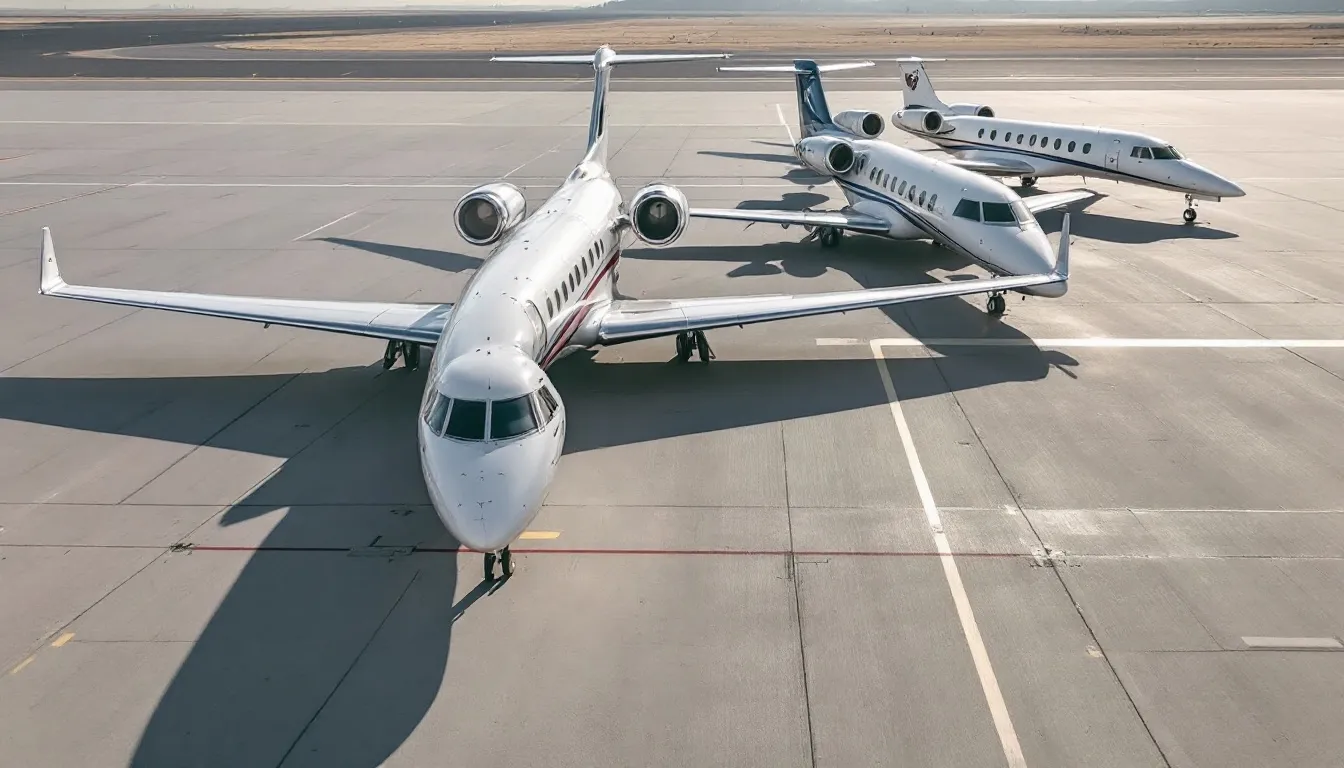
Heavy jets accommodate 10 to 16 passengers with maximum comfort and privacy, featuring multiple cabin zones that can include a separate bedroom and conference areas. These large jet aircraft provide the space and amenities necessary for extended flights while maintaining the flexibility of private aviation. With the capacity to carry up to 19 passengers, heavy jets also include luxurious amenities such as enclosed bathrooms and entertainment facilities, enhancing the premium in-flight experience.
The Gulfstream G450 sets industry standards for reliability and global capability, while the Bombardier Challenger 650 offers exceptional cabin volume and passenger comfort. The Dassault Falcon 2000LXS provides European engineering excellence with fuel efficiency that rivals smaller aircraft categories.
Multiple cabin zones enable diverse activities during flight, from private sleeping quarters to formal conference rooms. Full-service galleys with gourmet catering capabilities ensure that dining experiences rival those of the world’s finest restaurants, customized to passenger preferences and dietary requirements. Some luxury private jets come with enclosed bedrooms equipped with fine linens for added privacy and comfort, enhancing the overall travel experience.
A dedicated flight crew, including flight attendants, provides hotel-level service throughout the journey. Enhanced baggage capacity accommodates extended international travel, while advanced communication systems maintain business connectivity regardless of location. Larger private jets often feature spacious bathrooms, including some with full showers to help passengers feel refreshed upon arrival.
Heavy jets access most international airports while retaining the scheduling flexibility that defines private aviation. Their enhanced range capabilities eliminate fuel stops on most domestic routes and many international journeys, reducing total travel time and maintaining schedule reliability. In addition to their combination of space, range, and amenities, heavy jets are renowned for their luxurious amenities, offering high-end features that elevate the in-flight experience.
Ultra-Long-Range Jets: Global Connectivity
Ultra-long-range jets enable non-stop flights up to 7,500 nautical miles, connecting virtually any two points on Earth without intermediate stops. As the ultimate ultra-long-range jet category, these aircraft are designed for long-haul travel without layovers. They can fly nonstop on routes such as San Francisco to Auckland, making them ideal for travelers who require uninterrupted journeys over vast distances. These aircraft represent the pinnacle of private aviation capability, combining intercontinental range with uncompromising luxury and technological sophistication.
The Gulfstream G650ER leads this exclusive category, offering industry-leading speed and range performance combined with spacious cabins featuring multiple living areas and sleeping quarters. These jets are particularly well-suited for long-haul flights, providing the comfort and reliability needed for extended, nonstop journeys across continents. The Bombardier Global 7500 provides competitive capabilities with an innovative cabin design, while the Dassault Falcon 8X offers European engineering excellence and operational efficiency.
Spacious cabins feature multiple distinct zones, often including private bedrooms with lie-flat beds, formal dining areas, and dedicated work spaces. Private jets often feature comfortable seating that converts into lie-flat beds for optimal relaxation during flights. These jets are perfect for long-range flights, offering extended distance capabilities and luxury features that make international and intercontinental travel exceptionally comfortable. Advanced cabin management systems provide individual control over every aspect of the passenger environment, from lighting and temperature to entertainment and communication systems.
Customizable interiors allow owners and charter clients to specify luxury amenities that rival the world’s finest residences. Private suites with enclosed bathrooms, full shower facilities, and even conference rooms create truly unique travel experiences that maximize productivity and comfort during extended flights. For longer trips, these amenities ensure passengers enjoy the highest levels of comfort and convenience throughout their journey.
Satellite communications ensure global connectivity, enabling business operations and personal communication regardless of location. These systems provide high-speed internet access, telephone service, and video conferencing capabilities that maintain productivity during the longest intercontinental flights.
Executive Airliners: Commercial-Scale Luxury
Executive airliners represent converted commercial aircraft designed for large groups and corporate events, accommodating 19 to 50 or more passengers with airline-level amenities. Executive airliners are modified commercial aircraft designed for private use and can accommodate around 20 to 48 passengers. Bizliners, a subset of these aircraft, provide high luxury for large groups, with capacities exceeding 50 passengers and ranges of over 10,000 nautical miles. These aircraft provide the ultimate in group travel luxury while maintaining the privacy and scheduling flexibility of private aviation.
Options include the Airbus ACJ320neo, Boeing BBJ MAX 8, and Embraer Lineage 1000E, each offering distinct advantages in range, passenger capacity, and cabin configuration possibilities. These aircraft provide virtually unlimited customization options, with many featuring private suites, full shower facilities, formal dining rooms, and comprehensive conference facilities.
Private suites with individual climate control and entertainment systems ensure passenger comfort during extended flights. Full dining rooms with dedicated galley crews provide restaurant-quality meal service, while conference facilities enable productive business meetings at 41,000 feet.
Executive airliners excel for corporate retreats, sports teams, and VIP government transport where large groups require luxury accommodations and schedule flexibility. Their enhanced baggage capacity and passenger amenities make them ideal for extended international travel with substantial equipment or personal effects. The spacious luggage compartment in these aircraft is specifically designed to accommodate large amounts of baggage, ensuring that all equipment and personal effects are securely stored and easily accessible.
Operational requirements include larger airports and specialized ground handling, but these aircraft provide unmatched capabilities for unique travel requirements. Their combination of space, range, and luxury amenities creates travel experiences impossible to replicate through any other means.
Modern Jet Amenities and Technology
Contemporary private jets feature high-speed Wi-Fi and satellite connectivity across all categories, ensuring passengers remain connected to business and personal communications regardless of location. Advanced entertainment systems with streaming capabilities provide personalized content delivery to individual devices throughout the cabin. Thanks to modern technology, private jets now offer increased range, allowing for longer flights and more versatile travel options than ever before.
Gourmet catering options scale with aircraft size, from basic refreshment service on very light jets to full-service galleys on larger aircraft capable of preparing multi-course meals during flight. Professional catering services coordinate with leading restaurants worldwide to provide customized dining experiences that reflect passenger preferences and cultural requirements. Private jets offer gourmet dining, with meals prepared by skilled chefs to cater to individual preferences and dietary requirements.
Noise reduction technology has advanced dramatically, with modern aircraft featuring active cancellation systems and improved insulation that create remarkably quiet cabin environments. Improved cabin pressurization maintains lower altitude equivalents, reducing fatigue and jet lag during extended flights.
Customizable lighting systems enable passengers to adjust cabin ambiance for work, dining, or rest activities. Advanced climate control provides individual zone management, ensuring optimal comfort for all passengers regardless of personal preferences or varying external conditions. Many private jets also feature HEPA air filtration systems, improving air quality and ensuring a healthier cabin environment.
Most aircraft now feature touchless controls and advanced air filtration systems that became increasingly important following global health concerns. These systems provide hospital-grade air purification while minimizing physical contact points throughout the cabin environment.

Safety and Security in Private Aviation
Safety and security are the cornerstones of private aviation, ensuring every journey is as secure as it is luxurious. Whether you’re flying on very light jets for a quick regional hop or chartering ultra-long-range jets for intercontinental travel, private jets are subject to some of the most rigorous maintenance and inspection protocols in the industry. Leading private jet charter companies, such as JetOptions and Paramount Business Jets, adhere to strict Federal Aviation Administration (FAA) regulations and international standards, guaranteeing that every private aircraft is maintained to the highest level of airworthiness. Private jet charter services provide safety through ARGUS and Wyvern registration, ensuring compliance with the highest safety standards.
Modern private jets—including light jets, midsize jets, super midsize jets, and heavy jets—are equipped with advanced safety technologies designed to protect passengers and crew in all conditions. Enhanced vision systems, terrain awareness warning systems, and sophisticated weather radar are standard on many aircraft, allowing pilots to navigate safely through challenging weather and avoid potential hazards. The superior power-to-weight ratio of private jets also provides exceptional performance and maneuverability, offering an added layer of safety during takeoff, landing, and in-flight emergencies.
Flight attendants play a vital role in private jet travel, ensuring both safety and comfort throughout your flight. On larger aircraft, such as heavy jets and ultra-long-range jets, you’ll often find two flight attendants on board, each trained extensively in emergency procedures, first aid, and passenger care. Their expertise ensures that every aspect of your journey—from safety briefings to in-flight service—is handled with professionalism and attention to detail.
Security is another area where private jet travel outshines commercial airlines. Passengers and their belongings are thoroughly screened before boarding, and private flights often depart from smaller airports, bypassing the crowds and lengthy security lines typical of commercial flights. Many private aircraft are equipped with state-of-the-art security features, such as biometric authentication and secure communication systems, safeguarding both your privacy and your data while in the air.
Choosing the right jet and a trusted partner for your private jet charter is essential for peace of mind. Reputable operators maintain impeccable safety records, employ experienced pilots, and ensure that every aircraft—whether a Cessna Citation Latitude, Dassault Falcon, or Global Express—is meticulously maintained and ready for flight. This commitment to safety and security means you can focus on your business or leisure travel, confident that every detail has been managed to the highest standard.
With private jets offering a wide range of passenger capacities—from light jets that comfortably seat small groups to larger aircraft designed for extended intercontinental travel—there’s a secure and flexible solution for every journey. Whether you’re flying non-stop across continents or chartering a quick regional flight, private aviation delivers a level of safety, security, and personalized service that simply cannot be matched by commercial airlines.
Choosing Your Ideal Private Jet Option
Assessing trip requirements begins with evaluating distance, passenger count, and luggage needs for your typical travel patterns. Short regional flights favor very light jets or light jets, while transcontinental and international travel requires super midsize jets or larger aircraft categories. Chartering or leasing is often more cost-effective for infrequent flyers, typically defined as flying less than 50 hours per year.
Budget considerations encompass hourly rates, positioning fees, catering costs, and ground transportation arrangements. Hourly rates increase significantly with aircraft size, but larger jets often provide better value for longer flights due to higher speeds and reduced fuel stop requirements. Full ownership is typically justified for individuals who fly at least 200 to 400 hours per year.
Airport accessibility varies dramatically between aircraft categories, with smaller jets accessing thousands of airports unavailable to larger aircraft. However, longer runways required by heavy jets and ultra-long-range jets may limit destination options in some regions, requiring careful route planning.
Comparing charter versus fractional ownership versus full ownership requires analyzing annual flight hours, route flexibility requirements, and desired customization levels. Private jet travel options include full ownership, fractional ownership, jet charter, jet card programs, and leasing. Fractional jet ownership involves purchasing a share of a private jet, granting a set number of flight hours annually, typically between 50 to 400 hours. Full ownership of a private jet requires significant upfront costs ranging from $2 million to over $110 million and entails ongoing expenses. Charter provides maximum flexibility with no capital commitment, while ownership models offer greater control and potential cost savings for frequent travelers. Empty legs are discounted charter flights when an aircraft is flying empty to pick up or drop off passengers, offering a cost-effective option for flexible travelers.
Working with experienced brokers ensures optimal aircraft selection based on specific mission requirements rather than general categories. Leasing a private jet generally involves lower upfront costs and allows for capital preservation. Professional aviation consultants understand operational nuances, airport limitations, and cost optimization strategies that maximize value for each unique travel situation. Popular jets are frequently recommended by consultants as examples of favored models that best match specific travel needs.
The BlackJet Advantage in Private Aviation
BlackJet’s curated fleet selection ensures that every aircraft meets the highest standards for refined and meaningful travel experiences. Rather than simply providing access to available aircraft, BlackJet’s expert team matches specific aircraft capabilities with individual travel requirements to optimize every aspect of the journey.
Expert consultation begins with understanding your unique travel patterns, destination preferences, and service expectations. This comprehensive approach ensures that aircraft selection considers factors beyond basic capacity and range, including passenger comfort preferences, productivity requirements, and luxury amenity priorities.
Twenty-four-hour concierge services provide seamless flight coordination from initial booking through ground transportation arrangements. Private jet charter services offer 24/7 concierge service for customer support. This comprehensive support eliminates the complexity of private jet travel, allowing you to focus on your business or leisure activities while professionals handle every logistical detail.
BlackJet’s focus on safety, reliability, and exceptional service standards ensures that every flight meets or exceeds the highest industry benchmarks. Rigorous vetting procedures for aircraft operators, crew qualifications, and maintenance records provide confidence that every journey prioritizes passenger safety and comfort.
Global network access enables worldwide private jet options through carefully selected partners who share BlackJet’s commitment to excellence. This international reach ensures consistent service standards, whether you’re traveling domestically or embarking on complex international itineraries requiring multiple aircraft types and service providers.
BlackJet transforms private jet charter from a transactional service into a partnership that understands and anticipates your evolving travel needs. This relationship-based approach creates long-term value that extends beyond individual flights to encompass comprehensive travel planning and lifestyle enhancement.

The world of private jet options offers unprecedented choice and capability for discerning travelers who value time, comfort, and flexibility above all else. From economical very light jets perfect for regional business travel to ultra-long-range aircraft capable of non-stop global flights, each category serves specific mission requirements with distinct advantages.
Understanding these options empowers informed decision-making that optimizes both cost and travel experience. The key lies in matching aircraft capabilities with your specific requirements rather than simply selecting based on perceived prestige or luxury appointments.
As private aviation continues evolving with advanced technology, enhanced efficiency, and improved sustainability, the fundamental value proposition remains constant: complete control over your travel schedule and experience. Whether you require basic transportation or luxury accommodations, private jet options exist to meet every need and preference.
The investment in private aviation pays dividends in productivity, comfort, and life quality that extend far beyond simple transportation costs. For those who recognize time as their most valuable asset, private jets provide the ultimate tool for maximizing both professional effectiveness and personal satisfaction.
Connect with BlackJet today to discover how our curated approach to private aviation can transform your travel experience while ensuring every journey reflects your commitment to excellence and efficiency.
FAQ
What’s the difference between wet lease and dry lease options for private jets?
A wet lease includes the aircraft, crew, maintenance, and insurance in one package, making it ideal for occasional travelers who want comprehensive service without operational responsibilities. Wet leasing includes the pilot and cabin crew, typically for shorter timeframes. A dry lease provides only the aircraft, requiring you to arrange your own crew, maintenance, and insurance, which typically suits frequent flyers or companies with existing aviation departments seeking more control over operations. Dry leasing means you lease the aircraft but are responsible for the pilots, crew, maintenance, and insurance, offering greater operational control for experienced users.
How far in advance should I book a private jet charter?
While private jets can often be arranged with as little as 4-6 hours' notice, booking 24-48 hours in advance ensures better aircraft selection and competitive pricing. For peak travel periods like holidays or major events, booking 1-2 weeks ahead guarantees availability of your preferred aircraft type and avoids premium pricing for last-minute arrangements.
Can private jets fly internationally, and what documentation is required?
Private jets can fly internationally to most destinations worldwide, but require advance planning for customs clearance, landing permits, and passenger documentation. You’ll need valid passports, appropriate visas if required, and advance notification to customs authorities. Your charter provider typically handles permit applications and customs arrangements, but international flights require additional planning time compared to domestic travel.
What happens if weather delays or cancels my private jet flight?
Private jets have greater flexibility to avoid weather delays compared to commercial airlines, often able to depart earlier, later, or from alternate airports to circumvent weather systems. If cancellation becomes necessary for safety reasons, reputable charter companies provide alternative aircraft, rescheduling options, or full refunds depending on your contract terms and the circumstances causing the delay.
Are there restrictions on what I can bring aboard a private jet?
Private jets follow the same basic security regulations as commercial flights regarding dangerous goods and prohibited items, but offer much greater flexibility for personal belongings, sporting equipment, and business materials. Items like golf clubs, musical instruments, artwork, or confidential business documents can typically be accommodated easily, though firearms and certain hazardous materials still require special permits and handling procedures.
Conclusion
Navigating the diverse private jet options available today ensures you find the perfect aircraft tailored to your travel needs, whether for short regional trips or long intercontinental journeys. With categories ranging from very light jets to ultra-long-range and executive airliners, each offers unique advantages in comfort, range, and amenities. Partnering with a trusted provider like BlackJet guarantees access to a curated fleet, expert consultation, and seamless service, transforming private jet travel into an effortless, luxurious experience. Discover how BlackJet can elevate your private aviation journey with personalized solutions designed to match your lifestyle and travel demands.


 Sign up with google
 Sign up with Apple