In modern private aviation, connectivity is no longer a “nice to have.” For executives managing global teams, investors tracking markets in real time, and families expecting seamless digital comfort, in-flight internet is part of the value proposition. Yet private jet WiFi cost is far from standardized—and a misunderstanding of how it’s billed can turn a seamless journey into an unexpectedly expensive one.
This guide explains how private jet WiFi works, what it costs, and how to avoid surprise charges, with clear explanations of domestic versus international flights, technology differences, and booking best practices. If you’re flying private for productivity, discretion, or convenience, understanding WiFi pricing is essential.
Overview: Private Jet WiFi Cost Snapshot
Defining the Scope: Domestic vs International Costs
Private jet WiFi costs vary dramatically depending on whether you’re flying domestically over land or internationally over oceans. Domestic U.S. private flights often rely on air-to-ground (ATG) systems, which are significantly less expensive. International flights almost always require satellite internet connections, where pricing increases quickly with usage.
Common Pricing Models You’ll Encounter
Most private jet WiFi cost models fall into one of three categories:
Per-megabyte (MB) billing
Flat-rate or per-flight pricing
Monthly or annual subscription plans (typically for owners or long-term programs)
Understanding which model applies to your flight is critical before departure.
Why You Should Always Confirm WiFi Terms Before Booking
Unlike commercial aviation, WiFi is not universally included in private jet charter cost. Some private jet providers include basic connectivity, while others pass usage directly to the client. Always confirm whether internet access is included, capped, or usage-based—preferably in writing from your private aviation consultant.
Do Private Jets Have WiFi?
How Common Is WiFi on Private Jets?
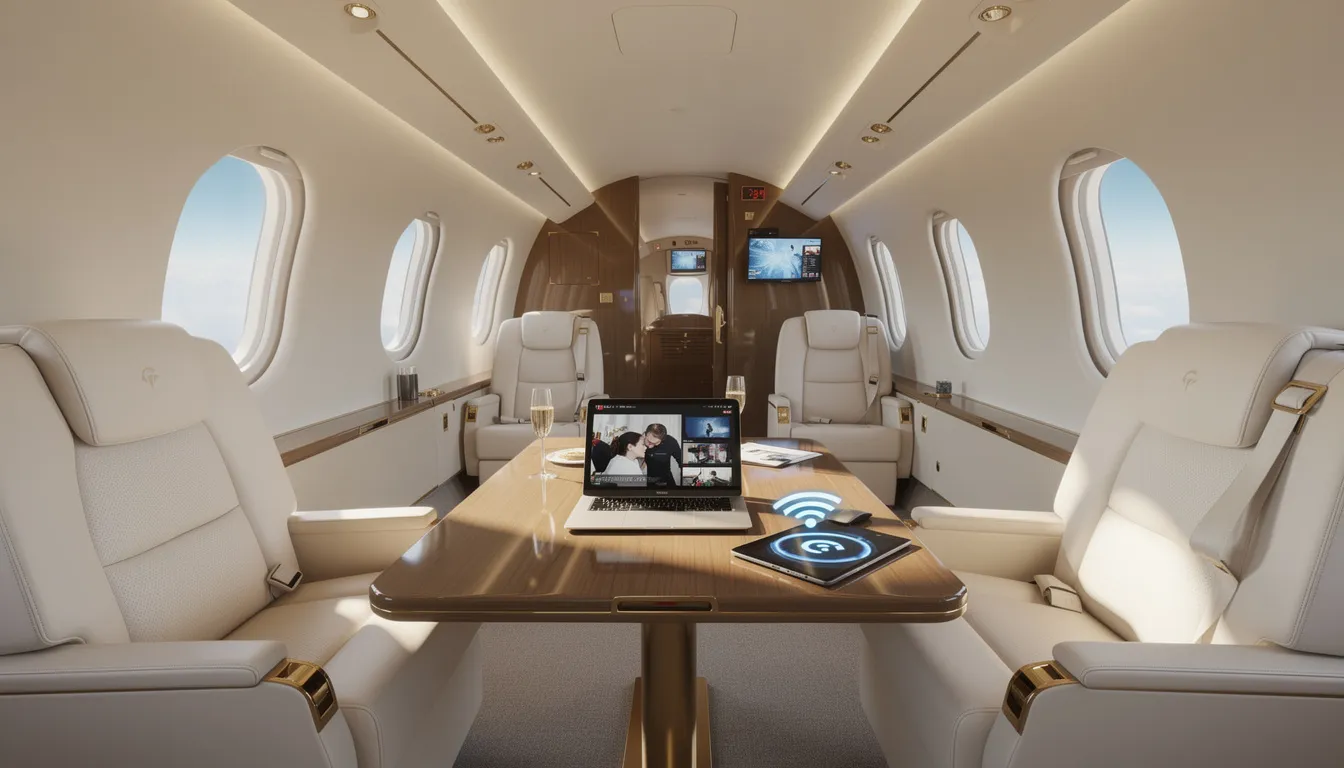
Today, many private jets—especially midsize, super-midsize, and heavy jets—are WiFi capable and equipped with some form of internet connectivity. WiFi has become a baseline expectation for business travelers and high-net-worth clients seeking a seamless flight experience.
Aircraft Types That Often Lack Connectivity
Certain aircraft are less likely to have WiFi installed:
In these cases, connectivity may be limited or unavailable altogether.
Always Ask Operators About Connectivity
Even when an aircraft technically has WiFi, coverage, speed, and cost can vary widely. Before confirming your flight, ask specifically:
Is WiFi installed and operational?
What system does the aircraft use (satellite-based internet or air to ground systems)?
How is usage billed (per megabyte, flat fee, or included)?
Satellite WiFi vs Air-to-Ground (ATG) WiFi
Satellite WiFi Basics
Satellite WiFi connects your aircraft to geostationary or low-earth-orbit (LEO) satellite networks. It offers global coverage, including over oceans and remote regions, but is generally more expensive and can have variable speeds depending on the system and weather conditions. Advanced, high-speed systems like Ka-band or Ku-band satellite technology cost more to operate than older, slower systems. Geostationary satellite providers like Viasat and Inmarsat offer global reliability, with installations costing between $450,000 and $700,000.
Air-to-Ground (ATG) WiFi Basics
ATG systems connect the aircraft to cell towers on the ground, similar to how cell phones operate. These systems are:
Faster for basic tasks over land, typically offering speeds around 10 Mbps
Significantly cheaper and often offered at low fees or even free on domestic flights
Limited to overland coverage (primarily continental U.S.) because ATG WiFi is not available when flying over the ocean due to its reliance on ground-based towers
Gogo Business Aviation is the industry standard for land-based connectivity, with hardware costs typically ranging from $100,000 to $225,000. SmartSky Networks offers a high-speed ATG alternative with plans ranging from $3,495 for 5 GB to $9,995 for unlimited per month.
Coverage Differences: Global vs Over-Land Only
ATG: Works over populated land masses, relying on cell towers and ground-based infrastructure
Satellite: Required for international routes, ocean crossings, island hops, and polar regions
Equipment Size and Aircraft Choice
Satellite systems require larger antennas and additional hardware, which may:
This is one reason light jets often rely on ATG systems or may lack WiFi altogether. Satellite Wi-Fi requires large and heavy equipment that impacts an airplane's weight, balance, and storage.
How Much Does Private Jet WiFi Cost?
Per-Megabyte Billing Explained
Many satellite WiFi systems charge based on data usage, measured in megabytes. This model can escalate quickly, especially with modern devices that constantly sync data in the background.
Typical Per-MB Cost Ranges
While pricing varies by service provider and region, typical ranges include:
Domestic satellite internet connections: moderate per-MB rates, often between $3.00 and $8.50 USD per megabyte
International satellite internet connections: significantly higher per-MB rates, often between $7 and $10 USD per megabyte
Basic Wi-Fi usage for standard email or browsing can typically cost a few hundred dollars. Streaming video or video conferencing consumes data exponentially faster than emailing, which can lead to cost thousands of dollars on long flights. Using social media can quickly add up to around $20, while downloading a movie could cost thousands.
Flat-Rate and Per-Flight Pricing Options
Some operators and companies offer:
Flat-rate WiFi for a single flight or hourly rate (often $100 to $250 per flight hour)
Daily connectivity packages or monthly subscriptions (ranging from $2,000 to $10,000 per month)
Unlimited WiFi options (often with fair-use policies)
Monthly service plans for Gogo start at around $1,895 for 1 GB and increase for higher usage options. Monthly or subscription plans for Wi-Fi on private jets can start from around $2,795/month for regional plans offering ~15GB. Starlink Aviation provides high-speed Wi-Fi using Low Earth Orbit satellites, with subscription prices ranging from $2,000 to $10,000 per month. A transatlantic trip can incur Wi-Fi costs generally ranging from $3,000 to $6,000.
These options can provide cost certainty and improve the passenger experience.
Always Request Written WiFi Cost Terms
To avoid disputes, request confirmation of:
Written terms protect both the client and operator.
WiFi Cost on Domestic Flights
Why ATG Reduces Domestic WiFi Costs
In the U.S., air to ground systems make domestic WiFi relatively affordable and sometimes free on certain private flights. These systems are optimized for business travel tasks like email, messaging, and light browsing.
When WiFi May Be Included in Charter Pricing
Some domestic charters include basic ATG WiFi at no additional charge, particularly on midsize jets and larger. However, streaming or heavy usage may still be restricted or charged separately.
Example Domestic Pricing Scenario
A two-hour domestic flight on a midsize jet using ATG WiFi may incur:
WiFi Cost on International Flights
Why Satellite Drives International WiFi Costs
Once you leave ATG coverage, satellite internet is mandatory. Satellite networks rely on complex infrastructure, which drives higher usage costs.
Typical International Per-MB Pricing
International satellite WiFi often carries premium rates per MB. Even routine business usage can generate substantial charges on long-haul flights.
Streaming Can Generate Very High Bills
Streaming video, cloud backups, and image-heavy social media sites can consume gigabytes of data. Without flat-rate plans, this can result in unexpected four- or five-figure WiFi charges on long international flights.
Speed, Performance, and Internet Connectivity
Typical ATG vs Satellite Speeds
ATG: Reliable for email, messaging, and light browsing with speeds around 10 Mbps
Traditional satellite: Adequate for business tasks with speeds ranging 12 to 20 Mbps, slower for media streaming
Advanced satellite systems: Improved performance with higher bandwidth and low latency
Starlink Aviation and LEO Satellite Potential
Low-earth-orbit systems such as Starlink Aviation promise:
Availability depends on aircraft certification and regional approvals.
Factors That Affect In-Flight Connectivity Speed
The performance of satellite Wi-Fi can be affected by severe weather, while ATG systems are generally more weather-resistant.
Installing WiFi on a Private Jet: Price and ROI
Typical Installation Cost Range
Installing WiFi on a private jet can cost anywhere from $100,000 to over $700,000, depending on:
Major Equipment Types
Weight and Balance Considerations
Additional equipment adds weight, which can:
Reduce range
Increase fuel burn
Affect payload capacity
ROI and Resale Value
Well-equipped connectivity can improve:
Calculating ROI is especially important for owners planning future resale. Larger jets with more robust systems typically offer faster, more expensive connectivity options compared to smaller light jets.
Tips for Flying Private Without Surprise WiFi Bills
Download Content Before Departure
Pre-download movies, presentations, and documents to avoid in-flight streaming.
Disable Background App Data
Many apps sync automatically. Turning off background data can dramatically reduce usage.
Avoid Image- and Video-Heavy Platforms
Social media sites and cloud photo backups are major data consumers. Avoid using platforms like Instagram and TikTok while in flight.
Ask for Flat-Rate or Unlimited Options
When available, flat-rate WiFi provides predictable costs and peace of mind.
Monitor Data Usage During the Flight
Some systems allow real-time usage monitoring—use it.
Booking Checklist: Ask About WiFi Cost and Coverage
Confirm Whether WiFi Is Included
Never assume connectivity is included in the charter cost or hourly rate.
Request Pricing Examples
Ask for sample usage costs based on your flight duration and expected activity.
Verify International and Island Coverage
Confirm coverage for ocean crossings, island routes, and remote regions.
Ask About Speed and Fair-Use Policies
Unlimited plans often include fair-use limits—clarify them in advance.
Importance of WiFi for Business Travelers
In-flight Wi-Fi is essential for business travelers to manage emails, attend virtual meetings, and access important documents without interruption. Two-thirds of business travelers report being more productive on a private jet than in their office due to the ability to communicate quickly with colleagues. Private jet Wi-Fi allows passengers to maximize their travel time by blending productivity with relaxation.
Conclusion: Planning for Private Jet WiFi Cost
Private jet WiFi delivers productivity, comfort, and continuity—but only when properly planned. Costs are driven by technology type, geography, usage habits, and pricing models, all of which vary widely across aircraft and private jet providers.
For travelers who value seamless experiences, the smartest approach is simple: confirm connectivity details before you fly. Whether you’re booking a short domestic hop or a long-haul international journey, understanding private jet WiFi cost ensures your private aviation experience remains effortless, predictable, and aligned with your expectations.
Explore premium private jet access with a trusted private aviation consultant—and discover how informed planning elevates every journey.


 Sign up with google
 Sign up with Apple