In the fast-evolving landscape of global business, executive travel has become a cornerstone of operational success. Private jets and private aviation empower business leaders with the freedom to fly on their own schedule, bypassing the constraints of commercial travel and maximizing every moment in the air. With private planes, passengers can conduct meetings, strategize, or simply relax, arriving at their destination refreshed, prepared, and ready to lead. Private planes are categorized into three broad categories: piston, turboprop, and jet aircraft.
Piston planes are the most cost-effective option for personal use and flight training, and they are ideal for very short-range flights under 300 miles. Turboprops use a jet engine to power a propeller, providing a balance between fuel efficiency and speed, and are excellent for regional travel up to 1,000 miles. The world of private aviation offers an impressive range of aircraft for sale, from nimble light jets to expansive, ultra-luxurious cabins—each designed to meet the unique needs of discerning customers.
At Avjet Global, we understand that every business and individual has distinct requirements. That’s why our aircraft sales team is dedicated to helping you find the perfect private jet, ensuring reliability, comfort, and efficiency on every flight. Each private plane for sale on Avjet Global's site undergoes over 100 inspections by expert technicians before being listed, ensuring the highest standards of quality and safety. Each private plane for sale undergoes rigorous inspections by expert technicians and aircraft engineers, further guaranteeing its readiness and reliability.
Avjet Global offers advanced features to filter listings by manufacturer and model, making it easier to find the aircraft that meets your specific needs. Whether you’re seeking a model that prioritizes productivity or one that offers unmatched luxury, our inventory spans the full spectrum of private planes, giving you the flexibility to choose the aircraft that best aligns with your business goals. Discover how private aviation can transform your travel experience, offering the ultimate combination of convenience, productivity, and freedom.
Key Takeaways
For C-suite executives managing global operations, private plane ownership represents a strategic asset allocation delivering measurable competitive advantages beyond luxury transportation.
Commercial aviation imposes average security and boarding delays of 117 minutes compared to 15 minutes at private terminals, making the time savings alone justify acquisition costs for high-productivity executives with hourly values exceeding $2,000-5,000.
Acquisition costs for private planes vary widely, ranging from a few hundred thousand dollars for used small planes to over $100 million for new large jets.
For example, the 2009 Challenger 300 is available for immediate delivery at a price of $10.995 million USD.
Professional guidance is essential when purchasing a private plane, including hiring an aviation broker, attorney, and tax advisor.
This comprehensive guide examines the strategic framework for private plane buy decisions, from mission definition through closing.
It enables informed acquisition choices that maximize operational efficiency and long-term value creation.
A well-structured private aircraft purchase process is especially important for executives, ensuring every step is optimized for both financial and operational outcomes.
Why Private Plane Ownership Transcends Luxury
Brand positioning and client relationship enhancement through exclusive transportation experiences strengthen business development efforts with high-value prospects and strategic partners. The psychological impact of arriving via private aircraft signals operational sophistication and financial strength that support premium pricing strategies and competitive differentiation in professional services, investment banking, and global consulting practices.
The ownership experience of a private plane further extends these strategic advantages, providing ongoing value and supporting long-term business goals through consistent access, flexibility, and enhanced control over travel logistics.
Aircraft Categories and Strategic Applications
Light Jets: Urban Efficiency Platforms
Light jets serve as urban efficiency platforms optimized for regional business circuits connecting major metropolitan areas within 1,200-1,500 nautical miles. The Citation M2 Gen3 and Phenom 300E lead this segment with advanced avionics, single-pilot certification capability, and operating costs ranging $2,500 to $3,500 per flight hour. Jets operate at higher altitudes and speeds, providing the fastest and most luxurious travel experience, and are divided into categories based on weight, range, and passenger comfort. Very Light Jets (VLJs) are economical options for short-haul flights with small groups, typically accommodating 4-6 passengers. These models are among the leading choices in the current jet market for light jets. These aircraft excel in corridors like New York-Chicago-Atlanta, where frequent business travel justifies dedicated aircraft access.
The 4-8 passenger capacity accommodates small executive teams while maintaining cost efficiency for frequent regional deployment, with a max passenger capacity of 8 and a max range of approximately 1,500 nautical miles for light jets. Single-pilot certification reduces crew complexity and operational overhead, enabling more flexible scheduling and reduced standby costs. Advanced safety systems, including synthetic vision technology and automatic emergency descent capability, provide enhanced operational security for demanding business schedules.
Operating costs averaging $2,500-3,500 per flight hour enable cost-effective frequent travel for executives making multiple weekly trips between regional business centers. The ability to depart on demand and reach smaller airports closer to final destinations creates substantial time savings compared to commercial hub-and-spoke routing systems.
Mid-Size Jets: Continental Command Centers
Mid-size jets function as continental command centers with a 3,000-4,000 nautical miles range, enabling transcontinental missions like Los Angeles-New York nonstop with full payload capacity. The max range for mid-size jets typically reaches up to 4,000 nautical miles, while the max passenger capacity is usually 10. Mid-Size Jets provide better cabin comfort, seating for 6-9 passengers, and are ideal for longer non-stop flights across the country. The Challenger 350 and Citation Longitude dominate this segment with 8-10 passenger configurations featuring dedicated work areas, sleeping accommodations, and advanced satellite communications systems.
Stand-up cabin height enables productive in-flight meetings and presentations, transforming travel time into valuable working sessions. Multiple cabin zones allow simultaneous work, dining, and rest activities for extended missions crossing multiple time zones. Advanced avionics, including synthetic vision, weather radar, and satellite-based navigation, provide all-weather operational capability essential for maintaining business schedules.
These aircraft serve executives managing continental business operations requiring frequent coast-to-coast travel with small teams. The balance between range, capacity, and operating costs makes mid-size jets optimal for growing businesses expanding geographic footprints while maintaining operational efficiency and cost discipline. Working with an experienced aircraft broker can help businesses identify the optimal mid-size jet for their specific operational requirements.

Heavy Jets: Global Executive Platforms
Heavy jets represent global executive platforms defining ultra-long-range leadership with aircraft like the Gulfstream G650ER and Bombardier Global 7500 providing intercontinental capability for missions like London-Singapore or New York-Dubai nonstop. Large Cabin / Heavy Jets are designed for long-range, intercontinental travel, featuring spacious cabins and high-end amenities for maximum comfort. These models are especially prominent in the jet sales market for global executive platforms. These aircraft accommodate up to a maximum of 19 passengers and offer a maximum range of approximately 7,500 nautical miles, with private staterooms, dedicated conference facilities, and multiple cabin zones enabling complex business operations during extended international flights.
Operating costs ranging $6,000 to $10,000 per hour reflect the sophisticated systems, larger crew requirements, and premium positioning justified by global reach and substantial time savings on international business travel. Advanced connectivity systems, including high-speed internet and satellite communications, enable seamless business operations during flight, maintaining productivity during long-range missions.
The ability to reach any global destination nonstop eliminates connection delays and customs complications while providing maximum scheduling flexibility for international business development, acquisition activities, and strategic partnership negotiations requiring executive presence in multiple continents.
New vs. Pre-Owned: Strategic Acquisition Analysis
New Aircraft Advantages
New aircraft acquisition provides factory warranty coverage, and acquiring a factory-new aircraft ensures buyers receive the latest engineering updates, zero prior usage, and full manufacturer support. Access to the latest avionics technology, including intuitive touch controls on touchscreen displays, synthetic vision systems, and enhanced weather detection capabilities, is also included. Customization opportunities through manufacturer design studios and interior specialists enable precise alignment with operational requirements and aesthetic preferences. Delivery timelines spanning 12-36 months allow strategic planning and preparation, including crew training, hangar arrangements, and operational infrastructure development.
Financing advantages through manufacturer-backed programs often provide competitive rates and terms compared to traditional aircraft lending. Maximum operational life and residual value optimization support long-term ownership strategies and eventual resale positioning. Latest safety systems and regulatory compliance ensure operational flexibility across international destinations without modification requirements.
The ability to specify exact configurations, avionics packages, and interior designs creates aircraft perfectly aligned with intended mission profiles. Manufacturer warranty coverage provides protection against defects and reduces initial maintenance costs during the critical first years of operation.
Pre-Owned Market Opportunities
Pre-owned aircraft represent 85% of transactions and offer immediate availability, making buying pre-owned aircraft an attractive option for those needing to acquire an aircraft quickly without extended delivery delays. Price reductions of 30-50% from new aircraft MSRP enable enhanced value while accessing proven performance platforms with established operational histories.
CFS Jets hosts an impressive inventory of jets for sale, comprised of various popular brands, providing buyers with a wide range of options to suit their needs. Comprehensive maintenance records and performance data provide transparency into aircraft condition and expected ongoing costs, and buyers can request full documentation and inspection reports before purchase to ensure complete confidence.
Many pre-owned aircraft include upgraded avionics and interior modifications completed by previous owners, providing additional value without incremental cost. Established depreciation curves provide predictable residual values supporting financing decisions and exit strategy planning. The broader selection of available aircraft enables comparison shopping and negotiation leverage unavailable in new aircraft markets.
Proven maintenance history and operational performance data reduce acquisition risk by providing documented evidence of aircraft condition and ongoing costs. Professional pre-purchase inspections reveal actual aircraft condition, enabling informed purchase decisions based on factual assessment rather than projections.
Critical Evaluation Criteria
Technical Due Diligence
Comprehensive 100-point inspection protocols cover airframe structural integrity, engine condition, and avionics system functionality through detailed examination by qualified technicians at independent inspection facilities. Maintenance log analysis includes total flight hours, landing cycles, and major inspection compliance to project future maintenance requirements and associated costs.
Avionics currency assessment evaluates WAAS/LPV approach capability, TCAS II collision avoidance, and weather detection systems, ensuring operational flexibility across domestic and international destinations. Engine program participation through manufacturers like Pratt & Whitney or Rolls-Royce provides cost predictability and maintenance support network access essential for reliable operations.
Certification compliance verification includes international airworthiness certificates, RVSM approval, and verification of FAA certification and adherence to FAA regulatory standards, enabling operations in global airspace systems without operational restrictions. Thorough documentation review identifies any outstanding airworthiness directives, service bulletins, or modification requirements that could affect operational costs or schedule reliability.
Operational Infrastructure Requirements
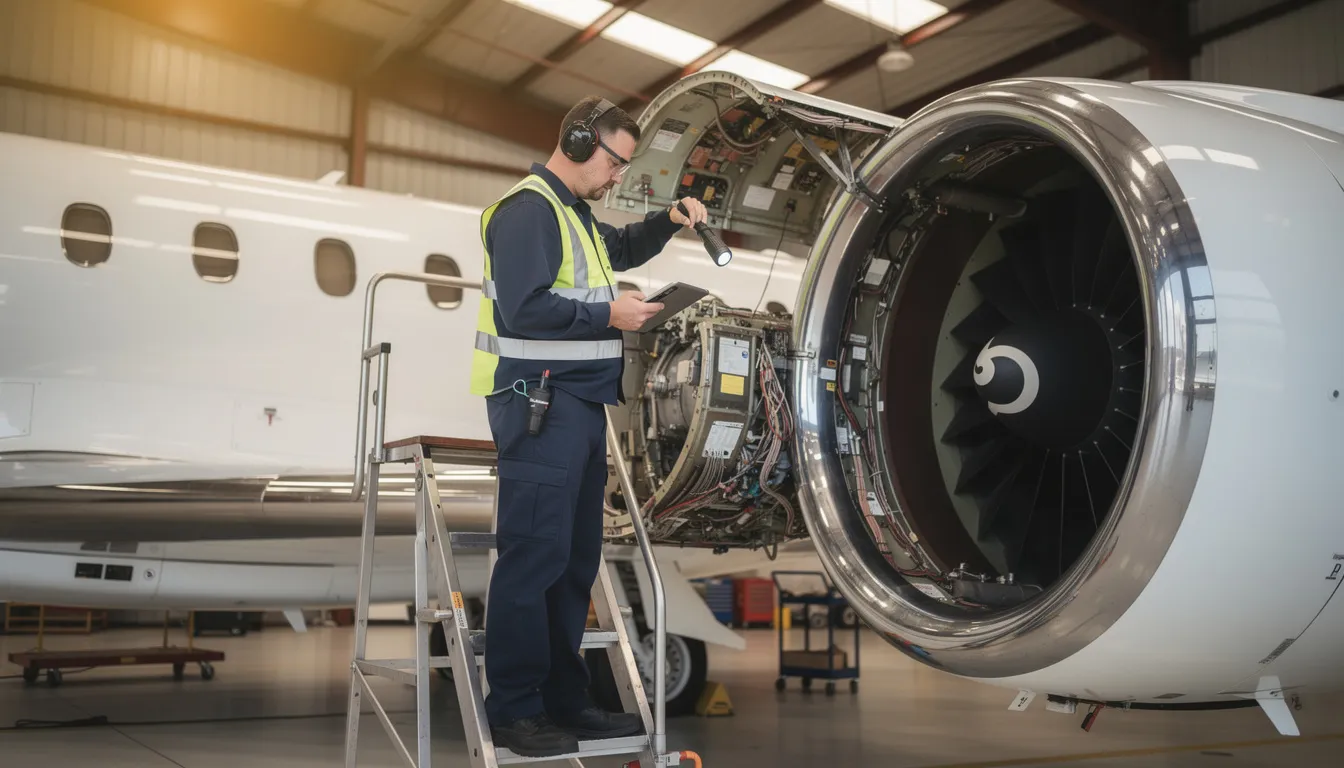
Pilot qualification and training programs through FlightSafety or CAE facilities ensure crew competency and regulatory compliance while maintaining insurance requirements for professional operations. Hangar arrangements at primary and alternate airports provide aircraft protection and operational base infrastructure supporting reliable scheduling and aircraft preservation. Securing adequate hangar space is crucial for operational efficiency and safeguarding the aircraft from environmental risks.
Maintenance provider relationships with authorized service centers ensure access to qualified technicians, genuine parts, and manufacturer support programs essential for maintaining airworthiness and operational reliability. Insurance coverage, including hull protection, liability limits, and crew coverage, provides comprehensive risk management aligned with operational requirements and regulatory minimums.
Trip planning and flight coordination services enable efficient scheduling, permit acquisition, and international operations support for complex multi-destination business travel requirements. Dedicated support infrastructure reduces operational complexity while ensuring compliance with varying international regulations and operational procedures.
Financial Architecture and Ownership Models
Direct Ownership Structure
Section 179 tax advantages enable immediate depreciation benefits up to $1 million for qualifying business aircraft, substantially reducing net acquisition costs for profitable businesses utilizing aircraft primarily for business purposes. Asset appreciation potential exists in premium aircraft segments where supply constraints and strong demand support value retention or growth over extended ownership periods, with value changes often tracked year over year to assess long-term performance.
Complete operational control and scheduling flexibility maximize utility for unpredictable business requirements and emergency travel needs that commercial aviation cannot accommodate. Privacy and confidentiality maximization protect sensitive business information and enable confidential meetings during travel, essential for strategic planning and competitive activities.
Legacy asset creation provides family or corporate succession planning opportunities while maintaining operational utility for ongoing business requirements. Direct ownership enables customization and modification flexibility, supporting evolving business needs without third-party approval or restrictions.
Alternative Ownership Models
Fractional ownership through NetJets, Flexjet, or Flight Options provides guaranteed aircraft access with professional management while sharing acquisition costs and operational expenses among multiple owners. For those not ready for full ownership, shared ownership offers a flexible alternative, allowing individuals or businesses to participate in private aviation without the responsibilities of sole ownership. Jet card programs offer flexible access with 4-24-hour notice periods without long-term ownership commitments or operational complexity.
Aircraft management partnerships reduce operational complexity by outsourcing scheduling, maintenance, crew management, and regulatory compliance to specialized providers with economies of scale. Lease structures with purchase options enable flexible commitment levels while preserving capital for core business operations and maintaining upgrade flexibility.
Partnership arrangements with other high-net-worth individuals or corporations distribute costs while maintaining access for periodic business requirements that don’t justify full ownership. These models provide entry points for evaluating private aviation benefits before committing to full ownership structures.
Advanced Technology and Safety Systems
Enhanced Flight Vision Systems (EFVS) enable low-visibility operations by providing synthetic runway imagery during approach phases, maintaining operational schedules during challenging weather conditions that ground commercial flights. Automatic Emergency Descent Mode protects against cabin pressurization loss by automatically descending to safe altitudes while maintaining aircraft control during emergency situations.
Synthetic Vision Technology provides three-dimensional terrain visualization in all weather conditions, enhancing situational awareness and safety margins during challenging approaches or mountainous terrain operations. Satellite-based weather services deliver real-time meteorological data, enabling informed routing decisions and turbulence avoidance for passenger comfort and schedule optimization.
Many advanced avionics now feature intuitive touch controls, allowing pilots to easily activate navigation and safety features with a simple touch, further streamlining cockpit operations. A modern avionics suite integrates these technologies, significantly enhancing both safety and operational efficiency for pilots and passengers. Emergency autoland capability in select aircraft, like the Cirrus Vision Jet, provides ultimate safety backup by automatically landing the aircraft if pilots become incapacitated, representing the cutting edge of aviation safety technology. Advanced connectivity systems enable seamless business operations during flight through high-speed internet, satellite communications, and integrated office systems, maintaining productivity during travel.

Personalization and Customization
One of the defining advantages of private aviation is the ability to personalize and customize your aircraft to reflect your unique vision and operational needs. From the moment you begin the acquisition process, every detail—from the cabin layout and seating configuration to the materials, lighting, and even the exterior paint scheme—can be tailored to create a truly bespoke flying experience. Our Xi Design Studio offers a dedicated service where owners can explore a wide range of interior and exterior options, selecting finishes, color palettes, and amenities that match their personal style and business requirements.
Whether you prefer a contemporary, minimalist interior or a classic, opulent design, our team of experts will guide you through the process, ensuring your aircraft is a perfect extension of your brand and lifestyle. The result is an environment that enhances comfort, productivity, and enjoyment for every journey. At Avjet Global, we are committed to offering a comprehensive range of customization options, empowering you to create an aircraft that is as individual as you are. Choose from our curated selection, or work with our designers to bring your vision to life—your private jet, your way.
Storage and Hangar Options
When it comes to owning private jets, securing the right storage and hangar solutions is essential for protecting your investment and ensuring your aircraft is always ready for takeoff. Aircraft storage is a key component of protecting your investment, as it safeguards your private jet from environmental damage and ensures long-term value retention. At Avjet Global, we understand that every private plane and owner has unique needs, which is why we offer a comprehensive range of storage options designed to meet the demands of today’s private aviation industry.
Our dedicated team assists clients in locating the ideal storage facility for their aircraft, whether you require premium hangar space, tie-downs, or covered parking. We take into account critical factors such as proximity to your home or business, security measures, and ease of access, ensuring your private jet is both protected and conveniently available whenever you need to fly. From light jets to large business aircraft, our storage solutions are tailored to accommodate a wide range of models and operational requirements.
Choosing Avjet Global for your storage and hangar needs means you benefit from our commitment to exceptional service and support. Our facilities offer a host of amenities to enhance your private aviation experience, allowing you to focus on business productivity, comfort, and the freedom that comes with owning a private plane. With our expert guidance, you can enjoy peace of mind knowing your aircraft is safeguarded against the elements and maintained in optimal condition, ready for your next business or leisure flight.
We are dedicated to serving the world of private aviation, supporting our customers at every step—from aircraft sales and acquisitions to training, maintenance, and storage. Whether you are just beginning to explore the possibilities of private jet ownership or are a seasoned owner looking to optimize your experience, Avjet Global is prepared to assist you in creating a personalized solution that meets your needs.
Start your private aviation journey with confidence by visiting our site to learn more about our storage and hangar options. Discover how our team can help you maximize the value, comfort, and reliability of your private jet, giving you the freedom to fly on your terms. Contact us today to discuss your requirements and let us help you enjoy the full benefits of private aviation, supported by a partner committed to your success.
Training and Support
Ensuring the safety and efficiency of every flight begins with world-class training and unwavering support. In private aviation, both pilots and owners benefit from comprehensive training programs designed to meet the highest standards of operational excellence. At Avjet Global, we offer a range of training options, from foundational flight instruction to advanced simulator sessions, allowing pilots to choose the program that best fits their experience and needs. Our training is delivered by seasoned professionals who are dedicated to preparing you for every scenario, so you can fly with confidence and peace of mind.
Beyond training, our commitment to service extends to ongoing support for every aspect of aircraft ownership. Our dedicated team provides maintenance, repair, and overhaul services, ensuring your aircraft remains in peak condition and ready for takeoff at a moment’s notice. We understand that reliability and readiness are non-negotiable in private aviation, which is why we offer tailored support solutions to meet your operational requirements. With Avjet Global, you gain a partner who is invested in your success, giving you the freedom to focus on your business while we handle the details.
Next-Generation Aircraft
The future of private aviation is here, with next-generation aircraft redefining what’s possible in terms of performance, technology, and comfort. Models like the Citation M2 Gen3, CJ3 Gen3, and CJ4 Gen3 represent the cutting edge of aviation innovation, offering advanced avionics, improved engine efficiency, and elegantly designed interiors that elevate the flying experience.
These aircraft are engineered to deliver greater range, enhanced reliability, and superior comfort, making them ideal for business leaders who demand the best from every flight. The Cessna Citation Ascend has received FAA certification with entry into service expected later this year, further expanding the options available for next-generation private aviation solutions.
At Avjet Global, we are proud to offer a curated selection of next-generation aircraft for sale, each meticulously chosen to meet the highest standards of quality and performance. Whether you’re seeking a nimble jet for regional travel or a spacious cabin for long-haul missions, our team will help you find the model that aligns with your operational needs and personal preferences. Explore the world of next-generation private jets and discover how the latest advancements in aviation can transform your travel experience, ensuring you are always ready to meet the demands of modern business.
Acquisition Process and Professional Support
The private plane buy process requires assembling specialized expertise before initiating purchase negotiations to ensure optimal outcomes and avoid costly mistakes. Key factors in purchasing a private plane include aircraft size, performance, safety record, and resale value. Budget for ongoing costs like maintenance, crew, and hangar fees in addition to the purchase price.
Aircraft broker selection should focus on specialists with demonstrated expertise in target aircraft categories, market knowledge, and transaction experience protecting buyer interests through complex negotiations. CFS Jets works with both the buyer's and the seller's attorney to hammer out every detail of the trade, ensuring a smooth and transparent transaction process.
Legal representation through aviation attorneys ensures purchase agreements protect buyer interests while maintaining regulatory compliance and proper documentation. These professionals structure transactions to optimize tax treatment while ensuring clear title transfer and lien clearances essential for a clean ownership transition.
Pre-purchase inspection coordination with qualified technicians at independent facilities provides an objective assessment of aircraft condition and identifies potential issues before final commitment. During this stage, buyers can request additional documentation or detailed inspection reports to ensure full transparency and address any specific concerns. Professional inspections typically require 5-10 days, depending on aircraft complexity, and reveal both immediate concerns and future maintenance requirements affecting total ownership costs.
Title search and lien verification through specialized aviation attorneys ensures clear ownership transfer without hidden claims or encumbrances that could affect future operations or resale activities. Closing coordination includes escrow services protecting both parties while ensuring simultaneous fund and title transfer, reducing transaction risk for all participants.
Post-purchase support, including aircraft registration, insurance coordination, and operational setup, ensures a smooth transition to active ownership with all regulatory requirements met and operational infrastructure established. Professional support teams handle complex documentation requirements while enabling owners to focus on business operations rather than administrative details.
Community and Networking
Private aviation is more than just a mode of travel—it’s a gateway to a vibrant, global community of passionate aviators, business leaders, and industry professionals. At Avjet Global, we believe that being part of this community enhances every aspect of the ownership experience. Our customers enjoy access to a diverse range of events, seminars, and workshops designed to foster connections, share knowledge, and promote best practices in aviation. Whether you’re a seasoned pilot or new to private jets, our community offers opportunities to network, learn, and grow alongside like-minded individuals.
We are dedicated to providing exceptional service and building lasting relationships, grounded in a shared commitment to safety, reliability, and excellence. Through our online resources and social media channels, customers can stay informed about the latest industry developments, connect with peers around the world, and access support whenever needed. At Avjet Global, we are proud to serve as a hub for the private aviation community, offering not just aircraft but a world-class experience built on trust, expertise, and a passion for flight.
Frequently Asked Questions
What ongoing maintenance commitments should I expect with aircraft ownership?
Annual maintenance costs typically range from 5% to 10% of aircraft acquisition value, including scheduled inspections, component overhauls, and aging aircraft compliance requirements. Modern aircraft utilize manufacturer maintenance programs that provide cost predictability through fixed-rate coverage for engines, avionics, and major components. Enrolling in a comprehensive maintenance program helps owners manage expenses more effectively and ensures higher reliability by covering both routine and unexpected maintenance needs. Scheduled maintenance includes annual inspections, 100-hour checks for active aircraft, and major inspections every 12-18 months, depending on utilization patterns. Budget conservatively for unexpected maintenance events, including component failures, storm damage, or manufacturer service bulletins requiring immediate attention.
How do I determine optimal aircraft size for my specific business requirements?
Owning a private plane is more than a symbol of luxury—it is a strategic investment that transforms executive travel by delivering unparalleled time efficiency, operational flexibility, and privacy. Whether selecting a light, mid-size, or heavy jet, aligning aircraft choice with your business mission and travel patterns is critical to maximizing value. Avjet Global specializes in high-quality private and business aircraft for sale, representing top manufacturers like Gulfstream, Boeing, and Bombardier. CFS Jets, a trusted name in the aircraft brokerage business since 1984, also offers extensive expertise in facilitating aircraft transactions. CFS Jets has strong relationships with the world's largest financial institutions, enabling seamless financing solutions for buyers. Leveraging professional support from brokers, attorneys, and maintenance experts ensures a smooth acquisition process and sustained aircraft reliability.
What hidden costs might surprise new aircraft owners?
Hangar expenses vary significantly by location, from $1,000-5,000 monthly in secondary markets to $3,000-8,000 monthly in major metropolitan areas, with premium facilities commanding even higher rates. For new owners, it's important to factor in operating expenses as a key consideration, since these ongoing costs can add up quickly. Insurance premiums beyond basic hull and liability coverage include crew coverage, international operations riders, and war risk insurance for certain destinations, potentially doubling basic premium estimates. Crew salary and training expenses for dedicated pilots range $150,000 to $300,000 per pilot annually, including benefits, recurrent training, and standby compensation for on-demand availability. Fuel costs fluctuate significantly with market conditions and consumption rates varying from 150 to 400 gallons per hour, depending on aircraft size, flight conditions, and operational altitude.
How does international travel capability affect aircraft selection and costs?
International operations require additional certifications, including foreign aircraft registration, crew licensing for specific countries, and aircraft modifications for different regulatory environments. Operators must also comply with various regulatory requirements when flying internationally. Some destinations require specific safety equipment, communication systems, or navigation capabilities that may necessitate aircraft modifications or restrict aircraft selection. Customs and immigration procedures vary significantly by destination, with some countries requiring advance permits, diplomatic clearances, or specific handling procedures that professional flight departments manage more efficiently. International insurance coverage, including war risk, hijacking protection, and foreign liability requirements, can substantially increase insurance costs, while some destinations require local insurance policies or bonding requirements.
What professional support team members are essential for successful aircraft ownership?
Aircraft management companies provide comprehensive operational support, including crew management, maintenance coordination, scheduling, and regulatory compliance, for annual fees typically ranging 3-8% of aircraft value. Aviation attorneys structure ownership entities to optimize tax treatment while ensuring regulatory compliance and proper documentation throughout the acquisition and ownership period. Establishing the right ownership structure is crucial for long-term success, as it impacts liability, tax efficiency, and operational flexibility. Qualified maintenance providers with manufacturer authorization ensure airworthiness compliance while providing cost-effective service and genuine parts access essential for reliable operations. Insurance specialists familiar with aviation risks secure appropriate coverage at competitive rates while ensuring adequate protection for operational requirements and regulatory minimums.
Conclusion
Owning a private plane is more than a symbol of luxury—it is a strategic investment that transforms executive travel by delivering unparalleled time efficiency, operational flexibility, and privacy. Whether selecting a light, mid-size, or heavy jet, aligning aircraft choice with your business mission and travel patterns is critical to maximizing value. Leveraging professional support from brokers, attorneys, and maintenance experts ensures a smooth acquisition process and sustained aircraft reliability.
By carefully evaluating new versus pre-owned options and understanding the total cost of ownership, executives can make informed decisions that enhance productivity and competitive advantage. Begin your private plane buy journey today with insights and resources from BlackJet.com to discover the freedom and efficiency that private aviation offers for your business success.


 Sign up with google
 Sign up with Apple