
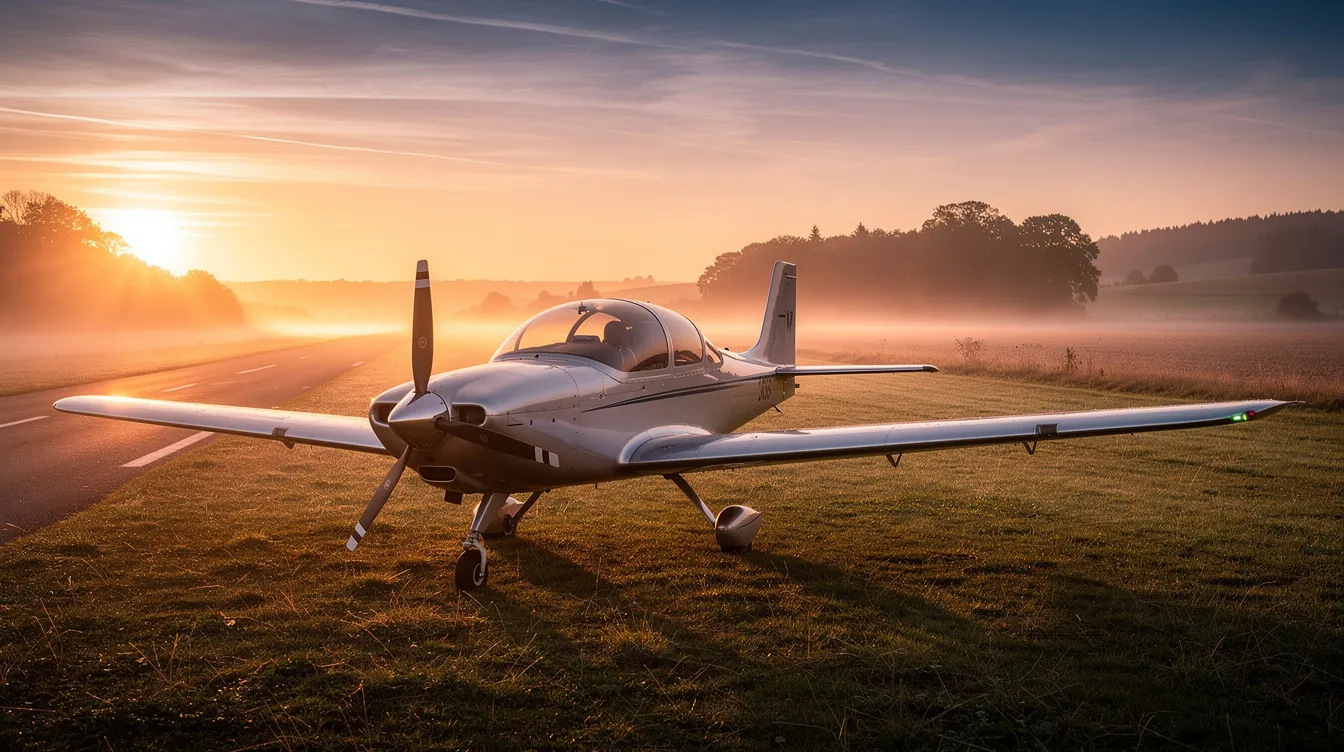
The single-seat airplane remains the most focused expression of personal aviation freedom in 2027. It is also, by design, the most limited. This article traces the full arc from solo cockpits to premium private jet access, showing where each option fits and why many pilots ultimately blend both into a smarter travel strategy.
Executive Overview: Why Single-Seat Airplanes Still Matter in 2027
Single-engine aircraft account for most general aviation flight hours in the United States. As of mid-2026, roughly 218,215 fixed-wing single-engine planes were registered in the U.S., representing over 70% of the crewed aircraft fleet. Among them, thousands of experimental homebuilts qualify as true single-seat airplanes- aircraft built exclusively for one pilot, with no passenger accommodation whatsoever.
Yet the world of personal aviation extends far beyond a solo cockpit. Most high-net-worth professionals and business travelers ultimately transition to professionally flown private jets for efficiency, safety, and comfort. The choice between owning a single-seat airplane and accessing a private jet through a Jet Card program is not about one being superior-it is about matching the right aircraft to the right mission.
Consider a concrete example: a pilot flying a Van's RV-3B from a small field near Dallas to Santa Fe-roughly 400 nm. That pilot cruises at 170 knots, manages weather and navigation solo, and arrives after about 2.5 hours with no passengers and minimal luggage. The same route via a BlackJet light jet: 400-plus knots, a pressurized cabin, the ability to bring colleagues or family, and arrival in well under two hours with ground support arranged digitally.
Owner-Flown Single Seat Plane vs BlackJet Jet Card:
Single seat: one occupant, full pilot control, maximum sensory involvement, lowest weight, high skill demands, and direct maintenance responsibility.
BlackJet Jet Card: multiple passengers, professional crew, quiet cabin, predictable pricing, delegated operations, and carbon-neutral flights at no extra cost.
Capital outlay: single-seat kits often run $40,000–$120,000; Jet Card access starts with a 25-hour block and scales to 50 hours with no aircraft purchase required.
Mission profile: short solo sport or aerobatic missions vs. time-sensitive business travel with luggage, companions, or work en route.
What Is a Single Seat Airplane? (And How It Differs from Other Single Engine Aircraft)
A single-seat airplane is an aircraft designed for exactly one occupant-the pilot. Single-seat aircraft cannot carry passengers or cargo beyond what the pilot personally stows. These planes prioritize the individual pilot's experience over passenger capacity, and many single-seat aircraft have simpler designs and fewer components than their multi-seat counterparts. Single-seat aircraft typically utilize fixed or retractable landing gear depending on the model and configuration.
Most single-seat airplanes fall into the experimental or homebuilt category-think Van's RV-3B, Sonex Onex, or Bede BD-5 derivatives. By contrast, the single-engine planes used by flight schools and owner pilots-Cessna 172, Piper Archer, Diamond DA40-seat two to four people. Cabin layouts in single-engine aircraft range from 2-seat trainers to 6-seat touring platforms, and single-engine low-wing aircraft typically serve 2–4 passengers comfortably.
Regulatory distinctions matter. In the U.S., experimental-amateur-built aircraft fall under FAA Part 21.191(g), while ultralights operate under Part 103. Under FAA Part 103, ultralights cannot exceed a maximum fuel capacity of 5 U.S. gallons, and ultralight versions weigh under 254 pounds empty. In the United States, qualifying ultralights require no pilot's license. Single-seat airplanes are typically designed for recreational flying and specific missions, not commercial transport.
Key sub-types include:
Single-seat piston sport planes (RV-3B, Sonex Onex): lightweight, efficient, capable of cross-country range.
Single-seat aerobatic aircraft (Extra 300S, Sukhoi Su-26, Pitts S-1S): designed for extreme g envelopes and competition aerobatics.
Single-pilot certified turboprops and jets with multiple passenger seats yet only one required pilot (Pilatus PC-12 NGX, Cirrus Vision Jet): these are not single-seat airplanes but share the solo-pilot operational concept.
Passenger Experience vs Pilot Thrill: Solo Cockpit or Private Jet Cabin?
Flying a single-seat airplane is aviation at its most visceral. Centerline seating provides symmetrical visibility and balanced weight distribution. Single-seat designs are lighter and more aerodynamic, translating every control input into immediate response. You feel the engine, the air, the horizon-and you are entirely responsible for all of it.
Now contrast that with stepping aboard a BlackJet private jet. Pressurized aircraft like the Piper M350 enhance passenger comfort at altitude, and modern jets often include luxury features like in-flight Wi-Fi, catering, and lavatory access. The interior is quiet. The crew handles everything. You work, rest, or simply explore the view from above the weather.
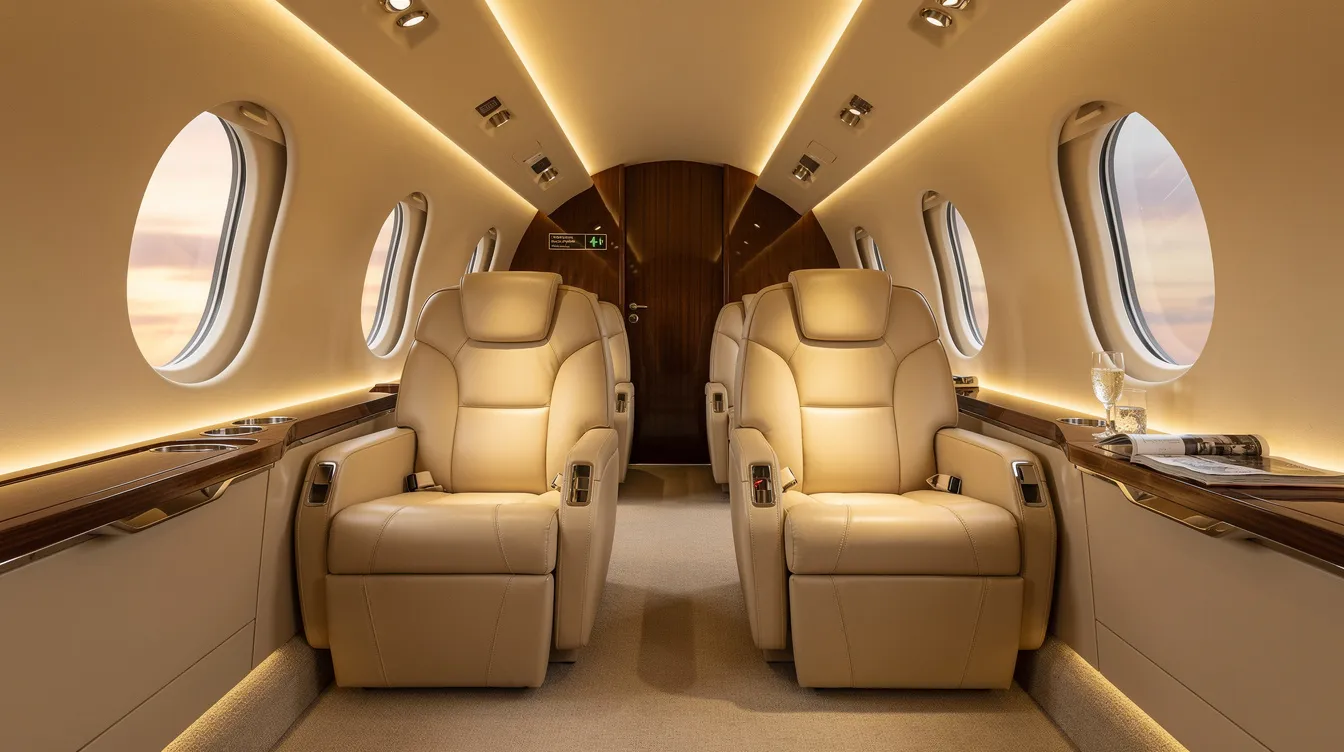
Two scenarios tell the full story:
A pilot takes a single-seat aerobatic plane on a Sunday morning 100 nm loop from a small field, climbing through patchwork farms, performing steep turns, returning in under two hours. Total fuel burn: roughly 15 gallons. Total passengers: zero. Total comments from the back seat: also zero.
A BlackJet member uses a 25-hour Jet Card to fly a light jet from Los Angeles to Aspen with three friends and ski gear. The sleek cabin seats everyone comfortably. Door-to-door: under 3.5 hours, including ground transfers, with no pilot workload and plenty of room for two children, luggage, and conversation.
Single-seat planes are perfect for pure pilot enjoyment and training discipline. Private jets excel for time-critical business and high-comfort family or leisure missions, and many travelers weigh these benefits carefully when deciding whether chartering a private jet is worth it compared to ownership or commercial flights.
Types of Single Seat Airplanes in 2027: Sport, Aerobatic, and Experimental
The production landscape for single-seat airplanes in 2027 breaks into distinct categories, each with a different mission and performance profile:
Sport and recreational: The Van's RV-3B cruises at approximately 170 KTAS with a range of 520–620 nm. The Sonex Onex offers a simpler, lower-cost option for local flying. Single-seaters typically use smaller, more fuel-efficient engines, and single-seat aircraft generally feature better power-to-weight ratios than multi-seat designs.
Aerobatic: The Extra 300S, Pitts S-1S, and Sukhoi Su-26 are designed for unlimited aerobatic competition. Roll rates, structural g limits (+/-10g in many options), and crisp control response define these machines-though cross-country speed and range take a back seat to performance under stress.
Glider and motor-glider: Models like the Schempp-Hirth Discus 2cT with self-launch capability offer extraordinary glide ratios and minimal fuel consumption.
Flying a single-seat airplane offers pure agility and lower operating costs compared to larger aircraft. The pilot has complete independence over flight planning and decision-making. But pilots cannot receive dual flight instruction in a single-seat aircraft, which is why flight schools rely on two-seat or four-seat trainers like the Diamond DA40 or Piper Archer instead.
Many enthusiasts view their single-seat airplane as a weekend toy-a machine that extends their skills and feeds the spirit-while relying on charter or Jet Card access for serious regional and intercontinental business travel, often turning to premium private jet cards and Jet Card programs when they want predictable pricing and professionally managed flights.
Safety, Avionics, and Regulatory Considerations for Single Seat Aircraft
Safety in single-seat aircraft hinges on a simple reality: there is no co-pilot. Single-engine piston accidents often trace to pilot decision-making, and the solo cockpit offers no backup for navigation errors, medical events, or task overload. Lighter, more responsive airframes demand precise handling, and most lack de-icing, weather radar, or a pressurized cabin.
Modern avionics enhance safety with terrain and traffic warning systems, even in experimental builds. Typical equipment in a well-equipped 2027 single-seat experimental includes Garmin G3X Touch or Dynon SkyView EFIS, ADS-B Out (compliance became mandatory in 2020 for U.S. airspace), and in higher-end builds, synthetic vision and basic autopilots. Modern single-engine aircraft often include synthetic vision technology as standard. Electronic Stability Protection (ESP) is now standard in many modern certified aircraft like the Cirrus line, and the Cirrus airframe parachute system-known as CAPS-has saved over 250 lives since its introduction, demonstrating how situational awareness and passive safety systems create meaningful protection.
By contrast, BlackJet partner aircraft carry fully integrated avionics suites-Garmin G5000, Collins Pro Line Fusion, full ADS-B In/Out, datalink weather, and stabilized approach capabilities-operated by trained, certified crews, reinforcing why private jets are considered highly safe compared to typical general aviation operations.
Regulatory course notes:
Operating a single-seat experimental aircraft under FAA Part 91 requires at minimum a private pilot certificate (remote keyless entry systems are irrelevant here-aviation demands hands-on piloting).
Maintenance differs sharply: owner-builders can perform condition inspections on experimental aircraft, while certified single-engine aircraft require licensed mechanics.
Commercial use-carrying passengers for hire-is typically prohibited in experimental single-seat airplanes.
Ownership Economics: Buying, Building, and Operating a Single-Seat Airplane vs Jet Card Access
Single-seat airplanes are often less expensive to purchase than larger models. A completed Van's RV-3B kit typically lands between $55,000 and $90,000, including engine and avionics. High-end aerobatic singles like the Extra 300S can exceed $400,000. Lower operating costs are a common advantage of single-seat aircraft across the market.
Variable costs for a typical single-seat sport plane: fuel burn of 7–10 GPH on avgas, annual hangar fees of $2,400–$6,000, insurance of $2,000–$6,000, and maintenance reserves. Single-engine piston planes consume less fuel than multi-engine alternatives, and piston singles achieve fuel efficiency comparable to driving at low passenger counts. The Diamond DA50 RG's diesel engine, for example, uses about 8 GPH at 45% power-a useful benchmark for efficient single-engine aircraft.
A pilot flying 40 hours per year in a single-seat experimental might spend roughly $32,000–$40,000 annually (including amortized purchase, fuel at ~$240/hour, hangar, insurance, and maintenance). That buys total control and the joy of owning your own machine.
Compare that to a business executive flying 40 hours per year on a BlackJet Jet Card. BlackJet offers 25-hour Jet Card options and 50-hour Jet Card options. Jet Cards eliminate capital tie-up and maintenance responsibilities. The cost is higher per hour, but the executive gains speed, cabin class selection, professional crews, and zero aircraft management, which makes understanding overall Jet Card membership pricing essential for comparing options. The buy decision comes down to mission, not simply total spend.
When to Choose a Single Seat Airplane, a Single Engine Aircraft with Seats, or a Private Jet
Mission-based guidance, simply stated:
Choose a single-seat airplane for solo recreation, aerobatics practice, or building precise stick-and-rudder skills within 100–400 nm. Single-engine aircraft are easier to fly than multi-engine planes, and the solo cockpit sharpens every skill.
Choose a multi-seat single-engine aircraft for 2–4 passengers on 300–800 nm trips. The Cirrus SR22T has a cruise speed of approximately 213 knots and a range up to 1,100 nautical miles. Single-engine low-wing aircraft are favored for regional business travel. The Diamond DA50 RG offers roughly 750 nm of range on Jet A fuel. Single-engine aircraft typically cruise at 110 to 220 knots depending on the model.
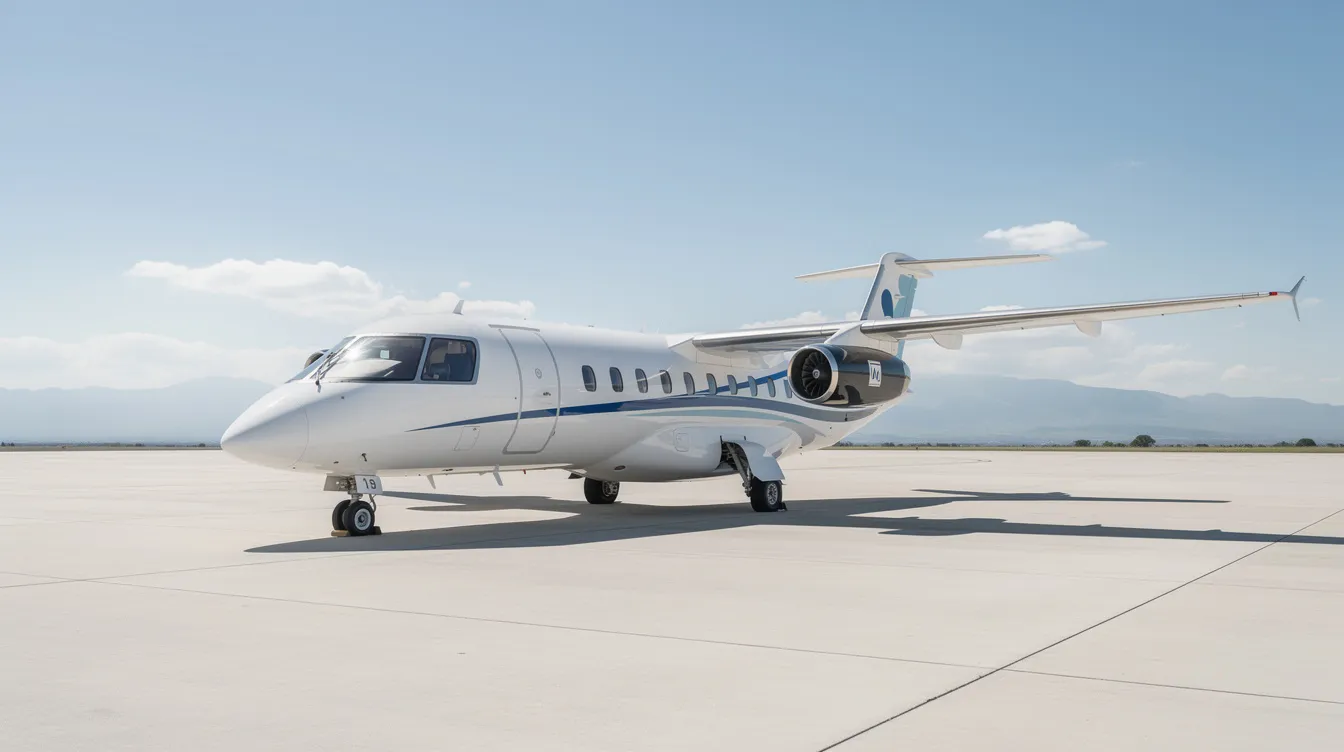
Choose a BlackJet private jet for 3–10 passengers, 400–3,000+ nm legs, or demanding weather and terrain, often cruising at higher altitudes than commercial flights for smoother rides. BlackJet offers access to multiple cabin classes-light, mid, super-mid, and large-and Jet Cards provide access to multiple cabin classes for travelers. Jet Card programs provide access to real-time flight support for every leg.
Many pilots keep their personal single-seat airplane for passion flying while shifting most business and family journeys to Jet Card programs for safety, comfort, and schedule control, mirroring how frequent travelers evaluate the best Jet Cards for regular flyers when optimizing their travel mix. It is not an either-or choice; it is a blended strategy.
From Flight Schools and Solo Trainers to Full-Spectrum Private Aviation
Most pilots start in two- or four-seat single-engine aircraft at flight schools-Cessna 172, Piper Archer, Diamond DA40-because training requires an instructor onboard. The progression is familiar: student pilot, first solo, instrument rating, then perhaps a move into experimental or single-seat aerobatic aircraft for advanced skills before eventually exploring private jets for sale under $10 million as business and travel needs grow.
The event that changes everything is when a pilot or owner realizes they value time, flexibility, and cabin comfort more than personally operating every trip. Jet Card programs offer prepaid access to private jets, and mobile booking platforms enable 24/7 access to private flights, especially with products like the BlackJet 25+ Hour Jet Card that combine fixed rates with flexible access. Mobile platforms streamline travel management for frequent flyers, while real-time support is available through mobile booking tools, making the transition from owner-flown to professionally managed aviation seamless.
Even non-pilots can skip the entire owner-pilot journey and go directly to Jet Card-based access, or simply buy an individual seat on a private jet, achieving the benefits of private aviation without training, medicals, or aircraft management produced by years of study.
Sustainability, Technology, and the Future of Single Seat Airplanes and Private Jets
Emerging sustainability trends are reshaping light aviation. Single-seat eVTOL designs-17 models surveyed recently-range from $59,000 to $150,000, though only two have confirmed deliveries. Whisper Aero's Powered Swift completed over 130 minutes of electric flight testing in 2026 on a modified Swift 3 glider. Jet A-burning diesels eliminate lead emissions associated with avgas, a meaningful upgrade for the standard single-engine aircraft fleet.
BlackJet ensures every jet flight is carbon neutral through verified offset programs-at no additional cost to members, aligning private flying with many of the strategies outlined for the cheapest private aircraft and budget-friendly access models. BlackJet ensures carbon-neutral operations for every flight, and Jet Card programs ensure carbon-neutral operations across the board, even on some of the world’s top luxury private jets. Growing adoption of Sustainable Aviation Fuel across business aviation fleets adds another layer.
Technological convergence is accelerating: glass cockpits, synthetic vision, and ADS-B are now standard in both experimental and certified aircraft. Real-time flight support is available 24/7 for travelers using BlackJet's platform, and real-time support enhances safety and efficiency during flights while helping manage scheduling and operational risks.
Looking ahead to 2027–2035: single-seat airplanes will remain a niche for enthusiasts and sport pilots, while digitally enabled Jet Card access becomes the default for high-net-worth, time-sensitive travelers, with some moving beyond 25- and 50-hour blocks to evaluate 100-hour Jet Card cost structures that match their flight volume.
FAQs: Single Seat Airplanes, Single Engine Aircraft, and BlackJet Jet Card Access
Common questions from pilots, owners, and travelers considering their many options:
Are single-seat airplanes safe for regular business travel?
Single-seat aircraft place full workload on one pilot with limited avionics redundancy. GA piston aircraft see roughly 4.53 accidents per 100,000 flight hours versus approximately 0.65 for Part 135 charter operations. For business-critical travel, professional crews and certified jets offer a measurably safer profile, whether you choose on-demand charter, evaluate NetJets Jet Card costs as a benchmark, or compare other structured programs.
Can I train in a single-seat airplane at a flight school?
No. Flight schools use dual-control certified trainers because instruction requires an instructor onboard with shared controls. Single-seat aircraft simply cannot accommodate that configuration.
How does owning a single-engine aircraft compare to booking private jets with a Jet Card?
Ownership demands capital (purchase or build), fixed costs (hangar, insurance), and variable costs (fuel, parts). A Jet Card delivers predictable hourly pricing inclusive of crew, maintenance, and insurance—without owning a depreciating asset—and can be weighed alongside other budget-friendly private aircraft and access options when designing a long-term travel plan.
What aircraft categories are available through BlackJet?
BlackJet Jet Cards unlock light jet, mid, super-mid, and large cabin categories, including access to top 16-seat private jet options for group travel. Members select the class that fits each mission rather than being locked into one airframe.
How does BlackJet ensure safety and sustainability?
BlackJet uses a proprietary “BlackJet Certified” program to vet partner operators and aircraft. Every flight is carbon neutral through verified offsets at no extra cost, even on large private jets carrying up to 50 passengers for corporate or event travel.
Conclusion: From Solo Seat to Jet Card – Choosing the Right Aircraft for Your Mission
The single-seat airplane remains aviation's purest expression of solo flight-a machine that creates an unmatched connection between pilot, sky, and engine. But for serious business itineraries, international trips, or family travel, BlackJet's Jet Card programs offer a superior blend of safety, convenience, and luxury that no personal aircraft alone can match.
The smartest approach for many pilots and travelers is a blended strategy: keep the personal plane for passion, and use Jet Card access for high-stakes missions where speed, comfort, and reliability define success.
Explore BlackJet's Jet Card membership to secure flexible, carbon-neutral private jet access tailored to your typical routes and schedule. Elevate your travel-effortlessly. Join BlackJet's Jet Card program for seamless, premium private travel with safety, sustainability, and flexibility built in.