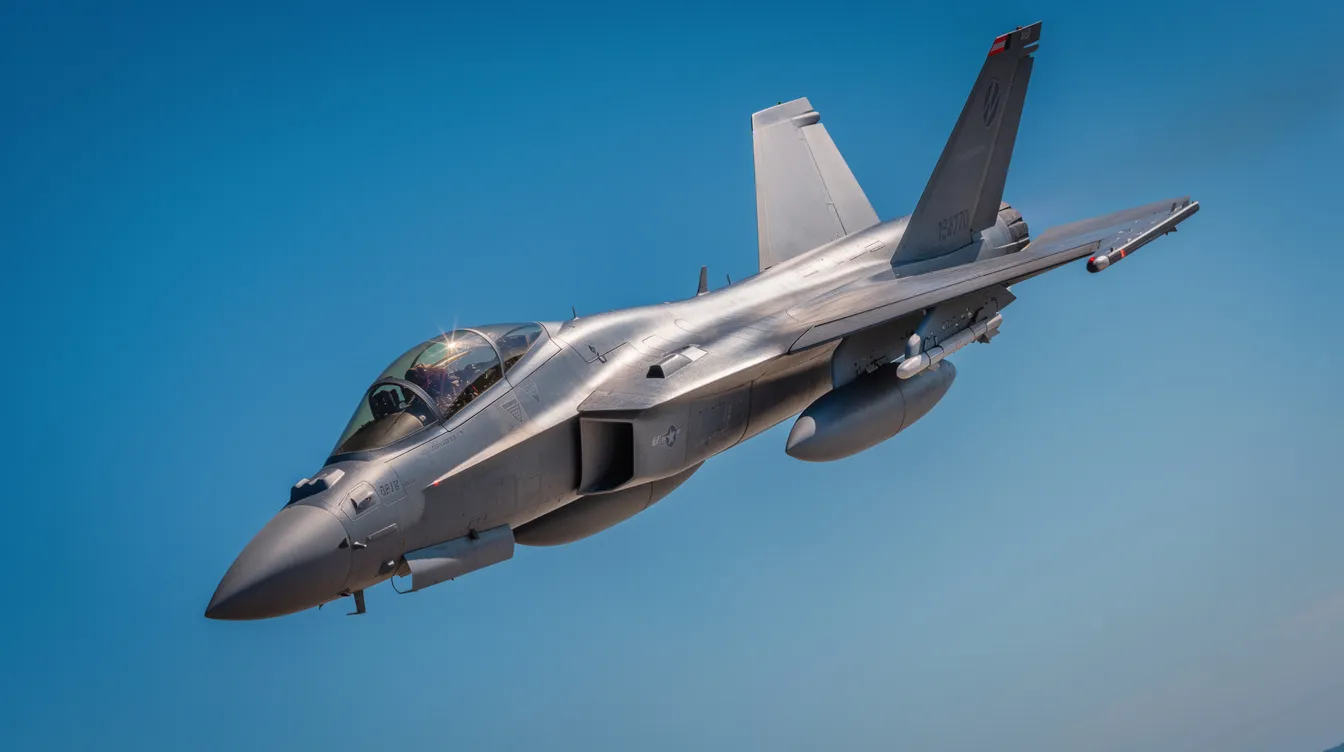
Introduction: Why Military Aircraft Still Shape the Skies in 2027
Military aircraft have driven aviation forward since WWI biplanes first dueled above the trenches. The Messerschmitt ME 262 was the first jet-powered fighter, entering aerial combat in 1944 alongside the Allied Gloster Meteor. Today, military jets utilize various design characteristics to meet specific operational needs—from stealth fighters to unmanned systems patrolling contested skies. The roles of military jets include combat, support, transport, and training, while platforms like attack helicopters and transport planes extend capabilities on the battlefield and beyond. Military aircraft serve various roles, including reconnaissance and transport, and concepts like range, speed, and mission readiness now influence private aviation standards, including how travelers buy a seat on a private jet that fits their specific mission profile. At BlackJet, we apply lessons from military-grade safety, technology, and mission planning to deliver carbon-neutral private jet access for our members, whether they are evaluating 10-million-dollar private jet options for ownership or prefer asset-light access models.
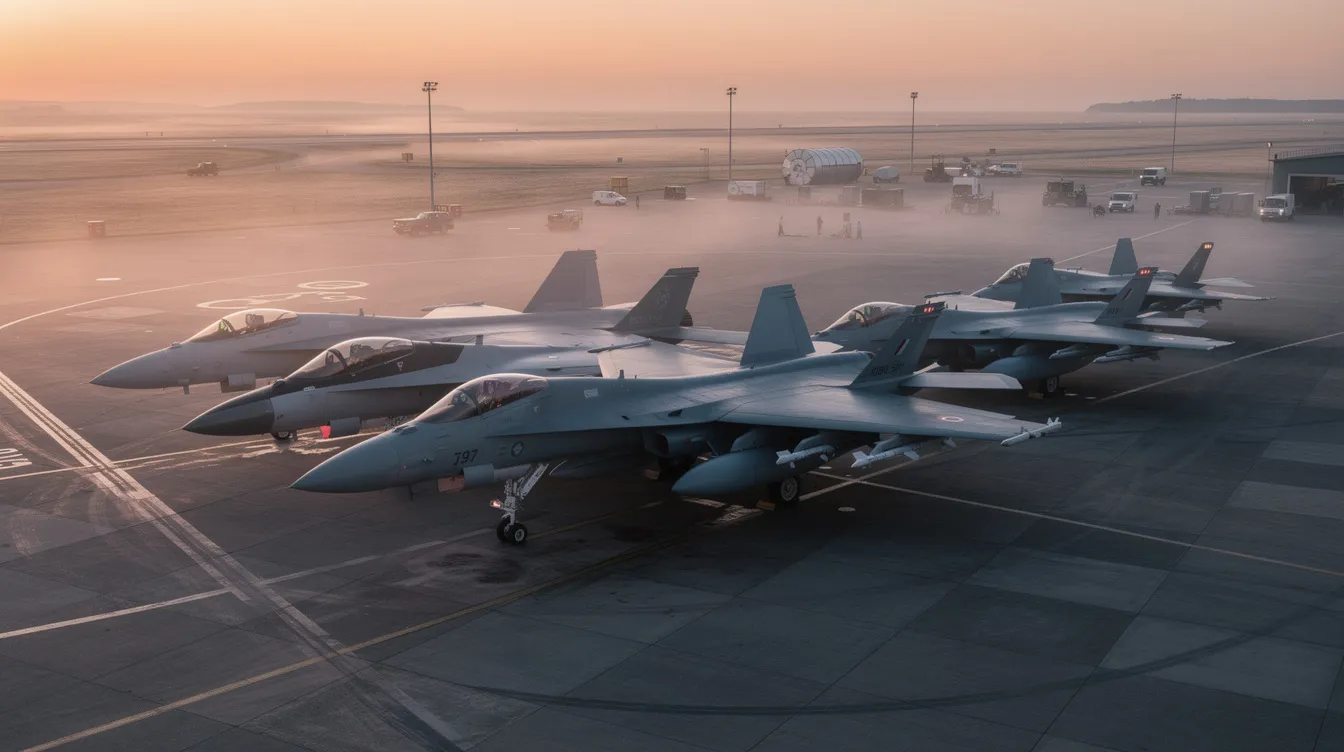
Core Combat Types: Fighter and Attack Aircraft
Fighter jets are designed primarily for aerial combat, achieving air superiority through high speeds, advanced radar, and air-to-air missiles. Military jets have differing speed and maneuverability characteristics for various roles; types of fighter jets range from pure interceptors to versatile multirole platforms. Multirole fighters can perform both air-to-air and air-to-ground missions, blurring lines between categories.
Military jet type | Primary role | Typical characteristics | Examples |
|---|
Fighter | Air superiority and aerial combat | High speed, maneuverability, radar, and air-to-air weapons | F-16 Fighting Falcon, F-22 Raptor, F-35 Lightning |
Attack aircraft | Close air support and ground strikes | Lower-altitude operations; weapons suited to engaging vehicles and positions | A-10 Thunderbolt II, Su-25 Frogfoot |
Bomber | Long-range delivery of heavy payloads | High payload capacity and extended range | B-52 Stratofortress, B-2 Spirit, Tu-160 |
Reconnaissance aircraft | Intelligence gathering and surveillance | Sensors, cameras, and signals-intelligence systems | U-2, SR-71 Blackbird, RQ-4 Global Hawk |
Electronic warfare jet | Disrupting adversary radar and communications | Jamming and electronic countermeasures | EA-18G Growler |
Tanker | In-flight refueling | Extends the operational range of other aircraft | KC-135, KC-46A Pegasus, A330 MRTT |
Military transport | Moving troops, equipment, and supplies | Large cargo capacity and long-range logistics | C-17 Globemaster III, C-5M Super Galaxy |
Key fighters commonly referenced in any comparison chart or military jet guide include:
General Dynamics F-16 Fighting Falcon – widely used globally since the 1970s
F-22 Raptor – operational since 2005, designed for air dominance
Lockheed Martin F-35 Lightning – a modern jet fighter capable of multirole operations
Sukhoi Su-35 – Russia's advanced 4++ generation platform, with MiG-29 variants also in service across 29 air forces worldwide
Ground attack jets are optimized for close air support. Attack aircraft provide close air support to ground troops, commonly flying at lower altitudes compared to bombers. They engage enemy positions, vehicles, and fortifications, utilizing various weapons for surgical strikes. The A-10 Thunderbolt II and Su-25 Frogfoot are designed to survive heavy ground fire over the battlefield, complementing attack helicopters, which hover on station but sacrifice speed. For a deeper look at force variants and jet fighter development, explore our fighter jets diagram resources, including jet fighter missile comparison data, air force variants jet profiles, and a military jet aircraft profiles overview with aircraft size chart MiG-29 details.
At BlackJet, matching mission to platform mirrors how we match members with the right cabin class through our Jet Card programs and broader premium private jet services.
Strike and Strategic Power: Bombers and Fighter-Bombers
Strategic bombers deliver heavy payloads over long distances, prioritizing payload capacity and long-range flight. Tactical bombers support ground troops with fast strikes against enemy positions and installations. The British Avro Lancaster was an iconic World War II bomber, and the US B-17 Flying Fortress was extensively used, carrying bombs across Europe. The Russian Tupolev Tu-160 continues as a significant long-range strategic bomber today.
Modern examples include the B-52 Stratofortress (introduced in 1955, expected to serve into the 2060s), the B-2 Spirit stealth bomber, and the upcoming B-21 Raider. Stealth technology reduces the detectability of aircraft by radar—a capability that reshapes modern warfare. Precision-guided munitions now let tactical bombers and fighter-bombers like the F-15E Strike Eagle deliver strikes with greater accuracy, a significant shift from area bombing to precision targeting.
Eyes and Ears in the Sky: Reconnaissance Planes and Electronic Warfare Jets
Information dominance defines 21st-century combat. Hot air balloons were used for military reconnaissance as early as 1794; today, reconnaissance jets gather intelligence and monitor enemy activities using imagery, signals, and electronic intelligence. The Lockheed U-2 was a significant jet-powered reconnaissance aircraft (first flight 1955, still in service), while the SR-71 Blackbird operated at Mach 3+ until 1998. Reconnaissance planes like the RQ-4 Global Hawk now search vast areas autonomously.
Electronic warfare jets jam enemy radar and disrupt communications—the EA-18G Growler is purpose-built for this mission. Airborne Early Warning and Control aircraft monitor airspace and coordinate operations, acting as flying command centers. Maritime patrol variants like the Boeing P-8 Poseidon show how aircraft platforms are adapted to specialized military roles. BlackJet's real-time flight support similarly coordinates complex itineraries behind the scenes, delivering seamless travel with uncompromising safety.
Specialized Military Jets: Trainers, Tankers, and Support Roles
Behind fighters and bombers sits an ecosystem that keeps forces trained and operational. Military transport planes became crucial during World War II for carrying supplies and troops, and modern military transport aircraft can carry entire tanks and heavy equipment across continents, just as the global fleet of private jets around the world now underpins flexible executive and VIP mobility.
Trainers: T-38 Talon (1961–present), T-7A Red Hawk (initial operational capability scheduled for 2027)
Tankers: Tankers extend the operational range of military aircraft by refueling them in flight: KC-135, KC-46A Pegasus, Airbus A330 MRTT
Support: VIP transport, command-and-control jets, and surveillance variants, alongside large-cabin aircraft suitable for group and delegation missions
BlackJet's Jet Card model provides planned access to aircraft without the responsibilities of ownership, helping travelers reach multiple cities through a coordinated service model. For a military aircraft reference, see our military planes list; travelers evaluating membership options can compare jet card cost per hour. Our guide to jet card pricing structures explains how predictable costs can support disciplined travel planning.
The Future of Military Jets and What It Means for Private Aviation
In 2027, unmanned combat air vehicles, hypersonic weapons, and AI-assisted avionics continue to reshape the battlefield, just as cutting-edge business aircraft show how the newest private jet innovations filter into civilian cabins. Optionally manned combat jets now enter service alongside drones acting as “loyal wingmen”; reconnaissance planes and attack aircraft are increasingly paired with autonomous systems. Operational hypersonic aircraft remain limited; most Mach 5+ systems are missiles rather than reusable jets.
Sustainability pressures influence both military and civil aviation through alternative fuels, efficient engines, and aerodynamic refinements. In private flying, many travelers consider budget-friendly private aircraft options that balance efficiency, cost, and environmental impact. BlackJet puts these principles into practice through modern aircraft selection, route optimization, and automatic carbon offsetting via our green private jet commitment—ensuring every member flight is carbon neutral, whether members favor long-range flagships or small private aircraft tailored to specific missions.
Military innovation sets the bar for safety, readiness, and efficiency, just as the best private jets in the world showcase how advanced engineering and systems design inform civilian fleets. These standards also shape BlackJet's approach to private aviation: advanced, secure, and sustainable private jet access through Jet Card programs, with flexibility across aircraft categories, as outlined in our overview of the best jet cards for frequent flyers.
Frequently Asked Questions About Types of Military Jets
What are the main types of military jets?
The main types include fighter jets, attack aircraft, bombers, reconnaissance aircraft, electronic warfare jets, airborne early warning and control aircraft, tankers, trainers, and military transport aircraft. Each is designed for a specific operational role, from aerial combat to intelligence gathering and in-flight refueling.
What is the difference between a fighter jet and an attack aircraft?
Fighter jets are designed primarily for aerial combat and air superiority, while attack aircraft focus on striking ground targets and providing close air support. Multirole fighters can perform both air-to-air and air-to-ground missions, so the categories can overlap.
What do reconnaissance jets do?
Reconnaissance jets gather intelligence and monitor enemy activities using cameras, radar, and other sensors. The Lockheed U-2 is a well-known jet-powered example, while modern platforms can use advanced systems to survey large areas.
How do stealth technologies work?
Stealth technology reduces an aircraft’s detectability by radar through design features and materials that limit radar reflections. It does not make an aircraft completely invisible; it makes detection and tracking more difficult.
How do tankers support military jets?
Tankers refuel aircraft in flight, extending their operational range and time in the air. This allows fighters and other military aircraft to travel farther without landing to refuel.
What can private aviation learn from military aviation?
Private aviation can draw lessons from military emphasis on planning, safety procedures, technology, and operational coordination. For travelers, a Jet Card offers flexible access to aircraft without ownership, while certified operators, real-time support, and carbon-neutral flight programs can support a more considered travel experience.
Conclusion: What Military Jets Reveal About Aviation
The many types of military jets—from fighters and bombers to reconnaissance, tanker, and transport aircraft—show how aircraft design responds to distinct missions. Speed, range, payload, maneuverability, stealth, and coordination all shape a platform’s role, while advances in safety and technology continue to influence aviation beyond defense. Explore our military planes list for more aircraft examples and roles.
For private travelers, the lesson is the value of matching the aircraft and support model to the journey. BlackJet’s Jet Card programs provide flexible access to multiple cabin categories without the responsibilities of ownership. Learn more about BlackJet Jet Card programs and compare Jet Card pricing structures, supported by digital booking, real-time assistance, rigorous safety standards, and carbon-neutral flights. Explore premium jet access and discover a more considered way to travel.
Elevate your travel—effortlessly. Explore BlackJet's Jet Card programs and discover how refined, mission-ready travel becomes your new standard.


 Sign up with google
 Sign up with Apple