Understanding the Weight of a Private Jet: Key Factors and Insights
January 9, 2026
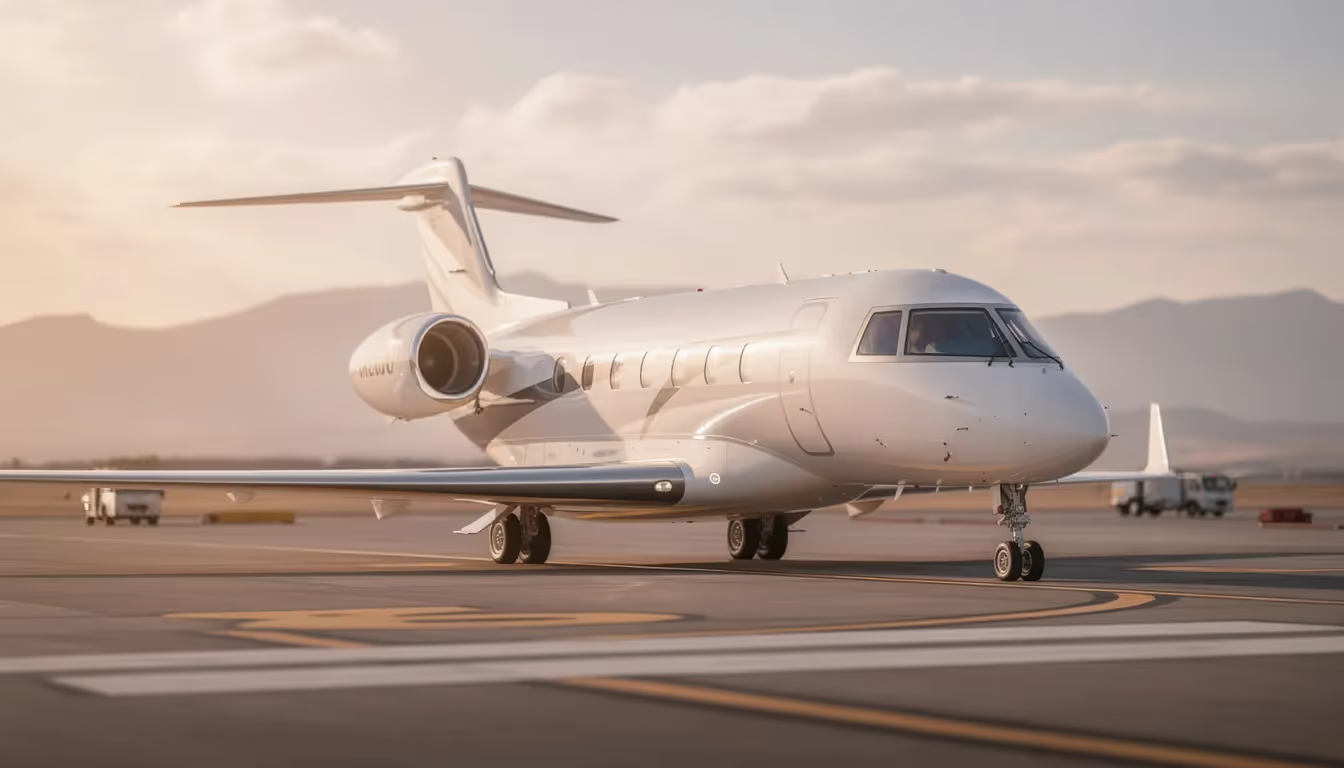
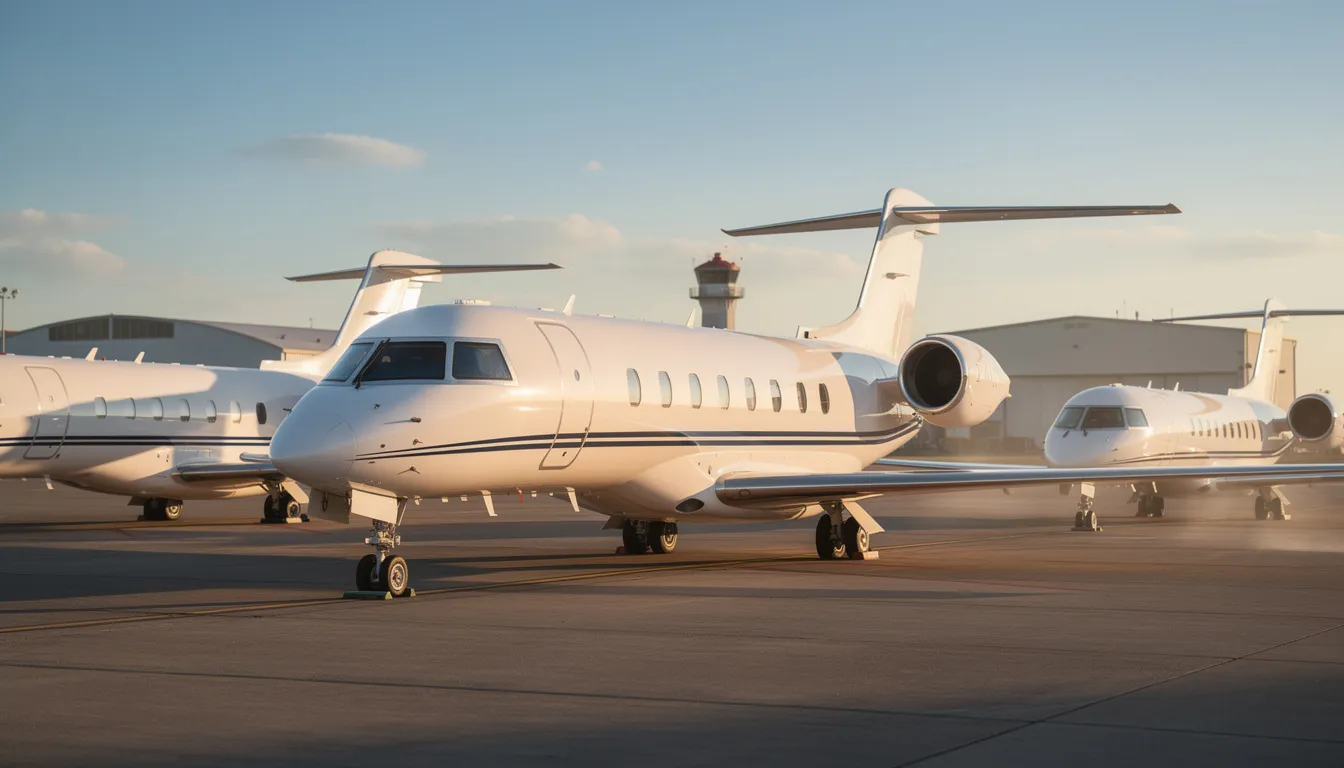
Heavy jets represent the largest and most luxurious category of private aircraft, typically featuring a maximum takeoff weight (MTOW) exceeding 60,000 pounds and capable of seating up to 16 passengers. They are ideal for long-haul trips, offering spacious cabins equipped with luxurious amenities such as fully lie-flat beds, lounges, and fully equipped galleys to ensure maximum comfort and productivity during extended flights.
Leading Models and Their Capabilities
Among the most prominent heavy jets is the Gulfstream G650ER, renowned for its impressive range of 7,500 nautical miles. This aircraft combines superior performance with a spacious cabin that supports business and leisure travel alike, providing ample space and privacy for its passengers.
The Bombardier Global 7500 surpasses even this with an ultra-long range of 8,700 nautical miles and a distinctive four-zone cabin layout, allowing passengers to enjoy separate living, dining, and resting areas. Its advanced technology and comfort features make it a top choice for intercontinental travel.
Another notable heavy jet is the Dassault Falcon 8X, offering a range of over 6,450 nautical miles and seating for up to 19 passengers. It provides an unparalleled level of privacy and security, making it favored by high-net-worth individuals and corporate clients who demand discretion and comfort.
The Gulfstream G700 further exemplifies the heavy jet category with an MTOW of 107,600 pounds and a range of 7,750 nautical miles, combining cutting-edge avionics, efficient performance, and a luxurious cabin environment.
Weight and Performance Considerations
Private jets vary widely in weight, from very light jets (VLJs) weighing approximately 6,000 pounds to heavy jets exceeding 100,000 pounds. For example, the Embraer Phenom 300, a popular light jet, has an MTOW of around 17,968 pounds, suitable for shorter trips with seating for 4 to 8 passengers.
Heavier jets require longer runways for safe takeoff due to their increased weight and fuel capacity. For instance, the Bombardier Global 7500 needs approximately 5,760 feet of runway, whereas very light jets often require less than 3,500 feet, allowing them to access smaller airports and more remote destinations.
Jet Categories by Weight and Capacity
Very Light Jets (VLJs): MTOW under 12,500 pounds, typically accommodating up to 4 passengers, ideal for short-haul flights and personal travel.
Light Jets: MTOW between 10,000 and 20,000 pounds, seating 4 to 8 passengers, offering efficient performance for short to medium distances.
Mid-Size Jets: Seating capacity of 7 to 9 passengers, designed for medium-range flights with enhanced cabin comfort.
Super Mid-Size Jets: Seating 8 to 10 passengers, offering increased range and cabin space compared to mid-size jets, suitable for longer medium-haul flights.
Large Jets: Accommodate 10 to 19 passengers, providing extensive cabin amenities and comfort for long-haul flights.
Heavy Jets: Over 60,000 pounds MTOW, seating up to 16 passengers, optimized for intercontinental travel with luxurious features.
Business Jets (Executive Airliners): Capable of seating 20 to over 75 passengers, offering extensive customization options and large cabin spaces, often converted from commercial airliners.
Selecting the Right Jet: Capacity and Luggage Considerations
When choosing a private jet, careful consideration of passenger capacity and luggage requirements is essential. Larger jets provide ample space not only for seating but also for baggage and specialized cargo, ensuring all belongings are accommodated comfortably.
Updated aviation regulations, effective from 2026, have introduced revised average passenger weight estimates, reflecting changing demographics. These regulations impact payload calculations, which include the combined weight of passengers, crew, and their baggage, influencing the maximum allowable takeoff weight and flight planning.
Summary
Heavy jets stand at the forefront of private aviation, delivering unmatched luxury, range, and performance. With models like the Gulfstream G650ER, Bombardier Global 7500, and Dassault Falcon 8X, travelers can enjoy intercontinental flights with superior comfort, privacy, and security. Understanding the weight classifications, seating capacities, and operational requirements of different private jets is crucial for selecting the ideal aircraft tailored to specific travel needs.h individual, time isn't just money—it's leverage. Private aviation redefines what it means to travel efficiently, offering more than just luxury. It provides strategic value through time savings, global access, and tailored experiences. Whether for a corporate executive flying between financial hubs or a family seeking discretion and comfort, private jet access fundamentally reshapes the travel experience.
While commercial airliners offer fixed schedules and crowded terminals, private aviation unlocks direct routes, private terminals (FBOs), and flexible timelines—features that are impossible to replicate with first-class commercial options.
At the heart of every jet's performance, range, and comfort lies a technical element often overlooked: weight. Understanding the weight of a private jet is crucial for optimizing performance, managing costs, and maintaining safety.
MTOW dictates how much the aircraft can safely lift off with—including passengers, fuel, cargo, and the aircraft itself. It determines how far a jet can fly, how much fuel it can carry, and what airports it can use.
Ramp Weight and Basic Operating Weight
Ramp Weight: Includes everything onboard before taxiing (fuel, baggage, people).
Basic Operating Weight: The aircraft itself, plus crew, fluids, and unusable fuel.
A few hundred pounds can make the difference between a successful non-stop flight and the need for a refueling stop.
While these systems add some weight, they greatly improve flight safety, reduce pilot workload, and optimize fuel burn.
Jets like the Dassault Falcon 7X integrate cutting-edge systems without sacrificing payload, thanks to efficient composite materials.
Use Cases: From Efficiency to Comfort
Executive Scenario: A CEO flying from New York to London aboard a Gulfstream G650ER skips 4 hours of commercial transfer delays, arrives rested, and holds meetings mid-flight.
Family Leisure: A group flying from Los Angeles to Maui via a Citation XLS avoids TSA lines and enjoys private catering, all within 6 hours.
Jet weight affects not only cost per hour but also comfort. Heavier jets accommodate lie-flat seating, larger lavatories, and custom interiors.
Aircraft Classes and Passenger Capacity
VLJs: 2–4 passengers, 1–2 hours of range
Light Jets: 5–8 passengers, up to 3 hours
Mid-Size Jets: 7–9 passengers, up to 5 hours
Super Mid-Size: 8–10 passengers, 6–8 hours
Heavy Jets: 10–16 passengers, 9–12 hours
Ultra Long Range: 12–19 passengers, 12–16+ hours
Comfort scales with weight, allowing for wider cabins, more amenities, and better cabin pressurization (e.g., G650ER has a 4,000-ft cabin altitude at 45,000 feet).
Large Cabin Jets: Strategic Tools, Not Just Status Symbols
Large cabin aircraft like the Bombardier Global 7500 serve boardroom-in-the-sky functionality. With conference tables, full-size beds, and a global range, they aren't just luxurious—they're tools for productivity and discretion.
These jets allow nonstop travel between major cities like Hong Kong and New York, reducing fatigue and maintaining executive performance.
Maintenance, Insurance, and Financing Considerations
Maintenance
Jet weight influences:
Landing gear wear
Brake systems
Engine maintenance intervals
Programs like Jet Support Services, Inc. (JSSI) or OEM maintenance plans ensure predictable upkeep costs.
Insurance
Policies are priced based on:
Jet category (light vs. heavy)
Age of aircraft
Intended usage (owner-piloted vs. managed fleet)
Avion Insurance and AOPA offer specialized policies for private jet owners.
Financing
Banks and specialty lenders offer:
Operating leases
Finance leases
Asset-backed loans
Heavier jets usually require higher down payments and longer loan terms due to their capital intensity.
Customization and Upgrades
Private jet interiors often reflect owner preferences:
Bespoke cabinetry
Color palettes and seat configurations
Advanced in-flight entertainment
Upgrades can include engine improvements or avionics packages that slightly increase operating weight but add performance and value.
Regulatory Standards: FAA, EASA, and Global Compliance
The Federal Aviation Administration (FAA) sets the safety standards in the U.S., including MTOW limits, noise restrictions, and maintenance intervals. Globally, the European Union Aviation Safety Agency (EASA) governs similar regulations.
Compliance is non-negotiable and often determines which runways or regions a specific aircraft can use.
Sustainability in Private Aviation
Environmental Impact of Heavier Jets
Larger jets emit more CO2 per hour
Sustainable Aviation Fuel (SAF) is being adopted gradually
BlackJet’s Sustainability Commitment
Carbon-neutral flights across all journeys
Efficient fleet optimization
Sustainable fuel partnerships with vetted operators
Clients gain the peace of mind that efficiency doesn’t come at the planet’s expense.
Innovation in Aircraft Design
Advances in materials science (e.g., carbon composites) and propulsion have led to lighter airframes and greater fuel efficiency.
Community forums, pilot training programs, and aviation expos (like NBAA) build a culture of safety and continuous learning.
Private Aviation as a Career Path
The industry supports:
Pilots and maintenance technicians
Operations and dispatch professionals
Sales, concierge, and logistics roles
With the rise of on-demand charter and jet card programs, demand for talent remains strong.
Frequently Asked Questions (FAQs) About the Weight of a Private Jet
What is the typical weight range of private jets?
Private jets vary widely in weight depending on their size and class. Very light jets typically weigh less than 12,500 pounds maximum takeoff weight (MTOW), light jets range between 10,000 and 20,000 pounds MTOW, midsize and super midsize jets range from about 20,000 to 50,000 pounds, while heavy jets exceed 60,000 pounds MTOW.
How does the weight of a private jet affect its performance?
The weight of a private jet directly impacts its range, fuel efficiency, cruise speed, and ability to operate from certain airports. Heavier jets generally have longer range and superior performance but require longer runways and consume more fuel. Lighter jets offer better fuel efficiency and can access smaller airports with shorter runways, making them ideal for short-haul and personal travel.
What is Maximum Takeoff Weight (MTOW) and why is it important?
MTOW is the maximum weight at which an aircraft is certified to take off safely, including the weight of the aircraft, passengers, cargo, and fuel. It determines how far a jet can fly nonstop, what airports it can operate from, and influences overall safety and performance.
How does cabin size relate to the weight of a private jet?
Generally, jets with larger cabin sizes have greater weight due to structural requirements and additional amenities. Large cabin aircraft provide ample space, luxury features like fully equipped galleys, and high-speed internet, but this also adds to the aircraft's overall weight.
Can the weight of a private jet restrict the number of passengers it can carry?
Yes, weight limitations, including MTOW and payload capacity, can restrict passenger numbers, especially on longer flights requiring more fuel. Additionally, cabin configuration and luxury amenities can impact seating capacities, balancing comfort with passenger count.
What types of private jets are suitable for smaller groups?
Very light jets and popular light jet models are ideal for small groups, typically seating 4 to 8 passengers. These aircraft offer efficient performance, single-pilot operation capabilities, and access to shorter runways, making them the go-to choice for personal travel and medium-haul flights.
Which private jets are best for long-haul or international flights?
Heavy jets and ultra-long-range jets, such as the Gulfstream G650ER and Bombardier Global 7500, are designed to fly nonstop over 6,000 nautical miles. They provide spacious cabins, advanced avionics, and superior performance for intercontinental travel, favored by large corporations, government officials, and high-net-worth individuals.
How does weight influence the operating costs of private jets?
Heavier jets generally incur higher fuel consumption and maintenance costs due to their size and complexity. However, they offer enhanced cabin comfort and longer maximum range. Lighter jets provide better fuel efficiency and lower operating costs but with less cabin space and range.
What safety regulations affect the weight and passenger capacity of private jets?
Aviation authorities impose strict limits on maximum takeoff weight, payload, and seating capacities to ensure safe operation. Regulations also dictate minimum crew requirements and emergency equipment based on passenger count, influencing how operators configure and operate aircraft.
How does environmental impact relate to the weight of private jets?
Heavier jets tend to emit more CO2 per flight hour due to higher fuel burn. The private aviation industry is increasingly adopting sustainable aviation fuels and more efficient aircraft designs to reduce environmental impact while maintaining performance and luxury.
Final Approach: Why Weight Defines Worth
Jet weight isn’t just a technical spec—it’s a performance blueprint. It influences cost, comfort, safety, and range. Whether you’re selecting an aircraft for transatlantic business travel or weekend escapes, understanding weight helps you make informed, strategic decisions.
BlackJet’s curated fleet and jet card programs are designed around these performance metrics, ensuring every flight is a balance of efficiency, luxury, and sustainability.
Discover Elevated Access
Explore how BlackJet can optimize your travel with intelligent jet selection, carbon-neutral journeys, and elite concierge support.
Join our Jet Card program and experience seamless private aviation that respects your time, your standards, and the skies.


 Sign up with google
 Sign up with Apple