Standard economy seat widths generally range from 16 to 19.5 inches, and airplane seat widths can vary depending on the aircraft model and cabin class. For many travelers, those few inches define the difference between arriving ready to work and landing stiff, sore, and uncomfortable. This guide breaks down exact seat width and seat pitch numbers across every cabin type, compares them to private jet cabins, and shows you how to make smarter booking decisions.
Quick Answer: Typical Airplane Seat Width and Pitch
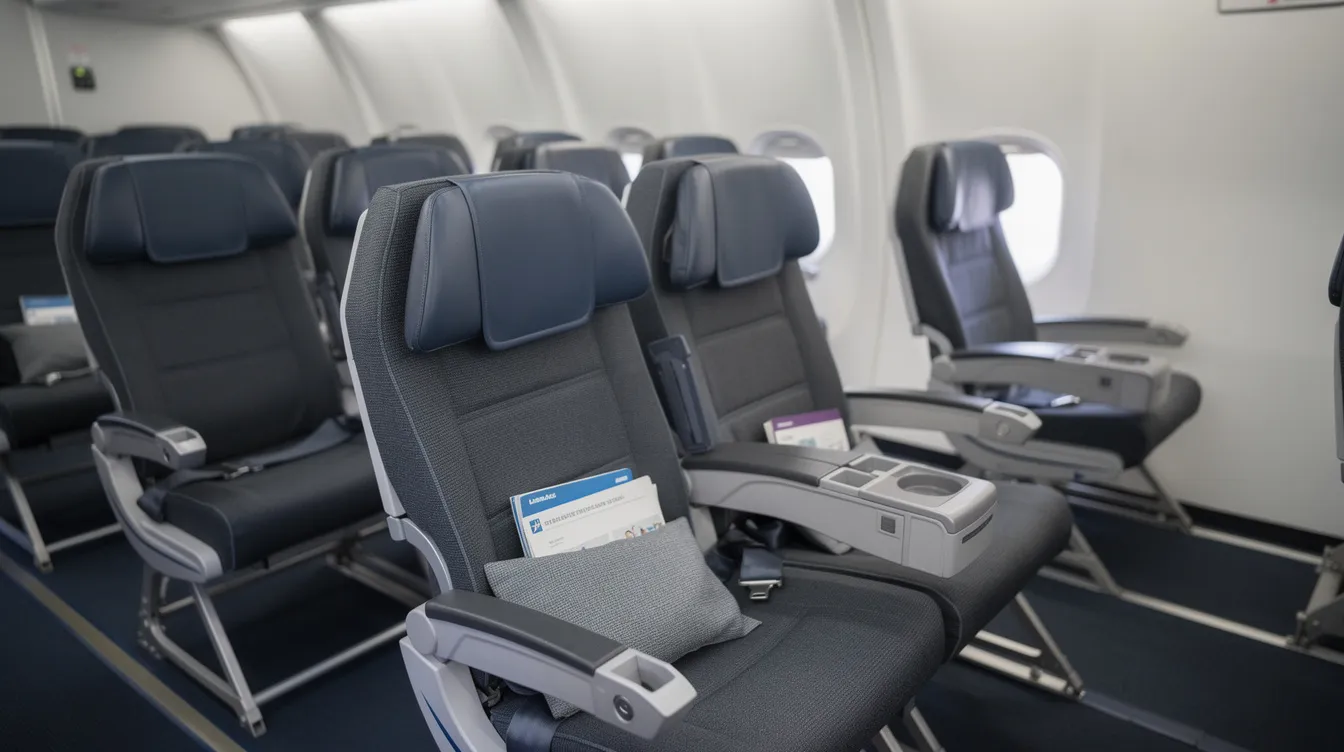
Airline cabins are classified as narrow-body or wide-body, and that distinction shapes every dimension you experience in flight. Economy class seat pitch typically ranges from 29 to 32 inches, with seat width running 16 to 18.5 inches wide. Premium economy adds a few inches in each direction. Business class opens up to lie-flat beds, and first class seats often range from 26 to 39+ inches in width in suite or bed mode.
Seat width is measured as the distance between the inner edges of the armrests. Seat pitch is the distance from a point on one seat to the same point on the seat in front; it serves as a proxy for legroom but does not account for seat thickness or recline.
Cabin Class | Typical Seat Width | Typical Seat Pitch / Bed Length |
|---|
Economy | 16–18.5 in | 29–32 in pitch |
Premium Economy | 18–21 in | 37–42 in pitch |
Business | 20–24+ in | 75–80 in bed length |
First Class | 26–39+ in | 78–80+ in bed length |
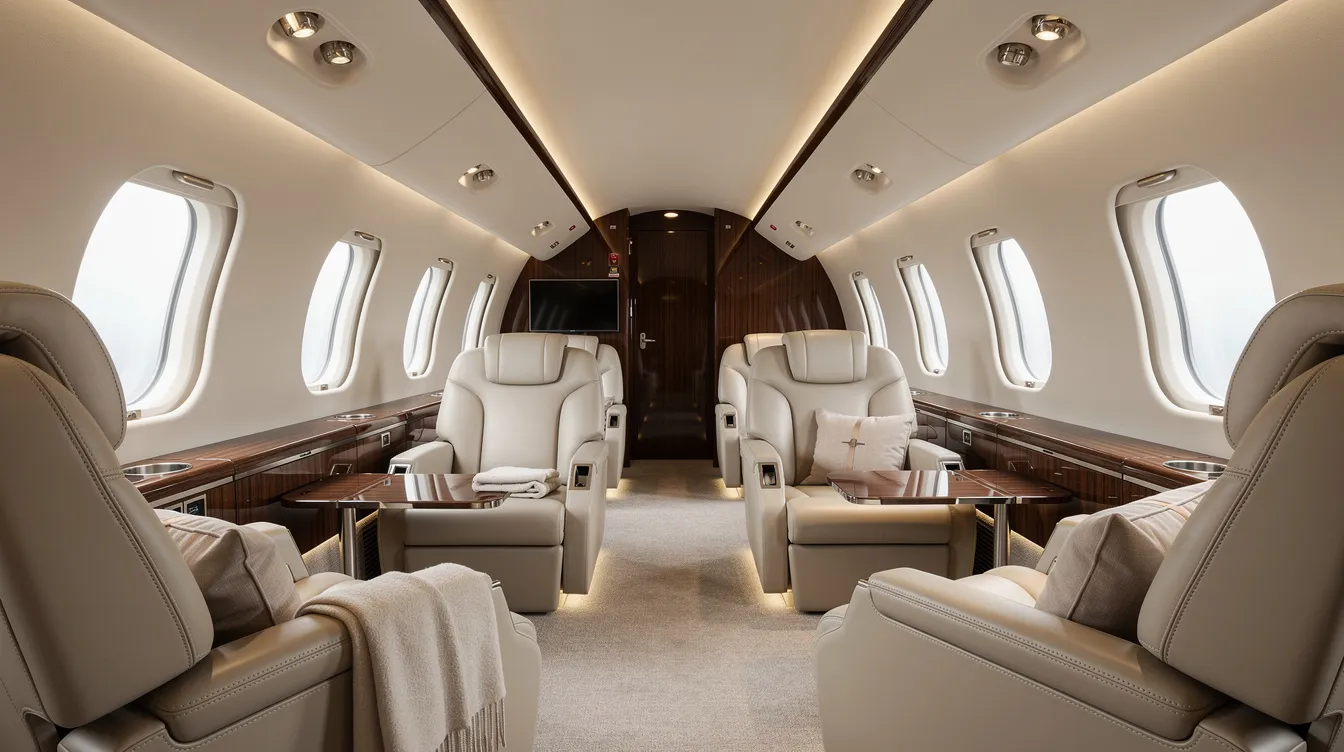
Private Jet (Light) | 20–22+ in seat; 57–67 in cabin width | No fixed rows; full stretch |
Private Jet (Midsize) | 22–24+ in seat; 70–82 in cabin width | Swivel/recline/bed conversion |
Private Jet (Large Cabin) | 24+ in seat; 84–98+ in cabin width | Multiple seating zones, divans |
Wide-body aircraft like the Boeing 777 and Airbus A350 generally offer slightly wider economy airplane seats than narrow-bodies such as the Boeing 737 or Airbus A320 family, because aircraft fuselage diameter directly influences the available seat width.
On private aircraft available through BlackJet Jet Card programs, there is no standard seat pitch. You can fully stretch out, swivel, or convert your seat to a flat bed; the concept of "rows" largely disappears.
Understanding Airplane Seat Dimensions: Width vs. Pitch vs. Overall Seat Size
Seat size is the combination of seat width, seat pitch, recline, and surrounding space: armrests, aisle access, bulkhead proximity, and sidewall curvature. All of these shape how comfortable or uncomfortable a flight feels.
The measurement between armrests tells only part of the story. Thick, fixed armrests eat into usable hip and shoulder room. A seat listed at 18 inches wide with a 2.5-inch-thick armrest on each side delivers less real space than an 18-inch seat with thin, liftable armrests. Most commercial aircraft seats are forward-facing, and most airline seats have reclining mechanisms for comfort, but shell depth and cushion design also determine how much of the measured pitch you can actually use.
Under-seat in-flight entertainment boxes, support bars, and tray table housings can steal foot space, making the pitch feel tighter than the number suggests. A seat with 32 inches of pitch but an IFE box beneath the seat in front may offer less toe room than a 30-inch-pitch seat without one. Seats may include power ports for small electrical appliances, which is helpful, but those ports sometimes occupy space in the footwell.
Car seats offer a useful comparison. A typical front car seat measures 19 to 21 inches wide, but with no stranger pressed against your shoulders and no shared armrest, 17 inches at the wheel feels far more comfortable than 17 inches in a middle seat at 35,000 feet.
How Wide Are Economy Airplane Seats on Major Airlines?
Economy seat width on commercial planes typically falls between 16 and 18.5 inches, with budget carriers at the narrow end and full-service airlines at the wider end. Full-service airlines typically maintain a consistent economy seat width of about 17 to 18.5 inches, though the specific aircraft matters as much as the brand name.
Economy Seat Widths by Aircraft Type
American Airlines fits many Boeing 737 and Airbus A321 economy seats at around 16.5 to 17.2 inches wide, with 30 to 31 inches of pitch on domestic routes. Economy seat widths on the Boeing 737 typically average 17 to 17.5 inches. JetBlue, by contrast, offers among the widest standard economy seats: roughly 17.8 to 18.4 inches wide with 32 to 34 inches of pitch depending on route. Southwest flies an all-737 fleet with widths around 17.0 to 17.8 inches and 31 to 32 inches of pitch. Frontier and other ultra-low-cost carriers may keep width at 17 to 18 inches but compress pitch to 28 to 30 inches using slimline seat designs. Budget carriers may have economy seat widths as low as 16 inches.
Average economy seat widths on the Airbus A220 range from 18.5 to 19 inches, making it one of the widest narrow-body economy cabins flying today. The Airbus A320 family, by comparison, has six-abreast seating in a 3+3 layout and typically delivers about 18 inches per seat. Internationally, Japan Airlines and Singapore Airlines offer up to 18.5 to 19 inches of width on some long-haul economy cabins.
Impact of Cabin Configuration
Cabin configuration affects the width of the seats on an aircraft. On the Boeing 777, airlines that seat passengers 10-abreast instead of 9-abreast shave roughly one inch per seat; 10-abreast typically yields about 17 inches wide, while 9-abreast delivers about 18 inches. Widebody aircraft economy seat widths generally range from 17 to 18 inches in a 9-abreast layout. That extra inch of width per seat costs the airline passenger capacity in each row, which is why carriers keep squeezing.
Trends in Seat Width Over Time
The shrinkage is not new. In 1985, no major US carrier offered seats less than 19 inches wide. Economy class seat width was typically 43 to 46 centimeters (about 17 to 18 inches) by 2003. Average seat width decreased from 18.5 to 17 inches since 2000. In 2013, Airbus proposed a minimum seat width of 18 inches, but no binding regulation followed.
Premium Economy: Extra Seat Width Without a First-Class Price
Premium economy is a distinct cabin between economy and business, available on most long-haul international routes. It offers wider seats, more legroom, and upgraded service.
Premium Economy Seat Dimensions
Premium economy seat widths typically range from 18 to 21 inches. American Airlines' premium economy on selected 787 and 777 aircraft runs about 18.5 to 19 inches wide with 38 inches of pitch. Japan Airlines and EVA Air list premium economy at approximately 19 to 19.5 inches wide with up to 42 inches of pitch.
Premium Economy Features
Most long-haul aircraft in this cabin feature adjustable headrests for comfort, thicker cushions, and sometimes adjustable leg rests. Recline is typically 2 to 3 inches more than economy, which makes those extra inches of pitch easier to use for sleep or laptop work.
Premium economy is worth the pay on overnight flights longer than 6 to 7 hours, for people who need to sit and work, or for anyone who finds standard economy too restrictive to fit comfortably.
Comparison to Private Jets
But even the best premium economy arranges passengers in dense rows with fixed armrests. On private jets available through BlackJet, individual club seats or divans in open cabins replace that row-and-pitch structure entirely.
Business & First Class vs. Private Jet Seating
Business and first class on commercial aircraft increase usable seat width and personal space to a degree that transforms the experience.
Business Class Seat Widths
Business class seat widths can range from 20 to 30 inches or more. Singapore Airlines' new business class on the 777-9 measures 24 inches wide with a 79-inch full-flat bed. At this level, seat pitch becomes less relevant; bed length and usable width define comfort.
First Class Suites
International first class suites push further. Some suites exceed 30 to 36 inches in bed mode and include doors, wardrobes, and standalone seating. ANA's "The Room" product spans up to 41.5 inches of usable width. Rearward-facing seats are common on business jets and some first-class commercial products, offering a different perspective from the standard forward-facing orientation.
Private Jet Cabin Layouts
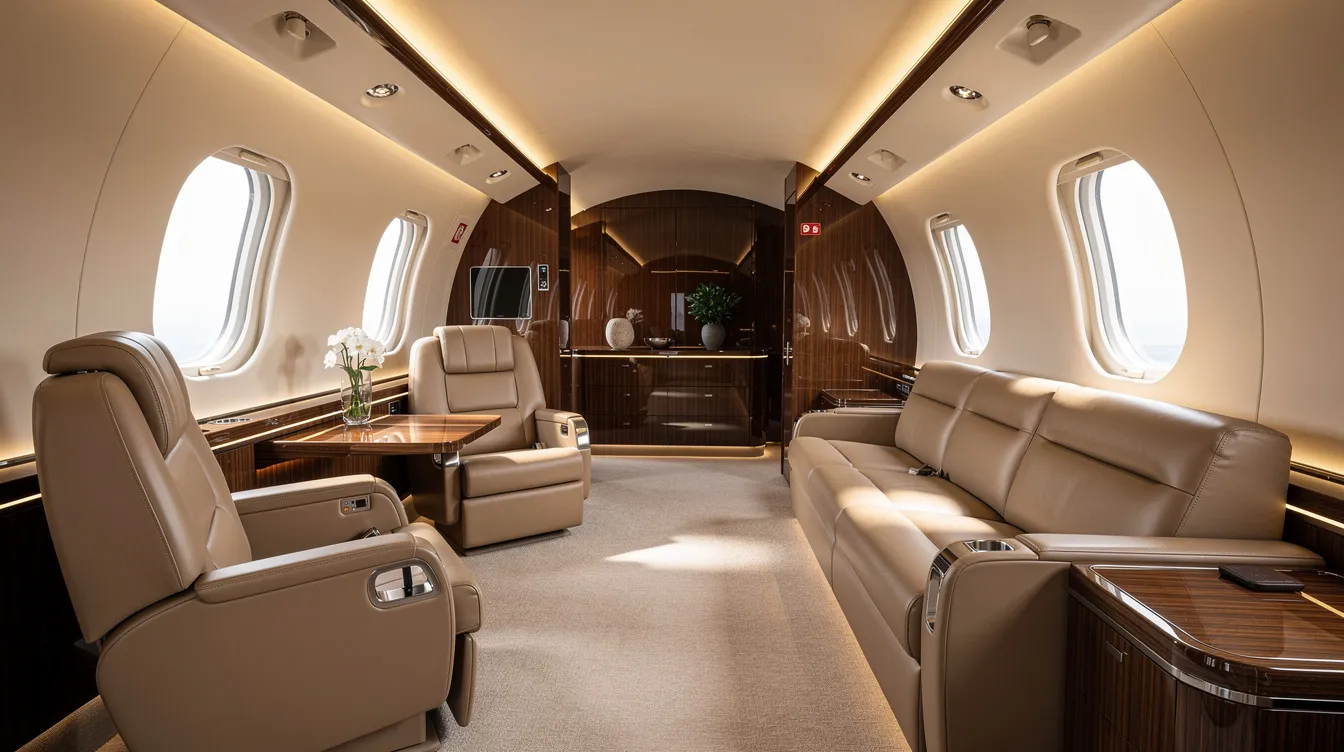
Private jet cabins, available through BlackJet's aircraft categories, operate on a different scale. Light jets provide cabin widths of 57 to 67 inches with club seats roughly 20 to 22 inches wide and no fixed rows. Midsize jets reach 70 to 82 inches of cabin width with seats that swivel, recline deeply, and sometimes convert into beds. Large-cabin jets offer 84 to 98+ inches of cabin width with multiple seating zones: club seats, sofas, and conference tables, reflecting the range of private jet types available for different travelers. The entire cabin is your personal space; the widest part of a large-cabin jet provides more room than most people have in their home office.
How to Check Seat Width and Pitch Before You Book
Knowing exact seat size matters most for taller or broader travelers and for anyone facing a flight over three hours. Here is where to find the data before you book:
Where to Find Seat Size Data
Airline websites: American Airlines and others publish seat maps with width and pitch by aircraft type.
Independent tools like SeatGuru, ExpertFlyer, or ComfortableFlights list airplane seat dimensions by flight number.
Travel forums with photos and reviews reveal real-world spacing, including window seat curvature and rear-cabin tapering.
Tips for Selecting Comfortable Seats
To select more comfortable seats, prioritize exit row or bulkhead seats for added legroom, but check whether armrests are fixed or under-seat storage is missing. Avoid seats near the rear where the fuselage narrows. If you routinely struggle with standard airplane seat width, consider premium economy, an extra-legroom row, or shifting key trips to private aviation via a Jet Card. To budget effectively, compare options using a guide to overall Jet Card cost and pricing structures.
Seat Width, Health, and Productivity on Long Flights
Seat size is more than a comfort concern.
Health Impacts of Narrow Seats
Sitting squeezed into 16 to 17 inches of width for 8 to 10 hours restricts circulation, limits the ability to change positions, and contributes to stiffness and fatigue. Medical guidance links prolonged constrained seating with higher discomfort and elevated risk factors for deep-vein thrombosis.
Even an extra inch or two of width makes it easier to shift posture and avoid constant shoulder contact with neighbors. On overnight flights, wider seats and more recline directly improve sleep quality.
Productivity Considerations
Greater pitch allows a more natural laptop posture, which matters for anyone who needs to work during a flight.
Consider a business executive flying from New York to London on a large-cabin private jet through a 25-hour BlackJet Jet Card. That traveler sleeps flat on a full-width divan, arrives at the airport terminal rested, and walks into morning meetings without the stiffness that follows 7 hours in a 17-inch economy seat. Travelers weighing this option can review a complete guide to 25-hour Jet Card features and costs to understand how such programs are structured. Private jets also allow walking around at will (when permitted by the flight attendant or crew), using larger lavatories, and working at real tables in seating positions similar to high-end car seats or office chairs. The distance between "flight time" and "productive time" shrinks to zero.
Why Seat Width Feels Different: Car Seats, Airplane Seats, and Cabin Layout
Numbers alone do not capture how spacious a seat feels. An 18-inch airplane seat with a stranger's shoulders pressed against yours on both sides feels tighter than a 19-inch car seat where you have the view, the door, and open air on one side.
Layout Factors Affecting Comfort
Layout factors compound this. A 3-3 layout on single-aisle planes like the 737 or A320 differs from a 2-4-2 or 3-3-3 arrangement on wide-bodies. Boeing 747 and Airbus A380 typically have 3+4+3 seating in economy, which means middle-section passengers sit between two armrests with no access to a window or aisle wall. Curving fuselage walls reduce head and shoulder space at the window seat. Extra-wide or fixed tray table armrests further reduce usable width.
Private Jet Cabin Advantages
Private jet cabins, particularly on midsize and large jets, eliminate the boxed-in feeling by placing individual armchairs around the cabin, similar to a living room. That open layout is a base-level feature of the BlackJet experience, not an upgrade.
How Jet Cards and Private Aviation Change the Seat Size Conversation
Instead of optimizing around narrow commercial airplane seats, a Jet Card redefines the subject entirely. You choose your aircraft by mission, not by seat map.
Jet Card Membership Benefits
A BlackJet Jet Card provides prepaid blocks of flight time; a 25-hour or 50-hour membership secures guaranteed access to multiple aircraft categories with transparent hourly rates. Readers interested in larger-cabin options can explore the BlackJet 25+ Hour Jet Card for mid, super-mid, and large jets. Members select from light, midsize, super-midsize, and large cabin types based on party size and trip profile. Travelers can match these categories with a guide to private jet sizes and cabin types. Each category offers more personal space than any commercial cabin, and comparing providers such as Flexjet’s Jet Card pricing and options can help benchmark value across the market.
Safety, Sustainability, and Technology
Three pillars support this model:
Safety: BlackJet applies industry-recognized third-party safety audits and proprietary operator vetting, ensuring that spacious cabins meet rigorous certification standards. The FAA and equivalent authorities still regulate seat installation and emergency access on private aircraft.
Sustainability: BlackJet offsets emissions to deliver carbon-neutral flights, so extra comfort and space are compatible with responsible travel; even travelers exploring the most affordable private jet options and entry-level aircraft can align comfort with sustainability.
Technology: 24/7 digital booking tools and real-time support let members compare cabin layouts and view seating arrangements before confirming, so there is no guesswork about seat width or legroom.
For travelers who find seat width and seat pitch a constant concern on airlines like American Airlines, Southwest, or low-cost carriers, shifting key routes to a Jet Card model can permanently remove those constraints, especially when structured as a 100-hour Jet Card with clearly defined costs and benefits.
FAQs About Airplane Seat Width, Seat Pitch, and Private Jet Comfort
Here are answers to the questions people ask most about airplane seat dimensions.
What is the average economy seat width and pitch?
Across major airlines, average economy seat width is about 17 to 18.25 inches, and average pitch is 30 to 32 inches.
How is airplane seat width measured?
It is measured as the distance between the inner edges of the armrests. Armrest thickness and design can alter the usable space by up to an inch.
Is there a standard size for airplane seats?
No. Each airline and aircraft type sets its own dimensions. Regulatory authorities have not enforced a minimum seat width in most jurisdictions.
Which airlines are known for wider economy seats?
JetBlue, Japan Airlines, and Singapore Airlines offer some of the widest economy seats on certain widebody configurations. Configurations can change with fleet updates, so check before boarding.
How does premium economy compare to business class in seat size?
Premium economy adds a small bump in width (18 to 21 inches) and pitch (37 to 42 inches). Business class typically offers fully flat beds with 20 to 24+ inches of width and 75 to 80 inches of bed length, plus privacy features and direct aisle access.
How much wider are seats on private jets?
Individual seats are typically 20 to 24+ inches wide with no shoulder contact from strangers and no fixed rows. The entire cabin acts as your personal space; a large-cabin jet can offer over 98 inches of total cabin width.
How can I avoid worrying about seat width altogether?
Frequent travelers who have loved the idea of consistent, spacious travel can explore BlackJet's Jet Card programs for guaranteed access to private cabins where seat dimensions are a given, not a lottery, and can review a complete guide to Jet Card pricing, costs, and benefits to align comfort with budget.
Next Steps: Choosing the Right Seat, or the Right Aircraft
Understanding seat width, seat pitch, and overall seat size helps you learn where to spend your money and when to change the kind of aircraft you fly. For commercial flyers, the steps are concrete: check the aircraft type and seat map before you book, prioritize flights and airlines with known wider seats, and consider premium economy on longer flights where that extra width matters. Sometimes a minor fare increase yields a big jump in comfort, but some travelers instead choose to buy an individual seat on a private jet when they need more space on specific routes.
For high-frequency or high-value travelers, the math shifts. Evaluate your annual flight hours and routes. Determine whether recurring premium economy or business class upgrades could be more efficiently replaced with a Jet Card that covers multiple trips at a predictable cost, perhaps via a 50-hour Jet Card program with transparent pricing. BlackJet's premium private Jet Card membership options convert seat width anxiety into assured comfort and productivity, flight after flight.
Discover how BlackJet can reshape your travel. Carbon-neutral, safety-certified private flights where seat dimensions are no longer a constraint, but a given. Explore BlackJet's Jet Card programs and experience what it means to fly on your terms.


 Sign up with google
 Sign up with Apple