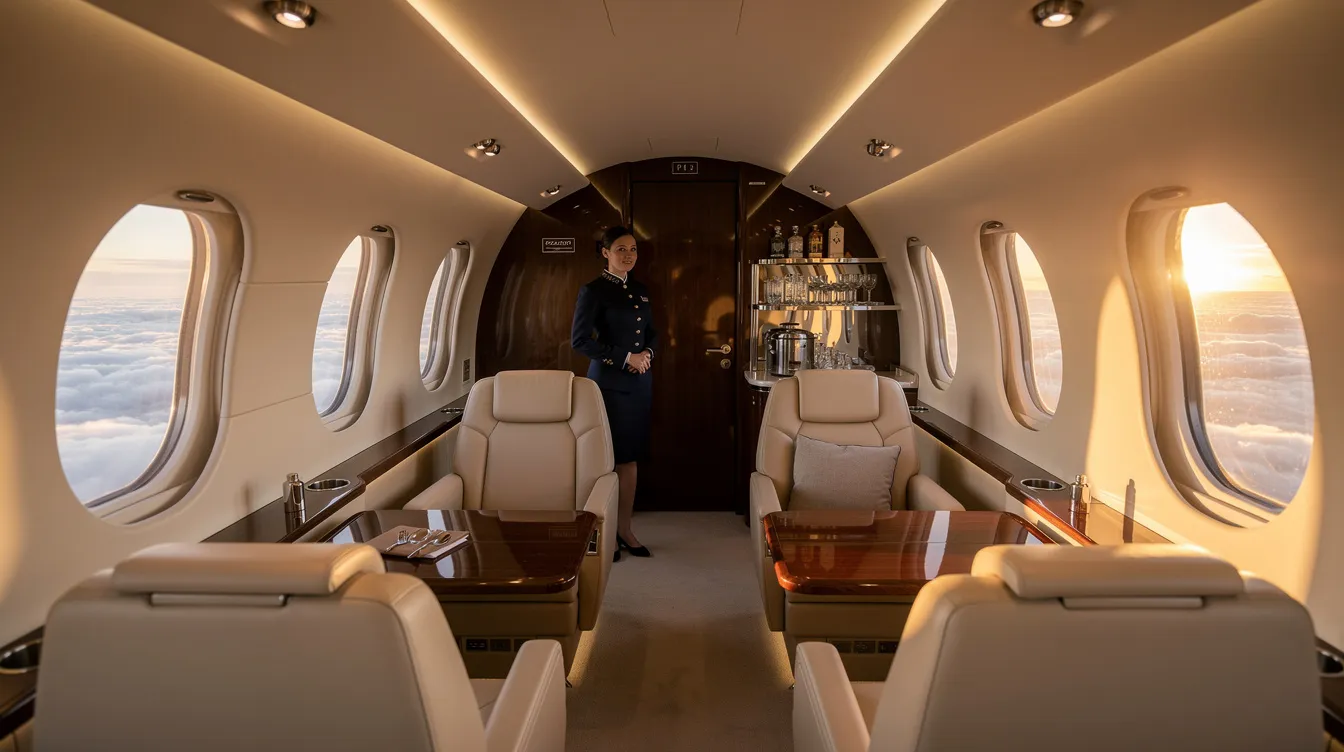
For organizations moving at speed—corporate teams, sports franchises, production crews, and high-net-worth families—travel isn’t just about getting from point A to B. It’s about control, timing, and cohesion. Coordinating 30 individuals across commercial schedules introduces friction, delays, and risk.
A 30-passenger aircraft removes that complexity entirely. One aircraft. One departure. One seamless experience.
Compared to commercial first class or splitting across multiple private jets, a single 30-seat charter often delivers 40–60% better per-person economics, while preserving schedule integrity and operational control. For decision-makers, that’s not a luxury—it’s leverage.
Overview of 30-Passenger Aircraft and Market Use Cases
The 30-passenger segment sits in a unique space within private aviation. It bridges the gap between traditional private jets and commercial airline service, offering:
Group cohesion, combined with private aviation flexibility, allows large groups to stay together during travel, streamlining logistics and reducing overall travel time.
Cabin comfort approaching business-class standards for every passenger
Efficient economics across mid-range and long-haul routes
Enhanced privacy that allows confidential discussions during flight without concerns of eavesdropping
These aircraft are commonly used for:
Corporate shuttles between major business hubs and corporate events
Professional sports team travel, accommodating players and coaching staff
Film and production crew transport
Entertainment crews and high-end group leisure or event travel
Large family gatherings requiring coordinated travel, such as destination weddings and reunions
Instead of managing fragmented itineraries, operators gain full control over departure timing, routing, and onboard experience.
Why Choose a 30-Passenger Plane
Unified Travel, No Fragmentation
Flying 30 people commercially often means splitting into multiple flights, risking delays, missed connections, and inconsistent arrival times. A single aircraft eliminates those risks entirely, enabling synchronized arrival and streamlined logistics.
Stronger Per-Person Economics
Chartering multiple light or midsize jets quickly escalates costs. A 30-passenger aircraft consolidates those expenses, often reducing per-person cost by up to 60% compared to smaller aircraft combinations. Although higher per-seat costs result from fixed costs spread over fewer passengers, the overall savings and convenience are compelling. For a detailed look at how charter pricing is structured across different missions and aircraft types, see our guide to understanding private jet charter pricing. Chartering a 30-seat aircraft typically costs between $5,000 and $8,000 per hour, with some prices reaching $8,000 to $15,000 per flight hour depending on aircraft type, route, and additional services.
Access to Smaller Airports and Direct Routing
30-passenger private jets have high short-field capability, allowing access to smaller, regional, or niche airports that commercial flights cannot serve. This significantly reduces ground transportation time compared to flights routed through major hubs, providing time savings and convenience. Direct routing capabilities enable flights closer to final destinations, saving additional travel time on the ground.
Consistent Service and Experience
From catering to cabin layout, a single aircraft provides a controlled, uniform experience—something commercial travel cannot replicate. Enhanced in-flight amenities such as entertainment systems, comfortable seating, and power outlets improve the overall passenger experience.
Aircraft Types for 30 Passengers
Regional Jets: The Market Standard
Regional jets dominate this segment, offering the optimal balance. For readers comparing 30-seat solutions with smaller or larger options, our overview of private jet types for every traveler explains how these aircraft fit within the broader cabin-size landscape.
Cabin space suitable for 30 passengers, typically with 1–2 or 2–2 seating configurations that eliminate middle seats for improved comfort
Efficient operating costs with high-efficiency engines designed for shorter routes
Range suitable for domestic, transcontinental, and some international flights, often operating at service ceilings over 41,000 feet and cruise speeds of 450–530 knots (830–980 km/h)
Pressurized cabins ensure passenger comfort at high altitudes (usually between 25,000 and 32,000 feet)
Common models include:
Embraer ERJ-135: Popular for 30-passenger private jet charters, offering a range of approximately 3,250 nautical miles, a cruising speed of 518 mph, and a cabin height of about 6 feet, allowing most passengers to stand upright. Classified as a large jet in private aviation, this impacts operational costs and amenities.
Embraer ERJ-145: Flexible seating from 30 to 50 passengers, extended range up to 3,700 nautical miles, suitable for longer transcontinental routes. Also classified as a large jet.
Bombardier CRJ-200: Comparable performance and capacity, with a range of about 3,200 nautical miles.
Turboprops for Short Routes
Turboprops like the Embraer EMB 120 Brasilia—a twin-turboprop aircraft featuring a circular cross-section fuselage and T-tail—are efficient for short-haul missions under 500 nautical miles. Travelers evaluating whether a turboprop, light jet, or larger-cabin aircraft is the best fit for their mission can benefit from a broader primer on private jet sizes. Other common turboprops in this segment include the Saab 340 and Jetstream 41.
Strengths:
Lower fuel consumption
Capability to operate from smaller airports with short runways
Ideal for regional or island operations, including the ATR 42-600, the only regional aircraft currently in production within the 30-50 seat segment, known for its low cost per trip and service to remote communities.
Limitations:
Why Light Jets Don’t Work
Light jets typically seat 6–10 passengers and lack the cabin capacity, baggage space, and operational range required for 30 passengers.
Large Jets: Possible but Inefficient
Large jets can carry 30+ passengers but often require costly reconfiguration, have higher operating costs, and face more restrictive airport and runway requirements.
Cabin Layouts and Passenger Comfort
30-passenger aircraft generally use 1–2 or 2–2 seating configurations, eliminating middle seats to improve passenger comfort. However, passengers may experience limited legroom and a somewhat cramped cabin compared to larger aircraft.
Baggage capacity is limited; often, passengers must gate-check luggage due to storage constraints. Onboard amenities typically include onboard galleys, multiple lavatories, and connectivity options such as Wi-Fi and power outlets. For decision-makers prioritizing safety alongside comfort, it’s useful to understand how private jet safety standards and risks compare with commercial aviation.
Charter Flight Planning
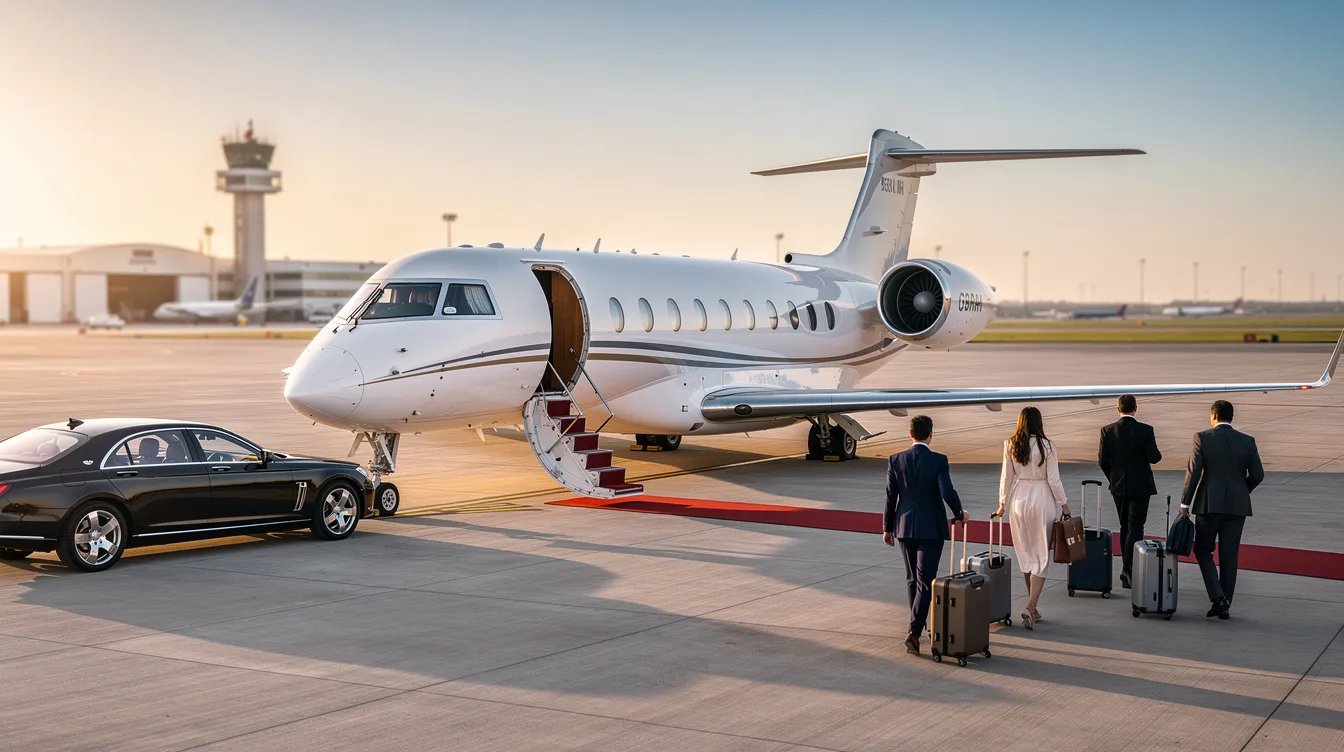
Planning a 30-passenger charter involves strategic considerations: many of which intersect with the broader factors that drive how much it costs to rent a private jet, from aircraft category to route structure and service level.
Aircraft availability is limited due to the specialized nature of these aircraft, making booking 60–90 days in advance essential for securing preferred dates and better pricing.
Flight routes, especially international ones, require complex coordination for permits, documentation, customs, and ground transportation. International operations often involve intricate permit requirements and customs procedures, necessitating careful collaboration with charter operators and destination authorities.
Catering must be coordinated in advance to accommodate dietary restrictions and meal timing for 30 passengers.
Efficient management of ground transportation logistics is essential for large groups to maintain cohesion; without proper coordination on the ground, the benefits of traveling together by air can be diminished.
Costs and scheduling can be influenced by positioning flights and crew availability; last-minute reservations often incur higher fees. Positioning fees are charged when the aircraft must be relocated from its base to the departure airport, typically at the full hourly flight rate.
Cost Breakdown and Additional Fees
Hourly charter rates for 30-passenger private jets typically range from $5,000 to $8,000 per hour, though prices can reach between $8,000 and $15,000 depending on aircraft type, route, and services. These ranges align with broader analyses comparing whether chartering a private jet is worth it versus flying commercially for different trip profiles and group sizes, including strategies to fly private more affordably, such as empty-leg and shared-charter options.
Additional fees include:
Fuel surcharges ($600 to $900+ per hour)
Crew overnight and per diem fees ($200–$400 per crew member per night), particularly relevant for multi-day trips
Landing and handling fees (varying by airport and aircraft size)
Positioning fees when aircraft must reposition from their home base
Despite these expenses, chartering a 30-seat aircraft often leads to substantial per-passenger cost savings compared to booking multiple smaller jets. When compared to commercial first-class tickets for 30 passengers on popular routes—which can easily total $40,000–$60,000 or more—private jet charters offer enhanced scheduling flexibility, greater privacy, and direct access to smaller airports closer to your final destination.
Use Cases for 30-Passenger Aircraft
Large corporations use 30-passenger aircraft for executive transportation to board meetings, retreats, and client events. Smaller groups with similar needs may opt to buy a seat on a private jet via shared or semi-private services instead of chartering an entire 30-passenger aircraft, especially once they understand charter flights and how they work.
Professional and collegiate sports teams rely on these aircraft to transport players, coaching staff, and equipment, with coordinated scheduling.
Film productions, concert tours, and television crews charter 30-passenger planes to move cast, crew, and essential gear efficiently, while smaller groups may instead buy individual seats on private jets via shared or semi-private services. Organizations with recurring production schedules sometimes look beyond ad hoc charters to structured solutions such as leasing a private jet or broader jet card membership pricing when utilization is high enough.
Affluent families planning destination weddings, milestone celebrations, or reunions find these aircraft perfect for keeping extended groups together throughout their journey.
The scheduling flexibility of private aircraft enables departure times that optimize productivity and minimize overnight stays, while direct routing capabilities allow access to smaller airports closer to final destinations.
Technology and Innovation
Modern 30-passenger aircraft frequently feature advanced avionics systems such as the Garmin G3000, enhancing safety and operational efficiency while complementing the robust private-jet safety standards and oversight that govern the industry.
These planes enable increased flight frequency on low-demand routes, improving regional connectivity.
Older passenger models are often converted into freighters, extending their operational life in cargo transport roles.
Environmental Considerations
Many operators invest in sustainable aviation fuels and carbon offset programs, aligning with Federal Aviation Administration regulations that promote quieter, more fuel-efficient engines and reduced emissions; these considerations often sit alongside broader private jet leasing strategies, unlimited private jet membership models, and cost structures when designing long-term aviation solutions.
Key Takeaways
Regional jets remain the most practical and popular solution for 30-passenger travel, offering a balance of range, comfort, and cost efficiency.
Turboprops serve well for short routes but lack the range and refinement for premium long-haul travel.
Booking well in advance is crucial for availability and cost savings.
A 30-passenger charter simplifies logistics, reduces coordination risks, and often improves per-person economics compared to alternatives.
With the right aircraft and operator, 30-passenger private jet travel delivers privacy, flexibility, and a superior travel experience for large groups.
Discover Seamless Group Travel with BlackJet
For organizations and individuals who value time, control, and precision, chartering a 30-passenger aircraft isn’t just efficient—it’s transformative.
BlackJet elevates this experience further through carbon-neutral flights, rigorous safety standards, and seamless access to the right aircraft for every mission, including structured solutions like the BlackJet 25+ Hour Jet Card for frequent travelers who may also compare it with the best jet cards for frequent flyers.
Discover how BlackJet can reshape your group travel.
Conclusion: Elevate Your Travel Experience with BlackJet
Choosing a 30-passenger plane for your group travel needs offers unmatched advantages in privacy, flexibility, and cost efficiency. Whether for corporate events, sports teams, entertainment crews, or large family gatherings, this category of aircraft streamlines logistics and enhances the overall passenger experience.
BlackJet stands out as a premier charter operator, providing an all-inclusive experience tailored to your specific route and group size, which is especially valuable once you understand how jet card pricing is structured. With a modern fleet, commitment to safety, and sustainable practices like carbon-neutral flights, BlackJet ensures your journey is not only comfortable and efficient but also responsible.
Visit BlackJet’s premium private jet card and charter programs to explore aircraft options, learn about their seamless booking process, and discover how they can help you unlock the full potential of private jet travel for your next trip; frequent travelers may also want to compare 100 hour jet card costs in detail, evaluate 50 hour jet card pricing and value, review Flexjet jet card cost and options, and understand NetJets jet card cost structures to benchmark programs across the market.


 Sign up with google
 Sign up with Apple