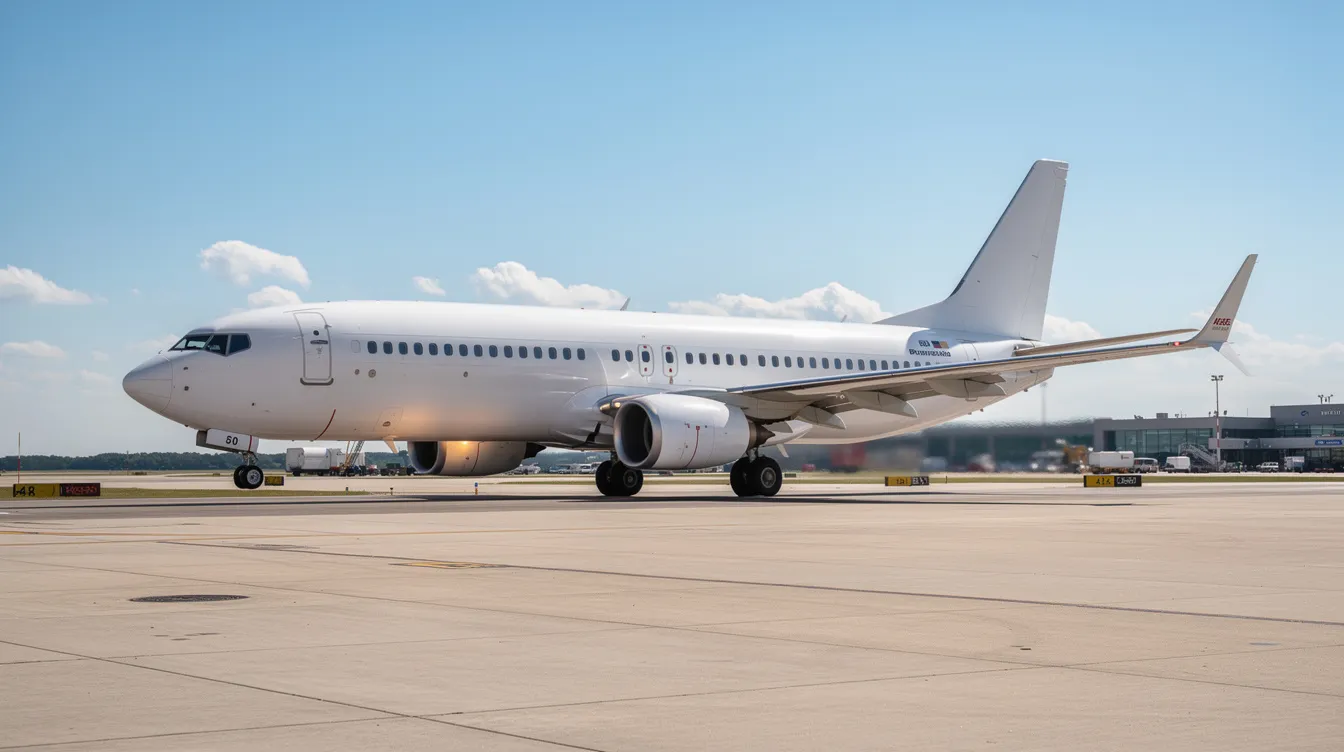
The Boeing 737-800 remains one of the most actively traded narrowbody aircraft on the secondary market. Here is what buyers, lessors, and private aviation clients need to know in 2026.
Executive Overview: 737-800 For Sale In 2026
The market for pre-owned Boeing 737-800 aircraft is active as major carriers update their fleets with 737 MAX and A320neo deliveries. Nearly 5,000 Boeing 737-800 units were delivered worldwide before Boeing ended production of the NG line, making it one of the most widely operated airframes in commercial aviation history. Every unit listed as a 737- 800 for sale today sits on the secondary market; there is no way to buy one new.
Used Boeing 737-800s typically sell for $15 million to $30 million in standard airline configuration. BBJ-based VIP conversions and freighter models can reach $35 million to $50 million or more. BlackJet does not act as a reseller of airliners but offers clients access to comparable cabin capacity through charter and Jet Card programs.
This article covers:
A 2026 market snapshot: where aircraft are listed, which build years are available, and how transactions happen.
Pricing tiers broken down by age, configuration, and maintenance status.
Technical specs and variant comparisons for the Boeing 737- 800 versus newer models.
Private conversion and VIP use cases, plus the real costs involved.
How BlackJet's access model compares to outright ownership for most private buyers.
Understanding The Boeing 737-800: Role, Specs & Variants
The Boeing 737-800 entered service in 1998 as part of Boeing's Next Generation family, developed to fill a short- to medium-haul gap in airline fleets worldwide. It became the best-selling variant of the 737 line, and thousands remain in daily operation across every continent.
Key specifications for the model:
Passenger capacity: The aircraft can accommodate 162 to 189 passengers depending on configuration. A typical two-class layout seats about 160; high-density single-class layouts push to 189. High-density cabin configurations are more appealing to low-cost carriers, making those airframes more desirable among budget operators on the secondary market.
Range and speed: The Boeing 737-800 has a maximum range of 5,765 km (roughly 5,700 to 6,300 km depending on load and auxiliary tanks). Cruise speed is 852 km/h, or about Mach 0.785.
Weight and fuel: Maximum takeoff weight is 79,016 kg. Maximum fuel capacity is 26,035 liters.
Engines and systems: It is powered by two CFM56-7B turbofan engines. The aircraft features a Honeywell 131-9B APU, glass cockpit avionics, TCAS II, and weather radar. Many airframes have been retrofitted with ADS-B Out.
Variants: Buyers encounter three primary configurations: standard passenger 737-800, Boeing Business Jet (BBJ2) builds with long-range tanks and luxury cabins, and 737-800BCF freighter conversions optimized for cargo.
Compared to the newer 737 MAX 8 or Airbus A320neo, the 737-800 burns roughly 10-20% more fuel per seat. But its acquisition cost on the secondary market is a fraction of what a used MAX commands, making the total cost of ownership attractive for operators with capital constraints and established parts supply chains.
Market Snapshot: 737-800 Jets For Sale In 2026
Thousands of 737-800 airframes remain in service worldwide. Approximately 1,250 Boeing 737 aircraft are in the air at any given time across all variants. Major airlines selectively release 737-800s as they receive new MAX deliveries, feeding a steady supply into the secondary market.
The public market for Boeing 737-800s is relatively thin with few listings available on open platforms. Commercial airliners are typically not sold through standard retail sites. A significant portion of 737-800 transactions occur off-market via aviation lessors and asset management firms based in Ireland, Singapore, and the UAE. Transactions for Boeing 737-800 commonly involve global aviation brokers and specialized remarketing agencies rather than direct buyer-seller negotiations.
What is available breaks into four categories:
In-service or on-lease units traded between lessors and airlines.
Off-lease aircraft in storage, often parked in desert facilities, with lower utilization remaining.
Freighter-converted 737-800BCF/SF models, carrying about 23 tonnes of payload over roughly 2,000 nautical miles.
Low-cycle airframes suitable for VIP or charter conversion.
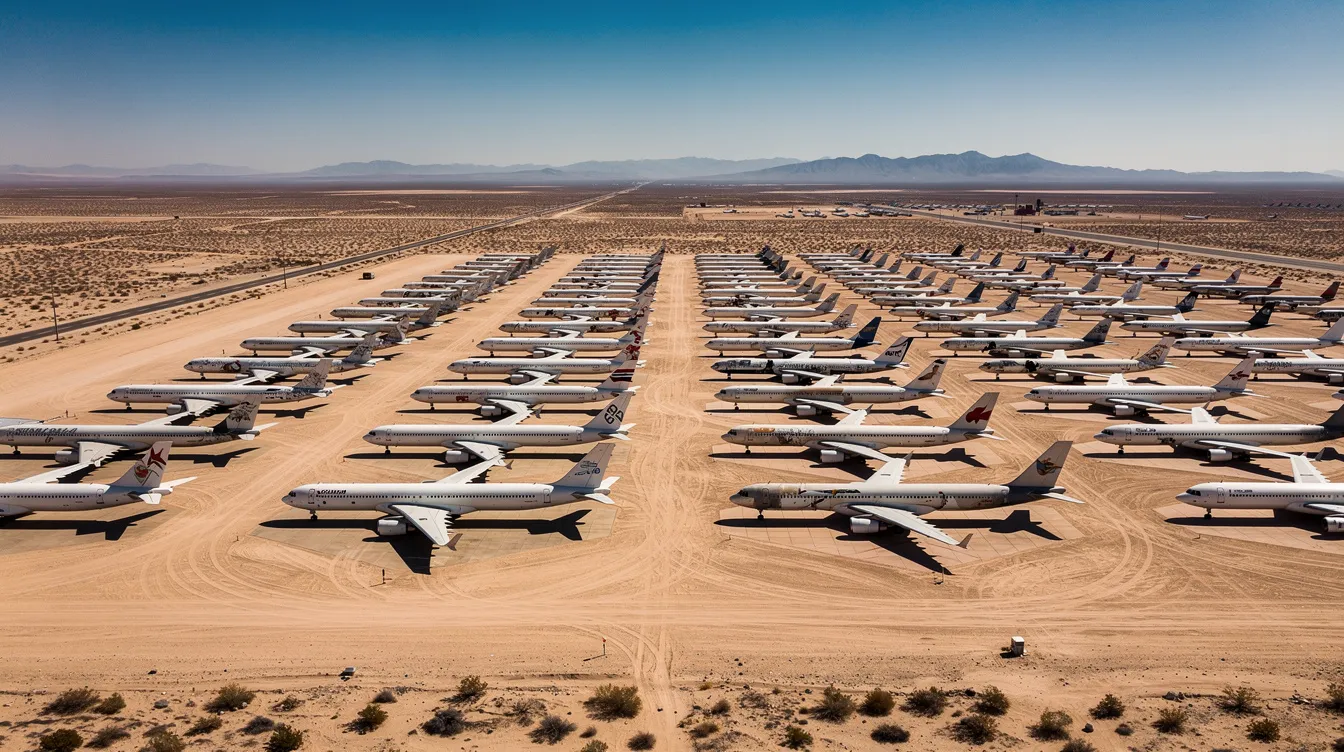
The build-year sweet spot for current listings falls between 2004 and 2017. A representative entry might look like this: a 2010 build with roughly 35,000 flight hours, dual-class cabin, based in the UAE, on the market around $20-22 million. If you search for photos of specific serial numbers, brokers will typically provide them under NDA.
How Much Does A Boeing 737-800 Cost In 2026?
Purchasing a Boeing 737-800 involves deep operational planning beyond just the acquisition, and it should be weighed against the broader private jet price list and access options. The upfront price is only the start; fuel burn, crew, insurance, hangar ground costs, and maintenance drive the long-term economics.
Price Tiers by Condition
Current pricing tiers for used 737-800 aircraft in 2026:
Condition | Approx. Age | Price Range (USD) |
|---|
Older, high-cycle passenger | 20+ years | $12-18 million |
Mid-life, well-maintained | 10-15 years | $18-30 million |
Premium BBJ / low-cycle / freighter | Varies | $35-50 million+ |
For context, baseline list prices for new Boeing 737-800s were around $96 million to $106 million. The last published figure was approximately $106.1 million before production ended. Real transaction prices between Boeing and airlines were lower, but the gap between the new list price and current used value illustrates the depreciation curve.
Factors Affecting Value
Key factors that impact the Boeing 737-800's market value include:
Aircraft age: While age is a consideration, maintenance status is often more important than calendar age for valuation purposes.
Maintenance status: Heavy maintenance checks (C-checks, D-checks, engine shop visits) that are recently completed can raise the asking price.
Upcoming overhauls: Airframes approaching a major overhaul window with engines not yet overhauled will trade at a discount.
Maintenance records: Quality of maintenance records is crucial during the purchasing process. Buyers should expect to review logbooks, AD compliance, and structural repair history before making a purchase.
Ownership vs. Charter Comparison
By comparison, a used 737 MAX 8 commands roughly $40-70 million but returns better fuel efficiency per seat-mile. For a regional carrier that needs to find capacity fast, a 2012 Boeing 737-800 in the low-20s offers a quicker entry point than waiting for MAX delivery slots. A private buyer seeking a VIP BBJ variant will pay more but gets a palatial interior over a proven airframe.
For most individuals and corporations, owning a 737-800 outright is rarely the most economical way to travel privately. Comparing that commitment with chartering a private jet highlights how the money saved by avoiding capital commitment, crew salaries, and regulatory overhead often makes structured access the better path.
From Airline Workhorse To Private Asset: Use Cases & Alternatives
When airlines retire a Boeing 737-800, the aircraft does not disappear. It finds new life in one of several roles: cargo conversion for e-commerce operators, corporate shuttle service between fixed hubs, government transport, or VIP charter, and in some cases as private jets for up to 50 passengers.
VIP and Private Conversions
Private VIP conversions strip out standard seats and install suites, conference rooms, and lounge areas, approaching the capabilities of long-range private jets for sale in terms of in-flight experience. These projects can cost tens of millions on top of the airframe price, depending on the level of finish. Boeing 737-800 aircraft require regulatory compliance and specialized flight crews for operation; all aircraft operations require appropriate approvals, maintenance arrangements, and certified pilots before a single flight departs.
Corporate Shuttle Use
Corporate shuttles, by contrast, keep 80-120 premium seats and run fixed routes (US to Mexico, intra-Europe), competing with the mission profile of many 12-seater private jet options on a larger scale.
Cargo Conversion
Cargo conversions feed the demand for express freight, with conversion costs running $4.0-6.0 million per unit.
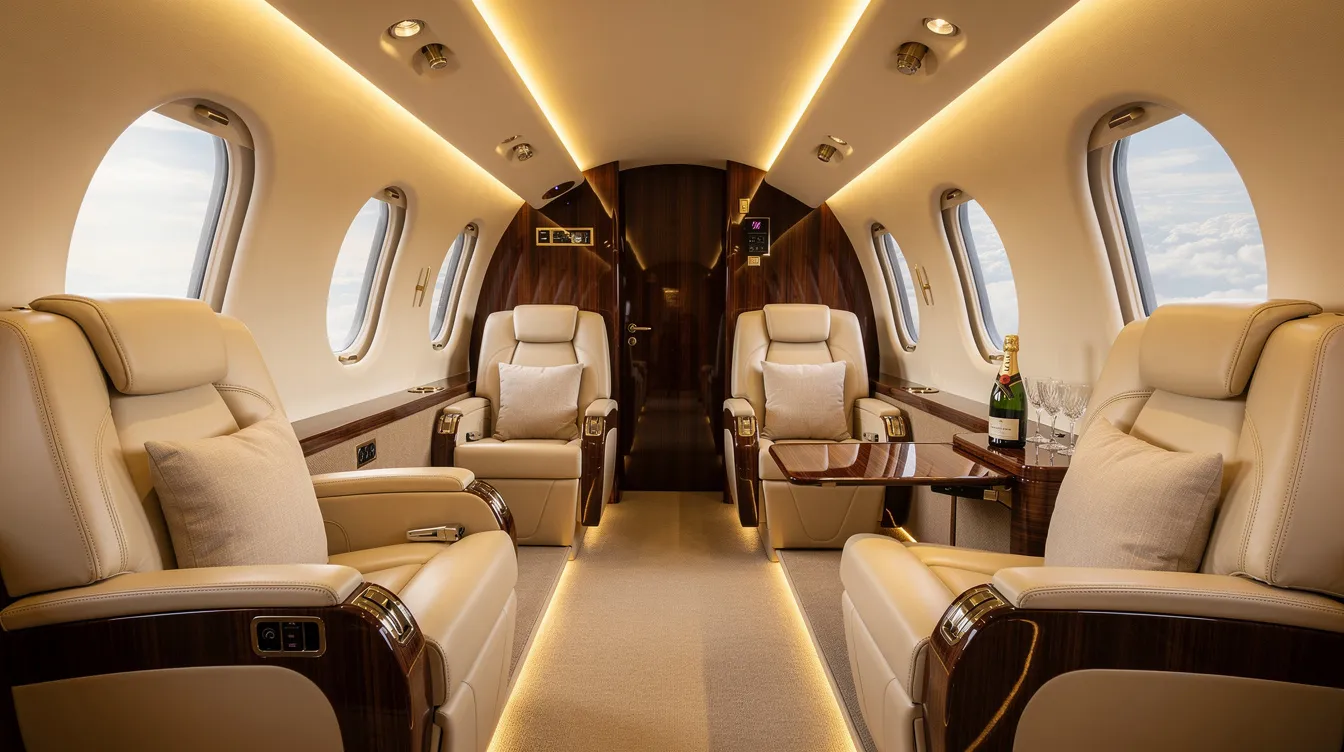
Consider this scenario: a Europe-based family weighs buying a 737-800 for seasonal travel between London, Nice, and Dubai, roughly ten round trips per year. Total annual ownership cost (depreciation, crew, parking, MRO, insurance) runs well into the millions. A 50-hour BlackJet Jet Card giving access to large-cabin jets covers the same missions at a fraction of the fixed cost, with no hangar lease, no maintenance staff, and no depreciation risk.
Safety, Sustainability & Access: How BlackJet Fits Into The 737-800 Conversation
BlackJet offers the control, privacy, and schedule freedom that making a large aircraft purchase promises, without the capital burden, through its premium private jet cards and programs. For clients who started their search looking at a Boeing 737 for sale, the comparison is worth examining.
Safety: BlackJet works only with operators holding third-party safety certifications (ARGUS, Wyvern, IS-BAH) and audited maintenance programs that meet or exceed commercial airline benchmarks.
Sustainability: Older 737-800s burn more fuel per hour than current-generation jets. BlackJet ensures every client flight is carbon-neutral through verified offset programs, at no extra cost to the traveler.
Technology: A 24/7 digital booking platform lets clients select the right aircraft category (midsize, super-midsize, large-cabin) trip by trip, rather than being locked into a single airframe, and even reserve individual seats on semi-private jets when appropriate.
Jet Card economics: Predictable hourly rates, zero depreciation exposure, no crew or parts liability, supported by a clear understanding of jet card membership pricing. The offer is access, not ownership.
Frequently Asked Questions About Boeing 737-800 For Sale
Q1: Where can I find Boeing 737-800 aircraft listings?
Most Boeing 737-800 aircraft for sale are listed through specialized aviation brokers, lessors, and remarketing agencies rather than public retail platforms. Many transactions occur off-market, especially through firms based in Ireland, Singapore, and the UAE.
Q2: What factors influence the price of a used Boeing 737-800?
Key factors include aircraft age, maintenance status, upcoming heavy checks, engine condition, cabin configuration, and lease status. Well-maintained, mid-life aircraft with high-density layouts tend to command higher prices.
Q3: How does owning a Boeing 737-800 compare to chartering through BlackJet?
Owning involves significant upfront capital, ongoing maintenance, crew salaries, and regulatory compliance costs. BlackJet’s Jet Card programs offer flexible, prepaid access to large-cabin jets without ownership burdens, providing safety-certified, carbon-neutral flights on demand.
Q4: Can Boeing 737-800 aircraft be converted for private or VIP use?
Yes. Many are converted into VIP configurations with luxury interiors or freighter variants. These conversions require regulatory approvals and specialized flight crews, with conversion costs adding substantially to the purchase price.
Q5: What is the typical range and passenger capacity of a Boeing 737-800?
The aircraft typically seats 162 to 189 passengers depending on configuration, with a maximum range of approximately 5,765 km. This makes it suitable for short- to medium-haul routes.
Q6: Are Boeing 737-800 aircraft still a sustainable choice?
While older 737-800s consume more fuel than newer models, operators can mitigate environmental impact through carbon offset programs. BlackJet ensures all client flights are carbon-neutral at no extra cost, enhancing sustainability in private aviation.
Conclusion: Navigating the Boeing 737-800 Market with Confidence
The Boeing 737-800 remains a cornerstone of commercial aviation with a robust secondary market fueled by fleet renewals and diverse operational roles. For prospective buyers and private clients considering a 737-800 for sale, understanding the nuanced balance between acquisition cost, maintenance status, and operational requirements is crucial. While outright ownership demands significant capital and ongoing commitments, alternatives like BlackJet’s Jet Card programs provide exclusive access to comparable large-cabin aircraft without the complexities of ownership.
Safety, sustainability, and technology are pillars that shape the modern private aviation experience. BlackJet’s commitment to certified operators, carbon-neutral flights, and seamless digital booking ensures clients enjoy premier travel that aligns with contemporary expectations. Whether for corporate shuttle, VIP conversion, or cargo use, the Boeing 737-800’s versatility endures, but the smartest choice often lies in flexible, hassle-free access rather than asset acquisition.
Explore how BlackJet can elevate your travel through strategic jet access, blending the legacy of the 737-800 with the future of private aviation.


 Sign up with google
 Sign up with Apple