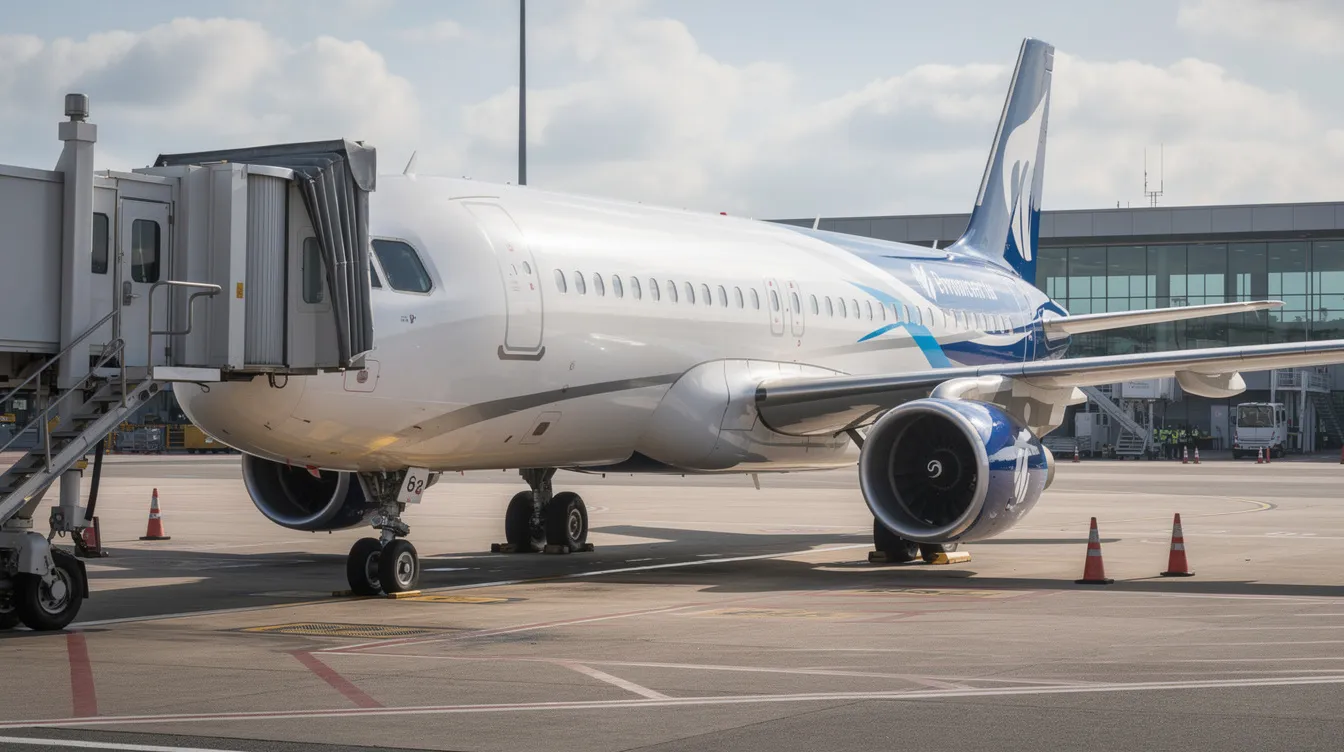
The Boeing 737 MAX 9 is one of the most widely deployed narrowbody aircraft in commercial aviation today, serving as a workhorse for major carriers across North America and beyond. But how many passengers does it actually carry, what shapes that number, and when does stepping off the commercial seat map entirely become the smarter move? This guide breaks down every dimension of 737 MAX 9 capacity - from certified maximums and airline-specific layouts to safety history and how private jet travel offers a fundamentally different equation.
Quick Answer: How Many Seats Are On The Boeing 737 MAX 9?
The Boeing 737 MAX 9 seats between 178 and 220 passengers depending on configuration. In a typical two-class configuration, airlines install approximately 178 to 193 seats, dividing cabin space between a premium cabin and standard economy. In a maximum single-class layout - the kind favored by ultra-low-cost operators - that number climbs to 220 seats, which represents the aircraft's certified ceiling. Boeing states that the MAX 9 offers a two-class seating capacity well suited to high-demand domestic and medium-haul routes.
In practice, the seat counts passengers actually encounter tend to cluster around the lower end. United Airlines configures its 737 MAX 9 fleet with 179 seats, while Alaska Airlines uses a layout of roughly 178 seats. Both airlines allocate meaningful cabin space to premium and extra-legroom sections rather than maximizing density.
For context, the 737 MAX 9 sits between the MAX 8 (typically 162–210 seats) and the Airbus A321neo (roughly 180–220 in two-class layouts), making it a mid-to-high capacity option in the single-aisle segment.
For business travelers and high-net-worth individuals who find even the best commercial cabin limiting, BlackJet's private jet programs offer a different kind of capacity - measured not in seat count, but in personal space, privacy, and control.
Where The 737 MAX 9 Fits In The Boeing 737 MAX Family
The Boeing 737 MAX family is Boeing Commercial Airplanes' current-generation single-aisle lineup, spanning four MAX variants - the MAX 7, MAX 8, MAX 9, and MAX 10. Each variant features a different fuselage length and corresponding passenger capacity, designed to serve different route demands and airline strategies. The Boeing 737 MAX 9 occupies the stretch position: longer than the MAX 8, shorter than the MAX 10, and aimed at carriers needing higher passenger capacity without moving to a widebody aircraft.
The Boeing 737 MAX family varies from 126 to 230 seats across different models, and the Boeing 737 MAX family can have varying cabin layouts, including economy and business arrangements. Approximate seating ranges by variant:
The 737 MAX 9 effectively replaced the older 737-900ER in Boeing's commercial lineup. It delivers similar or slightly higher capacity but with substantially lower fuel burn, thanks to new engines and aerodynamic improvements over the previous generation. The MAX 9 received FAA certification in February 2018, and the first delivery took place on March 21, 2018, to Lion Air - the launch customer for the type. Its maiden flight and first flight milestones had been reached earlier during Boeing's flight test program.
Boeing announced the MAX series features across the family as a unified platform: shared type ratings for pilots, common maintenance procedures, and fleet-wide parts interchangeability. This commonality makes fleet planning far simpler for airline customers considering multiple variants.
737 MAX 9 Dimensions, Exit Limits, And Maximum Certified Capacity
The fuselage length of the MAX 9 is 42.16 meters (138 feet 4 inches), giving it meaningful additional cabin length compared to the MAX 8. That extra space is what enables higher passenger capacity - but physical length alone does not determine how many seats can go inside. The aircraft has a maximum takeoff weight of 88,314 kg, a higher maximum takeoff weight than the MAX 8, and a maximum landing weight of approximately 74,500 kg. Its cargo capacity allows for approximately 10,000 kg of baggage and freight beneath the cabin floor, and the service ceiling is comparable to other members of the 737 family.
Maximum certified passenger capacity is determined by several factors, including airline configurations, but also by:
Emergency exit count and placement. The number and spacing of exits constrain how many passengers can be evacuated within regulatory time limits. Operators using the optional mid-cabin exit can seat more passengers; those using a sealed door plug accept a slightly different exit profile.
Cabin layout decisions. Galleys, lavatories, crew rest areas, overhead bins, and landing gear bulkheads all consume cabin floor space that cannot hold seats.
Low-cost carriers aiming for maximum revenue per flight tend to push toward the certified ceiling of 220 seats, compressing pitch and minimizing premium space. Full-service carriers typically stay in the 178–193 range, allocating room for domestic first class, extra-legroom economy, and more generous aisle widths. The result: two operators can fly the same plane and offer vastly different experiences.
Typical 737 MAX 9 Seating Layouts By Airline
Real-world 737 MAX 9 capacity is a reflection of each airline's business strategy - whether the carrier prioritizes premium revenue, per-seat economics, or a blend of both. Typical configurations for the MAX 9 range from 166 to 220 seats depending on the operator.
United Airlines flies one of the most well-known MAX 9 layouts, with 179 seats divided into approximately 20 United First (recliner-style domestic business seats), about 48 Economy Plus seats with extra legroom, and the remainder in standard economy. This balance reflects United's focus on premium cabin revenue and frequent-flyer loyalty on competitive transcontinental routes.
Alaska Airlines configures its Boeing 737 MAX 9 with about 178 seats, split between First Class, Premium Class, and Main Cabin economy. Alaska uses Recaro slim-line seats throughout and equips the cabin with the Boeing Sky Interior - a feature set that improves the visual feel of space even within a standard narrowbody fuselage.
Copa Airlines takes a different approach, using a two-class layout of just 166 seats on the MAX 9, reflecting its network focus on connecting Latin American markets where premium demand justifies a more spacious configuration on each seat map.
On the opposite end, Lion Air and Thai Lion Air - early MAX 9 operators - skew their layouts heavily toward high-density economy to maximize per-flight revenue across emerging markets. Their configurations push closer to 200 or more seats.
These examples illustrate the full spectrum, from 166 to 220 seats, all on the same aircraft type. The plane is the same; the experience is defined entirely by the operator's priorities.
Seat Pitch, Cabin Density, And Passenger Experience On The MAX 9
Capacity is not just about how many seats fit inside a fuselage. It is about what those seats feel like for three, four, or five flight hours. On the Boeing 737 MAX 9, three numbers define the passenger experience:
Standard economy: 30–31 inches of seat pitch, approximately 17–17.5 inches of width, in a 3-3 layout
Extra-legroom economy (e.g., Economy Plus): 34–36 inches of pitch
Domestic first or business class: 37–40 inches of pitch, wider seats of approximately 20–20.5 inches, often in a 2-2 layout
Higher-density MAX 9 layouts with 200 or more seats compress pitch toward 28–29 inches in economy, trading legroom for lower unit costs. This works commercially on short sectors, but on flights exceeding three hours, passenger satisfaction drops markedly.
Boeing's Sky Interior - standard on the MAX family - uses LED mood lighting, sculpted sidewalls, and larger overhead bins to create a perception of greater space. Combined with quieter cabin acoustics and improved air circulation, the interior upgrade is meaningful compared to older 737 NG variants. Power outlets are increasingly standard in premium rows and available throughout on many carriers.
By contrast, private jets in BlackJet's programs typically carry 4 to 16 passengers across a range of cabin categories, delivering far more floor area per person. The difference is not incremental - it is architectural.
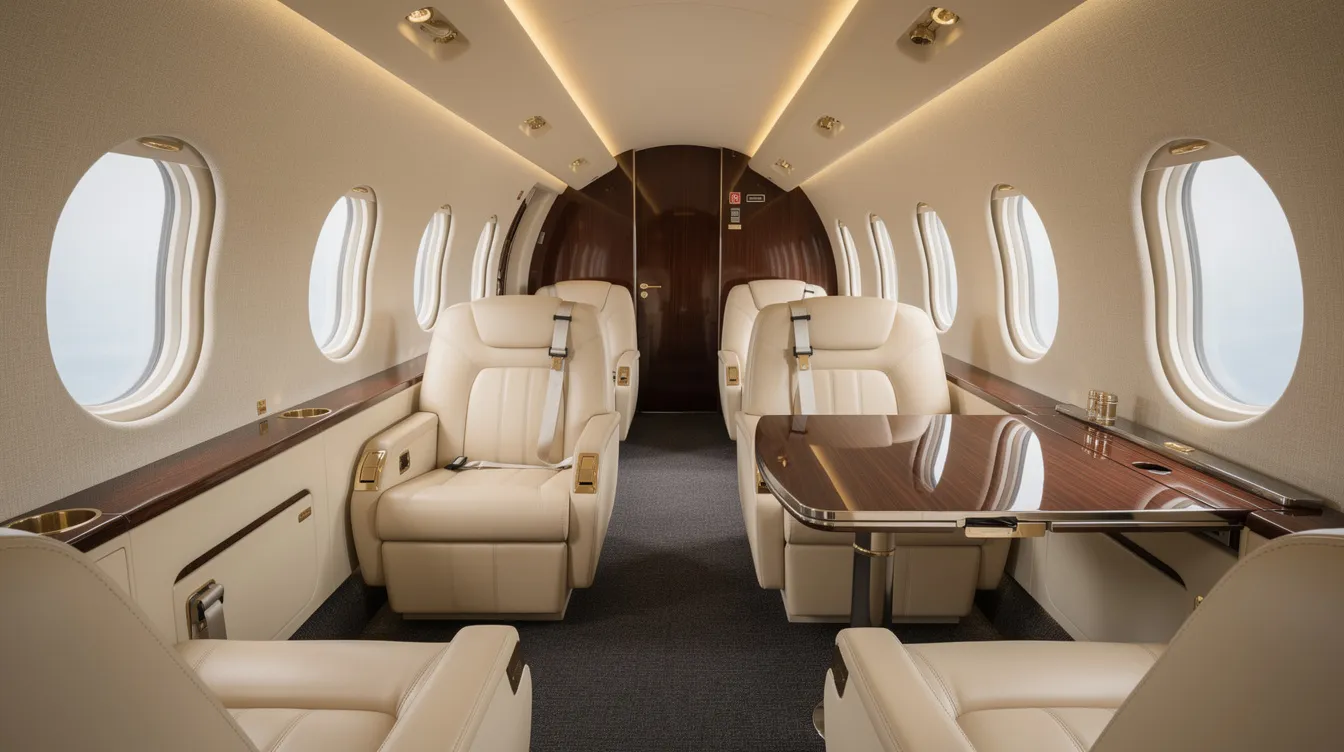
737 MAX 9 Cabin Classes Versus Private Jet Cabins
On a typical two-class configuration MAX 9, the cabin is divided into three zones: domestic first or business class (roughly 16–20 seats), an extra-legroom section (30–48 seats), and standard economy (100–130 seats). Even on a generously configured aircraft, more than 75% of seats are in standard economy.
The premium cabin on a 737 MAX 9 offers a wider seat with more recline and priority service, but it remains a shared environment - separated from economy by a curtain, not a wall. Passengers board through the same jet bridge, share the same overhead bins, and follow the same airline schedule.
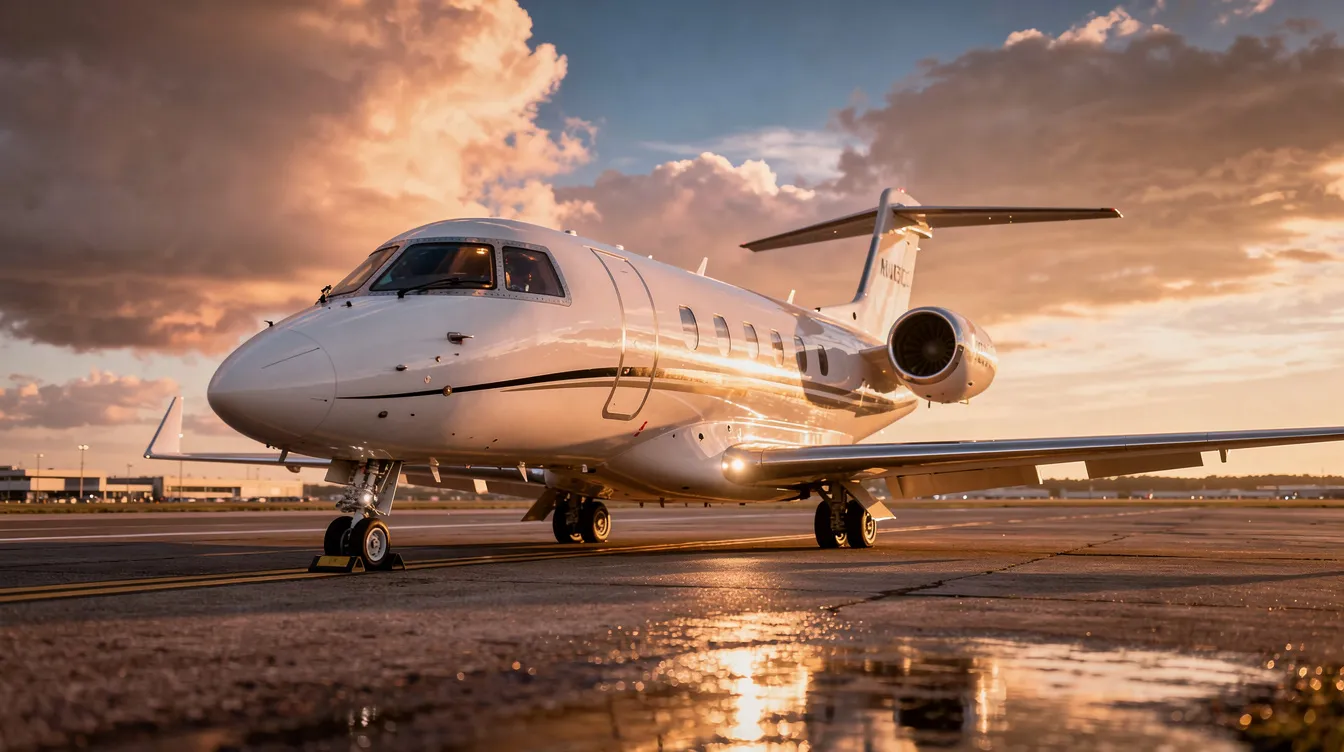
Private jet cabins operate on a fundamentally different principle. Across BlackJet's available categories - light jets, midsize jets, super-midsize, and large-cabin aircraft - nearly every seat functions as a first-class-equivalent or better: full recline, club seating, direct aisle access, and in many layouts, lie-flat capability, reflecting the wide range of private jet sizes available to match different mission profiles.
A corporate team of eight that would occupy multiple scattered rows on a 737 MAX 9 can instead charter a super-midsize jet and turn the entire cabin into a private meeting room.
A family of five can fly together in a single, private environment rather than splitting across premium and economy cabins.
The distinction is between renting a seat and commanding an entire cabin.
Fuel Efficiency, Advanced Technology, And Environmental Impact
The Boeing 737 MAX series, including the 737 MAX 9, represents a significant step forward in operating efficiency for single-aisle aircraft. At its core, the MAX 9 is powered by two CFM International LEAP-1B engines, each producing 130 kN of thrust. These more efficient engines feature a high bypass ratio that reduces both fuel burn and engine noise compared to the CFM56 engines on the previous generation 737 NG. The MAX 9 also features advanced technology split-tip winglets - sometimes called advanced winglets - that contribute to aerodynamic improvements and lower fuel burn across all phases of flight.
Boeing's published data claims approximately 20% lower fuel consumption and CO₂ emissions per seat compared with older 737 Next Generation models. Higher seating capacity amplifies this advantage on a per-passenger-mile basis, provided load factors remain high.
For private aviation, the emissions equation is different. Fewer passengers per flight means higher per-person fuel burn. BlackJet addresses this directly: all Jet Card flights are balanced to carbon-neutral performance through offset and insetting programs, at no additional cost to members. Learn more about sustainable private flying and how modern, efficient engines and responsible operations reduce the environmental footprint of every trip.
The trade-off is real but manageable. A full 737 MAX 9 is one of the most efficient ways to move 180 people. A private jet is the most efficient way to move one critical meeting, one family trip, or one deal team - with the environmental balance built in.
737 MAX 9 Range, Routes, And How Capacity Shapes Network Planning
The Boeing 737 MAX 9 has a maximum range of 3,550 nautical miles, making it well suited for domestic transcontinental missions and medium-haul international services. The Boeing 737 MAX series includes models designed for different route demands, and the MAX 9's mission profile covers the busiest single-aisle segments: New York to Los Angeles, Chicago to Cancún, and routes like Newark to Lima flown by United Airlines.
Airlines choose how many seats to install based on passenger demand on each route:
Leisure-heavy routes (e.g., to vacation destinations) push toward 200+ seats to maximize per-flight revenue
Business-heavy routes (e.g., New York–San Francisco) use lower densities around 175–185 seats to accommodate premium cabins and loyalty-program travelers.
New routes in emerging markets may start with higher density to test demand before adjusting the mix
Daily utilization for 737 MAX 9 fleets typically runs 9–11 block hours, with carriers operating four to six sectors per day. This pace demands high reliability, fast turnarounds, and consistent commercial service standards.
Private jet capacity planning works in reverse. With BlackJet, aircraft selection is optimized per trip - 4 to 16 passengers - not per scheduled route. Members control departure time, airport selection, and cabin configuration, a level of flexibility that no fixed-schedule 737 MAX 9 service can match.
Alaska Airlines Flight 1282, Door Plug Issues, And Capacity Design
On January 5, 2024, Alaska Airlines Flight 1282 - a Boeing 737 MAX 9 registered as N704AL - experienced the in-flight separation of its left mid-cabin door plug shortly after takeoff from Portland, Oregon. Rapid cabin depressurization occurred as the aircraft climbed through approximately 14,830 feet. All 177 occupants survived; several sustained minor injuries.
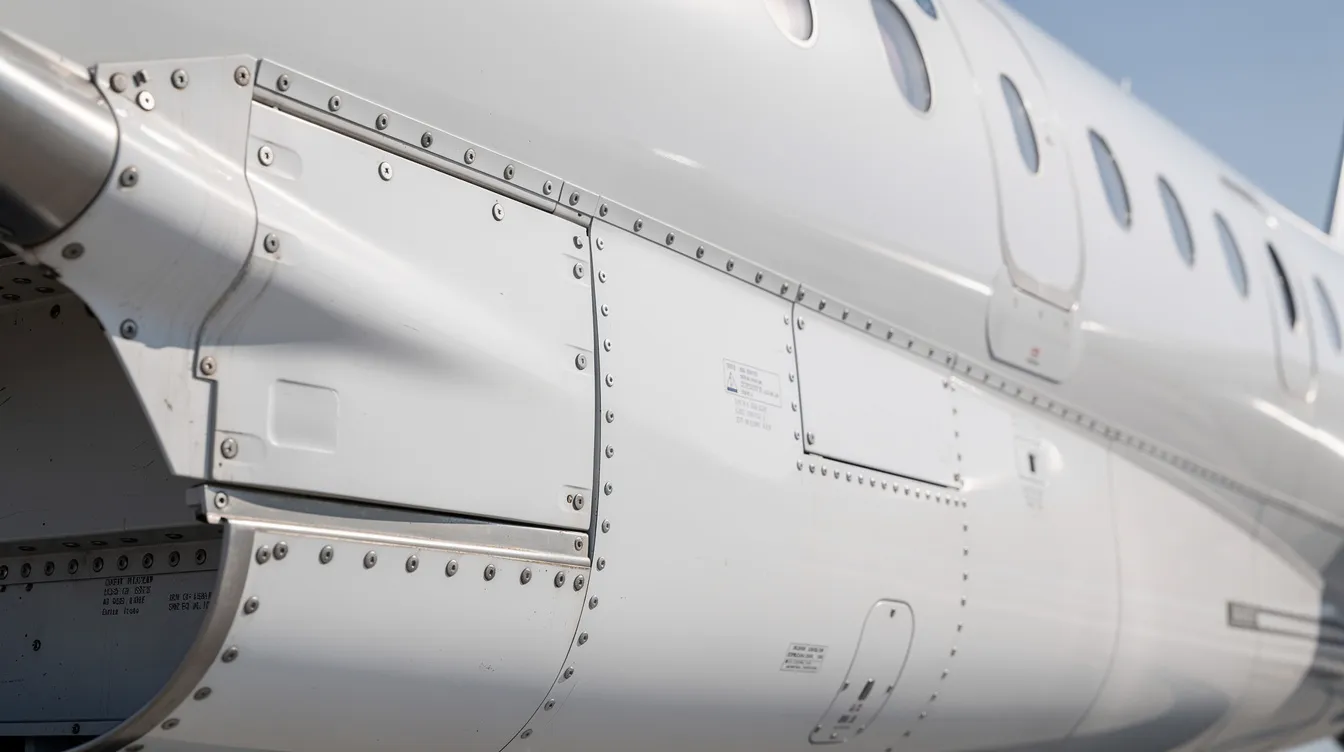
The door plug is a sealed structural panel that replaces an optional mid-cabin emergency exit. Airlines using lower-capacity layouts on the MAX 9 do not need the additional exit and install a plug instead. The NTSB investigation found that four retaining bolts were missing and all 12 stop fittings were disengaged, pointing to a manufacturing quality failure rather than a design flaw in the capacity configuration itself.
Key consequences:
The FAA grounded all 737 MAX 9 aircraft equipped with door plugs - 171 planes total - for inspections. Airlines including United found loose hardware during checks.
Inspections continued through late January 2024 and beyond, with regulatory scrutiny intensifying across Boeing's production lines.
The incident did not change the certified maximum seating capacity of the MAX 9, but it triggered deeper oversight of assembly quality and structural integrity.
The Alaska Airlines Flight 1282 event underscored a critical principle: capacity decisions and structural configurations are only as safe as the quality of their execution.
Lion Air Flight 610, Ethiopian Airlines Flight 302, And The MAX Family Grounding
The two events that most profoundly shaped the trajectory of the Boeing 737 MAX program were Lion Air Flight 610 on October 29, 2018, and Ethiopian Airlines Flight 302 on March 10, 2019. Both involved Boeing 737 MAX 8 aircraft - not the MAX 9 - but the consequences engulfed the entire MAX family.
The two fatal crashes killed a combined 346 people and represented two fatal accidents within five months of each other. Investigations revealed that the MCAS (Maneuvering Characteristics Augmentation System) - a flight control system designed to push nose-down trim commands in certain flight conditions - had activated based on erroneous angle-of-attack sensor data, overwhelming pilots who were not adequately trained on the system's behavior.
The 737 MAX fleet was grounded in March 2019 after two crashes, triggering the most extensive commercial aviation grounding in decades.
The 737 MAX family was grounded for 21 months after two fatal crashes, with the recertification effort involving extensive software redesign, hardware changes, and new pilot training mandates.
Certification delays rippled across the industry, affecting delivery schedules, airline fleet planning, and Boeing's standing with regulators worldwide.
Despite these high-profile events, commercial aviation's global fatal accident rate remains among the lowest of any transportation mode - well below one fatal accident per million flights, as reported by industry sources like ch aviation and others. Enhanced oversight and the design updates that emerged from these tragedies now apply equally to all MAX family capacity variants, including the MAX 9.
Safety Enhancements On The Boeing 737 MAX 9 And Modern Private Jets
Following the grounding, every Boeing 737 MAX model - including the 737 MAX 9 - underwent fundamental design changes and a rigorous recertification effort before being cleared to enter service again. Boeing redesigned MCAS after the 2018–2019 accidents to use dual angle-of-attack sensors instead of relying on a single input, added more robust flight control computers, and implemented mandatory enhanced pilot training requirements.
As of today, the Boeing 737 MAX 9 has recorded zero fatal accidents since its entry into service. The MAX 9 variant has also experienced zero hull losses. Hundreds of thousands of safe flight hours have been logged across major carriers and regional operators worldwide, including airlines in South Korea and other Asia-Pacific markets.
BlackJet applies a parallel philosophy to safety in private aviation. Every operator in the BlackJet Certified network meets rigorous standards - comparable to ARGUS Platinum and Wyvern benchmarks - covering maintenance protocols, crew experience minimums, and 24/7 operational oversight, aligning with the broader realities of private jet safety across the industry. Members can explore the full scope of private jet safety standards that govern every Jet Card flight.
Both modern airliners and private jets operate under strict safety frameworks. The difference with private flying through BlackJet is the additional layer of control: members can verify operator credentials, select aircraft types, and receive real-time flight support from a dedicated team, even when encountering moderate turbulence or schedule disruptions.
How Airlines Use 737 MAX 9 Capacity Strategically
Airlines treat the Boeing 737 MAX 9 as a strategic upgauging tool - a way to add 10 to 40 extra seats on busy routes without the cost step-up of widebody operations. When passenger demand on a route outgrows a 737-800 or A320, the MAX 9 provides higher passenger capacity in the same gate footprint, with compatible crew qualifications.
Southwest Airlines and other major carriers use the 737 MAX family to standardize their fleets around a single type rating, reducing training and maintenance costs across hundreds of aircraft.
Carriers deploy MAX 9s on routes where firm orders for seats are strong, and load factors consistently exceed 80%, ensuring the additional capacity translates into revenue rather than empty seats.
The combination of efficient engines and higher density makes the MAX 9 competitive on cost-per-available-seat-mile, a metric that drives fleet planning decisions at every major airline.
Advanced technology and lower per-seat fuel burn help airlines maintain competitive ticket prices even as they increase capacity - a dynamic especially visible on leisure-heavy routes where price sensitivity is high.
For BlackJet members, capacity is tuned not to mass demand but to individual client missions. Whether it is a solo executive, a deal team of six, or a family of ten, aircraft selection through a Jet Card program is calibrated to the specific trip, similar in spirit to the flexibility highlighted in guides to the best jet cards for frequent flyers - a bespoke approach that no scheduled 737 MAX 9 service can replicate.
737 MAX 9 Capacity Versus Airbus A321neo And Other Competitors
The Boeing 737 MAX 9 competes most directly with the Airbus A321neo in the approximately 180-to-220-seat single-aisle market. Both aircraft target the same high-demand domestic and medium-haul routes, and both offer similar capacity in standard configurations. The choice between them often comes down to fleet commonality, negotiated pricing, and operational preferences rather than dramatic performance differences.
Key distinctions:
The A321neo offers a slightly longer range - up to approximately 4,000 nautical miles in LR and XLR variants - and a higher maximum takeoff weight in certain configurations, giving it an edge on longer sectors. The MAX 9, with its range of 3,550 nautical miles, covers a shorter range profile but handles the vast majority of single-aisle missions effectively.
The Boeing 737 MAX 10, the largest variant in the MAX lineup, was Boeing's answer to the A321neo's capacity advantage, offering up to 230 seats. However, certification delays have slowed the MAX 10's path to commercial service.
Airlines with existing 737 fleets (pilot type ratings, parts inventory, maintenance infrastructure) lean toward the MAX 9 for similar capacity without retraining. Airbus-aligned carriers default to the A321neo for the same reasons.
As noted by sources including Simple Flying and industry analysts, the competitive dynamic between these types continues to shape order books. Both aircraft deliver strong operating efficiency for their operators - but neither solves the fundamental constraints that high-capacity single-aisle travel imposes on individual passengers.
Operational Comfort: 737 MAX 9 Business Class Versus Private Jet Experience
A domestic first-class or business-class seat on a 737 MAX 9 is, by airline standards, a comfortable product: wider recliner seats with 37 to 40 inches of pitch, priority boarding, a dedicated galley, and sometimes a curtained cabin divider. On a good day, it is a perfectly adequate way to cover a four-hour transcontinental segment.
But "adequate" is not "optimal." The passenger still boards through a crowded jet bridge, shares the forward cabin with 15 to 19 other premium travelers, stows luggage in communal overhead bins, and adheres to a fixed departure schedule. Confidential conversations happen within earshot of strangers. Connections are subject to airline scheduling, not personal priorities.
A private jet cabin under a BlackJet Jet Card inverts every one of those constraints:
A CEO flying from Seattle to New York boards at a private terminal 20 minutes before departure, brings three team members, holds a strategy session for the entire flight, and arrives at a secondary airport 30 minutes closer to the final meeting - all without encountering a single boarding group or middle seat.
Power outlets, Wi-Fi, and full-service catering are standard, configured to the member's preferences rather than an airline's cost model.
The difference is not about luxury for its own sake. It is about converting transit time into productive time - and that conversion is where the business jet proposition becomes financially rational, not merely aspirational, especially when you understand the broader private jet price list dynamics behind different aircraft and access models.
From Airline Capacity To Personal Capacity: Time, Control, And Productivity
Airlines optimize the seating capacity of aircraft like the 737 MAX 9 to move the maximum number of passengers at the lowest unit cost. That is a sound business strategy for mass transportation. But for travelers whose time is their scarcest resource, the relevant question is not "how many seats are on this plane?" - it is "how much of my own capacity does this trip consume?"
A 737 MAX 9 flight from Dallas to New York involves arriving at the airport 90 minutes early, passing through security, waiting at the gate, boarding with 178 other passengers, taxiing, flying, taxiing again, deplaning, and navigating a major hub terminal. Door-to-door, a four-hour flight can consume seven to eight hours.
With BlackJet's Jet Card model, members pre-purchase flight hours and deploy that private cabin capacity on demand, benefiting from the predictable costs and flexibility explained in our guide to jet card cost. A week with three city hops - say, New York to Chicago, Chicago to Miami, Miami back to New York - that would require three separate airline bookings, two connection risks, and six airport experiences becomes a single continuous private itinerary with flexible timing, chosen airports, and zero wasted hours.
The reframing is simple: airlines sell seat capacity. BlackJet sells personal capacity - the ability to do more with the same 24 hours.
Jet Cards Versus Owning A Seat On A 737 MAX 9
A Jet Card is a prepaid block of private jet hours - typically 25 or 50 - that grants guaranteed access to a range of aircraft without ownership obligations, crew management, or hangar costs, following the core jet card pricing principles of fixed hourly rates and transparent fees. It is private aviation distilled to its most flexible and predictable form.
Contrast this with buying business-class or first-class tickets on a Boeing 737 MAX 9. The commercial traveler pays per seat, per flight, at prices that fluctuate with demand, often spiking 3x to 5x for last-minute bookings on popular routes. They are bound to the airline's schedule, its seat map, and its operational decisions.
For frequent travelers who routinely purchase last-minute premium seats on 737 MAX or A321neo flights, a Jet Card often proves more predictable - and potentially more economical per productive hour when accounting for time savings, flexibility, and elimination of connection risks, especially when you compare the detailed 50-hour Jet Card cost against recurring premium cabin fares.
Operational advantages compound:
Members choose aircraft size - light, midsize, super-midsize, or large cabin - to match group capacity needs, rather than trying to fit those needs into an airline's fixed layout.
Booking is digital, available 24/7, and confirmed in hours rather than subject to fare-class availability.
Jet Cards are not for everyone. But for travelers who have already maxed out the value of commercial premium cabins, they represent the next strategic step, especially when you compare options in a curated list of the best jet cards for frequent flyers. Explore the BlackJet 50 Jet Card to see how prepaid hours translate into unrestricted access, or consider how the cheapest private aircraft options and entry-level jets can make private flying more accessible alongside Jet Card programs.
Frequently Asked Questions About 737 MAX 9 Capacity
What is the maximum number of seats on a Boeing 737 MAX 9?
The maximum single-class layout supports up to 220 seats. This configuration uses minimal pitch (around 28 inches) and eliminates premium cabins. Most airlines do not use this layout; it is primarily relevant for ultra-low-cost operators seeking maximum density.
How many seats does United's 737 MAX 9 have?
United Airlines configures its MAX 9 with 179 seats: approximately 20 in United First, about 48 in Economy Plus, and the remainder in standard economy.
Is the 737 MAX 9 more spacious than older 737 models?
Yes. Compared to 737 NG variants of similar length, the MAX 9 offers improved cabin aesthetics through the Boeing Sky Interior - larger overhead bins, LED lighting, sculpted sidewalls - though the fuselage width itself has not changed. Comfort gains come primarily from seat design, pitch choices, and interior finish rather than additional cross-section space.
Did Alaska Airlines Flight 1282 change the Boeing 737 MAX 9 capacity or configuration rules?
The incident on January 5, 2024, led to FAA-mandated inspections and intensified quality-control scrutiny on door plug installations. It did not change the certified maximum seating capacity. Airlines using the door plug configuration must now comply with stricter manufacturing inspection and documentation standards.
How does the 737 MAX 9 compare to private jets in terms of personal space per passenger?
A 737 MAX 9 in a 179-seat layout offers roughly 5 to 6 square feet of personal space per economy passenger. A midsize private jet carrying 8 passengers offers approximately 20 to 30 square feet per person - four to five times the space, with full control of the cabin environment- and falls within the mid-range of available private jet sizes that balance comfort and cost.
When does it make sense to move from flying 737 MAX 9 business class to a Jet Card like BlackJet?
When travel frequency exceeds 15 to 20 premium segments per year, when schedule flexibility and time savings are more valuable than the marginal cost difference, or when group travel needs consistently push commercial premium ticket costs above the per-hour Jet Card rate. Our guide to Jet Card costs can help quantify the trade-offs as you learn how Jet Cards work to evaluate whether the transition fits your travel profile.
How BlackJet Complements – Not Replaces – High-Capacity Airline Travel
Aircraft like the Boeing 737 MAX 9 are essential to global connectivity. They move hundreds of passengers efficiently on thousands of daily flights, and their fuel efficiency per seat-mile is unmatched in mass transportation. For many trips - predictable schedules, solo travel, well-served city pairs - commercial premium cabins remain a strong choice.
But for high-net-worth individuals and corporate teams, the optimal travel strategy blends both modes. Commercial flights on aircraft like the 737 MAX and A321neo handle routine segments. Private jets through BlackJet handle the missions where time, privacy, or flexibility matter most: board meetings in secondary cities, multi-city deal roadshows, family holidays to destinations poorly served by scheduled routes, or last-minute travel when airline capacity is sold out.
BlackJet provides 24/7 digital booking and real-time flight support, allowing members to react instantly when airline disruptions, delays, or capacity constraints impact their plans. Every Jet Card flight is carbon-neutral, safety-certified, and calibrated to the member's specific needs.
Elevate your travel - effortlessly. With BlackJet, private flight is accessible on your terms through our Jet Card programs, complete with rigorous safety standards, carbon-neutral performance, and unmatched flexibility. Explore our offerings and discover how refined, purposeful travel becomes your new standard.
Join BlackJet's Jet Card program for seamless, premium private travel - safety, sustainability, and flexibility built in.


 Sign up with google
 Sign up with Apple