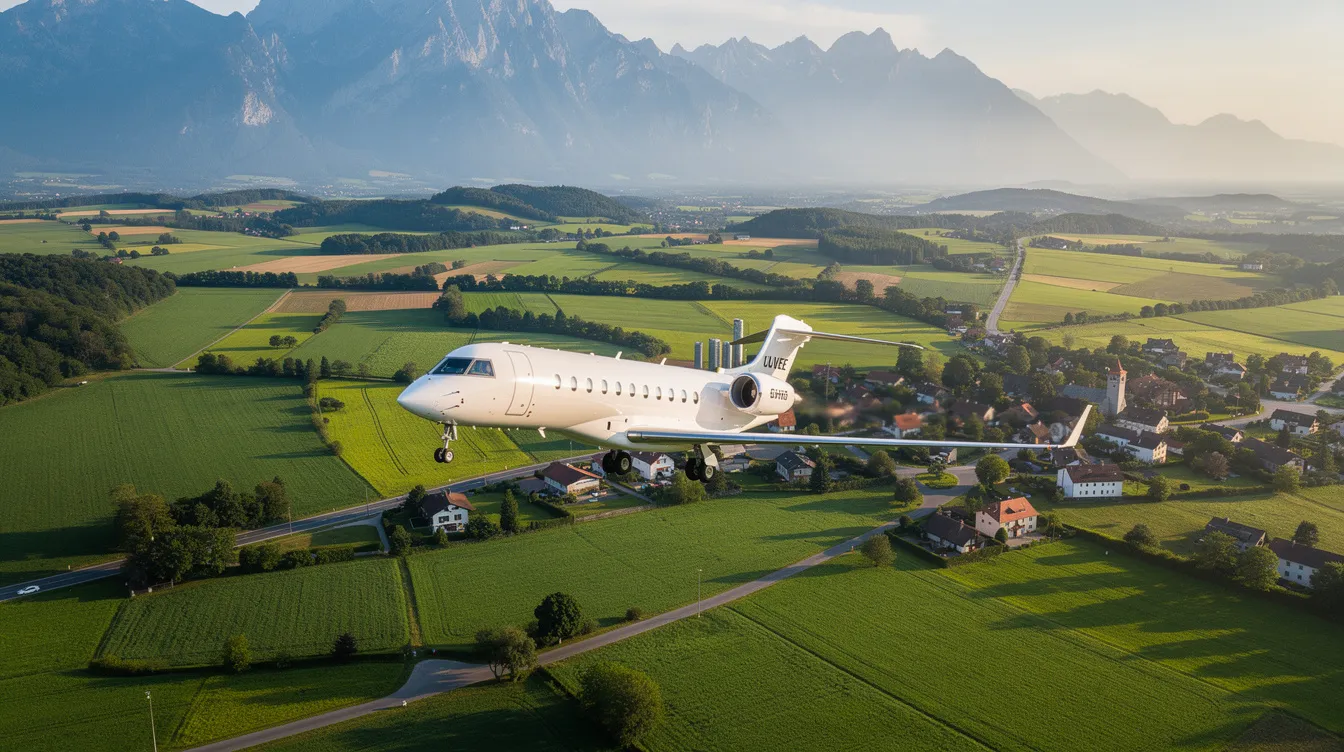
For more than a century, airplanes have compressed distance, accelerated commerce, and redefined human ambition. What began as twelve seconds of powered flight over sand dunes has evolved into an aviation ecosystem where a business jet can cross the Atlantic nonstop while its passengers finalize a deal in a stand-up cabin at 45,000 feet. This guide traces that arc - from fundamental physics to modern private jet travel - and explains why the airplane remains the most consequential machine in the sky.
Why Airplanes Still Matter for High‑End and Business Travelers
Air travel is no longer simply about getting from one city to another. For executives and high-net-worth travelers, an airplane is a strategic instrument - one that buys back the only resource money cannot manufacture: time.
Commercial vs. Private Travel Experience
Consider a New York–London trip. A commercial first-class passenger arrives at JFK roughly 90 to 120 minutes before departure, navigates security, waits at the gate, boards with hundreds of other passengers, and upon landing at Heathrow faces immigration queues and baggage carousels. Door-to-door, the journey can stretch well beyond ten hours. A private jet departing from Teterboro requires roughly fifteen minutes of pre-flight processing at a private FBO terminal, flies nonstop in six to seven hours, and lands at a smaller field like Farnborough - where the passenger walks to a waiting car within minutes. The net saving is two to three hours each way, every trip.
Fixed-wing aircraft enabled the global business networks we take for granted: just-in-time dealmaking across continents, same-day multi-city itineraries, and weekend returns from destinations that once required days of transit. Private aircraft emphasize flexibility, convenience, and comfort in ways that commercial schedules cannot match. Commercial aircraft operate on fixed schedules while private aircraft offer on-demand travel tailored to the passenger's agenda, not the airline's.
BlackJet exists to unlock this flexibility without the burdens of aircraft ownership. Through its Jet Card membership model, BlackJet provides prepaid access to multiple cabin classes, carbon-neutral flights, and 24/7 digital booking - putting the full strategic advantage of private aviation in a single account.
What Is an Airplane? (And How It Differs from Other Aircraft)
An airplane is a powered fixed-wing aircraft in which one or more aircraft engines generate thrust, and the aerodynamic shape of the main wing produces enough lift to sustain manned flight. That definition - fixed wings, engine-driven thrust, human crew - separates airplanes from every other vehicle in the sky.
Airplanes can be classified by their shape and engine type. Helicopters use rotary wings and can hover, but sacrifice speed and range. Drones are unmanned and limited in payload. Electric powered-lift vehicles - the emerging eVTOL category - blend rotors and lift fans for urban hops but remain in early certification stages, distinct from conventional flying machines.
Examples of Airplane Types:
Regional jets: seating 50 to 100 passengers on short commercial routes
Commercial airliners: narrow-body and wide-body jets serving hundreds of passengers on domestic and international schedules
Turboprop commuters: economical for shorter sectors and smaller airports
Light sport aircraft: recreational and training planes
Business jets: from very light jets through large-cabin, ultra-long-range models
Every type of private jet - whether a four-seat very light jet or an intercontinental heavy - is a subcategory of the fixed-wing aircraft family. Airplanes are categorized into commercial and private aircraft, but all share the same foundational physics.
From Myth to First Powered Flight and Manned Flight: A Short History of Airplanes
The dream of flight is older than recorded history. Turning that dream into engineering reality took centuries of incremental progress.
Ancient myths and early experiments. Stories like Daedalus and Icarus, glider attempts by Abbas ibn Firnas, and Leonardo da Vinci's ornithopter sketches represent intellectual precursors - imagination, not practical aircraft.
Sir George Cayley (1799). The English engineer Sir George Cayley defined the forces of lift and drag in 1799, separating lift surfaces from propulsion for the first time. Aviation historians credit Cayley with establishing the conceptual framework for every airplane that followed.
Otto Lilienthal (1890s). Lilienthal's systematic glider flights - over 2,000 documented - generated data on wing shapes and control that directly informed later pioneers.
The Wright brothers (17 December 1903). The Wright brothers made the first powered flight in 1903 at Kitty Hawk, North Carolina. Their achievement - the first sustained, controlled, powered manned flight - combined a lightweight engine, a propeller designed from wind tunnel data, and three-axis control surfaces into a single machine. It was the first powered flight recognized globally.
Alberto Santos-Dumont (1906). In Paris, Alberto Santos-Dumont flew 220 meters in 1906, unassisted by catapult or headwind assistance. His flights helped standardize international aviation milestones and spurred European development.
From these beginnings, the aviation industry accelerated at a pace unmatched by almost any other technology of the twentieth century.
How Airplanes Stay in the Sky: The Four Forces of Flight
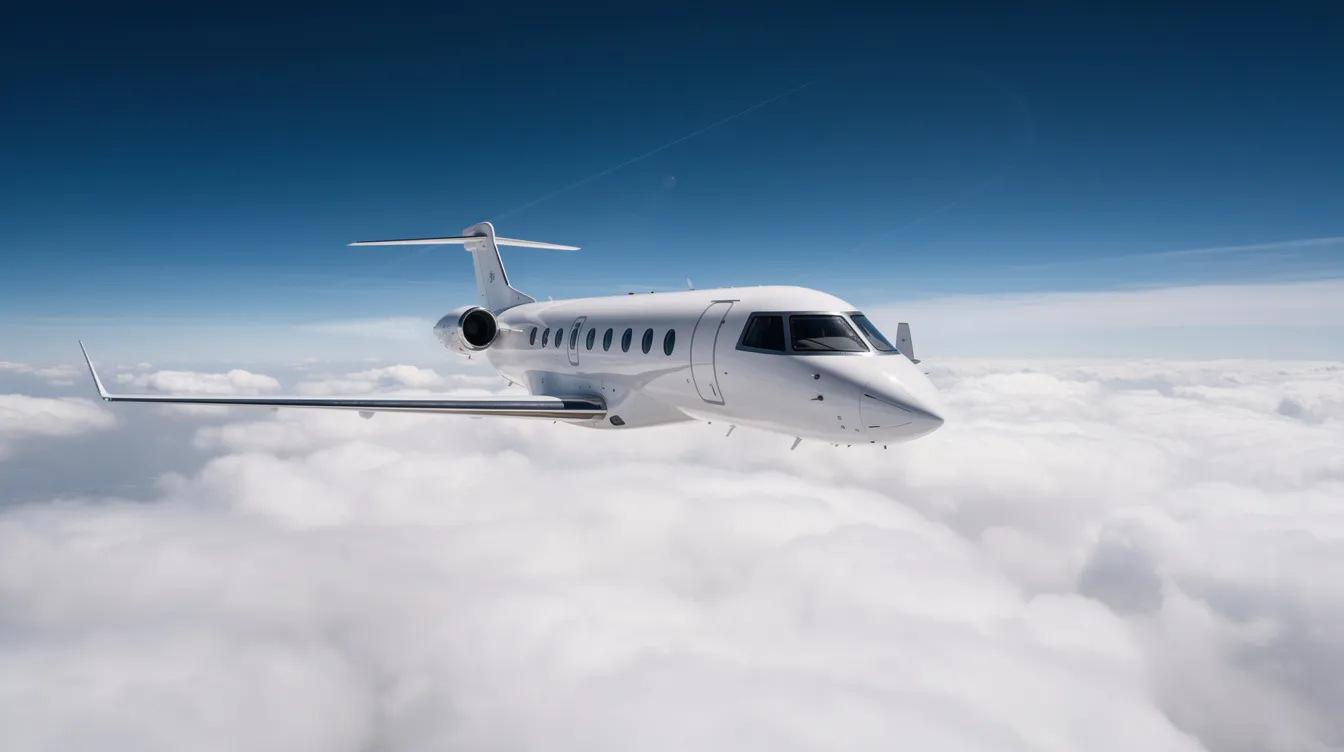
Airplanes fly by balancing four basic forces: lift, weight, thrust, and drag. Understanding these four forces explains everything from a light aircraft trainer circling a grass strip to a super-midsize jet cruising at FL450.
Summary of the Four Forces of Flight:
Force | Description |
|---|
Lift | Wings are designed to provide lift through their airfoil shape. As air passing over the curved upper surface accelerates, pressure drops relative to the lower surface. Lift is generated by pressure differences on wing surfaces. The angle of attack affects lift and drag ratios. |
Weight | Weight is the force of gravity acting on the aircraft, pulling it toward the ground through its center of mass. On a long transatlantic flight, fuel burn steadily reduces total weight, allowing the jet to climb to higher, more efficient altitudes. |
Thrust | Thrust is produced by engines accelerating air backward - whether through a turbofan's bypass stream or a propeller driven by a turboprop. Thrust must overcome drag to accelerate or maintain high-speed cruise. |
Drag | Drag opposes thrust and is caused by air resistance. Two types matter: parasitic drag (skin friction, form drag from the fuselage) and induced drag (a byproduct of producing lift). As speed climbs, drag increases significantly. Sleek fuselages, swept wings, and winglets on modern private jets reduce drag and extend range. |
In level flight, lift equals weight and thrust equals drag. During climb, thrust exceeds drag, and the wing generates more lift than the airplane's weight requires for equilibrium. Several factors - altitude, temperature, aircraft loading, and other elements of the aircraft and airflow - shift the balance continuously.
Inside and Outside the Machine: Key Parts of a Modern Airplane, Including Landing Gear
Every fixed-wing aircraft shares a family of structural and mechanical components. Most airplanes are made from aluminum and composite materials, a shift from the wood and fabric of early designs that has delivered enormous gains in strength, lightweight construction, and corrosion resistance.
Key Structural Components
Airframe. The airframe comprises the wings, fuselage, tail (empennage), and landing gear. Aircraft parts are often produced by dozens of different companies, then integrated during final assembly. The design process can last up to four years for a new aircraft type.
Wings. Wing design dictates flight characteristics. High-aspect-ratio wings on long-range jets maximize lift-to-drag efficiency, while swept wings on airliners manage air flows at high subsonic speeds. Movable elements - flaps for low-speed lift, ailerons for roll control - are critical control surfaces. A monoplane has a single wing plane configuration, which is the standard for virtually all modern aircraft, and most use a cantilever wing design with no external bracing.
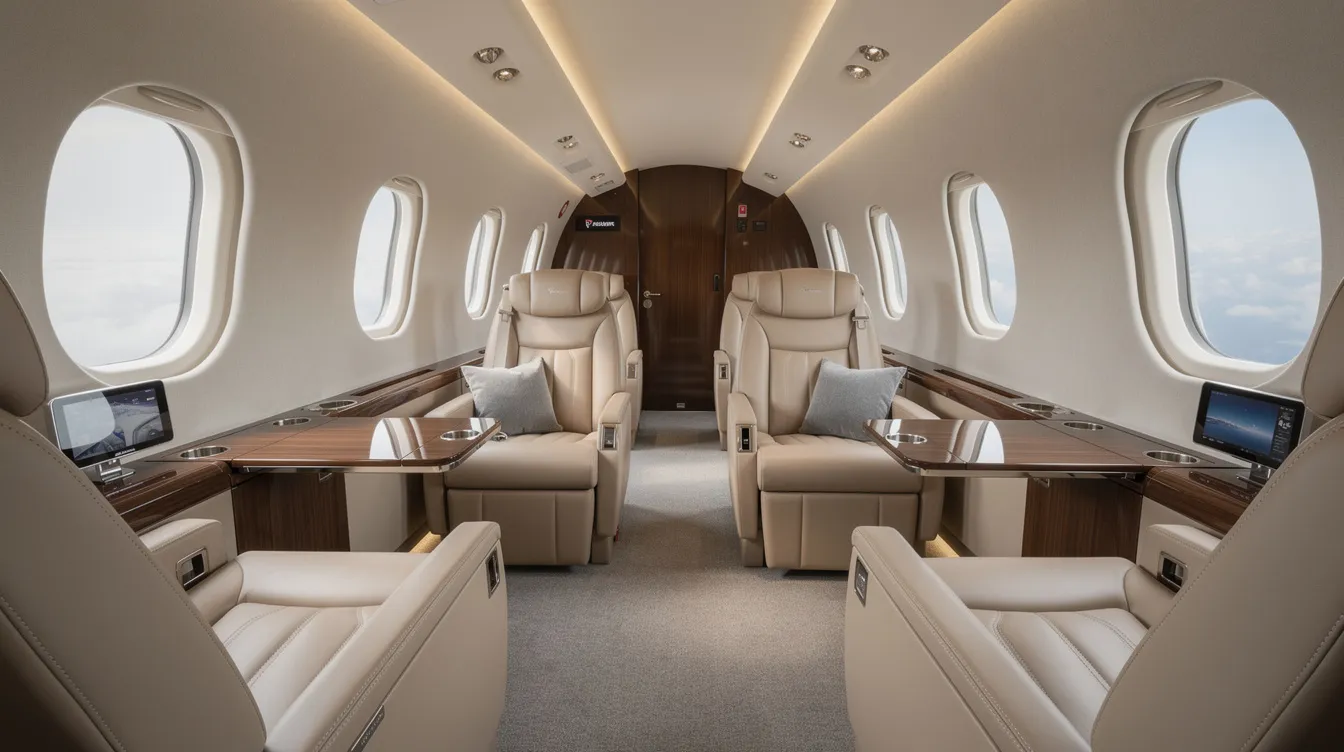
Fuselage. Commercial airliners pack rows of seats for maximum passenger capacity. Private jets invert that priority: club seating, berthable divans, flat floors, and stand-up headroom in large-cabin aircraft create a productive, comfortable environment.
Empennage. The tail section houses the horizontal stabilizer and elevator (controlling pitch) and the vertical fin and rudder (controlling yaw). Many business jets use T-tail configurations to keep the stabilizer clear of engine exhaust and wing wake.
Flight controls and cockpit. Pilots steer an airplane using movable surfaces on the wings and tail, commanded through a yoke or sidestick and rudder pedals. Modern glass cockpits consolidate flight data onto digital displays, and automation supports pilots during cruise - but experienced aviators remain essential for decision-making.
The Power Behind Flight: Aircraft Engines Explained
Aircraft engines determine how fast a plane flies, how high it climbs, how far it can range, and how quiet the cabin stays. For private aviation clients, engine choice directly shapes the travel experience.
Turbofan engines. Turbofan engines are commonly used in subsonic airliners and business jets alike. A large fan draws air into the engine; most of that air bypasses the core, producing thrust quietly and efficiently. Inside the core, air entering the combustion chamber mixes with fuel and ignites, spinning turbine engines that drive the fan. High-bypass designs on modern jets enable cruise at high altitudes - FL450 and above - where the air is smoother and fuel burn drops. Most commercial airliners fly at altitudes around 40,000 feet; many business jets cruise even higher.
Turboprop engines. A turboprop uses a shaft-driven propeller to generate thrust, with exhaust contributing only marginally. Turboprop airliners are used for short flights and are fuel-efficient, making them ideal for regional sectors and airports requiring smaller runways. They operate well at lower altitudes and speeds.
Piston engines. Found in light aircraft like the Cessna 172, piston engines power training and recreational flying. They are simpler and cheaper but limited in speed, altitude, and payload - a sharp contrast to turbine engines.
Thrust is produced by engines accelerating air backward, regardless of engine type. The propulsion system chosen for each jet engine or turboprop installation shapes the aircraft's mission capability. Jet aircraft are propelled by jet engines, not propellers, which is why they dominate long-range, high-speed private aviation. BlackJet partners exclusively with operators whose aircraft meet rigorous engine maintenance and inspection standards, a practice detailed on the BlackJet Safety page.
From Biplanes to Business Jets: Evolution of Airplane Design
The airplane's evolution from fabric-covered biplanes to composite-rich business jets is a story of wars, competition, and relentless engineering.
World War I transformed the airplane from a novelty into a weapon: stronger airframes, more powerful engines, and closed cockpits emerged in just four years. World War II accelerated change even further - pressurized cabins, all-metal monoplanes, radar, and the first jet engine–powered military aircraft arrived in rapid succession. The first operational jet fighter was the Messerschmitt Me 262 in 1943, signaling a new era. Bombers grew larger, fighters grew faster, and the foundations of modern aviation were laid in conflict.
Peacetime brought that technology to passengers. The first jet airliner, the de Havilland Comet, was introduced in 1952, followed by the Boeing 707. Wide-body jets - the Boeing 747, later the Airbus A380 - made mass international travel routine. Narrow-body jets typically seat between 100 and 240 passengers on domestic routes, while wide-body jets accommodate 250 to over 400 passengers on long-haul sectors, and specialized configurations can even deliver private jet comfort for up to 50 passengers on bespoke charters.
Parallel to commercial airliners, business jets evolved from cramped, short-range cabins into long-range private airplanes that quietly match many airline capabilities. Today's subsonic aircraft can cross oceans nonstop, cruise above weather, and land on runways too short for airliners. Among them are some of the top private jets in the world by luxury and performance. Aerodynamics, materials science, avionics, and aircraft engines have converged to make these machines efficient intercontinental tools.
Aircraft Categories and Cabin Classes in Private Aviation
Airplanes used in private aviation are grouped into categories that shape comfort, cost, and mission suitability. Commercial airplanes are designed for maximum passenger capacity and operating efficiency; private jets optimize for a different equation.
Very Light Jets
Light Jets
Seats: 6–8
Typical Range: 800–2,165 nm
Cruise Speed: ~415–465 kt
Hourly Rate (€): 2,800–4,200
Description: Light jets seat 6 to 8 passengers and are popular for quick corporate trips.
Midsize Jets
Seats: 6–9
Typical Range: 1,500–3,340 nm
Cruise Speed: ~440–460 kt
Hourly Rate (€): 4,200–7,200
Super-Midsize Jets
Seats: 8–12
Typical Range: up to 4,000+ nm
Cruise Speed: ~470–541 kt
Hourly Rate (€): 5,500–9,000
Large Cabin / Heavy Jets
Seats: 12–19
Typical Range: up to 6,000 nm
Cruise Speed: ~505–539 kt
Hourly Rate (€): 7,500–13,000
Description: Large cabin jets seat 12 to 19 passengers with luxury accommodations - stand-up headroom, multiple cabin zones, and berthable seating.
Mission matters: a New York–Miami dash suits a light jet, while New York–London demands a heavy or ultra-long-range aircraft. BlackJet Jet Card members select among multiple cabin classes depending on trip length, passenger count, and onboard needs, and can compare options using a detailed guide to jet card pricing structures and benefits. Every category still follows the same four forces and fixed-wing aircraft fundamentals, despite serving different market niches.
How Airplane Design and Certification Protect Your Safety
Safety in modern aviation results from layered design, testing, and regulatory oversight - not chance.
The certification process begins years before an airplane carries its first passenger. Engineers progress from conceptual design through wind tunnel testing, structural load analysis, and thousands of hours of flight testing before the Federal Aviation Administration regulates aircraft production in the U.S. and grants a type certificate (or EASA does so in Europe). The design process can last up to four years for aircraft, and longer for entirely new platforms.
Once certified, safety does not become static. Ongoing airworthiness directives mandate scheduled inspections, component replacements, and engine overhauls. Redundant avionics, backup hydraulic systems, and dual-engine reliability work in concert with crew training standards - recurrent simulator sessions, checkrides, and proficiency evaluations.
In private aviation, third-party auditors add another layer. BlackJet works with operators holding certifications such as ARG/US, Wyvern, or IS-BAO standards - voluntary safety programs requiring structured safety management systems and continuous improvement. Over 220 operators hold IS-BAO certification globally. BlackJet partner pilots hold ATP ratings and meet stringent qualification requirements, ensuring that every flight is commanded by experienced professionals.
Environmental Impact of Airplanes and Sustainable Private Aviation
Aviation contributes a small but meaningful share of global CO₂ emissions - and its impact is amplified by altitude effects that multiply warming potential beyond what ground-level combustion produces.
Fossil-fuel-powered aircraft release greenhouse gases like CO2 during every phase of operation. Aircraft emissions include soot and other pollutants, and contrails formed at high altitudes can trap heat. Airplanes contribute to noise pollution during takeoff and landing, an ongoing concern for communities near airports.
The industry is responding on multiple fronts:
More efficient engines with higher bypass ratios reduce fuel burn per nautical mile
Winglets and laminar-flow designs cut induced drag
Lighter airframes built from advanced composites lower weight and fuel consumption
Optimized flight planning routes aircraft through favorable winds and altitudes
Sustainable aviation fuel (SAF) offers a structural solution. Derived from waste oils, agricultural residues, or synthetic processes, SAF can reduce lifecycle emissions significantly compared with conventional Jet-A - though production scale and cost remain challenges.
BlackJet delivers carbon-neutral flights through verified carbon offset programs and, where available, SAF partnerships - at no extra cost to members. It is one of the clearest ways to reconcile the benefits of private aviation with environmental responsibility.
How Airplanes Changed Business, Leisure, and Global Connectivity
A London executive boards a jet at 7:00 a.m. at Farnborough, lands in Zurich for a board meeting by 10:00 a.m., flies to Milan for lunch with an investor, and returns home by evening. That kind of itinerary - impossible a century ago - is routine today for travelers with access to private aviation and underpins why the best jet cards for frequent flyers focus on guaranteed availability and predictable pricing.
After World War II, commercial airliners made mass global tourism and international supply chains possible within a few decades. The North American market alone saw air travel grow from a privileged novelty to the default mode for long-distance transport. Business aviation created a layer of agile connectivity above the airline network, reaching secondary airports and smaller cities that airliners bypass, and new private plane rideshare models now extend that flexibility to travelers who prefer to book a seat rather than an entire aircraft.
Imagine a BlackJet member holding a 25-hour Jet Card such as the BlackJet 25+ Hour Jet Card program. She departs Monday from London City Airport on a super-midsize jet, chairs a board session in Frankfurt by mid-morning, flies to Stockholm for an afternoon site visit, overnights, and returns Tuesday via Geneva. Three cities, two days, zero commercial connections, zero checked-bag anxiety.
Privacy, time control, and reduced friction - no queues, direct routing, departure when you are ready - are the decisive advantages. The plane does not leave without you, and it does not wait for 200 strangers.
Flying by Private Jet vs Commercial: What Actually Changes
Take a specific route: Los Angeles to Paris.
Factor | Commercial First Class | Large-Cabin Private Jet |
|---|
Airport | LAX (major hub, long security) | Van Nuys (private FBO, 15 min pre-flight) |
Boarding time | 60–90 min before departure | Arrive and board immediately |
Flight duration | ~10.5 hrs nonstop | ~10 hrs (direct routing) |
Cabin altitude | ~6,000–8,000 ft equivalent | ~4,000–5,000 ft (less fatigue) |
Passengers onboard | 200–400+ | Your party only |
Luggage | Checked, retrieved at carousel | Loaded by crew, handed on arrival |
Schedule | Airline timetable | Your timetable |
Commercial airplanes are designed for maximum passenger capacity and operating efficiency. That works well for price-sensitive solo travelers with flexible schedules. But for a group of four to six traveling together, the per-person economics of a private jet shift favorably - especially when connecting flights or indirect routing inflate commercial travel time, a calculation that becomes clearer when you understand the broader private jet price list and access options.
BlackJet's Jet Card model gives predictable hourly pricing, guaranteed availability windows, and one-point-of-contact trip management, making it easy to compare your jet card cost per hour across aircraft types. No hidden fees, no repositioning surprises - just effortless booking and consistent service.
Inside the Cockpit: How Pilots Control an Airplane
From a passenger's perspective, the flight feels seamless. Behind the cockpit door, pilots manage a continuous flow of decisions across the three axes of aircraft movement: pitch, roll, and yaw.
Primary controls. The yoke (or sidestick) commands ailerons for roll and the elevator for pitch. Rudder pedals adjust yaw - the nose swinging left or right. Throttle levers set engine power. Together, these control forces shape every maneuver from takeoff rotation to final approach.
Flight management systems. Modern FMS computers calculate optimal routes, step-climbs for fuel efficiency, and precise descent profiles. Autopilot handles the cruise segment, reducing workload - but pilots monitor every parameter and intervene whenever conditions demand it.
Phases of flight. Pre-flight checks verify systems and fuel. During takeoff, the wing must produce enough lift to rotate and climb. Climb transitions to cruise at an assigned altitude. Descent and approach require energy management - trading altitude for position while maintaining safe speed. Landing demands precise control of speed, descent rate, and alignment with the runway. At each phase, pilot judgment is irreplaceable.
BlackJet partner pilots undergo recurrent simulator training and checkrides to maintain proficiency. Their experience in military aircraft backgrounds, airline operations, or thousands of hours in business jets ensures that every flight is managed by seasoned professionals.
New Frontiers: Electric Aircraft, Advanced Air Mobility, and the Future
The next chapter of aviation is being written in electric motors, battery chemistry, and hybrid propulsion.
Early certified electric trainers are already flying, proving that battery-powered fixed-wing aircraft can handle short training sorties. Demonstrator air taxis- electric-powered lift vehicles capable of vertical takeoff - are progressing through certification in the United States and Europe, with commercial deployment expected in limited urban corridors before 2030. These are not conventional airplanes; they are complementary vehicles designed for short urban hops and last-mile connectivity.
Range limitations remain the primary constraint. Current battery energy density cannot match jet fuel, which means electric propulsion is viable for flights under roughly 200 nautical miles. Hybrid-electric concepts - pairing electric motors with a small turbine generator - could extend that envelope for regional missions.
Sustainability pressures and urban congestion are driving these innovations forward: quieter operations, zero local emissions during flight, and reduced dependence on fossil fuels. As battery technology matures, companies like BlackJet may integrate low-emission aircraft or advanced air mobility options into future service portfolios, extending the reach of private aviation into city centers and short-haul corridors where conventional jets are impractical. Meanwhile, shock waves from supersonic speeds research suggest that next-generation business jets may also compress long-haul travel times dramatically.
BlackJet FAQs: Airplanes, Jet Cards, and Your First Flight
What types of airplanes can I access with a BlackJet Jet Card? BlackJet Jet Cards provide access to multiple aircraft categories - from light jets for regional hops to large-cabin, long-range jets for intercontinental travel, including structured options like a 100-hour jet card for very frequent flyers.
Who operates the aircraft, and how are they vetted? BlackJet partners with operators that hold third-party safety ratings such as ARG/US Platinum, Wyvern Wingman, or IS-BAO certification. Every operator undergoes a rigorous vetting process. Learn more about BlackJet's certification standards.
How are BlackJet flights carbon neutral? Every flight is offset through verified carbon programs at no extra cost to members. Where available, SAF partnerships further reduce lifecycle emissions. Details are on the BlackJet Sustainability page.
How quickly can I book a flight? Members can request flights through the 24/7 digital platform, often with confirmation in as little as a few hours, depending on aircraft positioning and route.
What regions and airports does BlackJet serve? BlackJet serves a broad network of private airports and FBOs across North America and Europe, with access to secondary and regional fields that commercial airliners do not reach, whether you reserve an entire aircraft or buy just a seat on a private jet via shared or semi-private options.
Is a Jet Card more cost-effective than owning a jet? For most travelers flying fewer than 200–300 hours per year, a Jet Card eliminates ownership costs - hangar fees, crew salaries, insurance, maintenance - while preserving on-demand access, and strategic users may even explore jet card tax deductions and planning strategies with their advisors.
What pilot qualifications does BlackJet require? All partner pilots hold ATP ratings, meet minimum flight-hour thresholds, and complete recurrent simulator training. Read more about pilot qualifications.
Can I choose a specific aircraft type? Yes. Members can request a preferred category or specific aircraft model, subject to availability and route suitability.
What happens if my schedule changes last minute? Jet Card programs offer flexible rescheduling policies. BlackJet's concierge team adjusts itineraries in real time, ensuring your plane fits your plans - not the other way around- whether you prefer a smaller commitment like a 50-hour jet card with defined pricing or a larger block of hours.
Conclusion: The Enduring Impact and Future of Airplanes
Airplanes have transcended their origins as experimental contraptions to become vital tools for global connectivity, economic growth, and personal empowerment. For high-net-worth and business travelers, they represent more than transportation—they are strategic assets that reclaim time, enhance privacy, and enable unparalleled flexibility. Through innovations in design, safety, and sustainability, modern airplanes—especially private jets accessed via programs like BlackJet’s Jet Card—offer a seamless combination of luxury, efficiency, and environmental responsibility.
As aviation continues to evolve with advances in electric propulsion, sustainable fuels, and intelligent automation, the airplane’s role in shaping human experience will only deepen. Whether crossing continents or connecting secondary cities, airplanes remain the premier machines of the sky, delivering both performance and prestige. Discover how BlackJet can elevate your travel experience, unlocking effortless access to the world’s most sophisticated private aviation fleet.


 Sign up with google
 Sign up with Apple