For business executives and high-net-worth travelers, understanding the Boeing 737-900 interior is more than an exercise in aviation trivia. It directly affects how productive, rested, and composed you arrive at your destination. Every inch of seat pitch, every amenity decision, and every cabin layout choice shapes the experience across flights that can stretch three to six hours.
Executive Overview: Boeing 737-900 Interior vs Private Jet Cabins
The Boeing 737-900 is the longest variant of the Next-Generation 737 family, first entering commercial service in 2001 with Alaska Airlines as its launch customer. The airplane typically seats 177 passengers in two classes, though configurations can range from 177 to 189 depending on cabin layout. The first aircraft of this type were designed primarily for domestic or medium-haul routes, and that mission profile remains unchanged today. The plane cruises at roughly 840–850 km/h, with seat pitch ranging from 30 to 38 inches depending on class. A Boeing 737-900 operates on fixed airline schedules, which means travelers surrender control of timing from the moment they book.
Contrast that with a private jet cabin accessible through a Jet Card program. Private jets offer a maximum of 6 to 12 passengers for privacy, replacing the dense 3-3 economy environment with tailored space, schedule flexibility, and door-to-door efficiency. This article covers everything from seat maps and first-class specifications to onboard amenities and the specific scenarios where commercial 737 900 travel makes sense—and where private aviation with BlackJet offers a strategic advantage.
Boeing 737-900 Basics: Dimensions, Performance, and Role in the 737 Family
The Boeing 737-900 and its extended-range sibling, the 737-900ER, were developed to replace older 757-200 missions on medium-haul routes, giving airlines a narrowbody option with greater capacity and enhanced fuel efficiency.
Key specifications distinguish this Boeing aircraft from the rest of the family:
Specification | Boeing 737-900 / 900ER |
|---|
Length | ~138 ft 2 in (42.1 m) |
Interior cabin length | ~101 ft |
Wingspan (with winglets) | ~117 ft 5 in |
Cruising speed | Mach 0.78 (~828–842 km/h), max Mach 0.82 |
Range (900ER) | ~3,000+ nautical miles |
Maximum takeoff weight | ~194,700 lb |
Max capacity | Up to 220 passengers (single-class) |
The standard Boeing 737-900 and the 737-900ER can differ in cabin layout, with early 737-900 deliveries coming from Boeing's Renton factory; the ER variant adds extra fuel capacity and improved exit configurations, enabling extended range capabilities and higher seat counts. Over 95% parts commonality with other NG models simplifies airline maintenance—a point of development efficiency that keeps the 737 fleet economical for carriers. Typical operators include United, Delta, Alaska, KLM, and Lion Air, flying routes across dense domestic U.S. corridors, Europe hub-to-hub connections, and Southeast Asia regional networks.
Cabin Layout and Seat Map: How the Boeing 737-900 Interior Is Organized
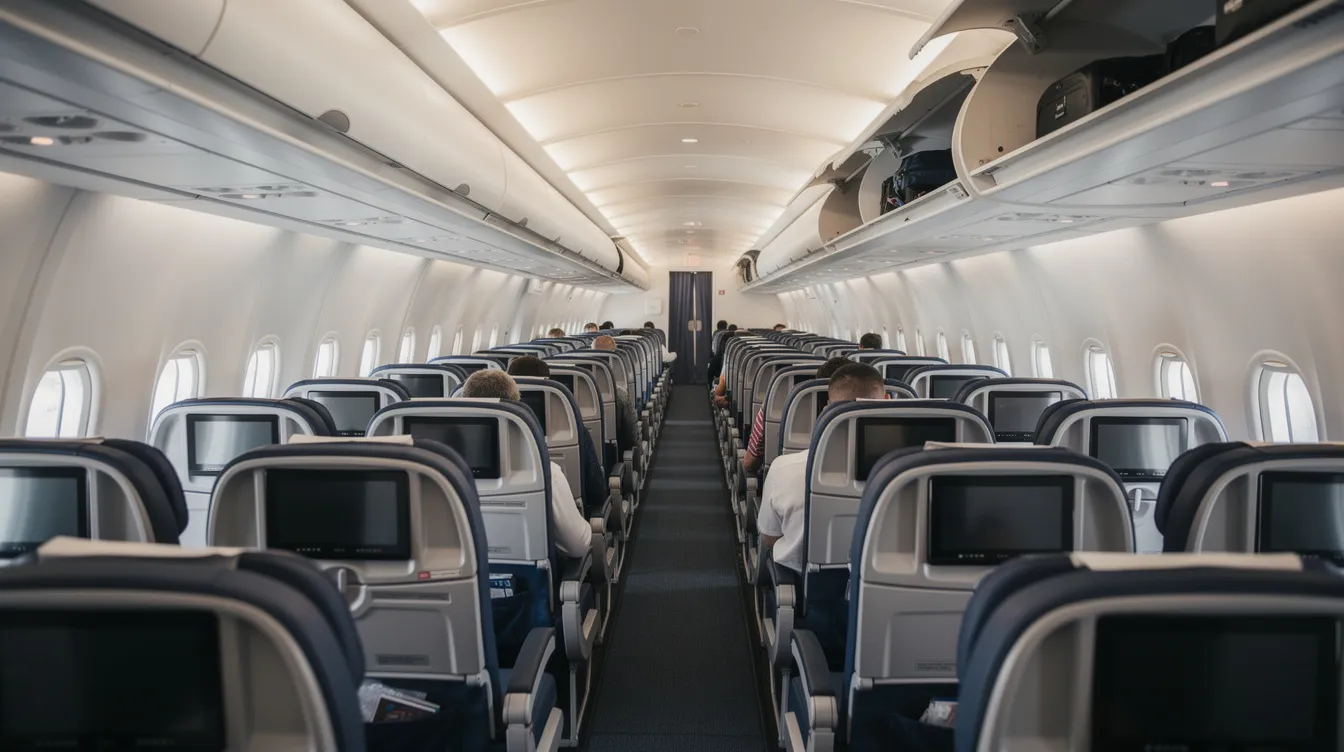
Most Boeing 737-900 interiors follow a predictable structure: a 2-2 layout in first class and 3-3 in premium economy and economy. Typical configurations include a premium cabin at the front and economy behind it. The typical seat layout in economy is 3-3, and a narrow-body aircraft's cabin may feel crowded compared to larger wide-body jets.
Front to back, the seat map reads: cockpit, forward galley, first class cabin, extra-legroom or premium economy section, standard economy cabin, rear galleys, and aft lavatories. Typically, three lavatories are present in the 737-900, with standard narrow-body lavatories located at the front and rear of the cabin.
A concrete example: United Airlines offers 20 first-class seats on the 737-900, followed by 42 premium economy seats and 117 economy seats, totaling 179 across the airplane. Many airlines display interactive seat maps online with icons for galleys, lavatories, emergency exits, and restricted-recline seats. For best results, cross-check airline maps with third-party review sites to identify bulkheads, exit rows, and wing-area seats before making your seat selection.
First Class Cabin: Comfort, Seat Pitch, and What to Expect
First class on the Boeing 737-900 is built for domestic and regional comfort—not long-haul lie-flat luxury. Expect a 2-2 configuration across roughly 4 to 5 rows, totaling 16 to 20 seats at the front. The Boeing 737-900 features 178 leather Recaro seats across its cabin, with the premium rows offering the most generous dimensions.
Typical first class numbers:
Amenities include larger seats with adjustable headrests, tray tables stored in the armrests, priority boarding to board early, upgraded meals and complimentary drinks, and dedicated cabin crew. Still, these seats do not convert to beds and share the cabin environment with 170+ other passengers.
By comparison, a private jet cabin via BlackJet offers full-flat beds, at most 6 to 12 passengers, and catering tailored to the traveler's preferences rather than a standardized airline menu.
Premium Economy and Extra-Legroom Seats: The "Middle Ground" in the 737-900 Interior
Premium economy—branded as Economy Plus by United or Comfort+ by Delta—provides the same 3-3 seat width as standard economy but adds meaningful legroom. Premium economy seats have a pitch of 34 inches and a width of 17 inches on United's 737-900, compared to 30–31 inches in standard economy.
These seats typically appear directly behind first class, sometimes at over-wing exit rows, and may be separated by curtains. Amenities include early boarding, enhanced snack options on some airlines, better odds of in-seat power, and faster deplaning from a forward position.
When does premium economy on a 737 900 make sense versus a BlackJet Jet Card? For a solo short hop where schedule aligns, premium economy is fine. For time-critical, multi-city days where schedule control matters more than a few extra inches of pitch, private access wins decisively.
Economy Cabin: Seat Pitch, Width, and Passenger Experience
The main Boeing 737-900 economy cabin holds well over 100 passengers in a 3-3 arrangement. Economy seats have a pitch of 30–31 inches and a width of 16–17 inches, with recline around 2 inches. Minor variations exist across airlines like KLM, United, Delta, and Alaska.
Many newer 737-900s feature improved overhead lighting and a larger cabin space, especially those retrofitted with Boeing Sky Interior. Sky Interior includes sculpted sidewalls and customizable LED mood lighting, along with larger overhead bins that hold roller bags upright. Many modern 737-900s also feature streamlined lavatories and optimized window designs that increase perceived openness.
Passengers near the wings often have a smoother ride in turbulence, though window views may be partially obstructed. Seats to avoid: last rows with limited or no recline, and seats near galleys and lavatories where noise and foot traffic spike.
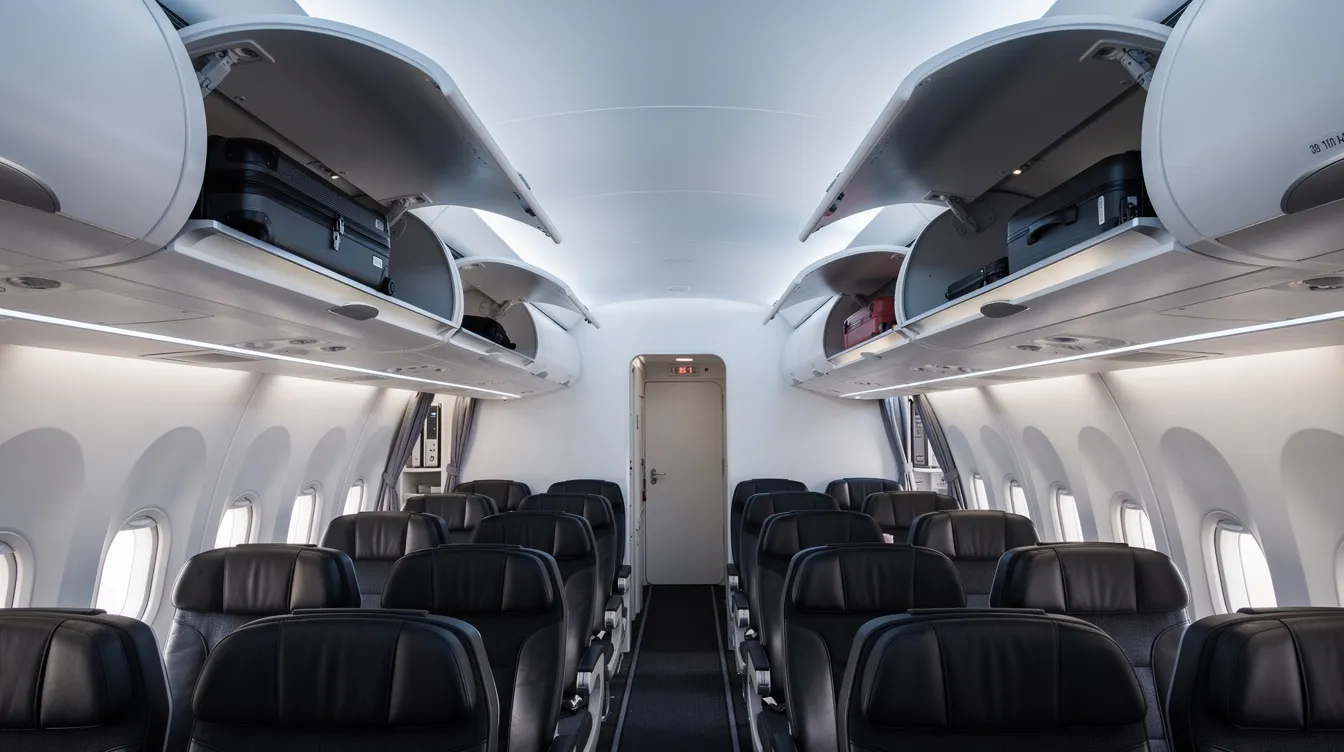
Even the best economy seat still places the traveler among 170+ people. A private light or midsize jet keeps the group small, quiet, and focused.
Seat Dimensions, Best Seats, and How to Read a Boeing 737-900 Seat Map
The "best" seat depends on what you value—legroom, quiet, quick exit, or access to power outlets. Here is an overview of dimension ranges by class:
Class | Seat Pitch | Seat Width | Recline |
|---|
First Class | 37–38 in | 20–21 in | ~5 in |
Premium Economy | 33–36 in | 17–17.3 in | ~3 in |
Economy | 30–31 in | 16–17.3 in | ~2 in |
Seat pitch is measured from a point on one seat to the same point on the seat in front. Seat width is measured between the inner sides of the armrests. Understanding these specifications helps distinguish a genuinely comfortable seat from a marketing label.
Tactical seat selection advice:
Choose exit rows and bulkheads for more legroom
Avoid last rows and seats immediately in front of exits (reduced recline)
Check window alignment—some seats left of center lose windows due to fuselage framing
Look for color-coding and recommended/avoid markers on third-party display sites
Onboard Amenities: Power, Wi-Fi, and Boeing Sky Interior Features
For travelers who need to work on a flight, amenities are not optional—they are infrastructure. Many Boeing 737-900s are equipped with AC power outlets and USB ports, particularly in first class and premium economy. Standard economy may have seatback power outlets in select rows, though availability varies.
In-flight entertainment options vary and may include seatback screens or wireless streaming to personal devices. Wi-Fi availability on the 737-900 varies by airline and flight: Delta offers free Wi-Fi across its 737-900ER fleet, while United provides paid connectivity.
Boeing Sky Interior features found on many 737 900s include sculpted sidewalls, larger pivoting overhead bins, and programmable LED mood lighting that reduces fatigue. Cabins are quieter than older 737 Classic interiors.
In a BlackJet private jet, these details elevate further: cabin noise drops to around 50–60 dB, Wi-Fi is optimized for video calls, catering is bespoke, and the entire cabin can be configured for work, dining, or rest.
Commercial Boeing 737-900 vs Private Jet Access with BlackJet
The Boeing 737-900 interior is optimized for airline economics—maximum customers per flight at minimum cost per seat. Private jets are optimized for time, privacy, and strategic flexibility.
Consider the boarding contrast: 737-900 flights operate on fixed airline schedules through busy terminals with security lines and gate queues. Private jet travelers can arrive 15 to 20 minutes before departure at private FBOs with minimal friction.
A concrete time-savings scenario: a mid-distance route like LA to Seattle. Commercial flights can take approximately 9 hours door-to-door when factoring in early arrival, security, boarding, taxiing, and baggage claim. Private jets can reduce travel time to about 6 hours with flexible departure times and proximity to smaller airports.
On productivity: a 737-900 economy or even first-class cabin still carries ambient noise of roughly 65–75 dB with limited privacy. A private jet carries only your party, with space for confidential meetings and calls.
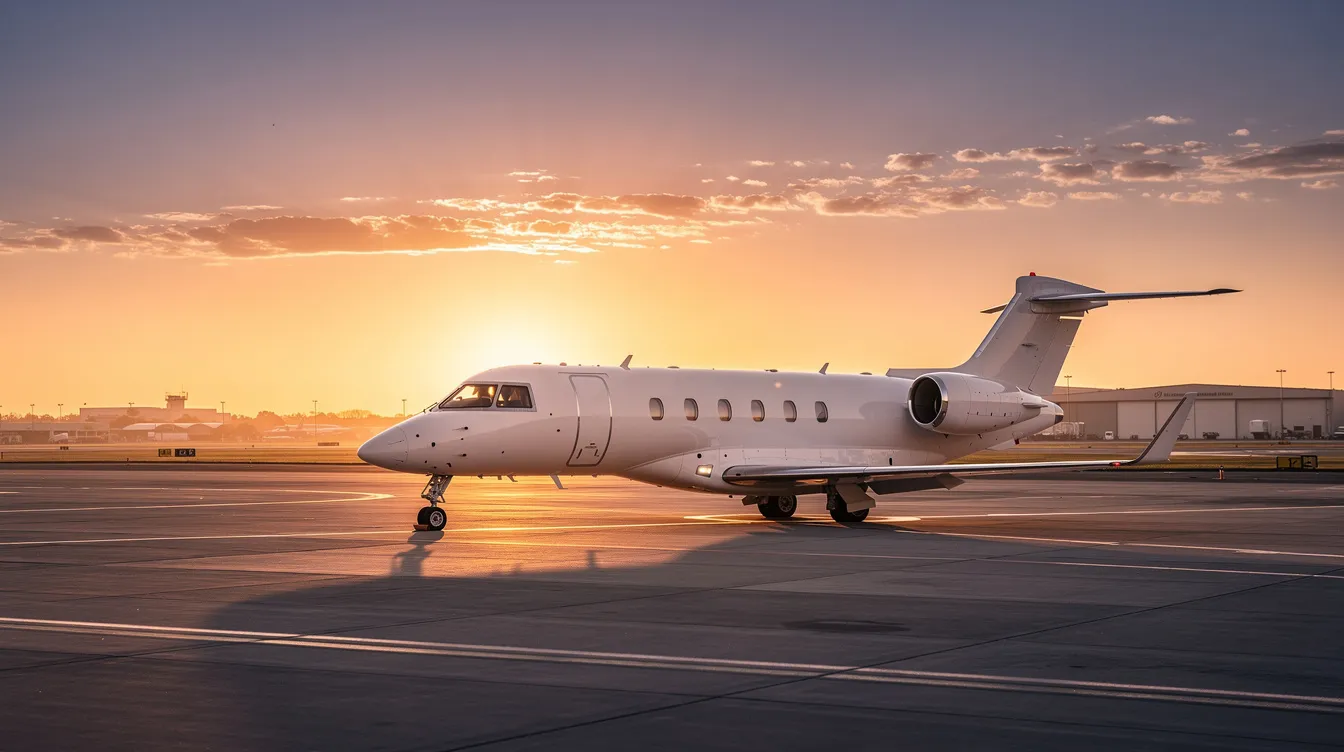
Cost positioning matters too. Commercial tickets are cheaper per seat. But a BlackJet Jet Card can be cost-justified for executive teams or families of 4–6 when factoring in hotel nights saved, billable hours preserved, and total trip efficiency.
Safety, Sustainability, and Technology: Airlines Operating the 737-900 vs BlackJet Standards
Both commercial 737-900 operators and private jet providers operate under strict aviation regulations. Commercial aircraft like the 737-900 follow FAA and EASA safety regulations, and the Boeing 737NG family has a hull-loss rate of 0.08 per million departures—a strong record built over decades of maintaining rigorous inspection programs.
BlackJet employs a multi-layer safety review for operator selection, relying on third-party audit standards like ARGUS, Wyvern, and IS-BAO to exceed minimum regulatory requirements. Every private jet safety protocol is vetted independently.
On sustainability: airlines use high load factors and winglets for range efficiency and reduced per-seat emissions. BlackJet ensures carbon-neutral flights through verified offset programs at no additional cost to the traveler—an approach detailed in our green private jet commitment.
Technology is where the experience diverges sharply. Airline support typically involves call centers and queues. BlackJet provides real-time human concierge support alongside a 24/7 digital booking platform with dynamic aircraft selection and integrated safety and offset tracking.
When to Choose a Boeing 737-900 Seat vs. a BlackJet Private Jet
For travelers who regularly fly routes served by the Boeing 737-900, the decision comes down to context.
The 737-900 makes sense when:
Traveling solo or as a couple on popular leisure routes
Cost per seat is the primary factor
Airline schedules align perfectly with your trip timing
A BlackJet Jet Card is the better choice when:
Running multi-city same-day business itineraries
Short-notice travel is required
Routes are poorly served by 737-900 schedules
Confidentiality or luxury impression matters for clients or stakeholders
Traveling with pets, bulky luggage, or a family group
Many BlackJet clients use a hybrid strategy: commercial first class or premium economy on a 737-900 for straightforward legs, complemented by Jet Card hours for complex or time-sensitive missions. Private jet bookings can be made through Jet Card programs in 25, 50, or 100-hour tiers, with BlackJet offering 24/7 digital booking tools and predictable pricing.
For business executives and high-net-worth travelers, understanding the Boeing 737-900 interior is more than an exercise in aviation trivia. It directly affects how productive, rested, and composed you arrive at your destination. Every inch of seat pitch, every amenity decision, and every cabin layout choice shapes the experience across flights that can stretch three to six hours.
Executive Overview: Boeing 737-900 Interior vs Private Jet Cabins
The Boeing 737-900 is the longest variant of the Next-Generation 737 family, first entering commercial service in 2001 with Alaska Airlines as its launch customer. The airplane typically seats 177 passengers in two classes, though configurations can range from 177 to 189 depending on cabin layout. The first aircraft of this type were designed primarily for domestic or medium-haul routes, and that mission profile remains unchanged today. The plane cruises at roughly 840–850 km/h, with seat pitch ranging from 30 to 38 inches depending on class. A Boeing 737-900 operates on fixed airline schedules, which means travelers surrender control of timing from the moment they book.
Contrast that with a private jet cabin accessible through a Jet Card program. Private jets offer a maximum of 6 to 12 passengers for privacy, replacing the dense 3-3 economy environment with tailored space, schedule flexibility, and door-to-door efficiency. This article covers everything from seat maps and first-class specifications to onboard amenities and the specific scenarios where commercial 737 900 travel makes sense—and where private aviation with BlackJet offers a strategic advantage.
Boeing 737-900 Basics: Dimensions, Performance, and Role in the 737 Family
The Boeing 737-900 and its extended-range sibling, the 737-900ER, were developed to replace older 757-200 missions on medium-haul routes, giving airlines a narrowbody option with greater capacity and enhanced fuel efficiency.
Key specifications distinguish this Boeing aircraft from the rest of the family:
Specification | Boeing 737-900 / 900ER |
|---|
Length | ~138 ft 2 in (42.1 m) |
Interior cabin length | ~101 ft |
Wingspan (with winglets) | ~117 ft 5 in |
Cruising speed | Mach 0.78 (~828–842 km/h), max Mach 0.82 |
Range (900ER) | ~3,000+ nautical miles |
Maximum takeoff weight | ~194,700 lb |
Max capacity | Up to 220 passengers (single-class) |
The standard Boeing 737-900 and the 737-900ER, with early deliveries assembled at Boeing’s Renton factory, can differ in cabin layout: the ER variant adds extra fuel capacity and improved exit configurations, enabling extended range capabilities and higher seat counts. Over 95% parts commonality with other NG models simplifies airline maintenance—a point of development efficiency that keeps the 737 fleet economical for carriers. Typical operators include United, Delta, Alaska, KLM, and Lion Air, flying routes across dense domestic U.S. corridors, Europe hub-to-hub connections, and Southeast Asia regional networks.
Cabin Layout and Seat Map: How the Boeing 737-900 Interior Is Organized
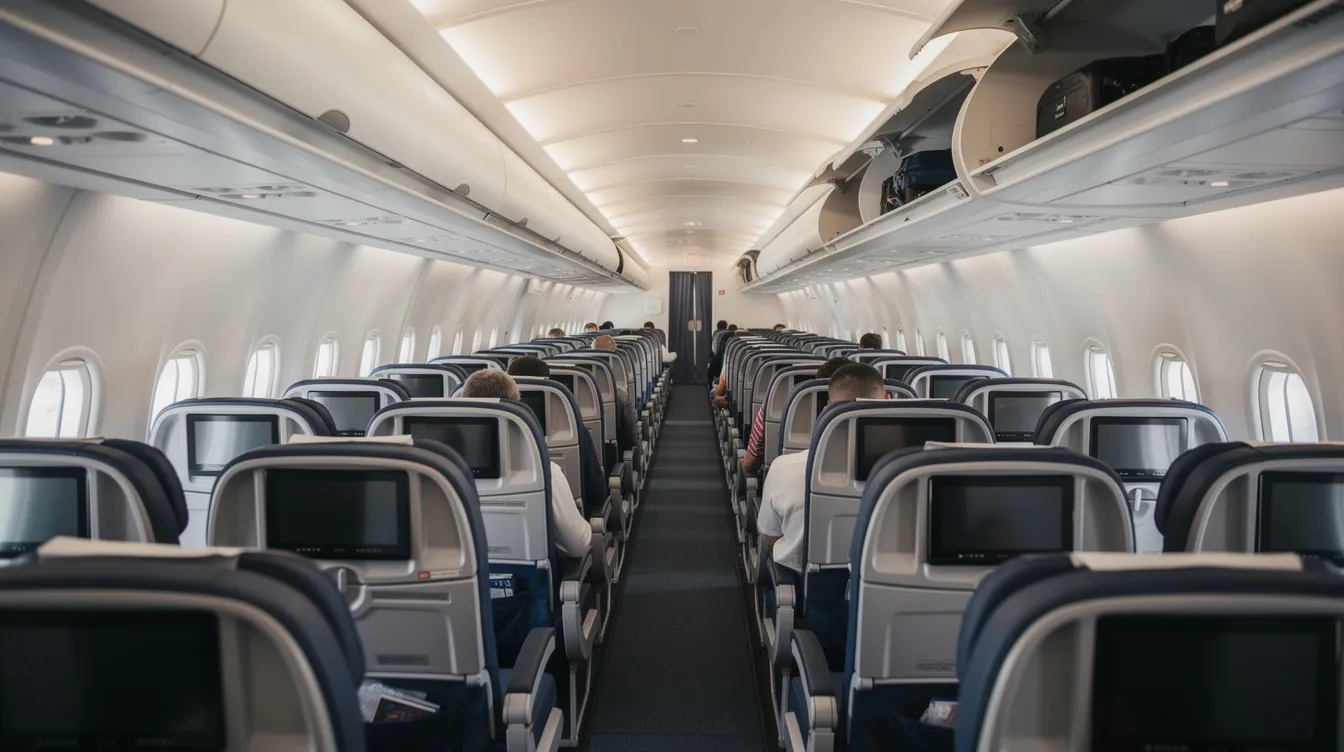
Most Boeing 737-900 interiors follow a predictable structure: a 2-2 layout in first class and 3-3 in premium economy and economy. Typical configurations include a premium cabin at the front and economy behind it. The typical seat layout in economy is 3-3, and a narrow-body aircraft's cabin may feel crowded compared to larger wide-body jets.
Front to back, the seat map reads: cockpit, forward galley, first class cabin, extra-legroom or premium economy section, standard economy cabin, rear galleys, and aft lavatories. Typically, three lavatories are present in the 737-900, with standard narrow-body lavatories located at the front and rear of the cabin.
A concrete example: United Airlines offers 20 first-class seats on the 737-900, followed by 42 premium economy seats and 117 economy seats, totaling 179 across the airplane. Many airlines display interactive seat maps online with icons for galleys, lavatories, emergency exits, and restricted-recline seats. For best results, cross-check airline maps with third-party review sites to identify bulkheads, exit rows, and wing-area seats before making your seat selection.
First Class Cabin: Comfort, Seat Pitch, and What to Expect
First class on the Boeing 737-900 is built for domestic and regional comfort—not long-haul lie-flat luxury. Expect a 2-2 configuration across roughly 4 to 5 rows, totaling 16 to 20 seats at the front. The Boeing 737-900 features 178 leather Recaro seats across its cabin, with the premium rows offering the most generous dimensions.
Typical first class numbers:
Amenities include larger seats with adjustable headrests, tray tables stored in the armrests, priority boarding to board early, upgraded meals and complimentary drinks, and dedicated cabin crew. Still, these seats do not convert to beds and share the cabin environment with 170+ other passengers.
By comparison, a private jet cabin via BlackJet offers full-flat beds, at most 6 to 12 passengers, and catering tailored to the traveler's preferences rather than a standardized airline menu.
Premium Economy and Extra-Legroom Seats: The "Middle Ground" in the 737-900 Interior
Premium economy—branded as Economy Plus by United or Comfort+ by Delta—provides the same 3-3 seat width as standard economy but adds meaningful legroom. Premium economy seats have a pitch of 34 inches and a width of 17 inches on United's 737-900, compared to 30–31 inches in standard economy.
These seats typically appear directly behind first class, sometimes at over-wing exit rows, and may be separated by curtains. Amenities include early boarding, enhanced snack options on some airlines, better odds of in-seat power, and faster deplaning from a forward position.
When does premium economy on a 737 900 make sense versus a BlackJet Jet Card? For a solo short hop where schedule aligns, premium economy is fine. For time-critical, multi-city days where schedule control matters more than a few extra inches of pitch, private access wins decisively.
Economy Cabin: Seat Pitch, Width, and Passenger Experience
The main Boeing 737-900 economy cabin holds well over 100 passengers in a 3-3 arrangement. Economy seats have a pitch of 30–31 inches and a width of 16–17 inches, with recline around 2 inches. Minor variations exist across airlines like KLM, United, Delta, and Alaska.
Many newer 737-900s feature improved overhead lighting and a larger cabin space, especially those retrofitted with Boeing Sky Interior. Sky Interior includes sculpted sidewalls and customizable LED mood lighting, along with larger overhead bins that hold roller bags upright. Many modern 737-900s also feature streamlined lavatories and optimized window designs that increase perceived openness.
Passengers near the wings often have a smoother ride in turbulence, though window views may be partially obstructed. Seats to avoid: last rows with limited or no recline, and seats near galleys and lavatories where noise and foot traffic spike.
Even the best economy seat still places the traveler among 170+ people. A private light or midsize jet keeps the group small, quiet, and focused.
Seat Dimensions, Best Seats, and How to Read a Boeing 737-900 Seat Map
The "best" seat depends on what you value—legroom, quiet, quick exit, or access to power outlets. Here is an overview of dimension ranges by class:
Class | Seat Pitch | Seat Width | Recline |
|---|
First Class | 37–38 in | 20–21 in | ~5 in |
Premium Economy | 33–36 in | 17–17.3 in | ~3 in |
Economy | 30–31 in | 16–17.3 in | ~2 in |
Seat pitch is measured from a point on one seat to the same point on the seat in front. Seat width is measured between the inner sides of the armrests. Understanding these specifications helps distinguish a genuinely comfortable seat from a marketing label.
Tactical seat selection advice:
Choose exit rows and bulkheads for more legroom
Avoid last rows and seats immediately in front of exits (reduced recline)
Check window alignment—some seats left of center lose windows due to fuselage framing
Look for color-coding and recommended/avoid markers on third-party display sites
Onboard Amenities: Power, Wi-Fi, and Boeing Sky Interior Features
For travelers who need to work on a flight, amenities are not optional—they are infrastructure. Many Boeing 737-900s are equipped with AC power outlets and USB ports, particularly in first class and premium economy. Standard economy may have seatback power outlets in select rows, though availability varies.
In-flight entertainment options vary and may include seatback screens or wireless streaming to personal devices. Wi-Fi availability on the 737-900 varies by airline and flight: Delta offers free Wi-Fi across its 737-900ER fleet, while United provides paid connectivity.
Boeing Sky Interior features found on many 737 900s include sculpted sidewalls, larger pivoting overhead bins, and programmable LED mood lighting that reduces fatigue. Cabins are quieter than older 737 Classic interiors.
In a BlackJet private jet, these details elevate further: cabin noise drops to around 50–60 dB, Wi-Fi is optimized for video calls, catering is bespoke, and the entire cabin can be configured for work, dining, or rest.
Commercial Boeing 737-900 vs Private Jet Access with BlackJet
The Boeing 737-900 interior is optimized for airline economics—maximum customers per flight at minimum cost per seat. Private jets are optimized for time, privacy, and strategic flexibility.
Consider the boarding contrast: 737-900 flights operate on fixed airline schedules through busy terminals with security lines and gate queues. Private jet travelers can arrive 15 to 20 minutes before departure at private FBOs with minimal friction.
A concrete time-savings scenario: a mid-distance route like LA to Seattle. Commercial flights can take approximately 9 hours door-to-door when factoring in early arrival, security, boarding, taxiing, and baggage claim. Private jets can reduce travel time to about 6 hours with flexible departure times and proximity to smaller airports.
On productivity: a 737-900 economy or even first-class cabin still carries ambient noise of roughly 65–75 dB with limited privacy. A private jet carries only your party, with space for confidential meetings and calls.
Cost positioning matters too. Commercial tickets are cheaper per seat. But a BlackJet Jet Card can be cost-justified for executive teams or families of 4–6 when factoring in hotel nights saved, billable hours preserved, and total trip efficiency.
Safety, Sustainability, and Technology: Airlines Operating the 737-900 vs BlackJet Standards
Both commercial 737-900 operators and private jet providers operate under strict aviation regulations. Commercial aircraft like the 737-900 follow FAA and EASA safety regulations, and the Boeing 737NG family has a hull-loss rate of 0.08 per million departures—a strong record built over decades of maintaining rigorous inspection programs.
BlackJet employs a multi-layer safety review for operator selection, relying on third-party audit standards like ARGUS, Wyvern, and IS-BAO to exceed minimum regulatory requirements. Every private jet safety protocol is vetted independently.
On sustainability: airlines use high load factors and winglets for range efficiency and reduced per-seat emissions. BlackJet ensures carbon-neutral flights through verified offset programs at no additional cost to the traveler—an approach detailed in our green private jet commitment and aligned with emerging affordable private jet options that broaden access to sustainable private flying.
Technology is where the experience diverges sharply. Airline support typically involves call centers and queues. BlackJet provides real-time human concierge support alongside a 24/7 digital booking platform with dynamic aircraft selection and integrated safety and offset tracking.
When to Choose a Boeing 737-900 Seat vs. a BlackJet Private Jet
For travelers who regularly fly routes served by the Boeing 737-900, the decision comes down to context.
The 737-900 makes sense when:
Traveling solo or as a couple on popular leisure routes
Cost per seat is the primary factor
Airline schedules align perfectly with your trip timing
A BlackJet Jet Card is the better choice when:
Running multi-city same-day business itineraries
Short-notice travel is required
Routes are poorly served by 737-900 schedules
Confidentiality or luxury impression matters for clients or stakeholders
Traveling with pets, bulky luggage, or a family group
Many BlackJet clients use a hybrid strategy: commercial first class or premium economy on a 737-900 for straightforward legs, complemented by Jet Card hours or a dedicated BlackJet 25+ Hour Jet Card for complex or time-sensitive missions. Private jet bookings can be made through Jet Card programs in 25, 50, or 100-hour tiers, with BlackJet offering 24/7 digital booking tools and predictable pricing—key benefits highlighted in guides to the best jet cards for frequent flyers.
Whether you are choosing seat 3A on a United 737-900 or stepping aboard a midsize jet from a private terminal, the goal is the same: arriving ready to perform. Discover how BlackJet Jet Cards can reshape the way you travel seamlessly, safely, and on your terms.


 Sign up with google
 Sign up with Apple