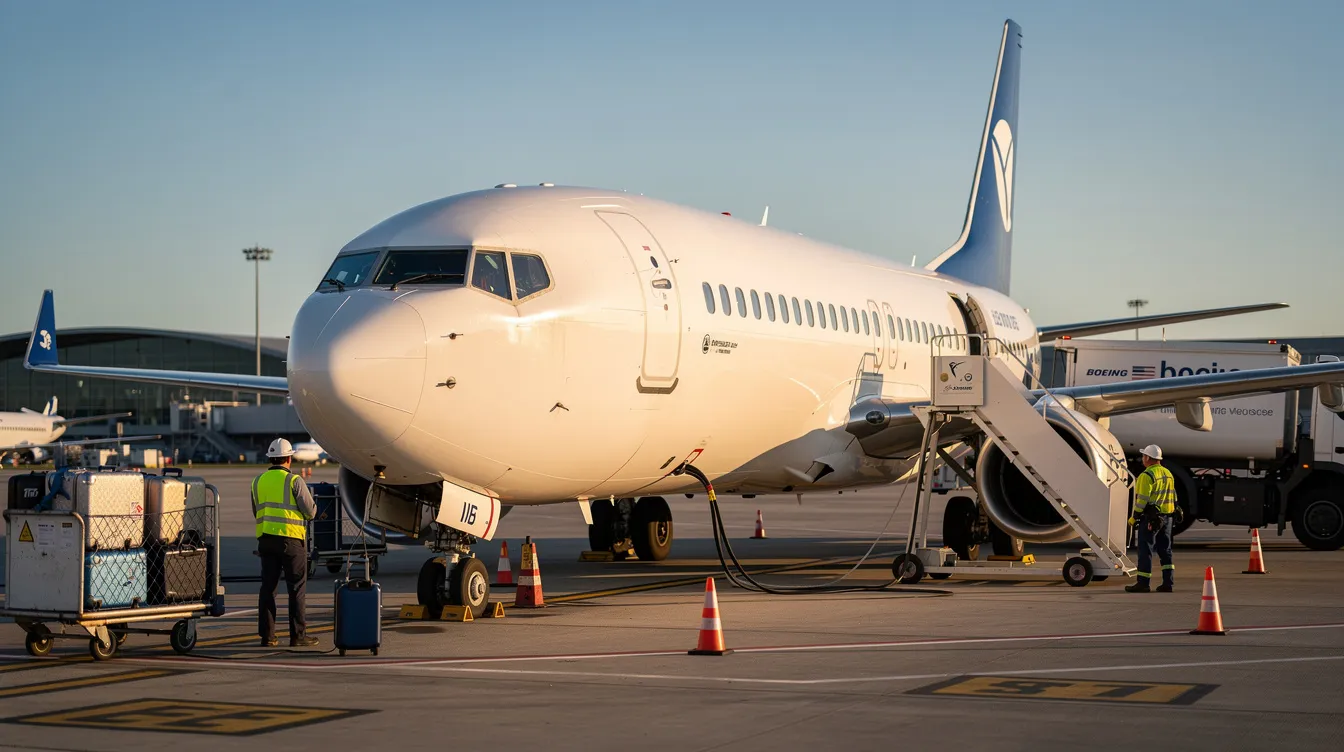
Aircraft weight shapes every critical aspect of flight—from how much runway is needed to how far a plane can travel and how much each hour of operation costs. For the discerning traveler weighing commercial aviation against private alternatives, understanding the mass of an aircraft like the Boeing 737 provides essential context for evaluating performance, efficiency, and value.
Overview: How Much Does a Boeing 737 Weigh in Tons?
The Boeing 737 family includes thirteen passenger models spanning nearly six decades of production, with configurations ranging from compact regional shuttles to stretched, high-capacity workhorses. The Boeing 737 series includes models with capacities from 85 to 215 passengers, and naturally, the weight of each variant reflects those differences in size, range, and technology.
Aircraft weights in commercial aviation are structured around specific definitions of weight parameters. In general, aircraft weight is measured using two primary benchmarks:
Operating Empty Weight (OEW): The weight of the aircraft including airframe, engines, operational fluids, and crew, but excluding payload and usable fuel.
Maximum Takeoff Weight (MTOW): The maximum weight at which the aircraft is certified for takeoff, including fuel, passengers, and cargo.
Across the full Boeing 737 lineup, maximum takeoff weight specifications range from 44 to 89.8 metric tons, while operating empty weight typically falls between 30 and 44 metric tons.
Table: Boeing 737 Model Weights and Capacities
Model | Empty Weight (metric tons) | Max Takeoff Weight (metric tons) | Typical Passengers |
|---|
737-200 (Original) | ~27.1 t | ~52.4 t | 97–136 |
737-800 (Next Generation) | ~41.4 t | ~79.0 t | 162–189 |
737 MAX 8 | ~45.1 t | ~82.2 t | 160–189 |
To make sense of these figures, a few definitions are essential:
Table: Key Aircraft Weight Terms and Definitions
Term | Definition |
|---|
Empty weight (OEW) | The mass of the aircraft itself—structure, engines, fixed equipment, and essential fluids—without payload or usable fuel. For a 737-800, that is roughly 41.4 metric tons (about 91,300 pounds). |
Maximum takeoff weight (MTOW) | The fully loaded ceiling: airframe plus fuel plus every passenger, bag, and piece of cargo on board. The 737-800's MTOW is approximately 79 metric tons. |
Maximum zero fuel weight | The maximum weight allowed before usable fuel is loaded. It exists to protect the wing structure from excessive bending loads when fuel tanks are empty. |
Maximum landing weight | The maximum weight allowed for touchdown under normal conditions, protecting landing gear, brakes, and structural integrity. For the 737-800, that limit is 77,000 pounds. |
Maximum taxi weight | The maximum permitted aircraft weight while taxiing before takeoff, typically slightly above MTOW to account for fuel consumed during ground operation. |
These parameters matter because payload is limited by maximum zero-fuel weight, and actual takeoff payload may be reduced by fuel requirements. In other words, every kilogram of fuel you add is a kilogram of passengers or cargo you may have to leave behind.
Now consider the scale difference. A super-midsize private jet—the kind many BlackJet members fly—has a typical MTOW of roughly 20 to 40 metric tons. A 737-800 nearly doubles that. For a deeper look at how private jet weight compares, the contrast becomes even more striking: lighter aircraft access smaller airports, burn far less fuel, and match the needs of groups of 4 to 12 travelers far more precisely than a 160-seat narrowbody ever could.
Boeing 737 Weight by Variant (Including 737-200 and 737-800)
The term "Boeing 737" covers a remarkably broad history of aircraft development. Weight varies significantly between early models like the 737-200, produced in the late 1960s, and later aircraft like the 737-800 and 737 MAX, which represent decades of engineering refinement. Understanding these differences helps frame why not all 737s are created equal—and why their operation profiles diverge so sharply.
Four Generations at a Glance
Table: Boeing 737 Generational Weights and Eras
Generation | Key Models | Empty Weight Range (t) | MTOW Range (t) | Era |
|---|
Original | 737-100, 737-200 | ~25–28 t | ~44–52 t | 1967–1988 |
Classic | 737-300, 737-400, 737-500 | ~31–35 t | ~56–68 t | 1984–2000 |
Next Generation | 737-600, -700, -800, -900 | ~37–44 t | ~66–79 t | 1997–2020 |
MAX | 737 MAX 7, 8, 9, 10 | ~43–49 t | ~80–89 t | 2017–present |
Each generation added range, seating capacity, and cabin volume, which naturally increased structural weight and MTOW—but also improved efficiency per seat.
The 737-200: Where It All Started
The 737-200, part of the original family, was designed for shorter regional routes. Its empty weight sits at approximately 27.1 metric tons (about 59,800 pounds), and its max takeoff weight reaches roughly 52.4 metric tons—modest by today's standards. Powered by Pratt & Whitney JT8D engines, the 737-200 burns more fuel per ton of weight and produces considerably more noise than any current-generation 737. Typical seating ran from 97 to 136 passengers depending on configurations, making it suitable for short-haul domestic routes but increasingly impractical as fuel costs rose and noise regulations tightened.
The 737-800: The Next Generation Workhorse
The 737-800 belongs to the Next Generation family, which also includes the 737-600, -700, -800, and -900 variants. The Boeing 737 Next Generation has lengths ranging from 31.09 to 42.06 meters, with the 737-800 sitting comfortably in the middle.
Representative weight figures for the 737-800:
Operating empty weight: approximately 41.4 metric tons (91,300 lb / ~45.6 short tons)
Maximum takeoff weight: approximately 79.0 metric tons (174,200 lb / ~87.1 short tons)
Maximum landing weight: 77,000 pounds
The 737-800 typically seats around 162 passengers in a two-class layout, or up to 189 in a high-density all-economy arrangement. That added seating and structural capacity—larger wings, more fuel volume, upgraded CFM56 engines—accounts for the substantial weight increase over earlier 737s like the 737-200.
Among the Classic models, the Boeing 737-400 offered a maximum capacity of 189 passengers in its densest seating configuration and bridged the gap between the early originals and the NG family. The 737-900ER, a stretched NG variant, pushed capacity even further while remaining within similar weight boundaries.
The 737 MAX: Heavier Structure, Better Efficiency
The Boeing 737 MAX entered service in 2017, introducing LEAP-1B engines, redesigned winglets, and refined aerodynamics. The MAX 8 carries an OEW of roughly 45.1 metric tons and a MTOW of approximately 82.2 metric tons. The larger MAX 9 pushes MTOW to about 88.3 metric tons with an OEW near 49 metric tons.
Despite being heavier than their NG predecessors, MAX variants deliver roughly 7–8% lower operating cost per seat thanks to engine efficiency and drag reduction features. This connects directly to broader industry trends—shared by competitors like the Airbus A320neo family—toward reducing emissions per passenger while maintaining or expanding range and capacity.
Why 737 Weight Matters: Performance, Range, and Operating Economics
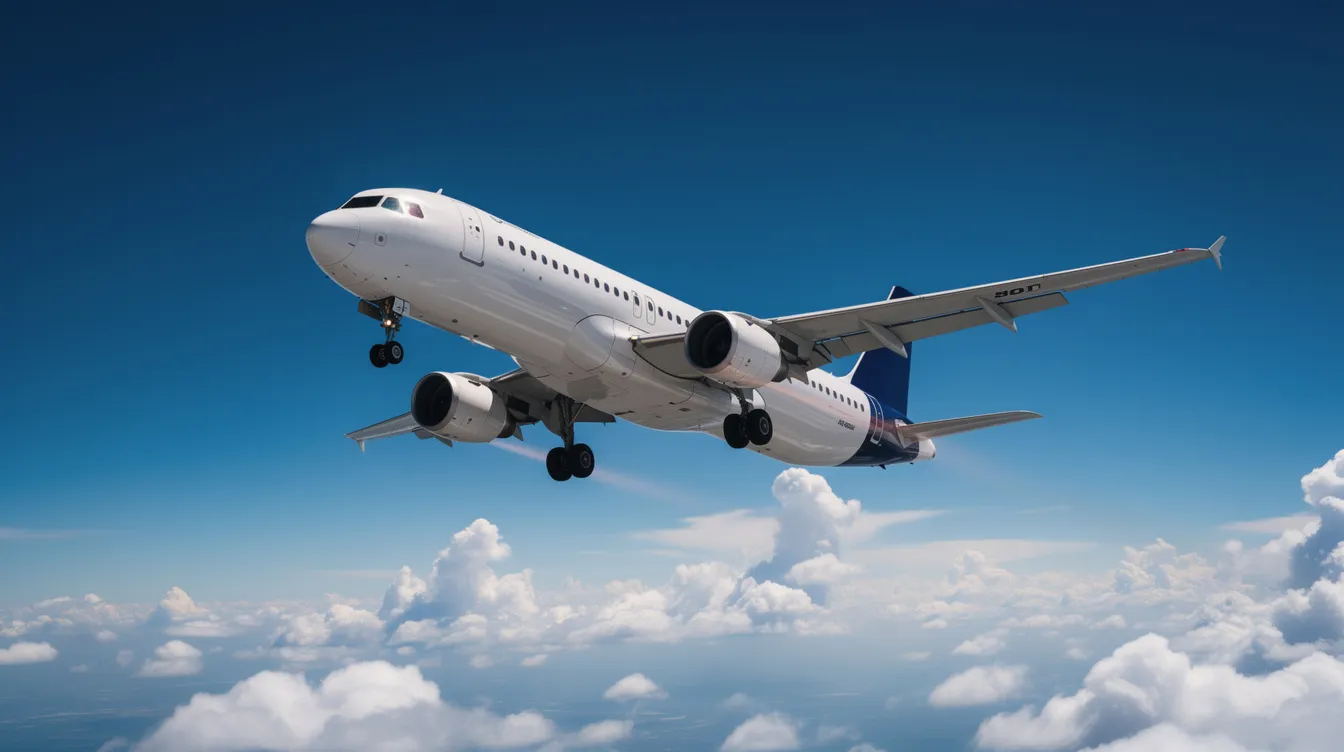
Every ton an aircraft carries affects how far it can fly, how quickly it can climb, and how much each hour of operation costs. For a Boeing 737 operating near its maximum takeoff weight, the practical consequences ripple through every phase of flight.
Weight and Fuel Efficiency
Heavier Boeing 737 variants demand more thrust—and therefore more fuel—to achieve the same mission. A 737-800 or MAX 8 may burn approximately 2.5 to 3 metric tons of fuel per hour during cruise. This figure climbs during takeoff and initial climb phases when thrust requirements peak.
Consider a 737-800 departing Denver International Airport on a July afternoon. Denver sits at 5,430 feet elevation, and summer temperatures can exceed 35°C. In that hot-and-high scenario, air density drops, engines produce less thrust, and the aircraft may be unable to depart at full MTOW. The result: airlines must sometimes reduce payload—offloading cargo or capping the number of passengers—to meet performance limits.
Range vs. Payload
Maximum takeoff weight and fuel capacity together define the 737's typical short- to medium-haul mission profile. A MAX 8 can cover roughly 3,500 nautical miles at optimal loading—enough for most domestic and intra-continental routes. But that range assumes careful balancing between fuel load and payload.
Every kilogram of fuel added may require a reduction in payload (passengers or cargo).
Airlines must optimize for both range and revenue, sometimes sacrificing one for the other depending on route and conditions.
Contrast this with a smaller private jet. A super-midsize aircraft weighing 25 to 35 metric tons at MTOW can cover similar distances—New York to Miami, Los Angeles to Aspen, London to Istanbul—non-stop with 8 to 12 passengers and significantly less total fuel. The lighter aircraft doesn't need the same runway length, doesn't require the same pavement strength, and reaches cruising altitude faster thanks to a superior power-to-weight ratio during climb.
Airport Infrastructure Requirements
A fully loaded 737-800 at 79 metric tons requires:
That typically means operating from congested hubs where slot access, gate availability, and landing fees add both cost and time.
Private jets weighing a fraction of a 737 can access thousands of smaller airfields that commercial narrowbodies cannot, especially when you choose the most economical private aircraft categories that balance cost, range, and comfort. That translates to shorter ground time, less congestion, and the ability to land closer to a final destination—benefits that compound over dozens of trips per year.
Per-Seat vs. Per-Mission Economics
For airlines, the Boeing 737's weight is justified by dense seating configurations and high load factors. Spreading the fixed costs of 79+ metric tons across 162 to 189 passengers makes each seat remarkably affordable. That economic model works brilliantly—when you need to fill most of those seats.
For an individual executive, a family of four, or a team of eight, chartering an entire 737-class aircraft is wildly inefficient.
You pay for the fuel to move 80 tons when you only need capacity for a fraction of the cabin.
A Jet Card program with premium private jet card options from BlackJet that matches aircraft size to party size eliminates that mismatch, turning per-seat economics into per-mission precision. You don't wait for a scheduled departure at a crowded terminal; you depart on your time, from the airport most convenient to you—drawing on the same principles that guide travelers who buy individual seats on private jets instead of whole-aircraft charters.
Boeing 737 vs. Private Jets: What High-Net-Worth Travelers Actually Fly
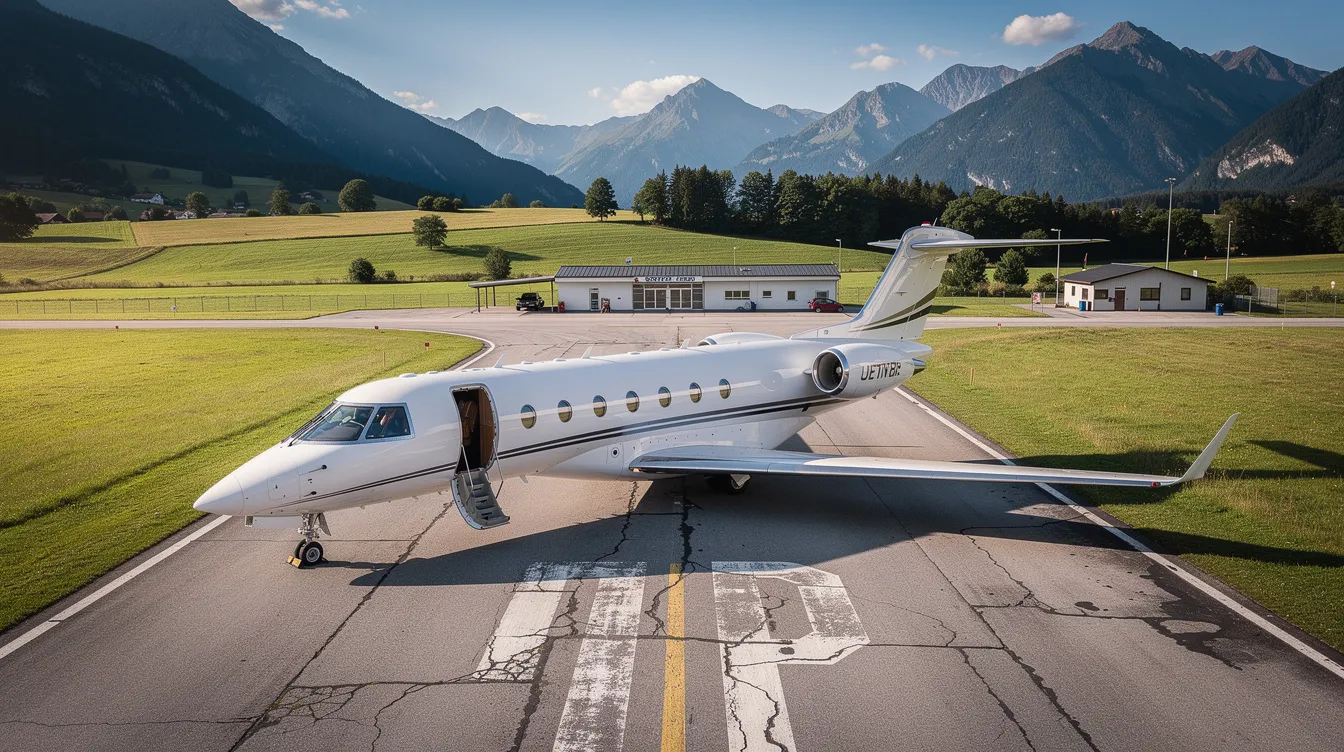
The Boeing 737 is a workhorse of commercial aviation—reliable, efficient at scale, and produced in greater numbers than any other jet airliner in history. But most BlackJet members don't need 189 seats. They need 6, or 10, or 14. And for that, a different class of aircraft delivers an entirely superior experience.
Weight Comparison: 737 vs. Private Jet Categories
Table: Boeing 737 and Private Jet Category Weights and Capacities
Aircraft Category | Typical MTOW (metric tons) | Typical Passengers | Example Routes |
|---|
Light Jets | 8–15 t | 4–7 | NYC–Nantucket, LA–Vegas |
Midsize Jets | 15–25 t | 7–9 | Chicago–Miami, Paris–Nice |
Super-Midsize Jets | 25–40 t | 8–12 | NYC–Miami, London–Geneva |
Large-Cabin Jets | 40–55 t | 10–16 | NYC–London, LA–Honolulu |
Boeing 737-800 | ~79 t | 162–189 | Scheduled airline routes |
Even a large-cabin private jet weighs roughly half to two-thirds of a 737-800, and for groups of around twenty travelers, large-cabin jets optimized for 20 passengers can deliver similar comfort with far less mass to move. A super-midsize jet—one of the most popular categories among BlackJet Jet Card holders—can cover key business routes like New York to Miami (approximately 1,100 nautical miles) non-stop with 8 to 12 passengers, burning roughly one ton of fuel per hour compared to the 737's 2.5 to 3 tons.
Safety and Certification: No Compromises at Any Weight
Regardless of whether an aircraft weighs 15 metric tons or 80, safety standards in private aviation are non-negotiable. Every operator in BlackJet's network meets rigorous third-party safety certifications, with maintenance protocols and crew qualifications that match or exceed commercial airline standards. Aircraft must comply with FAA or EASA type-certificate data sheets that specify every structural limit—MTOW, maximum landing weight, zero fuel weight—ensuring that no flight ever exceeds the parameters Boeing, Gulfstream, Bombardier, or any other manufacturer certified as safe.
Sustainability: Where Weight Meets Responsibility
Aircraft weight has a direct relationship with carbon emissions. Heavier aircraft burn more fuel, and more fuel means more CO₂. Newer models like the 737 MAX improve fuel burn per seat through better engines and aerodynamic features, but for small-party private travel, the most meaningful environmental gains come from flying the right-sized aircraft.
BlackJet provides carbon-neutral flights through verified offsets at no additional cost to members. Combined with selecting lighter, more efficient aircraft for each mission, this approach addresses the environmental footprint of private aviation head-on—without asking members to compromise on convenience or comfort.
Technology and Convenience: Right-Sizing Every Trip
BlackJet's digital platform and Jet Card model, including the BlackJet 25+ Hour Jet Card, let members select the right aircraft size—and therefore the right weight and cost profile—for each trip. There is no need to default to a 737-sized aircraft when a super-midsize jet covers the same route in the same time with a fraction of the fuel and operating cost.
Consider this scenario: a CEO needs to fly a team of eight from New York to Miami for a Monday morning meeting. A 737-800 could make the trip, but it would require a major airport departure, involve moving 79 metric tons of aircraft for eight people, and cost orders of magnitude more in fuel and fees than necessary. Instead, the CEO books a super-midsize jet through a BlackJet Jet Card—departing from Teterboro, landing at Opa-locka, saving over an hour of ground time on each end, and burning less than half the fuel. The team arrives rested, the carbon footprint is offset, and the cost aligns with the actual mission rather than the capacity of a 189-seat narrowbody.
That is the strategic advantage of private aviation: not flying the biggest aircraft, but flying the right one—and frequent flyers often unlock this advantage through the best-performing jet card programs.
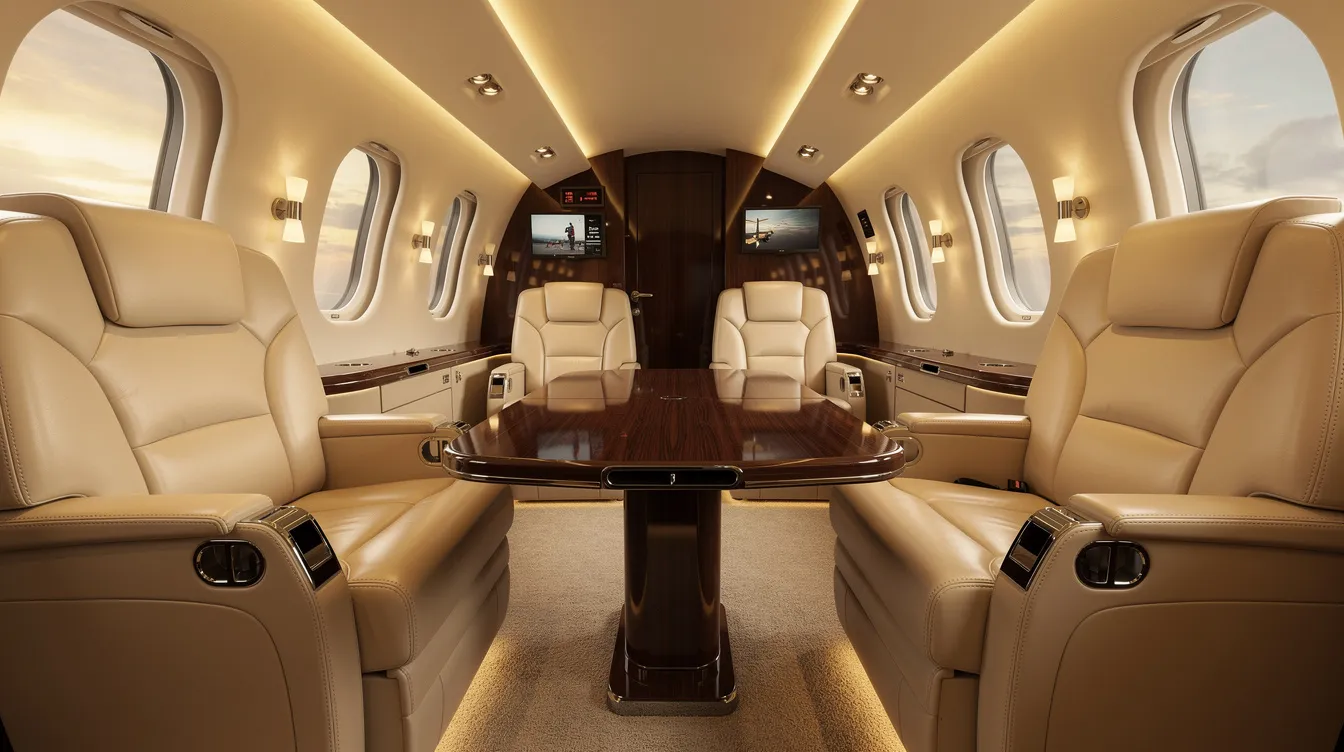
Elevate Your Travel—On Your Terms
Understanding how a Boeing 737 weighs in—from 27 metric tons empty for a vintage 737-200 to nearly 90 metric tons at max takeoff for a MAX 9—provides valuable context. But for travelers who value precision, privacy, and performance, the real insight is simpler: matching aircraft to mission is the ultimate efficiency.
Frequently Asked Questions (FAQs) About Boeing 737 Weight and Private Jet Travel
What is the operating empty weight of a Boeing 737-200?
The operating empty weight of the Boeing 737-200 is approximately 27.1 metric tons (about 59,800 pounds). This includes the aircraft structure, engines, and essential fluids but excludes payload and usable fuel.
How does the maximum takeoff weight of the Boeing 737-800 compare to earlier models?
The Boeing 737-800 has a maximum takeoff weight of around 79 metric tons, which is significantly higher than the original 737-200's MTOW of about 52.4 metric tons. This increase reflects advances in design, capacity, and range.
Why is aircraft weight important for private flyers?
Aircraft weight affects fuel consumption, range, runway requirements, and operating costs. For private flyers, choosing the right-sized aircraft—often lighter than a Boeing 737—means more efficient, flexible, and cost-effective travel.
How does the Boeing 737 compare to private jets in terms of weight and passenger capacity?
The Boeing 737-800 typically seats 162 to 189 passengers and weighs about 79 metric tons at takeoff. In contrast, private jets vary widely but often weigh between 8 and 55 metric tons and seat 4 to 16 passengers, offering more tailored and efficient options for smaller groups.
What safety certifications apply to Boeing 737 and private jets?
Both commercial aircraft like the Boeing 737 and private jets operated by BlackJet meet rigorous FAA or EASA certifications. Safety protocols, maintenance, and crew qualifications adhere to or exceed industry standards regardless of aircraft size.
How does aircraft weight impact sustainability in aviation?
Heavier aircraft burn more fuel and produce higher CO2 emissions. Newer Boeing 737 MAX models improve fuel efficiency, but private aviation achieves meaningful sustainability gains by flying the right-sized aircraft and offsetting carbon emissions through verified programs.
Can I access smaller airports with a Boeing 737?
Due to its weight and runway requirements, the Boeing 737 typically operates from major commercial airports. Smaller private jets can access thousands of regional and smaller airfields, providing greater convenience and time savings.
How does BlackJet’s Jet Card program enhance private jet travel?
BlackJet’s Jet Card programs offer prepaid access to a range of aircraft sizes, combining safety, sustainability, and flexibility. Members can select the perfect aircraft for each trip, avoiding the inefficiencies of flying oversized jets like the Boeing 737 when unnecessary.
What are the benefits of flying a super-midsize jet compared to a Boeing 737 for business trips?
Super-midsize jets weigh roughly 25 to 40 metric tons and seat 8 to 12 passengers, ideal for business routes like New York to Miami. They burn less fuel, access smaller airports, reduce ground time, and provide a more personalized experience than a 737-sized aircraft.
When did the Boeing 737 MAX enter service?
The Boeing 737 MAX series entered service in 2017, introducing more efficient LEAP-1B engines, improved aerodynamics, and winglets, which contribute to better fuel efficiency and lower operating costs per seat.
Conclusion: The Strategic Advantage of Understanding Boeing 737 Weight for Private Flyers
Grasping the weight dynamics of the Boeing 737 series—from the original 737-200 to the advanced 737 MAX—offers more than technical insight; it highlights the strategic considerations that define modern air travel for discerning individuals. While the 737 remains a cornerstone of commercial aviation with its impressive capacity and range, its sheer scale and weight underscore why private aviation opts for precision over size.
For high-net-worth travelers and corporate executives, this means embracing aircraft that align perfectly with mission needs—balancing passenger count, range, and airport accessibility without the excess weight and cost of a commercial narrowbody. Private jets, especially those in the super-midsize and large-cabin categories, provide a compelling alternative, delivering efficiency, convenience, and sustainability without compromise.
BlackJet’s Jet Card programs empower travelers to make these choices effortlessly, pairing rigorous safety standards and carbon-neutral flight options with flexible, technology-driven booking and support. The result is a travel experience that elevates every journey—not by flying bigger, but by flying smarter, tailored precisely to your needs.
With BlackJet, private flight is accessible through Jet Card programs that pair rigorous safety, carbon-neutral performance, and unmatched flexibility with seamless digital booking, whether you prefer a comprehensive 100-hour jet card for heavy usage or a smaller commitment. Whether you need a light jet for a quick weekend hop or a large-cabin aircraft for a transatlantic journey, every detail is handled—so you can focus on what matters most, supported by a clear understanding of private jet pricing and access options.
Explore BlackJet's Jet Card programs and discover how right-sized, refined travel becomes your new standard.


 Sign up with google
 Sign up with Apple