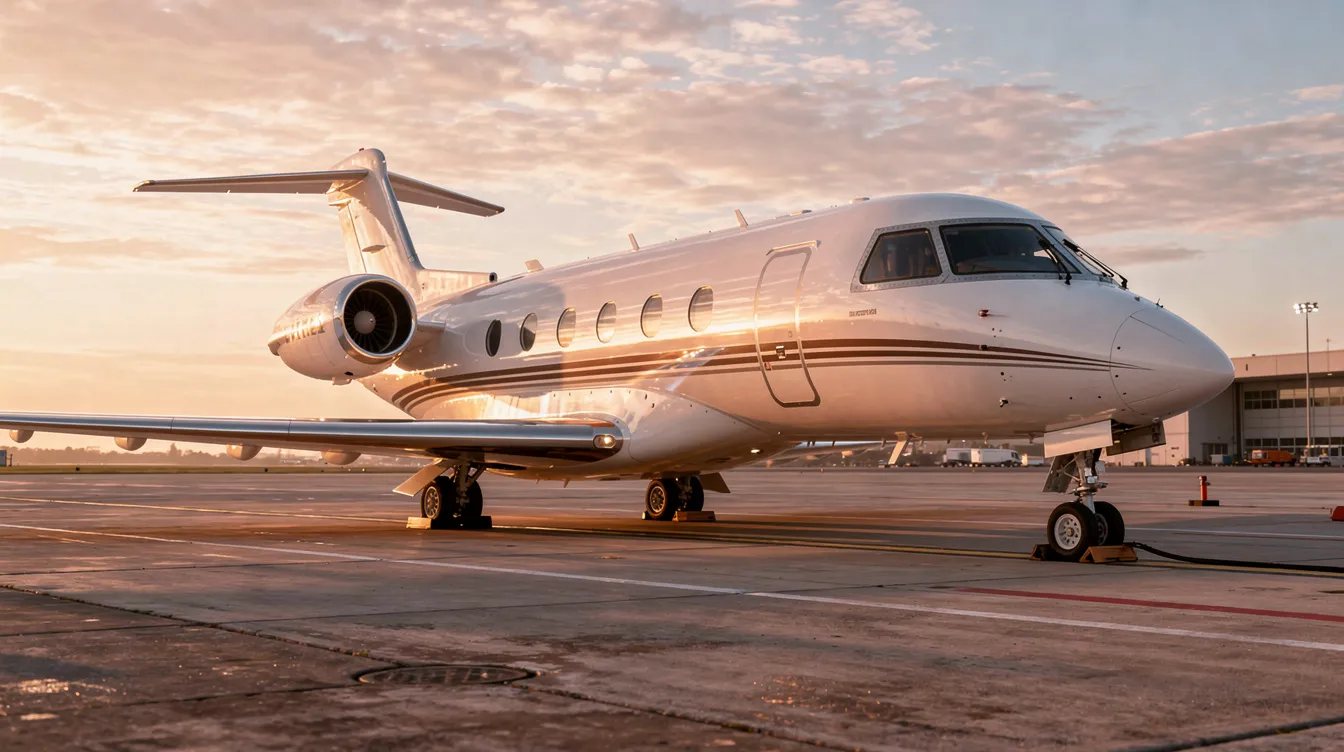
The Embraer 175 is one of the most frequently flown regional jets in the United States, and for good reason. Its 2-2 seating layout, dual-class cabin configuration, and relatively generous dimensions make it a standout among aircraft in its category. But once you understand exactly what's on offer - and what's not - the conversation shifts. Here's a complete breakdown of the Embraer 175 seat map, what each cabin delivers, and why travelers who discover private jet access through a Jet Card rarely look back.
Overview of the Embraer 175 Seat Map
The Embraer 175, commonly abbreviated as the E175, is a regional jet manufactured by Brazilian aerospace company Embraer as part of its E-Jet family. Designed for short- to medium-haul routes, this aircraft typically carries 76 seats in a dual-class configuration and is a workhorse for American Airlines, which operates it through regional partners including Republic Airways, Envoy Air, and SkyWest Airlines. You'll encounter it on routes connecting mid-tier cities with major hubs - think Charlotte to Nashville, Dallas to Memphis, or Chicago to Indianapolis.
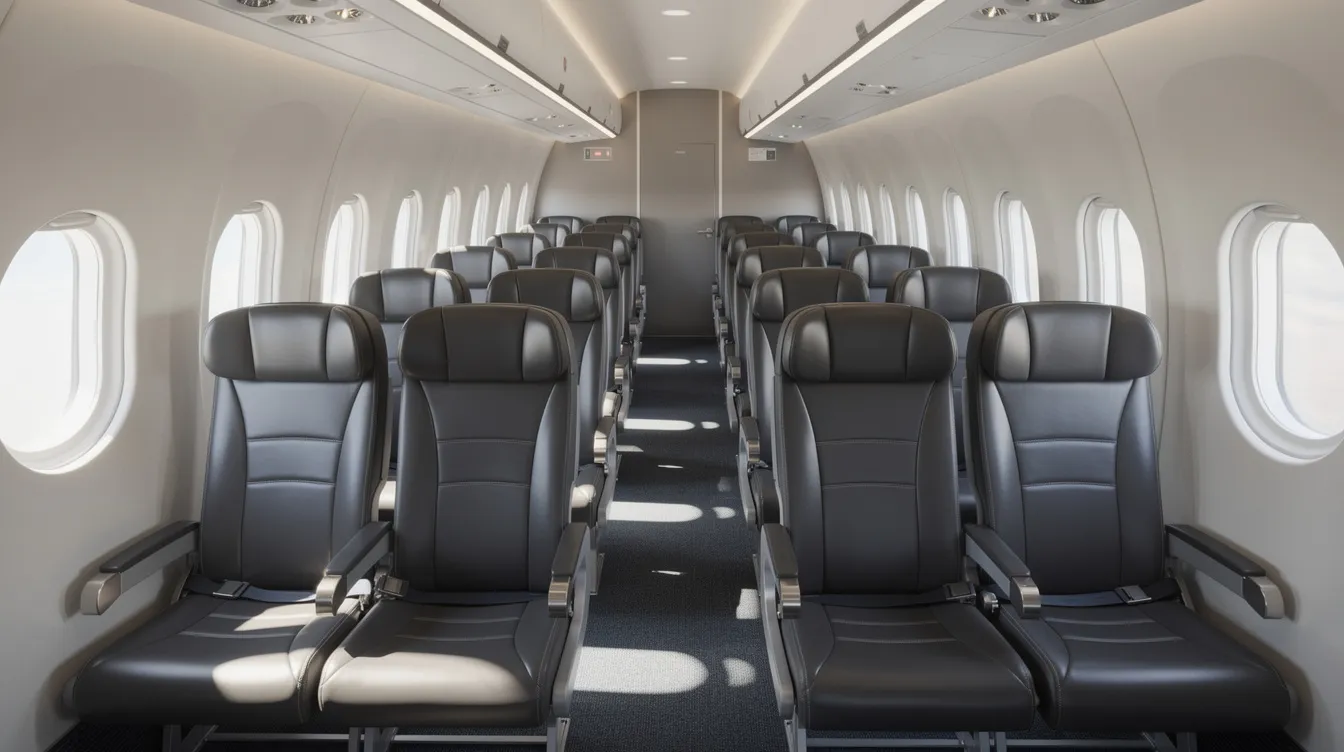
The seat map is structured around a 2-2 layout across all cabins, which means there are no middle seats on the Embraer 175. This is a meaningful distinction from larger narrowbody planes like the Boeing 737 or Airbus A320, where the dreaded center seat is an unavoidable reality for many passengers. On the E175, every passenger sits either at a window or on an aisle. The layout also allows couples to sit together without strangers in between, thanks to the absence of middle seats - a small but tangible comfort advantage.
Typical cabin classes on the E175 include first class at the front, followed by a Main Cabin Extra zone that functions similarly to premium economy, and then the standard economy section filling out the rear. On American Airlines, you'll most commonly see a 12 / 20 / 44 split, though some layout variants reduce first class to eight seats and adjust the other cabins accordingly.
This article focuses primarily on the American Airlines Embraer 175 seat map, though it's worth noting that configurations can differ slightly by airline, regional operator, and year of manufacture. For BlackJet readers, the key question is straightforward: how does the best seat on a 76-passenger regional jet compare with having the entire cabin to yourself on a private flight booked through a Jet Card? The answer, as we'll explore, comes down to time, privacy, flexibility, and control.
Embraer 175 Seat Map: Key Layout & Numbers
Understanding the Embraer 175 seat map starts with the numbers. The most common American Airlines configuration seats 76 passengers across three distinct zones. Here's a snapshot of the breakdown:
Cabin Class | Seat Count | Pitch (Legroom) | Width | Configuration |
|---|
First Class | 12 | ~37 inches | ~19.9–20 inches | 1-2 |
Main Cabin Extra | 20 | ~34 inches | ~18.2–19.3 inches | 2-2 |
Standard Economy | 44 | ~30 inches | ~18.2–19.3 inches | 2-2 |
Combined, the economy class features 64 seats on the E175 when you group Main Cabin Extra and standard economy, though their pitch and perks differ meaningfully.
The front-to-back order on the aircraft runs as follows: cockpit, then the first class cabin occupying the first several rows, followed immediately by the Main Cabin Extra zone, then the main cabin economy section extending to the rear. Galleys are positioned at both the front and rear of the plane, with lavatories typically at the forward and aft ends as well.
The 2-2 layout across the whole aircraft - including the Embraer E175's 2x2 seating configuration in economy - is one of the reasons this plane is considered among the more comfortable regional jets. No passenger is ever stuck in a center seat, and the fuselage width provides enough room that the aisle doesn't feel cramped during boarding and deplaning.
Key functional areas to note on the seat map include 4 emergency exits on the Embraer E175, with overwing exits located in the economy cabin. Entry doors sit at the front of the aircraft. Understanding where these features fall relative to your chosen seat can make a real difference in comfort and convenience, particularly on routes lasting two hours or more.
First Class on the Embraer 175
First class on the American Airlines Embraer 175 is modest by mainline standards but strong for a regional jet. The first class cabin contains 12 seats, arranged in a 1-2 seating configuration - a single seat on the left side of the aisle and a pair on the right. Some layout variants reduce this to eight first-class seats, but the 12-seat version is most prevalent.
First class seats on the Embraer 175 are noted for privacy, as some rows offer solo seat options on the left side of the aircraft. Passengers in seats 1A through 4A, for instance, have both a window and direct aisle access with no seatmate - a rarity in regional aviation.
Specifications at a Glance
Here are the typical dimensions and features for first class:
Pitch: approximately 36–37 inches of legroom, with most sources citing 37 inches as the standard
Seat width: roughly 19.9 to 20 inches
Recline: up to approximately 5–6 inches, though this is not a lie-flat seat
Power outlets at each seat for charging devices
Adjustable headrests and padded armrests
Dedicated overhead bins, though storage is somewhat limited on a regional aircraft
Amenities in this class cabin include enhanced catering with complimentary beverages and sometimes light meals, priority boarding, and more attentive service from cabin crew. The front-cabin environment is noticeably quieter than the rear of the plane, and passengers benefit from faster deplaning upon arrival.
How It Compares to a BlackJet Private Cabin
Even at its best, commercial first class on a 76-seat regional jet means sharing the cabin with up to 11 other travelers, adhering to fixed departure times, and navigating TSA security. A BlackJet light jet or midsize cabin on a comparable route offers a fundamentally different equation: private boarding at a dedicated terminal, full cabin privacy with only your party aboard, custom catering tailored to your preferences, guaranteed carbon-neutral operations, and departure times set by you, not the airline. The seat map becomes irrelevant when every seat in the aircraft is yours.
Premium Economy / Main Cabin Extra vs Standard Economy
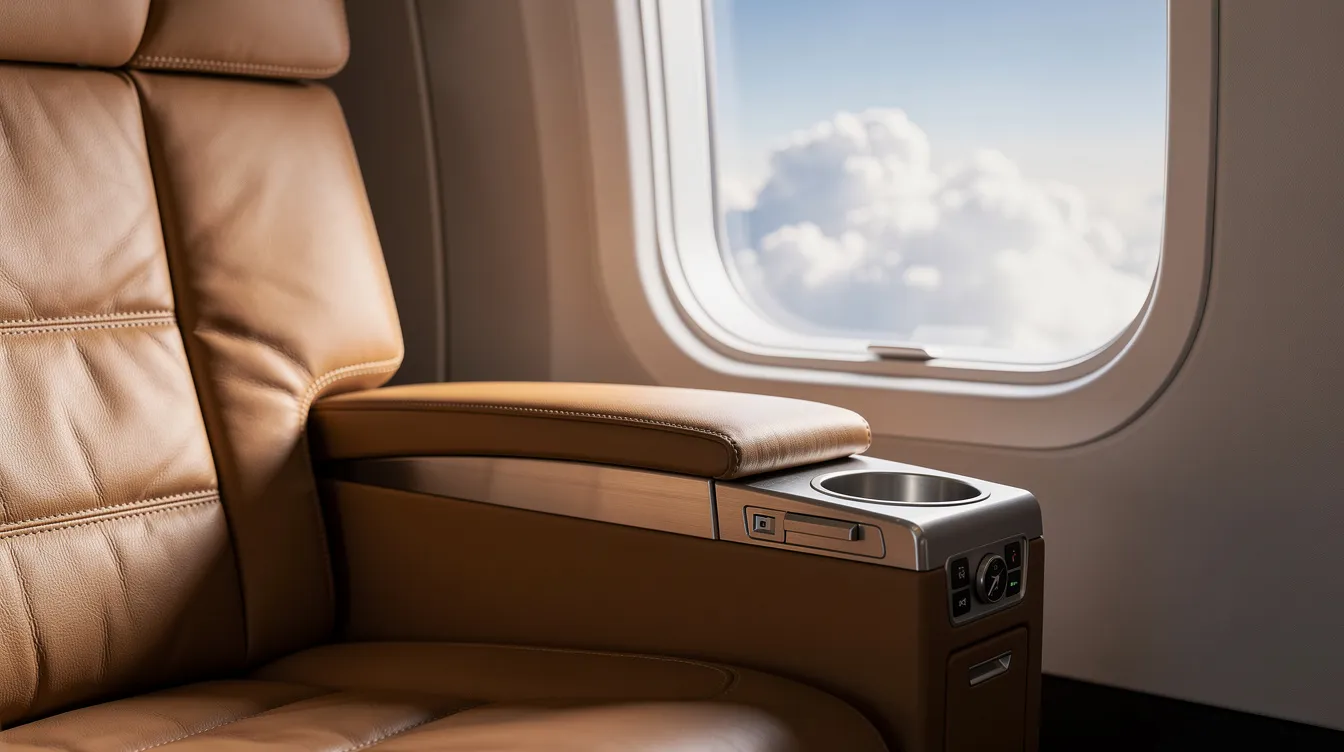
On many American Airlines Embraer 175 aircraft, the premium economy function is delivered through Main Cabin Extra seating rather than a structurally separate cabin. It's the same plane, the same row width, and the same overhead bins - but with a few tangible differences that matter on a two-hour flight.
Main Cabin Extra
The E175 includes 20 premium economy seats designated as Main Cabin Extra. These main cabin seats sit immediately behind first class and offer approximately 34 inches of pitch - a meaningful step up from standard economy. Main Cabin Extra seats often provide more legroom than standard economy seats, though the seat width remains the same at roughly 18.2 to 19.3 inches. Passengers in this zone also benefit from preferred boarding and, depending on AAdvantage status and route, occasionally complimentary beverages.
Standard Economy
Standard economy fills the rear of the aircraft with 44 seats in a 2-2 layout. Pitch drops to around 30 inches, recline is limited to roughly 3 inches, and amenities are minimal. The slimline seat design is functional but not generous, and passengers in the last rows sit close to the rear galleys and lavatories, which introduces noise, foot traffic, and occasional odor.
Quick Comparison
Feature | Main Cabin Extra | Standard Economy |
|---|
Seat Count | 20 | 44 |
Pitch | ~34 inches | ~30 inches |
Width | ~18.2–19.3 inches | ~18.2–19.3 inches |
Recline | ~3 inches | ~3 inches |
Boarding Priority | Yes | No |
Location | Behind First Class | Mid to Rear |
The most desirable seats in economy on the E175 seat map are exit-row seats for the extra legroom, forward economy rows for quicker deplaning, and window seats that are well aligned with actual windows. Seats in the last row of each section tend to receive the lowest rating from travelers due to recline restrictions and proximity to service areas, which is why some travelers start exploring how to buy a seat on a private jet when commercial comfort hits its limits.
Seat Map Details: Best Seats, Avoid Seats & Cabin Features
Travel review sites assign seat ratings based on several factors: legroom, proximity to lavatories and galleys, window alignment, recline restriction, and in-seat amenities. Knowing how to read these indicators on a seat map can turn a mediocre trip into a comfortable one - or at least a less uncomfortable one.
Best Seats on the American Airlines Embraer 175
Bulkhead first class (Row 1): Generous legroom with no seat in front, though you trade under-seat storage during takeoff and landing. Your bags must go in the overhead bins until cruising altitude.
Left-side first class seats (1A–4A): Solo seating with both window and aisle access. These are the most private seats on the aircraft.
Exit-row economy: Additional legroom, though seats must remain upright during taxi, takeoff, and landing.
Forward Main Cabin Extra rows: The best balance of legroom, cabin quietness, and proximity to the front door for deplaning.
Seats to Avoid
Last row of each cabin: Limited or no recline, and you're adjacent to lavatories or galleys. Noise, light, and foot traffic are persistent issues.
Seats next to galleys: The front and rear galleys generate noise from service preparation and crew movement.
Misaligned window seats: Some rows on both sides of the E175 have windows that don't line up with seat position, leaving you staring at a wall panel instead of the sky.
In-Seat Amenities
Modern E175 seat maps typically indicate the presence of AC power or USB outlets, though availability varies by row and cabin. The Embraer 175 features adjustable headrests and armrests across all cabins, along with shared air vents. Under-seat storage can vary due to IFE equipment boxes or seat-support structures in certain rows, so checking the seat map before selecting is worth the effort, particularly if you're weighing these trade-offs against the predictable Jet Card cost per hour for private alternatives.
Overhead bins on the Embraer 175 can accommodate standard carry-on bags, though they are narrower than those on mainline widebody aircraft. If you're traveling with larger roller bags, early boarding - which first class and Main Cabin Extra passengers receive - becomes a practical advantage, not just a perk.
Wi-Fi, Entertainment & Tech on the Embraer 175
Connectivity expectations have risen sharply in recent years, and the Embraer 175 meets them partially. Most American Airlines E175s are equipped with in-flight Wi-Fi, and Wi-Fi is available for all passengers onboard, though quality and speed depend on the provider and route. For basic messaging and email, it's generally reliable. For video calls or HD streaming, performance can be inconsistent - a common limitation across regional jet fleets.
Entertainment
There are no built-in seatback screens on most E175s. Instead, passengers can enjoy streamed entertainment options during flights through bring-your-own-device portals. You connect your personal phone, tablet, or laptop to the airline's streaming portal and access movies, shows, and audio content. It works, but it requires your own device and a charged battery at the start of the flight.
In-Seat Tech
First class seats offer power outlets for charging devices, while Main Cabin Extra and some economy rows provide USB ports. AC power availability becomes less consistent toward the rear of the plane. Seat maps on booking platforms increasingly show which rows have power access - it's worth checking before confirming your chosen seat.
For business travelers who need uninterrupted connectivity, private flights via a Jet Card often provide more predictable bandwidth per passenger. On a BlackJet flight, you're not sharing bandwidth with 75 other people. The connection is more stable, the cabin is quiet, and there are no announcements interrupting your call. It's the same point that applies to productivity broadly: fewer passengers mean fewer distractions, which is why frequent travelers ultimately evaluate the best Jet Cards for frequent flyers instead of just a better commercial seat.
Safety, Comfort & Sustainability: E175 vs Private Jet Travel
The Embraer 175 is a safe, modern regional aircraft with a strong operational record. Aerodynamic improvements - most notably Embraer's enhanced 45-degree winglets introduced around 2013–2014 - reduced fuel burn by approximately 6.4% compared with earlier wing designs. The aircraft operates under FAA Part 121 regulations with rigorous maintenance schedules, crew training requirements, and regulatory oversight, much like the high standards outlined in Flexjet Jet Card cost and program overviews. By any measure, it's a reliable platform.
Comfort Trade-Offs
Even in first class on the E175, passengers share the cabin with up to 11 other premium travelers. Schedules are fixed. Security lines add 30 to 90 minutes. Boarding queues, gate changes, and connection risks are realities of every commercial flight. You can optimize your seat selection, but you cannot optimize the system around you.
The BlackJet Alternative
BlackJet offers access to a curated network of private jets - from light jets ideal for routes similar to typical E175 sectors (New York to Chicago, Dallas to Miami) to midsize and large-cabin aircraft for longer trips. The experience starts differently: you arrive at a private terminal, board without a queue, and depart on your schedule, with access to multiple types of private jets tailored to your group size, range, and comfort preferences.
Safety is central to BlackJet's model. Every operator in the network undergoes proprietary vetting that examines pilot hours, training standards, and aircraft maintenance records. These standards meet or exceed commercial benchmarks, and the operators fly under FAA Part 135 regulations with codified Safety Management Systems.
Sustainability
All BlackJet flights are carbon-neutral through integrated offsets - covering not only CO₂ but also water vapor, aerosols, and nitrous oxide - at no additional cost to clients. Most travelers would agree that having sustainability built into the cost rather than treated as an add-on is a more honest approach. The E175 is relatively fuel-efficient for a regional jet, but individual commercial passengers have no direct control over their flight's environmental impact.
Using Seat Maps Strategically vs Choosing a Jet Card
Frequent flyers on American Airlines learn to use the Embraer 175 seat map strategically. They know that seat 2A offers solo privacy in first class. They know that Row 8 in Main Cabin Extra is the sweet spot for legroom without galley noise. They check which E175 variant is assigned to their route and adjust their selection accordingly. It's a skill, and it works - up to a point, especially if you haven't yet explored how Jet Card costs and membership pricing work on the private side.
But there's a ceiling to what seat-map optimization can achieve. You can pick the best seat on the plane. You still can't pick the departure time, skip the security line, avoid the connection, or control who sits next to you.
BlackJet Jet Card Programs
For travelers who have reached that ceiling, BlackJet's Jet Card programs offer a structural upgrade:
25-hour Jet Card: Prepaid access to private jets across multiple cabin types, ideal for executives flying 8–12 trips per year on regional routes and best understood through a complete guide to 25-hour Jet Cards.
50-hour Jet Card: Designed for higher-frequency travelers or those mixing short regional hops with longer domestic or international flights, with pricing and value outlined in this 50-hour Jet Card cost guide.
Digital booking tools and real-time support: Request specific aircraft categories and cabin layouts - effectively designing your own seat map instead of accepting a fixed commercial one via the dedicated BlackJet 25+ Hour Jet Card program.
Two Practical Scenarios
The weekly commuter: An executive flies from Dallas to Houston every Monday and Thursday on an American Airlines E175. Even in first class, each trip involves 90 minutes of airport overhead on each end. Over a year, that's roughly 300 hours spent in terminals, security lines, and boarding queues. A BlackJet Jet Card on a light jet cuts that overhead to minutes per trip - arriving at a private terminal 15 minutes before departure, boarding immediately, and landing at a closer airfield.
The family traveler: A family of four books four first-class seats on an E175 for a leisure trip. Cost per ticket is meaningful, but the total still involves shared cabins, fixed schedules, and checked bags. A private light jet for the same route seats the family together in complete privacy, with luggage loaded directly, catering chosen in advance, and departure timed to their preference - not the airline's, especially when they use one of the best Jet Cards for frequent flyers to lock in predictable access and pricing.

Frequently Asked Questions About the Embraer 175 Seat Map & Private Alternatives
How many seats are on the American Airlines Embraer 175?
The Embraer E175 has 76 seats total in the most common American Airlines configuration. This breaks down to 12 first class seats, 20 Main Cabin Extra seats, and 44 standard economy seats.
Is there a first class on every Embraer 175 flight?
Most American Airlines E175s include a first-class cabin, but the size varies. The standard layout has 12 first-class seats in a 1-2 arrangement, while some variants reduce this to 8 seats with a larger economy section.
Which seats on the E175 have the most legroom?
First class has 12 seats with a pitch of 37 inches. Bulkhead Row 1 offers the most legroom in the first-class cabin, though under-seat storage is limited. Exit-row seats in economy provide extra legroom beyond the standard 30-inch pitch. Main Cabin Extra rows deliver roughly 34 inches of pitch.
Does the Embraer 175 have Wi-Fi and power outlets?
Yes. Wi-Fi is available across all cabins, typically through a streaming portal to personal devices. First class seats include power outlets, and USB ports are available in many Main Cabin Extra and some economy rows. AC power is less common in the rear of the aircraft.
Are there middle seats on the Embraer 175?
No. The E175 uses a 2-2 configuration in every cabin, so every passenger sits at either a window or an aisle. This is one of the specifications that makes the E175 more comfortable than larger narrowbody planes with 3-3 seating.
How does flying first class on an Embraer 175 compare with chartering a private jet through a Jet Card?
Commercial first class on the E175 offers more legroom, enhanced service, and priority boarding - but you still share the cabin, follow fixed schedules, and navigate airport infrastructure. A BlackJet Jet Card provides private boarding, full cabin control, custom catering, flexible scheduling, and carbon-neutral operations. The cost structure differs significantly: first class is priced per seat per flight, while a Jet Card is prepaid by the hour across multiple trips, so understanding Jet Card cost per hour and broader Jet Card pricing structures becomes essential.
Is flying on an E175 eco-friendly, and how does BlackJet handle carbon emissions?
The E175's enhanced winglets reduce fuel burn by approximately 6.4% compared with earlier designs, making it one of the more efficient regional jets. BlackJet goes further: every flight is fully carbon-neutral through integrated offsets that cover CO₂, water vapor, aerosols, and nitrous oxide - included at no extra cost to the traveler, even when clients choose budget-friendly private aircraft options or explore the cheapest private jet solutions to enter private aviation more economically.
Conclusion & Invitation to Explore BlackJet
The Embraer 175 seat map offers one of the more comfortable regional flying experiences available today. With no middle seats, a well-structured dual-class layout, and reasonable specifications in first class, the E175 earns its place as a preferred aircraft on short- to medium-haul routes across the American Airlines network. For travelers who know how to read a seat map and select strategically, it delivers genuine value.
But commercial aviation - even at its best - operates within fixed constraints. Schedules are set. Cabins are shared. Airport overhead is unavoidable. For travelers who have already maximized the value of first class and now want control over their schedule, privacy, and aircraft type, the next step isn't a better seat. It's a different model entirely, whether they start with budget-friendly private aircraft options or explore the cheapest private jet pathways into private aviation.
BlackJet is built for that transition. Rigorous safety standards, carbon-neutral flights as standard, and technology-enabled booking and support form the foundation. Whether you fly 25 hours a year or 50, whether your routes mirror E175 sectors or extend further, the Jet Card programs are designed to make private aviation accessible, structured, and meaningful.
Elevate your travel - effortlessly. Explore BlackJet's Jet Card programs and discover how refined, purposeful travel becomes your new standard. Compare a year of regional first class with a year on a Jet Card, and see what control over your journey actually looks like.


 Sign up with google
 Sign up with Apple