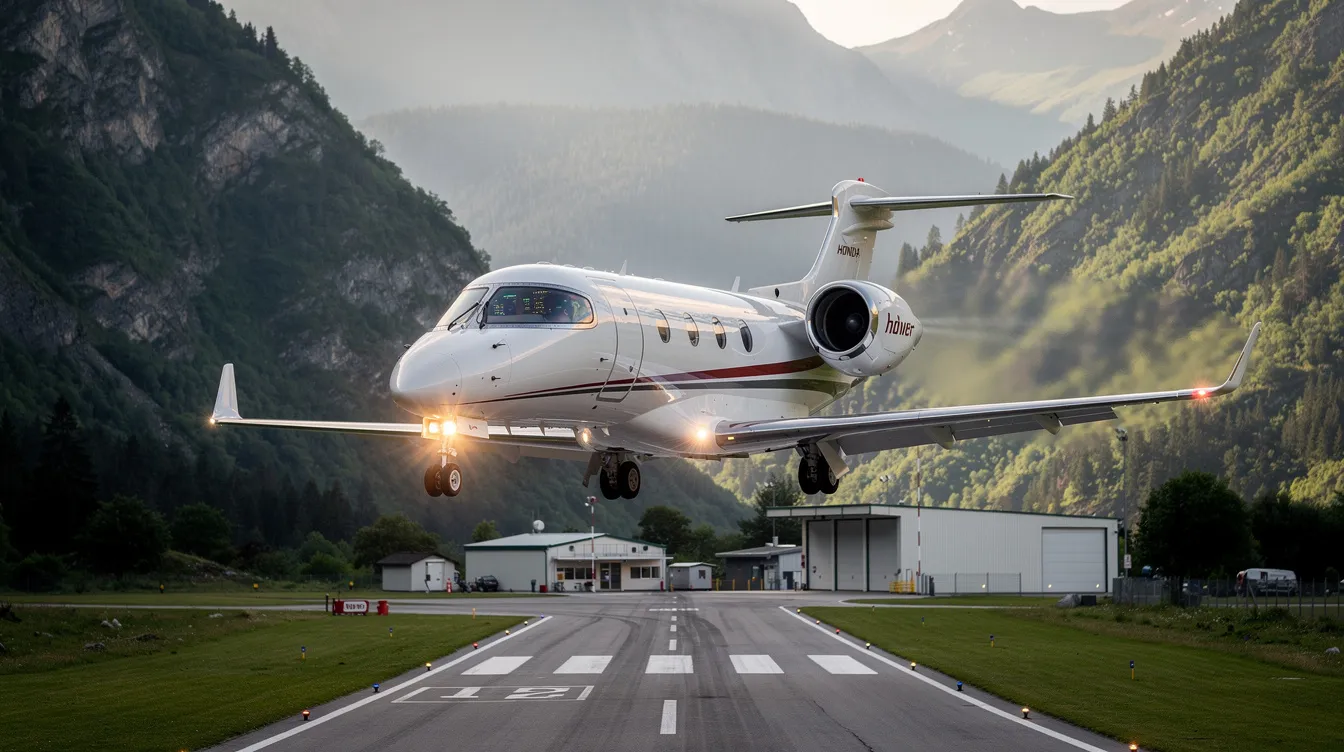
For executives and high-net-worth travelers who measure time in opportunities rather than minutes, the HondaJet Elite II—often searched as “honda elite 2 jet”—is Honda Aircraft Company’s advanced light business jet, introduced in 2022 for efficient, flexible regional private travel. It seats up to seven passengers, delivers a range of 1,547 nautical miles, and pairs modern avionics with the speed, privacy, and access to smaller airports that make private aviation valuable for frequent business flyers and discerning leisure travelers alike.
This guide looks at how the HondaJet Elite II performs in real-world private travel, from cabin comfort and flight deck technology to operating economics, sustainability, safety, and where it fits within access models such as BlackJet Jet Cards. If you want the benefits of private jet travel without the burden of ownership, it stands out as a light jet that blends luxury, schedule control, and efficiency in a way few regional aircraft can.
Why the HondaJet Elite II Matters for Discerning Private Fliers
The HondaJet Elite II was launched in 2022 by Honda Aircraft Company, setting new standards in the advanced light business jet segment. With a factory list price of $6,950,000, a range of 1,547 nautical miles, and seating for up to seven occupants in certain crew configurations, it delivers exceptional performance for regional missions between 1,000 and 1,500 nm.
Consider the math on a New York–Miami trip. Commercial first class: two-plus hours of airport processing, a three-hour flight, and limited schedule options. An Elite II departs from a private terminal in minutes, flies nonstop in under two hours, and lands at airports closer to your actual destination. Door-to-door, you recover three to four hours each way.
For many travelers, owning a Honda aircraft is unnecessary. Access through a premium jet card or on-demand charter-like BlackJet's private jet card programs-delivers the benefits of the HondaJet Elite II without the long-term capital commitment. BlackJet curates aircraft across the light jet category and beyond, ensuring members fly the right aircraft for each mission by matching travelers with the right private jet size for each journey.
Honda Aircraft Company and the Evolution to the Elite II
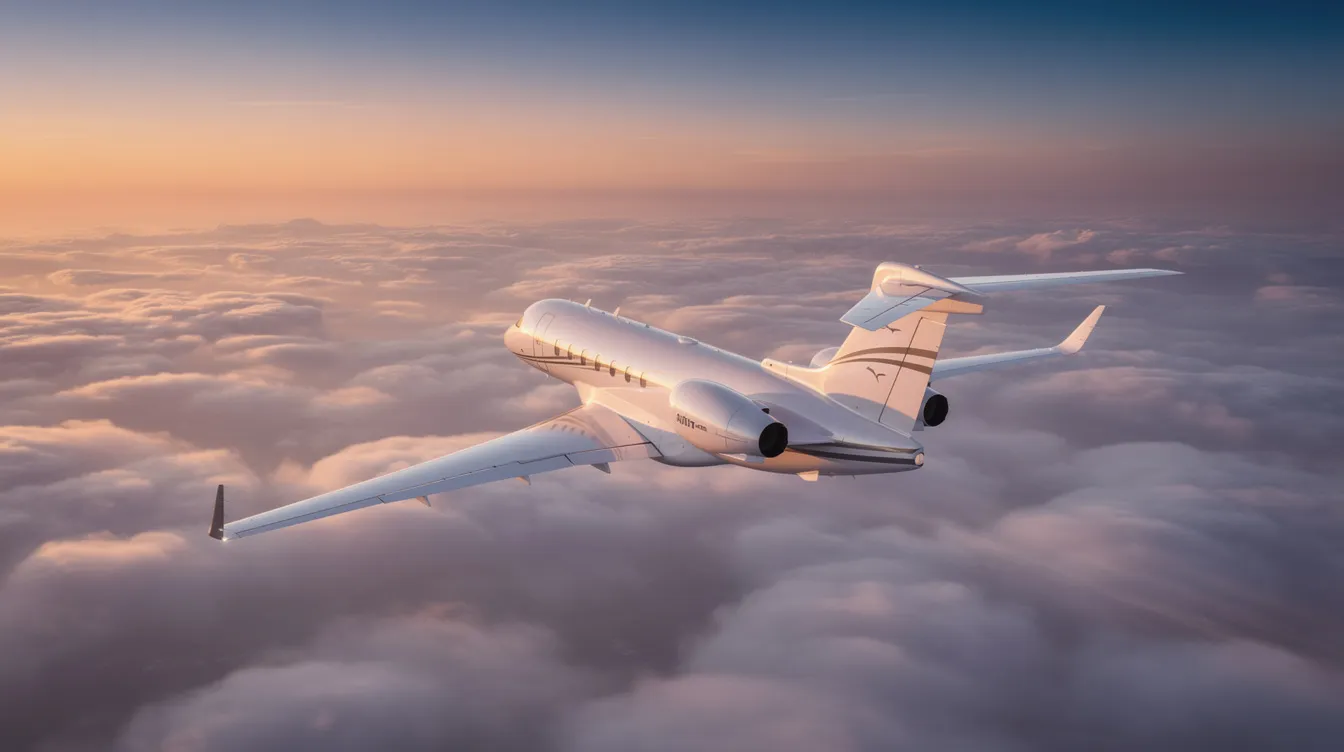
Honda Aircraft Company, a subsidiary of American Honda Motor Co. headquartered in Greensboro, North Carolina, earned FAA type certification for the original HA-420 HondaJet in 2015. The upgrade path-HondaJet to beautiful HondaJet APMG to HondaJet Elite to Elite S to Elite II-reflects a company committed to continuous innovation in the very light jet category.
By late 2021, over 200 HondaJets had been delivered globally, accumulating more than 210,000 flight hours. The Elite II introduction incorporated customer feedback on comfort, performance, and more automation features. Type validations in new markets like Brazil-with first delivery anticipated around LABACE 2026-demonstrate expanding global demand.
Honda's design philosophy centers on efficiency born from aerodynamic breakthrough thinking: compact footprint, advanced aerodynamics, and a customer-centric design approach targeting the very light jet and light business segment rather than large-cabin aircraft. For BlackJet clients, Honda's focus on reliability and an expanding service network ensures safe, predictable operations and meticulously maintained fleet availability-a foundation that ranks Honda among the top private jet manufacturers.
Performance, Range, and Takeoff Distance: What the Numbers Mean for Your Missions
The HondaJet Elite II delivers superior performance across every metric that matters for regional travel:
Metric | HondaJet Elite II |
|---|
NBAA IFR Range (4 pax) | 1,547 nautical miles |
Maximum Cruise Speed | 422 knots (up to 450 knots) |
Service Ceiling | FL 430 (43,000 ft) |
Maximum Takeoff Weight | 11,100 pounds |
Takeoff Distance (sea level, MTOW) | ~3,699 ft |
Landing Distance (4 pax, reserves) | ~2,717 ft |
That takeoff distance of roughly 3,699 feet opens access to shorter regional and executive airports that larger jets simply cannot use-making it one of the best aircraft requiring smaller runways for efficient operations.
Powered by twin GE Honda Aero Engines HF120 turbofans producing approximately 2,050 lbf of thrust each, the Elite II achieves fuel-efficient climb performance and consistent cruise economics. The HondaJet Elite II is also certified for steep approaches up to 5.5 degrees, unlocking challenging airports like London City or mountain destinations that demand precision.
Compared with competitors in the light jet category-the Cessna Citation M2 or the Embraer Phenom 300-the Elite II often wins on fuel burn per nautical mile for missions under 1,500 nm, thanks to its unique integration of over-the-wing engine placement and natural laminar flow surfaces. It is the farthest-flying aircraft in its class.
A BlackJet 25-hour jet card client flying Chicago to Nassau (approximately 1,200 nm) can make that trip nonstop in an Elite II, skipping the fuel stops and ground delays that less capable light jets require. That translates to an elevated flight experience and more efficient operations on every mission.
Cabin Experience and Interior Layout: Comfort in a Compact Footprint
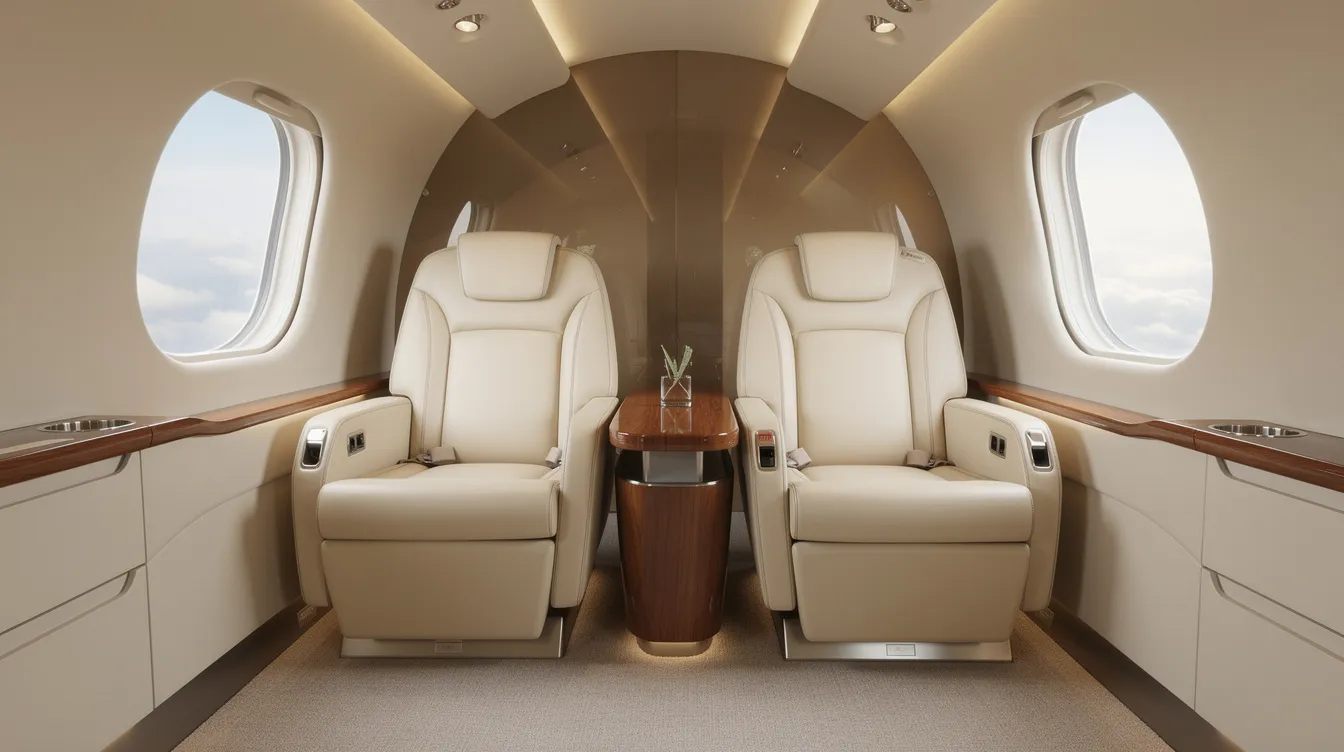
The HondaJet Elite II cabin configuration seats up to six passengers plus one pilot-or five passengers with dual crew. The executive club arrangement positions four contoured leather seats facing each other, with additional side-facing seats for staff or companions. The configuration is compact but intelligent, designed for productive 1–3 hour sectors.
Cabin dimensions-approximately 17.8 feet long, 5 feet wide, and 4.83 feet tall-place it at the top of its class among the best small private aircraft. What truly differentiates the space is how quiet it is. The over-the-wing engine mount configuration—an innovative design unique to the HondaJet Elite II—places the engines above the wings rather than attached to the fuselage. This unique placement not only reduces cabin noise by directing engine sound away from the passenger area, but also improves aerodynamic efficiency by minimizing interference drag between the wing and engine, resulting in a quieter and more fuel-efficient flight.
Large windows flood the cabin with natural light. A fully enclosed lavatory sits at the rear. Climate control and cabin management systems give passengers direct control over temperature and entertainment. Wi-Fi connectivity turns the cabin into a flying office-critical for time-sensitive business travelers who treat transit as productive hours, not dead time.
For BlackJet members, the Elite II aligns perfectly with clients seeking a luxurious yet fuel-efficient light jet for short regional hops, especially those comparing it to top affordable private planes and light jets: small teams, families, or executives who prioritize privacy and schedule control over raw cabin volume.
Flight Deck Technology: Intuitive Human–Machine Interface and Safety Enhancements
The HondaJet Elite II features advanced Garmin G3000 avionics, a state-of-the-art integrated flight deck system developed by Garmin and Honda. The Garmin G3000 avionics suite includes high-resolution touchscreen displays, synthetic vision, and comprehensive navigation, communication, and flight management capabilities, providing pilots with an intuitive and highly automated interface for enhanced situational awareness and operational safety.
The system integrates primary flight displays, navigation, weather, and traffic on high-resolution touchscreens, dramatically reducing pilot workload during complex operations.
Key automation features push the aircraft forward in its class, especially when compared with other cost-effective private aircraft options:
Autothrottle: FAA-certified in late 2024, this power management based system automates thrust through climb, cruise, and approach phases, matching desired flight characteristics without constant manual adjustment. It reduces pilot workload significantly during single-pilot operations.
Emergency Autoland: Certified by the FAA in February 2026, this technology allows autonomous landing in emergencies. If a pilot becomes incapacitated, the system can autonomously control the aircraft, select an appropriate airport, navigate, and land without human intervention-a first for the very light jet segment.
Stabilized Approach Alerts: Visual and aural cues warn pilots when approach parameters deviate from safe profiles, particularly valuable at challenging airports or during night operations.
Ground Spoilers and ASAS: Automated ground spoilers enhance takeoff and landing field performance, while the Advanced Steering and Augmentation System enhances operational safety during ground operations.
The HondaJet Elite II is designed for single pilot operations, but these new technologies combined with modern autopilot bring a whole new level of situational awareness. BlackJet pairs these aircraft with highly trained, dual-pilot crews and strict operator certification, leveraging every safety system to its full potential. These technological innovations set new standards for the class.
Operating Economics, Ownership, and Alternatives to Buying
The economics of an Elite II come into sharp focus when you compare ownership against access-based models and understand jet card cost structures and pricing.
Cost Element | Approximate Figure |
|---|
New Aircraft Price (2025) | $6,950,000 |
Annual Operating Cost (~350 hrs/yr) | $978,993 |
Cost Per Flight Hour | ~$2,374 |
The Embraer Phenom 300, priced at $6.8–$7.3 million, competes in a similar market bracket but with a larger cabin and different mission profile. Pre-owned HondaJet Elite and Elite S models may appear at lower capital cost, but earlier airframes may lack the autothrottle, Emergency Autoland, and increased fuel capacity of the Elite II. Some one-owner aircraft with low hours are available for immediate sale or immediate delivery, but buyers must verify whether these are fully enrolled in engine and maintenance programs or whether fractional jet ownership and depreciation might offer a better economic balance.
The trade-offs between whole ownership (one owner aircraft, full control, full risk), fractional programs, and a jet card model come down to utilization, capital exposure, and flexibility, especially once you factor in jet card pricing, costs, and benefits.
Consider a client flying 25 trips per year within 1,200 nm. Owning an Elite II costs roughly $978,993 annually before financing-plus the $6.95M acquisition and residual value risk. A BlackJet 50-hour Jet Card provides prepaid access to light business jets with no crew management, no hangar fees, and no remarketing headaches, and its value becomes clearer when you understand 50-hour jet card pricing and value. For travelers who value the owned flown experience without the ownership burden, jet cards sit at the strategic sweet spot.
Sustainability and Efficiency: HondaJet Elite II and Carbon-Neutral Travel
The HondaJet Elite II uses Sustainable Aviation Fuel since 2019 across demonstration and corporate flights, aligning with Honda's broader sustainability vision and the Elite program's vision for the future of aviation, while still competing favorably on total cost versus renting a private jet for individual trips.
Within the very light jet category, the Elite II leads on fuel efficiency. At approximately 130–135 gallons per hour, it burns meaningfully less fuel per passenger-mile than midsize jets flying similar routes and many other affordable private planes. That efficient performance stems from three aerodynamic pillars:
Over-the-wing engine mount – reduces interference drag between wing engine and fuselage
Natural laminar flow – smooths airflow over the wing and nose, cutting skin-friction drag
Composite fuselage – reduces structural weight, enabling expanded range without proportional fuel penalties
From BlackJet's sustainability perspective, every flight is offset to carbon-neutral status at no additional cost to the client. Choosing efficient types like the Elite II minimizes the offset required per trip, making carbon-neutral guarantees more cost-sustainable and supporting corporate ESG goals, especially when compared to the cheapest private aircraft and very light jet options. A 700 nm business trip in an Elite II versus a midsize jet can reduce fuel consumption by 30% or more-efficiency born from deliberate engineering, not compromise.
Safety Record, Training, and How BlackJet Assesses HondaJet Operators
The HA-420 family boasts a 99.7% dispatch reliability rate as of December 2021, with more than 200 aircraft in service accumulating over 210,000 flight hours. That reliability figure reflects strong engineering and maintenance culture.
Like all modern business jets, the family has experienced incidents-including runway excursions and a handful of hull-loss events reported by 2025, some involving fractional operators. Safety is a function of aircraft design, maintenance quality, pilot training, and operating culture-not just make and model. Honda Aircraft Company has earned multiple FAA AMT Diamond Awards, evidencing rigorous technical standards.
BlackJet vets operators flying new aircraft like the Elite II through:
Third-party safety audits (ARGUS, IS-BAO, or equivalent)
Mandatory dual-pilot crews on all jet flights
Continuous monitoring of incident data and Part 135 compliance
Verification that pilots complete recurrent simulator training
Advanced safety features-autothrottle, stabilized approach monitoring, emergency autoland-complement rather than replace rigorous human factors protocols. In an emergency situation, these systems provide critical backup. Combined, they create more automation layered with disciplined operating procedures.
Frequently Asked Questions About the HondaJet Elite II
Q: What is the maximum passenger capacity of the HondaJet Elite II?
A: The HondaJet Elite II typically seats up to seven passengers, with configurations allowing for six passengers plus one pilot or five passengers with dual crew.
Q: How does the HondaJet Elite II compare to other light jets in terms of range and speed?
A: The Elite II offers a range of 1,547 nautical miles and a maximum cruise speed of up to 450 knots, making it one of the fastest and farthest flying aircraft in the very light jet category.
Q: What safety features are included in the HondaJet Elite II?
A: The Elite II includes advanced safety technologies such as autothrottle, stabilized approach alerts, and Emergency Autoland, which enables autonomous landing in emergencies. It is also certified for single-pilot operations with a 99.7% dispatch reliability rate.
Q: Can the HondaJet Elite II operate from smaller airports?
A: Yes, with a takeoff distance of approximately 3,699 feet and certification for steep approaches up to 5.5 degrees, the Elite II can access shorter runways and challenging airports like London City.
Q: How does the HondaJet Elite II support sustainability?
A: The Elite II uses Sustainable Aviation Fuel (SAF) and features aerodynamic innovations like over-the-wing engine mounts and a composite fuselage to maximize fuel efficiency and reduce emissions. BlackJet also offsets all flights to carbon-neutral status at no extra cost.
Q: Is ownership the only way to access the HondaJet Elite II?
A: No, travelers can access the Elite II through premium jet card programs like BlackJet’s, which offer prepaid access without the capital commitment and operational responsibilities of ownership.
Q: What is the approximate annual operating cost of the HondaJet Elite II?
A: The annual operating cost is approximately $978,993, based on typical usage of around 350 flight hours per year.
Q: What advancements distinguish the Elite II from earlier HondaJet models?
A: The Elite II introduces increased fuel capacity, greater maximum takeoff weight, new interior options, and advanced avionics features including autothrottle and Emergency Autoland, enhancing both performance and passenger comfort.
Is the HondaJet Elite II Right for Your Travel Profile?
The ideal traveler for a HondaJet Elite II flies 1–5 passengers on mostly regional trips under 1,400 nm, values access to smaller airports near city centers or resort destinations, and treats cabin time as productive work time.
Think of a tech founder commuting from San Francisco to Southern California weekly. A family making frequent East Coast weekend escapes. A European executive connecting London, Geneva, and Milan on tight schedules. For these missions, the Elite II's speed, range, and runway flexibility are unmatched in the light jet market, but for very large groups,s a 50-passenger private jet solution becomes the more appropriate choice.
When transcontinental nonstops, larger groups, or heavy cargo enter the picture, stepping up to a midsize or large-cabin jet or even top 16-seat private jets for larger teams makes more sense. BlackJet advisors help members match aircraft category to each specific trip-balancing cost, comfort, runway access, and sustainability goals, whether that means a compact Elite II or a 30-passenger private jet for group travel.
The HondaJet Elite II represents the future of regional private aviation: innovation in aerodynamics, more automation in the cockpit, and a price point that redefines value in the light business jet segment. Whether you prefer to own or access, the performance speaks for itself, and heavy users can further optimize their strategy by understanding 100-hour jet card costs and structures.
Explore how BlackJet's Jet Card programs can bring the Elite II experience into your travel routine-discover your options today.


 Sign up with google
 Sign up with Apple