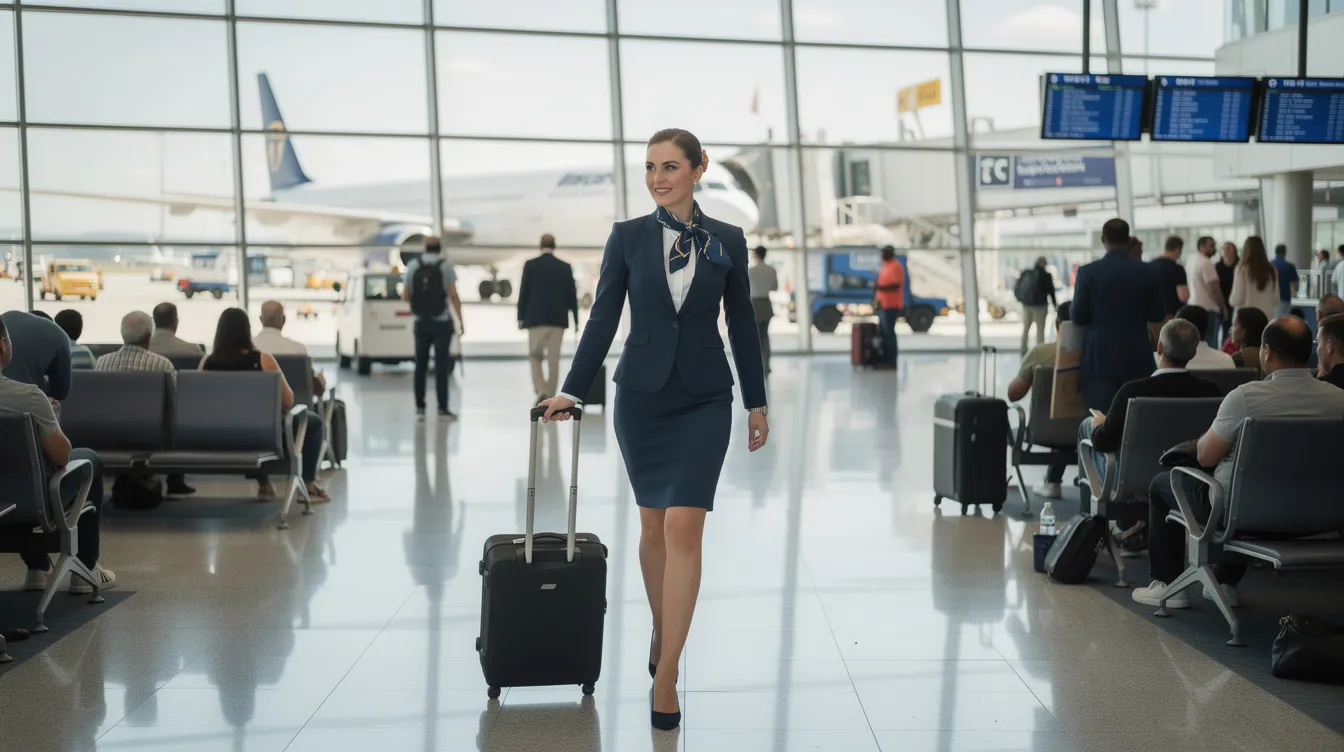
Becoming a flight attendant is one of the most sought-after career paths in aviation, yet the timeline from first application to flying regularly catches many candidates off guard. This guide is for aspiring flight attendants and career changers interested in understanding the full process and timeline to join the profession. Knowing what to expect helps you plan your career and avoid common delays. This guide breaks down every stage, from meeting basic requirements to completing probation, so you know exactly what to expect and how to prepare.
Quick Answer: Timeline to Become a Flight Attendant
From your first application to flying regularly, becoming a flight attendant commonly takes 6 to 12 months, with some candidates needing 1 to 2 years due to reapplying to multiple airlines. Here is how the typical commercial airline timeline breaks down:
Stage | Duration |
|---|
Research, meet requirements, prepare resume and cover letter | 2–6 weeks |
Application process (online application, assessments, interviews, background checks) | 1–6 months |
Airline flight attendant training | 4–9 weeks |
Probationary flying before being considered "established" | 3–12 months |
Most airline initial training programs last between 3 and 6 weeks at regional carriers, while major airlines often run training programs around 6 to 7 weeks. The typical timeframe to complete airline-specific training and earn FAA certification is 3 to 8 weeks, depending on fleet complexity.
For private aviation and luxury cabin crew - including those serving BlackJet private jet card clients via partner operators - timelines can be faster for experienced hospitality professionals, but training standards remain equally rigorous. Safety never takes a shortcut, regardless of aircraft size.
Understanding the Flight Attendant Career Path
Flight attendants balance safety, service, and adaptability at 30,000 feet. They are trained to respond to evacuations, medical emergencies, security threats, and turbulence before they ever push a beverage cart down the aisle. The career splits into two distinct branches:
Commercial airline flight attendants work scheduled routes with large crews, fixed seniority systems, and defined regulatory oversight.
Private jet cabin attendants operate on charter and jet card flights with smaller teams, higher-touch service, and far more personalization.
BlackJet clients frequently interact with cabin crew members on private jet charter flights. These crews often start in commercial aviation to earn certifications and safety experience, then transition into business aviation for greater autonomy and bespoke service. Core skills like first aid, calm decision-making, and emergency procedures are universal, but the style of service diverges significantly between the two worlds. This article focuses mainly on the commercial path, with notes on how these skills translate to private jet environments.
Core Flight Attendant Requirements and How Long They Take to Meet
Meeting baseline flight attendant requirements often takes longer than the training itself, especially for younger applicants or career changers. Here are the universal requirements and how long each may take to arrange:
Age, education, and documentation:
Applicants must be at least 21 years old at most major carriers, including Delta Airlines (some regionals allow 18–20). Applicants must be at least 21 years old.
A high school diploma or GED is required, though a college degree can help you stand out. If you are still finishing school, plan accordingly. A high school diploma or GED is required for applicants.
Candidates need a valid passport with at least 30 months' validity and blank pages. Getting or renewing a passport without expedited processing can take 6 to 12 weeks. Candidates need a valid passport with at least 30months's validity.
Fluency in English is required for all U.S. flight attendant positions. Fluency in English is required for flight attendant positions.
Physical and practical standards:
Flight attendants must meet specific height and reach requirements— many airlines require around a 76- to 82-inch vertical reach to access the overhead bin and emergency equipment. Flight attendants must meet specific height and reach requirements.
Ability to sit in a jumpseat with a full harness; no fixed weight requirement, but candidates must safely secure all belts.
Comfort in water for pool drills with life jackets, even where swimming is not formally tested.
Mandatory screenings:
Candidates must pass a background check and drug screening. Background checks covering criminal history and employment verification may take several weeks. Candidates must pass a background check and drug screening.
Drug screening and, in some regions, medical checks can add 1 to 3 weeks.
Candidates with complete documentation — passport, education, clean background - can move through the flight attendant hiring process more quickly, often shaving months off their overall timeline.
Preparing to Become a Flight Attendant Before You Apply
One to six months of focused preparation can dramatically shorten the time it takes to receive a flight attendant job offer. Here are practical pre-application steps with indicative timeframes:
2–4 weeks: Research flight attendant requirements for specific airlines via their careers pages.
2–8 weeks: Build relevant customer service experience in hospitality, medical, or security roles and gather references.
1–2 weeks: Create or refine a flight attendant resume and cover letter tailored to the cabin crew role.
Additional readiness tips:
Create profiles on major airlines' careers portals and set job alerts for the flight attendant position. Some U.S. majors open cabin crew postings only a few times per year.
Save at least 2 to 4 months of living expenses. Many airlines provide unpaid training or training with a limited stipend — plan financially.
Be open to relocation. Your base assignment may land you in Atlanta, Dallas–Fort Worth, New York, or another hub city.
Training programs can enhance job application success rates, and in-person training is preferred over online-only programs by hiring managers. Service standards in private aviation — such as those serving BlackJet jet card travelers and the BlackJet 25+ Hour Jet Card program - often favor candidates who have deliberately built premium hospitality skills before applying.
The Flight Attendant Application Process and How Long Each Stage Takes
The application process itself often spans several months. Airlines take several weeks to a few months for their application and interview process, depending on demand and volume of applicants.
Typical stages and approximate timelines:
Online application submission: The application process can take 1 to 2 hours to complete. Once submitted, application questions cannot be modified, so review carefully before clicking submit. Airline review can take 2 to 12 weeks depending on the hiring cycle.
Online assessment: Situational judgment tests are usually completed within a few days of invitation.
Video or personal introduction: Expect a virtual interview window of 48 to 72 hours to submit a pre-recorded response once invited.
Live interviews: Group exercises, a virtual interview with recruiting teams, or a consolidated in-person interview day may be scheduled 1 to 4 weeks after assessments, and at Delta Airlines, the delta flight attendant selection stages may include a similar virtual and in-person screening flow.
Final interview and offer: After the final interview, a conditional job offer may arrive within days or take several weeks. After receiving a conditional job offer, candidates generally undergo background checks, reference checks, and drug screening, requiring 2 to 6 additional weeks before a start date is confirmed.
Successful candidates are evaluated throughout the interview process based on communication skills and alignment with airline values. In competitive markets, applicants may not hear back at all. Candidates can reapply after six months if unsuccessful, though some major carriers impose a 12-month waiting period—extending the total recruitment process to 18 to 24 months.
Private jet operators often have smaller, more bespoke hiring cycles, favoring experienced cabin crew and luxury service professionals.
Flight Attendant Training: Duration, Structure, and Intensity
Flight attendant training is a full-time, exam-heavy course focused on safety, service, and regulatory compliance. Flight attendants must complete a four-week training program at minimum, though duration varies by carrier:
Airline Type | Training Duration |
|---|
Regional carriers (e.g., PSA Airlines) | ~4 weeks |
American Airlines (Dallas–Fort Worth campus) | ~7 weeks |
International / long-haul carriers | Up to 9 weeks |
Key modules covered:
Safety procedures
Emergency evacuations
First aid
Customer service protocols
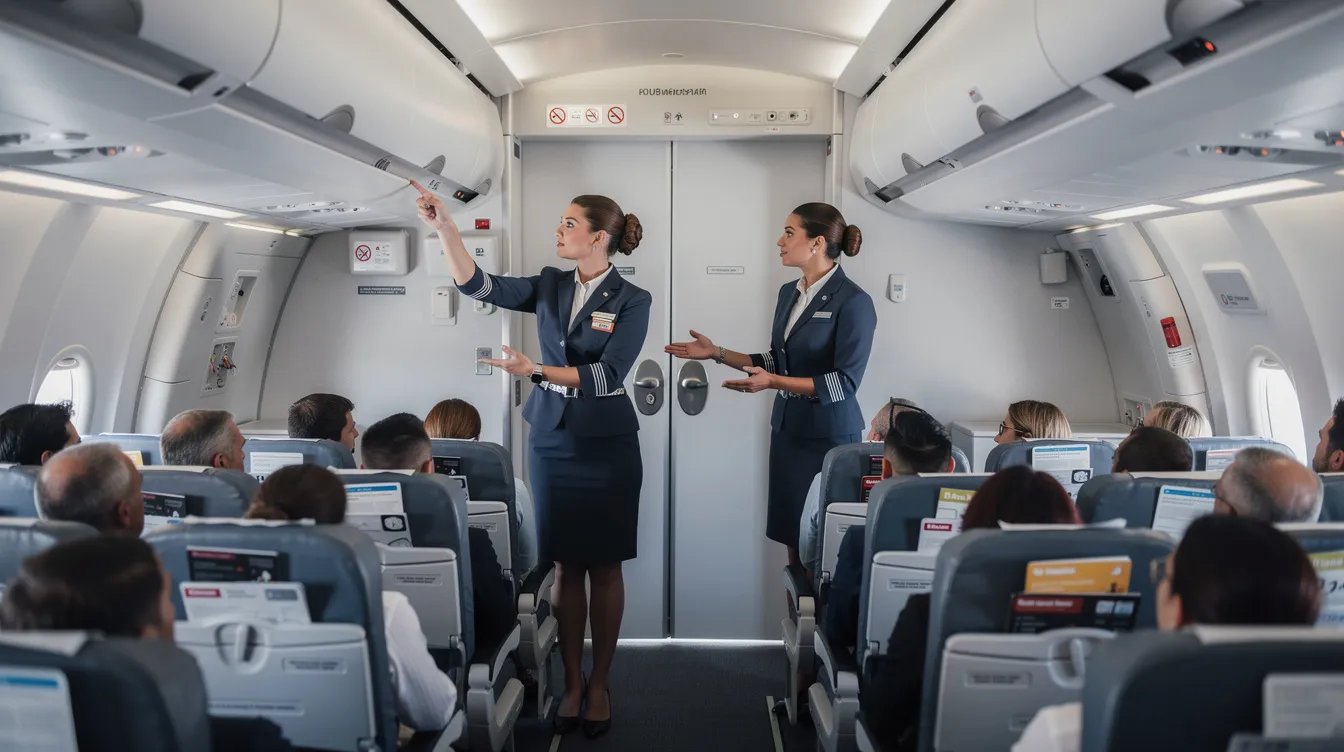
Aircraft familiarization for each model the airline operates, with emphasis on doors, slides, and emergency equipment locations.
Certification training programs for flight attendants typically include safety drills and hands-on training, including CPR and use of onboard medical kits.
Regulatory milestones:
Flight attendants need an FAA Certificate of Demonstrated Proficiency to serve on U.S. aircraft with more than 20 seats. Tests usually require scores of 80 to 90 percent or higher, with strict retake limits. Training includes emergency procedures and safety protocols that must be demonstrated, not just memorized.
Lifestyle impact during initial training:
Training days are often 8 to 10 hours, 5 to 6 days per week.
Many airlines provide shared lodging and sometimes meals during training; others require self-funded accommodation.
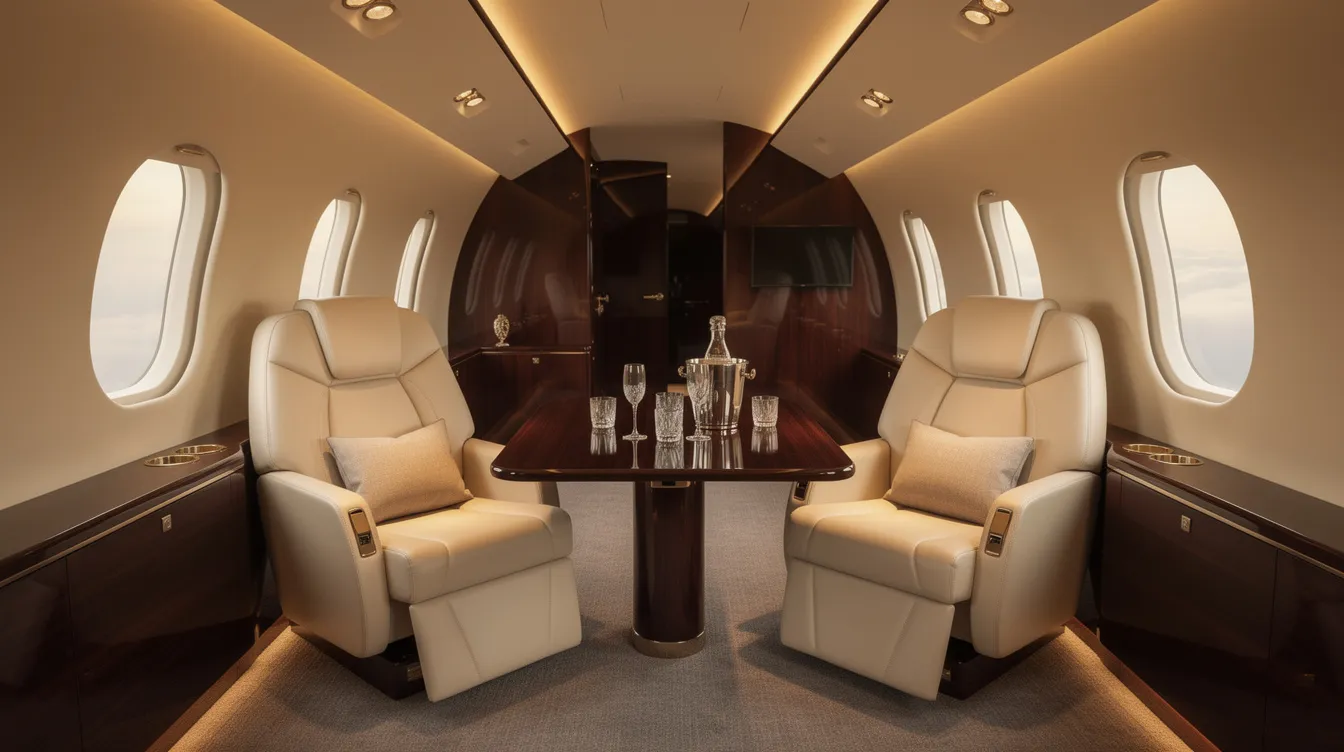
Cabin crew serving private jet clients — such as those working flights marketed by BlackJet's partners or other top private jet companies - often complete additional service-focused training on fine dining, wine and beverage knowledge, and discreet VIP service, adding 1 to 4 weeks of specialized courses. For a deeper look at certification paths, see our certified flight attendant career guide.
From Graduation to Your First Year: Probation, Reserve, and Base Assignment
Successful completion of training is only the first step. The first week on the line begins a critical period that shapes a flight attendant career for years to come.
Base assignment: New flight attendants typically receive their base assignment during training — American Airlines assigns bases around week three. Bases are major hubs, and transfer requests are subject to seniority and vacancy rules.
Probationary period: Upon graduation, new flight attendants enter a standard 6-month probationary period. Attendance, performance, and safety compliance are closely monitored. An estimated 30 to 50 percent of new hires at some airlines may not complete training or probation.
Reserve status: Many new hires spend their first 1 to 2 years on reserve, meaning they must be available to report on short notice. This creates unpredictable, flexible schedules and can feel like a big family commitment.
What "fully settled" looks like: After at least one year, many flight attendants gain predictable schedules, preferred routes, and the ability to bid for desirable layovers. At this point, some consider lateral moves to premium cabins, international flying, or transitions into business aviation. Flight attendants must also complete annual recurrent training to maintain active certification — this never stops throughout the career.
For those curious about how much airline attendants get paid, new flight attendants earn between $20,000 and $30,000 in their first year, while experienced flight attendants can earn up to $50,000 annually. Benefits include medical, dental, and vision insurance, plus travel benefits and discounts on hotels and car rentals. Airlines also offer flexible schedules and ample time off for employees as seniority grows.
Factors That Speed Up or Slow Down Your Timeline
While a typical day-to-day life in aviation evolves over time, the path to getting hired as a flight attendant averages 6 to 12 months at most airlines. Several factors can change that.
Factors that speed things up:
Having a current passport and passing background checks quickly.
Relevant customer service experience in hospitality, healthcare, or security.
Completing a reputable flight attendant training course or aviation program before applying.
Geographic flexibility - willingness to accept any base assignment can shorten the timeline considerably.
Factors that slow things down:
Applying during hiring freezes or after application windows have closed.
Incomplete applications, visible tattoos or ear gauges that violate airline standards, or errors that trigger delays.
Needing to reapply after mandatory waiting periods — often 6 to 12 months at competitive carriers.
Restricting yourself to one city or region, which limits job offers.
Candidates with excellent premium service experience - five-star hotels, yachts, luxury restaurants - may advance faster into private plane stewardess jobs once they hold initial safety certifications, especially when paired with flexible options like leasing a private jet for bespoke travel.
Commercial Airline vs Private Jet Cabin Crew Timelines
Most people start as commercial flight attendants, but many aspire to eventually work in private aviation, serving executive travelers across the world and tapping into a rapidly growing global private jet fleet.
Commercial airline sequence:
Meet basic requirements and prepare: 2–6 months
Complete the hiring process and background checks: 3–6 months
Finish flight attendant training (4–9 weeks) and probation (6–12 months)
Private jet / business aviation path:
Most operators require prior airline or safety-focused cabin experience, adding 1 to 3 years.
Private jet-specific training on fine dining, service customization, and discrete VIP care adds several weeks per operator.
Cabin crews working on flights booked via jet cards or private jet charter services - like trips arranged for BlackJet members under various private jet membership programs — need strong safety fundamentals equal to top airline standards, plus exceptional boutique service skills including tailored meals, onboard technology familiarity, and comfort management in smaller, quieter aircraft. Those interested in this journey can start in commercial aviation, then build parallel experience in luxury hospitality and languages to prepare for private jet employment opportunities, including pathways where travelers simply buy a seat on a private jet instead of chartering the whole aircraft.
Planning Your Career Strategy: From First Application to Long-Term Growth
A flight attendant career is a long-term investment, not a short-term travel job. Many crew members later move into leadership, training, operations, or business aviation roles.
Map your 3–5 year plan:
Year 1: Become a flight attendant, complete training, finish probation. Expect the hardest adjustment period of your life in aviation.
Years 2–3: Build seniority, secure preferred bases and routes, pursue additional qualifications (language certifications, advanced first aid, trainer roles).
Years 3–5: Explore transitions to premium cabins, corporate flight departments, or private jet cabin roles.
Ongoing learning matters. Regular recurrent training maintains safety knowledge. Optional courses in wine, fine dining, or cultural etiquette prepare you for high-demand roles in business aviation.
BlackJet jet card members expect smooth, safe, and sustainable journeys on private aircraft operated by certified partners, supported by transparent jet card pricing structures that make costs predictable. Flight attendants who invest in continuous training across safety, service, sustainability, and technology are better positioned for roles in this segment. By understanding the timeline and deliberately stacking the right experiences, a motivated person can progress from first application to a sophisticated aviation career — including potential private jet opportunities — in roughly 3 to 7 years.
Frequently Asked Questions About Becoming a Flight Attendant
This FAQ addresses common timing and process questions drawn from major airlines' publicly available guidance.
How long does it take from applying to starting flight attendant training at a major airline? Typically 3 to 9 months, depending on the recruitment event schedule and applicant volume.
How often can you reapply if you are not selected? Every 6 to 12 months, depending on airline policy. Delta Airlines and United both enforce specific waiting periods.
Do you get paid during flight attendant training? It varies. Some airlines offer a stipend; others provide lodging and meals but no salary. Read the fine print of your offer letter.
How long does the background check take before you can begin a flight attendant position? Typically 2 to 6 weeks after your conditional job offer.
How long before you can transfer your base assignment? Usually after the probationary period and subject to vacancies — commonly 6 to 12 months.
Are you guaranteed a full-time schedule immediately after training? No. Most new hires spend time on reserve with variable hours. Flight attendants spend their early months building seniority before gaining schedule stability.
How many years of experience do you need to move into private jet cabin crew positions? Most private operators look for 2 to 3 years of strong commercial performance plus demonstrated luxury hospitality skills. For salary expectations in this segment, explore our private jet stewardess salary insights alongside a broader view of private jet pilot compensation and operating costs.
What additional training is recommended for private jet charter or jet card flights? Fine dining service, wine education, multilingual communication, and discretion training — all of which strengthen your next steps toward serving high-net-worth travelers.
Specific numbers — weeks, months, training details — change by airline and region. Always confirm the most current information on each airline's official careers site before you prepare your application.
Conclusion: Navigating Your Path to a Flight Attendant Career
Becoming a flight attendant is a strategic journey that combines rigorous training, thorough preparation, and a commitment to safety and service excellence. While the timeline from application to flying regularly typically spans 6 to 12 months, your personal path may vary based on experience, readiness, and the airline or private aviation segment you choose. By understanding each stage—from meeting baseline requirements and excelling in the application process to completing FAA-certified training and probation—you position yourself for success in this dynamic profession.
Whether aiming for the bustling schedules of commercial airlines or the bespoke service of private jet cabins, investing in premium hospitality skills, safety knowledge, and continuous learning will set you apart. For those interested in private aviation, the career progression often builds on a foundation of commercial experience paired with specialized service training. Explore more about private jet employment opportunities and how to enhance your skills for luxury travel.
Ultimately, becoming a flight attendant is more than a job; it’s a long-term career with opportunities for travel, growth, and connection across the globe. Plan deliberately, prepare thoroughly, and embrace the adventure ahead. Your journey to the skies starts here. Learn about the flight attendant application process and what to expect during flight attendant training. For insights into career advancement, see our guide on private jet stewardess jobs.


 Sign up with google
 Sign up with Apple