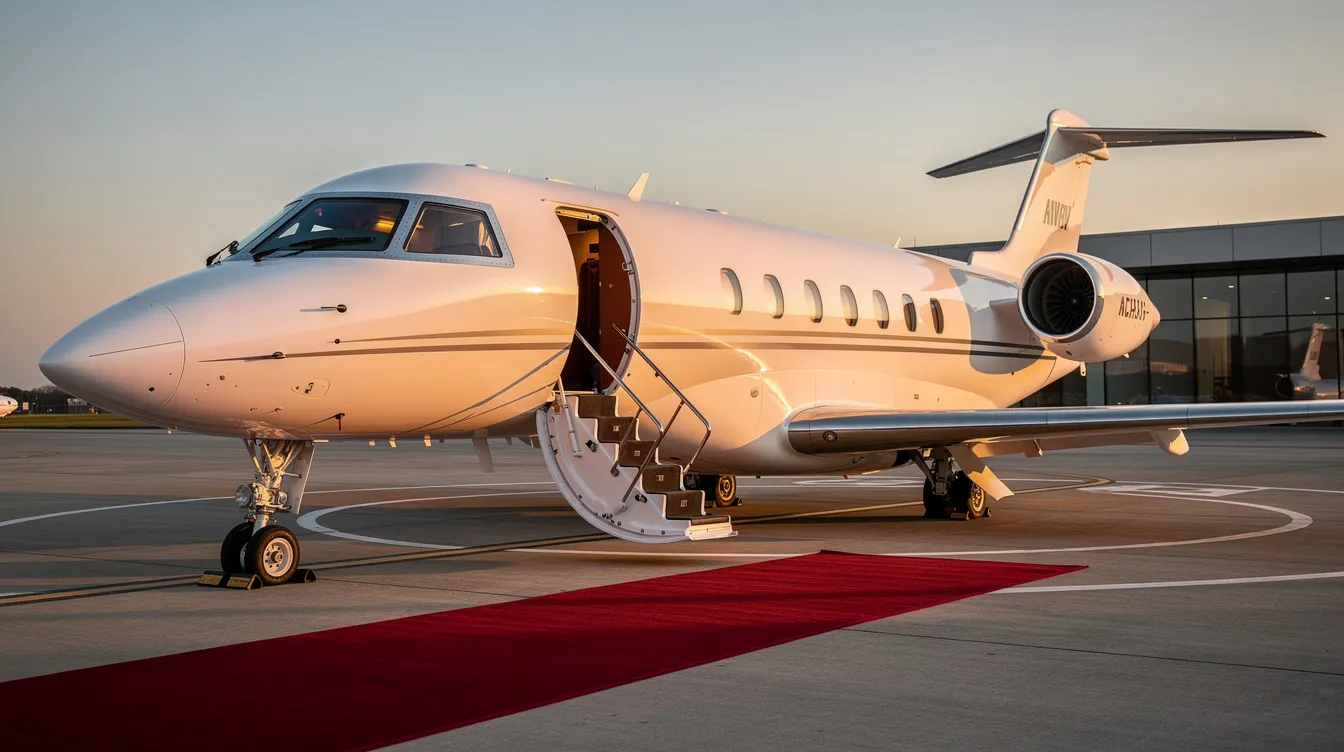
The Boeing 737 is the most-produced commercial aircraft in aviation history, and yet the answer to "how many passengers on a 737" is never a single number. Depending on the generation, variant, and airline configuration, the seating capacity of this iconic aircraft ranges from 85 to 230 passengers. Below, we break down the numbers by generation, explore how cabin layout decisions shape the passenger experience, and offer a perspective on when stepping off the 737 and into a private jet becomes the smarter strategic move.
Quick Answer: How Many Passengers Can a Boeing 737 Carry?
The passenger capacity for the Boeing 737 family ranges from approximately 85 to 230 passengers. That range depends on which variant you're flying and whether the airline has chosen a single-class or two-class cabin layout. Seating configurations can range from single-class layouts to two-class setups, and each airline makes different trade-offs between passenger comfort and revenue density.
Here are the broad capacity ranges by family:
737 Original (737-100 / 737-200): roughly 85–130 seats, now rare in commercial service
737 Classic (737-300 / -400 / -500): approximately 110–168 seats, mostly retired from major fleets
737 Next Generation (737-600 / -700 / -800 / -900ER): about 108–215 seats, still the backbone of many airlines worldwide
737 MAX (MAX 7 / 8 / 9 / 10): approximately 138–230 seats, the current-production generation with the highest capacity potential
Low-cost carriers like Ryanair or Southwest Airlines typically push toward the upper end of these ranges using all-economy layouts with tighter seat pitch. Full-service carriers such as United Airlines or American Airlines use two classes: a small Business or First cabin up front plus Economy, which reduces total seats but increases per-seat revenue.
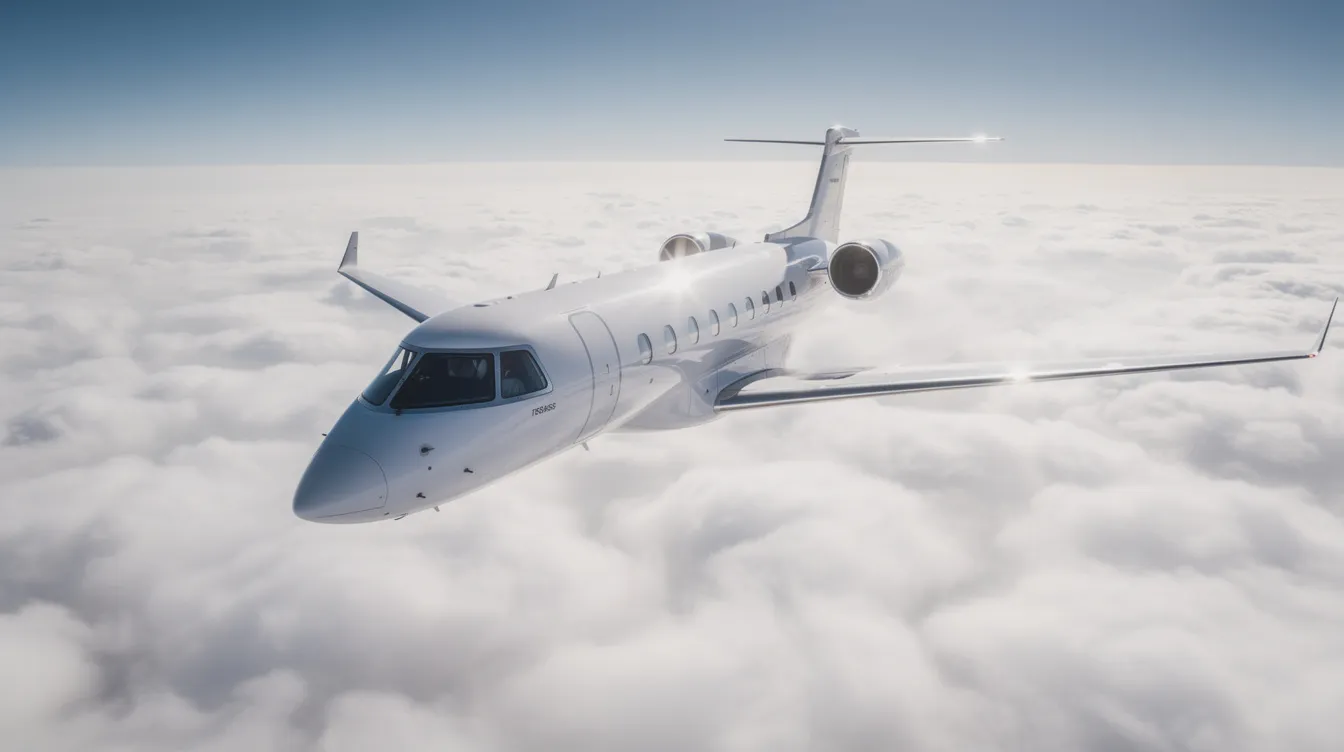
For contrast, a typical private jet seats 4 to 16 passengers in a cabin designed around personal space rather than density. The difference isn't just about how many people board-it's about what each person experiences once the door closes.
Understanding Boeing 737 Passenger Capacity by Generation
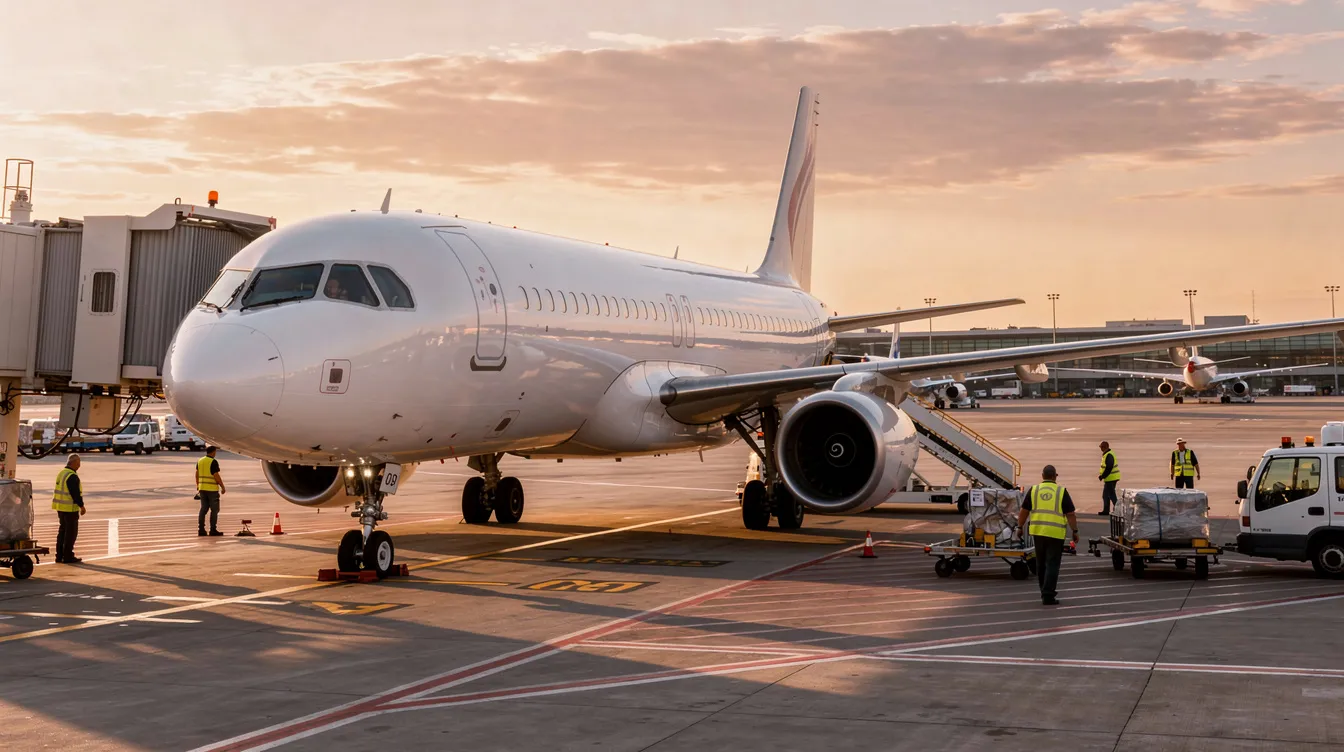
The Boeing 737 first flew in 1967, and in the nearly six decades since, Boeing has iterated across four distinct generations-each expanding range, improving fuel efficiency, and offering greater seating flexibility. When someone asks "how many passengers on a 737," the real question is: which 737 variant?
All 737s are narrow-body, single-aisle aircraft with a standard 3–3 seating layout in economy. The 737 fuselage cross-section is 148 inches wide, a dimension that has remained essentially unchanged across every generation. What has changed is fuselage length, engine technology, wing design, and cabin interiors-all of which influence how many passengers each variant can carry and how comfortably they fly.
Airlines also have the ability to select different galley, lavatory, and exit configurations, which slightly change the maximum certified seating for a given airframe. Design improvements such as fuel-efficient engines and blended winglets allowed Boeing to increase capacity and extend range without significantly raising operating costs, making the 737 the backbone of short- and medium-haul routes around the world.
Boeing 737 Passenger Capacity Overview by Variant
Generation | Variant(s) | Typical Seating Capacity (Passengers) | Notes |
|---|
737 Original | 737-100 | ~100 | Only 30 produced; rare today |
| 737-200 | 100–130 | More successful; short-haul workhorse |
737 Classic | 737-300 | 128–149 | First major capacity expansion |
| 737-400 | 146–168 | Stretched version of -300 |
| 737-500 | 108–132 | Shorter fuselage variant |
737 Next Generation | 737-600 | 108–132 | Smallest NG variant |
| 737-700 | 126–149 | Popular regional aircraft |
| 737-800 | 162–189 | Best-selling NG variant |
| 737-900/900ER | 173–215 | Extended fuselage, high-density capable |
737 MAX | MAX 7 | 138–172 | Replaces 737-700 |
| MAX 8 | 162–200 | Most popular MAX; includes MAX 8-200 variant |
| MAX 9 | 178–220 | Stretched MAX 8 |
| MAX 10 | 188–230 | Largest MAX variant |
Boeing 737 Original: 737-100 and 737-200 Passenger Capacity
The first-generation 737s were compact aircraft designed primarily for short-haul domestic routes. The 737-100 has a seating capacity of 100 passengers in a typical layout, and the 737-100 was the smallest variant, with only 30 produced, making it a footnote in aviation history rather than a fleet workhorse.
The 737-200, launched in 1965 and entering service in 1968, proved far more commercially successful. The 737-200 can accommodate up to 130 passengers in high-density configurations. In a two-class layout mixing Business and Economy, the 737-200 seats around 100–115 passengers, depending on exit placement and galley size.
These original variants had Pratt & Whitney JT8D engines, a generation of powerplant that was standard for its era but significantly less efficient than modern alternatives. Crew commonality across both variants was a selling point for early operators, allowing pilots to transition between the -100 and -200 with minimal additional training.
Today, these aircraft are essentially absent from commercial service. You're more likely to find a 737-200 in a museum, operating as a freighter in remote regions, or serving military applications than carrying fare-paying passengers on selected routes.
Boeing 737 Classic: 737-300, 737-400, 737-500 Passenger Capacity
The Classic series, entering service through the 1980s and 1990s, represented Boeing's first major capacity expansion for the 737 platform. The 737-300, 737-400, and 737-500 have a capacity of 110 to 168 passengers, depending on variant and layout.
Typical configurations broke down as follows:
737-300: the 737-300 typically seats 149 passengers in a standard layout, with two-class versions closer to 128–140
737-400: approximately 146–168 passengers, the stretched version of the -300 designed to compete directly with larger single-aisle options
737-500: roughly 108–132 passengers, a shorter-fuselage variant suited to thinner routes
Maximum all-economy layouts pushed slightly above these ranges when regulatory exit limits allowed, but carriers rarely operated at absolute maximum density on the Classics.
By the late 2000s, most major airlines had begun retiring Classic 737s in favor of the more fuel-efficient next-generation series and Airbus A320 family jets. The Classics played a critical role in helping low-cost carriers build dense, short-haul networks during their commercial prime, proving that a simple, reliable single-aisle aircraft could generate strong economics when matched with high-utilization schedules.
Boeing 737 Next Generation (NG): 737-600, 737-700, 737-800, 737-900/900ER
The next generation 737 NG family, in commercial service from 1998, became the global workhorse for short- and medium-haul routes. Capacity ranges from about 108 to 215 passengers across the four main sub-variants:
737-600: approximately 108–132 seats, the smallest NG variant, primarily operated by Scandinavian carriers
737-700: roughly 126–149 seats, popular with airlines needing moderate capacity on regional routes. The 737-700C variant can be reconfigured for cargo or passengers, giving operators flexibility to carry cargo or switch to passenger service as demand shifts
737-800: The 737-800 has a capacity of 162 to 189 passengers, making it the most versatile NG variant. It is the best-selling variant with 5,220 orders as of 2026, used by carriers from Southwest Airlines to Turkish Airlines
737-900/900ER: an extended fuselage model seating approximately 173–215 passengers in two classes. The 737-900ER can seat up to 220 passengers in a high-density layout, pushing the NG platform to its structural limits
The 737-800 typically accommodates 162 to 189 passengers, depending on whether the airline configures the cabin with two classes or a dense all-economy layout. In standard airline service, most 737-800s fly with around 170–180 passengers.
The 737-800 has a wingspan of 35.8 meters, and aerodynamic refinements, including blended winglets, helped cut drag and improve fuel efficiency. Powered by CFM56-7B fuel-efficient engines, the NG delivered markedly lower per-seat fuel burn than the Classics it replaced. The 737 Next Generation also introduced a six-screen LCD glass cockpit, a significant avionics improvement that enhanced situational awareness for pilots and reduced cockpit workload.
These improvements in efficiency allowed airlines to increase capacity on existing routes while keeping costs competitive-a combination that made the 737-800 the default choice for carriers building modern short-haul fleets across every continent.
Boeing 737 MAX: 737 MAX 7, MAX 8, MAX 9, MAX 10 Passenger Capacity
The 737 Max family represents the current production generation, with the first delivery of the MAX 8 to Malindo Air in 2017. The 737 MAX series offers seating for 138 to 230 passengers, depending on variant and layout, and the 737 MAX series generally offers higher capacity than previous next-generation models while burning significantly less fuel.
Approximate seating ranges by variant:
737 MAX 7: roughly 138–172 seats, replacing the 737-700 on thinner routes
737 MAX 8: approximately 162–200 seats, the most popular model. The 737 MAX 8 typically seats 162 to 178 passengers in a two-class layout. Ryanair's MAX 8-200 "Gamechanger" variant pushes to 197 seats in all-economy by adding a third pair of exit doors
737 MAX 9: approximately 178–220 seats, used by Alaska Airlines and United Airlines in domestic two-class configurations, with around 178–179 passengers
737 MAX 10: roughly 188–230 seats, the highest-capacity variant in the family, designed for high-density trunk routes
The 737 MAX features larger CFM LEAP engines with a 69-inch diameter, providing greater thrust and substantially lower fuel consumption than the CFM56 engines on the NG. The 737 MAX offers up to a 14% reduction in fuel consumption compared with the generation series it replaces, making high-density seating more environmentally and financially viable.
The 737 MAX series offers a range of 3,215 to 3,825 nautical miles, giving airlines the ability to serve longer routes-including transatlantic flights on selected routes-with a single-aisle aircraft.
The MAX was grounded worldwide after two fatal crashes in 2018 and 2019. The 737 MAX series was grounded worldwide after two fatal crashes, leading to extensive software, training, and certification updates before returning to service. The type has since re-entered fleets globally and is now operating with airlines across every major market, though it remains the subject of close regulatory scrutiny.
Seat Maps, Classes, and Cabin Layout: Why the Same 737 Seats Have Different Numbers
Certification sets a maximum seat count for each 737 variant based on emergency exit capacity and airframe limits. But the actual number of passengers on any given 737 flight is determined by the airline's chosen layout, not the aircraft's theoretical maximum.
The standard economy configuration is 3–3 seating across a single aisle. Airlines alter total capacity by adjusting the number of Business or First class seats, galley positions, lavatory count, and cabin space allocation. A typical two-class 737 NG or 737 MAX might trade 10–30 economy seats for a small premium cabin with wider seats and more pitch.
Emergency exit door placement-overwing exits on all variants, plus additional doors on larger models like the MAX 8-200-sets safety-driven seat limits, and door and exit locations on the left side also help explain how seat maps and certified limits are interpreted. The Boeing 737 family has a passenger capacity range of 85 to 230 passengers, but real-world airline configurations rarely reach the certified maximum. If you're booking a specific flight, checking the airline's seat map for that route will give you the exact count.
Economy Class on the 737: Typical Passenger Experience
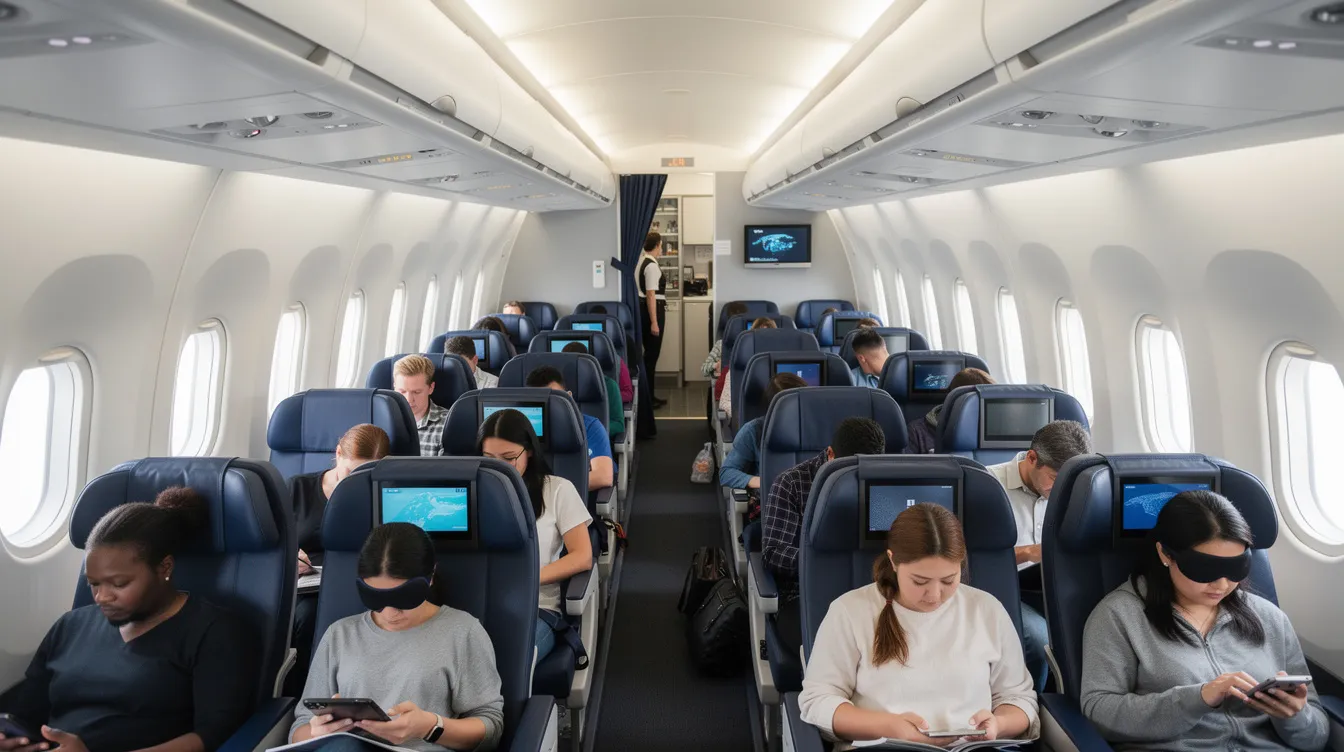
Most 737 economy cabins feature 3–3 seating with seat widths around 17–18 inches and pitch typically between 29 and 32 inches, depending on airline strategy.
Low-cost carriers compress pitch toward 28–29 inches to maximize passenger count per aircraft. Legacy carriers like American Airlines or Alaska Airlines tend to offer slightly more room at 30–32 inches, accepting fewer total seats in exchange for better passenger comfort and higher ticket yields.
Modern cabins on the 737-800 and 737 Max often include improvements that ease the experience without adding space:
Mood lighting using LED systems that simulate natural light cycles
Sculpted sidewalls that create a slightly more open feel in the cabin
Redesigned overhead bins that hold more carry-on bags, reducing boarding delays
USB and power outlets at every seat for personal device charging
These features are meaningful improvements over older cabins, but the fundamental constraint remains: a 737 economy seat is designed to maximize capacity per flight, not to maximize comfort per traveler.
Business Class on the 737: Fewer Seats, More Space
Business cabins on a 737 significantly reduce overall seat count but generate higher revenue per seat through premium fares and enhanced cabin space. Typical configurations use a 2–2 layout in the forward rows, with seat widths exceeding 20 inches and pitch ranging from 34 to 40 inches.
A 737-800 configured with 170 passengers in standard economy might drop to around 160 or fewer if the carrier expands its Business section or increases legroom in premium economy rows. Alaska Airlines, for example, configures its MAX 9 fleet with a dedicated First Class cabin at 41 inches of pitch and approximately 21.3 inches of width, comfortable by commercial aircraft standards.
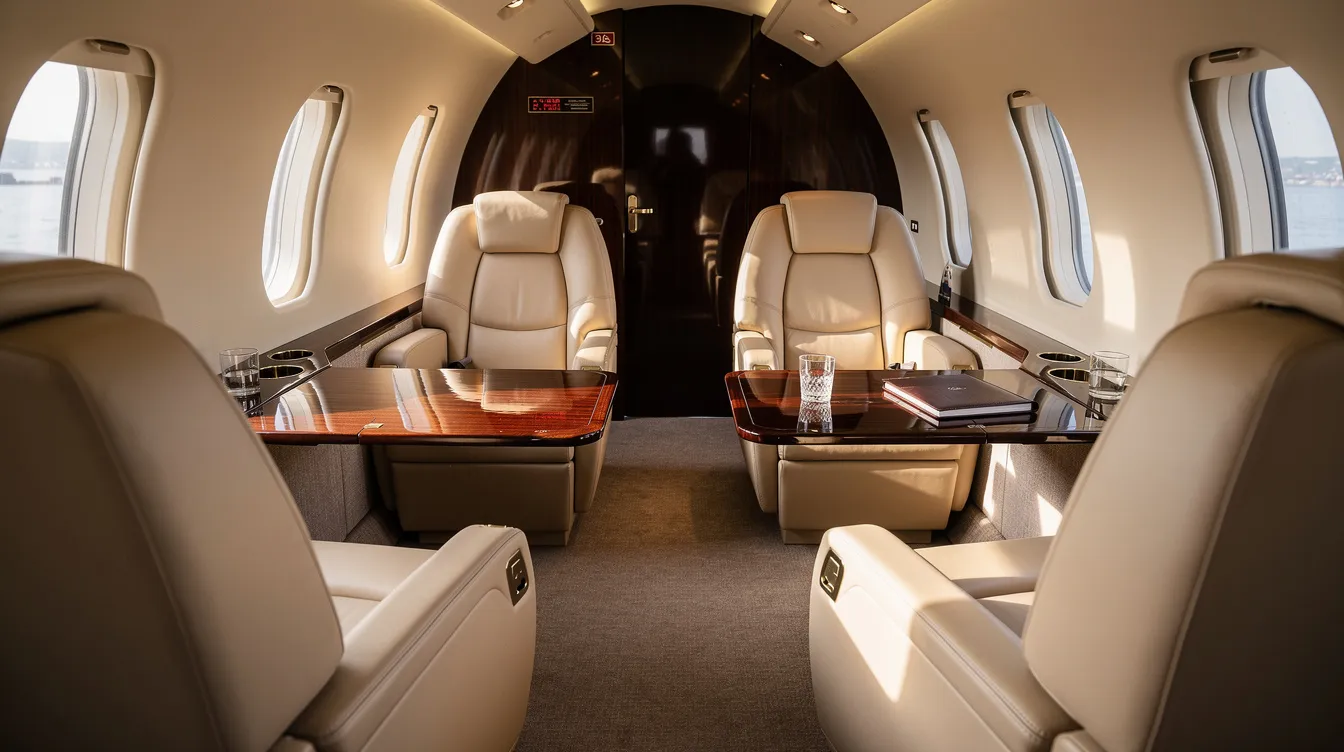
On a private jet, the comparison shifts entirely. Where a 737 Business cabin offers 8–16 premium seats among 150+ total passengers, a midsize private jet dedicates its entire 4–10 seat cabin to a single group. The experience is closer to a private office or living room than an airline cabin, with club seating, conference tables, and divans as standard fixtures.
How Passenger Capacity Affects Range, Performance, and Fuel Efficiency
While the certified capacity sets an upper limit, real-world passenger and baggage loads directly affect how far a 737 can fly and how efficiently it burns fuel.
The 737-800 has a maximum range of approximately 3,115 nautical miles when lightly loaded, but a full aircraft at maximum passengers and cargo weight may need to reduce fuel load or accept a shorter range to stay within maximum takeoff weight limits. Airlines balance passenger density against comfort, ticket yield, and operating costs per seat-an equation that varies by route, season, and competitive pressure.
The Boeing 737-800 burns approximately 4.88 US gallons per seat per hour, a figure that improves with higher load factors. Annual operating costs for the Boeing 737 vary based on multiple factors, including utilization, maintenance intervals, and fuel prices. Design features like winglets and fuel-efficient engines allow carriers to increase capacity without proportional increases in fuel consumption.
For high-net-worth travelers, this math works differently. Optimizing personal time and productivity can be far more valuable than optimizing seats per aircraft. A three-hour commercial flight that requires five hours of total travel time, including security, boarding, and baggage claim, represents a fundamentally different value equation than understanding the broader private jet price list, costs, and access options behind a private departure with 15 minutes of pre-flight time.
Fuel-Efficient Engines and Winglets on the 737 and 737 MAX
The evolution of powerplants across the 737 family tells the story of commercial aviation's relentless pursuit of efficiency:
JT8D (Original/Classic): reliable but fuel-hungry by modern standards
CFM56-7B (NG): a generational leap in fuel efficiency, enabling the NG series to carry more passengers over longer routes with lower per-seat costs
CFM LEAP-1B (737 MAX): the current standard, with the MAX achieving up to a 14% reduction in fuel consumption over the NG
The 737-800's fuel capacity is roughly 30% greater than older variants, giving it the range and endurance to serve routes that would have required larger aircraft in previous decades. Blended winglets on NG models and advanced technology winglets on the MAX reduce drag by 3–5% or more, translating directly into lower fuel burn per flight.
These technologies matter at scale. When an airline operates hundreds of 737s on thousands of daily flights, even a few percentage points of improved fuel efficiency translate into millions of dollars in savings and measurable reductions in carbon emissions per passenger.
At BlackJet, we view sustainability through a different lens. While commercial fleets improve fuel efficiency by filling more seats on larger aircraft, we ensure every private flight is carbon-neutral by default, matching the environmental ambition of modern commercial aviation while delivering an entirely different travel experience.
How Many Passengers on a 737 vs a Private Jet: Strategic Choices for the Discerning Traveler
A 737 typically carries 130–200+ passengers. A private jet seats 4–16. The gap in capacity is enormous-and intentional. The right choice depends on strategy, not just how many people can board.
Commercial 737 flights excel on trunk routes with frequent schedules, competitive fares, and predictable service. They are the proven reliability of mass air transport. Private jets win on flexibility, privacy, and time savings, particularly on routes where commercial schedules don't align with business demands or where access to smaller airports eliminates hours of ground transportation.
BlackJet clients often use premium private jet cards and Jet Card programs to complement or replace 737 travel on high-value trips where schedule, security, or productivity matter most. While airlines chase fuel efficiency per seat, BlackJet focuses on time efficiency, safety layers, and bespoke service per traveler.
Time Saved: 737 Commercial Schedule vs BlackJet Private Access
Commercial 737 travel involves predictable friction: early airport arrivals (60–90 minutes for domestic, longer for international), security screening, boarding queues, potential delays, and baggage claim on arrival. For a routine New York to Chicago flight, a route heavily served by 737-800 and 737 MAX aircraft, the flight itself is roughly two hours. The total door-to-door experience, however, often approaches four to five hours.
With BlackJet, a member arrives at a private terminal approximately 15 minutes before departure. There are no security lines, no boarding groups, no overhead bin competition. The same New York to Chicago route takes roughly the same air time, but the total experience compresses to under three hours door-to-door.
For an executive flying from New York to a meeting in Chicago and returning the same day, BlackJet's 25+ Hour Jet Card access recovers two to three hours of time that can be spent preparing for a board presentation, joining a call, or simply arriving rested.
BlackJet jet card members schedule flights dynamically through digital booking tools, supported by transparent jet card pricing structures that align departures tightly with meetings, family plans, or connections to destinations that commercial 737 service doesn't reach directly.
Privacy, Productivity, and Comfort: 170+ Seats vs 8 Seats
Consider the contrast: a 737 economy cabin with 170–190 passengers sharing a single aisle, limited legroom, and ambient noise from engines and fellow travelers. Now compare that with a typical 8–10 seat midsize private jet, where the entire cabin functions as a secure meeting room, a quiet workspace, or a personal retreat.
On a private jet, confidential discussions happen without concern for neighboring seats. Work continues uninterrupted with personal device connectivity, stable Wi-Fi, and table space for laptops and documents. There is no middle seat, no seatbelt sign delaying movement, and no announcement interrupting your focus.
Private jet layouts often include club seating, divans, and conference tables, making productive use of every minute in the air. Comfort on a private jet is defined by space per passenger, not by maximizing the number of passengers who can fit in the cabin, especially on flagship models featured among the top 10 best private jets in the world.
BlackJet enables this experience on demand through jet card programs with predictable membership pricing, without the capital commitment of full or fractional aircraft ownership. Whether it's a 25-hour or 50-hour card, members gain access to a network of vetted aircraft across multiple cabin categories-light, midsize, super-midsize, and heavy-matched to the mission at hand; heavy users may even evaluate options using a dedicated 100 Hour jet card cost analysis to optimize long-term value.
Safety, Certification, and Sustainability: 737 Airlines and BlackJet
The 737 family has an extensive operational record spanning nearly six decades. As of November 2023, the Boeing 737 family has 529 aviation accidents, and the 737 family has resulted in 5,779 fatalities from accidents-sobering numbers in absolute terms, but viewed against hundreds of millions of flights, the modern variants demonstrate strong safety performance.
The hull loss rate for the 737 Next Generation is 0.18 per million departures, and the 737-800 has a hull loss rate of 0.17 per million departures-figures that place these aircraft among the safest in commercial aviation history. Major airlines operate 737 and 737 MAX fleets under rigorous national aviation authority oversight with mandatory maintenance schedules and crew training standards.
BlackJet adds additional safety layers for private operations. We work exclusively with vetted operators that meet or exceed FAA and EASA requirements, including third-party audits such as ARGUS and WYVERN where applicable. Unlike commercial airlines focused on maximum seat capacity, BlackJet missions are tailored to small groups with personalized risk assessment and real-time operational oversight.
Both airline 737 fleets and BlackJet-linked operators are increasingly leveraging fuel efficiency improvements and carbon offset initiatives to reduce climate impact-a shared commitment across commercial and private aviation mirrored by the top private jet companies leading on safety and service.
BlackJet's Safety and Carbon-Neutral Commitments
BlackJet's safety approach is multi-layered: operator certification checks, continuous monitoring, pilot qualification verification, and adherence to proprietary safety standards that go beyond regulatory minimums.
Where a 737 may carry 150–200 passengers with standardized safety protocols applied uniformly, BlackJet's smaller manifests allow more individualized safety focus. This includes weather routing tailored to specific missions, airport selection based on runway conditions and approach complexity, and crew pairing optimized for the route and aircraft type.
Every BlackJet flight is carbon-neutral by default through verified offset or insetting programs, matching or exceeding the environmental responsibility efforts seen on the newest 737 MAX fleets. BlackJet ensures every journey is carbon neutral, at no extra cost to members.
Our digital platform shares key safety and sustainability information transparently with members before each trip, so customers know exactly what standards are being met before they step aboard.
FAQs: Passenger Capacity on a 737 and Private Alternatives
Here are answers to common questions tied to how many passengers on a 737 and related travel decisions.
What is the maximum number of passengers a 737 can carry?
The Boeing 737 family has a passenger capacity range of approximately 85 to 230 passengers. The smallest variant, the 737-100, seated about 100 passengers, while the largest current model, the 737 MAX 10, can be configured for up to 230 seats in high-density layouts. Real-world airline configurations are usually 10–20% below the certified maximum to accommodate galleys, lavatories, and premium cabins.
Is a 737-800 bigger than a 737 MAX 8 in terms of passengers?
They are very similar. The 737-800 has a capacity of 162 to 189 passengers, while the 737 MAX 8 typically seats 162 to 178 passengers in a two-class layout and can be configured up to 200 in all-economy versions like Ryanair's MAX 8-200. The MAX 8 is more efficient rather than dramatically larger-its advantages are primarily in fuel efficiency, range, and modern cabin amenities rather than raw seat count.
How does legroom on a 737 compare with a private jet?
Economy class on a 737 usually offers 29–32 inches of seat pitch. Exit rows may provide 38–39 inches. On a private jet, legroom typically exceeds 40 inches, and many cabin layouts feature fully adjustable seats, club configurations, or lie-flat options. The difference isn't incremental-it's a fundamentally different approach to cabin space.
Can BlackJet arrange flights on aircraft similar in size to a 737?
BlackJet's core jet card programs focus on light, midsize, super-midsize, and heavy cabin private jets, typically seating 4 to 16 passengers. For larger groups or special missions requiring airliner-class VIP aircraft, including private jets for up to 50 passengers, BlackJet's network can coordinate on-request solutions. Whether you need a 6-seat citation for a day trip or a VIP-configured airliner for a corporate retreat, BlackJet's team can match the right aircraft to the mission, drawing on deep expertise in the cheapest private aircraft and budget-friendly options as well as ultra-luxury jets.
Which 737 variant was the first airline favorite?
The 737-200 was the first airline workhorse of the family, entering service in 1968 and proving far more popular than the short-lived 737-100. Lufthansa was the first airline to operate the 737-100, but it was the -200's versatility on short-haul routes, and later its adaptability for military applications that established the 737 as a global standard. The 737-800 later surpassed it to become the best-selling commercial aircraft variant in history.
Conclusion: Use the 737's Capacity Where It Shines, Elevate the Rest with BlackJet
The Boeing 737 family remains the backbone of commercial aviation, carrying anywhere from about 100 to over 200 passengers per flight across thousands of routes worldwide. From the original 737-100 to the modern 737 MAX 10, each generation has delivered greater seating capacity, improved fuel efficiency through advanced engines and winglets, and expanded the reach of efficient single-aisle air travel.
Airlines use dense seating and fuel-efficient engines to move large numbers of passengers on key routes-and for many trips, that model works well. The 737 is reliable, ubiquitous, and efficient at what it does: high-volume transport on established routes.
But for the traveler whose time, privacy, and productivity carry a premium, the 737's strengths become limitations. A packed 178-seat cabin, a 90-minute pre-departure routine, and a rigid schedule don't serve every mission equally.
That's where BlackJet reshapes the equation. Smaller, highly optimized private jets trade seat count for time savings, security, and strategic flexibility. Every BlackJet flight is carbon-neutral, safety-vetted beyond regulatory minimums, and bookable on demand through our digital platform.
Elevate your travel—effortlessly. With BlackJet, private flight isn't reserved for a few. It's accessible on your terms through our Jet Card programs, complete with rigorous safety, carbon-neutral performance, and unmatched flexibility. Explore our offerings and discover how refined, meaningful travel becomes your new standard.


 Sign up with google
 Sign up with Apple