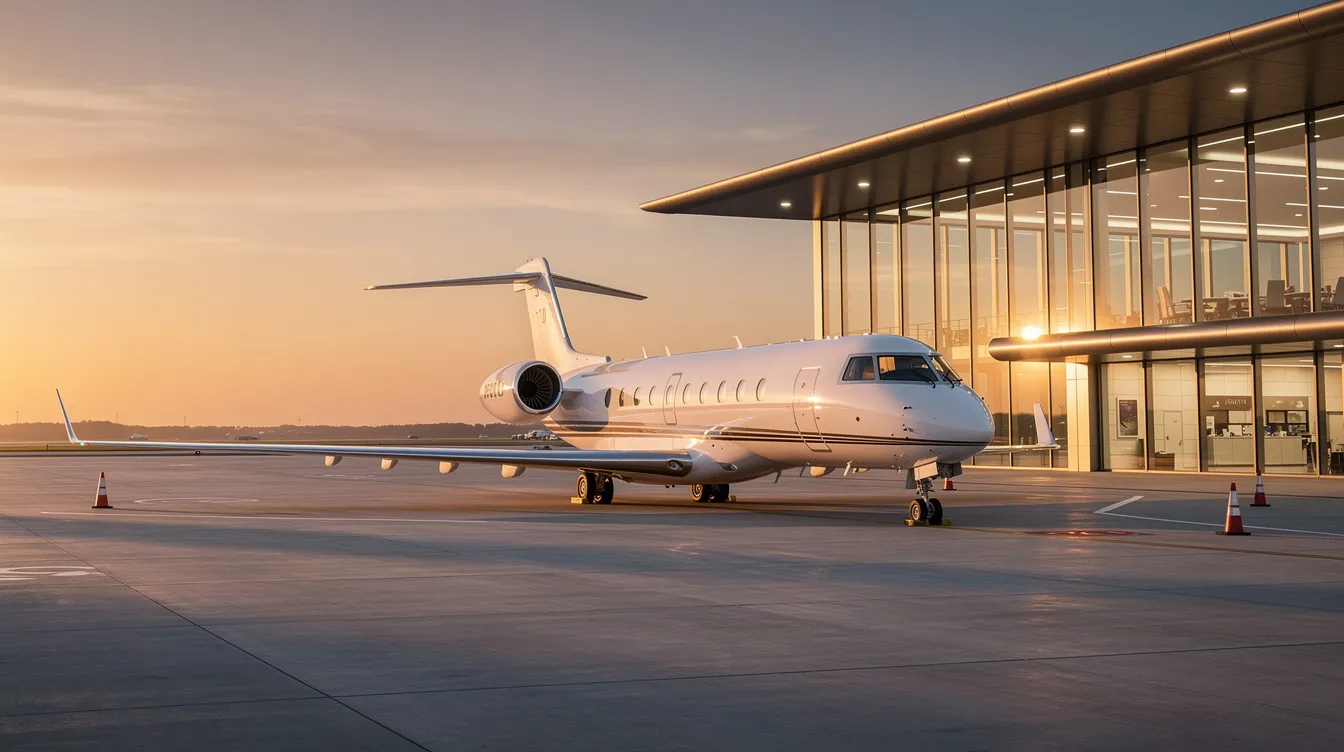
Private jet access is more than a luxury; for executives, families, and discerning travelers, it is a strategic advantage built around time, privacy, safety, and control. Understanding aircraft weight helps explain why one jet can slip into a regional airport while another needs a major runway, and why BlackJet matches each trip to the right cabin class, range, and payload profile.
At a Glance: How Much Do Airplanes Weigh?
Airplanes weigh anywhere from roughly 1,500 lbs for small single-engine private planes to over 1,000,000 lbs for massive commercial wide-body jets. In practical terms, airplane weight ranges from under 1,000 kg for light aircraft to more than 575,000 kg for jumbo jets, and that weight affects runway length, fuel planning, safety margins, comfort, and private jet trip planning.
A Cessna 172 has an empty weight of about 762 kg, an average passenger plane like a Boeing 737 has an empty weight of about 41,000 kg, and the Airbus A380 reaches a maximum takeoff weight of about 575,152 kg. An airplane's weight can range from a few thousand pounds to nearly one million pounds, and the airplane’s weight changes by mission, fuel load, passengers, cargo, and catering.
Commercial airliners prioritize mass transport, while private jets prioritize access, schedule control, and customization. BlackJet clients typically fly on light jets, midsize jets, super-midsize jets, and heavy jets rather than jumbo jets, using aircraft weight as a practical tool for airport access, time saved, and a more comfortable journey.
Types of Airplanes and How Much They Weigh
Aircraft weight scales with mission: training, personal flying, private business travel, scheduled airline service, and cargo aircraft operations. The weight depends on aircraft structure, engines, fuel, fixed equipment, passenger and cargo payload, and range requirements.
Light Aircraft and Small General Aviation Planes
Light aircraft typically weigh 500–1,200 kg empty, and light aircraft typically have a maximum takeoff weight (MTOW) of less than 12,500 pounds, which includes the weight of the airplane, fuel, passengers, and cargo. A Cessna 172 is about 762 kg empty and 1,157 kg MTOW; a Cirrus SR22 is about 1,020 kg empty and 1,634 kg MTOW; a Piper PA-28 sits in the same small-aircraft world, and many of these models feature in guides to the cheapest private aircraft and budget-friendly options.
These smaller aircraft offer short runway performance but are sensitive to extra weight, a heavy bag, checked bags, carry-on bags, and the number of passengers aboard. BlackJet does not typically place members on piston light aircraft, but these examples define the lower end of airplane weight and overlap with entry-level, more affordable private jet options that broaden access to private flying.
Private Jets and Turboprops (From Light Jets to Heavy Jets)
Most BlackJet flights use private aircraft such as turboprops and private jets, where aircraft weight determines cabin volume, range, how much luggage can be carried, and fuel consumption. Very light jets run about 3,000–5,000 kg MTOW, light jets about 5,000–9,000 kg, midsize jets about 9,000–18,000 kg, super-midsize jets about 18,000–22,000 kg, and heavy jets about 22,000–48,000 kg.
Light aircraft typically have a maximum takeoff weight (MTOW) of less than 12,500 pounds, while small private jets and turboprops generally weigh between 4,000 and 12,000 kg. An Embraer Phenom 300 is about 5,200–5,350 kg empty and 8,150 kg MTOW; a Cessna Citation CJ3+ is a popular light jet; a Challenger 350 is about 10,500 kg empty and 18,400 kg MTOW; and a Gulfstream G650 is roughly 24,400 kg empty with a 45,178 kg max takeoff weight. BlackJet advisors may place four passengers New York–Miami on a light jet, while ten passengers New York–London usually call for a heavy jet with more fuel, runway, and baggage capability, drawing on the full spectrum of private jet types to balance comfort, range, and cost.
Commercial Airliners and the “Average Passenger Plane”
When travelers ask, “How much does an airplane weigh?” they often picture an average passenger plane, such as a Boeing 737 or Airbus A320. Commercial airplanes are categorized by aisle configuration: narrow-body (single aisle) or wide-body (dual aisle).
A Boeing 737-800 weighs about 41,000–42,000 kg empty and 79,000–80,000 kg MTOW, while an Airbus A320neo is about 44,000 kg empty and 79,000–82,000 kg MTOW. Narrow-Body Airliners have MTOW in the range of 150,000 to 200,000 lbs, while Regional Jets have a Maximum Takeoff Weight (MTOW) of approximately 40,000 to 100,000 lbs. Wide-Body Airliners generally have MTOW between 500,000 and 800,000 lbs, and a Boeing 777 300ER is about 167,800 kg empty and 351,500 kg MTOW.
Commercial airliners have maximum takeoff weights ranging from approximately 110,000 pounds to over 775,000 pounds, depending on whether they are narrow-body or wide-body aircraft. For a regional route, BlackJet’s Jet Card can replace fixed schedules, security queues, and connections with direct private jet access to executive airports, matching each itinerary to the right private jet size and cabin class.
Jumbo Jets, Super Jumbos, and Cargo Giants
Jumbo jets are large aircraft built for high-capacity passenger or freight missions. The Boeing 747-8 is about 220,000 kg empty and 447,700 kg MTOW; heavy jets, including cargo aircraft, have a maximum takeoff weight of over 775,000 pounds, with examples like the Boeing 747 having an MTOW of 970,000 pounds.
The Airbus A380, the world's largest passenger airliner, has a maximum takeoff weight of 1,268,000 pounds (575,152 kg), making it one of the heaviest aircraft in the world. Ultra-Large Airliners can have MTOW ranging from 850,000 to over 1,200,000 lbs. The Antonov An-225 Mriya, destroyed in 2022, was the heaviest weight benchmark at about 285,000 kg empty and 640,000 kg MTOW. Airports serving these giants often need 3,000+ m / 10,000+ ft runways and reinforced pavement; BlackJet clients rarely need them because business heavy jets offer a better balance of speed, efficiency, privacy, and premium access.
Table: Typical Airplane Weights and Passenger Capacities
Aircraft Type | Empty Weight (kg) | Maximum Takeoff Weight (kg) | Typical Passenger Capacity (how many passengers) |
|---|
Light Aircraft (e.g., Cessna 172) | 762 | 1,157 | 2-4 |
Light Jet (e.g., Embraer Phenom 300) | 5,200 | 8,150 | 6-9 |
Midsize Jet (e.g., Challenger 350) | 10,500 | 18,400 | 8-10 |
Heavy Jet (e.g., Gulfstream G650) | 24,400 | 45,178 | 12-18 |
Narrow-Body Airliner (e.g., Boeing 737-800) | 41,000 | 79,000 | 130-189 |
Wide-Body Airliner (e.g., Boeing 777-300ER) | 167,800 | 351,500 | 300-400 |
Jumbo Jet (e.g., Airbus A380) | 276,000 | 575,152 | 500-850 |
Key Airplane Weight Terms: Empty Weight, Fuel Weight, and MTOW
When discussing how much airplanes weigh, aviation uses several definitions. Empty weight or basic empty weight includes aircraft structure, engines, fixed equipment, standard fluids, unusable fuel, and oil, but excludes usable fuel, passengers, and cargo; operating empty weight adds crew and operational items.
Maximum Takeoff Weight (MTOW) describes the heaviest a plane can safely be at takeoff, including fuel, passengers, and luggage. Maximum landing weight protects the landing gear and structure on arrival, maximum zero fuel weight limits the aircraft before usable fuel is added, and ramp weight includes taxi fuel. Jet fuel weighs about 6.7 pounds per gallon, or about 0.8 kg per liter, so airplane fuel weight questions are central to dispatch planning; a Boeing 737 domestic fuel weight may be 18,000–20,000 kg, while a G650 can carry similar fuel capacity for long missions. On a Phenom 300 New York–Chicago hop, the maximum weight includes fuel, crew, passengers, bags, and reserve fuel, not just the cabin load.
How Airplane Weight Changes Before and During a Flight
Airplanes become progressively lighter as they burn fuel during flight. An airplane's weight changes every flight based on fuel load, passengers, cargo, and catering, and fuel load can account for up to 40% of an airplane's total takeoff weight on long-haul flights.
A Boeing 737-8000 might start at 41,400 kg empty, add 20,000 kg of fuel, and add 15,000 kg of passengers and bags, producing about 76,400 kg total weight before fuel burn. A Challenger 350 may combine about 10,500 kg empty weight, 4,000 kg fuel, and 1,500 kg payload, then land several thousand pounds lighter. Passenger and cargo payload significantly add to an airplane's weight, with the FAA using standard passenger weights of 190 lbs (86 kg) per adult in summer and 195 lbs (88 kg) in winter, including carry-on bags. BlackJet operators use sophisticated weight and balance calculations and weight calculations before each leg, reflecting the same rigorous approach discussed in depth when asking whether private jets are safe and how risks are managed.
Why Airplane Weight Matters: Safety, Performance, and Airport Access
Airplane weight is central to safe takeoff, climb, landing, and airport choice. Heavier airplanes need a longer takeoff roll, higher rotation speed, more runway, and powerful engines; lighter aircraft can often use shorter regional airports.
Center of gravity matters as much as total aircraft weight. If passengers, skis, or golf clubs sit too far forward or aft in the cargo hold, handling characteristics can change, so BlackJet crews and vetted operators monitor weight and balance calculations carefully. Hot-and-high airports such as Aspen or Telluride in summer reduce performance, sometimes requiring less fuel, fewer passengers, or a different jet. BlackJet partners only with operators that follow strict safety margins, Federal Aviation Administration rules, EASA or equivalent standards, and aviation authorities’ certification requirements.
Runway Length, Climb Performance, and Cruise Efficiency
A light jet and a heavy jet departing the same airport face different runway, climb, and cruise considerations. The heavy jet may carry extra fuel for range, but more fuel increases drag, fuel burn, and sometimes requires a fuel stop if runway or weather limits make departure close to MTOW.
For example, a BlackJet member flying Los Angeles–Hawaii in a super-midsize jet may limit baggage or passenger count to optimize range and performance. Airframe materials play a major role here: airframe materials play a significant role in determining an airplane's weight, with modern planes like the Boeing 787 using carbon-fiber composite materials that can reduce empty weight by as much as 20% compared to older aluminum alloy designs. Carbon fiber composite materials in newer Gulfstream G500/G600-style designs also support fuel efficiency and range.
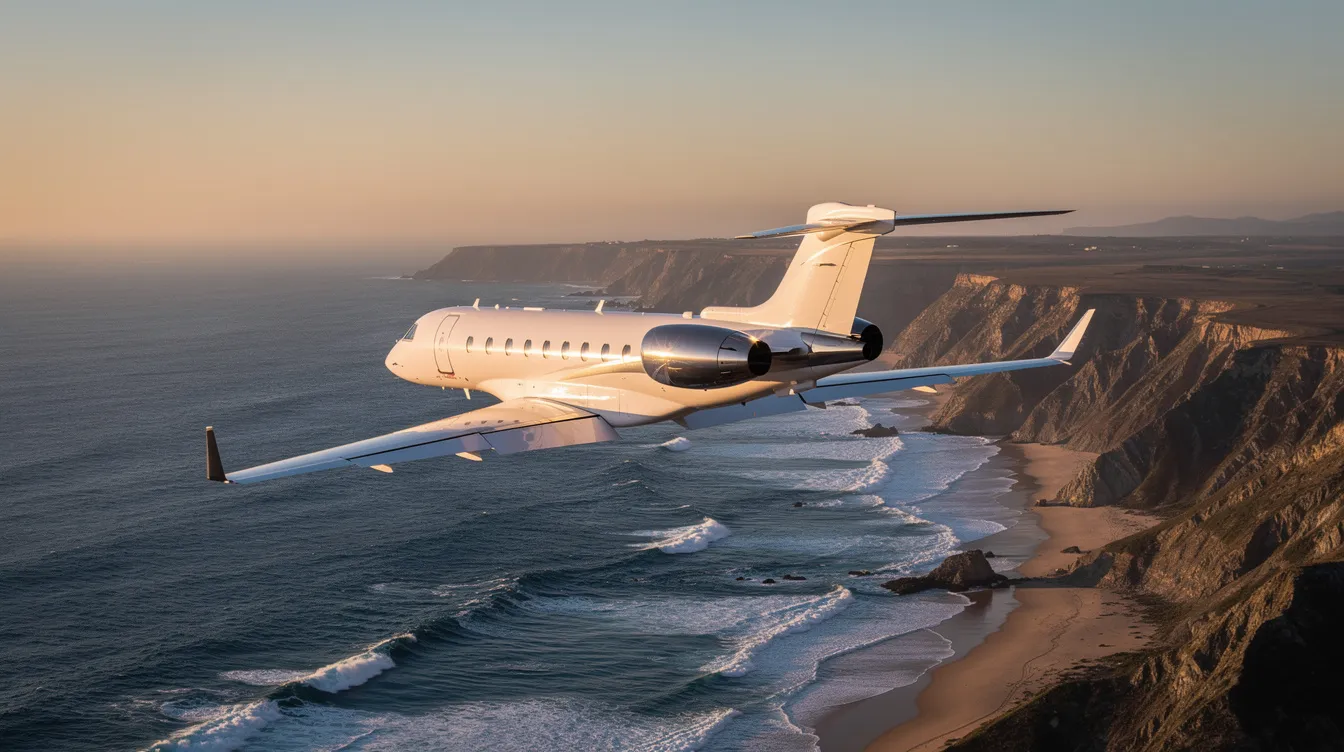
Fuel Weight: How Much Does Airplane Fuel Weigh and Why It Matters?
Fuel weight is often the major variable in airplane weight, especially on medium-haul flights and long-range routes. Planners think in both gallons and pounds because jet fuel is bought by volume, but performance is calculated by weight; Jet A typically weighs about 6.7 lbs per gallon.
A Boeing 737-800 may carry about 6,800–7,000 gallons, or roughly 20,000–21,000 kg, on a longer route. Fuel weight is a major variable affecting an airplane's total weight, with a fully fueled Boeing 777-300ER carrying roughly 320,000 lbs (145,000 kg) of jet fuel, nearly doubling its empty weight. A Gulfstream G650 may take 18,000–20,000 kg for an 11–12 hour mission. More fuel means extra weight, higher fuel consumption, and more fuel burn to carry the fuel itself, so dispatchers optimize reserve fuel without carrying unnecessary excess.
Balancing Fuel Weight and Payload on Private Flights
Picture six executives flying from New York to London on a BlackJet heavy jet. The team balances fuel weight, passenger load, checked bags, catering, and reserve fuel against maximum takeoff weight and maximum landing weight so the trip remains nonstop, legal, and comfortable.
For longer nonstop routes, operators may reduce payload to carry the fuel needed, particularly from short or hot runways. As the aircraft burns fuel, performance improves, and BlackJet’s real-time support team manages these trade-offs behind the scenes so members experience a seamless journey.
How Can Something So Heavy Fly?
Aircraft weighing hundreds of tons fly because lift balances weight when enough air flows over the wings. The wing’s airfoil shape, angle of attack, and forward speed create upward force equal to the weight of the airplane.
A Cessna 172 may lift off around 65–75 knots, while heavier airplanes such as wide-body airliners may rotate around 150–180 knots. Larger wings, powerful engines, and certified performance data make this possible. Before every BlackJet flight, pilots and dispatchers evaluate current weight, runway, temperature, and weather to confirm margins.
Weight, Lift, and Center of Gravity in Everyday Terms
Think of loading a luxury SUV versus a sports car: the same bags placed differently can change the balance. In aircraft, seats, baggage areas, tanks, usable fuel, and unusable fuel are positioned so the center of gravity remains within limits as fuel burns off.
Pilots and automated systems adjust trim while the aircraft becomes lighter. Even when only a few passengers are aboard, BlackJet’s partner operators follow rigorous procedures for aircraft weight, balance, and performance.
Private Jet Operations, Aircraft Weight, and the BlackJet Experience
For BlackJet members, aircraft weight shapes the real experience: cabin space, luggage allowance, range, runway access, and airport choice, all delivered through BlackJet’s premium private jet card and membership services. A light jet may access regional fields near a meeting, while heavy jets may favor executive airports such as Teterboro over JFK or Van Nuys over LAX when runway and performance conditions allow.
BlackJet’s safety process vets operators and aircraft for maintenance, certification, performance, and compliance with FAA, EASA, or equivalent standards. Sustainability is also part of the planning: lighter modern aircraft, optimized routing, reduced unnecessary fuel carriage, sustainable aviation fuel where available, and BlackJet carbon-neutral flights through offsets help reduce environmental impact without compromising service, while broader private jet pricing and access models shape how clients choose the most efficient way to fly.
Jet Cards, Flexibility, and Choosing the Right Aircraft Weight Class
BlackJet’s 25-hour and 50-hour Jet Card programs provide access across multiple cabin classes without committing to one aircraft type or weight category, and the dedicated BlackJet 25+ Hour Jet Card adds fixed-rate access to mid, super-mid, and large cabin jets. A two-passenger regional day trip may use a light jet, a coast-to-coast family holiday may use a super-midsize jet, and a transatlantic business mission may use a heavy jet. Understanding how jet card costs and structures work helps align these choices with the budget.
Behind each recommendation, BlackJet considers runway length, max takeoff weight, payload, range, weather, sports teams or group travel needs, and potential fuel stops, alongside jet card cost per flight hour and how different aircraft categories price out. Members see digital booking tools, real-time support, and refined service; the operations team handles the technical details discreetly, including evaluating jet card pricing structures and options that keep costs predictable.
Frequently Asked Questions About Airplane Weight
These concise answers cover the questions travelers ask most often, from “how much does airplane fuel weigh?” to “how much does a Boeing 737 weigh?”
How much does the average passenger plane weigh?
The average weight of a passenger plane in the Boeing 737 or Airbus A320 family is about 41,000–45,000 kg empty and about 77,000–83,000 kg at MTOW. A typical narrow-body airliner falls in that range, while wide-body models are significantly heavier.
How much does a Boeing 737 weigh?
A Boeing 737-800 is about 41,000–42,000 kg empty and roughly 79,000–80,000 kg fully loaded for takeoff. See manufacturer-style data summaries such as Boeing 737-800 reference figures.
How much does airplane fuel weigh?
Jet fuel weighs about 6.7 lbs per U.S. gallon, or about 0.8 kg per liter. A narrow-body may carry around 20,000 kg on a long domestic route, while large wide-body jets may carry far more.
How much does a light aircraft weigh?
A Cessna 172 weighs about 762 kg empty and 1,157 kg MTOW, while a Cirrus SR22 is about 1,020 kg empty and 1,634 kg MTOW. These figures show why smaller aircraft are highly sensitive to baggage and passenger changes.
How much does a typical private jet weigh?
A light jet such as an Embraer Phenom 300 is about 5,350 kg empty and 8,150 kg MTOW. A heavy jet such as a Gulfstream G650 is about 24,400 kg empty and about 45,178 kg MTOW, while even larger-cabin aircraft appear in analyses of the best private jets for 20 passengers.
Who sets maximum takeoff weight limits?
Manufacturers establish limits through certification testing, and the Federal Aviation Administration, EASA, ICAO guidance, and other aviation authorities approve those limits. Maximum takeoff weights ranging by aircraft class are legal operating limits, not suggestions.
Do newer aircraft weigh less?
Often, yes. Modern planes use improved airframe materials, advanced systems, and composites to reduce empty weight, although cabin, avionics, and safety systems can add weight back.
How does airplane weight affect what I can bring on a BlackJet flight?
BlackJet coordinates aircraft selection, passenger count, how much luggage, skis, golf bags, and bulky items in advance. If fuel, runway, or payload limits are tight, the team recommends the right cabin class before it becomes a travel-day issue.
Conclusion: Understanding Airplane Weight When You Fly or Charter
Airplanes weigh anywhere from a few hundred kilograms for light aircraft to more than 575,000 kg for ultra-large jumbo jets, and every flight combines empty weight, fuel weight, passengers, baggage, and cargo into one operating number. Aircraft weight matters because it shapes safety margins, airport access, cabin comfort, luggage flexibility, range, and whether light jets, midsize jets, or heavy jets are best suited to the mission.
BlackJet brings rigorous safety standards, advanced planning tools, real-time support, and a carbon-neutral commitment to the complexity of aircraft performance. Explore how BlackJet’s Jet Card programs give you seamless access to the right aircraft, on your schedule, with every detail, from airplane’s weight to carbon offsets, managed discreetly on your behalf.


 Sign up with google
 Sign up with Apple