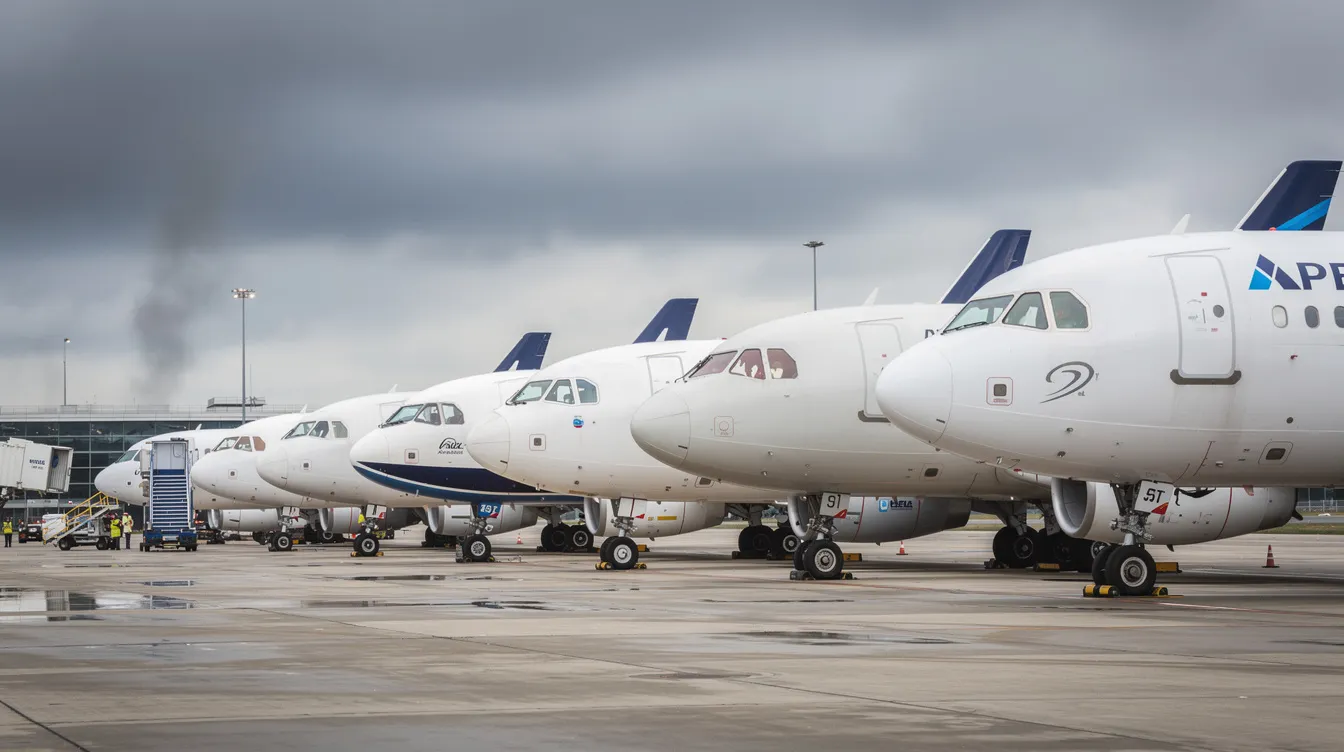
Key Facts: JetBlue's 2026 Financial Snapshot
Debt: ~$9 billion outstanding
Liquidity: $2.2 billion in cash and investment securities (end-Q2 2026)
Losses: Six consecutive years of net losses
CEO Statement: Bankruptcy is not on the table (Joanna Geraghty)
Turnaround Plan: Targeting profitability by 2027; focused on reliability and revenue
Cost-Cutting: Delaying $3 billion in new aircraft purchases
Credit Rating: Downgraded to CCC+ in 2026 (high default risk)
Debt Maturities: $755 million due in 2026
Analyst View: 75% estimated probability of bankruptcy by 2027
Operational Costs: Rising due to increased fuel prices
Recent Financing: $500 million secured in April 2026, backed by 22 aircraft
Article Scope, Audience, and Why This Matters
This article examines JetBlue's financial health, risk of bankruptcy, and what travelers should know for 2026 and beyond. It is designed for travelers, business flyers, and industry watchers who need clarity amid headlines about credit downgrades, route exits, and years of red ink. The topic matters because uncertainty about JetBlue's future creates anxiety for ticket holders and travel planners, impacting decisions on booking, loyalty, and contingency planning.
Is JetBlue Going Out of Business? (Direct Answer)
Is JetBlue going out of business?
No, JetBlue Airways is not in bankruptcy, not liquidating, and not ceasing operations as of mid-2026. The airline continues to sell tickets and operate flights to over 100 destinations. However, JetBlue faces high financial risk:
Credit rating: Downgraded to CCC+ in 2026, signaling elevated default probability.
Debt: Roughly $9 billion outstanding.
Losses: Six consecutive years of net losses.
Liquidity: $2.2 billion in cash and investment securities.
CEO Statement: CEO Joanna Geraghty has stated that bankruptcy is not on the table for JetBlue.
Turnaround Plan: Management is executing a turnaround plan focused on cost-cutting, delaying $3 billion in new aircraft purchases, and aiming for profitability by 2027.
Analyst View: Some analysts estimate a 75% probability of bankruptcy by 2027.
Definitions
Bankruptcy: A legal process allowing a company to reorganize its debts while continuing to operate. JetBlue's CEO says bankruptcy is not currently being considered.
Liquidation: The process of ceasing operations and selling off assets. JetBlue is not in liquidation.
Credit Rating: An assessment of credit risk; CCC+ means high risk of default.
Turnaround Plan: A set of strategies to restore profitability, including cost-cutting, delaying aircraft purchases, and improving reliability and revenue.
Travelers should be aware of the risks but can still book JetBlue flights for the near term, especially on core routes. For those seeking extra certainty, pairing commercial bookings with private jet solutions is an emerging trend.
Summary: Is JetBlue Going Out of Business? (Short, Direct Answer)
JetBlue Airways is not in bankruptcy, not liquidating, and not ceasing operations as of mid-2026. The company continues to sell tickets, operate flights across more than 100 destinations, and adjust its network. However, analysts view JetBlue's financial position as high risk, with S&P assigning a CCC+ credit rating in June 2026—a level that signals elevated default probability over the coming years.
It's critical to understand the difference between these concepts:
"Going out of business": Liquidation—assets sold, flights stop, the brand disappears.
Bankruptcy / Chapter 11: Court-supervised restructuring while the airline keeps flying. Passengers typically notice little immediate change.
"At risk but operating": Where JetBlue sits today: financially stressed, making strategic cuts, but still a functioning carrier.
For travelers planning near-term trips on routes like New York to Fort Lauderdale or Boston to Orlando, JetBlue remains a viable option. High-net-worth and business travelers seeking additional certainty are increasingly pairing commercial bookings with private jet solutions like BlackJet Jet Cards as a hedge against disruption.

Why People Think JetBlue Might Be Going Out of Business
A wave of negative developments over the past two years has fueled speculation. In 2024, federal courts blocked JetBlue's proposed merger with Spirit Airlines, removing what many viewed as the company's best path to competitive scale. That setback came alongside the unraveling of the northeast alliance with American Airlines, years of mounting losses, and increasingly cautious analyst commentary throughout 2025 and 2026.
Merger Block and Alliance Unraveling
Financial Losses and Debt
Six consecutive years of net losses heading into 2026.
Approximately $9 billion in total debt as of Q2 2026, a burden that dwarfs the company's shrinking equity base.
Credit Rating and Analyst Commentary
S&P assigned a CCC+ credit rating in June 2026, deep in speculative territory.
Reports from outlets like CH Aviation and financial news services have highlighted restructuring scenarios.
Some analyst projections—including claims of a "75% chance of bankruptcy by 2027"—circulate on niche financial blogs but are not supported by consensus modeling at major firms.
Rising fuel prices since late 2025 and persistently high interest rates have amplified media focus on weaker carriers, making every route cut or schedule adjustment feel like a distress signal.
To better understand JetBlue's situation, let's examine its current financial health.
JetBlue's Current Financial Health in 2026
JetBlue's finances are genuinely stressed. The company has lost money for multiple consecutive years, carries heavy leverage, and faces squeezed margins in a brutal cost environment. But it still generates meaningful revenue, controls valuable airport slots, and operates a modern fleet.
General Overview
JetBlue is operating under significant financial pressure in 2026. The airline has posted six consecutive years of losses, is burdened by approximately $9 billion in debt, and faces rising operational costs—especially from fuel. Despite these challenges, JetBlue maintains $2.2 billion in liquidity and is executing a turnaround plan that includes cost-cutting, delaying $3 billion in new aircraft purchases, and focusing on improving reliability and revenue. CEO Joanna Geraghty has publicly stated that bankruptcy is not on the table, and management projects a return to sustained operating profitability in 2027.
Debt and Equity
Total debt: Approximately $9 billion as of June 30, 2026.
Equity: Fell from roughly $2.12 billion at end-2025 to about $1.59 billion by mid-2026.
Revenue and Costs
Revenue per available seat mile (RASM): Rose approximately 10.9% year-over-year in Q2 2026.
Cost per available seat mile (CASM): Climbed roughly 17%, driven largely by fuel prices averaging $4.23 per gallon.
JetBlue recovered only about 50% of its higher fuel costs through fares and ancillary revenue in Q2, meaning the rest eroded margins directly.
Liquidity Position
Ended Q1 2026 with around $2.2 billion in available cash and investment securities.
Over $6 billion in unencumbered assets—planes, slots, and other holdings not yet pledged as collateral.
Secured $500 million in debt financing backed by 22 aircraft in April 2026.
This gives the company roughly 18 to 24 months of runway at current burn rates, assuming demand and costs remain stable.
Despite weakness, JetBlue still controls significant slot holdings at JFK, Boston Logan, and Fort Lauderdale, and operates a fleet of modern Airbus narrowbodies with real resale and lease value. CEO Joanna Geraghty has emphasized the "JetForward" strategy as the path back to profitability—but that path remains unproven.
Looking ahead, the next major challenge is JetBlue's upcoming debt maturities, often referred to as the "debt wall."
The 2027–2029 "Debt Wall" and What It Really Means
A "debt wall" describes periods when large amounts of borrowing come due simultaneously. If a company can't repay or refinance those obligations, it faces restructuring or bankruptcy. For JetBlue, the debt wall looming between 2027 and 2029 is what keeps analysts cautious.
2026: Around $755 million due.
2027: Approximately $411 million.
2028: Roughly $516 million.
2029 and beyond: Additional obligations that compound the pressure.
In normal market conditions, airlines roll over this kind of debt using secured loans backed by aircraft and airport slots, sale-leaseback transactions on planes, new bond issuances, or bank credit facilities. JetBlue's TrueBlue loyalty program also holds latent monetization value.
Analysts focus on 2027 as a critical decision point. If JetBlue's revenue growth outpaces costs and the company begins generating positive free cash flow, lenders will refinance. If losses persist and credit markets tighten further, Chapter 11 restructuring becomes the more probable path. S&P projects leverage could reach approximately 10 times debt-to-EBITDA by end-2027 absent meaningful improvement.
For travelers, it's important to understand that debt walls are financial events, not operational ones. Flights don't stop because a bond matures. What changes is the behind-the-scenes negotiation between the airline, its lenders, and its lessors.
Historical precedent is instructive: Delta filed for Chapter 11 in 2005, United in 2002, and American Airlines in 2011. All three restructured, emerged leaner, and continued flying. None went bankrupt in the colloquial sense of vanishing overnight.
Next, let's look at how JetBlue's route cuts and airport exits fit into this broader financial picture.
Route Cuts and Manchester Boston Regional Airport Exits: Are They Signs of Collapse?
When an airline pulls out of an airport, it's natural to wonder whether the company is circling the drain. But route rationalization is standard practice—healthy carriers do it routinely, and distressed ones do it more aggressively.
JetBlue's exit from Manchester Boston Regional Airport is a clear example. The airline launched service at MHT in January 2025, but announced it would cease all operations there by July 8, 2026, citing underperforming demand and the need to redeploy aircraft to higher-return markets. JetBlue closed that station after just 17 months. Southwest Airlines and Breeze continue to serve the New Hampshire airport, highlighting that the market exists—just not profitably enough for JetBlue's cost structure.

Alongside the MHT exit, JetBlue has trimmed roughly 10 routes system-wide, including seasonal service in parts of the Caribbean and Central America. Shifts around Los Angeles—once considered a potential LAX focus city expansion—reflect post-Spirit merger recalibration on the west coast. Meanwhile, daily flights on core domestic flights and leisure corridors remain intact or have even grown.
What matters is where the freed-up planes go. JetBlue has launched new transatlantic routes like Boston to Milan and reinforced Florida and Caribbean flying—markets with stronger demand and higher fares. A shrinking route map doesn't automatically equal imminent shutdown. It can be the necessary surgery to restore profitability.
To understand JetBlue's competitive position, let's examine how it fits between legacy carriers, Spirit Airlines, and ultra-low-cost competitors.
JetBlue's Strategic Position Between Legacy, Spirit Airlines, and Ultra-Low-Cost Carriers
JetBlue occupies an increasingly uncomfortable middle ground in the US airline industry. It offers more amenities than ultra-low-cost carriers like Spirit Airlines and Frontier—think free wifi, seatback entertainment, and more generous legroom—but lacks the global networks, alliance memberships, and corporate contracts that define legacy carriers.
This "stuck in the middle" dynamic creates a strategic squeeze:
Business travelers: Often favor the largest carrier options—Delta, United Airlines, or American—for schedule frequency, lounge access, and alliance benefits.
Price-sensitive leisure travelers: Gravitate toward low-cost carriers offering the absolute lowest base fares, even at the expense of comfort.
JetBlue's customers: Fall between these poles, valuing quality but unwilling to pay legacy premiums—a segment that shrinks when the economy tightens or low fares flood the market.
JetBlue offers meaningful differentiators that still carry weight. Its Mint premium cabin competes effectively on transcontinental and select transatlantic routes, delivering a lie-flat experience at below-legacy pricing. The airline's reputation for customer service and its seats with more pitch than most competitors remain selling points.
But this positioning directly affects the bankruptcy conversation. Being squeezed from both sides limits pricing power, market share growth, and the ability to absorb cost shocks. When fuel spikes or pilots negotiate higher contracts, JetBlue has fewer levers to pull than either the scale-advantaged legacies or the bare-bones low-cost operators. That's precisely why analysts remain cautious about the company's ability to outgrow its debt burden.
Next, let's break down the industry-wide pressures that are compounding JetBlue's financial stress.
Fuel Prices, Operating Costs, and Industry-Wide Pressures
JetBlue's financial stress doesn't exist in isolation. The broader airline industry is contending with a cost surge that has hit mid-size carriers hardest.
Jet Fuel and Pricing Lag
Jet fuel prices averaged $4.23 per gallon in Q2 2026, up 76% from a year earlier.
Tickets are often sold months before departure at fares set before fuel prices spike.
JetBlue recaptured only about 50% of its higher fuel costs in Q2 2026 through fare increases and ancillary revenue.
Other Rising Costs
Interest expenses have risen with higher base rates, making debt service more expensive.
Labor agreements with pilots, cabin crew, and technical operations staff reflect inflation and competitive hiring pressures.
Airport fees at major hubs like New York and Fort Lauderdale continue to increase.
Carriers with massive global networks—think Delta or United—can spread risk internationally, shift capacity, and leverage cargo revenue. Two airlines in the middle tier, like JetBlue and others without that scale, absorb more of the pain. Private aviation faces fuel costs too, but structured programs like BlackJet's Jet Cards smooth price volatility for clients through pre-purchased hours and transparent pricing.
Despite these pressures, JetBlue still controls valuable assets. Let's review what those are and why they matter.
JetBlue's Network, Fleet, and Partnerships: Assets That Still Matter
Beyond the balance sheet, JetBlue controls strategic assets that lenders, potential acquirers, and restructuring advisors care about deeply. These assets are a significant reason why complete liquidation remains unlikely.
Network: JetBlue serves over 100 international destinations and domestic cities across the U.S., Caribbean, Central and South America, and Europe—including London, Paris, Amsterdam, Dublin, and now Milan. The airline maintains strong footholds at New York JFK, Boston Logan, and Fort Lauderdale, with valuable slot holdings at congested airports that competitors covet. Its headquarters in Long Island City anchors a brand with deep roots in the Northeast.
Fleet: JetBlue operates a modern, largely Airbus narrowbody fleet—A320 family aircraft including the A321neo and A220-300, with the latter replacing aging Embraer E190s. Orders for the A321XLR, which would extend transatlantic range, have been deferred to approximately 2030 under the JetForward plan to conserve cash. These planes retain strong resale and lease value in today's aircraft market.
Partnerships and loyalty: While JetBlue was the first airline to offer free live television at every seat and has built a loyal customer base, its TrueBlue loyalty program generates important co-branded credit card revenue. Codeshare and interline agreements—including partnerships with carriers like Contour Airlines—extend connectivity, even without a formal global alliance membership.
These assets matter because they serve as collateral for financing, make JetBlue an acquisition or merger candidate, and increase the odds that the brand survives in some form even under restructuring. Under former CEO Robin Hayes and now Joanna Geraghty, the airline has built infrastructure that has value beyond quarterly earnings.
If JetBlue's financial situation worsens, what would bankruptcy mean for passengers? Let's clarify how airline bankruptcies typically work.
How Airline Bankruptcies Typically Work (and How They Affect Passengers)
If the word "bankrupt" triggers images of padlocked gates and grounded planes, it's worth understanding how airline restructuring actually works in the United States.
Chapter 11 bankruptcy is a legal process that allows a company to reorganize its debts while continuing to operate. It is fundamentally different from Chapter 7 liquidation, where operations cease, and assets are sold. Nearly every major U.S. airline that has filed for bankruptcy has used Chapter 11—and emerged still flying.
Historical examples:
Delta filed in 2005 and exited Chapter 11 in 2007 as a stronger, more profitable airline.
United entered bankruptcy protection in 2002 and emerged in 2006.
American Airlines filed in 2011 and used the process to merge with US Airways, becoming the world's largest carrier.
During these restructurings, passengers experienced remarkably little disruption. Tickets remained valid. Flights generally continued as scheduled. Frequent-flyer miles and status largely survived, though some program terms were adjusted.
What typically changes during restructuring:
Debt is reduced or rescheduled on more favorable terms.
Aircraft leases and labor contracts may be renegotiated.
Unprofitable routes, airplane types, and bases get cut.
The airline emerges leaner but operational.
If JetBlue were to face Chapter 11 between 2027 and 2029, the pattern suggests it would pursue this kind of reorganization rather than vanish overnight. Passengers on core routes would likely continue traveling with minimal delays or disruption. The risk rises primarily on marginal routes and at smaller airports where service was already thin.
So, what should travelers do if they're worried about JetBlue's future? Let's break down practical strategies.
What JetBlue Passengers Should Do If They're Worried
Short-Term Travel Tips
Use credit cards with strong travel protections for chargeback rights and trip cancellation coverage.
Avoid locking in non-refundable add-ons far in advance unless protected by separate insurance.
Consider travel insurance that explicitly covers airline insolvency; check policy details.
Mission-Critical Travel Strategies
Book flexible or refundable fares whenever possible.
Keep backup itineraries with other airlines in mind.
For the highest-stakes legs, pair commercial bookings with private jet access. A BlackJet Jet Card held in reserve provides a contingency if commercial options falter due to schedule changes, weather, or airline instability.
Finally, stay informed without overreacting. Monitor JetBlue's quarterly financial announcements and watch for signals like further credit downgrades or accelerated route exits. But don't panic-cancel every reservation based on speculative headlines. Market conditions are fluid, and the airline is actively working to reverse its trajectory.
For travelers and corporations seeking even greater certainty, private aviation is becoming a strategic alternative.
Why Some Travelers and Corporations Are Shifting Toward Private Aviation
When a well-known airline like JetBlue shows signs of financial strain, it highlights a broader vulnerability in commercial air travel: schedules are set by the airline, not the traveler. For time-sensitive passengers and corporations, that dependency is increasingly uncomfortable.
Private aviation addresses the core pain points that commercial instability exposes:
Schedule control: Aircraft depart when the client is ready. No cancellations because a route became unprofitable.
Airport access: Private flights reach hundreds of airports—including regional fields in Florida, New England, and the West Coast—that carriers like JetBlue or Spirit don't serve.
Privacy and productivity: Work uninterrupted, hold confidential conversations, and eliminate security lines and crowded terminals.
BlackJet's model is built for exactly this kind of strategic flexibility. With Jet Card programs offering 25- or 50-hour blocks across multiple cabin classes, travelers gain guaranteed access to vetted operators, seamless digital booking, and real-time flight support—without the commitment of aircraft ownership. These premium private jet cards and Jet Card programs provide predictable pricing and convenience comparable to the best private jet membership pricing options on the market.
Consider a scenario: a New York-based executive who typically flies JetBlue Mint to Fort Lauderdale or London maintains a BlackJet Jet Card for critical trips. When a last-minute meeting arises or commercial networks face disruption, that card activates immediately—no scrambling for alternative flights or sleeping in airports, illustrating many of the advantages highlighted in guides to the best Jet Cards for frequent flyers.
BlackJet also provides carbon-neutral flights by default and operates exclusively with safety-certified operators, aligning with what many travelers learn when they explore how safe private jets are compared with commercial aviation, creating a reliability layer that complements—rather than replaces—commercial travel.
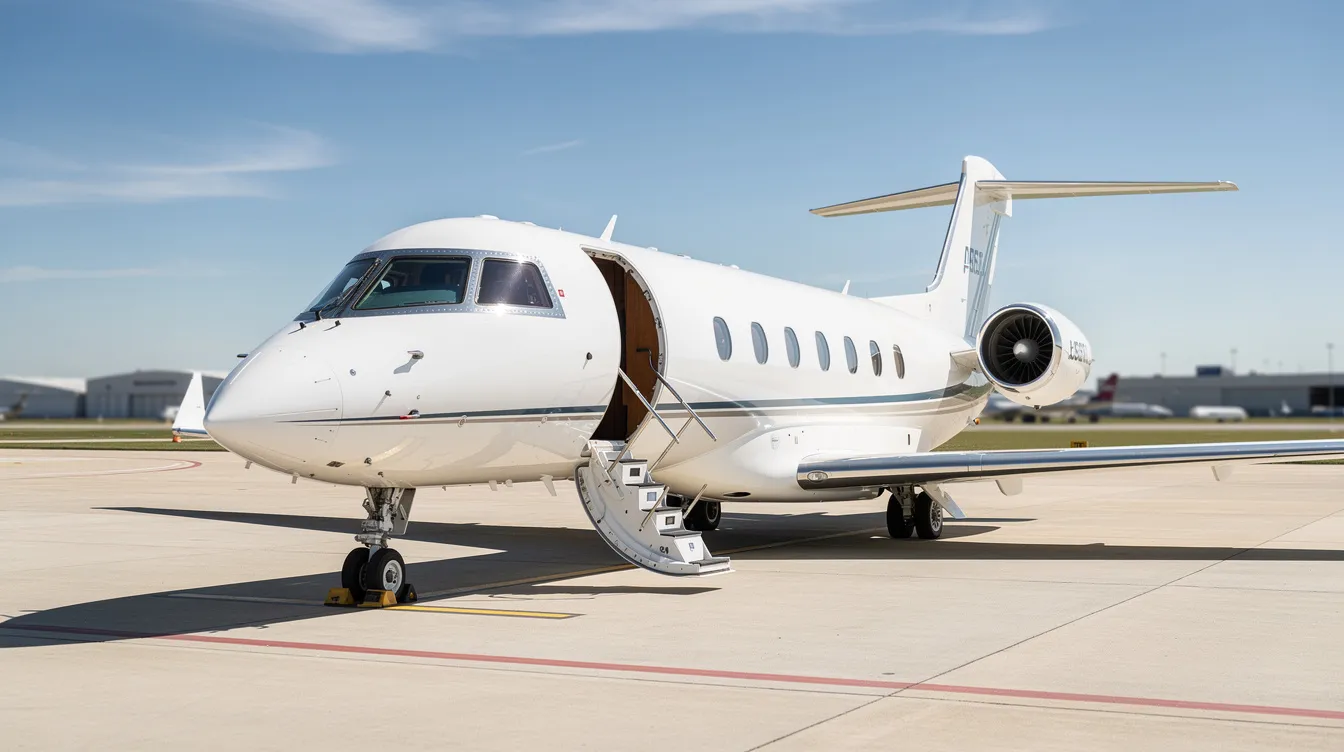
How do Jet Cards compare with other premium travel options? Let's break it down.
Jet Cards vs Ad-Hoc Charter vs Commercial First Class
As commercial uncertainty rises—whether from JetBlue's finances or industry-wide volatility—high-value travelers are reassessing how they allocate their travel spend across three main models, increasingly digging into comprehensive Jet Card pricing guides to understand how private access compares with premium cabins and ad-hoc charter.
Dimension | Commercial First Class (e.g., JetBlue Mint) | On-Demand Charter | Jet Cards (e.g., BlackJet) |
|---|
Cost predictability | Fares fluctuate with demand and fuel | Variable pricing; peak spikes | Known hourly rates, transparent terms |
Flexibility | Fixed schedules and routes | Custom departure times/routing | Custom scheduling, guaranteed access |
Reliability | Subject to route cuts/cancellations | Limited short-notice availability | Prepaid capacity ensures access |
Experience | Premium cabin, shared airplane | Private cabin, custom catering | Private cabin, vetted operators, consistent service |
For a frequent New York to South Florida traveler, the calculus might look like this: JetBlue Mint works well for routine trips when schedules align. But during peak season—holidays, major events in Las Vegas or Miami—commercial seats become scarce and fares spike. A BlackJet 25-hour Jet Card guarantees capacity at locked-in rates, functioning as both a convenience upgrade and an insurance policy, especially when you understand typical 50-hour Jet Card cost and value dynamics and how flexible products like the BlackJet 25+ Hour Jet Card are structured.
The deeper point is strategic. In a world where even established brands like JetBlue can become restructuring candidates, structured private access becomes part of a risk-management strategy. It protects against the route exits, schedule changes, and capacity reductions that distressed carriers impose on their passengers—and for heavy users, understanding the 100-hour Jet Card cost structure can be central to that long-term planning. Private aviation isn't just about luxury—it's about control over outcomes when the commercial landscape shifts.
Safety, sustainability, and reliability are also top priorities for discerning travelers. Here's how BlackJet addresses these needs.
How BlackJet Ensures Safety, Sustainability, and Reliability Amid Airline Volatility
Serious travelers judge aviation options on three pillars—safety, sustainability, and operational reliability—not ticket price alone. When commercial carriers face financial pressure, those pillars can wobble. Maintenance budgets tighten. Experienced pilots leave for better-paying competitors. Schedule reliability declines as the company prioritizes cost-cutting over service consistency, pushing some travelers to compare top private jet companies for luxury and reliability as an alternative safety net.
Safety: BlackJet's framework is built on vetted, top-tier certified operators meeting standards such as ARG/US Platinum and Wyvern Wingman ratings. Every flight operates under audited maintenance protocols with experienced crews. This curated ecosystem offers a level of predictability that's harder to guarantee when a commercial airline is navigating financial distress.
Sustainability: BlackJet provides carbon-neutral flights as standard through verified carbon offset programs and, where feasible, sustainable aviation fuel partnerships. This contrasts with the challenge facing commercial carriers—including JetBlue—in rapidly transitioning large fleets to lower-emission operations while simultaneously managing billions in debt.
Reliability and technology: With 24/7 digital booking, live support, proactive rerouting capabilities, and access to multiple aircraft categories, BlackJet functions as a stability layer in volatile times. A corporate travel manager can integrate it alongside commercial contracts, activating private flights precisely when disruptions occur.
Consider the scenario: a corporate team is scheduled on JetBlue from New York to a critical investor meeting. A storm system or last-minute schedule change threatens the trip. A BlackJet flight activates within hours, and the team lands on time—preserving deal value that far exceeds the cost of the flight itself. That's not indulgence. That's operational resilience.
What are the possible futures for JetBlue? Let's review the scenarios analysts are watching.
Future Scenarios for JetBlue: From Turnaround to Restructuring
No one can predict JetBlue's future with certainty, but analysts have outlined several plausible scenarios for the 2026–2029 period. Understanding these helps travelers plan with clear eyes rather than panic.
Scenario 1: Successful turnaround. The JetForward profitability plan takes hold. Route cuts and fleet deferrals reduce costs. Fuel stabilizes, demand remains strong, and JetBlue achieves management's target of $850–950 million in incremental EBIT by 2027. Positive free cash flow enables refinancing of 2027–2029 debt maturities. The airline stabilizes and begins modest expansion.
Scenario 2: Chapter 11 restructuring. Continued losses erode liquidity through late 2027. JetBlue files for bankruptcy protection to renegotiate debt, leases, and labor contracts. Flights continue throughout the process. The route map shrinks—some bases close, some aircraft leave the fleet—but the core brand and key hubs survive. This mirrors what Delta, United, and American all navigated successfully.
Scenario 3: Consolidation or strategic partnership. JetBlue becomes an acquisition target for a larger airline or consortium. After the failed attempt to merge two airlines—JetBlue and Spirit—regulatory hurdles remain significant. But a distressed valuation makes combination more feasible, potentially with a legacy carrier seeking JetBlue's Northeast slots and transatlantic routes.
Scenario 4: Deep attrition. In a severe recession or oil shock, decline accelerates. JetBlue sells assets—slots, loyalty program stakes, aircraft—and retreats to a handful of profitable markets. Complete liquidation remains the least likely outcome but cannot be categorically ruled out under extreme market conditions.
For travelers, the takeaway is practical: diversify your carrier exposure when possible, use flexible booking options, and for mission-critical travel, consider private options such as BlackJet to sidestep uncertainty entirely.
Conclusion: Is JetBlue Safe to Fly, and How Should You Plan Ahead?
JetBlue is not "going out of business" today. But it faces real financial stress—heavy debt, persistent losses, and a credit rating deep in speculative territory—that could lead to restructuring later this decade. Historically, major airline restructurings have allowed carriers to keep flying rather than vanish overnight.
For near-term leisure trips, JetBlue remains a viable option, particularly on core routes through New York, Boston, and Florida. For business-critical or once-in-a-lifetime journeys, build redundancy into your plans: mix carriers, choose flexible fares, and monitor the company's quarterly updates.
Sophisticated travelers increasingly treat private jet access not as a luxury indulgence but as a resilience tool. A BlackJet Jet Card held alongside your commercial bookings ensures that when schedules shift or money is on the line, your most important trips remain non-negotiable.
Uncertainty in commercial aviation is structural. But with the right combination of informed planning and private access, discerning travelers stay in control of their time and outcomes.
Explore how BlackJet can reshape your travel strategy—discover our Jet Card programs today, compare them with alternatives like NetJets Jet Card cost structures or Flexjet Jet Card pricing and options, and dive into resources on billionaire private jet price trends in 2026, fractional jet ownership depreciation, and maximizing Jet Card tax deductions.


 Sign up with google
 Sign up with Apple