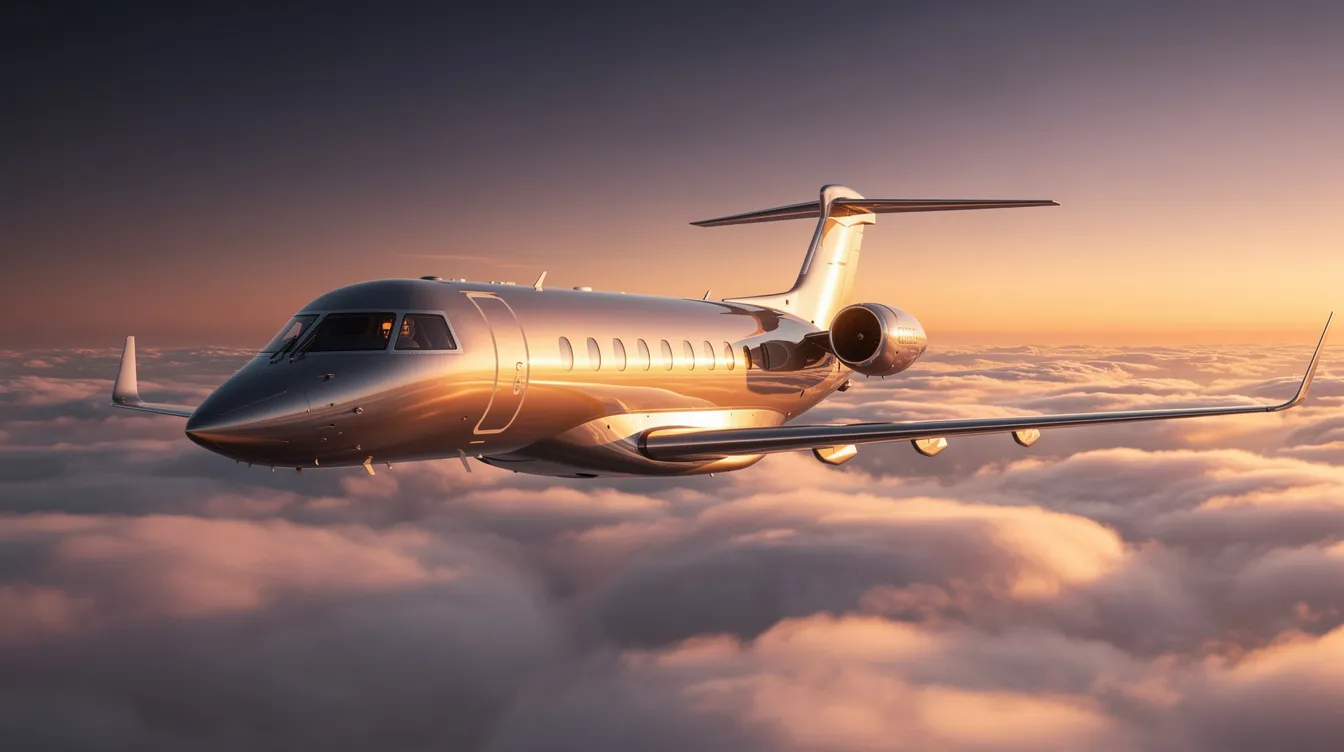
Jet-powered aviation reshaped both warfare and commerce across the globe. Today, the same principles that send fighter jets screaming through the skies at Mach 2 also propel business travelers coast-to-coast in quiet, pressurized cabins. This guide explores both worlds-and shows why BlackJet's Jet Card model turns jets flying into a true strategic advantage.
Why Jets Flying Matters for High-Performance Travel
All jet aircraft are defined by their use of jet engines rather than propellers. Jet engines pull in and compress air, mix it with fuel, and ignite it to create thrust-the forward force that moves the aircraft through the air. Commercial jets are designed for mass transportation efficiently over long distances, while high-bypass turbofan engines provide fuel efficiency and reduced noise for modern jets across categories.
The difference between flying private and flying commercial comes down to hours, not minutes. A New York-to-Miami commercial itinerary, including two-plus hours of pre-flight security, boarding, potential connections, a 2.5-hour flight, and baggage claim, can consume five to seven hours door-to-door. A private jet from Teterboro to Opa-Locka covers the same distance in roughly three hours total: 30 minutes on the ground, two hours in the air, and minimal arrival time.
While fighter jets are engineered for speed and maneuverability, business jets prioritize range, comfort, and productivity. BlackJet exists on the business aviation side, offering structured, carbon-neutral private jet access for people who travel frequently, not one-off orientation rides in decommissioned military jet trainers.
Fighter Jets vs Private Jets: Different Missions, Same Sky
Fighter jet flights and private jet flights serve entirely different purposes. One is built around combat, flight training, and reconnaissance. The other delivers executive mobility, privacy, and life-changing time savings. Yet every jet in the sky relies on the same physics.
The operation of jets relies on the interaction of four key forces: lift, weight, thrust, and drag. Weight is the force pulling the airplane down toward Earth. Lift acts against gravity, allowing the plane to rise, generated by a pressure difference created by the wing design. Bernoulli's Principle states that faster air moves over the top of a wing than the bottom; higher air velocity results in lower air pressure, and airfoil wings are designed to create a pressure drop above the wing that produces lift. The lift must be greater than or equal to the weight of the aircraft for it to fly. Drag is air resistance that slows the plane down, while thrust overcomes that resistance. Jets fly by manipulating air to create forces that overcome gravity and air resistance.
Jets use sleek, streamlined designs to minimize drag for higher speeds. Streamlined shapes reduce drag and allow faster speeds across all categories. Turbine engines power jets, distinguishing them from propeller-driven aircraft, and jets perform best at their optimal "L/D max" airspeed rather than at low speed.
Jet aircraft can be categorized by purpose: commercial, private, or military. Within private aviation, the best jet cards for frequent flyers align aircraft choice with mission profile and usage patterns. Military jets are characterized by speed, maneuverability, and specialized functionalities designed for combat, reconnaissance, or support roles, emphasizing speed. Military jets can exceed Mach 2.0 and are designed to sustain high G-forces. Experimental jets are engineered for speeds exceeding Mach 1.0 to Mach 5.0, pushing what's possible in aerospace.
A modern fighter like the F-35 Lightning II delivers Mach 1.6 capability, a single seat, and a short combat radius. The MiG-21 is a supersonic interceptor capable of Mach 2, able to break the sound barrier with the roar of raw power. By contrast, a Gulfstream G650ER offers up to ~7,500 nautical miles of range, a Mach 0.90 high-speed cruise, seating for 14–18 passengers, a full galley, and lie-flat configurations—one of the top private jets in the world for luxury and performance. Private jets are classed by size from Light Jets to Ultra-Long-Range Jets.
Civilians cannot charter active military aircraft. What people call "fighter jet flights" are orientation rides in demilitarized trainers. BlackJet focuses entirely on business aviation: rapid city-pair connections, privacy, and productivity.
Where Fighter Jet Flights Happen Today
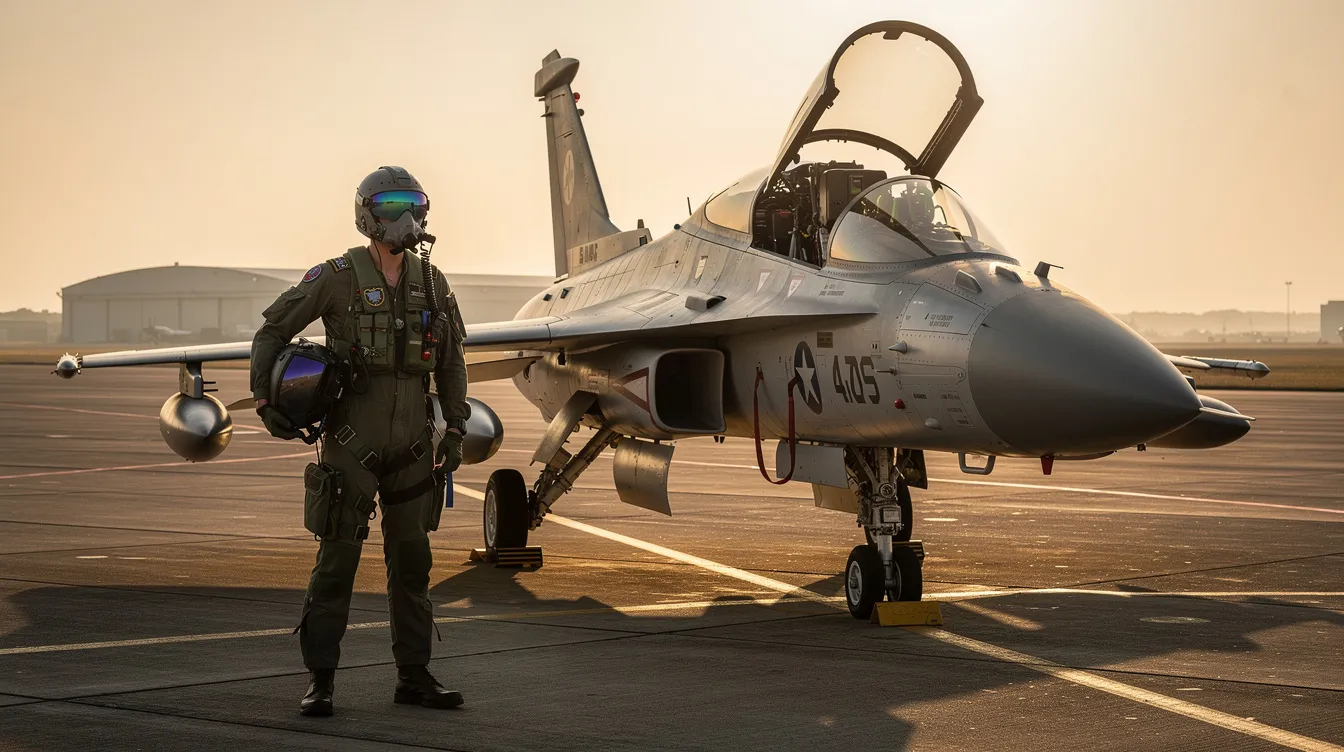
Most fighter jet experiences are conducted in retired or trainer aircraft under strict regulation. Fighter jet flights are available in over 18 locations worldwide, and Incredible Adventures has offered fighter jet flights since 1993, making them accessible across the globe.
Here are key locations and aircraft:
Aircraft | Location | Notable Detail |
|---|
L-39 Albatros | Los Angeles, California | The world's most widely used military jet trainer |
MiG-21 | Tampa, Florida | Supersonic experiences reaching Mach 2 |
MiG-15 | Hradec Kralove, Czechia | Cold War fighter with a history dating back to Russia |
T-33 Shooting Star | Waterloo near Toronto, Canada | Classic USAF trainer |
L-39 Albatros | France, Germany, Switzerland, Lithuania | European locations with aerobatic options |
The de Havilland Vampire was the RAF's first operational jet fighter, a landmark in aviation history. Today, you can experience the L-39 Albatros in Los Angeles, California, or fly the MiG-21 in Tampa, Florida, for supersonic experiences. Fly the MiG-15 from Hradec Králové, Czechia, or book the T-33 in Canada, including Waterloo near Toronto. Fighter jet experiences are available at multiple locations worldwide, with more locations expanding across Texas and beyond.
These flights are typically 20–45-minute orientation missions focused on aerobatic maneuvers and high-G forces, including high-speed passes at low altitude. Participants experience supersonic flight in jets like the MiG-21, and no prior aviation experience is required for fighter jet flights-a comprehensive pre-flight briefing covers safety and procedures. Physical requirements include medical screening, weight and height limits, and cardiovascular clearance. The feel of 4–6 positive Gs during a banked turn is close to the edge of what most civilians can handle.
These are one-off thrill experiences-not recurring transport solutions. Whether you search "een nieuwe zoekopdracht" or browse en beelden of cockpit footage online, fighter jet orientation rides remain bucket-list adventures, not business tools.
Jets Flying for Business: Inside BlackJet's Private Jet Model
BlackJet transforms jet flying into a strategic asset for frequent travelers. Through premium Jet Card membership and private jet programs, people gain prepaid access to private aircraft without the burden of ownership-no crew salaries, no hangar fees, no depreciation risk.
The Jet Card concept is straightforward: purchase 25-hour or 50-hour blocks at fixed hourly rates, with jet card pricing that stays predictable across trips. BlackJet guarantees aircraft access within 24–48 hours, giving members the right to fly on their schedule with predictable pricing and zero hidden fees.
Cabin options span every mission profile, from small groups to private jet charters that can accommodate up to 50 passengers:
BlackJet's digital booking platform lets members search routes, view aircraft categories, see estimated flight times, and confirm flights 24/7, similar in ease to buying a seat on a private jet through modern platforms. This is what separates structured jet access from ad-hoc charter: no asset risk, no long-term obligations, and real-time support at every stage.
The Flight Experience: From Fighter Jet Thrills to Private Jet Ease
The contrast between a fighter jet cockpit and a BlackJet cabin could not be sharper. One demands a helmet, G-suit, and ejection-seat harness. The other begins with a 20-minute arrival at a private terminal and a personalized welcome.
A typical fighter jet orientation flight starts with a pre-flight safety briefing, suiting up, and strapping into a rear cockpit. Then come the aerobatics-loops, rolls, and sustained G-forces that test your limits. Fighter jet flight experiences require no prior aviation experience, but physical demands are real. The pilots, typically ex-military with thousands of hours, guide every maneuver.
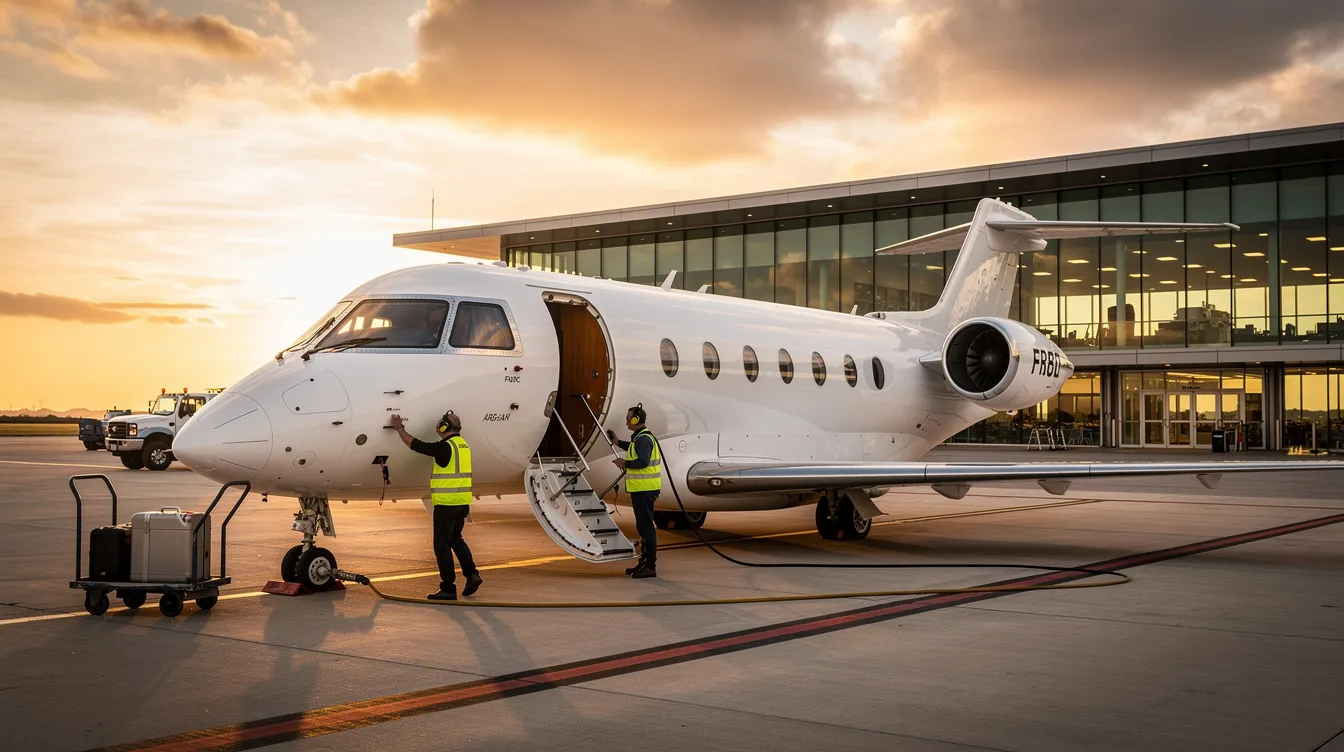
A BlackJet flight feels entirely different. Picture a Friday afternoon departure from Teterboro to Aspen on a midsize jet: direct ramp access, choice of catering, lay-flat seating configured for rest, and Wi-Fi capable of video calls. No security lines. No layovers. Just seamless, purposeful travel that protects your time and energy, backed by private jet safety standards that rival or exceed commercial aviation.
Safety in Military Jet Flying: Military Discipline, Private Certification
Both fighter jets and private jets operate under rigorous safety regimes-different frameworks, equally uncompromising standards.
Fighter jet experiences use ex-military pilots with extensive hours and military-grade emergency equipment. Passengers undergo strict medical screening and detailed safety briefings before every flight.
BlackJet partners exclusively with operators holding leading third-party safety ratings such as ARGUS Platinum and Wyvern Wingman certifications. These require consecutive audits, continuous monitoring, and rigorous maintenance reviews, all factored into jet card pricing structures and membership value. Dual-pilot operations, mandatory crew duty-time limits, and standardized weather-diversion procedures are non-negotiable.
Consider a winter evening flight from Chicago to Teterboro: BlackJet's operations team monitors a forecasted snowstorm and proactively adjusts routing or timing, deciding the member doesn't need to ask.
Sustainability and Technology in Modern Jet Operations
Any jet-flying, fighter, e,r or business jet generates emissions. The question is what operators do about it. For travelers balancing budget and impact, there are also the cheapest private aircraft options and access models that optimize costs. BlackJet calculates emissions for every Jet Card flight and retires offsets through verified carbon registries, at no extra cost to members.
BlackJet's network prioritizes modern, fuel-efficient aircraft types and offers optional Sustainable Aviation Fuel (SAF) blends where available at major hubs, while still recognizing demand for the cheapest private jet options and entry-level aircraft. Key technology elements include predictive maintenance powered by real-time aircraft data, optimized flight planning for fuel efficiency, and digital booking that reduces friction and human error.
By contrast, older fighter jets like the MiG-21 or T-33 burn significantly more fuel per hour and lack modern efficiency features. They serve heritage and flight training purposes-not sustainability goals—unlike structured programs where even a 100-hour jet card cost is evaluated alongside efficiency and flexibility.
Choosing How You Want Jets to Work for You
Fighter jet flights deliver raw adrenaline and a close connection to aviation history across the world. BlackJet's Jet Card programs deliver something different: recurring, strategic mobility for business and life. One is a single experience costing $5,000–$30,000 for thirty minutes. The other is an investment in a 25-hour Jet Card that covers multiple business and family trips throughout the year.
Consider the ideal BlackJet member: a CEO commuting monthly between Los Angeles and San Francisco, or a family alternating between New York and Palm Beach each season. These are people who value safety certifications, carbon-neutral flights, flexible aircraft categories, digital booking, and responsive 24/7 flight support—benefits central to the BlackJet 25+ Hour Jet Card program.
Elevate your travel effortlessly. Explore BlackJet's Jet Card options and discover how structured private jet access can turn jet flying into a long-term advantage. With rigorous safety, carbon-neutral performance, and unmatched flexibility, refined travel becomes your new standard.
Jets Flying & BlackJet: Key FAQs
Can I book a fighter jet flight through BlackJet?
No. BlackJet specializes in business and private travel across the globe, not in aerobatic or military jet experiences. For fighter jet orientation flights, dedicated operators at locations in Florida, California, Czechia, and Canada handle those bookings independently.
How quickly can BlackJet arrange a private jet?
Many routes are available with 24-hour notice, and same-day options exist subject to availability and Jet Card terms. The digital platform lets members begin searching and confirming flights around the clock.
What aircraft categories can I access with a Jet Card?
Light jets for short regional hops, midsize and super-midsize jets for cross-country corridors, and large-cabin ultra-long-range jets for international routes. Each category is matched to your mission.
Are BlackJet flights really carbon neutral?
Yes. Emissions are calculated per flight and offset through recognized, verified registries built into every Jet Card at no additional cost.
How does BlackJet pricing compare to owning a jet?
Ownership involves acquisition costs ($10–$65+ million), crew salaries, hangar fees, insurance, maintenance, and depreciation. A Jet Card eliminates all fixed overhead-you pay only for the hours you fly.
What safety certifications do BlackJet's partner operators hold?
Only operators meeting top-tier third-party ratings, such as ARGUS Platinum Elite and Wyvern, qualify for BlackJet's network. Regular internal audits supplement these external certifications.
Conclusion: Elevate Your Journey with BlackJet
Jets flying represent more than just speed and power—they embody the pinnacle of modern travel efficiency and sophistication. Whether experiencing the thrill of a fighter jet flight or embracing the seamless luxury of private jet access, the sky holds unparalleled opportunities. BlackJet’s Jet Card programs transform private aviation into a strategic advantage, delivering unmatched flexibility, rigorous safety, and genuine sustainability.
For the discerning traveler seeking to protect time, privacy, and productivity, BlackJet offers a premium gateway to the world’s skies. Discover how effortless, carbon-neutral private jet travel can redefine your journeys and elevate your lifestyle.


 Sign up with google
 Sign up with Apple