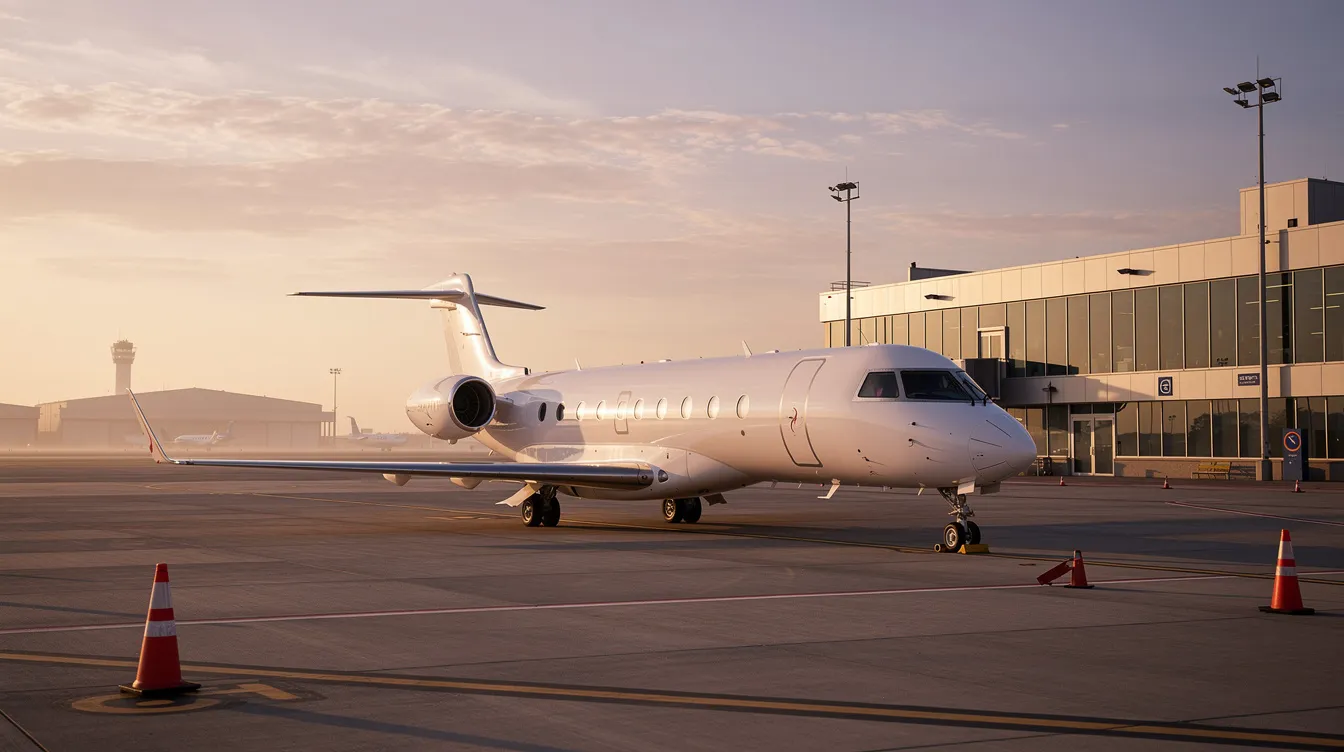
For discerning travelers, jets for charter are no longer just a symbol of luxury. They are a tool for time control, privacy, operational agility, and better decision-making. BlackJet brings that advantage into a membership model through Jet Card programs designed for frequent flyers who want premium private jet access without the burden of ownership.
In this guide, we’ll explain how private charter works with BlackJet, how to choose the right aircraft, what charter costs typically include, and why safety, sustainability, technology, and global access should shape every private travel decision.
Why Jets for Charter Are a Strategic Advantage (Not Just a Luxury)
Commercial first class may improve the seat, but it does not change the system. You still operate on the airline’s schedule, arrive early, pass through crowded terminals, and route through major hubs. By contrast, a private jet charter places the aircraft around your travel plans. Traveling by private jet significantly reduces travel time, as passengers can avoid long security lines and crowded terminals, leading to a more efficient travel experience.
For business executives, that efficiency can be decisive. A commercial journey that requires a 3–4 hour airport process can often become a private aviation experience where arrival, screening, boarding, and departure happen in under 45 minutes at a private terminal. Private jet charters provide enhanced flexibility, allowing travelers to choose their departure times and routes, which is not possible with commercial flights. Private jet charters also offer a higher level of comfort and privacy compared to commercial flights, with personalized services and tailored in-flight experiences.
That is why jets for charter play a significant role in high-level business outcomes. A leadership team can fly from New York to Chicago in the morning, hold confidential deal discussions en route, attend meetings midday, and return home that evening. Lighter jets can land at smaller, localized executive airports closer to destinations, while larger jets handle international hauls. This direct access to secondary markets can save hours when commercial flights require connections or distant hub airports.
BlackJet positions this advantage through a jet card model that is smarter for frequent flyers than full ownership or ad-hoc charter flights. Consider a corporate team flying private from Los Angeles to Austin for a board meeting. With a private charter, they can depart from a convenient executive airport, arrive closer to the meeting location, return the same day, avoid hotel costs, and preserve work hours that would otherwise disappear into air travel logistics. Keep reading to understand aircraft types, pricing ranges, safety standards, and membership options.
How Private Charter Flights Work with BlackJet
BlackJet simplifies the booking process for private jet charter flights through a membership structure. A member joins the BlackJet Jet Card program, selects a 25-hour or 50-hour block, searches digitally for charter flights, reviews instant pricing, confirms the itinerary, and flies for a smooth booking experience from search to confirmation. The goal is to give clients one single point of access to a diverse fleet, verified operators, and real-time support.
The booking process for private jet charters typically involves selecting departure and arrival locations, travel dates, and the number of passengers, which can be done through various online platforms. With BlackJet, members use a 24/7 digital platform to search by city pair, such as Teterboro to Miami Opa-locka, then refine by date, time window, passenger count, cabin size, and aircraft categories. Travelers can expect to receive instant pricing and availability for private jet charters, allowing for quick comparisons and informed decision-making.
Unlike ownership, BlackJet is not limited to one private jet. Members gain access to a global fleet through vetted operators, providing access to thousands of aircraft types across regions. This aircraft availability helps BlackJet match each mission with the right aircraft, whether the trip requires a regional light jet, a long-range heavy jet, or a premium aircraft offering spacious cabins for international work and rest.
Here is one example itinerary. A BlackJet member with a 50-hour Jet Card needs to fly London–Geneva–Dubai over 72 hours. The member searches the platform for a super midsize or ultra-long-range cabin, enters passengers and schedule preferences, and receives charter options. BlackJet confirms the quote, coordinates flight details, arranges crew and handling, monitors the first flight into Geneva, then supports the onward overnight sector to Dubai. From quote to landing, the journey is managed by a dedicated support team rather than the traveler calling multiple operators.
Aircraft Types and Cabin Classes: Choosing the Right Jet for Charter
BlackJet gives members access to multiple aircraft categories through one jet card, from efficient turboprops to ultra-long-range jets. When choosing a jet for chartering, you must evaluate the aircraft’s mechanical range, its passenger and luggage capacity, and the operator’s safety credentials.
Aircraft Category | Typical Passenger Capacity | Range (Nautical Miles) | Cruise Speed (mph) | Ideal Use Cases |
|---|
Turboprop | 6–8 | 1,000–1,400 | 280–360 | Short regional trips, remote airports, island access |
Very Light Jet (VLJ) | 4–5 | Short-range | Moderate | Quick regional day trips, small groups |
Light Jet | 6–8 | Up to 2,010 | 460–510 | Regional/transcontinental flights, small executive groups |
Midsize Jet | 7–9 | 2,500–3,500 | 500–550 | Comfortable mid-range business travel |
Super Midsize Jet | 8–10 | 3,500–4,500 | 500–550 | Cross-country flights, longer regional international routes |
Heavy Jet | 12–18 | 5,500–8,000+ | High | Intercontinental journeys, large groups, privacy zones |
Ultra-Long-Range Jet | 12+ | Up to 7,000 | High | Global nonstop flights, major international hubs |
Turboprop aircraft, such as the King Air 350, are versatile and can operate from shorter runways, making them suitable for various missions, including corporate travel and air ambulance services. A turboprop such as the Pilatus PC-12 or King Air 350 typically seats 6–8 passengers, cruises around 280–360 mph, and can cover roughly 1,000–1,400 miles depending on load and conditions. For routes like Dallas–Houston, island access, or remote business sites, turboprops can be the best aircraft because runway flexibility matters more than top speed.
Very Light Jets (VLJs) are the smallest true jet aircraft and are ideal for small families or business travelers taking quick regional day trips. They suit short private jet travel with limited luggage, typically seating 4–5 passengers and operating efficiently on brief routes where comfort, speed, and convenience matter.
Light jets, like the Embraer Phenom 300E, are designed for 6-8 passengers and are ideal for regional and transcontinental routes, with a range of up to 2,010 nautical miles. In this class, a Citation CJ3+ or Phenom 300E may cruise around 460–510 mph and seat about 6–7 passengers. Light jets are practical for New York–Miami, Los Angeles–Las Vegas, or regional corporate flights where travelers want speed and access to smaller executive airports.
Midsize jets usually seat 7–9 passengers, cruise around 500–550 mph, and offer ranges around 2,500–3,500 miles. Aircraft such as the Hawker 900XP provide more cabin comfort than light jets, often with enclosed lavatories and better luggage capacity. The Cessna Citation Latitude is a midsize jet known for its spacious cabin, accommodating up to nine passengers, and a range of up to 2,700 nautical miles. For many executives, a citation latitude is a strong balance of comfort, range, and operating value.
Super midsize jets seat roughly 8–10 passengers, cruise around 500–550 mph, and can often cover 3,500–4,500 nautical miles depending on model and configuration. The Praetor 600 and Challenger 3500 are examples of premium aircraft suited to cross-country New York–Los Angeles routes, longer regional international sectors, and trips where spacious cabins improve productivity.
Heavy jets typically accommodate 12 to 18 passengers and can fly non-stop for distances of 5,500 to over 8,000 miles, making them ideal for intercontinental journeys. A Gulfstream G450 is a representative heavy jet option, with the comfort, range, galley capacity, and crew support expected for larger aircraft and senior teams. Heavy jets also serve groups that need privacy zones, meeting space, and rest areas.
Ultra-long-range jets, such as the Gulfstream G650, can fly up to 7,000 nautical miles non-stop, making them suitable for connecting distant global cities. Aircraft such as the Gulfstream G650 and Global 6500 are designed for routes like New York–London, Dubai–Paris, or Los Angeles–Tokyo. Some missions may even require vip airliners for large delegations, although most private jet travelers find heavy and ultra-long-range aircraft sufficient for global business aviation.
Real-World Charter Scenarios for Business and Leisure
Frequent flyers rarely use private aviation for only one purpose. A BlackJet member may use the same Jet Card for weekday corporate flights, weekend family trips, event travel, and complex international itineraries. That flexibility is one reason the private aviation industry has seen growing demand for membership-based private jet charter services.
A CFO with a 25-hour Jet Card may need to visit manufacturing plants in Atlanta, Nashville, and Charlotte within 36 hours. BlackJet can coordinate a light jet or midsize aircraft for the sequence, manage flexible scheduling between stops, and allow the CFO to return home without relying on airline timetables. Many private jet charter services allow for flexible scheduling, accommodating last-minute trips and providing options for various aircraft types based on the traveler’s needs.
For leisure, imagine a family of six chartering a super midsize jet from Chicago to Aspen in January 2026. They bring ski equipment, travel with pets, and request customized in-flight catering. Compared with commercial flights, the private jet flight allows more privacy, more control over departure time, and more comfort after arrival in mountain weather.
A global use case may involve a board flying from New York to London in a Gulfstream G650 for quarterly meetings, returning on the same aircraft type. For destinations such as Saint Martin, the Caicos Islands, wine country, Western Sahara, or even complex humanitarian or advisory travel involving South Sudan, BlackJet advisors can compare options and recommend the perfect aircraft based on range, runway needs, security, and passenger profile.
The same Jet Card can also support event-driven charter flights. Art Basel Miami, the Monaco Grand Prix, major finals, and holiday weekends often compress demand into narrow windows. With guaranteed availability under defined terms, BlackJet helps members plan peak-day travel even when aircraft availability is tight and commercial seats are limited.

Jet Card vs. On-Demand Charter vs. Fractional Ownership
The private aviation market offers several distinct booking models based on the frequency of travel. Jet Card, on-demand charter, and fractional ownership can all provide access to jets for charter, but they differ in commitment, pricing, control, and complexity.
A Jet Card means prepaid flight hours, fixed or contracted rates, and predictable access. On-demand charter means trip-by-trip quotes, variable pricing, and no ongoing commitment. Fractional ownership means buying an equity stake in an aircraft program, often with long contracts, monthly management fees, occupied hourly charges, and asset exposure.
BlackJet Jet Card programs offer 25-hour and 50-hour options across multiple aircraft categories. Members receive guaranteed availability with defined booking windows, contracted hourly rates, and support across domestic and international charter options. For frequent flyers, this can reduce uncertainty without requiring them to manage a private jet.
The ownership burdens are substantial. A full or fractional aircraft relationship may involve crew management, maintenance planning, depreciation, resale risk, scheduling rules, and fixed fees, whether you fly or not. BlackJet removes many of those obligations while still delivering consistent aircraft quality, exceptional service, and access to a diverse fleet.
For example, an executive flying private 40–60 hours per year may find a BlackJet Jet Card more practical than signing a five-year fractional ownership agreement. If a super midsize card rate were predictable across the year, the finance team could budget usage directly. A fractional arrangement could require a large capital commitment, monthly management fees, and long-term lock-in, even if travel needs change.
Safety and Flight Crew Standards in Private Charter
Safety and flight crew quality are non-negotiable pillars of BlackJet’s service, reflecting an unwavering commitment to safety, reliability, and service standards, not optional upgrades. In private aviation, prestige only matters when it is supported by disciplined operations, certified providers, and transparent oversight.
FAR Part 135 is a regulation enforced by the FAA that governs commercial charter operations, ensuring high safety standards for on-demand flights, including air taxis and small commuter services. Every private jet flight arranged by reputable operators is typically operated by FAA Part 135 certified providers who meet or exceed industry-leading safety standards. For international sectors, equivalent regulatory frameworks apply.
Operators that maintain top ratings from independent safety auditing organizations are preferred for chartering. Ensure the operator holds top-tier safety certifications from independent agencies like ARGUS and Wyvern. Operators must undergo independent safety checks from organizations like ARGUS or Wyvern to ensure compliance with safety protocols and operational excellence. BlackJet may also review IS-BAO standards where applicable; the International Business Aviation Council outlines how IS-BAO supports safety management in business aviation, a focus shared by many of the top private jet companies for luxury travel.
Before confirming a charter flight, BlackJet’s operations team verifies aircraft maintenance status, crew duty limits, recent safety history, and operator credentials. That review is especially important when the aviation industry is under pressure to scale quickly while maintaining operational excellence. Clients may request information about the operator, aircraft tail number, and safety certifications before departure.
Crew composition depends on aircraft size and mission. Some turboprops may operate with one pilot where regulations and aircraft certification allow, while most jets use two-pilot crews. International sectors, ocean crossings, heavy jets, and ultra-long-range aircraft often involve augmented pilots and cabin attendants to support rest, service, and compliance.
Technology, Flexible Scheduling, and Global Fleet Access
BlackJet uses technology to make flying private simpler: mobile booking, real-time aircraft availability, instant charter quotes, and a digital account dashboard. Members can review upcoming trips, monitor remaining hours, and coordinate flight details without rebuilding each trip from scratch.
Flexible scheduling is one of the clearest advantages of private jet access. A traveler may adjust departure time on the day of flight, add an extra stop, or re-route mid-trip if meetings change. A planned Geneva stop, for example, can become Milan if the meeting moves and airport permissions, crew duty, and aircraft performance all align.
BlackJet’s global fleet access spans vetted operators across North America, Europe, the Middle East, and key leisure hubs such as the Caribbean and the Maldives. This matters because the best solution is not always the closest jet; it is the aircraft that fits the mission, range, airport, passenger count, luggage, safety profile, and timing.
Real-time support is equally important. BlackJet’s 24/7 coordination team tracks weather, air traffic control delays, airport conditions, crew timing, and ground transportation. If disruption appears, the team can proactively adjust departure slots, alternate airports, handling, or onward logistics.
Consider a member whose investor meeting is moved from London to Zurich three hours before departure. Through the app, the member requests the route change. BlackJet confirms Zurich handling, updates the crew and flight plan, verifies airport timing, and keeps the trip moving without the member calling multiple providers.

Sustainable Charter Flights: Carbon-Neutral by Design
Modern private aviation must address environmental impact directly. BlackJet builds sustainability into every charter flight so clients can fly private with a clearer understanding of emissions, aircraft efficiency, and offset strategy.
All BlackJet Jet Card flights are carbon neutral by default through verified carbon offset programs, with no extra effort required from clients. These programs may include reforestation, clean energy, and certified methane reduction projects designed to balance flight emissions through measurable climate benefits.
Sustainable Aviation Fuel, or SAF, is also becoming more important across the private aviation industry. SAF can reduce lifecycle emissions compared with conventional jet fuel, depending on feedstock and production pathway, and it is compatible with existing aircraft when certified under approved standards. The U.S. Department of Energy provides a useful overview of SAF development and its role in lower-carbon aviation.
BlackJet prioritizes partners who incorporate SAF where available, while recognizing that availability varies by region and airport. Environmentally conscious clients can speak with BlackJet advisors about routes, aircraft types, and aircraft size choices that may reduce fuel burn per passenger without compromising safety or mission requirements.
Pricing, Value, and What to Expect to Pay
Charter pricing is driven by aircraft category, route distance, positioning, airport fees, mission costs, and peak versus off-peak dates. Providers calculate the total cost of a charter flight based on several ancillary fees beyond the base hourly rate. Charter invoices typically include the hourly rate plus variables such as fuel surcharges and landing fees.
Private jet charter costs typically range from $1,500 to $20,000+ per billable flight hour, depending on the size and class of the aircraft. Charter costs for private jets can vary significantly based on aircraft type, distance, and other factors, with typical hourly rates ranging from $2,500 for smaller turboprops to over $15,000 for larger jets. Private jet charter pricing is influenced by factors such as aircraft availability, mission costs, and the timing of the booking, with empty leg flights often providing substantial discounts compared to standard charters.
As a practical guide, turboprops may start around $2,500 per hour, light jets may run from $3,500–$4,500 per hour, midsize jets may start around $5,000–$6,000 per hour, and super midsize aircraft may run $6,500–$8,000 per hour. Typical pricing for chartering mid-sized cabin jets starts at around $7,000 per hour, while ultra-long range jets can start at $12,000 per hour, reflecting the varying costs associated with different aircraft categories. Heavy and ultra-long-range jets commonly begin from $9,000+ per hour and can rise significantly based on route, aircraft, and demand.
Sample trip ranges help make the numbers clearer. A New York–Miami private jet charter on a midsize jet may fall around $18,000–$24,000, depending on aircraft and fees. Dallas–Aspen on a light jet may vary based on season, luggage, weather, and mountain airport performance. London–Dubai on an ultra-long-range jet may exceed $70,000–$100,000 depending on routing, aircraft, and handling.
U.S. domestic flights are subject to a 7.5% Federal Excise Tax plus segment fees. Major aviation hubs charge significantly higher landing and ramp handling fees than smaller airports. Typical extras include catering upgrades, ground transportation, de-icing, customs, overflight charges, and special handling; BlackJet either includes these items where applicable or clearly discloses them before confirmation to help avoid hidden fees.
The value of the BlackJet Jet Card is predictability. Members benefit from fixed, transparent hourly rates, no repositioning surprises within defined service areas, and no long-term contracts. That structure gives frequent travelers a cleaner budget and more confidence when travel plans change.
BlackJet Jet Card: Designed for Frequent Flyers
The BlackJet Jet Card is built for frequent flyers who log 25–100+ hours per year and want predictable access to jets for charter. It is particularly useful for private jet travelers who need the convenience of membership without taking on the obligations of aircraft ownership.
Members can choose 25-hour or 50-hour blocks, fixed hourly rates across multiple aircraft categories, guaranteed availability with defined booking windows, and no initiation fee. The model is designed to help travelers gain access to private jet charter services through one membership rather than managing multiple brokers, operators, or aircraft contracts.
For corporate travel, the advantages are straightforward. Finance teams can budget annual travel spend more precisely, while executives receive consistent service standards on every flight. Online tools show remaining hours, trip history, invoices, upcoming itineraries, and information that supports reporting and compliance. BlackJet also treats privacy seriously, including how personal data processed through digital tools is protected and used for flight coordination.
A tech founder with a 50-hour Jet Card might use BlackJet for quarterly investor roadshows between San Francisco, New York, London, and Berlin. The founder may use a heavy jet for the transatlantic leg, a super midsize aircraft within Europe, and a light jet for a regional U.S. meeting. Across the itinerary, BlackJet remains the single point of coordination.
FAQ: Jets for Charter with BlackJet
How far in advance should I book jets for charter?
Jet Card members typically receive guaranteed availability within defined notice windows, often 24–72 hours depending on route, cabin class, and peak days. During major events, holidays, or Sunday return patterns after weekend travel, earlier planning is recommended.
Are one-way charter flights possible?
Yes, a one-way private charter is common. Depending on aircraft positioning, the quote may include repositioning costs, but BlackJet aims to make those costs transparent before confirmation.
Can I bring pets and extra luggage?
Pets are often allowed with advance notice, subject to aircraft and operator rules. Luggage limits depend on aircraft size, so a ski trip, golf trip, or family vacation may call for a larger cabin or aircraft with better baggage capacity.
How many airports can private jets access compared with commercial airlines?
Private aviation can use thousands more airports than airline networks, including regional and executive fields closer to the final destination. This is one reason private jet travel can reduce total door-to-door time.
Can I choose specific aircraft types or only cabin classes?
Most clients select cabin classes, but specific aircraft model preferences can often be requested when available. BlackJet selects the operator and aircraft based on safety credentials, aircraft performance, range, passenger count, luggage, and schedule.
How does BlackJet vet the operator and aircraft?
BlackJet reviews the operator’s regulatory status, safety ratings, maintenance readiness, and crew qualifications before confirming the mission. This helps members make informed decisions instead of selecting only by price.
What are the cancellation policies?
Jet Card cancellations typically follow program terms, notice periods, and peak-day rules. On-demand charters may have different cancellation windows and change fees, so BlackJet discloses applicable policies before booking.
What should first-time private flyers expect?
BlackJet guides first-time private flyers through FBO arrival, security, baggage handling, boarding, and in-flight expectations. The experience is designed to feel calm from day one, whether the traveler is an executive, family member, or one of many aviation enthusiasts curious about how private flight works.
Elevate Your Travel: Fly Private with BlackJet
Jets for charter deliver strategic value because they return control to the traveler: time, privacy, flexibility, comfort, and direct routing. With BlackJet, that access is shaped through a Jet Card model built for modern business, leisure, and international mobility.
BlackJet combines rigorous safety standards, carbon-neutral flights, advanced technology, real-time support, and global fleet access. After nearly two decades of rapid change across the private aviation industry, the strongest providers are those that pair luxury with operational substance; BlackJet is built to operate with the discipline clients expect from a global leader.
Explore BlackJet Jet Card options, request a bespoke charter quote, or speak with a BlackJet advisor for a tailored travel plan. From single leisure legs to complex multi-city corporate itineraries across North America, Europe, and beyond, BlackJet helps make seamless, meaningful travel the new normal for discerning travelers who choose to fly private.
Conclusion: The Future of Private Jet Charter with BlackJet
Jets for charter have evolved beyond mere luxury to become essential tools for the modern traveler seeking control, efficiency, and discretion. BlackJet’s innovative Jet Card programs deliver unparalleled access to a global fleet of private jets, combining the convenience of digital booking with the assurance of rigorous safety standards and sustainable practices. Whether for business agility, family leisure, or complex international itineraries, BlackJet empowers discerning travelers to redefine how they fly—effortlessly, flexibly, and responsibly.
By choosing BlackJet, members gain not only premium aircraft and exceptional service but also a strategic advantage that transforms travel into a seamless extension of their lifestyle and work context, which is useful when comparing options like the NetJets jet card cost and structure. As private aviation continues to embrace technology, sustainability, and operational excellence, BlackJet stands at the forefront, offering a refined, meaningful private jet experience tailored to the demands of today’s world.
Elevate your travel with BlackJet and discover how true private jet access can unlock new possibilities for your journeys—wherever, whenever, and however you choose to fly, whether you’re planning large-group private jet travel for up to 50 passengers or arranging bespoke private jet charters in Karachi, especially once you fully understand what charter flights mean and how they operate.


 Sign up with google
 Sign up with Apple