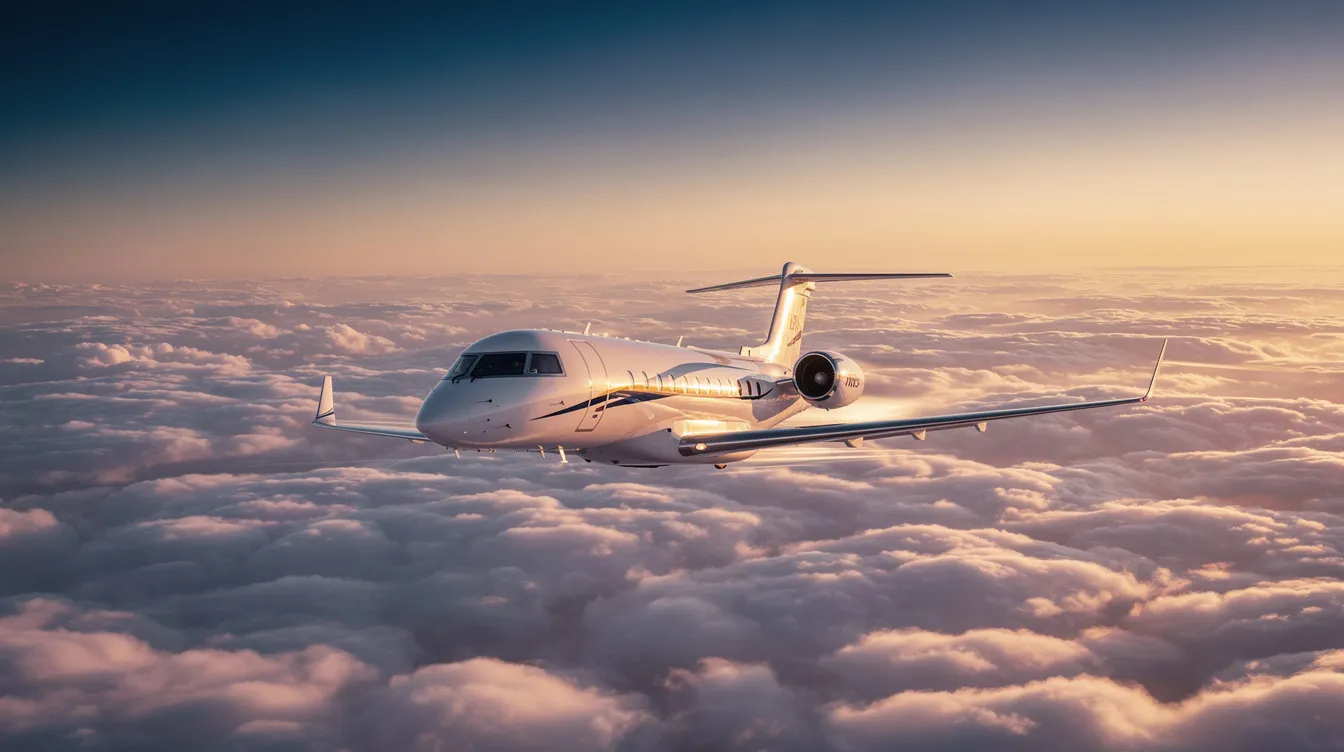
Microlight planes sit at the opposite end of the aviation spectrum from a BlackJet-arranged private jet, yet both serve distinct roles in how serious travellers and aviation enthusiasts experience the sky. This guide is intended for aviation enthusiasts, private pilots, and individuals considering private flying options. It covers the fundamentals of microlight planes, their performance, costs, and how they fit alongside private jet solutions. This guide unpacks what microlight aircraft are, how they perform, what they cost, and—critically—how they complement rather than compete with the strategic mobility that a Jet Card delivers.
Microlight Planes vs Private Jets: Why They Matter for Serious Travellers
Microlight planes are lightweight, small-capacity aircraft designed for recreational flying. They are typically single-seat or two-seat machines that cruise at 50–120 knots, operate under visual flight rules in daylight, and cover ranges of 150–500 nautical miles on a good day. Compare that to a BlackJet light jet or super-midsize mission-London to Nice or New York to Miami at 400+ knots, above the weather, with pressurised cabins and luggage capacity for a family or business team.
The contrast is not about quality; it is about purpose. Microlights are built for recreational pilots and local adventure. BlackJet's Jet Card programs are engineered for executives and high-net-worth individuals who cannot afford schedule risk, weather cancellations, or limited payload.
What many people outside aviation do not realise is that a significant number of BlackJet members began their flying journey in microlights or gliders. They fell in love with hands-on piloting, then graduated to private jet access when business demands, family logistics, and intercontinental itineraries outgrew what any ultralight could deliver.
Throughout this article, we will return to BlackJet's core pillars-safety oversight, carbon-neutral flights, and 24/7 digital booking-showing how each one contrasts with and complements the world of microlight aviation.
Exactly What Is a Microlight Aircraft?
The term microlight aircraft (or ultralight aircraft in North America and parts of the world including South America and the Middle East) describes a class of very light aeroplanes defined by national rules governing maximum take-off weight and stalling speed rather than by any single airframe shape.
Core characteristics include:
Occupancy: microlights are designed to carry no more than two persons.
Weight: the UK microlight maximum weight limit is 600 kg since 2021 for a two-seat landplane, and 650 kg for a two-seat amphibian or floatplane.
Stall speed: microlights must have a stall speed below a defined limit-typically 45 knots calibrated airspeed in landing configuration.
Systems: simple powerplants, minimal avionics compared with certified general aviation aeroplanes, and lightweight construction.
A two-seat landplane equipped with an airframe-mounted total recovery parachute system may qualify for slightly higher weight thresholds under certain national rules, whereas a single-seat deregulated machine in the UK might weigh as little as 300 kg—illustrating how microlights sit alongside other cheap light aircraft options in the broader universe of budget-friendly flying.
Both fixed-wing microlights and flex-wing microlights fall under this umbrella, as do some autogyros classified within sport aviation frameworks. Microlights are classified into three main types: fixed-wing, flex-wing, and autogyro. Fixed-wing microlights resemble small airplanes and use conventional controls. Flex-wing microlights are controlled by shifting the pilot's weight. Autogyros use spinning rotor blades for lift and a propeller for thrust.
Both fixed-wing microlights and flex-wing microlights fall under this umbrella, as do some autogyros classified within sport aviation frameworks. To anchor the concept: a typical two-seat touring microlight aeroplane weighs roughly half of what a four-seat certified piston aircraft weighs and burns a fraction of its fuel, but carries less and flies slower.
From Hang Glider to Microlight: A Short History
The story of microlight aviation begins with foot-launched hang gliders in the mid-1970s. Pioneers in Europe and Australia experimented with adding small engines to flexible Rogallo-style delta wing hang glider frames, creating crude but exhilarating powered aircraft.
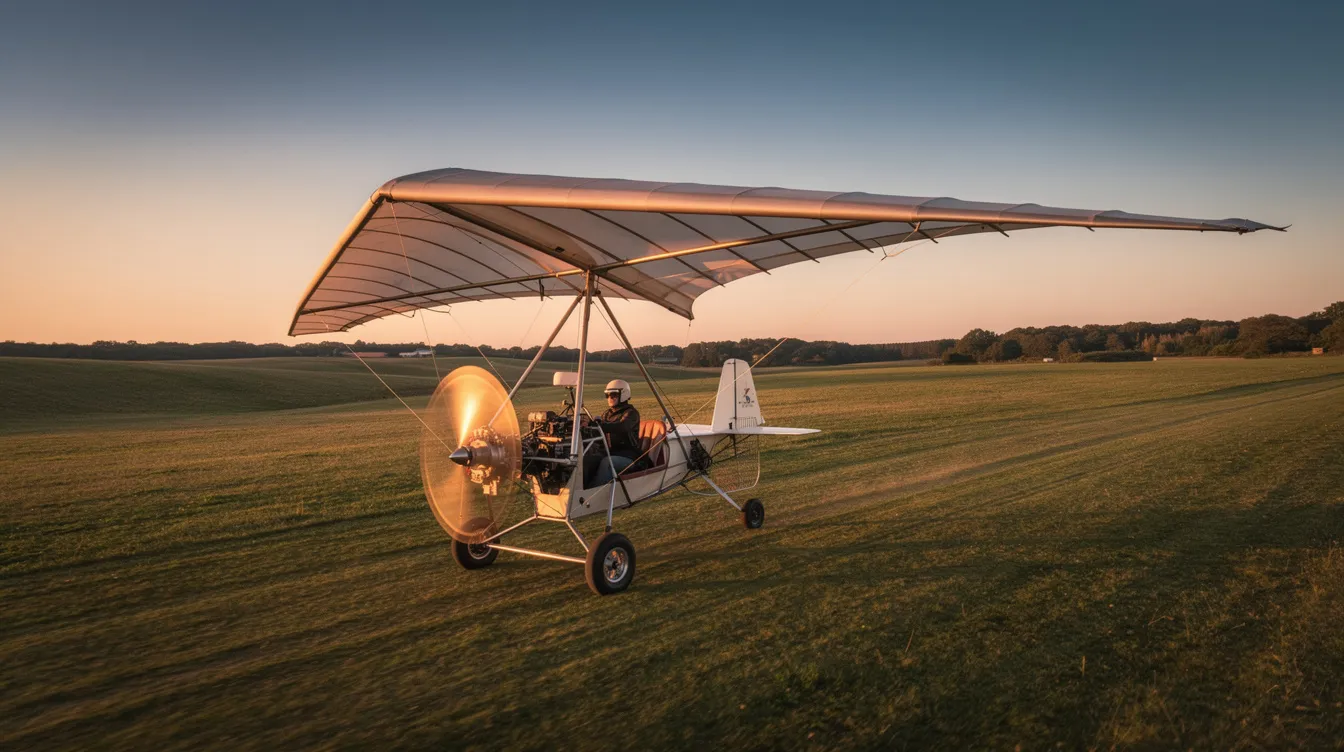
Those early powered hang gliders used simple trike undercarriages beneath a hang glider-style wing, driven by two-stroke engines originally adapted from chainsaws or snowmobiles producing around 10–20 hp of forward thrust. Control was rudimentary: the pilot shifted body weight against a horizontal control bar to steer.
Key milestones unfolded quickly:
Late 1970s: experimental powered hang glider flights proved the concept.
Early 1980s: dedicated microlight engines emerged, and the divergence into flex wing trikes and fixed wing microlights with three-axis controls began.
1980s–1990s: regulatory agencies-including the UK CAA and France's DGAC-formalised training, licensing, and airworthiness standards as the sport matured.
By the 2000s, improvements in materials (composites, modern alloys) and reliable four-stroke engines expanded the microlight's role from pure fun flying to credible touring within 300–500 nm ranges. The gap between a well-equipped microlight and a small certified aeroplane narrowed considerably, especially when you compare them with the best small private aircraft for different missions available today.
The Main Families of Microlight Aircraft
"Microlight" is not one aircraft type. It is a family of categories unified by weight and performance limits rather than a single flight design. Microlight designs include fixed-wing, flex-wing, powered parachutes, and gyroplanes, though for licensing and competition purposes microlights are classified into three main types: fixed-wing, flex-wing, and autogyro.
Family | Control Method | Typical Seats | Cruise Speed | Typical Range |
|---|
Flex wing (trike) | Weight shift via control bar | 1–2 | 45–65 kts | 150–300 nm |
Fixed wing (three axis) | Ailerons, elevator, rudder | 1–2 | 80–120 kts | 300–600 nm |
Autogyro | Rotor for lift, rudder + stick | 1–2 | 55–85 kts | 150–250 nm |
Each family attracts a different pilot personality-from the open-air thrill-seeker in a trike to the cross-country tourer in a composite fixed wing- just as different private jet sizes appeal to distinct traveller profiles. The sections that follow examine each one in detail.
Flex Wing Microlights and Weight‑Shift Flying
A flex wing microlight consists of a trike carriage, wheels, engine, and seats suspended beneath large fabric wings arranged in a delta-wing sail layout. Flex-wing microlights are controlled by shifting the pilot's weight against a triangular horizontal control bar connected to the wing. Push the bar left, the wing tilts right, and the trike turns. It is intuitive, physical, and nothing like flying a conventional aeroplane.
The feel of weight shift control flying is visceral: open cockpit, strong airflow, relatively low cruise speeds of 45–65 knots, and direct responsiveness to body movement. Pilots often describe it as a "flying motorbike."
Typical missions include:
Local sightseeing flights on calm summer evenings
Circuits from grass strips
Short cross-country hops in benign weather
Pilots may come from a hang glider or paraglider background, but weight shift flying requires specific instruction distinct from three-axis microlights. Training hours are modest-microlights require fewer flight instruction hours for pilot licensing compared to conventional aircraft-yet the skill set is unique.
Microlights can be derigged and transported on a trailer, allowing for enhanced accessibility; flex wing trikes are especially easy to disassemble and store at home rather than paying for hangarage.
Although BlackJet members are more likely to travel by jet for serious trips, some own flex wing trikes as purely recreational weekend machines-illustrating the enormous contrast in speed, comfort, and mission between the two worlds.
Fixed Wing Microlights: High‑Wing, Low‑Wing, and More
Fixed-wing microlights use three-axis controls- ailerons, elevator, and rudder-in layouts that closely mirror small certified aeroplanes and other types of planes. Fixed-wing microlights resemble small airplanes and use conventional controls, with wings configured in either high-wing or low-wing layouts, making the transition from microlight training to general aviation relatively straightforward.
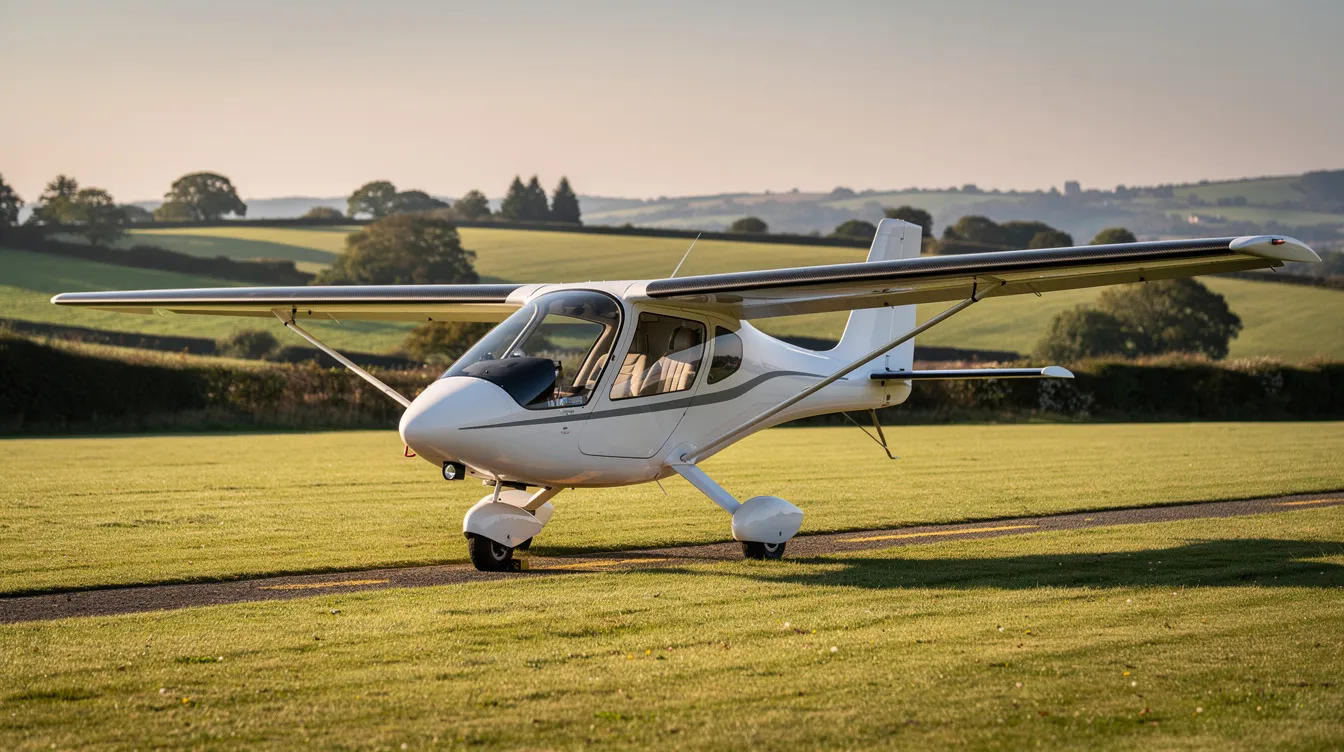
Two broad sub-categories define the market:
High-wing designs: high-wing microlights offer better visibility and stability for novice pilots, and many are optimised for short take-off and landing from rough grass strips.
Low-wing designs: low-wing microlights provide enhanced maneuverability and speed potential, attracting pilots who prioritise cross-country touring and aerodynamic efficiency.
Performance numbers for modern fixed-wing microlights are genuinely impressive. Cruise speeds sit in the 80–120 knot range, fuel burns average 10–18 litres per hour on engines like the Rotax 912, and ranges of 300–600 nm are achievable depending on engine and tank size. The Aerospool WT9 Dynamic and models like the Apollo Fox represent this new generation of capable touring machines.
Microlights excel in short take-off and landing performance, often needing less than 200 metres of grass to get airborne-a characteristic that opens up hundreds of small airfield options unavailable to larger aircraft.
Yet even the fastest fixed-wing microlight cruising at 120 knots is roughly three times slower than a light jet at FL400, without pressurisation, de-icing, or the ability to fly above weather. For travellers who prioritise speed and comfort, small private jets widen this convenience gap further with every mile of distance.
Autogyros and Other Ultralight Variants
Autogyros-sometimes called gyrocopters or gyroplanes-occupy a fascinating niche in microlight aviation, and while they are rotorcraft like a helicopter, their rotor spins freely to generate lift rather than being powered as part of the lift system. Autogyros use spinning rotor blades for lift and a propeller for thrust, creating an aircraft that can take off and land in remarkably short distances and remain stable at very low airspeeds.
Their handling is distinctive: resistant to stalls, comfortable in slow flight, and forgiving for newer pilots. However, autogyro cruise speeds (typically 55–85 knots) and range (150–250 nm) make them less practical for cross-country journeys than fixed-wing alternatives. Many autogyro pilots fly for the sheer pleasure of low-level touring, scenic flights, and aerial photography over landscapes that demand slow, stable flight.
Other edge variants share airfield space with microlight pilots:
Powered parachutes: fabric canopy providing lift, a small engine for forward thrust, extremely slow and weather-dependent.
Very light helicopters: rotary-wing machines occasionally classified under ultralight rules in certain jurisdictions, though full helicopters generally fall outside the microlight category.
None of these machines are suited to business transport. Their speed, range, and weather limitations confine them to leisure and training roles-a world apart from the mission profiles served by midsize or large cabin jets and other types of private jets used for serious travel.
Flight Design and Technology in Modern Microlights
Modern microlight aircraft incorporate increasingly sophisticated flight design that would have been unrecognisable to the trike pilots of the 1980s. Composite fuselages, clean aerodynamics, winglets, and retractable landing gear now appear across the category.
The engine landscape has shifted decisively. Early two-stroke powerplants-lightweight but noisy and thirsty-have given way to four-stroke and fuel-injected options from manufacturers like Rotax. These modern engines deliver smoother power, lower fuel consumption, and significantly improved reliability over thousands of hours.
Avionics have followed a similar trajectory. Glass cockpit technology, GPS moving maps, and ADS-B receivers have filtered down to the microlight world, giving pilots situational awareness tools once reserved for certified general aviation. The Swedish manufacturer Blackwing Sweden pushed this further, building a 600 kg-class machine with side-by-side seating and modern avionics whose CEO set an FAI world speed record in the 600 kg class.
The parallel to BlackJet's technology focus is direct: situational awareness and real-time data matter whether you are at the controls of a composite microlight or sitting in the cabin of a private jet monitored by dispatch teams and cockpit avionics.
The gap between a well-equipped microlight and a small GA aircraft is narrower than most outsiders assume-though the gap between any microlight and a business jet, including more affordable private jets under 10 million, remains vast.
Regulations, Licensing, and Safety in Microlight Aviation
Microlights are subject to simplified licensing regulations compared to conventional aircraft. In the UK, pilots typically hold a National Private Pilot Licence – Microlight (NPPL-M), requiring a minimum of 25 hours of flight instruction, though 30–40 hours is more realistic for competency. Microlights require fewer flight instruction hours for pilot licensing than a full PPL, and medical standards are lighter.
The UK Civil Aviation Authority updated microlight regulations in 2021, raising the maximum weight for factory-built microlight aeroplanes to 600 kg for landplanes and 650 kg for amphibians. Aircraft require a permit to fly, and ongoing airworthiness falls under Part-ML rules that are proportional to the aircraft's complexity.
Key operational limitations include:
Daytime VFR flight only (unless specifically certified)
Maximum altitude restrictions in certain airspace classes
Microlights may face tighter restrictions regarding flying conditions and airspace near controlled zones
Safety depends on pilot training, weather conditions, and proper maintenance when flying microlights. Diligent pre-flight planning, respecting weight and balance limits, and knowing when marginal weather should ground a flight are non-negotiable habits.
BlackJet's safety framework operates at a fundamentally different level: audited operators, dual-pilot crews on most missions, rigorous crew training, and proprietary vetting that exceeds regulatory minimums. The philosophy is the same-never compromise on safety-but the infrastructure differs enormously.
Microlight Flying Experience: What It Feels Like
Picture a Saturday morning at a small airfield in the English countryside. You walk around your microlight, checking control surfaces, fuel levels, and engine oil. You strap in, slide on a headset, and taxi to a 400-metre grass strip. The engine note rises, the airframe lifts off after a short roll, and within seconds you are climbing through 500 feet with an unobstructed view of fields, rivers, and villages below.
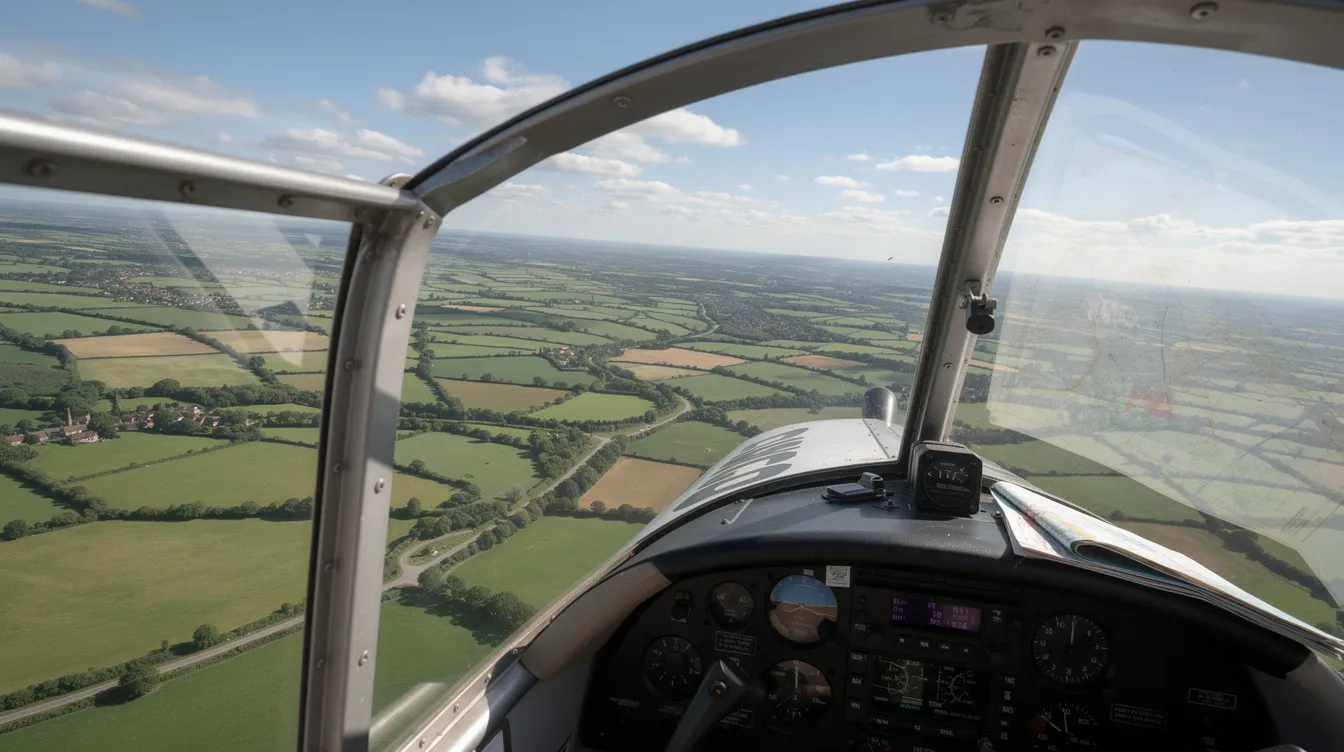
Flying a microlight at 1,500–3,000 feet is a sensory experience: you feel thermals through the airframe, hear the wind around the canopy, and make constant small corrections. The lightweight design of microlights increases sensitivity to turbulence and weather conditions, which is part of what makes the flying so engaging-and so demanding of pilot attention.
Contrast this with cruising at FL400 in a BlackJet-arranged business jet: pressurised cabin, climate control, noise isolation, connectivity, and a cabin attendant. Different planet, same sky.
Microlight flying suits hobbyists who relish hands-on control, unhurried weekend trips, and the satisfaction of operating their own aircraft. Some BlackJet clients keep microlight ownership strictly as a leisure pursuit while relying on Jet Cards for time-critical personal and corporate itineraries-separating the joy of piloting from the logistics of getting somewhere on schedule.
Performance: Speed, Range, and Weather Limits vs Private Jets
Microlights typically have lower cruising speeds and shorter ranges compared to larger aircraft. Here is how common microlight types stack up against business aviation options:
Metric | Flex Wing Microlight | Fixed Wing Microlight | Light Jet (e.g. Citation CJ3) |
|---|
Cruise speed | 45–65 kts | 80–120 kts | 400–450 kts |
Typical range | 150–300 nm | 300–600 nm | 1,500–2,000 nm |
Passengers | 1 | 1–2 | 6–8 |
All-weather? | No | No | Yes |
Cruising altitude | 1,000–5,000 ft | 3,000–10,000 ft | FL350–FL450 |
Consider three example routes:
London–Edinburgh (~260 nm): A fixed-wing microlight needs 2.5–3 hours in perfect weather, VFR only. A light jet covers it in under an hour, any season.
Paris–Ibiza (~550 nm): Beyond most microlights' comfortable range without refuelling. A midsize jet does it in 1.5 hours.
Los Angeles–Las Vegas (~210 nm): Feasible for a fixed-wing microlight in calm conditions, but the desert turbulence and controlled airspace around Las Vegas make it impractical. A private jet is wheels-up to wheels-down in 50 minutes.
Microlights are vulnerable to wind, turbulence, icing, and daylight constraints. They have no pressurisation, no de-icing, and a maximum altitude that keeps them well within the weather rather than above it.
Operating Costs: Microlight Ownership vs Jet Card Access
Microlights offer exceptional cost-efficiency for private aircraft ownership. A used flex wing trike might cost £8,000–£12,000; a modern factory-built fixed wing microlight ranges from £30,000 to over £100,000.
Typical annual operating costs for 50 hours of flying:
Cost Item | Estimated Annual (UK) |
|---|
Hangarage | £1,500–£2,400 |
Insurance | £1,000–£1,500 |
Fuel (10–18 L/hr) | £1,000–£2,000 |
Maintenance & inspections | £800–£1,200 |
Regulatory fees | £200–£400 |
Total | £4,500–£7,500 |
Microlights have low maintenance overhead due to simple designs, which keeps variable costs manageable. Microlights provide unrivaled personal freedom in flying schedules-no booking windows, no crew coordination, just you and the weather.
BlackJet's Jet Card model works differently: prepaid blocks of flight time across multiple aircraft categories, with no ownership risk, no crew management, and the ability to scale hours with business demands, particularly through structured products like the BlackJet 25+ Hour Jet Card.
Consider a European entrepreneur who keeps a microlight at their country property for weekend flying but relies on a 25-hour BlackJet Jet Card for pan-European business trips and family holidays. The microlight costs £6,000 a year to operate. The Jet Card delivers ten to fifteen intercity flights with zero maintenance burden, professional crews, and guaranteed availability. The two serve entirely different purposes-one is a hobby, the other a strategic mobility tool.
Microlight Aircraft, Sustainability, and Electric Ultralights
Microlights inherently produce fewer emissions per hour than larger aircraft. Burning 10–18 litres of fuel per hour at low altitudes, their carbon footprint is a fraction of even the most efficient turboprop.
Electric microlights represent the next frontier. Electric microlights use electric motors and batteries for power, and they provide quieter flights and smoother operations compared to combustion-engine equivalents. Electric microlights have lower operating costs than traditional models, with dramatically reduced fuel and maintenance expenses.
However, practical constraints remain significant. Current battery technology limits endurance to roughly one to two hours, payload is reduced by battery weight, and recharging infrastructure at small airfields is sparse. Electric power works for training circuits and short local flights, but not yet for the 300 nm touring missions that attract cross-country pilots.
The competitive world is taking notice. New electric competition categories are being developed by federations, and the FAI record register includes new ratifications for electric flights-signals that electric ultralights are moving from experimental curiosity to recognised discipline.
BlackJet approaches sustainability from a different angle: carbon-neutral flights through verified offset programs, emerging adoption of Sustainable Aviation Fuel, and a commitment to decarbonising long-range mobility-including more affordable private jet options-where electric power is decades away from viability.
Both approaches-lightweight electric prototypes and fuel-efficient long-range jets-sit along the same continuum of cleaner aviation innovation.
Microlight Communities, Clubs, and Competitions
The social fabric of microlight aviation is one of its most enduring attractions. Local flying clubs cluster around small grass-strip airfields, hosting weekend fly-ins where pilots compare notes on engine maintenance, share route recommendations, and introduce newcomers to the sport.
FAI-sanctioned competitions have existed since the 1980s, testing navigation accuracy, fuel efficiency, and precision landing. National microlight rallies-particularly popular in the UK, France, and across Europe-draw hundreds of aircraft for multi-day events that combine competitive flying with social gatherings.
At a typical English microlight meet, you might find fifty aircraft parked on a farm strip, pilots swapping stories over tea, and impromptu formation departures into the evening sky. It is grassroots aviation at its most authentic.
These communities foster mentorship and safety culture. Experienced pilots coach newer members on weather judgment, route selection, and aircraft care-skills that save lives in a discipline where the pilot is solely responsible for every decision.
BlackJet's member community serves a parallel but different purpose: business networking, curated events, and concierge-grade travel solutions rather than hands-on piloting. Both communities share a respect for aviation, but the context and the stakes differ considerably.
Who Microlights Are Ideal For (And When They're Not)
Microlight planes attract clearly defined user profiles:
Aviation enthusiasts wanting an affordable entry into aircraft ownership
Pilots who value slow-flight scenery and the intimacy of open-cockpit or lightweight flying
Technically inclined hobbyists who enjoy hands-on maintenance and the satisfaction of operating their own machine
Microlights excel in specific scenarios: scenic coastal flights, hops between local airfields, basic training, aerial photography sorties, and leisure trips under good weather conditions. Their simple designs and low operating costs make them unmatched for recreational pilots on a budget and a useful reference point when comparing the cheapest private aircraft available in general aviation.
They fall short when:
You need to fly in poor weather, at night, or through icing conditions
Passengers, luggage, or time-critical schedules are involved
Regulatory restrictions limit access to the airspace or airfield you need
Maximum altitude for unpressurised flight becomes a constraint over mountainous terrain
High-net-worth individuals and executives typically separate "flying for fun" from "flying as a tool." A microlight, a classic taildragger, or even a glider satisfies the former. For the latter-when reliability, privacy, schedule control, and multi-city itineraries matter-BlackJet is the logical partner.
How Jet Cards and Private Jet Charter Complement Microlight Flying
Experienced aviators who own microlights often still use charter or Jet Cards for frequent travel when they cannot pilot themselves, need greater range, or must carry passengers and luggage beyond what any ultralight can handle, making it important to understand overall Jet Card cost and pricing.
BlackJet's Jet Card model offers prepaid blocks-typically 25- or 50-hour programs-across multiple cabin classes, with guaranteed access within specified notice periods and 24/7 digital booking, and many travellers evaluate this through a detailed look at 50-hour Jet Card cost and value. No ownership risk, no crew scheduling, no maintenance surprises.
Two practical examples illustrate how the two coexist, especially for flyers considering a larger commitment such as a 100-hour Jet Card program:
The weekend pilot/weekday executive: A London-based entrepreneur flies a fixed-wing microlight from a Surrey grass strip on Saturdays, then uses BlackJet to attend board meetings in Munich, Milan, and Madrid within a single working week.
The family traveller: A pilot who enjoys solo flex wing sorties uses BlackJet to fly the family and luggage to a Mediterranean villa-a mission no microlight could serve.
BlackJet's digital booking, real-time flight support, and safety screening allow clients to keep the joy of microlight flying entirely separate from the logistics of mission-critical travel, while clear Jet Card pricing structures make the cost side predictable.
Think of Jet Cards as the "second wing" of your aviation life: one for passion, one for performance.
Safety, Certification, and Risk Management: Ultralight vs Business Aviation
The regulatory distance between microlight operations and commercial-grade business jet flights is substantial. Microlights typically operate under sport aviation rules with single-pilot operations and lighter oversight. Business jets fly under stringent national and international standards with dual-pilot crews, mandatory recurrent training, and multi-layered maintenance programmes.
Accident-rate data reflects the different environments. Across all UK general aviation-which includes microlights-the CAA reports approximately 2–3 accidents with fatal or serious injury per 100,000 hours flown. Responsible training and diligent maintenance dramatically improve individual outcomes, but the statistical gap versus commercial or business aviation remains.
BlackJet's safety philosophy goes beyond regulatory minimums:
Partnerships with audited operators holding independent safety certifications
Preference for experienced, high-hour crews
Data-driven vendor vetting that evaluates maintenance records, fleet age, and operational history
Proprietary standards layered on top of regulatory requirements
Whether you are at the controls of a microlight or sitting in the cabin of a chartered jet, the principle is the same: safety is non-negotiable. The infrastructure that supports it simply operates at different scales.
Planning Your Personal Aviation Mix: From Microlight to BlackJet
The most aviation-savvy travellers do not pick a single mode of transport and apply it to every trip. They build an aviation portfolio matched to the specific demands of each journey.
A simple decision framework helps:
Factor | Microlight | Private Jet (Jet Card) | Scheduled Airline |
|---|
Distance | Under 250 nm | 250–4,000+ nm | Any |
Time sensitivity | Low | High | Medium |
Passenger count | 1 (+ 1 pax max) | 1–14 | Any |
Baggage | Minimal | Generous | Checked limits |
Weather flexibility | Fair weather only | All-weather | All-weather |
Piloting enjoyment | Maximum | Passenger comfort | N/A |
Consider a year in the life of a well-rounded aviation enthusiast: 50 hours of microlight fun flying from a countryside airfield, 30 hours of BlackJet Jet Card travel for business across Europe and beyond, and a handful of long-haul scheduled airline flights to destinations where even a private jet would be impractical.
BlackJet advisors can help clients design this mix, recommending suitable aircraft categories-light jet, midsize, super-midsize, or large cabin-that complement personal microlight or GA ownership perfectly, whether you need full-aircraft charter or simply want to buy a seat on a private jet.
Microlights and private jets are not competitors. They are complementary tools in a sophisticated travel strategy, each delivering value that the other cannot replicate-whether that is choosing among the best small private aircraft, planning large group trips that call for private jets for up to 50 passengers, or evaluating the largest and best long-range private jets on the market. For some travellers, that portfolio even extends to premium UK-based private jets for sale, or the top 10 private jets worldwide, layered on top of a simple microlight kept at a local strip.
Frequently Asked Questions About Microlight Planes
Q1: What distinguishes fixed-wing aircraft microlights from other microlight types?
Fixed-wing microlights resemble small airplanes with rigid wings and use conventional aerodynamic controls like ailerons, elevators, and rudders. They typically offer higher cruising speeds and longer ranges compared to flex-wing or autogyro microlights, making them suitable for cross-country touring.
Q2: Are microlight planes safe to fly compared to private jets?
Microlights operate under sport aviation regulations with single-pilot operations and less stringent oversight than business jets. Safety relies heavily on pilot training, weather conditions, and maintenance. BlackJet’s private jets incorporate rigorous safety protocols, dual-pilot crews, and audited operators, reflecting a higher certification standard.
Q3: Can microlight planes be used for business travel?
Microlights are primarily designed for recreational flying and short-range touring under visual flight rules. Their limited speed, range, and weather restrictions mean they are not practical for time-sensitive or multi-passenger business travel, where private jets excel.
Q4: What are the benefits of electric microlight planes?
Electric microlights offer quieter, smoother flights with reduced environmental impact and lower operating costs. While battery technology currently limits flight duration and range, ongoing advancements promise a greener future for ultralight aviation.
Q5: How do microlight licensing requirements compare to conventional pilot licenses?
Microlight pilot licensing requires fewer flight hours and less stringent medical standards compared to full private pilot licenses. This streamlined process makes microlight flying an accessible entry point for aspiring pilots.
Q6: What kind of maintenance do microlight planes require?
Due to their simple mechanical designs and reliable engines like the Rotax series, microlights have lower maintenance overhead. Regular inspections and adherence to airworthiness standards ensure safe operation with manageable costs.
Q7: How do microlight planes contribute to sustainable aviation?
Microlights consume significantly less fuel per hour than larger aircraft, reducing carbon emissions. Electric microlights further lower environmental impact, aligning with broader efforts toward sustainable and carbon-neutral aviation.
Conclusion: From Ultralight Adventure to Seamless Private Jet Access
Microlight planes offer something no business jet ever will: raw, hands-on connection to the sky at minimal cost and maximum personal involvement. They are an extraordinary way to experience flight as pilots have known it since aviation's earliest days.
But when the mission changes—when time, distance, weather, passengers, or stakes demand certainty—no microlight can deliver what a BlackJet Jet Card provides. Speed measured in hundreds of knots. Range that spans continents. Cabins designed for productivity and rest. Safety frameworks built on layers of audited oversight. And carbon-neutral flights that address the environmental responsibility of modern air travel.
The most discerning travellers do not choose between these worlds. They inhabit both—keeping a microlight for weekend adventure and a Jet Card for everything the world demands of them during the week.
Discover how BlackJet can redefine the way you move between the places that matter most.


 Sign up with google
 Sign up with Apple