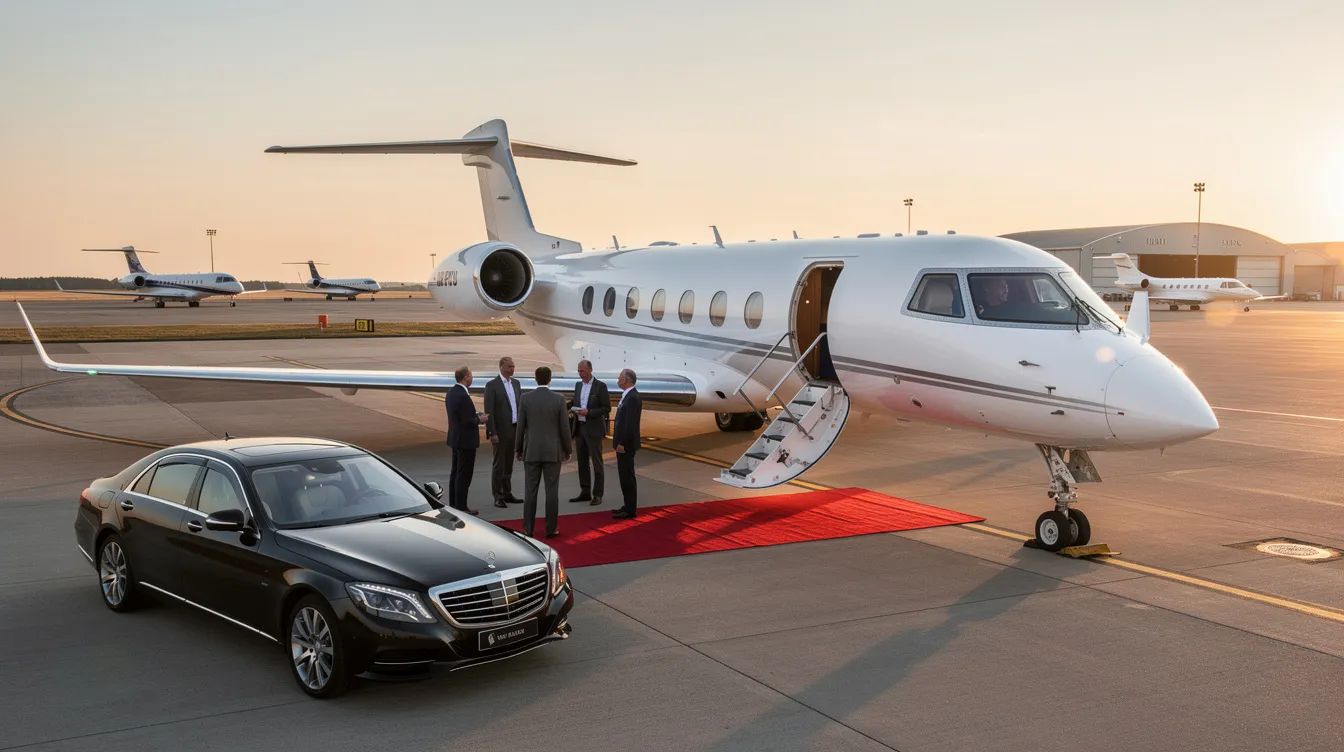
Private air flights are transforming how high-value travelers move, offering unmatched flexibility, time savings, and privacy compared to commercial travel. For discerning travelers who measure success in productivity and precision, private air flights represent far more than a comfortable way to reach a destination—they are a strategic tool that reclaims hours lost to commercial airport congestion, transforms flight time into uninterrupted work sessions, and delivers access to thousands of airports that major carriers simply cannot serve. Using a private plane provides maximum flexibility and convenience.
Definition: Private air travel operates on an on-demand basis, allowing you to hire an entire aircraft rather than a seat. This core concept distinguishes private air flights from commercial airline travel and is central to understanding the benefits and options available.
This guide is for business executives, frequent travelers, and families considering private air flights. It covers Jet Cards, on-demand charter, aircraft categories, pricing, and the BlackJet experience. Private air flights matter because they offer unmatched flexibility, time savings, and privacy compared to commercial travel—empowering you to travel on your terms.
This is all part of the broader business aviation sector, which encompasses private jet services, on-demand charters, and tailored solutions for corporate and high-net-worth clients.
BlackJet delivers this advantage through flexible premium Jet Card memberships and private jet services, curated charter flights, and a technology-forward approach that makes flying private as seamless as booking a premium car service. Whether you’re a business executive coordinating multi-city deal tours or a family seeking stress-free leisure travel, understanding how private aviation works—and when it makes financial sense—unlocks a new dimension of efficiency and comfort. There are many benefits to choosing private air flights, including time savings, privacy, and personalized service. Experience private aviation with BlackJet and discover a seamless, tailored journey designed around your needs.
Key Takeaways
Private air flights are not merely about luxury seating and champagne service. They represent a fundamental shift in how high-value individuals approach travel, prioritizing time efficiency, privacy, and access over the traditional commercial airline experience.
BlackJet Jet Card memberships (25-hour and 50-hour options) provide prepaid access to multiple aircraft categories—from light jets to ultra-long-range—with locked-in hourly rates, guaranteed availability, and 24/7 digital booking tools with real-time support.
Time savings are substantial: A typical New York to Los Angeles business trip takes 5–6 hours door-to-door by private jet compared to 9–11 hours via commercial first class, saving 4+ hours per round trip.
Private terminal (FBO) access eliminates long security lines, crowded gates, and boarding delays—arrive just 15–20 minutes before departure and walk directly to your aircraft.
All BlackJet flights are carbon-neutral by default, with verified offset programs and Sustainable Aviation Fuel (SAF) options at select airports, promoting cleaner alternatives to traditional jet fuels and addressing environmental concerns without additional fees.
This guide covers how pricing works across aircraft types, when a Jet Card beats ad-hoc charter or fractional ownership, and what to expect from booking through landing.
Why Private Air Flights Are a Strategic Advantage (Not Just a Luxury)
Consider a typical business trip in 2026: A New York–based executive needs to reach Los Angeles for afternoon meetings. Flying commercial first class means arriving at the commercial airport roughly three hours before departure, navigating TSA security queues that average 30–60 minutes during peak periods, waiting through boarding delays, and then facing potential airborne disruptions. Total door-to-door time: 9–11 hours.
That same executive flying private arrives at a fixed-base operator (FBO) terminal 15–20 minutes before departure, walks directly to the aircraft, and lands at Van Nuys (VNY) instead of LAX—cutting ground travel time on both ends. Total door-to-door: 5–6 hours.
Quantifiable Benefits
4+ hours saved per round trip, translating directly into productivity or personal time
Same-day multi-city itineraries become feasible—a New York to Dallas and then Chicago round trip can be completed in under 12 hours door-to-door versus 18+ hours commercially
Flight time becomes work time: Uninterrupted cabin environments serve as secure mobile offices or peaceful sanctuaries, allowing for deal reviews, board presentations, and confidential discussions without neighboring passengers or cabin distractions
Access to more airports—over 5,000 U.S. airports—compared to approximately 500 served by commercial airlines, enabling proximity to final destinations and access to smaller, more convenient airports closer to your endpoint
Private jets fly point-to-point, eliminating layovers and the need to navigate through crowded hub airports. Flexibility in scheduling allows passengers to set departure times and adjust mid-trip, accommodating changes in plans, whether they charter the whole aircraft or buy a single seat on a private jet via shared and semi-private options.
Real-World Examples
Concrete examples illustrate this advantage clearly. Landing at Teterboro (TEB) instead of JFK places executives minutes from Manhattan rather than navigating one of the world’s busiest commercial airport environments. Van Nuys (VNY), near Los Angeles, offers the same strategic advantage as LAX.
The contrast with commercial first class extends beyond timing. Private jet travelers experience no queues, direct access to the aircraft, departure times tailored to their schedules, and complete privacy to discuss sensitive deals or review confidential documents. The cabin is exclusively yours.
BlackJet positions itself as a premier Jet Card and private jet charter solution for frequent U.S. and transatlantic travelers. The focus remains on safety through certified operators, technology-enabled booking that removes friction, and carbon-neutral operations that address sustainability without compromising convenience.
How Private Air Flights Work
Private air flights generally operate through three primary models, each suited to different usage patterns and preferences: jet card programs, fractional ownership, and on-demand charter services (also known as air charter). Understanding these distinctions helps travelers select the approach that best meets their needs.
On-Demand Charter
On-demand charter suits occasional travelers—those flying privately fewer than 10–12 times per year. These services are provided by Part 135 charter companies, which are FAA-certified on-demand air carriers adhering to strict safety and operational standards. Key characteristics include:
Hiring the entire aircraft and selecting departure and arrival airports, with access to private terminals that allow passengers to skip long security lines
Ad-hoc pricing that fluctuates based on aircraft availability, positioning needs, and market demand
Variable availability around peak periods such as Christmas 2026, major sporting events like the 2026 World Cup in North America, and holiday weekends
Flexibility for one-off trips without long-term commitments
Exposure to repositioning fees when aircraft must ferry empty to reach departure airports
This model works well for testing private aviation or handling irregular travel needs, but pricing volatility and availability uncertainty can create friction for frequent flyers, making it essential to understand the drivers of private jet charter pricing and cost structures.
Jet Cards and Memberships
Jet Cards represent the middle ground—pre-purchased flight hours with predictable pricing and guaranteed access. For travelers evaluating jet card cost and private jet membership pricing, BlackJet’s 25-hour and 50-hour Jet Card options exemplify this approach:
Locked-in hourly rates for the term of the card, insulating members from peak-period price spikes
Guaranteed aircraft access with defined call-out times (typically 24–48 hours for U.S. domestic flights)
Consistent service standards across a diverse fleet of vetted operators, offering exclusive access to a wide range of aircraft options from light jets to heavy jets
24/7 digital booking tools and real-time support, simplifying the booking process and providing assistance whenever needed
Flexibility across cabin classes—use hours on light jets for short hops or heavy jets for transcontinental flights
No capital tied up in aircraft ownership, no crew management, no depreciation concerns
Jet card programs are designed for high-net-worth individuals and frequent business travelers. Travelers comparing options should understand the jet card cost per hour across providers and aircraft types. They can be more cost-effective than traditional charter services, especially for those flying under 300 hours per year, as chartering often proves cheaper than ownership in such cases.
Full or Fractional Ownership
Full ownership demands $5–50 million upfront plus $1–2 million in annual fixed costs covering crew, maintenance, and hangar fees. Fractional ownership reduces capital outlay but still involves significant commitments. This model makes sense for:
Ultra-high utilization travelers flying 200–300+ hours annually
Personalized interior requirements specific to individual or corporate branding
Willingness to manage or outsource complex operational logistics
Private jets lose 5–10% of their value yearly, making ownership a significant capital allocation decision that only pays off at very high utilization levels.
BlackJet focuses on Jet Cards and curated charter access precisely because this model delivers ownership-style control and predictability without tying up capital in a depreciating asset. For travelers flying 25–100 hours annually, this represents the optimal balance of access, flexibility, and cost efficiency, especially compared with the cheapest private aircraft and other budget-friendly options, as well as broader affordable private jet solutions such as VLJs, turboprops, and empty legs.
Aircraft Categories for Private Air Flights
Private air flights are matched to aircraft categories based on range requirements, group size, and route profiles. The following categories include some of the most popular aircraft in private aviation, frequently requested for their range, comfort, and reliability. BlackJet provides access across all major cabin classes, with advisors helping match each trip to the right aircraft.
Understanding these categories enables smarter decisions about when to select a cost-effective light jet versus when a heavy jet’s range and amenities justify the higher hourly rate.
Light Jets
Light jets like the Cessna Citation CJ3+ and Hawker XP 400 offer 4–8 seats, cruise at 430–480 mph, and have ranges of up to approximately 1,500 nautical miles. These aircraft excel at:
Regional and short-haul routes: Miami–Nassau, Los Angeles–Las Vegas, New York–Nantucket
Cost efficiency: Lower hourly rates compared to larger categories
Short runway capability: Access to airports with runways as short as 4,000 feet
For trips under 1,000 miles with smaller groups, light jets deliver excellent value without sacrificing speed or comfort.
Midsize and Super Midsize Jets
The midsize and super midsize category—including aircraft such as the Citation Latitude, Praetor 500, and Challenger 3500—seats 8–9 passengers in stand-up cabins (with a typical ceiling height of 5’8”–6’). Ranges extend to 2,500–3,500 nautical miles with significantly improved baggage capacity (200–300 cubic feet).
Ideal routes include:
Cross-country U.S. flights: New York–Dallas, Chicago–San Jose, Miami–Seattle
European connections: London–Marrakesh, Paris–Moscow, Zurich–Dubai
Multi-day trips requiring substantial luggage for business or leisure
The enhanced cabin space makes these aircraft particularly well-suited for productive work sessions and comfortable longer flights.
Heavy and Ultra-Long-Range Jets
Heavy jets like the Gulfstream G-IVSP and Gulfstream G600 represent the pinnacle of private aviation capability. The Gulfstream G-IVSP can accommodate 13–14 passengers and has a range of approximately 4,200 nautical miles. With 10–14 seats, ranges exceeding 6,000 nautical miles, and amenities including bedrooms, showers, and 600+ cubic feet of baggage space, these aircraft handle:
Nonstop intercontinental flights: New York–London (5.5 hours versus 7+ commercial), Los Angeles–Tokyo, Dubai–Geneva, as well as large-group missions on private jets suitable for up to 50 passengers
Large group travel: Board meetings, family reunions, sports teams
Extended comfort requirements: Lie-flat beds, private suites, full galleys
Ultra-long-range jets can fly intercontinental routes nonstop, covering distances of 7,000 to 8,000 nautical miles, and many feature the same advanced technology and amenities found on the top 10 best private jets worldwide.
Turboprops
Turboprop aircraft like the King Air 350 seat 6–8 passengers, have effective speeds of 300–500 mph, and have ranges of around 600-1,000 miles. While slower than jets, turboprops provide:
30–50% lower hourly costs compared to jets for distances under 300 miles
Short and rough runway access: Strips under 3,000 feet, mountain airports, remote airfields
Regional efficiency: Dallas–Austin, Zurich–Nice, Los Angeles–Mammoth Lakes
For shorter hops where speed differences are minimal (turboprops add only 5–10 minutes on very short routes like Westchester to East Hampton), the cost savings make turboprops an intelligent choice.
BlackJet advisors help match each trip to the best aircraft category, balancing comfort preferences, hourly cost, runway requirements at the origin and destination, and total passenger count.
Inside the Cabin
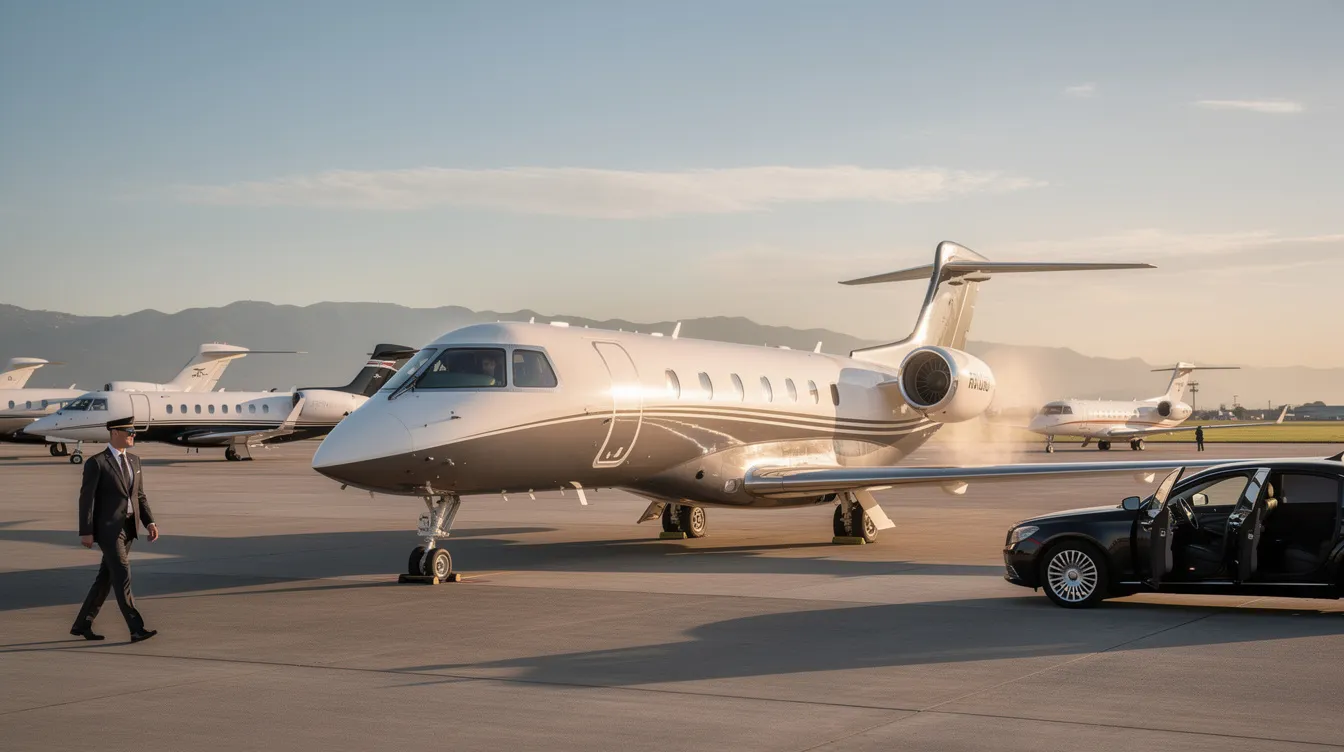
The private flight experience extends far beyond simply avoiding the hassles of commercial airports. Cabin environments are designed for productivity, rest, and personalized service that commercial first class cannot match. BlackJet ensures consistent premium standards across its operator network.
Cabin Comfort
Typical cabin layouts include:
Club seating: Facing pairs are ideal for meetings and conversations
Divans: Convertible to beds for rest on longer flights
Conference tables: Available on midsize and larger jets for working sessions
Fully reclining seats: Pitch of 78–82 inches on larger aircraft versus commercial first class maximum of 78 inches
Noise levels in modern private jets typically range from 50–60 decibels—quiet enough for sleep or focused work without distraction. Cabin lighting, temperature, and entertainment systems can be customized to passenger preferences.
Connectivity and Productivity
By 2026, Starlink-enabled Wi-Fi will be used by 70%+ of premium charter fleets, delivering speeds of 50–200 Mbps. This enables:
Video conferences: Full HD calls without lag or disconnection
Secure document access: Review deals, contracts, and presentations
Universal power: 110V outlets and USB-C ports at every seat
For business executives, flight time transforms from dead time into productive work sessions. A three-hour flight becomes a three-hour meeting room without interruption.
Catering and Service
Private aviation catering draws from local culinary partners rather than airline food services. BlackJet-sourced flights offer:
Curated menus: New York delis, London fine dining, Dubai international cuisine
Dietary accommodations: Vegan, kosher, gluten-free, allergen-free options with 24–48 hours’ notice
Full-service options: Light breakfasts to multi-course Michelin-inspired tasting menus
Premium beverages: Selected wines, spirits, and specialty coffees
Crew on midsize and larger jets (typically 1–2 flight attendants) are trained for UHNW client service, managing requests discreetly and professionally.
Privacy and Security
Private jet cabins provide complete confidentiality for:
Board-level discussions: No neighboring passengers to overhear sensitive conversations
Deal negotiations: Review terms and strategy without concern for eavesdropping
Family travel: Personal space without the public exposure of commercial terminals
Security screening at FBOs is discreet—exempt from TSA processes for aircraft with fewer than 61 passengers—eliminating the public screening experience entirely.
Pets and Families
Subject to regulations, pets can travel comfortably in the cabin with their owners, unlike commercial flights, where pets are often transported in cargo. This includes:
Cabin pets allowed: Generally under 100 lbs, regulations-compliant
Direct ramp access: No need to navigate terminal crowds with children, elderly passengers, or animals
Equipment handling: Skis, golf clubs, surfboards, and oversized luggage loaded directly by crew
A family flying from Los Angeles to Aspen with skis, snowboards, and a dog enjoys ramp access and seamless boarding that is not possible with commercial flights.
BlackJet Jet Cards
For travelers flying privately at least 20–30 hours annually, BlackJet Jet Cards represent the flagship solution—combining predictable pricing, guaranteed availability, and the flexibility to scale aircraft selection to each trip’s requirements.
Card Structures
BlackJet offers two primary Jet Card options, including the BlackJet 25+ Hour Jet Card, including a 25-hour jet card with clear features and costs, and a 50-hour jet card pricing and value guide:
Prepaid hours can be used across multiple aircraft categories—light, midsize, super midsize, and heavy jets—based on each trip’s specific needs. This flexibility eliminates the constraint of owning a single aircraft type while providing access to a diverse fleet.
Predictable Pricing
BlackJet Jet Cards feature locked-in hourly rates for the card's term, a structure that invites comparison with NetJets jet card costs and program design. These rates include:
Standard repositioning: No surprise ferry fees for aircraft positioning
Crew costs: Pilot and cabin crew expenses included
Core operational expenses: Fuel surcharges and standard handling
Indicative 2026 hourly ranges (provided as examples only) span from the mid-$6,000s for light jets to $8,000–$9,000 for midsize and low-to-mid teens for heavy and ultra-long-range aircraft. For a deeper breakdown of jet card pricing structures, hourly rates, and fees, fixed rates protect members from the 20–50% price spikes that can occur during peak demand periods.
Availability and Call-Out
Guaranteed aircraft access comes with defined notice periods:
24 hours: Standard for U.S. domestic flights
48–72 hours: Peak periods and international sectors
Proactive peak management: BlackJet anticipates high-demand periods like Thanksgiving 2026 and Christmas–New Year and secures aircraft for members in advance
Jet Card members can also secure private air flights at a moment's notice, providing a crucial advantage for urgent or last-minute travel needs, making these programs among the best jet cards for frequent flyers.
This availability guarantee distinguishes Jet Cards from ad-hoc charter, where last-minute requests during peak periods may face limited options or premium pricing.
Flexibility
Jet Card flexibility includes:
Cabin class upgrades or downgrades: Match aircraft to each trip’s needs
Multi-leg itineraries: New York–Boston–Washington D.C. round-trip in a single day
Minimum segment durations: Typically 1–2 hours billed per segment, with clear rules for short flights
Use Cases
Technology Executive: A San Francisco–based tech CEO uses a 50-hour Jet Card to coordinate team visits across San Francisco, Seattle, and Austin throughout Q4 2026. Approximately 15 hours of flight time replaces 40+ hours of commercial travel, accounting for connections, layovers, and ground transportation.
International Family: A London-based family alternates between a New York–London heavy jet flight (12 hours annually) and short European hops to their Mediterranean property (8–10 hours). The Jet Card provides flexibility across both trip types without managing multiple relationships.
Technology & Real-Time Support
Technology removes friction from private travel, transforming what was once a phone-intensive booking process into a streamlined digital experience. BlackJet combines a digital-first platform with 24/7 human support for moments when personal attention matters.
Mobile Booking Platform
The BlackJet app and web portal enable members to:
Request flights in minutes: Enter routes, dates, passenger counts, and cabin preferences
View real-time availability: See which aircraft categories and operators can serve the requested itinerary
Select and confirm: Choose preferred options and lock in itineraries directly from mobile devices
Track Jet Card balance: Monitor hour usage and remaining prepaid time
Instant and Transparent Estimates
Before confirming any flight, members see:
Estimated flight time: Based on aircraft performance and routing
Hour deductions: How many Jet Card hours will be consumed
Cost summaries: Clear breakdowns without hidden fees
This instant pricing visibility—similar to leading digital charter platforms but integrated with prepaid Jet Card balances—eliminates negotiation and quote-waiting time.
Trip Management
Active trip features include:
Push notifications: Alerts when crew arrives, gate/terminal directions to the FBO
Weather updates: Proactive communication about conditions affecting departure or routing
Live itinerary changes: Adjust departure time (e.g., +90 minutes for an overrunning meeting) directly through the app
Ground coordination: Airport transfers and car services arranged on request
Dedicated Flight Support
Every BlackJet Jet Card member has access to a dedicated team available 24/7/365. Human support handles:
Last-minute destination changes: Redirect from one city to another mid-trip
Special requests: Complex catering, ground handling requirements, VIP arrangements
Troubleshooting: Weather disruptions, crew duty limits, mechanical issues
Data-Driven Reliability
BlackJet uses historical performance and operator data to:
Anticipate peak congestion: Thanksgiving 2026, Christmas–New Year in Europe, major events like the 2026 World Cup
Proactively secure aircraft: Reserve capacity for members before demand peaks
Optimize routing: Identify efficient flight paths and reduce unnecessary positioning
Safety in Private Aviation
For BlackJet, safety is non-negotiable—positioned above convenience and luxury in every operational decision. All aircraft are operated by independent, fully certified air carriers meeting strict regulatory standards. Private air flights are conducted by U.S. 14 CFR Part 135 direct air carriers or other government-approved air carriers, with indirect air carriers also playing a key role in private aviation services and certification. These operators are authorized to operate aircraft under strict FAA standards, ensuring legal and safe private aviation. As a private jet provider, BlackJet is committed to safety and regulatory compliance at every level.
Operator Certification
BlackJet partners exclusively with operators who maintain elite certifications:
ARGUS Platinum: Top 10–20% of approximately 2,500 U.S. Part 135 operators
IS-BAO Stage 3: International Standard for Business Aircraft Operations
Wyvern Wingman: Independent safety audit and ongoing monitoring
These certifications indicate operators who exceed minimum regulatory requirements, invest in crew training, and maintain robust safety management systems under FAA (or EASA and equivalent) oversight.
Travelers should verify a company's Part 135 status by requesting their FAA Air Carrier Certificate and ensuring the aircraft tail number matches the approved list. This verification is a key step in ensuring the operator's legitimacy and safety.
Crew Experience
Minimum standards for crews operating BlackJet-sourced flights include:
Captain flight hours: Typically 3,000+ total hours with 500+ hours in type
Type ratings: Specific certification for each aircraft model
Recurrent training: Simulator checks at least annually, covering emergency procedures, system failures, and adverse weather operations
Experienced crews bring judgment developed over thousands of flight hours, recognizing and managing risks before they become problems.
Aircraft Maintenance
Rigorous maintenance schedules ensure aircraft airworthiness:
Scheduled inspections: A/B/C/D checks at 200–400 flight-hour intervals per manufacturer specifications
Manufacturer compliance: Adherence to Gulfstream, Bombardier, Cessna, and other OEM maintenance programs
Certified facilities: Work performed at authorized maintenance centers with proper tooling and expertise
Operational excellence in maintenance prevents mechanical issues from affecting flight schedules and, more importantly, passenger safety.
Risk Management and Safety Checks
Before each flight, BlackJet reviews:
Operator history: Recent incidents, violations, or inspection findings
Insurance coverage: Adequate liability protection for passengers and operations
Current compliance: Crew currency, aircraft inspections, and operational certificates
Stratos Jets has organized its workflows to incorporate air charter safety checks at every step. The Stratos Safety Team has cultivated a network of the safest, most reputable air carriers worldwide, exemplifying industry-leading operational excellence.
Passenger Briefing and Comfort
Clients receive clear but concise safety briefings on each flight. Crew members are prepared to handle:
First-time private flyers: Walking through procedures without condescension
Children: Age-appropriate safety explanations
Nervous travelers: Reassuring, professional demeanor throughout the flight
Safety communications are delivered with confidence that puts passengers at ease rather than creating anxiety.
Flight Planning
A reliable flight planner is essential for safe and efficient private jet travel, integrating route selection, weather data, fuel calculations, and itinerary management, which becomes even more critical when coordinating private jets suitable for 20 passengers and other large groups. BlackJet employs advanced flight planning tools to optimize safety, efficiency, and comfort on every journey.
Sustainable Private Air Flights
Private aviation carries a higher per-passenger carbon footprint than commercial flying—a reality that responsible operators must address openly rather than ignore. Private jet emissions accounted for approximately 15–16 million tonnes of CO2 in 2023, representing about 1.7–1.8% of civil aviation emissions. BlackJet confronts this challenge directly through verified offset programs, sustainable fuel options, and operational efficiency.
Carbon-Neutral as Standard
BlackJet makes every flight carbon-neutral by default at no extra cost to Jet Card members. This commitment is active through 2025–2026, covering all flight operations through verified reduction programs.
There is no opt-in process, no additional fee, and no complexity for members. Carbon neutrality is built into BlackJet’s operational model.
Offsets and Projects
BlackJet supports third-party certified carbon offset projects, including:
Renewable energy facilities: Wind, solar, and other clean energy development
Reforestation initiatives: Forest protection and restoration programs
High-integrity carbon removal: Verified through Gold Standard, Verra, and equivalent certification bodies
Only projects with transparent verification and measurable impact are included—no unverifiable claims or questionable schemes.
Sustainable Aviation Fuel (SAF)
Where available at select FBOs, BlackJet works with operators who can uplift SAF blends:
Current availability: Los Angeles (LAX/VNY), San Francisco, London, Amsterdam
Emissions reduction: SAF reduces lifecycle emissions by up to 75% compared to conventional Jet A fuel
Expanding access: SAF availability is growing as production scales through 2026–2030
While SAF is not yet universally available, BlackJet prioritizes its use where supply chains support it.
Smart Routing and Aircraft Selection
Operational efficiency also reduces environmental impact:
Right-sized aircraft: Selecting smaller aircraft for smaller groups avoids excess fuel burn
Direct routing: Turboprop flights for short hops under 300 miles can reduce fuel consumption by 40% compared to jet alternatives
Efficient flight planning: Optimal altitudes, speeds, and routes minimize unnecessary fuel consumption
Empty Leg Flights and Responsible Travel
Travelers can mitigate their environmental impact by using empty-leg flights, which are repositioning flights that would otherwise fly without passengers. These flights often come with significant discounts—up to 75% off standard charter prices—making private aviation more accessible for flexible travelers.
Booking a round trip rather than two one-way flights often yields better pricing and guarantees aircraft availability.
The demand for responsible, sustainable travel is growing, prompting the private aviation industry to balance luxury with environmental consciousness.
Pricing & Costs
While private air flights represent a premium product, clear pricing frameworks help clients budget strategically. Understanding what drives costs enables informed comparisons with commercial alternatives—especially when factoring in the time value of executive schedules.
Key Pricing Drivers
Several factors influence private flight costs:
Aircraft category: Light jets cost significantly less per hour than heavy jets.
Flight distance: Longer distances generally mean more flight hours.
Airport fees: FBO handling, landing fees, and parking vary by location.
Peak vs. off-peak: Holiday periods and major events can increase ad-hoc charter costs by 20–50%.
Repositioning: Aircraft must sometimes ferry empty to reach departure points.
Weather conditions: Deicing and weather delays may incur additional fees.
Sample Ranges (Indicative)
Approximate 2026 hourly rates (examples only—actual pricing varies), and for very frequent travelers, a detailed 100-hour jet card cost guide and broader analysis of jet card cost per hour across tiers and aircraft can help benchmark long-term budgets:
Light jets: Mid-$6,000s per flight hour
Midsize jets: $8,000–$9,000 per flight hour
Super midsize: $9,000–$11,000 per flight hour
Heavy and ultra-long-range: Low-to-mid teens per hour
Charter costs for private jets can vary widely, typically ranging from approximately $2,000 to over $17,000 per flight hour, depending on aircraft type and route. Private jet charter pricing can range from $2,500 per hour for smaller aircraft to over $15,000 per hour for larger, long-range jets.
Travelers can expect to pay around $2,800 for a short flight in a small plane, while a 1.5-hour flight in a midsize jet may cost closer to $34,500.
Jet Card vs. Ad-Hoc Charter
Below is a comparison of Jet Card and Ad-Hoc Charter models, two of the primary private jet charter pricing frameworks travelers evaluate:
Jet Card vs. Ad-Hoc Charter Comparison
Pricing: Jet Cards offer locked-in hourly rates, while Ad-Hoc Charter pricing is variable and market-based per trip.
Availability: Jet Cards guarantee availability with notice, whereas Ad-Hoc Charter depends on aircraft and operator availability.
Budget Predictability: Jet Cards provide high predictability and estimable annual costs; Ad-Hoc Charter costs fluctuate per trip.
Peak Periods: Jet Cards help avoid price spikes during holidays and events; Ad-Hoc Charter prices can be 20–50% higher during peak times.
Booking Process: Jet Cards feature streamlined digital booking with real-time support; Ad-Hoc Charter involves shopping for and negotiating each trip.
Flexibility: Jet Card hours are usable across multiple aircraft types; Ad-Hoc Charter requires selecting an aircraft type per trip.
During high-demand periods like the 2026 World Cup fixtures in North America or Thanksgiving travel, ad-hoc charter costs can surge 20–50% above normal rates. Jet Card members access aircraft at their contracted rates regardless of market conditions.
Transparent Pricing and Booking
Private jet charter services often provide instant pricing and booking options, allowing travelers to secure flights quickly without hidden fees. BlackJet emphasizes transparent pricing, ensuring that all costs, including taxes and fees, are included in the quoted price.
Passengers use private terminals (FBOs) to arrive shortly before departure and bypass long security lines. Typically, passengers arrive 15–30 minutes before departure, bypassing long check-in and security lines.
Booking Process Steps
Search for routes and enter travel plans.
Select the perfect plane from the available aircraft options.
Book instantly through the digital platform.
Enjoy the private flight experience with dedicated account manager support.
Many private jet charter services offer instant pricing and booking through their online platforms, allowing for quick and easy arrangements. Travelers can often check in much closer to departure time when using private terminals compared to commercial flights, sometimes as little as 15 minutes before takeoff.
Private jet charter companies typically allow more luggage than commercial airlines, accommodating special items such as sports equipment or musical instruments.
Booking a private jet can be done with as little as two hours' notice, providing flexibility for last-minute travel plans.
Travelers can often customize their itineraries when booking a private jet, allowing for direct access to smaller airports and avoiding commercial flight congestion.
Additional Benefits of Flying Private
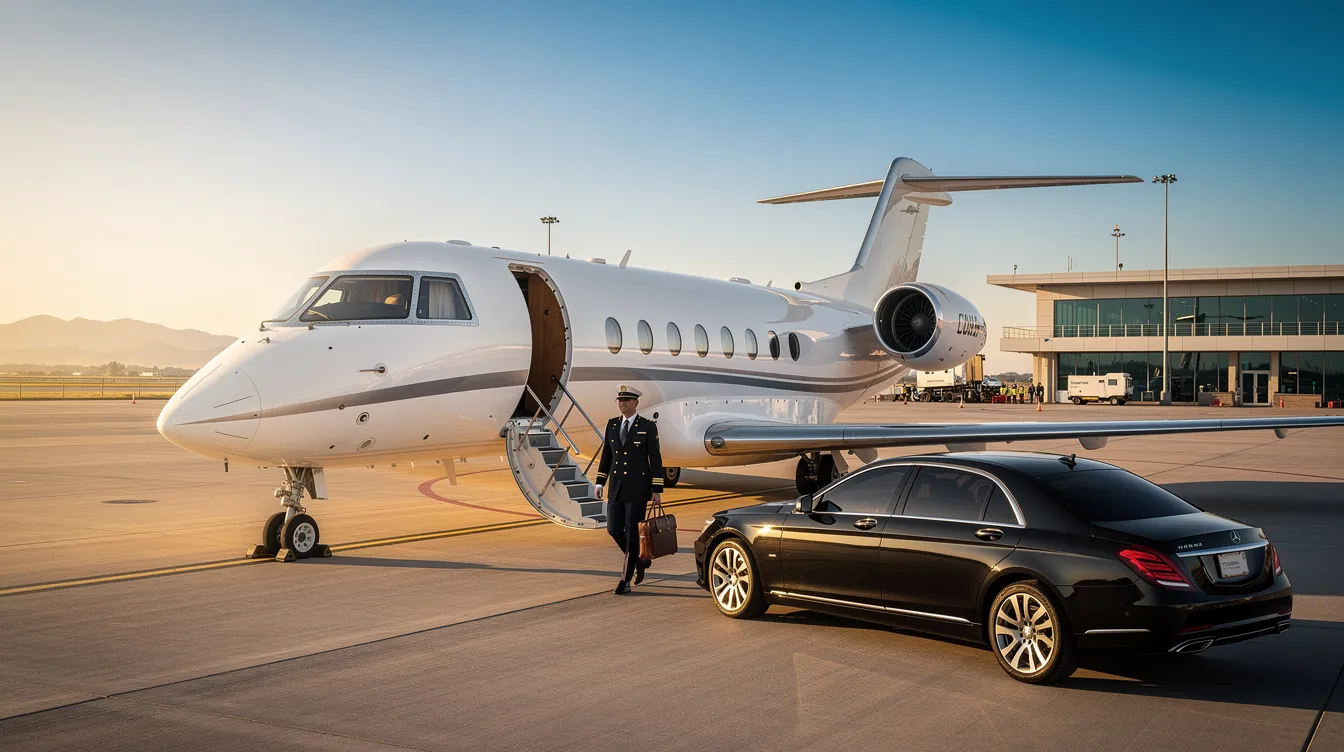
Enhanced Comfort and Speed
Private jets often cruise at higher altitudes (up to 51,000 feet) and faster speeds than commercial airliners, enabling quicker travel times and smoother rides.
Modern private jets use advanced medical-grade HEPA air filtration systems, reducing exposure to germs and maintaining more consistent humidity and cabin pressure, which helps reduce travel fatigue and illness.
Privacy and Productivity
Private aviation offers confidentiality for conducting sensitive business meetings or video conferences mid-flight, making it particularly beneficial for executives and families with complex itineraries.
Passengers typically park near the plane and arrive just 15–30 minutes before departure, skipping the long security lines typical of commercial airports.
Luggage and Flexibility
Private jet travel also allows more luggage and equipment on board than commercial airlines, accommodating everything from golf clubs to musical instruments.
The space and comfort of an executive jet allow you to choose how you'll spend your time in the air, whether working or relaxing.
Conclusion
BlackJet offers a comprehensive private air flight experience that combines the convenience of on-demand charter and Jet Card programs with the highest standards of safety, sustainability, and service. Whether you are a frequent business traveler or a family seeking luxury and flexibility, BlackJet empowers you to fly your way—anywhere, anytime—with confidence and peace of mind.
Explore BlackJet’s Jet Card offerings and discover how refined, meaningful travel becomes your new standard. Join BlackJet’s Jet Card program for seamless, premium private travel—safety, sustainability, and flexibility built in. To learn more and book your next private air flight, visit BlackJet’s official website for detailed information, instant pricing, and personalized support designed to elevate your private aviation experience.


 Sign up with google
 Sign up with Apple