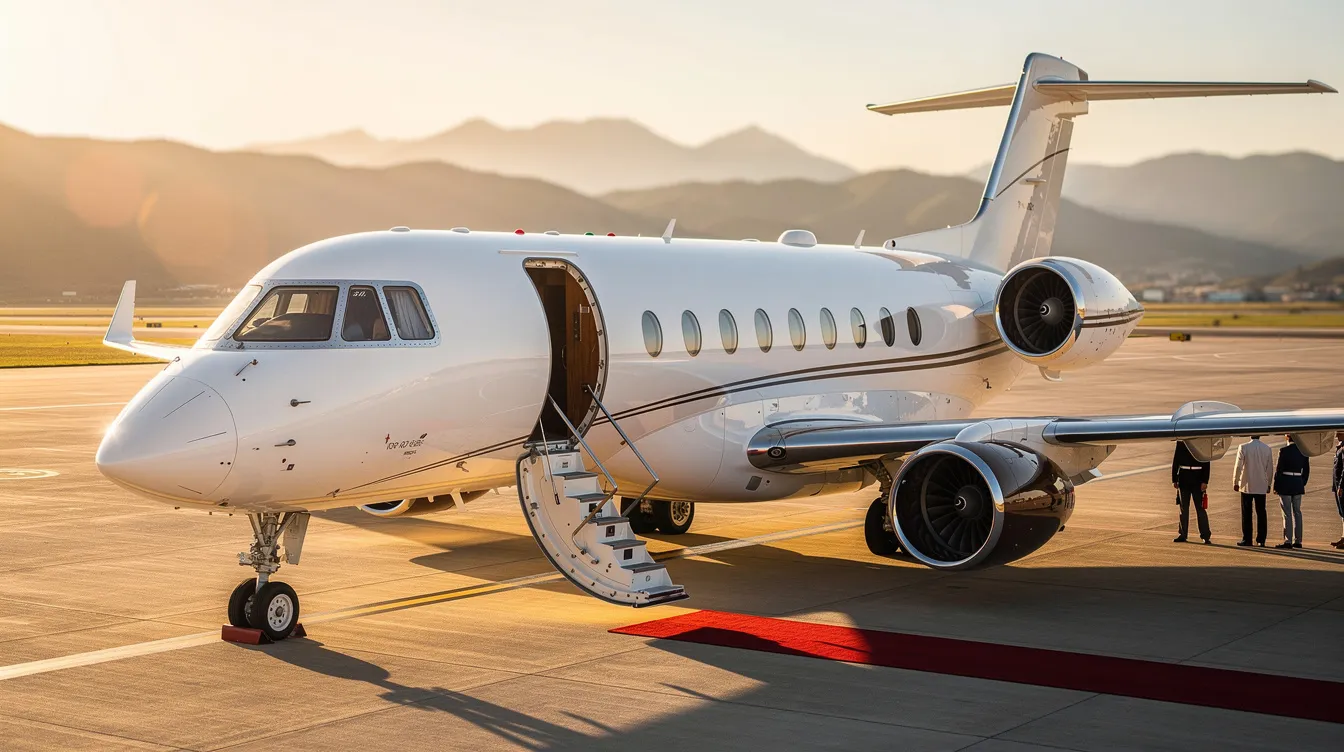
For business travelers, executives, and families considering private aviation, understanding private plane rates in 2026 is essential for making informed decisions about travel budgets and value. This guide covers hourly charter rates, key fees, Jet Card value, and how these compare to full or fractional ownership.
Typical Private Plane Rates: Quick Summary
Private jet charter costs typically range from $3,500 to over $18,000 per flight hour in 2026, varying by aircraft size, age, model, route, and onboard services.
Costs for private jet charter typically range from $3,500 to over $18,000 per hour, varying by plane age and model.
Private jet charter costs can vary significantly based on factors such as flight time, distance, aircraft type, and additional services requested.
Rates peak during holidays, special events, and high-season travel due to increased demand and limited aircraft availability.
Main Private Jet Categories: Capacity & Range
Category | Typical Passenger Capacity | Typical Range (Nautical Miles) |
|---|
Turboprop | 6–8 | 1,075–1,845 |
Very Light Jet (VLJ) | 2–4 | 1,178–1,300 |
Light Jet | 4–8 | ~2,000 |
Midsize Jet | 8–9 | 1,741–3,242 |
Super Midsize Jet | 8–10 | 2,500–4,200 |
Large Jet | 9–16 | 4,000–7,800 |
Ultra-Long-Range Jet | 12–16 | 5,950–8,055 |
VIP Airliner | 30–50+ | Intercontinental |
2026 Hourly Rate Overview
Private jet charter rates (primarily determined by aircraft size, flight distance, and time) in 2026 reflect a mature market where hourly charter costs have stabilized after the inflationary pressures of 2022–2024. Today, private jet charter prices typically range from approximately $3,500 to $18,000+ per flight hour, with the final cost shaped by aircraft category (e.g., turboprops, very light jets, light jets, midsize jets, super-midsize jets, large jets, ultra-long-range jets, and VIP airliners), route complexity, seasonal demand, and ancillary fees.
Total trip costs for private jet charters are often 20-40% higher than the base hourly rate due to itemized fees such as airport charges, fuel surcharges, crew expenses, aircraft positioning fees, and applicable taxes. Understanding this pricing landscape is essential for anyone evaluating private aviation as a strategic tool rather than an occasional indulgence. In addition to chartering, the private and business aviation sector offers a wide range of aviation services, including aircraft management, maintenance, ground support, and operational support, providing comprehensive solutions for travelers and aircraft owners alike.
Here is a quick snapshot of 2026 hourly rates by aircraft type:
Turboprops: approximately $2,000–$3,000 per hour
Light jets: approximately $3,500–$4,500 per hour
Midsize jets: approximately $4,000–$6,000 per hour
Super midsize jets: approximately $6,000–$8,500 per hour
Heavy and long-range jets: approximately $8,500–$14,000+ per hour
VIP airliners: from approximately $16,000 per hour
Charter vs. Ownership Cost Comparison
When considering how much does it cost to fly private, comparing chartering a private jet to outright ownership reveals a stark financial divide. Full ownership of a private aircraft typically makes sense only for those flying 150–200+ hours annually, given fixed costs that routinely exceed $1 million per year. These costs include crew salaries ($300K–$500K), maintenance reserves ($200K–$400K), hangar fees ($50K–$150K), insurance, and depreciation on a $10–$50 million acquisition. For travelers flying fewer hours, the economics favor charter or membership models.
BlackJet’s premium Jet Card programs model addresses a core frustration with on-demand charter: pricing volatility. By prepaying for blocks of flight hours—typically 25 or 50 hours—Jet Card members lock in fixed, predictable hourly rates across defined cabin classes. This approach eliminates the guesswork of fluctuating quotes, peak-season markups, and last-minute premiums that can inflate a single trip by 20–50%.
Jet Card programs typically require an upfront deposit of $50,000 or more and provide guaranteed aircraft availability, simplified booking processes, and access to a variety of aircraft types. Many programs also include concierge support, catering, and ground transportation, enhancing the overall travel experience.
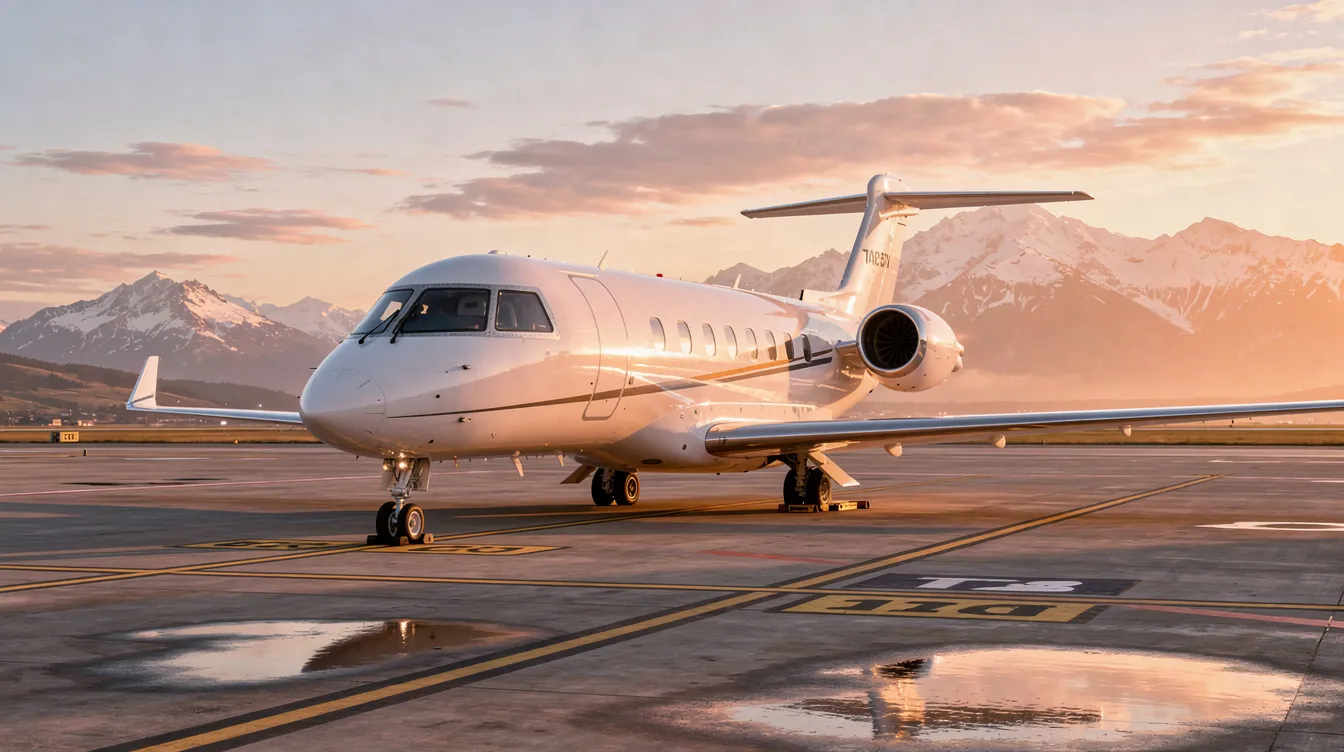
Next, let’s explore why private plane access is considered a strategic advantage for business travelers, executives, and families.
Why Private Plane Access Is a Strategic Advantage
Private jet travel delivers far more than luxury. For executives, founders, family offices, and UHNW leisure travelers, flying private functions as a productivity multiplier—compressing schedules, unlocking flexibility, and protecting what cannot be bought back: time.
Consider a straightforward comparison. A New York to Chicago day trip on commercial airlines consumes 9–12 hours door-to-door once you factor in airport arrivals, security lines, boarding delays, connections, and ground transport at both ends. The same trip via private jet flight, departing from a secondary airport like Teterboro, takes 5–6 hours total including ground time. That is not marginal improvement; it is a structural advantage that compounds across dozens of trips per year.
Private aviation opens access to more than 5,000 U.S. airports—compared to roughly 500 served by commercial airlines. This network enables same-day, multi-city itineraries that would be impractical or impossible on scheduled service. A CEO using a 25-hour BlackJet Jet Card could fly New York to Toronto in the morning for an investor meeting, continue to Detroit for a site visit in the afternoon, and return home that evening. Total block time: approximately 6–8 hours. Total days consumed: one.
The strategic benefits extend beyond time savings. Board meetings held onboard remain confidential, eliminating the risks of crowded terminals and shared lounges. Reduced overnight stays translate directly to lower hotel and per diem costs—often $500–$1,000+ per night saved. And the ability to align aircraft schedules precisely with high-stakes events—whether investor calls, client presentations, or family commitments—shifts private flight from expense to investment.
With these strategic advantages in mind, let’s break down how private plane rates are calculated and what factors drive the total cost of your trip.
How Private Plane Rates Are Calculated
The “hourly rate” quoted by aircraft operators and brokers serves as a baseline, but it rarely tells the full story. Understanding private jet flight costs requires obtaining detailed, itemized quotes to ensure transparency in the total expenses. The total cost to charter a private jet is driven by several interconnected variables, and understanding these factors separates sophisticated buyers from those who discover unexpected line items on final invoices.
Aircraft Category
Aircraft category: Rates scale with size, range, and capability. Larger, newer jets are more expensive to charter than smaller jets. A turboprop or very light jet costs a fraction of what you pay for a heavy jet or Boeing Business Jet. Aircraft type selection should match your mission—not exceed it. Private jet rental cost is influenced by aircraft type, flight distance, and additional services, and considering these factors helps travelers estimate potential expenses.
Flight Time and Distance
Flight time and distance: Operators charge based on “block time” (engine start to shutdown), not just wheels-up flying. Flight distance matters, but so do taxi times at congested airports. Longer flight distances increase fuel consumption and total billable flight hours. Many operators impose daily or segment minimums—often 1–2 hours—meaning a 45-minute hop may still bill as a full hour or more. The cost of a private jet is directly influenced by flight distance because longer flights consume more fuel, increasing pricing accordingly.
Route Structure
Demand Timing
Demand timing: Peak periods—holidays, ski season, major events like the Super Bowl or Cannes Film Festival—can add 20–50% surcharges. Off-peak windows offer better availability and softer pricing. Booking private jet charters during off-peak times can lead to lower prices, as demand typically drives costs up during holidays and peak travel seasons.
Positioning Requirements
Positioning requirements: If the aircraft must fly empty to reach your departure point, aircraft positioning fees add $2,000–$10,000+ to your total, depending on distance.
Airport and Government Taxes
Airport and government taxes: Airport fees can add $150 to $3,500 depending on the airport's traffic and size. U.S. flights incur federal excise tax (7.5%) plus segment taxes ($4–$5 per passenger). International flights layer on overflight permits, landing permits, and customs handling—sometimes $500–$5,000 depending on route.
Variable Operational Costs
Optional Services and Amenities
Optional services and amenities: Catering, cabin Wi-Fi, ground transportation, and deicing are rarely included in base quotes. These can add hundreds to thousands of dollars per trip.
The gap between a “published hourly rate” and the number on your final invoice explains why sophisticated travelers prefer transparent, fixed-rate programs. BlackJet’s Jet Cards provide that clarity—standardized terms, predictable pricing, and visibility into exactly what you are paying for before departure.
Now that you understand the main cost drivers, let’s examine how hourly rates differ by aircraft category and what you can expect for each type of jet.
Private Plane Hourly Rates by Aircraft Category
Aircraft size and range represent the single largest driver of hourly private jet pricing. A turboprop serving regional routes operates in a fundamentally different cost structure than an ultra long range jet crossing oceans. Understanding these categories helps match your mission to the right private aircraft—and the right budget.
Turboprops and Very Light Jets
Turboprops and very light jets occupy the entry point of private plane rates, typically ranging from $2,000 to $3,000 per hour in 2026. These aircraft seat 6–8 passengers in configurations suited to regional hops of 1,075–1,845 nautical miles, making them ideal for short regional flights.
Popular models include the Pilatus PC-12 (a turboprop workhorse with exceptional short-field performance) and the Phenom 100 or Citation M2 (very light jets offering jet speed at turboprop-adjacent prices). A 2-hour flight from Dallas to Aspen on a turboprop might cost approximately $5,000–$6,000 before fees—an accessible entry point for regional business and leisure travel.
Light Jets
Light jets step up in speed, range, and cabin refinement, with hourly rates typically running $3,500–$4,500. These aircraft accommodate 4–8 passengers and cover distances up to approximately 2,000 nautical miles nonstop.
The Phenom 300 series and Citation CJ3+/CJ4 dominate this category, offering club seating, enclosed lavatories, and enough range for corridors like New York to Nashville or London to Nice. A 2-hour New York–Nashville hop on a light jet at $3,500 per hour equals approximately $7,000 before taxes and fees. A short domestic trip on a light jet might total around $10,000 including fees, making light jets attractive for domestic point-to-point missions where speed matters but transcontinental range does not.
Midsize and Super Midsize Jets
Midsize jets and their super midsize counterparts occupy the core of the private charter market, with rates spanning $4,000–$8,500 per hour. These aircraft seat 6–10 passengers, feature stand up cabins, and deliver ranges of 2,500–4,200 nautical miles. They sit in the middle of the broader spectrum of private jet types for different travelers, balancing cabin comfort, range, and cost.
The Citation XLS+, Praetor 500, and Challenger 3500 represent the leading midsize and super midsize jet options. A transcontinental flight from New York to Los Angeles—approximately 5 hours of block time—costs $25,000–$45,000 on a super midsize jet, making these aircraft the default choice for coast-to-coast business travel and European medium-haul routes like Paris to Dubai.
Heavy and Long-Range Jets
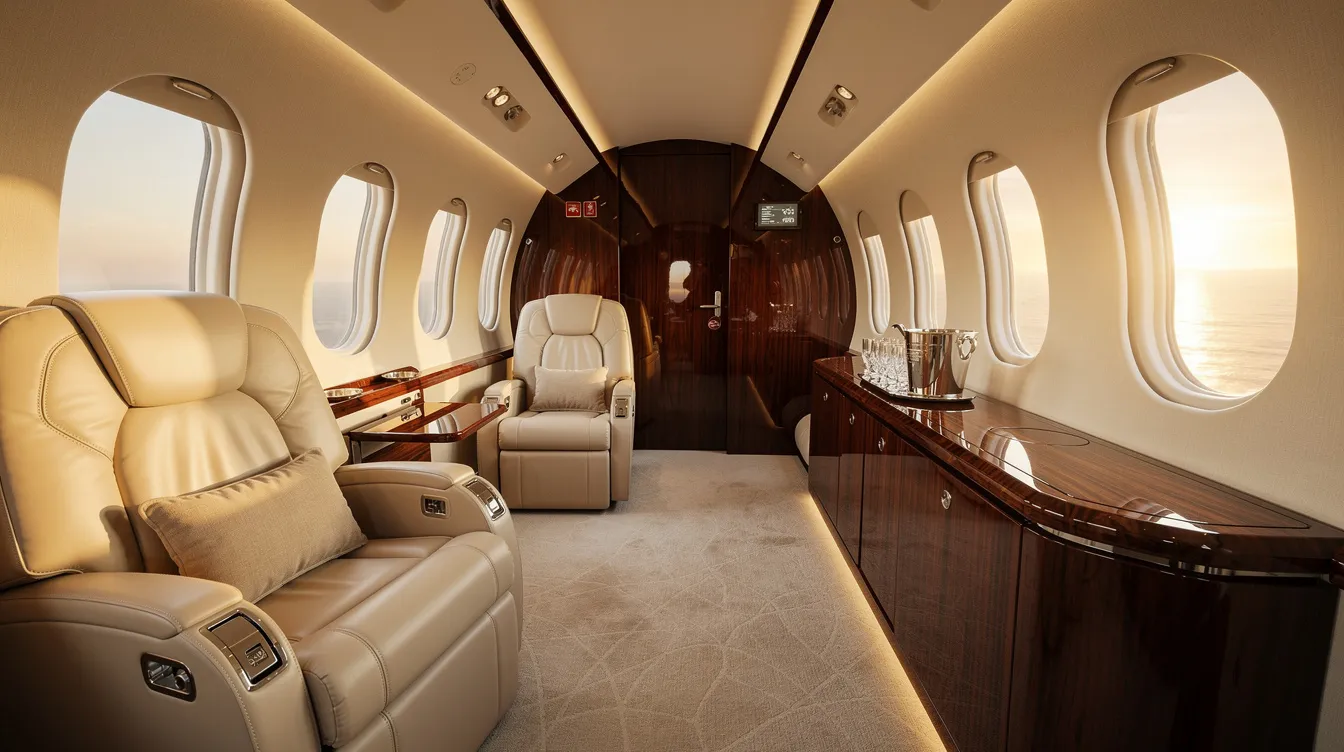
Heavy jets and ultra long range jets command hourly rates of $8,500–$14,000+ (and sometimes exceeding $20,000 for flagship models). These aircraft seat 9–16 passengers in spacious cabins with full galleys, crew rest areas, and ranges of 4,000–7,800 nautical miles.
The Gulfstream G600 and G650ER, Bombardier Global 6500, and similar platforms define this segment. They enable nonstop flights from New York to London (6–7 hours), Los Angeles to Tokyo, or Dubai to New York. A New York–London roundtrip on a heavy jet typically runs $130,000–$160,000+ depending on aircraft age, configuration, and operator. A transatlantic flight on a heavy jet can exceed $150,000 including fees, positioning, and taxes.
VIP Airliners
At the apex of private jet rental prices sit VIP airliners—Boeing Business Jet configurations, Airbus ACJ models, and converted widebodies. Hourly rates start around $16,000–$25,000 and climb based on customization.
These aircraft serve 30–50+ passengers with all-business or VVIP interiors, making them ideal for corporate group travel, sports teams, heads of state, or extended family trips spanning continents. A transoceanic mission on a Boeing Business Jet represents private aviation at its most expansive—and most expensive, sitting at the very top of any comprehensive private jet price list in terms of hourly and trip costs.
With a clear understanding of hourly rates by aircraft category, let’s look at real-world route examples to see how these rates translate into total trip costs.
Route Examples: What Popular Private Flights Really Cost in 2026
Below is a table summarizing popular private jet routes, aircraft types, estimated flight times, and total estimated costs for 2026. These examples illustrate how aircraft category, flight time, and fees combine into final charter costs.
Route | Aircraft Type | Flight Time (Each Way) | Estimated Total Cost (Roundtrip) |
|---|
New York (TEB) – Miami (OPF) | Midsize Jet | 2.5–3 hrs | $30,000–$40,000 |
Los Angeles (VNY) – Las Vegas (LAS) | Light Jet | 1 hr | $16,000+ (due to minimums) |
London (FAB) – Nice (LFMN) | Light/Midsize Jet | 2 hrs | $15,000–$30,000 |
New York (TEB) – London (LHR/LCY) | Long-Range Jet | 6–7 hrs | $130,000–$160,000+ |
Dubai – Zurich | Ultra-Long-Range | 6 hrs | $80,000–$110,000 |
Travelers considering semi-private flights should also be aware that these options may incur additional fees such as pet handling, cleaning, and fuel surcharges, as well as optional add-ons that can affect the total price—similar to the structure outlined when examining how much it costs to charter a small plane.
Empty leg flights offer significant discounts, often ranging from 25% to 75% off standard charter rates, as they allow travelers to book flights that would otherwise operate without passengers. This option is ideal for flexible travelers looking to reduce costs without committing to full charter pricing.
After reviewing route-specific costs, it’s important to understand the key fees and surcharges that can impact your final invoice beyond the hourly rate.
Key Fees and Surcharges Beyond the Hourly Rate
Sophisticated flyers watch both the hourly rate and the “shadow costs” that accumulate around it. Private jet charter services vary significantly in what they include—and what they add after the fact. BlackJet’s Jet Card programs simplify or cap many of these extras, but understanding the full fee landscape helps you evaluate any quote you receive and compare it with typical Jet Card cost per hour across different providers and aircraft types.
Airport Landing Fees
Expect $150–$3,500 per landing depending on aircraft weight, airport congestion, and location. Busy hubs like JFK, LAX, and London City charge premium rates; regional airports typically cost $200–$500.
Ramp and Handling Fees at Fixed Base Operators
FBO charges range from $100–$500 per visit for ramp access, ground power, and basic services. Many FBOs waive or reduce these fees with minimum fuel purchases—but if you are not fueling, you are paying.
Federal Excise Tax and Segment Taxes (U.S.)
International Permits and Fees
Overflight permits, landing authorizations, and customs handling can add $500–$5,000+ per trip depending on route complexity and country requirements. Flights to restricted airspace or non-treaty nations cost more.
Fuel Surcharges
Deicing and Winter Operations
Deicing a light jet might cost $1,500–$3,000; a heavy jet in severe conditions can incur $10,000–$15,000 per event. Winter travelers in northern climates should budget accordingly.
Crew Overnights and Expenses
If your itinerary requires the flight crew to overnight, expect $200–$800 per crew member per night for hotels, meals, and ground transport. Extended trips with flight attendants multiply this cost.
Hangar and Parking Fees
Cabin Wi-Fi, Catering, and Ground Transportation
Connectivity packages run $1,000–$3,000 per trip on aircraft equipped for high-speed internet. Catering ranges from $50–$200+ per person. Ground transport coordination adds logistical cost and, sometimes, markup.
BlackJet structures its Jet Card programs with transparency at the core. Members receive itemized or all-in pricing that clarifies which fees are included, which are capped, and which apply only to specific scenarios. This approach eliminates the invoice surprises that undermine trust in on-demand private jet service.
With a full understanding of fees and surcharges, let’s compare the main models for accessing private jets and how each impacts your effective hourly rate.
Jet Cards vs. On-Demand Charter vs. Ownership: How Each Impacts Your Effective Rate
Your “effective cost per hour” for private plane access depends heavily on how you access the aircraft. The three primary models—on-demand charter, Jet Card membership, and ownership (fractional or full)—carry distinct cost structures, risk profiles, and operational realities.
On-Demand Charter
Chartering a private jet on an ad-hoc basis offers maximum flexibility: no commitments, no prepayment, no long-term obligations. However, rates float with market demand, aircraft availability, and repositioning requirements.
Elite brokers can shop multiple charter operators to find competitive pricing, but clients bear the volatility. During peak periods—ski season in Aspen, Art Basel in Miami, Super Bowl weekend—on-demand charter flights routinely command 30–50% premiums over baseline rates. Empty leg flights may offer discounts, but their schedules are fixed and rarely align with traveler needs.
Jet Cards with BlackJet
For many travelers, the most important decision is not whether to use a card, but which program structure fits them best; a detailed overview of Jet Card pricing and benefits can clarify how membership models translate into real-world value.
Jet Card programs occupy the middle ground: prepaid blocks of flight hours (typically 25 or 50 hours) with fixed or capped hourly rates across defined cabin classes. As outlined in broader guides to understanding Jet Card cost, BlackJet’s Jet Card structure delivers several advantages over on-demand charter:
Rate stability: Lock in super midsize rates at $7,500 per hour while on-demand quotes for the same aircraft spike to $9,000–$10,000 during peak season.
Guaranteed availability: Book within a specified notice window (often 24–72 hours depending on cabin class) with confidence that aircraft will be available.
Simplified pricing: Repositioning, daily minimums, and peak-day surcharges are standardized or capped—no negotiating each trip.
Transparent terms: Fuel, taxes, and major fees are either included or clearly itemized upfront.
A concrete example: a New York–based traveler using a 25-hour BlackJet card for ski season trips to Aspen locks in their hourly rate at the time of purchase. When on-demand quotes surge 40% during Christmas week, the Jet Card holder pays the same fixed rate they would in October.
Fractional and Full Ownership
Owning a private jet—whether outright or through a fractional share—provides the lowest marginal usage cost per hour once the aircraft is flying. However, you must absorb substantial fixed costs regardless of utilization.
A $25 million aircraft carries $1.5–$2.5 million in annual fixed costs: crew salaries, maintenance reserves, hangar fees, insurance, management fees, and depreciation. At that burn rate, ownership breaks even against premium charter or Jet Card pricing only at 250–400+ annual flight hours. Below that threshold, you are paying for an asset that sits idle.
For aircraft owners flying fewer hours, the balance sheet burden of depreciation and carrying costs often exceeds the value of marginal hourly savings, especially when you factor in complexities like fractional jet ownership depreciation and its impact on long-term economics.
BlackJet’s positioning serves travelers flying roughly 25–200 hours per year—enough to justify dedicated private access, but not enough to justify the capital commitment of ownership. Jet Card members receive consistency, elite service, and carbon-neutral flights without the illiquidity of an owned asset, similar to the advantages described in overviews of the best Jet Cards for frequent flyers.
Next, let’s look at what you’re paying for beyond the cabin—focusing on safety, certification, and technology in private aviation.
Safety, Certification & Technology: What You’re Paying For Beyond the Cabin
Headline rates reveal nothing about the quality of what you are buying. The most discerning travelers understand that private jet cost encompasses far more than cabin finish and champagne service—it includes safety oversight, operational excellence, and real-time support that protects passengers and schedules alike.
Safety and Certification Standards
Private aviation is governed by strict safety regulations under the Federal Aviation Administration (FAA) for charter operations, specifically under FAR Part 135, which mandates safety standards for commercial air charter services. The National Transportation Safety Board (NTSB) reports that charter flights under FAA Part 135 regulations have significantly better safety metrics, with a fatality rate of 0.201 per 100,000 flight hours, compared to general aviation accidents which average 0.84–1.19 fatalities per 100,000 flight hours.
Not all aircraft operators meet the same standards. Premium private jet charter services work exclusively with operators holding current air carrier certificates from the FAA or equivalent EASA approvals in Europe. Beyond regulatory minimums, look for operators carrying ARGUS Platinum, Wyvern Wingman, or IS-BAO certifications—ratings achieved by only 10–20% of the industry.
These certifications require rigorous auditing of maintenance programs, crew training protocols, duty and rest policies, and operational procedures. Pilots must hold type ratings with substantial hours on the specific aircraft they fly, often exceeding 1,000 hours on type with recurrent simulator training every six to twelve months.
How BlackJet Curates Its Network
BlackJet does not own aircraft. Instead, BlackJet curates a network of vetted operators who meet or exceed the highest safety and operational standards. Every operator in the BlackJet Jet Card fleet holds a valid air carrier certificate in the relevant jurisdiction and has passed BlackJet’s proprietary internal safety review before onboarding.
This curatorial model ensures that when you book through your Jet Card, you are not accepting an unknown charter operator—you are accessing a pre-vetted network where safety is non-negotiable.
Technology and Support
Private aviation operates in a dynamic environment. Weather changes, airport slots shift, and mechanical issues arise. BlackJet provides 24/7 operations support with dedicated teams handling IRROPS (irregular operations), weather reroutes, slot management, and schedule optimization.
Members access digital booking and itinerary management via mobile and web platforms, with real-time visibility into remaining Jet Card hours, current effective rates, and trip status. In-flight connectivity options—high-speed Wi-Fi, satellite communications—are available and priced transparently for members who need to work onboard.
The difference between a $3,000-per-hour quote from an unknown operator and a $4,000-per-hour rate from a vetted, certified, technology-enabled provider is not simply $1,000. It is the difference between uncertainty and assurance.

With safety and technology covered, let’s address the growing importance of sustainability and carbon-neutral private jet travel.
Sustainable Private Aviation and Carbon-Neutral Rates
Environmental impact has become a core consideration for many private aviation clients. The conversation around private plane rates now routinely includes sustainability components—and for travelers with ESG mandates or personal environmental commitments, understanding these options matters.
What Contributes to Sustainable Private Flight
Three primary mechanisms enable “sustainable” or “carbon-neutral” private aviation:
Sustainable aviation fuel (SAF): SAF blends—typically 2–10% at current availability—are increasingly offered at major hubs across North America and Europe. SAF carries a 20–50% cost premium over conventional jet-A but delivers up to 80% lifecycle emissions reduction. Availability remains limited to select airports, but the network is expanding.
Carbon offset programs: High-quality offset programs neutralize CO₂ emissions through verified forestry, renewable energy, or direct air capture projects. Offsets are typically priced at $10–$20 per tonne of CO₂. A New York–London roundtrip on a heavy jet generates approximately 50–70 tonnes of CO₂, which can be neutralized for $500–$1,400 through credible offset registries.
Modern fleet selection: Aircraft like the Gulfstream G600, Bombardier Global 6500, and Embraer Praetor 500 deliver 10–15% improved fuel efficiency compared to prior generations. Operators investing in modern fleets reduce per-flight emissions structurally.
BlackJet’s Carbon-Neutral Commitment
BlackJet positions all Jet Card flights as carbon-neutral. The cost of verified carbon offsets is either embedded in the hourly rate or transparently itemized—not hidden as a surprise surcharge. This approach allows clients to travel with confidence that their flights carry neutralized emissions without requiring separate offset purchases or complex calculations, which can be an important factor when assessing whether chartering a private jet is worth it beyond pure dollars and cents.
Consider a client flying New York–London–New York under a BlackJet Jet Card. The estimated emissions for this roundtrip—approximately 60 tonnes of CO₂—are automatically offset through BlackJet’s partnership with verified registries. The client receives sustainability documentation suitable for corporate ESG reporting, investor communications, or personal records. No additional action required, no hidden fees discovered after the fact.
For travelers who care about environmental responsibility alongside operational excellence, this embedded sustainability model represents meaningful differentiation in private jet pricing.
Now that you have a comprehensive understanding of rates, fees, safety, and sustainability, let’s review foundational topics such as taxes, commercial comparisons, and overall conclusions before diving into frequently asked questions.
Federal Excise Tax and Fees
When planning a private jet charter, it’s important to account for more than just the base hourly rate. One of the most significant additional costs is the Federal Excise Tax (FET), which applies to all domestic charter flights within the United States. This tax is set at 7.5% of the total charter price and is a standard part of private jet charter billing.
Beyond the FET, travelers should be aware of other common fees that can affect the final cost of charter flights. Landing fees are charged by airports based on the aircraft’s weight and the airport’s location, with busier or more prestigious airports typically commanding higher rates. Ramp and handling fees cover the services provided by fixed base operators (FBOs), such as parking, ground power, and passenger assistance. These fees can vary widely depending on the airport and the type of private jet being used.
Factoring in these taxes and fees is essential when chartering a private jet, as they can add a significant amount to your overall budget. By understanding the full scope of costs—including federal excise tax, landing fees, and other surcharges—you can avoid surprises and make more informed decisions about your private jet travel.
With taxes and fees in mind, let’s compare private jet charter to commercial flights to help you determine which option best fits your needs.
Commercial Flight Comparison
When weighing the options between private jet charter and commercial flights, the differences extend far beyond price. Private jet charter offers unmatched flexibility, allowing you to set your own schedule, choose your preferred aircraft, and depart from regional airports closer to your home or destination. This level of customization is simply not possible with commercial flights, which operate on fixed schedules and limited routes.
For business travelers and groups, private jet charter can transform the travel experience. Meetings can be held in-flight, productivity is maximized, and the hassles of crowded terminals and lengthy security lines are eliminated. While commercial flights may be more cost-effective for solo travelers or those with flexible schedules, the value of private jet charter becomes clear for those prioritizing time, privacy, and convenience.
Ultimately, the decision between private jet charter and commercial flights comes down to your specific needs. If flexibility, comfort, and efficiency are top priorities—especially for business or group travel—chartering a private jet offers a compelling alternative to traditional commercial flights.
To summarize, let’s review the key takeaways before moving to the FAQ section.
In summary, private jet charter stands out as a unique and exclusive way to travel, delivering a blend of flexibility, comfort, and convenience that commercial flights cannot match. By understanding the key factors that influence private jet charter costs—such as aircraft type, flight distance, and additional services—you can make informed decisions that align with your travel goals and budget.
The benefits of private jet charter extend beyond luxury, offering productivity gains, time savings, and a highly personalized experience for both business and leisure travelers. Comparing these advantages to commercial flights helps clarify when private jet charter is the right choice for your needs.
With the right information and expert guidance, navigating the world of private jet charter becomes straightforward and rewarding. Whether you’re seeking a cost-effective solution for business travel or a luxurious escape for leisure, private jet charter provides an experience that is tailored to your requirements and exceeds expectations.
FAQ: Common Questions About Private Plane Rates
What is the minimum cost to rent a private plane for a short hop?
A 1–2 hour regional flight on a turboprop or very light jet typically starts at $3,000–$6,000 total including basic fees. However, daily minimums may apply: a 45-minute flight may bill as 1–2 hours depending on operator policies. For budget planning, assume $3,500–$5,500 as a realistic floor for a same-day roundtrip under 2 hours per leg.
How do private plane rates compare to first or business class if I’m traveling with a group?
For solo travelers, commercial first class is almost always cheaper per seat. But private aviation economics shift with group size. A New York–Los Angeles flight on a midsize jet costs approximately $30,000–$45,000 total. For a group of six, that works out to $5,000–$7,500 per seat—comparable to or better than business class ($5,000–$10,000 per seat) with vastly superior time efficiency and privacy.
Do Jet Card rates really stay fixed even during holidays?
Most premium Jet Card programs, including BlackJet’s, lock in hourly rates at purchase. However, peak-day policies vary. Some programs cap surcharges at 10–15% on designated high-demand days (Christmas, Thanksgiving, Super Bowl Sunday); others eliminate them entirely for Jet Card holders. Confirm the specific structure before purchasing.
What hidden fees should I look out for in private aviation quotes?
The most common “surprises” include aircraft positioning fees for one-way trips, deicing charges in winter, crew overnight expenses for multi-day itineraries, international handling fees, and fuel surcharges during price spikes. Ask for a written breakdown of all fees before confirming any booking.
How quickly can I book at a fixed rate through BlackJet?
Typical notice windows for guaranteed availability range from 24–72 hours depending on cabin class. Light and midsize jets generally require less lead time; heavy jets and peak periods may require more. For last-minute requests, BlackJet’s 24/7 operations team can often source aircraft within hours—though availability is not guaranteed outside the standard notice window.
Are BlackJet flights carbon-neutral, and does that change the rate?
Yes, all BlackJet Jet Card flights are carbon-neutral. The cost of verified offsets is embedded or transparently itemized in your pricing—not added as a hidden premium. You receive sustainability documentation for ESG or personal records at no additional effort.
Does choosing a lower rate mean compromising on safety?
It can. Operators offering rates significantly below market often cut corners on maintenance, crew training, or insurance coverage. BlackJet maintains rigorous safety standards across its vetted operator network—no trading down for price. Every aircraft accessible through a BlackJet Jet Card meets or exceeds FAR Part 135 certification, ARGUS or Wyvern ratings, and BlackJet’s proprietary internal audits.
How to Get a Personalized Private Plane Rate with BlackJet
Because fuel prices, airport environments, and tax regimes change regularly, the most accurate private plane rate is always tied to a specific request. Your route, travel dates, passenger count, and cabin class preference all influence your final cost—making generic online calculators useful for estimates, but insufficient for real planning.
BlackJet invites you to explore Jet Card options—25-hour or 50-hour structures—designed to deliver predictable, fixed hourly rates across business and leisure travel. Request a tailored set of scenario-based quotes for your top three routes this year, and you will see exactly how your effective rate compares with and without a Jet Card. For travelers evaluating ownership, fractional programs, or shifting from commercial first class, BlackJet’s dedicated advisors can model break-even points based on your real travel pattern.
Discover how BlackJet can reshape the way you value your time, protect your privacy, and access the world—through intelligent, transparent private plane access built for the most discerning travelers.
Conclusion
Navigating private plane rates requires more than just understanding hourly costs—it demands insight into the full spectrum of fees, operational variables, and access models. BlackJet stands at the forefront of this landscape, offering tailored Jet Card programs that provide fixed, transparent pricing combined with a curated network of certified operators. This approach empowers travelers to make strategic decisions that optimize time, comfort, and budget without sacrificing safety or service quality.
Whether you are a frequent business traveler, a high-net-worth individual, or a family seeking seamless luxury travel, BlackJet’s innovative platform and expert advisors deliver unmatched flexibility and peace of mind. By leveraging BlackJet’s personalized rate quotes and membership benefits, you gain exclusive access to a global fleet, carbon-neutral flights, and 24/7 support designed to elevate every journey.
Explore your private aviation options today at www.blackjet.com and discover how premier private plane access can transform your travel experience into a strategic advantage.


 Sign up with google
 Sign up with Apple