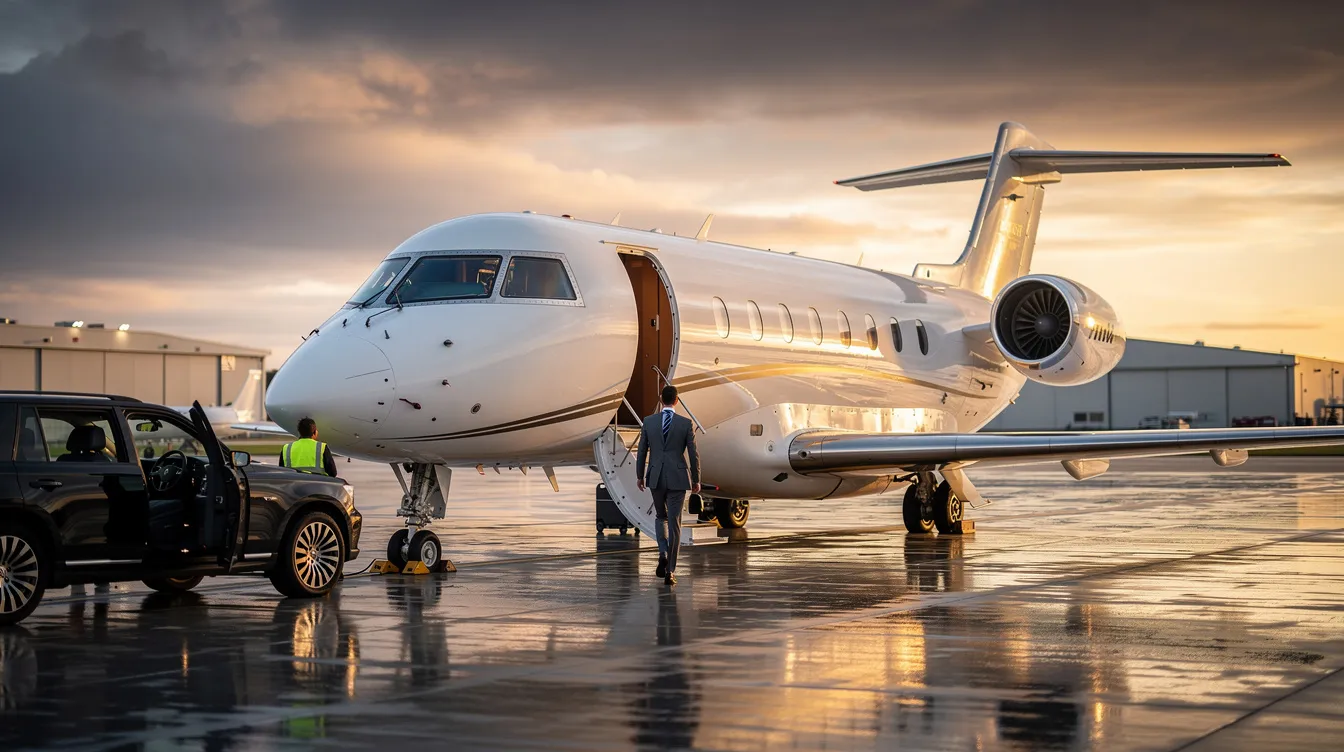
Private aviation has long been associated with exclusivity—but today, it’s increasingly defined by access. For modern travelers—executives, entrepreneurs, and high-value leisure flyers—especially business executives, leisure travelers, private jet travelers, and frequent travelers—the goal isn’t just to fly private. It’s to do so efficiently, intelligently, and cost-effectively. The private aviation industry is evolving rapidly, with private flying and innovative business models making private aviation more accessible and efficient for a wider range of travelers.
Private plane rideshare is emerging as one of the most compelling entry points into the private flight market. By allowing travelers to purchase individual seats instead of chartering an entire aircraft, rideshare models unlock private jet travel at a fraction of the traditional cost—without sacrificing the core benefits: speed, privacy, and seamless airport access. This approach delivers significant savings by splitting the cost among a small group of travelers, making a $25,000 jet experience accessible for a fraction of the price. Compared to private charters and traditional charter services, private plane rideshare offers greater flexibility and lower flight costs, while private charters and traditional charter services provide more tailored, premium experiences and established safety standards. In contrast to commercial airlines, which often involve crowded terminals, long security lines, and rigid schedules, private plane rideshare offers unmatched convenience and flexible scheduling.
As demand grows across high-traffic leisure corridors and business routes, rideshare is reshaping how people think about flying private. Private jet rideshare services are often described as ‘Uber for private jets’, connecting travelers to available aircraft through digital platforms. These platforms connect travelers and provide access to a broader private flight market, leveraging modern technology to streamline the booking process and improve accessibility. Companies often use apps to list available aircraft options and seats on popular routes or empty leg flights, making private aviation more accessible and efficient for more people.
Major platforms for booking private plane rideshares include XO, Airble, Wheels Up, Jettly, Private Jets Inc, and KinectAir. These platforms offer a diverse fleet ranging from light jets to super midsize jets and long-range aircraft, providing access to a global network of private planes.
What Is Private Plane Rideshare And How It Changes Private Flights
Definition: Seat-Based Private Aviation
Private plane rideshare allows passengers to book individual seats on a private jet, rather than paying for the entire aircraft. Instead of a $20,000 charter, you might pay $1,500–$5,000 per seat depending on the route, aircraft type, and passenger capacity.
This fundamentally changes private aviation from a fixed-cost luxury into a flexible, scalable travel option.
Platform-Driven Access
Modern rideshare platforms aggregate aircraft availability and display:
Pre-scheduled shared flights along popular routes such as New York to Miami, Los Angeles to Las Vegas, and Chicago to Dallas
Empty leg offerings and empty leg deals
Dynamically matched flights based on demand
These platforms connect travelers to available aircraft by providing access to real-time seat inventory. Passengers can browse flights online or via an app and select a seat on a shared private jet, streamlining the booking process with transparent pricing.
This creates a marketplace where private jet capacity and repositioning flights can be optimized and distributed across multiple travelers, reducing operating costs and operational expenses.
Key Difference From Private Charter
Rideshare: Lower cost, shared schedule, less control over travel plans, fixed schedules that may not allow flexibility in departure times
Charter: Full control, higher cost, personalized itinerary, and exceptional customer service
For many travelers, that tradeoff is worth it—especially for short flights or leisure travel.
How Rideshare Platforms Let You Fly Private
Instant Seat Inventory & Pricing
Most platforms list available flights with:
Aircraft type
Route including direct flights to major cities and leisure hotspots like Las Vegas, Key West, Aspen, and Miami
Per-seat pricing reflecting airport fees and operating costs
Departure time and flight duration
This allows for near-instant booking, similar to commercial flying but within the private aviation ecosystem.
Private Terminals (FBO Experience)
Even with rideshare, you still access Fixed Base Operators (FBOs)—private terminals where:
You arrive 15–30 minutes before departure
No long security lines or TSA bottlenecks, saving private jet travelers an average of 2–3 hours per trip compared to commercial first-class passengers
Direct boarding from the lounge to the aircraft
This is one of the biggest time advantages versus commercial flying.
Pre-Scheduled vs Dynamic Flights
Pre-scheduled flights: Common on high-demand routes such as New York to Miami, Los Angeles to Las Vegas, and San Francisco to Aspen, with flights often clustering around these high-demand corridors, particularly during peak travel seasons
Dynamic matching: Platforms group travelers heading in similar directions to optimize passenger capacity
This hybrid model improves efficiency and reduces empty seats, offering significant savings.
Booking Options
Travelers can choose:
Pay-as-you-go individual seats
Membership tiers with membership fees for priority access and guaranteed availability, ideal for frequent flyers on platforms like Wheels Up and VistaJet
Full charter upgrades when needed
Some platforms offer membership-based jet card services with predictable costs and no additional membership fees, beneficial for frequent travelers and business travelers seeking operational excellence.
This flexibility makes ridesharing appealing for both occasional users and frequent flyers.
Flights Cost, Empty Legs, And Typical Savings

Charter Pricing Baseline
Traditional private jet charter costs typically range from (for a deeper breakdown of how much it costs to rent a private jet and a broader explanation of what charter flights mean in private aviation):
$2,000/hour (turboprops and light jets)
Up to $20,000/hour (heavy jets and super midsize jets)
For a short trip, this quickly becomes cost-prohibitive for individuals.
Rideshare Savings
Rideshare seats often deliver 30% to 70% savings compared to full charter costs on the same route.
For example:
A $20,000 flight split across 6 passengers = ~$3,300 per seat
Cost Drivers
Pricing varies based on:
Aircraft type and passenger capacity
Fuel prices and airport fees
Route demand and flight duration
Repositioning legs and empty leg flights, which are often the most affordable option in private jet rideshare, allowing travelers to fly for up to 70% less than charter rates
Peak periods—like holidays or ski season—can push prices higher.
Budget travelers can find empty-leg deals on platforms like Airble—often called the 'Skyscanner for private jets'—or XO, which can be 50–75% cheaper than standard charters.
Empty Legs: Finding Discounted Private Flight Seats
What Are Empty Legs?
Empty legs occur when an aircraft must reposition without passengers. Instead of flying empty, operators sell these seats at steep discounts.
Discount Range
Empty leg seats can be 40% to 75% cheaper than standard charter pricing.
Trade-Offs
For flexible travelers, empty leg deals represent one of the best value opportunities in private aviation, and they can be a key factor when evaluating whether chartering a private jet is worth it.
Aircraft Options & Private Jet Types For Rideshare
When you compare different private jet sizes and categories alongside the main types of private jets available for every traveler, you can better match the aircraft to your trip profile and budget.
Light Jets
As small private jets for luxury travel, they are perfect for quick business or weekend trips.
Midsize Jets
Super-Midsize & Long-Range Jets
Turboprops & Small Airliners
Popular Rideshare Routes: Las Vegas, Key West, Aspen, And Leisure Corridors
These leisure and business corridors sit within a wider ecosystem of more than twenty thousand private jets worldwide, concentrated heavily in North America and Europe.
High-Demand Routes
New York → Miami
Los Ángeles → Las Vegas
Chicago → Dallas
These routes consistently offer shared-seat availability and direct flights to smaller airports closer to travelers’ final destinations, enhancing overall travel efficiency.
Leisure Travel Hotspots
Destinations like Key West and Aspen see strong seasonal demand, with curated shared flights during peak travel periods, catering to both business and leisure travelers.
Regional Efficiency
Flying into smaller airports reduces total travel time significantly—one of the core advantages of private aviation over commercial airlines. The convenience of private jet rideshare also allows travelers to reach remote destinations that may not be accessible via commercial airlines.
Flexible Scheduling, Memberships, And Private Charter Alternatives
Flexibility Trade-Off
Rideshare works best for travelers who can accept some schedule variability in exchange for lower flight costs.
Membership Programs
Many platforms offer memberships and jet cards—such as the BlackJet 25+ Hour Jet Card and other top jet cards for frequent flyers—that include:
When Charter Still Wins
Full charter is better when you need (and understanding how private jet charter pricing works helps you compare options):
Exact departure times
Custom routes
Larger groups or privacy
Semi-Private Jet Flights
Companies like Blade and JSX offer semi-private jet flights, providing a more comfortable experience than commercial airlines. Travelers who want to buy a seat on a private jet can compare these semi-private options with app-based rideshare and empty-leg seats to find the best fit. JSX operates 30-seat jets from private terminals on scheduled routes, offering semi-private travel at a fraction of the cost. Popular semi-private routes include New York to Miami and Los Angeles to Las Vegas.
Safety, Certification, And Regulatory Considerations
Regulatory Framework
Most rideshare flights operate under FAA Part 135 or 91K regulations, the same standards used in private charter, and align with the broader realities of private jet safety and risk management.
Third-Party Safety Audits
Reputable charter operators maintain certifications such as:
These ensure high operational standards and pilot qualifications.
What To Verify
Before booking:
Operator certification
Pilot experience
Maintenance records
Insurance coverage
At Private Jets Inc and other providers, safety is non-negotiable—every flight meets rigorous certification standards.
Private jet rideshare services are fully regulated under FAA and DOT rules, ensuring safety and compliance with industry standards.
Comparing Rideshare To Private Charter And How To Choose
When To Choose Rideshare
You prioritize cost efficiency
You’re flying popular routes
You have schedule flexibility
When To Choose a Charter
Hybrid Options
Semi-private flights combine:
Fixed schedules
Private terminal access
Lower seat pricing
Blurring the line between commercial flying and private aviation.
Booking Process, Fees, And Onboard Experience
Booking Details
Most bookings include:
Per-seat pricing with transparent pricing
Aircraft type and passenger capacity
Departure FBO and airport fees
Luggage limits and ground transportation options
Additional Fees
Beyond the core flight price, longer-term users weighing ownership versus leasing or charter should also understand structures like private jet leasing programs and costs and the economics of a 50 hour jet card cost and value.
You may encounter:
FBO handling fees
Catering costs
Ground transportation
Repositioning charges
Onboard Experience
Even on shared flights, expect:
Tips For Leisure Travel And Group Trips
For Weekend Travel
Use strategies to fly private more cheaply, such as flexible dates, empty legs, and off-peak routes
Book pre-scheduled shared flights early
Focus on high-demand leisure corridors
For Groups
Compare:
In some cases, chartering becomes more cost-effective for larger groups.
Sustainability, Tech, And Market Growth
Environmental Impact
Private jet emissions have drawn significant scrutiny due to their disproportionate environmental impact, with private jets emitting approximately 15–16 million tonnes of CO2 in 2023. Private jets emit 5–14 times more CO2 per passenger-kilometre than commercial flights, largely due to low occupancy rates.
Mitigation Efforts
To mitigate their environmental impact, travelers can consider options like utilizing empty leg flights, choosing more efficient aircraft, and prioritizing sustainable aviation fuels. BlackJet ensures that all rideshare flights are 100% carbon neutral, without adding a surcharge, and even supports innovative options like purchasing private jets with cryptocurrency.
Industry Trends
The environmental impact of private aviation has come under increasing scrutiny, prompting discussions about sustainability in the industry. AI-driven platforms are improving flight matching, route optimization, and empty-leg utilization, which will continue lowering costs and increasing accessibility in the private aviation industry.
FAQ — Quick Facts
How much does a rideshare seat cost?
Short flights can start in the hundreds of dollars, while longer routes scale into the low thousands, depending on aircraft and demand.
Are empty-leg flights reliable?
They offer exceptional value but require flexibility. Changes or cancellations can occur if the underlying charter changes.
Can I fly private to Key West or Las Vegas?
Yes. These are among the most common rideshare and charter routes in the U.S.
Is rideshare safety comparable to charter?
Yes. Most rideshare flights operate under the same regulatory standards and safety audits as traditional charter.
Discover A Smarter Way To Fly Private
Private plane rideshare is redefining access—but it’s just one part of a broader shift in air travel.
For those seeking greater flexibility, guaranteed availability, and elevated safety standards, options like unlimited private jet flight memberships or other refined approaches may be the next step.
Discover how BlackJet and other platforms can reshape your travel.
Explore seamless private jet access with a focus on safety, sustainability, and precision—through BlackJet’s premium private jet membership and jet card programs—designed for those who value time above all else.
Conclusion: Elevate Your Travel Experience with Private Plane Rideshare and Beyond
Private plane rideshare is transforming the private aviation landscape by making private flights more accessible, cost-effective, and convenient. Whether you’re a business executive, leisure traveler, or frequent flyer, rideshare options offer significant time savings, enhanced privacy, and access to a diverse fleet of aircraft on popular routes.
For travelers who prioritize safety, operational excellence, and guaranteed availability, platforms like BlackJet provide premium membership and jet card programs that combine flexibility with exceptional service. With a commitment to sustainability through carbon-neutral flights and advanced technology that streamlines the booking process, BlackJet exemplifies the future of private aviation.
By leveraging innovative rideshare models alongside trusted providers, you can enjoy the luxury and efficiency of private jet travel tailored to your unique needs. Explore the possibilities today at BlackJet.com and take your travel experience to new heights.


 Sign up with google
 Sign up with Apple