Introduction
This guide explains how international air hostess and flight attendant pay is structured, how salaries differ by region, what benefits and allowances contribute to total compensation, and how rank and experience affect career progression. It is for aspiring and current international air hostesses and flight attendants who want to understand what they may earn across commercial and private aviation. Knowing how base pay, flight hours, per diems, benefits, and seniority fit together matters for comparing offers, choosing an airline or home base, and making informed long-term career plans.
The salary of international air hostess roles in 2026 is not a single number - it is a layered compensation package built from base salary, hourly pay per flight hour, per diem allowances, and bonuses. Salaries vary based on airline, country, experience, and total flight hours, which means two flight attendants flying the same route on different carriers can take home vastly different amounts. In North America, international cabin crew typically earn $55,000–$95,000 per year, with senior crew often exceeding $100,000 once allowances are included. The average salary for international flight attendants ranges from $30,000 to $80,000 USD annually worldwide, while the median annual wage for flight attendants was $63,580 in 2025. Meanwhile, private jet cabin crew occupy a separate tier entirely, with experienced professionals earning median salaries above $150,000 in full-time corporate roles. This guide breaks down exactly how flight attendant pay works region by region, rank by rank, and commercial versus private - with real 2026 figures.

How International Flight Attendant Pay Is Structured
When airlines advertise a cabin crew salary, the figure rarely tells the full story. In most cases, what flight attendants actually earn is a composite of several moving parts, and understanding these components is essential before comparing pay rates across airlines or regions.
Here are the core elements that make up total compensation for international cabin crew:
Base salary - a fixed monthly amount, often modest on its own, that serves as the guaranteed floor regardless of how many hours are flown.
Flight/block hour pay - companies typically pay flight attendants based on flight hours (measured from door close to door open). This is the largest variable component.
Per diem and layover allowances - tax-advantaged daily payments for meals and expenses during time away from home base.
Profit sharing and bonuses - profit-sharing and bonuses are common in major airlines, sometimes adding weeks of extra pay annually.
Sales commission - particularly at low-cost carriers, onboard retail sales can supplement income.
Typical monthly flying hours for international crew range from 70 to 90 block hours. To see how this builds annual income, consider straightforward sample math: a long-haul flight attendant earning $40 per hour who flies 80 hours per month generates $3,200 in flying pay alone. Add $300 in diem pay for layovers, a $1,800 base salary, and you reach roughly $5,300 per month - or about $63,600 per year before bonuses. That gap between the advertised "base" and the realistic total compensation is often $15,000–$30,000.
Pay component | Monthly amount | Annual amount |
|---|
Flying pay ($40 × 80 hours) | $3,200 | $38,400 |
Base salary | $1,800 | $21,600 |
Layover per diem | $300 | $3,600 |
Estimated total before bonuses | $5,300 | $63,600 |
Average International Air Hostess Salary by Region in 2026
Regional economic conditions, union strength, cost of living, and tax policy drive enormous differences in pay rates. Flight attendant pay varies significantly by region and airline type, so a direct comparison requires looking at gross annual earnings in local currencies.
North America
US international flight attendants at legacy carriers earn roughly $55,000–$95,000 in total compensation, with senior crew exceeding $110,000. Entry-level flight attendants typically earn $25,000 to $40,000 in their first year.
Western Europe
European cabin crew typically earn €20,000–€50,000 annually. Junior crew at flag carriers start around €24,000–€35,000, while senior long-haul pursers can surpass €60,000. In Australia, the average flight attendant salary is AU$98,578 annually, reflecting the higher cost of living in the Asia-Pacific region.
Middle East
Hub carriers in the Middle East like Emirates and Qatar Airways offer packages worth approximately $30,000–$55,000 per year, with the critical advantage that earnings are tax-free in the UAE and Qatar.
Asia-Pacific
Depending on airline prestige and seniority, annual compensation ranges from roughly US$35,000 to US$80,000, though crew in expensive cities like Singapore and Hong Kong face high living costs that erode the advantage.
Low-cost carriers globally can start closer to $20,000–$30,000 equivalent, while premium flag carriers and union-backed airlines pay meaningfully more but often require stricter training and entry standards.
Flight Attendant Pay in the United States
The US market offers some of the strongest earning potential for international flight attendants in the world, driven by powerful union contracts and recent contract negotiations that have significantly raised hourly pay.
Entry-level international flight attendants at major US airlines commonly earn around $28,000–$40,000 in base pay during their first year. New hire flight attendants may earn as little as $2,000 per month in base flight pay alone, but once per diems, boarding pay, and benefits are layered in, first-year total compensation reaches $50,000–$60,000 at carriers like Delta, American, and United. Flight attendants in the US can earn nearly $80,000 annually within several years of service.
The common US pay model centers on an hourly rate for flight time - often $30–$80 per hour in 2026, depending on seniority. Under the American Airlines APFA contract, first-year flight attendants earn approximately $35.82 per flight hour, while senior flight attendants on long-haul international routes can exceed $70 per hour. United Airlines ratified a new contract in 2026 that delivered a 31% overall pay increase, including new boarding pay provisions.
Senior crew and purser on long-haul international routes can reach $80,000–$130,000 annually in total compensation. Flight attendants generally receive standard health and retirement benefits, including medical insurance, 401(k) matching, and complimentary or deeply discounted standby travel. Under federal law, rest rules and reserve duty minimums are negotiated through union contracts - organizations like AFA-CWA significantly influence pay scales, schedules, and contract terms across the industry.
International Flight Attendant Salaries in Europe
European cabin crew income varies widely depending on whether you fly for a national flag carrier, a pan-European airline, or a budget operator. Gross salaries can look competitive on paper, but high taxation and social contributions across EU countries mean net take-home pay often lags behind tax-free Gulf roles.
Here is what realistic 2026 ranges look like by carrier type:
Legacy flag carriers (Lufthansa, Air France, British Airways):
Junior crew: roughly €1,800–€2,700 per month basic, or €24,000–€34,000 per year
Senior crew and pursers: €40,000–€55,000 per year, including long-haul supplements
Premium long-haul roles (e.g., Air France Chef de Cabine): up to €55,000–€75,000
Senior cabin crew in the UK earn £40,000 to £55,000 annually at carriers like British Airways
Low-cost carriers (Ryanair, Wizz Air, EasyJet):
Starting around €1,300–€1,900 per month - flight attendants in Europe earn between €1,500 and €3,500 monthly depending on seniority and operator
Onboard sales commission can add meaningful income, particularly on high-traffic domestic routes
EasyJet Spain's 2025–2026 collective contract shows a basic annual salary of just €9,495 for new crew
European carriers typically offer benefits including pension contributions, staff travel privileges, guaranteed rest periods, and strong labour protections negotiated through union agreements. However, accommodation is rarely provided - unlike Gulf carriers - which means a London- or Paris-based crew member faces significant housing expenses that cut into take-home money.
Qatar Airways, Emirates, and Other Gulf Carrier Cabin Crew Pay
Gulf carriers remain among the most popular destinations for aspiring international flight attendants, and for good reason: tax-free salaries, company-provided accommodation, and access to route networks spanning every continent. The trade-offs - demanding schedules, strict grooming and conduct standards, and long periods away from family - are real, but the financial package is compelling for many.
Here are specific 2026 figures for the major Middle East carriers:
Emirates (Grade II, economy class cabin crew):
Basic salary: approximately AED 4,980 per month
Flying pay: AED 69.60 per flying hour
Average total monthly pay: roughly AED 11,244 (about USD $3,060/month or ~$36,700/year) at 90 flying hours
This excludes profit-sharing bonuses - Emirates has recently paid approximately 20 weeks of basic salary as profit share
Qatar Airways cabin crew:
Total monthly package ranges from around QAR 10,000–15,500 (approximately $2,700–$4,300), including basic salary, transport, and layover allowances
Senior roles command significantly higher pay. Emirates pursers are reported in the AED 18,000–21,000 per month range ($4,900–$5,700+). A senior purser or cabin service director at Qatar Airways can see total monthly packages exceeding QAR 18,000 with seniority adjustments and responsibility premiums.
Major international airlines often provide company-provided housing and travel allowances. In Dubai and Doha, this means shared accommodation, airport transport, medical insurance, and heavily discounted global staff travel - non-cash additional benefits that can be worth $15,000–$25,000 per year when valued against what crew in other regions pay out of pocket.

How Seniority and Rank Affect Flight Attendant Pay
Career progression from junior cabin crew to senior cabin crew, senior purser, or in-flight manager is the primary driver of higher income in commercial aviation. Seniority affects salary increases and trip assignments, meaning that time in service directly determines both how much you earn and what international routes you fly.
Typical rank progression for international cabin crew:
Junior flight attendant - first 1–3 years; lowest hourly rate, reserve duty common, limited route choice
Senior flight attendant - 3–8 years; higher hourly pay, more control over schedules, eligibility for long-haul international flights
Purser / Lead - responsibility for cabin management; additional hourly or monthly premiums
Cabin service director / Inflight manager - top rank with the highest pay and authority over entire cabin operation
Pay scales typically increase through yearly seniority steps. A US-based international senior flight attendant might earn $20–$30 more per hour than a new hire on the same aircraft type by 2026. Senior crew members can earn up to $10,000 per month, compared to new hires starting around $2,000 per month. Multilingual skills can enhance earning potential and job opportunities, with many airlines offering a foreign language premium of $2–$4 per flight hour for language-of-destination qualification. Training allowances and premium pay for ultra-long-haul or high-yield business class routes further accelerate earnings for those who climb the seniority ladder.
Hourly Pay vs. Salary: Understanding "Per Hour" Rates
Much of flight attendant pay is described as hourly pay per hour of flight time or block time, not as a traditional fixed monthly salary. This distinction matters because what counts as "paid time" varies by airline and contract.
What counts as paid flight time:
Block time (aircraft door closed to door open) - the universal standard
Boarding pay - historically unpaid, but newer US contracts now compensate boarding at roughly half the flight hour reserve override rate
Reserve duty - guaranteed minimum pay for on-call periods, even if no flight is assigned
Deadhead time - positioning flights paid at a reduced rate
2026 hourly rate ranges by region:
US major carrier international crew: roughly $30–$80 per hour depending on seniority and aircraft
European carriers: approximately €15–€35 per hour of flight time layered onto a base salary
Gulf carriers: more modest hourly flying pay (60–80 AED per flight hour) but stacked onto a tax-freebase and housing
To see how hourly pay becomes annual income, walk through a concrete schedule: a mid-seniority international flight attendant flying 75 hours per month at $45 per hour earns $3,375 in flight pay. Add a $1,500 base, $350 in per diem, and $200 in premiums - that is $5,425 per month, or roughly $65,100 per year before bonuses and overtime.
Pay component | Monthly amount | Annual amount |
|---|
Flight pay ($45 × 75 hours) | $3,375 | $40,500 |
Base salary | $1,500 | $18,000 |
Per diem | $350 | $4,200 |
Premiums | $200 | $2,400 |
Estimated total before bonuses and overtime | $5,425 | $65,100 |
Picking up extra trips or working holiday periods on short notice can push that figure meaningfully higher.
Benefits, Per Diems, and Hidden Value in Cabin Crew Compensation
Per diem allowances are provided for meals and other expenses during layovers, and they represent one of the most underappreciated components of cabin crew compensation. International flights often include added allowances for layovers, and international layovers may include extra compensation for meals and accommodations beyond the standard diem rate.
Per Diem Rates
$2–$4 per hour away from home base in US contracts (e.g., $3.50 per trip hour for international under APFA).
European and Asia-Pacific carriers often pay fixed daily amounts.
For crew flying long-haul international rotations, per diems can add $8,000–$15,000 per year to take-home income.
Travel Perks
Many airlines offer complimentary or discounted standby travel for employees and families - a benefit worth thousands annually for those who use it.
Medical Insurance and Retirement
Flight attendants generally receive standard health and retirement benefits, including pension schemes in Europe and 401(k) plans in the US.
Company-Provided Accommodation
Company-provided accommodation is standard at Gulf carriers and rare elsewhere. It can be worth $12,000–$20,000+ per year in cities like Dubai.
Uniform and Grooming Allowances
Many carriers provide dry-cleaning budgets, uniform replacement, and grooming stipends.
Tax-Free Earnings
Tax-free earnings on international assignments can increase take-home pay substantially - a crew member earning $36,000 tax-free in Dubai often retains more disposable income than a European counterpart earning €45,000 gross. Comparing salary alone without accounting for these extras and differences in tax treatment is misleading when you try to evaluate which job truly pays more.
Commercial Airline Flight Attendants vs. Private Jet Cabin Crew
Private jet cabin crew roles are more specialized than commercial airline positions and command fundamentally different earning structures. While commercial aviation offers predictable union-negotiated pay scales and large-company benefits, private aviation rewards a different skill set - discretion, bespoke service, and the ability to arrive prepared for any destination or passenger preference- much like performance-driven roles where private jet broker salary is heavily tied to client relationships and deal flow.
Commercial Airlines
Seniority-driven pay ladders
Large crews per plane (often 8–14 on wide-body international aircraft)
Union protections, standardized rest rules, structured schedules
Typical range: $50,000–$130,000 depending on seniority and route
Private Jet / Business Aviation
For cockpit crew, private jet pilot salary ranges can further increase the overall earning potential within business aviation compared to many commercial roles.
Smaller teams (often 1–2 cabin crew per aircraft)
Personalized service for high-net-worth passengers
Day rates ranging from roughly $400–$800 per day for experienced freelancers
Full-time private aviation cabin crew in North America and Europe often earn $70,000–$120,000, with some VIP contracts paying considerably more
According to the 2026 Global Cabin Crew Benchmark Report, the median salary for full-time corporate/private aviation cabin crew is approximately $151,000–$152,000 per year
The private jet stewardess salary ceiling is notably higher than commercial aviation, though the job demands flexibility, elevated hospitality skills similar to five-star hotels, and comfort working closely with recurring high-profile clients; programs like the BlackJet 25+ Hour Jet Card illustrate how sustained private flying can create steady demand for these premium cabin crew roles.
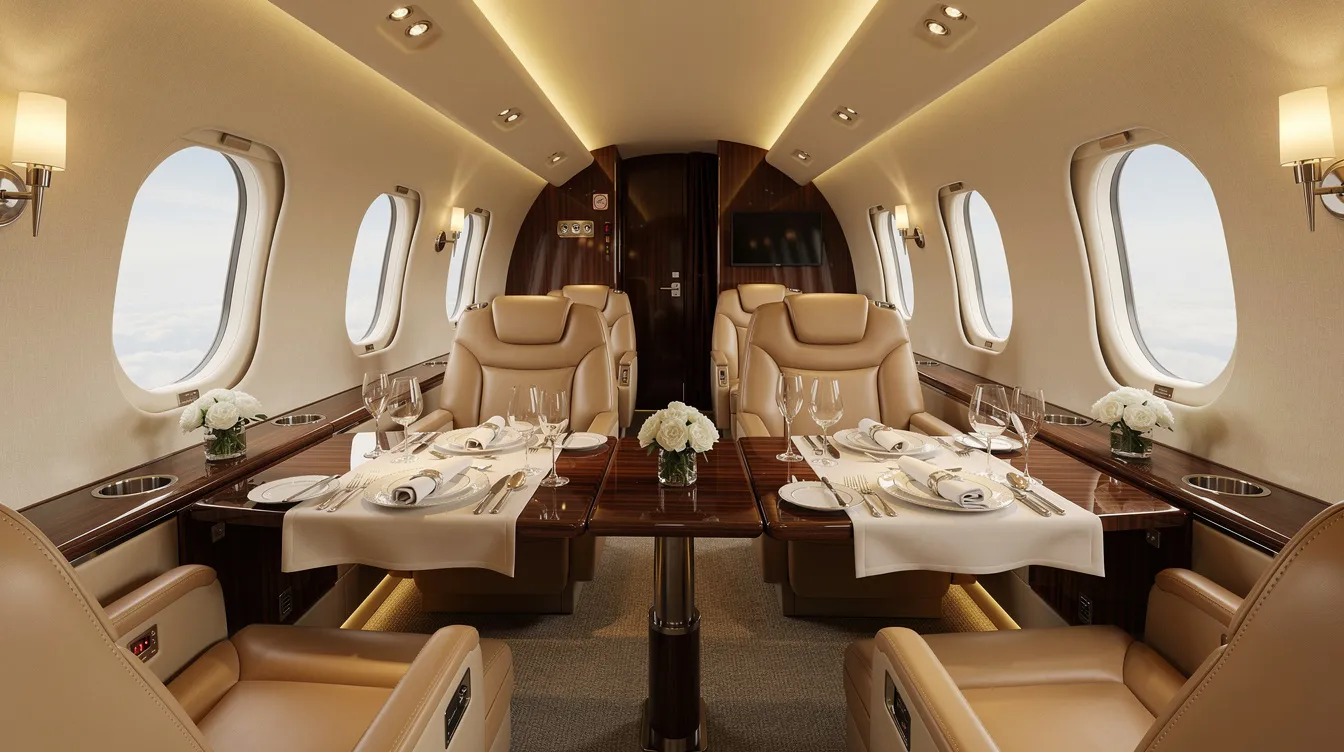
How BlackJet Fits into the Private Aviation Career Landscape
BlackJet operates at the intersection of premium service and private aviation access, offering Jet Card programs that give high-frequency travelers consistent safety, carbon-neutral flights, and seamless booking across multiple aircraft categories. While this article focuses on commercial international air hostess pay, the private aviation world represents a natural career destination for many experienced flight attendants.
Experienced international cabin crew transitions into private aviation to find benefits similar to those enjoyed by frequent flyers who choose the best jet cards for regular travel:
More personalized service environments with greater autonomy
Potential for higher per-trip earnings and stronger total compensation, especially when working with owners who rely on structured products like a 100-hour Jet Card program to support frequent flying
Greater control over the types of trips and the aircraft type they operate, similar to travelers who choose a 50-hour Jet Card to balance cost and flexibility
Direct relationships with discerning passengers who value professionalism and discretion
BlackJet's model relies on rigorously vetted operators and crew who meet stringent safety and service standards, creating consistent demand for highly skilled professionals and aligning with clients who study the broader private jet price list and access options before committing. The premium, bespoke expectations of BlackJet's clientele - executives, entrepreneurs, and high-net-worth families who may buy individual seats on private jets rather than entire aircraft - require a level of responsibility and hospitality that seasoned international flight attendants are well equipped to deliver.
Whether you are considering the passenger side of premium private travel or exploring long-term career moves toward private plane jobs or other private plane stewardess jobs, BlackJet's Jet Card offerings represent how modern private aviation works at its best.
Is International Flight Attendant Pay Worth It? Pros, Cons, and Career Tips
International flight attendant pay can be attractive relative to many entry-level positions around the world, especially when factoring in travel benefits, per diems, and tax advantages at certain carriers. But the job rarely leads to extraordinary wealth on its own - the real value lies in the lifestyle, the career trajectory, and the doors it opens.
Key pros:
Opportunity to see the world on long-haul international routes across every destination
Tax-free salaries and housing at Gulf carriers stretch income further
Strong benefits and retirement plans at legacy carriers and unionized airlines
Free or discounted travel for crew and, in many cases, family members
Key cons:
Irregular hours, jet lag, and extended nights away from home
Seniority-driven schedules that can take years of reserve service to improve
Demanding training, grooming standards, and physical requirements
New hire flight attendants may earn $2,000 per month - tight in expensive cities
Practical tips for maximizing earnings:
Target airlines with strong union agreements or robust pay scales - the contract matters more than the airline brand
Aim for long-haul fleets and positions that pay extra: senior crew, pursers, and business class service
Use language skills to qualify for language-of-destination pay, which adds $2–$4 per flight hour at many carriers
Build seniority strategically - every year of service compounds hourly rate increases and route access
Consider transitioning into business or private aviation roles for higher earning ceilings later in your career
With smart choices about airline, home base, and career path, an international air hostess can build a solid income and open doors to future roles in premium hospitality, corporate travel, or private aviation. Whether your interest is in the world of commercial flying or the elevated experience of private jet travel, the skills built in this job are transferable and valued.
Frequently Asked Questions About International Air Hostess Salaries
What is the average salary of an international air hostess?
The average salary for international flight attendants ranges from about $30,000 to $80,000 USD annually. Actual earnings depend on the airline, country, seniority, and flight hours, as well as per diems and other allowances.
How much can a new international flight attendant earn?
Entry-level flight attendants typically earn $25,000 to $40,000 annually, although some new hires may receive as little as $2,000 per month in base pay. Flight hours, layover allowances, and benefits can increase total compensation.
Which region pays international cabin crew the most?
Pay varies by airline and role, but experienced US flight attendants at major carriers can earn nearly $80,000 annually, with senior crew sometimes earning more through allowances and bonuses. Gulf carriers may offer tax-free earnings, housing, and transport, which can raise the overall value of a compensation package.
Do international flight attendants receive extra pay during layovers?
Many airlines provide per diem allowances for meals and other expenses while crew members are away from their home base. International routes may include additional layover allowances, though rates and eligible expenses vary by airline and contract.
Does seniority affect an air hostess's salary?
Yes. Seniority typically increases pay and can improve access to preferred routes and schedules. Experienced crew may progress into purser or cabin service director roles, which carry additional responsibility and higher earning potential.
Are international flight attendant salaries tax-free?
Not always. Tax treatment depends on the country, employment arrangement, and individual circumstances. Some international assignments, including certain Gulf-based roles, may offer tax-free earnings locally; candidates should confirm their obligations with qualified tax advisers.
Can multilingual skills increase flight attendant pay?
Yes. Speaking languages relevant to an airline's routes can improve job prospects and may qualify crew for language premiums. The availability and amount of additional pay vary by airline and contract.
How does private jet cabin crew pay compare with commercial airline pay?
Private jet cabin crew compensation follows a different structure, with roles often emphasizing discretion, flexibility, and personalized service. Experienced professionals may find higher earning potential in some corporate aviation positions, but pay depends on the employer, schedule, and contract.
Conclusion
The salary of an international air hostess in 2026 depends on more than a headline figure. Airline, region, seniority, flight hours, per diems, tax treatment, and benefits all shape total compensation. Entry-level earnings may be modest, while experienced crew and purser can earn substantially more through higher pay rates, international allowances, and bonuses. Compare complete packages—not just base salary—and weigh schedule demands, housing costs, travel benefits, and career progression before choosing an airline. Learn more about cabin crew salaries, flight attendant pay per hour, and private jet stewardess salaries to compare career paths.
For cabin crew ready to explore a different path, private aviation offers a distinct career environment centered on discretion, flexibility, and tailored service. For travelers, BlackJet’s Jet Card programs provide premium private jet access without aircraft ownership, with flexible booking, rigorous safety standards, and carbon-neutral flights. Discover how BlackJet can elevate the way you travel.


 Sign up with google
 Sign up with Apple


