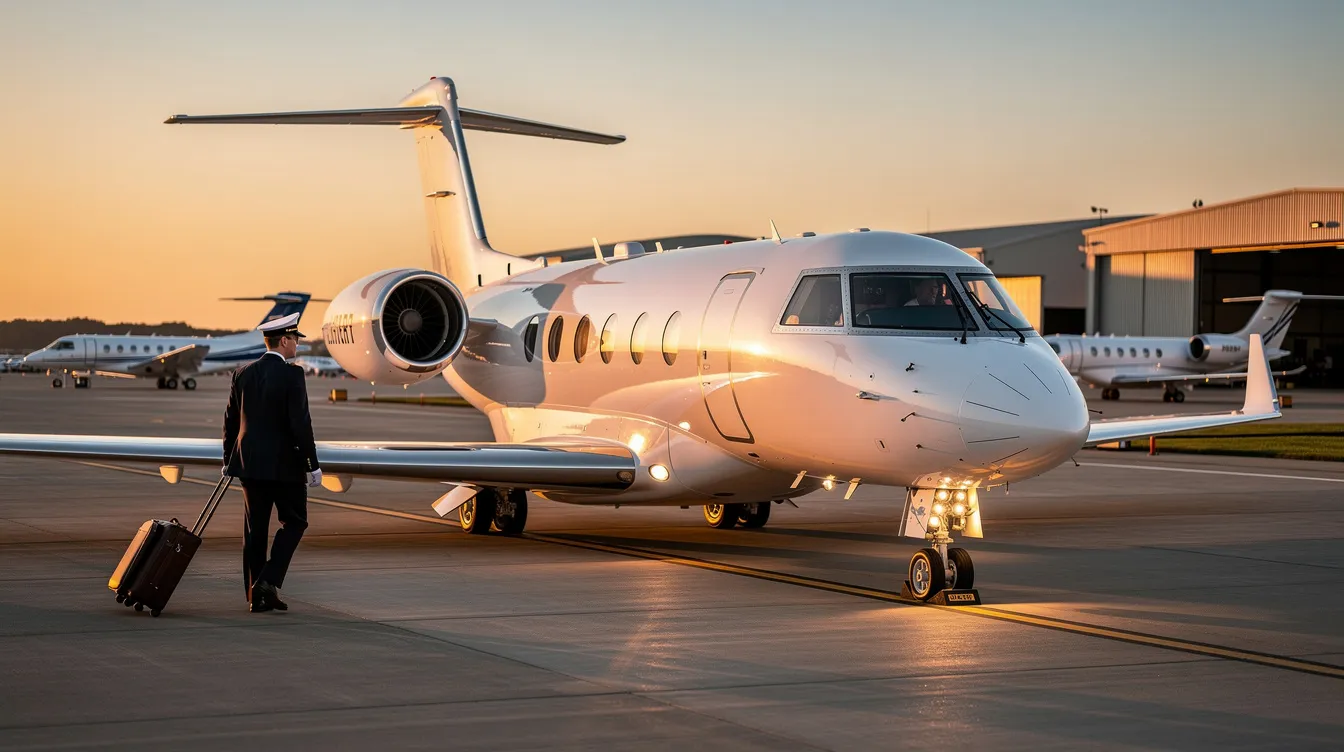
Singapore private jet travel with BlackJet offers elite Jet Card access for business executives, family offices, and luxury travelers seeking efficiency, privacy, and a strategic advantage in Southeast Asia. This page covers comprehensive private jet travel options in Singapore, including Jet Card membership programs, detailed airport and terminal information, transparent pricing, and step-by-step booking guidance. Whether you are a corporate leader, a family office principal, or a discerning leisure traveler, understanding these options empowers you to maximize time, security, and comfort while navigating one of Asia’s most dynamic hubs.
Why Singapore Private Jet Access Is a Strategic Advantage
Efficiency and Time Savings
Private jet travel to Singapore functions as a critical efficiency multiplier for discerning travelers who measure success in hours saved, not miles flown. The contrast with commercial alternatives—even Singapore Airlines' first or business class—is stark.
Ground handling at Seletar Airport (XSP) typically requires only 60–90 minutes from curb-to-aircraft. Compare that to 2–3 hours at bustling Changi Airport for commercial flights, factoring in check-in queues, security screening, and taxi waits. This disparity compounds on return legs, where private jets enable immediate post-flight access to chauffeured transfers directly to Marina Bay or the Central Business District.
Passengers using private jets often arrive just 15–20 minutes before departure, bypassing long check-in and security lines. Private jets frequently fly at higher altitudes—above 40,000 feet—avoiding commercial traffic and enabling more direct routes, which further reduces travel time.
Strategic Location and Regional Connectivity
Singapore’s 2024–2026 landscape underscores this edge. The city manages over $5.4 trillion in assets under management and serves as Southeast Asia’s aviation gateway, with private aviation facilitating rapid hops to Indonesia, Malaysia, Thailand, and beyond while bypassing Changi’s peak-hour congestion. For family offices reporting quarterly, executives conducting regional board meetings, or business and leisure travelers combining work with resort escapes, private aircraft access eliminates the friction that commercial travelers accept as inevitable.
Privacy, Security, and Expedited Processing
Private jet travel also enhances privacy and security, providing a discreet environment for passengers. Dedicated customs and immigration officers at fixed-base operators (FBOs) allow for expedited formalities, typically clearing arrivals in 15–30 minutes, significantly faster than commercial terminals. This expedited processing not only reduces ground time but also enhances overall travel safety and efficiency.
BlackJet’s Strategic Offering
BlackJet operates as a premium Jet Card provider offering locked-in rates, guaranteed availability during peak periods, and carbon-neutral flights as standard—positioning Singapore-based members for both business and luxury tourism itineraries across the region.
With the strategic advantages of private jet travel established, let's examine how BlackJet’s Jet Card and membership experience delivers value for frequent Singapore travelers.
BlackJet Singapore Jet Card & Membership Experience
Jet Card Program Overview
A Jet Card is a prepaid access program, typically offering 25-hour and 50-hour plans, allowing members to book private jet flights without ownership or traditional charter arrangements. For frequent Singapore-centric private jet travelers who fly 25+ hours annually regionally but lack the $20–50 million capital or $2–5 million yearly costs of outright ownership, Jet Cards deliver exceptional value without long-term commitments, especially when buyers understand Jet Card cost per hour comparisons across aircraft types and providers.
Private jets are categorized into Very Light Jets (4–6 passengers), Light Jets (5–9), Midsize Jets (7–9), Super Midsize Jets (9–10), Large Jets (12–16), Ultra Long Range Jets (14–18), VIP Airliners (19–189), and Turboprop Aircraft (6–19). Each category is designed to suit different travel needs and group sizes.
BlackJet’s offerings include 25-hour and 50-hour Jet Card programs providing access to multiple cabin classes: Very Light Jets (typically accommodating 4–6 passengers), Light Jets (5–9 passengers), Midsize Jets (7–9 passengers), Super Midsize Jets, Large Jets, Ultra Long Range Jets, and VIP Airliners, which can carry between 19 to 189 passengers, ideal for larger groups or corporate travel. Turboprop aircraft, accommodating 6–19 passengers and often used for shorter regional flights due to their efficiency and cost-effectiveness, are also accessible.
Rates lock in USD, shielding members from the 20–30% fuel volatility that often surprises ad-hoc charter clients.
Membership Benefits
For Singapore-based or Singapore-focused clients, membership benefits include:
Guaranteed access on peak dates, including March (family office reporting season), F1 Grand Prix week (September), and year-end holidays
Fixed response times under 30 minutes for booking requests
24/7 mobile and web booking tools with real-time aircraft availability at Seletar and Changi VIP Terminal
Live chat with aviation specialists for complex itinerary planning
Carbon-neutral flights via verified offsets at no additional cost
Mobile Booking Platforms
Mobile booking platforms for private jet charters provide users with the ability to book flights on demand, often with as little as four hours' notice, enhancing flexibility. Many platforms offer instant pricing systems that provide immediate quotes, eliminating the traditional back-and-forth communication typically associated with booking.
Data indicates Jet Card holders save 15–25% versus ad-hoc private jet charters through minimized repositioning legs and bundled services. For readers evaluating broader Jet Card cost and membership structures, understanding how pricing and benefits align with usage is essential. For Singapore’s ESG-focused family office community—where 70% prioritize sustainability per recent surveys—BlackJet’s default carbon offsetting through Gold Standard projects resonates strongly.
With membership benefits established, let's explore the key airports and terminals serving Singapore's private jet travelers.
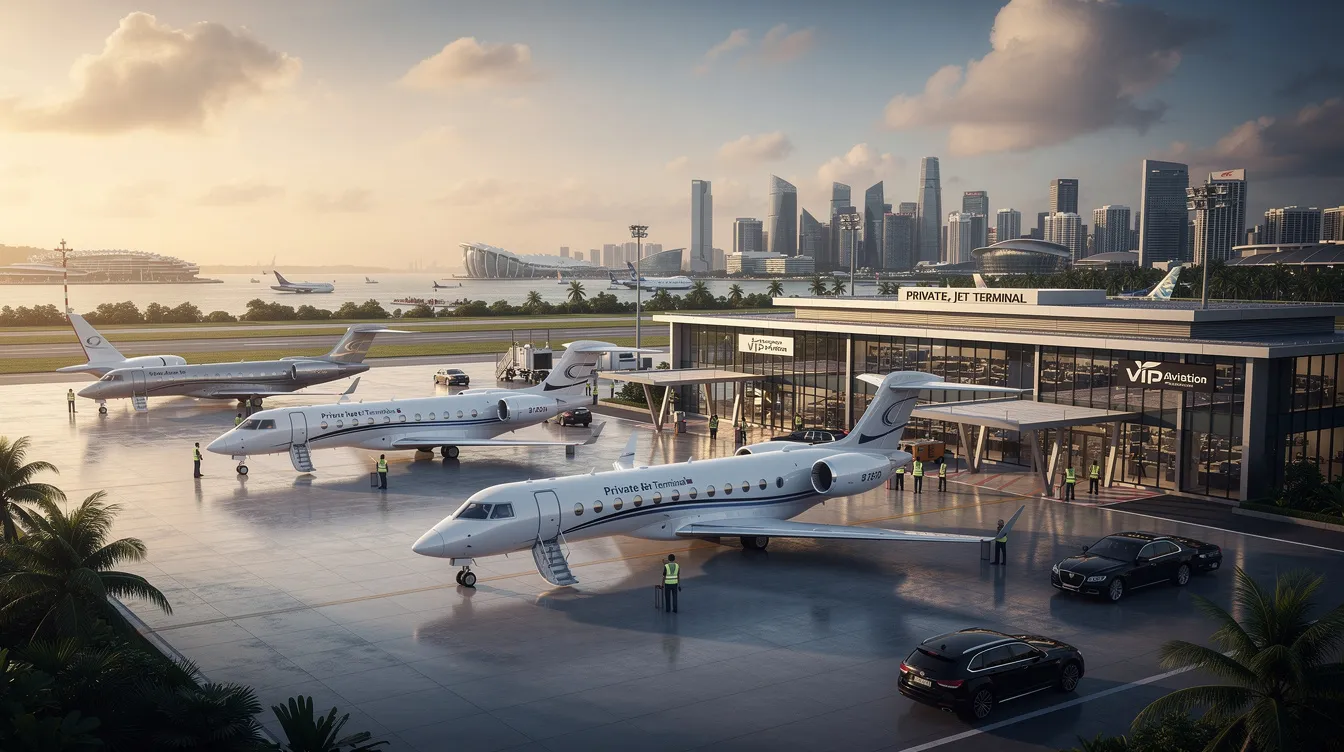
Singapore Private Jet Airports & Terminals
Singapore offers three primary options for private aviation: Seletar Airport (XSP), Singapore Changi Airport VIP/JetQuay Terminal (SIN), and Paya Lebar Air Base (QPG, limited use). Singapore Changi Airport provides VIP terminals for private jet travelers, although Seletar is often preferred to avoid congestion. Each serves different operational needs, and BlackJet’s team ensures members route through the optimal facility for their specific itinerary.
Below, we break down each airport and terminal to help you choose the best option for your journey.
Seletar Airport (XSP/WSSL) – Singapore’s Business Aviation Hub
Seletar Airport is a former air force base transformed into Singapore’s dedicated private aviation airport, operating 24 hours a day. It is located approximately 14 km (9 miles) from the city center, offering discreet and quick transfer procedures that significantly reduce ground transportation time for private jet travelers. The airport features four FBOs (Fixed Base Operators), including Jet Aviation, ExecuJet, Hawker Pacific, and Sino Jet, providing comprehensive private aviation services.
Seletar supports all major private jet categories, from very light jets to ultra-long-range aircraft like the Gulfstream G650 and Bombardier Global 7500. Its 24/7 operational capability and faster taxi times compared to commercial terminals enable streamlined departures and arrivals, making it the preferred choice for many BlackJet members seeking efficiency and privacy.
Singapore Changi Airport VIP Terminal (SIN/WSSS)
Singapore Changi Airport, one of Asia's largest and most prestigious hubs, is located about 26 km (16 miles) from the city center. It offers a dedicated VIP terminal known as JetQuay CIP Terminal for private jet travelers. This facility operates 24/7 and provides world-class luxury amenities, including private suites, fine dining, spa access, showers, and dedicated immigration counters that clear passengers in approximately 5 minutes.
While Changi's VIP terminal offers unparalleled service and is ideal for travelers connecting to commercial flights or requiring extensive services, it is generally more congested than Seletar. Taxi times and ground handling can be longer due to the airport’s size and high commercial traffic volume, which may impact scheduling flexibility.
BlackJet recommends Changi for members needing seamless same-day connections to long-haul commercial flights or complex multi-carrier itineraries.
Paya Lebar Air Base (QPG) – Limited, Special-Use Option
Paya Lebar Air Base primarily serves as a military facility with highly restricted civilian access. It is generally reserved for government, military, or diplomatic flights and lacks the FBO infrastructure necessary for standard private jet operations. Civilian private jets require special clearance well in advance, making Paya Lebar an impractical choice for most private jet travelers.
BlackJet members do not use Paya Lebar for routine private jet flights, focusing instead on Seletar and Changi for their Singapore operations.
With airport options clarified, let’s look at the most popular private jet routes and flight scenarios from Singapore.
Popular Singapore Private Jet Routes & Flight Scenarios
Singapore’s equatorial position optimizes 1.5–8-hour regional flights to Asia-Pacific business centers and leisure destinations, with ultra-long-range jets enabling direct access to the Middle East, Europe, and beyond. For Jet Card members, repeat patterns—quarterly board meetings, monthly site visits, annual family holidays—become seamless with pre-purchased hours and priority booking.
Statistics show 40% of Seletar traffic consists of regional flights under 4 hours, reflecting Singapore’s role as the region’s gateway. BlackJet members leverage this positioning for everything from a short regional hop to Kuala Lumpur to trans-Pacific connections via Tokyo or Sydney, particularly when using Jet Cards optimized for frequent flyers who value predictable access and transparent costs.
Regional Business Routes (Up to ~4 Hours)
Singapore–Hong Kong represents the key financial corridor at approximately 3.5–4 hours block time (1,600nm). BlackJet members often favor super midsize jets like the Citation X or Challenger 350 for work-friendly cabins with Wi-Fi and meeting tables. Door-to-door timing runs approximately 6 hours versus 9+ hours commercial, enabling full-day meetings with same-day return capability.
Singapore–Bangkok (~2 hours, 900nm) and Singapore–Jakarta (~1.5–2 hours, 500nm) suit light jets such as the Phenom 300 or Learjet 75 under a Jet Card. These routes enable same-day business trips that would consume two days commercially and mirror BlackJet’s broader regional network, including dedicated private jet charter services in Karachi for South Asian connectivity.
Sample scenario: A CEO departs Seletar at 0700, lands in Bangkok at 0900 local, conducts meetings until 1600, and returns to Singapore by 1830—impossible with commercial schedules.
Singapore–Kuala Lumpur (~1 hour, 180nm) represents the shortest hop, often done on light jets or turboprops. The door-to-door savings versus commercial plus border traffic can exceed 3 hours for access to neighboring countries.
Luxury Leisure & Resort Routes
Singapore–Bali (Denpasar, ~2.5 hours) and Singapore–Maldives (Malé, ~4 hours) serve as classic resort island getaways for families and couples seeking luxury getaways. Light or midsize jets work well for Bali; midsize or super midsize jets suit the Maldives, often with onward seaplane or speedboat connections coordinated by BlackJet’s concierge team.
Singapore–Phuket and Singapore–Langkawi (~1.5–2 hours) offer shorter luxury beach retreats, frequently booked around long weekends and public holidays. These routes see strong demand from business travelers, extending trips with family fun additions.
BlackJet handles bespoke touches: tailored in-flight menus, children’s amenities, golf clubs, and dive gear loaded directly into the hold, and carbon-neutral positioning of each leg. For private jet travelers, the journey itself becomes part of the luxury accommodations experience.
Long-Haul & Ultra-Long-Range Itineraries
Singapore–Sydney (~8 hours, 3,800nm) and Singapore–Tokyo (~7 hours) typically fly on heavy jets or super midsize jets with full-flat seating and private meeting-capable cabins. These long-haul routes connect Singapore’s financial community to neighboring countries’ major markets.
Singapore–Dubai (~7 hours) serves as a key corridor for Middle East wealth management connections. Singapore–London (~13 hours) and Singapore–Zurich or Geneva (~13–14 hours) cater to private banking, wealth management, and family office travel using ultra-long-range jets like the Gulfstream G650 or Global 7500.
Singapore–New York (~18+ hours) typically operates with a technical stop in Dubai or Anchorage. BlackJet’s flight support team optimizes routing, crew rest schedules, and customs procedures to maintain passenger comfort.
Sample itinerary: A family office principal flies Singapore–London (13 hours, G650), conducts meetings over two days, repositions London–Geneva (1.5 hours, Challenger), attends private banking sessions, then returns Geneva–Singapore (13 hours)—approximately 50 Jet Card hours over a week with maximum flexibility.
With route options in mind, let’s examine how pricing and Jet Card economics work for Singapore private jet travelers.
Singapore Private Jet Pricing & Jet Card Economics
Aircraft Categories and Passenger Capacities
Private jets are categorized by size and capacity, including Very Light Jets (4–6 passengers), Light Jets (5–9), Midsize Jets (7–9), Super Midsize Jets (9–10), Large Jets (12–16), Ultra Long Range Jets (14–18), VIP Airliners (19–189), and Turboprop Aircraft (6–19), each suited for different travel needs.
Pricing Structure and Cost Drivers
Pricing for Singapore private jet operations depends on aircraft category, hours flown, and season. Ad-hoc charter exposes travelers to variable fuel surcharges and repositioning fees (up to 20% of total cost), while Jet Cards lock in rates and bundle essentials—key context for executives comparing Singapore-centric flying with a larger 100-hour Jet Card commitment.
For very large delegations, VIP airliners with up to 50 seats can be more economical per passenger than multiple smaller aircraft, making guides to the best private jet for 50 passengers particularly relevant.
These ranges scale significantly for large-cabin aircraft suitable for groups, and organizations planning off-sites or road shows may evaluate the best private jet for 20 passengers when comparing group charter against multiple smaller jets.
Hourly Rate Table
Below is a table outlining typical hourly rates and passenger capacities for each private jet category:
Aircraft Category | Hourly Rate (USD) | Typical Passengers |
|---|
Very Light Jets | $2,750–$3,500 | 4–6 |
Light / Super Light Jets | $2,900–$5,400 | 5–9 |
Midsize Jets | $4,300–$8,500 | 7–9 |
Super Midsize Jets | $4,750–$10,500 | 9–10 |
Heavy / Large Jets | $6,800–$14,500 | 12–16 |
Ultra Long Range Jets | $10,000–$14,000 | 14–18 |
VIP Airliners | $16,000–$31,000 | 19–189 |
Turboprop Aircraft | $2,000–$4,350 | 6–19 |
BlackJet’s Jet Card locks in these rates, minimizes repositioning charges, and includes crew, fuel, standard catering, and handling—reducing the bill surprises common with one-off charters and giving prospective members a clear benchmark when comparing alternatives like NetJets Jet Card costs and structures.
Cost drivers include aircraft size (50% variance), distance and season (20%), notice period and peaks (15%), and fuel volatility (15%). March and the F1 Singapore Grand Prix period see tighter best aircraft availability and upward price pressure, while May and November offer more favorable conditions.
Route-Specific Price Illustrations (Indicative)
Representative one-way charter estimates for popular private jet routes illustrate why many clients compare these figures against Jet Card cost per hour benchmarks before deciding on their optimal access model:
Singapore–Bangkok (light jet): ~$13,000–$18,000
Singapore–Hong Kong (midsize): ~$30,000–$45,000
Singapore–Sydney (heavy jet): ~$85,000–$120,000
Singapore–Dubai (super midsize/heavy): ~$75,000–$105,000
Jet Card members effectively pre-purchase hours, smoothing these costs over the year and achieving better predictability than ad-hoc charter, with some heavy users evaluating whether a 50-hour Jet Card structure aligns better with their annual flying volume. BlackJet provides transparent, line-item quotes with no hidden fuel or repositioning surcharges for standard itineraries captured in the Jet Card agreement—delivering exceptional value through predictability.
Empty Legs & Singapore Value Opportunities
Empty legs—repositioning flights when aircraft relocate without passengers—appear frequently on busy corridors like Singapore–Hong Kong, Singapore–Bangkok, and Singapore–Jakarta. Potential savings reach 50–75% off typical charter rates (e.g., $8,000 versus $25,000 for Singapore–Hong Kong), and savvy travelers often treat them as one route to buy a seat on a private jet at a fraction of standard charter pricing.
BlackJet alerts members to relevant empty legs via app or email, allowing them to supplement core Jet Card flying when schedules align. The trade-off: timing and routing remain inflexible. Empty legs serve as opportunistic enhancements for leisure travelers with flexible dates, not reliable options for critical business trips requiring prior notification and schedule certainty.
With pricing and value opportunities outlined, let’s turn to safety, certification, and technology in Singapore's private aviation.
Safety, Certification & Technology in Singapore Private Aviation
For BlackJet clients, safety and operational rigor matter more than cabin finishes. Singapore’s regulatory environment, through CAAS, enforces EASA/FAA-equivalent standards, and BlackJet’s operator vetting reflects this focus.
Private jet companies implement strict safety policies, including rigorous vetting of operators and real-time safety checks to ensure every flight exceeds safety margins required by law. The private aviation industry adheres to international safety standards, with operators required to maintain comprehensive safety management systems and undergo regular audits to ensure compliance.
BlackJet partners exclusively with operators holding recognized third-party ratings: ARGUS Platinum, Wyvern Wingman, or IS-BAO Stage 3 (representing the top 10% globally). Crews maintain 5,000+ hours of Asia-Pacific experience, supported by robust safety management systems and modern avionics, including Synthetic Vision.
BlackJet’s operations team monitors weather patterns (monsoons, June–September, regional thunderstorms causing 40% of diversions), NOTAMs, and ATC constraints around Singapore to minimize delays. Example: rerouting a Singapore–Hong Kong flight around ITCZ storms while preserving the meeting schedule.
Onboard, midsize+ jets typically feature Ka-band Wi-Fi enabling productive work, dual-pilot crews, and cutting-edge technology avionics. BlackJet’s platform provides digital contracts, secure payment, in-app trip tracking, and real-time communication with operations and concierge—giving members complete visibility without hours of notice chaos.
Real-time flight support services allow travelers to modify their travel plans mid-flight, including changing destinations after departure, enhancing flexibility and convenience.
With safety and technology assured, let’s address sustainability and carbon-neutral private jet flights from Singapore.
Sustainable, Carbon-Neutral Private Jet Flights from Singapore
Singapore’s growing focus on sustainability and ESG aligns with its NET-Zero 2050 commitments, especially among family offices and listed companies (80% now report via TCFD frameworks). Private aviation need not conflict with these values.
The aviation industry is responsible for approximately 2-3% of global carbon emissions, prompting a push for more sustainable practices in air travel. Carbon offsetting is a common practice in the aviation sector, allowing travelers to compensate for their flight emissions by investing in environmental projects.
BlackJet makes every flight carbon-neutral as standard by purchasing verified carbon offsets through ICAO CORSIA-compliant programs at no extra effort or cost to members. Offsets partner with certified projects—Asian reforestation initiatives, renewable energy developments—using reputable registries.
A typical light jet generates approximately 1–3 tonnes of CO2 per hour; BlackJet automatically calculates and offsets each leg. Sustainable aviation fuel (SAF) availability at Seletar and Changi remains limited but growing (+50% year-over-year uptake), and BlackJet monitors opportunities to advise when SAF uplift becomes possible.
For Singapore private jet users with ESG reporting requirements, BlackJet provides documentation supporting carbon-neutral travel claims—transforming potential liability into demonstrated environmental responsibility.
With sustainability addressed, let’s explore Singapore’s luxury ecosystem for private jet travelers.
Singapore’s Luxury Ecosystem: Where BlackJet Clients Stay, Dine, and Meet
Private jet arrivals into Singapore typically combine high-stakes meetings with curated leisure, and BlackJet’s concierge aligns air, ground, and lifestyle elements into seamless access experiences.
Luxury Hotels:
Iconic Marina Bay Sands – skyline views, events, casino, celebrity chef restaurants
Raffles Hotel – heritage luxury, the original Singapore Sling
The Fullerton and The Fullerton Bay – CBD proximity, colonial grandeur
Capella Singapore on Sentosa Island – resort island retreat, Auriga spa, golf
Dining:
BlackJet concierge secures reservations aligned to arrival times—land at 1800, seated by 2000 at the National Gallery’s resident fine dining.
Cultural & Leisure:
Gardens by the Bay with its Cloud Forest domes
Singapore Botanic Gardens (a UNESCO World Heritage Site featuring the National Orchid Garden)
ArtScience Museum
Chinatown with fragrant spice shops and lively markets
Little India featuring Sri Veeramakaliamman Temple with traditional architecture
Kampong Glam’s architectural marvel mosques
Sentosa Island offers Universal Studios, golf, and beach clubs for family fun
The city’s compact layout means BlackJet clients can land at Seletar, reach a Marina Bay meeting within 45 minutes, and enjoy panoramic city views over fine dining the same evening—a rhythm commercial travelers simply cannot match.
With Singapore’s luxury ecosystem mapped, here’s how to book your private jet journey with BlackJet.
How to Book a Singapore Private Jet with BlackJet
BlackJet offers both Jet Card and on-demand charter solutions for Singapore trips, focusing on long-term relationships with frequent travelers who value predictability and premium service, while also advising clients who are evaluating purchasing a private jet outright as a complement to or replacement for membership-based access.
The BlackJet booking journey:
Initial Consultation – Discuss typical routes, cabin preferences, and annual flying patterns with a dedicated aviation specialist
Jet Card Selection – Choose between 25-hour and 50-hour programs, with flexibility across cabin classes from light jets to VIP airliners
Onboarding – Complete streamlined customs KYC and contract, typically within 48 hours
First Trip Planning – Select dates, airports (Seletar or Changi VIP), aircraft types, and special requests through BlackJet’s app or web portal
Digital booking runs 24/7 with real-time aircraft availability across Singapore’s top private jet airports. Special requests—Wi-Fi requirements, pets (with prior AVS documentation), dietary preferences, larger aircraft for groups—integrate seamlessly.
Concierge services include chauffeured transfers throughout Singapore, hotel coordination, restaurant reservations, and any security or privacy considerations. From inquiry to wheels-up, BlackJet manages every detail.
Explore how a BlackJet Jet Card can transform your Singapore travel. Schedule a discreet consultation to map your 6–12 month pattern and discover the strategic advantage of predictable, premium private aviation.
FAQs: Singapore Private Jet Travel with BlackJet
Do I need to be a Jet Card member to fly with BlackJet to Singapore?
No. BlackJet accommodates ad-hoc charter requests for non-members. However, Jet Card membership is optimal for frequent travelers, offering locked-in rates, guaranteed availability during peak periods, and streamlined booking through our digital platform.
How far in advance should I book my Singapore flight?
For standard itineraries, 48–72 hours' notice typically secures the best aircraft availability. During peak periods (March, F1 Grand Prix, December holidays), booking 1–2 weeks ahead is advisable. In urgent cases, BlackJet can often arrange departures within 4–6 hours, subject to aircraft, crew, and Singapore slot constraints.
Can I bring my pet into Singapore on a private jet?
Yes, with advance preparation. Singapore requires AVS (Animal & Veterinary Service) documentation and prior notification. BlackJet’s concierge manages permit applications and ensures aircraft selection accommodates your pet comfortably.
Is Wi-Fi available on Singapore routes?
Wi-Fi is standard on approximately 95% of midsize jets and larger aircraft serving Singapore. For regional routes under 4 hours, most super midsize and heavy jets offer Ka-band connectivity suitable for video calls and business applications.
What visa and customs rules apply when flying privately to Singapore?
Visa requirements mirror commercial travel—ETA eligibility applies to many nationalities. The difference: customs procedures are completed via private terminals in approximately 10 minutes versus standard immigration queues. BlackJet coordinates all documentation in advance.
Why choose BlackJet for Singapore private jet travel?
BlackJet combines Jet Card predictability with rigorous safety standards, carbon-neutral operations as default, and technology-enabled service designed for discerning travelers. Our focus on Singapore and Asia-Pacific routes means deep operational expertise at Seletar and Changi, relationships with premier FBOs, and concierge integration with the city’s luxury ecosystem. For business travelers and leisure travelers alike, BlackJet transforms private aviation from transaction to trusted partnership.
Conclusion
Singapore private jet travel with BlackJet delivers a seamless, efficient, and luxurious experience for business executives, family offices, and discerning leisure travelers. By leveraging Jet Card membership, travelers gain access to locked-in rates, guaranteed availability, and a suite of premium services that maximize efficiency, privacy, and comfort. With detailed airport options, transparent pricing, and a robust support ecosystem, BlackJet stands as the premier choice for private aviation in Singapore and the broader Asia-Pacific region.


 Sign up with google
 Sign up with Apple