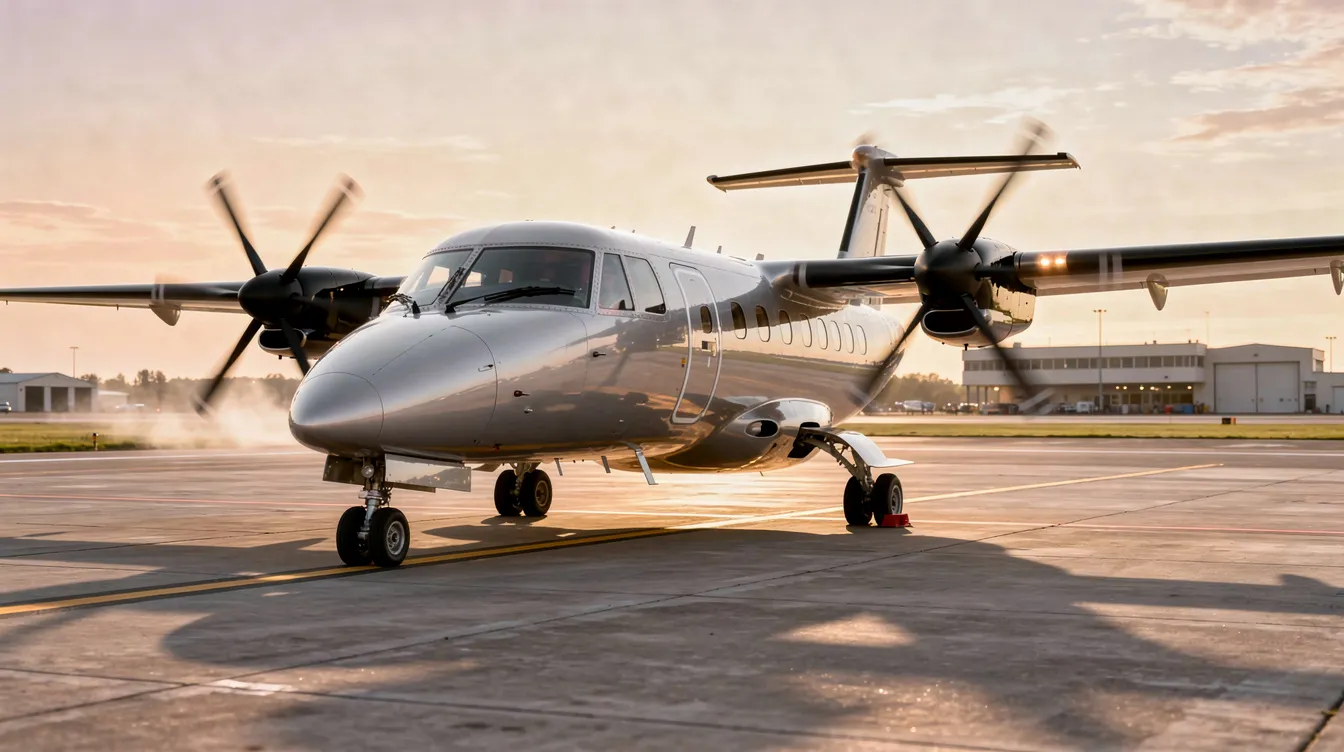
For executives and families who value time over everything else, understanding turboprop charter prices is the first step toward unlocking a smarter way to travel. This guide is designed for executives, families, and first-time private flyers seeking to understand the true costs of turboprop charter in 2024–2026. While private jet charter often conjures images of sleek cabin interiors and transcontinental routes, the reality is that most private flights are regional, and turboprop aircraft dominate this space with significantly lower operational costs and unmatched access to smaller airports. Turboprop aircraft are powered by turboprop engines that efficiently convert power into thrust at lower speeds, making them suitable for short to medium-haul flights. They are highly efficient in terms of fuel consumption and operational costs for short to medium-haul flights, making them a cost-effective option for private travel. Turboprop aircraft are ideal for short-haul regional flights, typically under 2-3 hours, and capable of landing at smaller airports.
Knowing what drives turboprop charter prices helps travelers make informed decisions and avoid unexpected costs.
This guide breaks down exactly what you’ll pay for turboprop charter in 2024–2026, from hourly rates and real trip scenarios to the fees that show up on your final invoice. Whether you’re considering your first private charter or evaluating a Jet Card program, these numbers will help you make informed decisions about private jet charter pricing.
Introduction to Turboprop Charter and Private Jets
Private jet charter offers a level of convenience, privacy, and luxury that commercial airlines simply can’t match. Whether you’re flying for business or leisure, chartering a private jet means you set your own schedule, choose your departure airport, and enjoy a tailored in-flight experience—all without the crowds, delays, or rigid timetables of commercial travel.
When it comes to private jet charter rates, there’s no one-size-fits-all answer. Private jet rental prices are influenced by several factors, including the aircraft type, the length and complexity of your route, and the operator’s standards. For example, the cost to charter a private jet can range from $1,800 to $18,000 per billable flight hour, depending on whether you select a cost-effective turboprop aircraft for a short regional hop or a large-cabin jet for a transcontinental journey.
Turboprop aircraft stand out as a smart entry point for private jet travel, especially for short to medium-haul flights typically under 2–3 hours. These aircraft offer many of the same comforts as light jets but with significantly lower operational costs, making them an attractive option for travelers who want the benefits of private aviation without the premium price tag. Unlike owning your own private plane—which comes with substantial upfront investment and ongoing maintenance—private jet rental allows you to pay only for the flight hours you need, with no long-term commitments or hidden expenses.
Additionally, turboprops can take off and land on shorter runways, granting access to smaller, less congested airports. This capability provides greater flexibility and convenience in reaching destinations that larger jets cannot serve, such as regional hubs or remote locations. Operating at lower altitudes, turboprops increase fuel efficiency and avoid busy commercial air traffic, which can reduce overall travel time.
Understanding how private jet charter costs are structured, and how factors like aircraft type and operational costs affect your final bill, is the first step toward making informed decisions about your private air travel. In the sections that follow, we’ll break down exactly what you’ll pay for turboprop charter, how these rates compare to other private jet categories—including midsize jets that provide longer range and higher altitude performance for cross-country travel—and what to expect on your final invoice.
Fast Answer: Typical Turboprop Charter Prices Today
Most private turboprop charters in North America and Europe range from approximately $1,200 to $2,500+ per flight hour in 2024–2026, with premium models like the King Air 350i reaching $3,200 per hour on peak days. The base hourly rate for turboprop flights typically ranges from $1,000 to $3,000, reflecting variations in cabin size, technology, and aircraft age. These hourly charter rates represent flight time only—before applicable taxes, landing fees, handling charges, fuel surcharges, and other additional costs are added.
A total charter cost for a 2-hour turboprop flight generally falls between $2,500 and $5,000 before extra fees. Short flights may incur additional fees because they don't allow operators to cover minimum operating costs, often leading to daily minimums of 1.5 to 2 hours per leg. Fuel surcharges, which can start around $300 per hour during market surges, and airport fees contribute to the dynamic pricing structure.
Here’s what specific routes typically cost:
Route | Aircraft Model | Flight Time | Estimated Cost (Round Trip) |
|---|
New York Teterboro (TEB) to Nantucket (ACK) | King Air 350 | ~2 hours | $5,000–$7,000 (peak summer demand) |
Dallas Love Field (DAL) to Austin (AUS) | Pilatus PC-12 | ~1 hour | $4,000–$5,500 (including FET & fees) |
Los Angeles Van Nuys (VNY) to Napa (APC) | Pilatus PC-12 | ~1.8 hours | $7,500–$9,000 (all-in, 3.0–3.6 hrs) |
BlackJet Jet Card clients see more predictable turboprop rates because hourly pricing is fixed in advance rather than fluctuating with each trip. This eliminates the 15–40% peak surges that can appear in ad-hoc charter markets during high-demand periods like Thanksgiving or major sporting events. | | | |
Compared to light jets, turboprop aircraft are typically 25–40% less expensive per hour on the same short routes. A twin-engine King Air 200 offers similar 6–8 passenger capacity to entry-level jets but at lower operating costs—making turboprops the natural starting point for executives entering private aviation.
Why Turboprops Are the Smart Entry Point to Private Aviation
Turboprop charter occupies a strategic position between commercial business class and light jets, offering the control and flexibility of private flights without the premium price tag of jet engines. For regional trips under 800–900 nautical miles, turboprops deliver door-to-door time savings of 2–3 hours by routing through smaller regional airports rather than congested hubs like JFK or LAX.
The value proposition is clear:
Lower hourly rates than comparable light jets or midsize jet options, with fuel consumption 30–50% below jet categories on short sectors
Access to 10,000+ short runways and remote airports that jets cannot reach, including destinations like Nantucket (ACK), Martha’s Vineyard (MVY), Aspen, and Napa
Schedules adjustable within 24–48 hours versus commercial aviation’s fixed routing and connection requirements
Departure from reliever airports eliminates TSA lines and terminal congestion entirely
Luggage flexibility for skis, golf bags, and equipment that commercial carriers restrict or charge heavily for
Many BlackJet clients use turboprops as a regional shuttle for 45–120 minute private flights between business hubs and secondary cities. The Texas Triangle (Dallas-Houston-Austin) and Northeast Corridor (Teterboro-White Plains-Martha’s Vineyard) are particularly well-suited to turboprop operations.
Technically, turboprop engines combine a jet turbine core with a reduction gearbox spinning propellers at optimal RPM. This design delivers 30–50% better specific fuel consumption than pure jets on legs under 500 nautical miles, while requiring runways as short as 2,000–3,000 feet versus 4,500+ feet for jets.
For executives and families, this translates to a simple calculation: less time waiting, more control over your schedule, and significantly lower total charter cost than owning your own private plane or chartering jets for every regional trip.
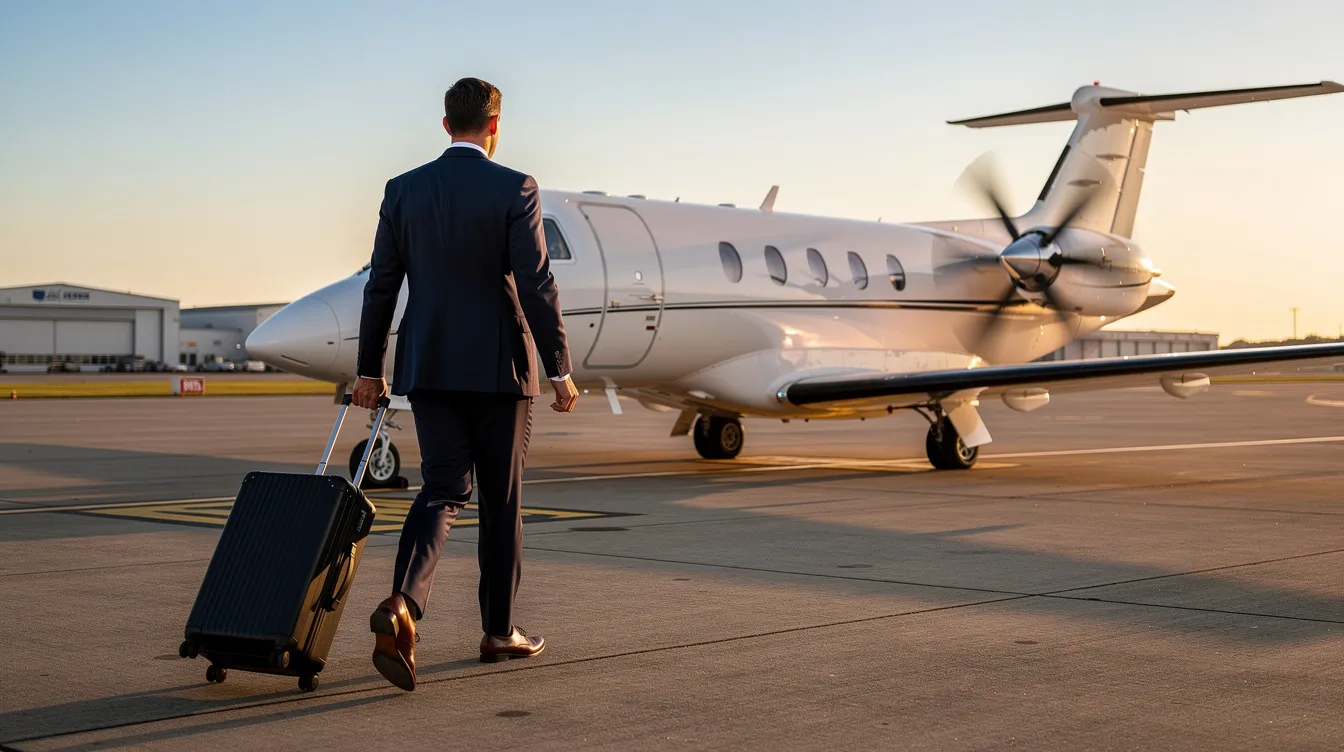
Typical Turboprop Charter Rates by Aircraft Type
Not all turboprops are priced equally. Cabin size, cruise speed, extensive range capability, and aircraft age significantly influence hourly rates. Understanding these variations helps you match the right turboprop aircraft to your specific trip requirements.
Here are typical 2024–2026 hourly charter ranges for the most common models (pre-tax, flight time only):
Aircraft Model | Hourly Rate Range | Passenger Capacity | Range (nm) | Notes |
|---|
Pilatus PC-12 / PC-12 NG | $1,700–$2,400 | 6–9 | 1,845 | Exceptional short-field performance |
King Air 200 / B200 | $1,800–$2,500 | 7–9 | 1,500 | Pressurized cabin |
King Air 350 / 350i | $2,200–$2,900 | 9–11 | ~1,500 | Largest turboprop option, enhanced amenities |
Cessna Grand Caravan EX | $1,600–$2,100 | 9–14 | 1,070 | Ideal for rugged strips or island hops |
These ranges reflect normal market conditions. Peak holidays and high-demand events such as Miami F1, the Masters, or Sundance Film Festival can push rates 15–30% higher due to constrained aircraft availability. | | | | |
Older airframes with refurbished interiors typically sit at the low end of these ranges, while newer aircraft equipped with Garmin G3000 avionics and Wi-Fi connectivity command 20–30% premiums.
For comparison with other private jet categories:
Aircraft Category | Hourly Rate Range |
|---|
Turboprops | $1,200–$3,000 |
Light Jets | $2,600–$3,800 |
Midsize Jets | $3,500–$5,500 |
Heavy Jets | $6,000+ |
For most sub-500-mile missions carrying 4–8 passengers, a turboprop delivers 80–90% of the comfort of a small private plane charter at materially lower private jet cost. The speed difference of 60–120 knots translates to only 15–30 minutes on typical regional routes—often irrelevant when factoring total door-to-door time. | |
Sample Trip Scenarios: What a Turboprop Charter Really Costs
Concrete examples help translate hourly rates into real-world budgets. These scenarios use recognizable city pairs with approximate 2024–2026 pricing to illustrate what you’ll actually pay for a complete turboprop charter.
Route | Aircraft Model | Flight Time (each way) | Billable Hours (round trip) | Estimated Cost (all-in) |
|---|
Los Angeles (VNY) to Napa (APC) | Pilatus PC-12 | 1.8 hours | 3.0–3.6 | $7,500–$9,000 |
London Biggin Hill (BQH) to Geneva (GVA) | King Air 350 | 1.6 hours | 3.2 | £6,500–£9,000 (includes fees) |
New York (TEB) to Martha’s Vineyard (MVY) | King Air 200 | 0.9–1.1 hours | 4.0 (2-hour minimum daily) | $5,000–$8,000 |
Understanding what drives these totals beyond airborne minutes is essential: | | | | |
Minimum daily billable flight hour requirements (often 1.5–2.0 hours) push costs above pure flight time
Aircraft positioning: if the entire plane must reposition empty to pick you up or return to base, you typically pay for those legs—often $1,000–$3,000 in additional fees
Peak days and seasonality: Thanksgiving, Christmas–New Year’s, and major events push rates 20–40% higher due to concentrated market demand
Airport choice: high-density airports impose landing fees of $500–$800 versus $100–$200 at nearby reliever airports that private jet travel can access
Fuel prices: fuel surcharges can start at $300 per hour and fluctuate based on airport and market conditions
Crew fees: include pilot overnight accommodation, meals, and daily rates, typically $200–$600 per crew member per night
BlackJet minimizes repositioning cost by sourcing aircraft already near your departure airport through its vetted operator network—a key advantage of working with charter companies that maintain broad fleet relationships.

What Actually Drives Turboprop Charter Prices?
While the hourly rate is the headline number that charter companies quote, several underlying factors determine your final invoice. Understanding these drivers helps you anticipate costs and make strategic choices about when and how you fly private.
Price Driver | Description | Typical Impact on Cost |
|---|
Aircraft type and cabin | Newer turboprops with advanced avionics and premium interiors cost $300–$500 more per hour | +10–20% hourly rate |
Flight distance and routing | Longer legs add billable hours; weather or ATC delays can increase time 10–20% | Variable, based on flight length |
Aircraft positioning | Empty legs to/from departure airport billed to client, often $1,000–$3,000 extra | Significant for remote departures |
Peak days and seasonality | High demand periods increase rates by 20–40% | +20–40% during holidays/events |
Airport choice | Busy airports charge $500–$800 landing fees; smaller reliever airports charge $100–$200 | $100–$800 per landing |
Fuel prices | Fuel surcharges start at $300/hour, vary with market and airport | +$300/hour or more during surges |
Crew fees | Overnight pilot accommodations, meals, and daily rates typically $200–$600 per crew member | $200–$600 per crew member per night |
Fuel prices also play a role, though turboprops’ lower fuel consumption (50–100 gallons per hour versus 150+ for jets) provides some insulation from volatility. Crew member costs typically run $400–$600 per hour across two-pilot operations. | | |
BlackJet’s Jet Card model smooths many of these variables with fixed hourly jet card cost per hour and transparent fuel surcharges—particularly valuable for frequent flyers who need predictable budgeting across 25–40 annual flight hours.
Cost Comparison: Turboprops vs Light Jets vs Commercial Business Class
Turboprops sit at the intersection of affordability and control, especially for regional routes where jet speed advantages diminish. Understanding how they compare helps you choose the right tool for each mission and evaluate whether chartering a private jet is worth it.
Comparison Aspect | Turboprops | Light Jets | Commercial Business Class |
|---|
Hourly Cost | $1,200–$3,000 | $2,600–$3,800 | Varies widely |
Speed | Lower cruise speed (60–120 knots slower) | Faster cruise speed | Fixed commercial schedules |
Airport Access | 10,000+ smaller airports | Larger airports only | Major commercial hubs |
Passenger Capacity | 6–11 passengers | 4–7 passengers | Large cabins, many passengers |
Door-to-Door Time Savings | 2–3 hours via regional airports | Moderate | None, fixed schedules, and TSA |
Fuel Efficiency | 30–50% more efficient than jets | Higher fuel consumption | N/A |
Turboprop vs Light Jets | | | |
Turboprops are typically 20–35% cheaper per hour for regional flights under 500–600 nautical miles
Light jets cruise 60–120 knots faster and excel on non-stop trips beyond 700–800 nautical miles, where turboprop engines reach their practical limits
For a 200nm hop, the speed difference translates to 10–15 minutes—often irrelevant when factoring ground time at smaller airports versus congested jet hubs
Turboprop vs Commercial Business Class
For very large corporate or event groups, dedicated charter planes for 100 passengers can sometimes rival the total cost of multiple business-class tickets while delivering superior schedule control and privacy.
On a per-seat basis, a full turboprop carrying 6–8 passengers can match or beat last-minute business class on busy routes
Private departures from secondary airports eliminate TSA lines and connection waits, saving 2–3 hours door-to-door
A team of six flying from Chicago to Indianapolis for a client meeting may spend as much on last-minute commercial business fares and hotels as they would on a same-day turboprop charter that returns them home by evening—around $5,500 versus $5,400 commercial plus delays and overnight costs
Turboprop vs Owning Your Own Private Plane
For travelers weighing regional turboprop use against occasional long-haul missions with larger teams, exploring the best private jet for 20 passengers clarifies when stepping up to a heavy jet makes financial sense.
Aircraft ownership requires $1M+ initial investment plus $500K+ annually in fixed operational costs
Chartering proves 3–5x more efficient for travelers flying under 200–300 hours annually
Jet Cards bridge the gap with ownership-like access without capital commitment
BlackJet clients often graduate from per-trip turboprop charters into Jet Cards once they recognize how frequently they’re flying short regional routes—and how much predictability a fixed-rate program provides, especially when they understand jet card pricing structures and benefits.
Beyond the Hourly Rate: Fees, Taxes, and Extras
Many first-time private jet rental customers focus exclusively on hourly rates, but 10–25% of the final bill often comes from ancillary items. Knowing what to expect prevents surprises and helps you budget accurately when evaluating comprehensive BlackJet private jet card and membership options.
Key non-hourly costs with typical ranges:
Fee Type | Typical Range | Notes |
|---|
Landing fees | $100–$800 | Depends on airport size and aircraft weight |
Ramp and handling fees | $100–$500 | Sometimes waived with a minimum fuel purchase |
U.S. Federal Excise Tax (FET) | 7.5% + $4–$5 per passenger per segment | Applies to domestic flights |
Crew overnight expenses | $200–$600 per crew member/night | For multi-day trips requiring overnight stays |
De-icing and winter ops | $1,500+ | Varies by aircraft size and weather |
Catering and ground transportation | Varies | Optional, based on service |
Hangar fees | $100–$300 | For overnight aircraft storage |
International flights add further complexity through VAT, customs fees, landing permits, and overflight charges that can reach $500–$5,000 depending on routing and destination country. | | |
BlackJet provides itemized quotes separating hourly flight time, applicable taxes, and extras so clients see exactly where each dollar goes. This transparency contrasts with opaque brokers who may inflate quotes by 20–50% without clear justification.
Safety, Technology, and Sustainability: How They Affect Turboprop Pricing
For BlackJet, lower cost never comes at the expense of safety or standards. Price differences between operators sometimes reflect higher operating rigor, and understanding this helps you evaluate what you’re actually paying for.
Safety Standards
BlackJet sources only from operators with robust third-party ratings such as ARGUS or Wyvern certification, representing the top 10% of audited operators with $50K+ annual compliance costs
These vetted operators deliver incident rates below 1 per million departures versus industry averages of 2–3
Professional two-pilot crews operate most turboprop missions, with modern maintenance programs tracking 100+ aircraft parameters continuously
Technology and Comfort
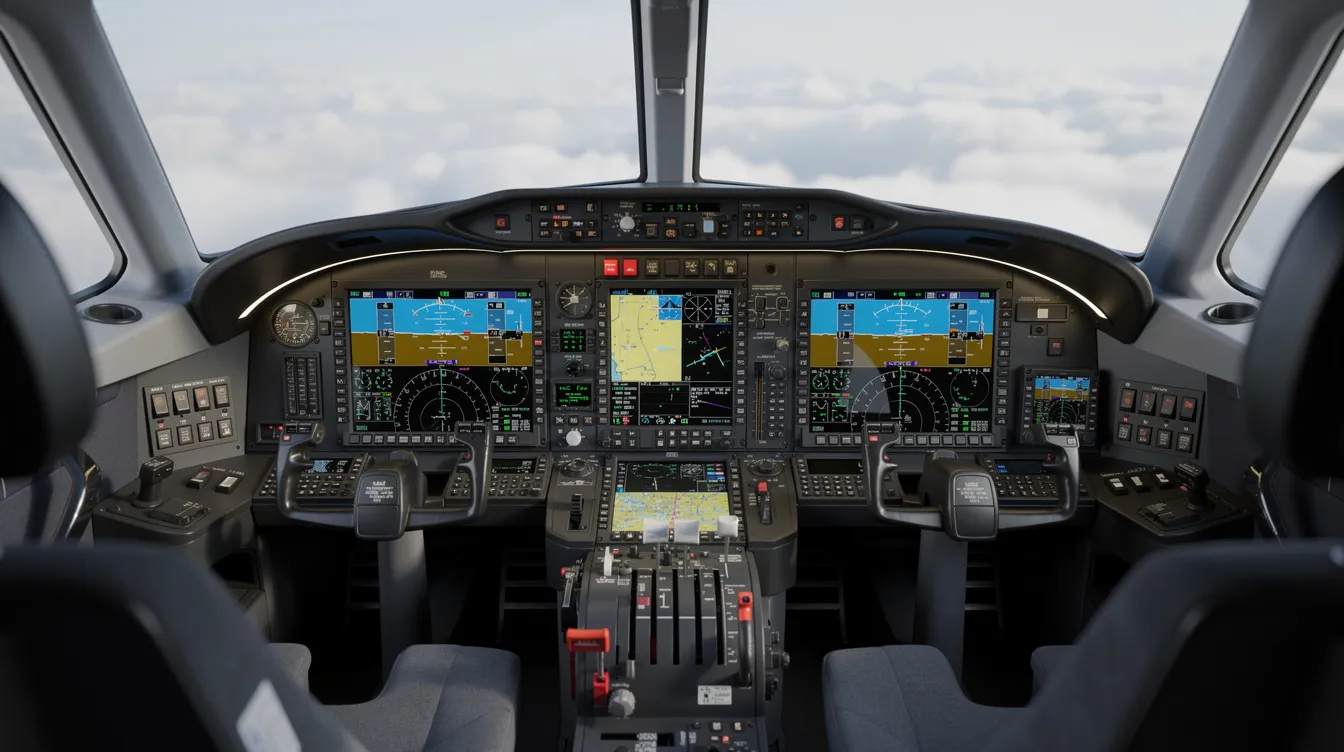
Upgraded avionics suites like Garmin G1000/G3000 with synthetic vision and autothrottle add 10–15% to hourly rates but significantly improve safety margins
Cabin connectivity via Gogo or Viasat Wi-Fi enables productivity during flight time—a key differentiator from commercial regional flights
Jet Card members typically access a higher baseline specification of aircraft as part of program standards
Sustainability
Turboprop aircraft typically burn 30–50% less fuel than similar-capacity jets on short sectors, reducing both carbon footprint and fuel spend
A PC-12 consumes approximately 70 gallons per hour versus 120+ for comparable light jets
BlackJet offers carbon-neutral flights by default through Gold Standard verified offset programs, with the incremental cost ($5–$10 per ton) embedded and clearly disclosed rather than hidden
Paying slightly more for vetted, tech-forward, carbon-neutral operations is a conscious choice many BlackJet clients make—recognizing that private jet rental prices should reflect operational excellence, not just aircraft access, particularly on larger missions where private jets for 50 passengers are under consideration.
When a Turboprop Is (and Isn’t) the Right Financial Choice
Turboprops are not universally best or worst for every mission. Their value depends entirely on your travel profile and route requirements.
Turboprops are ideal for:
Regional trips of 45–150 minutes each way, especially between secondary or hard-to-reach airports that jets cannot efficiently serve
Groups of 4–8 passengers who would otherwise purchase last-minute business or first-class tickets on commercial carriers
Frequent shuttles between corporate locations within one region—Texas Triangle, Northeast Corridor, UK–Benelux, or similar regional routes
Access to smaller regional airports like Las Vegas satellite fields, remote airports in mountain destinations, or island strips where runway length restricts jet operations
Budget-conscious private aviation entry where private jet charter cost matters as much as experience
Stepping up to a jet makes sense when:
Non-stop flights exceed 800–1,000 nautical miles, where turboprop speed and altitude limitations add meaningful longer flight times
Missions require cabin height and layout beyond turboprop configurations—executives working in-flight on 4+ hour legs benefit from jet cabin dimensions
International flights cross multiple time zones, where jet speed reduces total travel fatigue
BlackJet advisors typically review a client’s last 6–12 months of travel to recommend a mix of turboprop and jet access, often via a Jet Card that spans multiple cabin classes and aircraft size categories, and may compare options like NetJets jet card costs and structures when clients are evaluating different programs.
Jet Card vs Per-Trip Turboprop Charter: Managing Your Spend
Once a traveler flies private 20–40 hours per year, ad-hoc pricing on each turboprop trip often becomes inefficient. Understanding both approaches helps you choose the model that matches your travel patterns, and highlights when the best jet cards for frequent flyers start to offer outsized value.
Per-Trip Charter
Suitable for occasional flyers or one-off events where flexibility matters more than rate certainty
Pricing varies trip-to-trip with market demand, aircraft positioning needs, and seasonal factors, including empty legs availability
Useful for testing routes and aircraft types before committing to a program
Can expose you to 15–40% peak surges during high-demand periods
BlackJet Jet Cards
Offer fixed hourly rates for renting private jets for turboprops and jets, eliminating exposure to peak-season spikes and repositioning fees
Include guaranteed aircraft availability within defined notice windows (typically 24–48 hours)
Standardize safety and cabin criteria across all flights—no quality variation between trips
Simplify budgeting: clients pre-purchase 50 hour jet card blocks and draw down time instead of negotiating each quote
For a client flying 25–40 hours annually on regional turboprop routes, a Jet Card typically reduces effective per-hour cost by 10–20% compared to sporadic charter while providing predictability that ad-hoc booking cannot match—particularly with structured options like the BlackJet 25+ Hour Jet Card.
The decision often comes down to control: Jet Card holders trade capital commitment for rate certainty, while per-trip charterers maintain flexibility at the cost of price variability—especially for very frequent travelers who might consider 100 hour jet card costs to lock in long-term value.
Conclusion: How to Get an Accurate Turboprop Charter Quote with BlackJet
Online calculators provide only rough estimates. Actual private jet rental prices require current aircraft availability, precise trip details, and operator-specific pricing that generic tools cannot capture. Other reputable charter providers, such as Stratos Jets, are also known for their luxury private jet offerings, strong client support, and transparent pricing options.
To receive an accurate quote, prepare the following information:
Exact departure airport and arrival airport (or preferred regions if you have flexibility)
Dates, preferred departure windows, and whether the trip is one-way or a same-day round trip
Passenger count, luggage profile (skis, golf bags, oversized items), and any pet or special requirements
Flexibility on aircraft type if budget optimization matters more than specific model preference
BlackJet’s approach combines technology with expertise:
A digital booking platform surfaces live aircraft options and real-time pricing based on actual aircraft availability at BlackJet.com
Human advisors refine routing to minimize aircraft positioning, suggest the most cost-efficient turboprop or jet for each mission, and identify potential empty legs that could reduce your total cost
Jet Card holders confirm turboprops with as little as 24–48 hours’ notice at their locked-in hourly rate
For travelers ready to fly private with precision and predictability, turboprop charter represents the most accessible entry point to private aviation. Whether you’re evaluating a specific trip or considering how a Jet Card could reshape your regional travel, BlackJet’s team is prepared to provide transparent pricing tailored to your exact requirements.
Explore BlackJet’s Jet Card programs or request a tailored turboprop charter quote for your next regional journey.


 Sign up with google
 Sign up with Apple