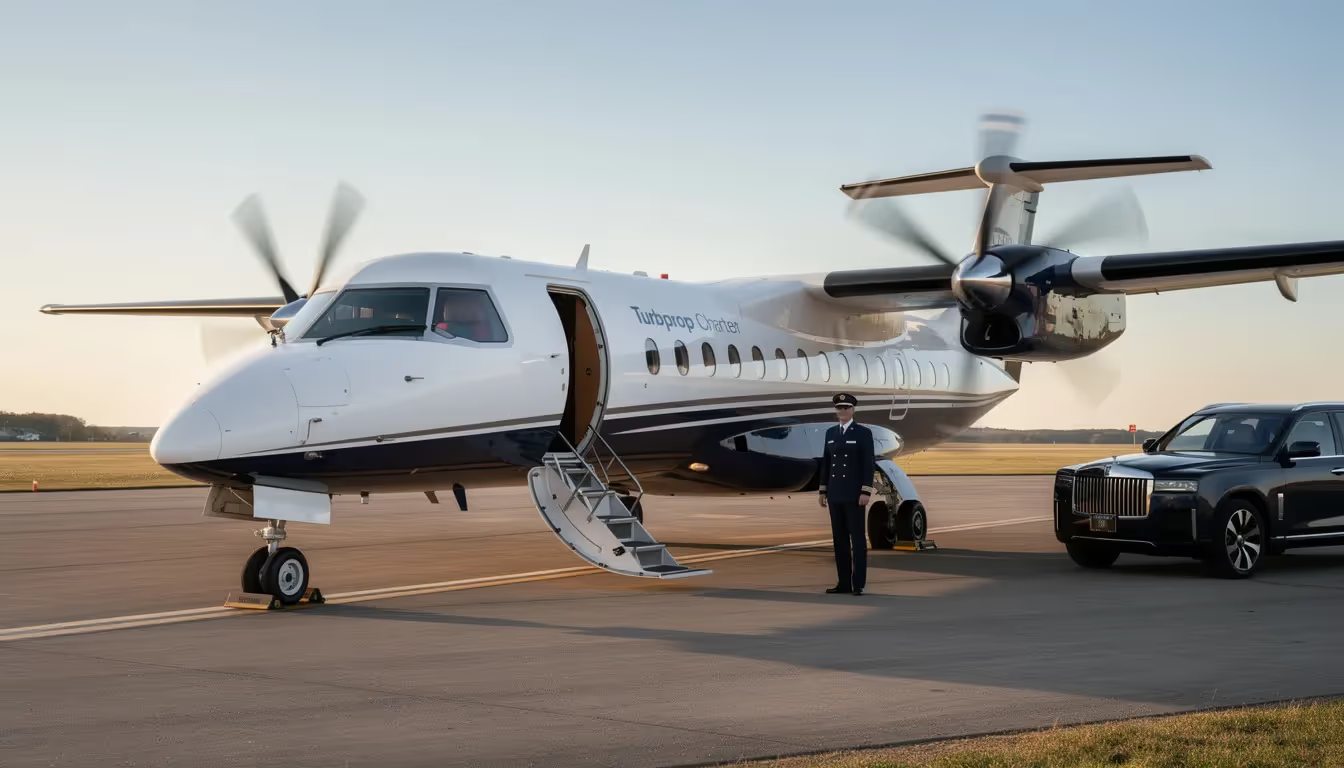
Time is currency for the modern executive. In a world where every hour lost in transit could mean a missed opportunity or delayed decision, private jet access becomes more than a status symbol — it’s a strategic tool. Private charter flights eliminate the inefficiencies of commercial travel, offering seamless scheduling, access to smaller airports, and unmatched comfort. Air charter services provide on-demand private flight options with transparency, ease of booking, and personalized quotes, ensuring a smooth and customer-focused experience. When it comes to cost-effective regional mobility, turboprop aircraft often prove to be the wise choice.
Understanding how private jet charter rates—especially turboprop rates—are calculated empowers you to make decisions grounded in both strategy and value. Light jets offer the ideal balance of size and luxury, making them a perfect choice for both business and leisure travel. Whether you’re comparing private jet rental options or planning a multi-city trip, this guide breaks down the numbers behind the luxury. An extensive range of aircraft is available for private jet rentals, from efficient turboprops to luxurious jets, catering to every travel need.
The Private Jet Landscape: Aircraft Types and Use Cases
Light Jets: Efficient, Nimble, and Popular
Light jets are a popular option for short to mid-range flights (typically under 3 hours). Known for their impressive performance characteristics, light jets deliver higher speeds and can fly at greater altitudes compared to turboprops. They offer seating that can comfortably seat 4–7 passengers, providing both privacy and flexibility for small groups.
Light jets also feature a maximum range that generally exceeds that of most turboprops, making them better suited for longer, non-stop trips. Light jets offer enhanced speed and altitude capabilities, making them ideal for longer, non-stop flights. While their fuel usage and operational costs remain higher than turboprops, they provide quick boarding times and a competitive price point for business trips or regional hops.
Turboprops: The Smart Choice for Regional Travel
Turboprop aircraft — powered by efficient propeller-driven engines — are an excellent option for regional routes. Turboprop aircraft are powered by turboprop engines that efficiently convert power into thrust at lower speeds. These aircraft typically operate at lower altitudes, which increases fuel efficiency and allows access to smaller airports. Turboprops are especially well-suited for shorter flights due to their operational efficiency and lower operating costs. As smaller aircraft, they often have lower daily minimum flight hours and are more economical compared to larger jets. The King Air, for example, is a purpose-built aircraft for cargo hauling, featuring a large cargo door, versatile cabin layouts, and greater cargo capacity compared to light jets.
While the cruising speed is slightly lower than that of jets, they more than make up for it with fuel efficiency, lower charter rates, and surprising cabin comfort. Turboprops typically have smaller cabins and less cargo space compared to light jets, but many seat up to 8 passengers with ample luggage space. Turboprops are also praised for their ability to handle adverse weather conditions better than light jets due to their robust design and slower speeds. Larger, newer turboprops, such as the King Air 350i, cost more than smaller models like a Caravan, and premium models like the Pilatus PC-12 or King Air 350i can reach rates up to $4,500-$5,000 per hour. However, turboprop charters are generally more economical, with hourly costs ranging from $1,600 to $2,300.
Midsize Jets: Versatility Meets Comfort
Offering longer range and higher altitude performance, midsize jets are suited for cross-country travel. Their mid-tier pricing and roomier cabins make them popular for both business and leisure, striking a balance between the cost of light jets and the amenities of large-cabin aircraft.
Larger Aircraft: Capacity and Prestige
For international flights, corporate roadshows, or flying with large groups, large-cabin jets (such as a Gulfstream or Falcon) offer increased range, luxury finishes, and high-capacity seating. However, this class brings significantly higher costs due to increased fuel burn, airport fees, and crew requirements.
What Impacts the Cost of Your Charter Flight?

Private jet rental prices typically range from $1,800 to $18,000 per billable flight hour, with average hourly rates for turboprops generally ranging from $1,200 to $3,000 per hour, depending on aircraft size and age. The 'flight hour' is a key metric in estimating private jet rental expenses, as prices are typically calculated on an hourly basis. Fuel prices and fuel surcharges can significantly impact operational costs, with surcharges starting at roughly $300/hour during market surges. Flight distance is another major factor in determining flight costs and duration, as longer distances result in higher expenses. Many charter operators require daily minimums, often a minimum daily charge of two hours, even for shorter flights.
International fees may apply for flights crossing borders, covering expenses such as landing permits, overflight permits, customs, and immigration. Jets and turboprops can fly above most weather systems, ensuring a smoother and more comfortable flight experience by avoiding turbulence from adverse weather systems. Rates can increase significantly at busy or exclusive airports due to high landing and handling fees, which can range from $100 to $1,500 depending on the airport's prestige. A 7.5% Federal Excise Tax (FET) applies to all domestic U.S. flight legs.
Typically, longer flights increase total cost due to more hours, fuel, crew time, and potential overnight fees. Private jet charter rates are significantly lower than buying your own private plane. The cost of chartering a jet for a week can range from tens of thousands to several hundred thousand dollars, depending on how often you fly and which aircraft you choose. Private jet charter costs can vary depending on different factors, but generally, smaller aircraft have more affordable hourly rates. Additional costs may arise from repositioning fees, crew overnight expenses, airport handling charges, and applicable taxes.
Aircraft Type and Hourly Charter Rates
The type of aircraft you choose is the single most important cost driver. Here’s how it typically breaks down:
Turboprops: $1,200–$2,500/hour
Light Jets: $2,500–$3,500/hour
Midsize Jets: $3,500–$5,500/hour
Heavy Jets: $6,000–$10,000+/hour
Typical turboprop charter rates range from about $1,200 to $3,000 per hour. General category hourly rates for turboprops include $1,800 - $2,400/hour for King Air 90, $2,000 - $2,800/hour for Pilatus PC-12, and $2,800 - $3,500/hour for King Air 350i. The maximum range of turboprops is generally less than that of light jets, making them best suited for regional flights. Empty legs (repositioning flights) can cut costs by 50-80% when booking these flights.
Turboprop aircraft consistently offer the lowest per-hour charter rates, making them a favorite for regional travel where speed is secondary to cost-effectiveness and airport accessibility.
Fuel Consumption and Efficiency
Fuel remains one of the highest operational costs in aviation. Turboprops stand out in this category. Their engines consume 30–50% less fuel than comparable light jets for short-range flights. That efficiency translates directly into lower overall charter costs and a smaller carbon footprint.
Aircraft Availability and Market Demand
Like any premium service, pricing responds to supply and demand. Popular weekends, holidays, or large events (think Art Basel or Davos) can significantly inflate rates. Last-minute bookings may also come with positioning fees, especially if your departure airport doesn’t already have the aircraft you need.
The Role of Flight Time and Distance
Calculating Cost by Hour and Distance
While charter companies often quote hourly rates, the total flight cost is a mix of flight hours, positioning legs, airport fees, and additional services. For example:
A 300-mile flight in a turboprop (e.g., from Palm Beach to Savannah) may take ~1.5 hours.
At $1,800/hour, that’s $2,700, plus fees.
Compare that to a light jet for the same flight at $3,000/hour — $4,500 before fees.
Over multiple trips, these differences become strategically significant for businesses or individuals who fly often.
Aircraft Matching to Trip Profile
A 90-minute regional flight with four passengers doesn’t require a heavy jet. In fact, many BlackJet clients use turboprop charters for these routes to maximize efficiency. The smaller footprint and shorter runway capabilities allow access to airports that jets often can’t use — saving even more time on the ground.
Per-Hour Costs and Private Jets
When considering a private jet charter, understanding how costs are calculated is essential for making the most of your travel investment. The primary factor in determining private jet charter cost is the hourly rate, which varies based on the aircraft type, size, and onboard amenities.
For most charter flights, private jet charter rates are quoted per hour. Light jets, which are perfect for shorter trips and small groups, typically range from $2,500 to $4,000 per hour. If your travel needs require longer flights or more cabin space, midsize jets offer a step up in comfort and range, with hourly rates generally between $4,000 and $7,000. For those seeking the ultimate in luxury and capacity, larger jets can command rates of $10,000 or more per hour.
Turboprop charter stands out as a particularly cost-effective solution for regional flights. Turboprop aircraft often start at around $1,600 per hour, making them an attractive option for travelers who want the benefits of a private plane without the higher costs associated with jet engines. These aircraft are ideal for shorter routes and can access smaller airports, providing both flexibility and value.
It’s important to remember that the per-hour rate is just the starting point. Additional fees—such as landing fees, ground transportation, and other services—can add to the total cost of your private charter. Factoring in these extra charges ensures you have a clear picture of your overall charter cost before you fly.
By understanding how private jet charter rates are structured and what influences the total cost, you can confidently select the right aircraft for your specific trip—whether that’s a turboprop for efficient regional travel or a jet for longer flights.
Additional Costs to Consider
Airport and Handling Fees
Private terminals (FBOs), landing fees, and handling costs vary by airport. Smaller regional airports often have lower handling fees, which favors turboprop usage.
Catering and Ground Transportation
While optional, onboard catering, in-flight Wi-Fi, and car service on arrival all add to your total charter cost. These are important considerations for high-touch itineraries.
International and Seasonal Fees
Flying internationally? Expect customs, immigration coordination, and overflight permits. Additionally, winter flights may incur de-icing fees, particularly in colder regions. These can range from a few hundred to several thousand dollars, depending on aircraft size.
Why Turboprops Are a Strategic Asset
Ideal for Regional Hubs and Hard-to-Reach Airports
Turboprops can land on runways as short as 3,000 feet — opening up a wider network of airports and avoiding busy commercial hubs. This makes them perfect for destinations like:
Napa Valley (Angwin-Parrett Field)
The Hamptons (East Hampton Airport)
Aspen, CO (especially in winter conditions)
Cost Control Without Compromise
Turboprops deliver business-class comfort without business-class pricing. They typically feature leather club seating, soundproof cabins, and often a lavatory — all within a significantly more affordable charter bracket.
Sustainability Benefit
Turboprops also produce less CO₂ per hour than most jets. For environmentally conscious clients or companies with carbon goals, this offers a clear advantage in aligning air travel with broader ESG targets.
How to Estimate Your Private Charter Cost
Use an Expert (Not Just a Calculator)
Online tools can provide a ballpark estimate, but real charter cost requires expert insight. At BlackJet, our advisors consider factors like:
Plan for Add-Ons
Don’t overlook costs like catering, in-flight Wi-Fi, VIP lounge access, crew overnight stays, or international permits. These can easily add 15–25% to your base flight price — or more on long-haul flights.
Private Jet Rental vs. Jet Card vs. Charter On-Demand
When to Rent Per Trip

An on-demand charter is best for occasional flyers who want flexibility. You only pay when you fly, but pricing can fluctuate dramatically.
When Jet Cards Make Sense
Frequent flyers benefit from locked-in hourly rates, guaranteed availability, and simplified booking. BlackJet’s Jet Card program offers premium access with fixed turboprop and jet pricing — ideal for executives who value predictability, access, and time savings.
Why Ownership Isn’t Always the Answer
Owning an aircraft comes with hangar fees, maintenance, depreciation, and crew management — often reaching well over $1 million annually. For most clients, charter or Jet Card access delivers the same convenience with none of the overhead.
Frequently Asked Questions (FAQs)
What is the average hourly cost of a turboprop charter?
Most turboprop charters range between $1,200–$2,500 per hour, depending on aircraft type, availability, and region.
Are turboprops safe for private travel?
Absolutely. Turboprop aircraft undergo the same rigorous maintenance and safety checks as jets. At BlackJet, all turboprop charters are sourced from ARGUS-rated or Wyvern-certified operators.
Can I use a turboprop for international travel?
Turboprops are best for domestic and short-range international flights (e.g., U.S. to Mexico, Caribbean). For transcontinental routes, a light or midsize jet is more suitable.
Are turboprop flights affected more by weather?
Turboprops are designed for low-altitude and regional conditions. While they may be more sensitive to certain weather patterns, professional pilots and advanced routing ensure safe operation in nearly all conditions.
Your Next Flight, Elevated
BlackJet clients understand that prestige isn’t about extravagance — it’s about precision. Turboprop charters offer a compelling combination of value, access, and efficiency — making them a go-to for the traveler who flies smart.
Whether you're chartering a short flight to a regional business meeting or exploring a new vacation destination, choosing the right aircraft makes all the difference.
Explore Smarter Jet Access
With BlackJet, every detail — from fuel-efficient aircraft to certified operators — is designed around your standards.
Discover how BlackJet can reshape your travel.


 Sign up with google
 Sign up with Apple