
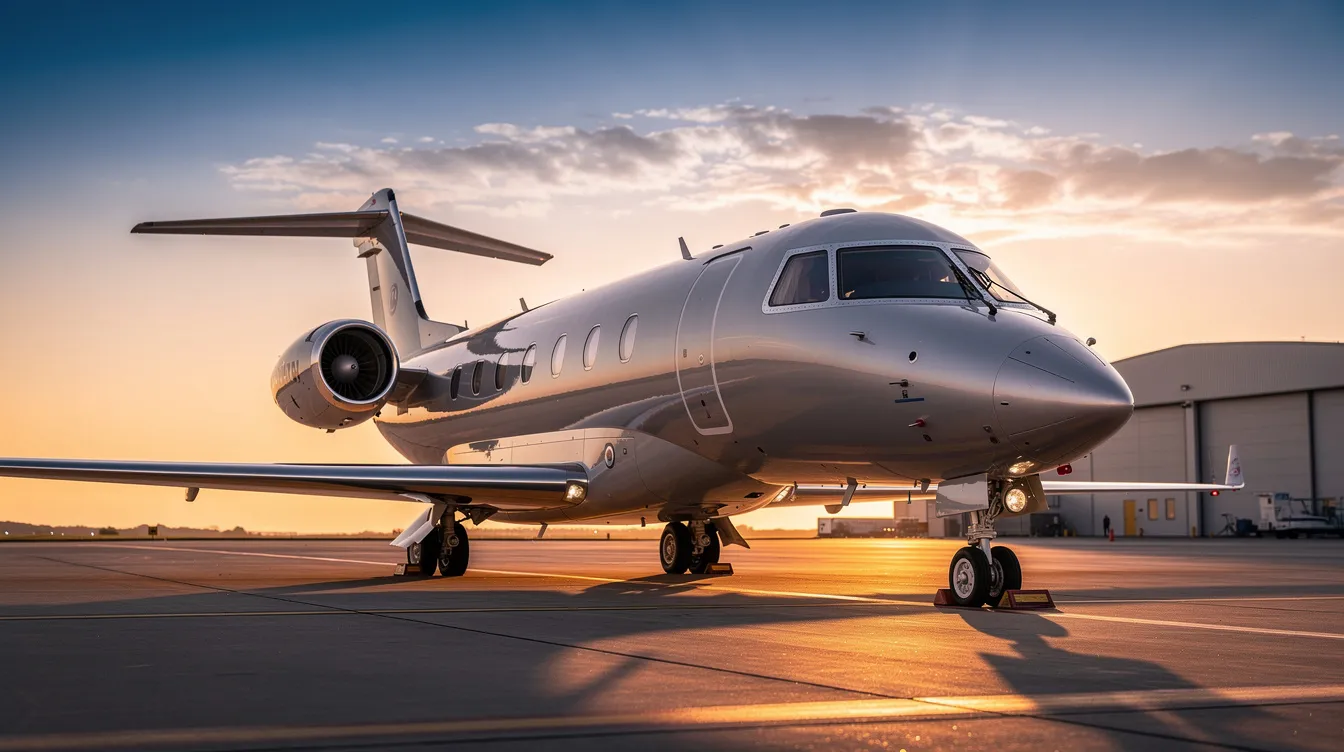
In private aviation, "ultralight" has nothing to do with shaving grams off trekking poles or sleeping bags. It means stripping away friction, wasted time, and unnecessary complexity from every flight you take. Consider the contrast: a 2027 commercial business-class trip from New York to London still involves security lines, mandatory arrival windows, layovers, baggage drama, and customs queues that can consume five or six hours beyond actual flight time. A BlackJet Jet Card flight covers the same route with direct routing, no queues, and departure on your schedule-not an airline's.
Just as ultralight gear transforms a mountain expedition by removing every unnecessary ounce, BlackJet's model-Jet Cards, on-demand charter, and digital booking-does the same for frequent business and luxury travel. Business jets typically seat 4 to 20 passengers, and flying privately is a strategic advantage for high-net-worth travelers and executives who understand that time is their most finite resource. This article shows how BlackJet applies ultralight principles-efficiency, minimalism, performance-to private jet access in 2027, including safety, sustainability, and technology.
From Ultralight Gear to Ultralight Travel: A New Kind of Minimalism
If you've ever followed thru-hikers on the Pacific Crest Trail, you know the philosophy: swap your 60-liter pack, heavy tents, and thick insulation for Gossamer Gear-style lightweight systems. Ultralight backpacking focuses on minimizing pack weight, aiming for under 10 pounds of base weight (which excludes food, water, and fuel). Ultralight setups favor minimalist or frameless packs for reduced weight, and ultralight backpacking treats gear as a multi-use system for efficiency. Carrying less weight lowers strain on muscles and joints, and ultralight backpacking allows for longer hiking distances with less fatigue.
Advanced ultralight materials like Dyneema are lightweight yet strong, providing excellent strength-to-weight ratios. Ultralight materials reduce pack weight for outdoor activities, while ultralight clothing allows greater freedom of movement during activities. Many ultralight fabrics wick moisture away from the skin. Of course, ultralight gear often omits extra comfort features to save weight; ultralight gear systems promote careful campsite selection and handling, and ultralight materials may require gentler care due to increased vulnerability. Trade-offs in ultralight backpacking include higher costs for specialized materials-but backpackers who make the switch generally agree the investment pays off in performance and endurance. Ultralight gear improves energy efficiency during long-distance adventures, and ultralight gear takes up less space in a backpack.
Now apply that same filter to aviation. In private flying, "weight" equals wasted time, inflexible ownership structures, and administrative overhead, which is why understanding Jet Card membership pricing becomes central to designing an ultralight setup. BlackJet removes these heavy elements via premium private Jet Cards and on-demand access. Instead of hiking poles and tarps, BlackJet's ultralight gear is its streamlined membership, app-based booking, transparent pricing, and curated aircraft network.
Here's a concrete example: an entrepreneur flying New York–San Francisco twice a month in 2027 trades complex charter negotiations for a fixed BlackJet 25-hour Jet Card with tap-to-book simplicity.
Heavy/complicated travel vs. ultralight/simple travel:
Old gear approach: owning an aircraft, managing crew, handling maintenance, paying hangar fees whether you fly or not
Ultralight approach: prepaid hours, guaranteed availability, right-sized cabin class per trip, digital booking in minutes
Old gear approach: calling brokers, negotiating each charter, uncertain pricing
Ultralight approach: fixed hourly rates, one Jet Card, predictable budgeting
BlackJet Jet Cards: The Core of Ultralight Private Jet Access
Think of a Jet Card as the private aviation equivalent of an ultralight kit-one compact solution that covers most mission profiles. Jet cards provide prepaid access to private jets, and programs typically offer 25-hour or 50-hour options. They cater to high-net-worth leisure travelers and executives who want the stuff that matters-flexibility, safety, privacy-without the load of aircraft ownership.
Jet cards include 24/7 digital booking tools, and Jet Card programs offer carbon-neutral flight options as a default in 2027, with Jet Card pricing structures designed to keep those benefits transparent. Mobile booking platforms enable 24/7 access to jet services; users can book private jets via mobile applications, and mobile platforms streamline the booking process for travelers.
Consider this use case: a CEO who logs 40–60 hours of regional flying per year. Owning a light jet means millions in upfront capital, plus hangar, crew salaries, insurance, and depreciation-regardless of whether the aircraft sits idle for weeks, especially when you compare that outlay to typical Jet Card cost per hour for similar usage. A BlackJet 50-hour Jet Card replaces all of that with a single prepaid commitment and access to multiple cabin classes, and a detailed 50-hour Jet Card pricing guide shows how these costs break down in practice.
Key advantages of Jet Cards:
Prepaid hours with consistent, capped hourly rates
Guaranteed availability across multiple aircraft categories
No ownership costs, no fractional share contracts, no per-trip negotiations
Predictable budgeting for annual travel planning
Carbon-neutral flights included at no extra cost
Access from a single mobile platform-helpful whether you're at home, in a country abroad, or mid-trip
BlackJet vs. Owning, Chartering, or Flying First Class
The comparison makes the most sense when you think of travel options on a spectrum from heaviest to lightest:
Ownership (heaviest): Upfront capital runs into tens of millions-midsize jets alone cost $13M–$43M. Add crew, maintenance, hangar, insurance, and depreciation. Best suited for those flying 300+ hours per year on global routes. For context, even turboprop aircraft are powered by turbine engines and require dedicated management, while ultralight aircraft weigh less than 254 pounds and can carry one passenger only-a reminder of how far apart the aviation spectrum stretches. Light sport aircraft have a maximum weight of 1,320 pounds, occupying another narrow category entirely. Trikes and similar platforms serve recreational purposes but share none of the mission capability of business jets.
On-demand charter (lighter but unpredictable): No fixed costs, but rates vary wildly. Peak-day surcharges and repositioning fees can spike costs 30–50%. Availability is never guaranteed, especially during holidays or major events, which is why frequent travelers gravitate toward the best Jet Card programs for consistent access.
Commercial first class (time-heavy): Comfortable in the cabin, but the extra weight is everywhere else-security, connections, rigid schedules, and hours lost to airport processes. Women and men traveling for business alike lose productive hours that compound across dozens of annual trips.
BlackJet Jet Cards (ultralight configuration): Mid-five- to low-six-figure prepaid commitment. Access to light, midsize, super-midsize, and large-cabin jets under one card. Fixed hourly rates averaging roughly $10,958/hr in Q3 2026 across all entry-level categories. No ownership burden, no per-flight negotiation. This is the ultralight configuration for travelers who prioritize time, privacy, and financial agility.
Aircraft Categories: Matching Cabin Class to an Ultralight Mindset
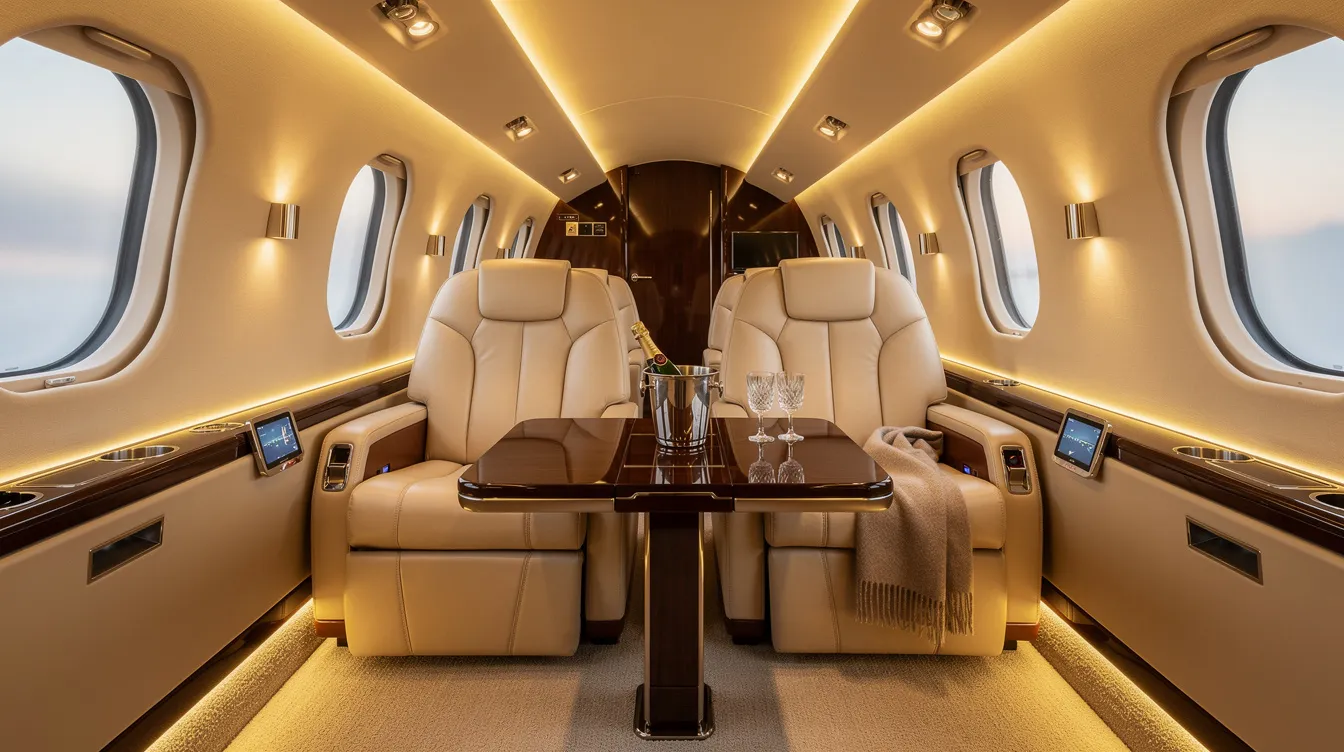
Private jets offer multiple cabin classes for different needs. Cabin classes vary in size, luxury, and amenities, and common cabin classes include light, midsize, and large jets, mirroring the broader landscape of private jet types for every traveler. Luxury cabin classes provide high-end features and privacy, and cabin classes impact the overall cost of private jet travel.
An ultralight philosophy favors selecting the smallest, most efficient aircraft that does the mission safely and comfortably-just as a backpacker wouldn't carry a camera, stoves, utensils, and a pair of heavy jackets when a fine multi-use kit would do, and a clear view of private jet sizes and use cases makes those trade-offs easier. Here's how BlackJet's aircraft categories break down:
Light jets: 6–7 passengers, ~1,500–2,000 nautical mile range, ~400–450 knots. Ideal for sub-3-hour hops like Boston–Chicago or Los Angeles–Aspen. Capable of accessing smaller airports with shorter runway lengths, and often featured among the best small private aircraft for flexible missions.
Midsize jets: 7–9 passengers, 2,000–3,000 nm range, stand-up cabin. The right balance of comfort and efficiency for coast-to-coast U.S. flights.
Super-midsize jets: 8–10 passengers, 3,000–3,600 nm. Nonstop New York–Los Angeles, or London–Dubai without compromise. More interior space, higher speed.
Large-cabin / long-range jets: 10–16+ passengers, transoceanic capability. Multi-zone cabins for intercontinental flights like New York–London. Explore BlackJet's certified large cabin jets for these missions.
BlackJet advisors and digital tools help clients right-size cabin class per trip so you're not over-packing on aircraft size and cost. Flying a heavy jet from Miami to Nassau when a light jet handles it fine is the aviation equivalent of hauling a 40-pound pack on a day hike.
Safety as Non-Negotiable: Ultralight Doesn't Mean Cutting Corners
While hikers may shave ounces off sleeping pads and replace thick socks with lighter pairs, BlackJet never shaves safety margins. Ultralight in aviation means eliminating bureaucracy, not safety layers.
Private jets must comply with FAA safety regulations, and safety certifications are crucial for private aviation companies. BlackJet's safety framework includes:
Third-party safety ratings such as ARGUS and Wyvern, with every partner operator audited to meet or exceed industry standards
Minimum pilot hour requirements and recurrent training for every crew member
Full Part 135 compliance for all U.S. operations-covering maintenance, crew duty time, and operational oversight
Safety measures include regular aircraft maintenance checks, and private jets are subject to rigorous safety inspections
Weather and route risk assessments, alternate airport planning, and real-time operational adjustments
The aviation industry is exploring electric aircraft technology as a future development, but today, BlackJet's unmatched safety standards focus on proven, auditable protocols.
Scenario: A winter 2027 flight from Zurich to London. The BlackJet ops team identifies icing conditions along the planned route, proactively adjusts departure timing by 90 minutes, and recommends a super-midsize aircraft with superior de-icing capability, applying the same risk-aware mindset found on the world's best-performing private jets. The client receives a notification, approves the change with one tap, and arrives safely-never having to research weather data, call a pilot, or manage the decision themselves.
Sustainable, "Ultralight" Environmental Footprint: Carbon-Neutral Flights
BlackJet applies ultralight thinking to environmental impact by minimizing and offsetting the carbon "weight" of each flight. Sustainable aviation aims to reduce carbon emissions, and carbon-neutral flights are becoming more common in aviation across the industry, even as travelers explore more affordable private jet options that still prioritize efficiency.
All BlackJet Jet Card flights are carbon-neutral by default in 2027, with offsets integrated at no extra cost to members. Carbon offset programs help mitigate aviation's environmental impact by calculating CO₂ per route and investing in verified climate projects-reforestation, renewable energy, or certified carbon removal through organizations like Verra and Gold Standard. Sustainable aviation practices include using alternative fuels, and BlackJet's sustainability program incorporates sustainable aviation fuel (SAF) where supply permits, aligning cost and carbon impact in the same way as budget-friendly private aircraft choices.
Example: A 25-hour Jet Card member flies New York–Miami, Los Angeles–Aspen, and London–Nice over six months. Cumulative emissions from all flights are calculated automatically and fully offset-the member receives an annual impact summary showing their carbon-neutral status without lifting a finger.
Sustainability features built into every Jet Card:
Default carbon offsets on every flight-no opt-in required
SAF blending where available, with expanding supply partnerships
Third-party verified offset projects
Annual sustainability reporting delivered to each member's dashboard
Research into next-generation green private jet technologies and fuel alternatives
Technology as Your Ultralight "Gear": Booking, Support, and Transparency
BlackJet's mobile booking platform and web dashboard are the digital equivalent of curated ultralight gear-compact, powerful, and always ready. Real-time flight support is available 24/7 for travelers, and real-time support enhances safety and efficiency during flights.
Private aviation companies offer real-time flight updates to clients, and private aviation companies often provide 24/7 real-time support. Here's what BlackJet's technology delivers for every user:
24/7 booking requests: Schedule flights any time, from anywhere-whether you're in Canada, Australia, Italy, or over the sea near New Zealand
Instant pricing estimates: See all-in costs by route and cabin class, including fuel surcharges and taxes, before you confirm
Real-time flight status: Track your aircraft, receive pre-flight weather updates, and get proactive notifications if conditions shift, whether you've booked a whole aircraft or simply bought a seat on a private jet
Secure document storage: Passports, travel preferences, catering notes, and ground transport requests stored in one place
Multi-leg coordination: Plan a New York–London–Geneva itinerary in minutes, without email chains or phone tag
Live operations support: Real humans (not chatbots) available before, during, and after each flight to adjust departure times, routing, or ground transport
Mental load reduction: Every feature is designed to filter out planning weight, so your trip preparation feels as light as packing a single stuff sack instead of multiple bags
Designing Your Personal Ultralight Flight Kit with BlackJet
Think of this like building an ultralight backpacking list-but for your travel life. Your core elements include a chosen Jet Card tier, preferred aircraft categories, and standard route templates, all grounded in a clear understanding of Jet Card pricing and benefits. No fanny packs full of receipts. No water bottle of worries about whether your charter will show up. Just a durable, reliable system built around how you actually fly.
Profile 1: U.S. Coastal Executive: A New York–based CEO flying to Miami and Los Angeles monthly. A 50-hour Jet Card in the light and super-midsize categories covers both short hops and coast-to-coast flights, and a 100-hour Jet Card cost breakdown can help them plan for eventual scale-up as their schedule grows. Preferred airports: Teterboro, Opa-locka, Van Nuys. Default setup: onboard Wi-Fi workspace, light catering, ground transport pre-arranged. This executive is a big fan of the store-and-go preference system-set it once, fly without repeating instructions.
Profile 2: European Investor A London-based investor with regular trips to Zurich and Milan, plus occasional flights to other countries like China for business. A 25-hour Jet Card with super-midsize access handles intra-European routes; large-cabin hours can be added for intercontinental legs, making a 25-hour Jet Card features and costs guide especially relevant. Sun protection and warm clothing packed for Alpine meetings; the flight itself requires zero logistical planning beyond one tap.
Profile 3: Leisure Traveler:r Seasonal ski trips, island getaways, remote resort access. This traveler might hike in the morning and fly to the next destination by afternoon. A 25-hour Jet Card with multi-category access lets them switch between light jets for short island hops and midsize for longer legs, and a solid grasp of Jet Card cost per hour helps them align budget and spontaneity. No sales pitch needed-the flexibility speaks for itself.
Steps to design your ultralight travel setup:
Audit your past 12–24 months of flying with a BlackJet advisor
Identify your top 3–5 routes and the right cabin class for each
Choose your Jet Card tier (25 or 50 hours) based on projected annual usage
Set default preferences: catering, ground transport, workspace configuration, temperature preferences
Review your carbon-neutral impact summary quarterly
Frequently Asked Questions About Ultralight Private Jet Access
How do Jet Cards differ from on-demand charter?
Jet Cards lock in hourly rates for the contract period and generally guarantee availability with defined notice windows (often 24–72 hours). On-demand charter quotes each flight individually, with rates that fluctuate based on demand, repositioning, and peak-day surcharges. For anyone flying more than a few times per year, Jet Cards deliver more predictable costs and reliable access.
What aircraft categories can I access with a single Jet Card?
BlackJet Jet Cards provide access to light, midsize, super-midsize, and large-cabin jets. You choose the right category per trip—no need to commit to a single aircraft type. This makes fine sense for travelers whose routes vary in length and passenger count, especially when comparing structures like NetJets Jet Card costs and inclusions.
How is carbon-neutrality verified in 2027?
BlackJet uses third-party verified offset projects through organizations like Verra and Gold Standard. Emissions are calculated per route, and offsets are applied automatically. Members receive annual impact summaries showing cumulative offsets. Some of the advice we follow mirrors industry leaders who offset at 300% to cover non-CO₂ warming factors.
What safety certifications does BlackJet require?
Every partner operator must hold current ARGUS or Wyvern ratings, maintain Part 135 compliance, and meet minimum pilot hour requirements. Aircraft undergo regular maintenance checks and rigorous safety inspections. This is non-negotiable—of course, no amount of convenience justifies compromising safety.
How quickly can a flight be arranged?
Typical lead times range from 24 to 72 hours depending on aircraft category and route. For urgent requests, BlackJet's 24/7 operations team works to source available aircraft as rapidly as possible.
How does the cost of a Jet Card compare to commercial first class for frequent routes?
A 25-hour light jet card costs roughly $183,000–$191,000 (approximately $7,300–$7,650 per hour). For an executive flying New York–Chicago round-trip twice monthly, the per-trip cost is higher than first class—but the time saved (3–5 hours per round trip in airport processes alone), privacy, and productivity often make the Jet Card the more valuable choice for those who can quantify their time, particularly when evaluated against broader Jet Card cost benchmarks.
Are there minimum daily usage rules?
Yes. Most Jet Card programs have daily minimums—currently averaging about 95 billed minutes per flight day across the industry. Short hops may still incur this minimum, so it's helpful to factor this into your planning.
Can I use my Jet Card for international flights?
Absolutely. BlackJet Jet Cards cover domestic and international routes. Whether you're heading to Italy, Canada, or across the sea to Australia or New Zealand, the same card and booking platform apply. Your advisor can help with customs coordination and country-specific requirements, including when your trip involves large private jets for 20 passengers.
Call to Action: Elevate Your Travel with Ultralight Private Jet Access
BlackJet's approach turns private aviation into an ultralight experience: minimal friction, clear pricing, rigorous safety, and carbon-neutral performance built into every flight. No extra weight. No unnecessary complexity. Just a capable, refined system designed around how you actually travel, whether you access aircraft on-demand or explore premium private jets for sale in the UK for long-term ownership.
Explore BlackJet's Jet Card programs-25-hour and 50-hour options-and speak with an advisor about right-sizing an ultralight travel strategy for 2027 and beyond, including solutions for private jets accommodating up to 50 passengers when your missions demand it. Request a sample itinerary and pricing for your top three routes, or tour the digital booking platform to see how effortless the experience feels.
Join BlackJet's Jet Card program and experience how ultralight, carbon-neutral private jet access can quietly become your new standard of travel.