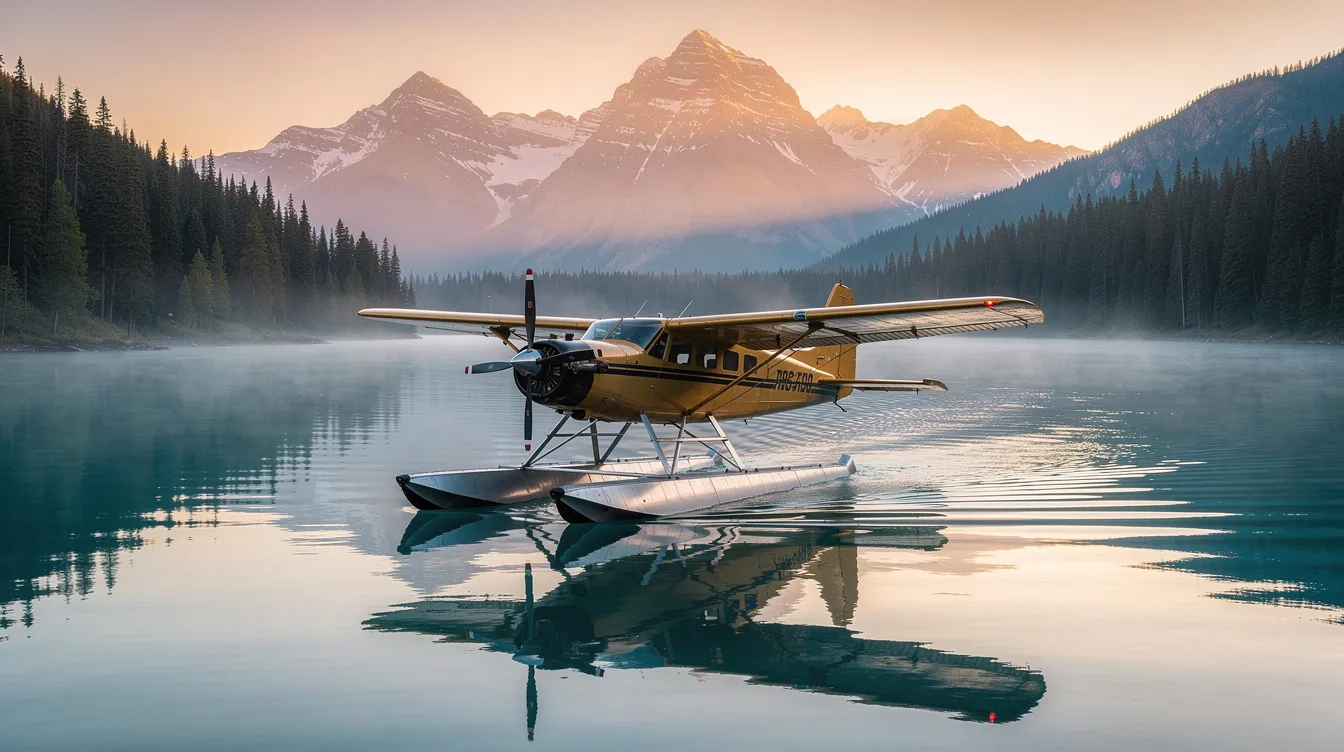
Private aviation opens doors that commercial flight cannot reach-but some of the world's most coveted destinations have no runway at all. Water landing planes bridge that gap, connecting travelers to lakeside lodges, island resorts, and coastal retreats that exist beyond paved runways. This guide traces the full arc of these remarkable aircraft, from early twentieth-century experimentation to today's amphibious turboprops, and explains how BlackJet integrates water-landing segments into seamless, carbon-neutral private travel.
Strategic Advantage: Why Water-Landing Planes Matter Today
Aircraft capable of landing on water extend private aviation's reach to places that simply cannot support traditional airports. Consider Alaska's roadless interior, the scattered atolls of the Maldives, British Columbia's chain of wilderness lakes, or the Mediterranean's smaller islands-each destination demands water access rather than tarmac. Float planes access remote areas without runways, and they transport supplies to wilderness locations that would otherwise require hours of overland or maritime transfer.
The time advantage is substantial. A commercial itinerary from New York to a British Columbia fishing lodge might involve a mainline flight to Vancouver, a regional hop to a smaller airport, and a ninety-minute boat ride. A private jet to Vancouver followed by a thirty-minute float plane leg to the lodge dock compresses that journey dramatically and eliminates exposure to crowded terminals and rigid ferry schedules.
For high-net-worth and executive travelers, water landings function as the precision final-mile solution. After a super-midsize or long-range jet handles the intercity segment, a vetted float plane or amphibious aircraft delivers the traveler directly to a remote villa, a yacht anchorage, or a lakeside retreat. Privacy is preserved, schedules remain flexible, and the travel experience itself becomes part of the destination's appeal. Float planes also offer unique sightseeing experiences-scenic aerial tours over glaciers, coastlines, and coral reefs that no ground transfer can replicate.
BlackJet's role is to coordinate the entire journey through a single point of contact. Jet Card hours cover the private jet segment, with access to premium private jet cards and membership programs, while water-landing legs are arranged through carefully selected partner operators and quoted alongside the jet charter. Baggage transfers, weather contingencies, and scheduling buffers are managed by BlackJet's real-time support team so that each leg connects without friction.
What Is a Water-Landing Plane? (Seaplanes, Float Planes, Flying Boats, Amphibious Aircraft)
Water-landing planes are aircraft specifically designed or modified to take off and land on water. The umbrella term "seaplane" covers every aircraft that operates from a water surface, but the category breaks down into distinct types. Seaplanes include both float planes and flying boats, each with a fundamentally different relationship to the water beneath them.
Float planes use external pontoons-sometimes called external floats-mounted beneath a conventional airframe to keep the fuselage above the water. Flying boats land using their fuselage directly on water; the hull itself is shaped like a boat's keel, providing buoyancy without separate pontoons. All float planes are seaplanes, but not vice versa: a flying boat is also a seaplane, yet it has no external pontoons at all.
Amphibious aircraft add another dimension. These designs combine either amphibious floats (pontoons with built-in retractable wheels) or a boat-hull fuselage with landing gear, giving them the ability to land on both water and traditional runways. The versatility comes at a cost-added weight and mechanical complexity-but it means a single aircraft can operate from a remote lake one hour and a paved runway the next.
In practice, modern seaplanes used by commercial and private operators are overwhelmingly float planes and amphibious aircraft rather than true flying boats. Large flying boats are rare, expensive to maintain, and reserved for specialized government or firefighting roles. The floatplane aircraft that serve tourism, cargo, and charter operations today are far more practical for daily service.
Types of Water-Landing Aircraft: Float Planes, Flying Boats, and Amphibious Aircraft
Understanding the three main categories clarifies which aircraft fits a given mission-and why certain destinations demand one type over another.
Float planes are essentially small land aircraft fitted with external floats in place of wheels. A highly modified Cessna 172 or 182 on straight floats is a common training platform. The legendary De Havilland DHC-2 Beaver, purpose-built for Canadian bush operations, remains a workhorse when mounted on pontoons. Straight floats restrict the aircraft to water operations only; amphibious floats integrate retractable wheels so the aircraft can also use standard aircraft runways. Float planes can land on lakes, rivers, and coastal waters with minimal infrastructure-just a stretch of calm surface.
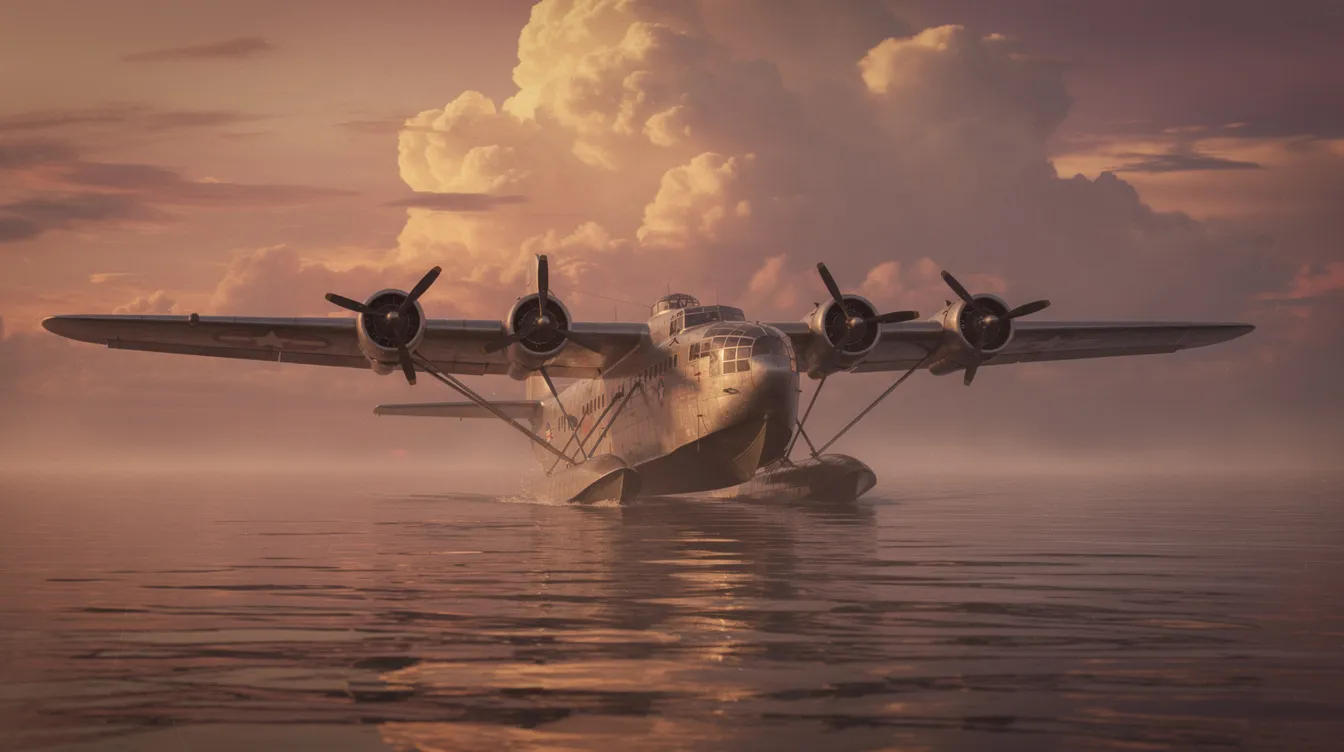
Flying boats use a hull-type fuselage as a flotation device, with small wingtip floats or sponsons for lateral stability. Historic examples include the Curtiss model NC series that attempted the first non-stop aerial crossing of the Atlantic in stages, the Short Sunderland patrol bomber, and the enormous Blohm & Voss BV 238-the largest flying boat of World War II. Flying boats can handle rougher water than floatplanes because their wide, reinforced hulls distribute impact loads more effectively. High-mounted engines protect powerplants from spray.
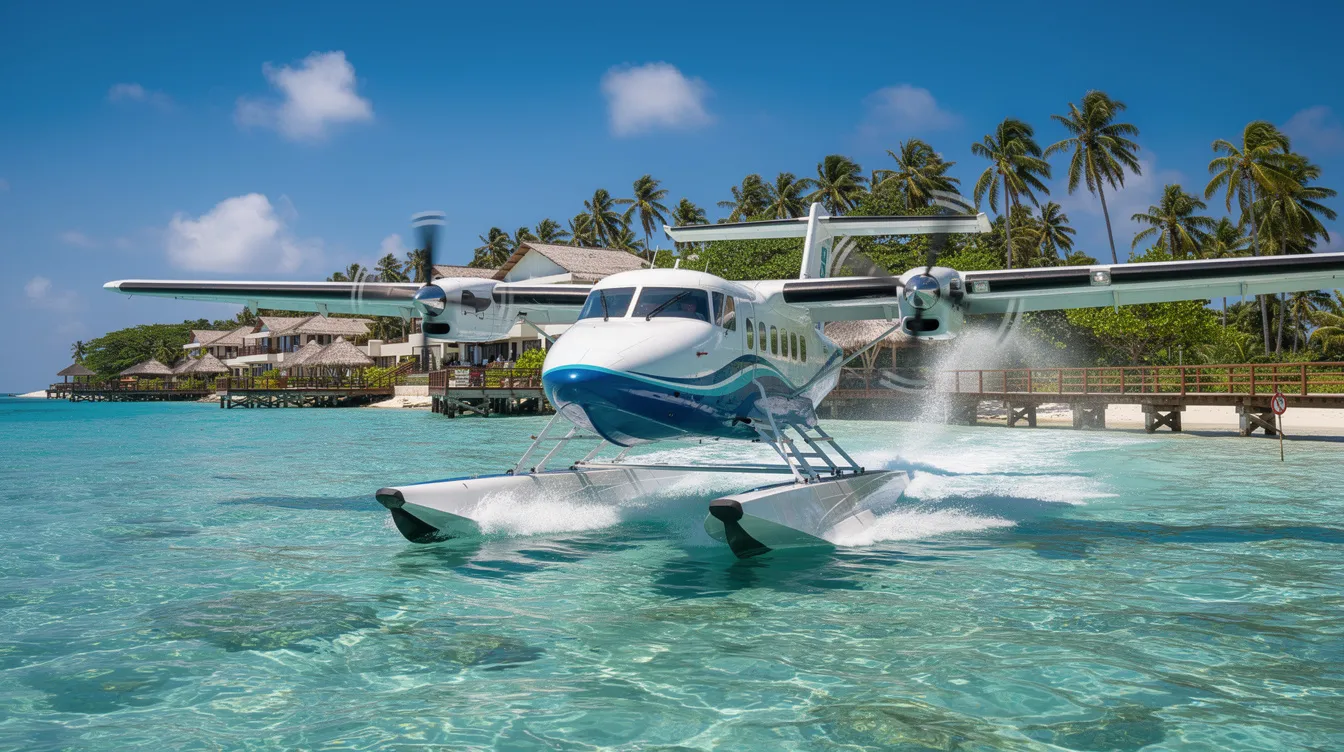
Amphibious aircraft merge water and runway capability into one platform. The De Havilland DHC-6 Twin Otter on amphibious floats is a staple of resort and remote community service. The Canadair CL-415 is used for firefighting, scooping water from lakes mid-flight. The ICON A5 is a light-sport amphibian designed for recreational flying, while the Beriev Be-200 stands as a rare jet-powered amphibian used for maritime patrol and firefighting. Each type is chosen based on mission: float planes for remote destinations and bush access, flying boats for open-ocean or heavy-lift missions, and amphibious aircraft for operations requiring flexibility between water and land.
How Water-Landing Planes Actually Land on Water
A water landing unfolds in four distinct phases, each requiring precise pilot judgment.
Approach. The pilot aligns with prevailing wind and swell patterns, judging surface conditions from altitude. Pilots assess wind direction and wave patterns before landing on water, using shoreline markers, wind streaks, and water color changes to read the surface. Glassy, mirror-smooth water is paradoxically one of the most dangerous conditions because it eliminates depth perception.
Flare. As with any landing, the pilot reduces descent rate and pitches the nose slightly upward to bleed off vertical speed before contact.
Touchdown. The floats or hull meet the surface in either displacement (plow) mode-where the aircraft pushes water aside at slower speeds-or planing mode, where it skims the surface. A "step" built into the float or hull bottom helps break water adhesion and transition to planing. Passengers typically feel a firm bump at first contact followed by a steady rush of spray that diminishes as speed decreases.
Deceleration to taxi. Aerodynamic drag, water resistance, and sometimes reverse thrust slow the aircraft to taxi speed. The pilot holds pitch to prevent the nose from digging in-a phenomenon called porpoising, which is a dangerous repeated bouncing caused by incorrect pitch and speed management.
An emergency water landing of a standard aircraft not designed for water operations is referred to as ditching. Ditching requires specific technical and safety procedures far different from a routine seaplane operation, and most commercial airliners are not optimized for water landings. Water landings in non-seaplane aircraft typically occur due to dual-engine failure or fuel exhaustion-circumstances that demand rapid execution and immediate evacuation.
Floats, Hulls, and Stability: The Hardware Behind Water Landings
Two fundamental architectures keep water landing planes afloat: external float systems and integrated hulls. Each demands precise engineering for buoyancy, strength, and careful weight distribution.
Floats are hollow, watertight structures divided into multiple compartments by internal bulkheads-so a single puncture does not sink the aircraft. Popular models include the EDO 2960 series and Wipline 3730 and 3430, each matched to specific airframe weights. Every float incorporates a hydrodynamic "step" -a transverse break in the bottom surface-that allows the aircraft to transition from displacement to planing during water takeoffs. Floatplanes are designed for stability on water during landings through the spacing of the two main pontoons, which resist roll forces during taxi and in crosswinds.
Hull-based flying boats and amphibians use stepped hulls with spray rails and chines to channel water away from engines and control surfaces. These hull shapes generate hydrodynamic lift during the takeoff run, allowing the aircraft to break free of water drag and become airborne. Wingtip floats, or sponsons,s prevent the wing from dipping into the water during turns.
Stability on the water depends on float spacing, wing dihedral angle, and proper loading. An aft-heavy load can cause the tail to settle and the nose to rise dangerously, while lateral imbalance invites wing strikes in waves. Pre-flight checks for water operations are more involved than for other aircraft: pilots inspect float compartments for leaks, verify bilge pumps and drainage plugs, examine struts and attachment hardware for corrosion, and assess water and weather conditions before committing to a departure.
Engine Placement, Spray Protection, and Avionics
Engine placement on water landing planes is driven by one imperative: keeping powerplants clear of water interference. Smaller float planes like the Cessna 180 or 185-or a highly modified Cessna adapted for floats with a Robertson STOL kit-mount engines on the nose with the propeller relatively high, relying on the aircraft's positive angle of attack during takeoff to minimize spray contact. Larger amphibians and flying boats elevate engines further. The Twin Otter positions turboprops on a high wing; the CL-415 does the same; historical giants like the Dornier Do X mounted engines on pylons above the wing entirely. Engine placement is a defining constraint of seaplane design.
Spray protection goes beyond positioning. Spray rails on floats and hulls deflect water downward and outward. Control linkages are sealed against moisture intrusion. Corrosion-resistant materials-anodized aluminum, stainless steel fasteners, hydrophobic coatings-extend service life in salt-water environments.
Modern seaplanes carry avionics suites that directly improve safety over featureless water. Synthetic vision displays recreate terrain and horizon cues that vanish over glassy surfaces. Radar altimeters provide precise height above water. Mode C transponder and ADS-B Out ensure the aircraft is visible to air traffic control and nearby traffic. These technologies translate into smoother landings, fewer weather-related cancellations, and a safer experience for passengers-particularly in four-season flying environments where conditions shift rapidly.
History of Water-Landing Aircraft: From Pre–World War I to the Jet Age
Aviation history and water have been intertwined since powered flight's earliest years. The first successful float plane flights occurred in the 1910s, when Glenn H. Curtiss conducted experiments between 1911 and 1912 that proved a standard aircraft could operate from water using pontoons-a pivotal US flight achievement. By 1914, the Benoist XIV was offering scheduled passenger service across Tampa Bay in Florida, making it a landmark flight achievement in regular air transport.
In Britain, the Bat Boat amphibious flying boat won the Mortimer Singer Prize, demonstrating that a single aircraft could operate from both water and land. Meanwhile, Curtiss's America was designed with enough fuel capacity for 1,100 miles, aiming to cross the Atlantic-an ambition that foreshadowed the golden age of long-distance flights by flying boat.
The interwar period (1920s–1930s) brought rapid expansion. The first commercial flying boat service began in 1923, and within a decade, floatplanes and flying boats were establishing international airline routes. Short Empire flying boats carried mail and passengers across the British Empire. Pan American's clippers crossed the Pacific. These aircraft thrived precisely because many destinations lacked paved runways-water was the only viable landing surface.
The turning point came after World War II. Longer-range land-based aircraft like the de Havilland Comet and Boeing 707 could fly farther and faster than any flying boat, and the rapid construction of airports worldwide diminished the need for giant water-landing aircraft. Yet demand for smaller float planes persisted in remote areas of Canada, Alaska, Scandinavia, and the Pacific Islands-regions where runways remained scarce, and water remained plentiful.
World War I and World War II: Water Planes in Warfare
The military value of water landing planes became apparent almost immediately after their invention.
During World War I (1914–1918), the Royal Navy deployed Felixstowe flying boats for coastal patrols and anti-submarine warfare across the North Sea. The Felixstowe F.2A was used extensively by the Royal Navy during WWI, and the Felixstowe F.2 was extensively used for coastal patrols against German U-boats and surface vessels operating from coastal stations along Britain's eastern shore. The "Felixstowe notch" hull design-a refinement of earlier Curtiss America variants-improved hydrodynamics and sea-handling, allowing aircraft to operate in rougher conditions. World War I accelerated seaplane technology from experimental curiosity to operational necessity.
World War II elevated water-based aircraft to global strategic importance. The PBY Catalina was a widely used flying boat during WWII, serving in ocean patrol, convoy escort, search and rescue missions, and anti-submarine warfare across every theater. Over 2,661 PBY Catalinas were produced during World War II, making it the most numerous flying boat in aviation history. Flying boats were crucial for search-and-rescue operations in WWII, recovering downed aircrew from open ocean where no other aircraft could land. The Short Sunderland patrolled the Atlantic; Japan fielded the Kawanishi H8K "Emily"; Germany produced several versions of maritime patrol and transport flying boats, including the Blohm & Voss BV 238-the largest flying boat ever built during the World War era.
The wartime legacy extended directly into civil operations. Better hull designs, standardized maintenance regimes, corrosion-resistant materials, and formalized pilot training for rough-water operations all emerged from military experience. The same operational discipline that kept patrol aircraft flying over hostile oceans now underpins the safety standards used by remote tourism and specialist mission operators worldwide.
Twenty-First Century Developments and Modern Roles
By the twenty-first century, true flying boats had become rare production items, but amphibious aircraft and float planes remained vital where geography demands water operations. Twenty-first-century developments have focused on materials, propulsion, and avionics rather than entirely new airframe concepts.
The Chinese AVIC AG600-currently the world's largest amphibious aircraft in certified production at roughly 53,500 kg maximum takeoff weight-targets firefighting and maritime rescue. The Russian Beriev Be-200 Altair operates as a jet-powered amphibian for firefighting and maritime patrol. The ShinMaywa US-2 is designed for air-sea rescue, capable of landing in sea states that would ground most other aircraft.
Traditional types endure. Fleets of DHC-2 Beavers, DHC-3 Otters, and DHC-6 Twin Otters continue operating throughout Alaska, northern Canada, Scandinavia, and the Maldives, alongside a wide variety of private jet types across every size category that connect into these regional seaplane networks. Their Pratt & Whitney PT6 turboprops deliver the reliability and power needed in isolated regions, and a complete restoration of aging airframes keeps these platforms flying decades beyond their original service life.
Modern composites reduce weight and resist corrosion. Efficient turboprops lower fuel burn. Avionics suites with synthetic vision and satellite communications improve safety margins. The economic rationale is simple: where building a runway is impossible or prohibitively expensive-and demand for access is growing-water aircraft remain the only practical solution, just as budget-friendly private aircraft options make point-to-point private flying more accessible on traditional runways.
Regional Applications: Where Water-Landing Planes Are Essential
Alaska and Northern Canada. Thousands of lakes, few roads, and vast distances make float planes a crucial lifeline for remote communities. Aircraft ferry supplies, hunters, scientists, and tourists to lakeside cabins and settlements that have no road access. Float planes are essential for emergency search-and-rescue operations in these regions, reaching accident sites or medical emergencies hours before any ground vehicle could arrive. Bush planes and float-equipped turboprops are as common here as taxis in Manhattan.
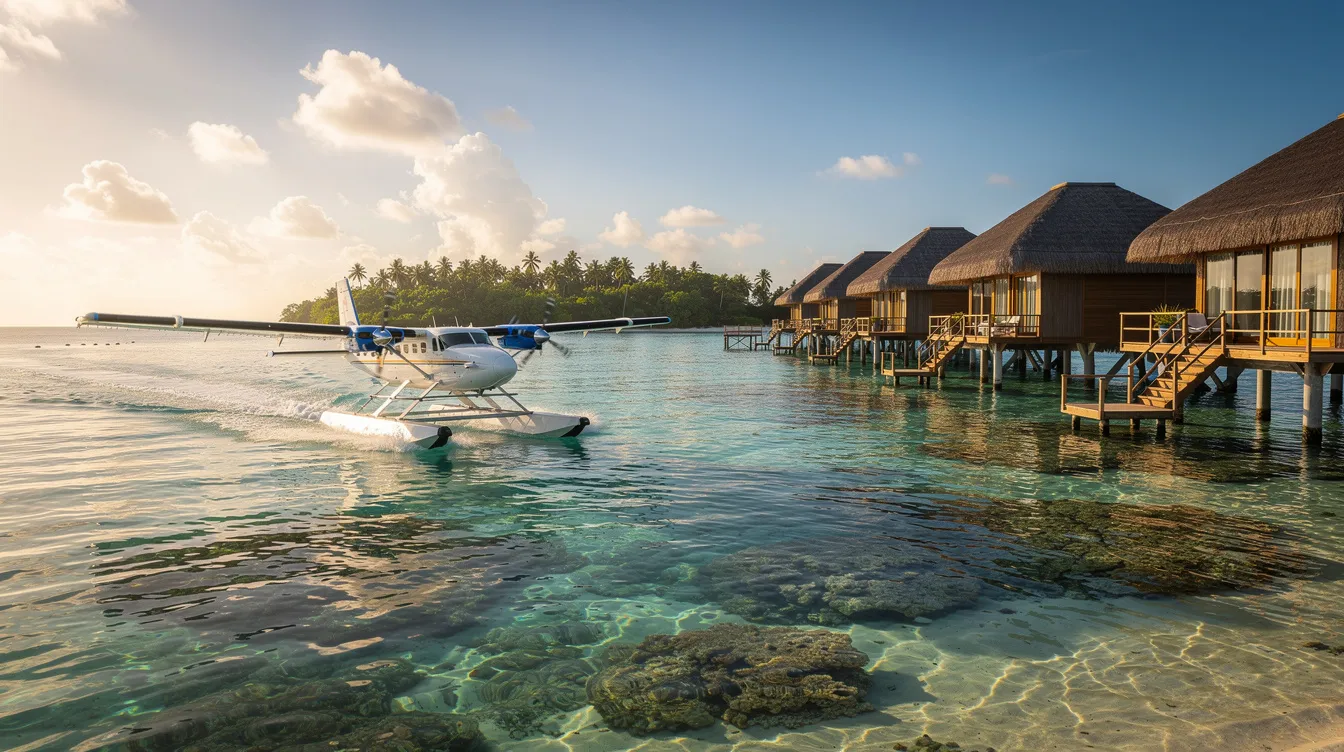
Maldives and Tropical Archipelagos. Guests arriving at Malé International Airport routinely transfer to Twin Otter seaplanes that deliver them across lagoons to overwater villas. The geography-1,192 coral islands spread across 90,000 square kilometers-makes regular air transport by seaplane the only practical connection between the international hub and individual resorts. These scenic aerial tours over crystal-clear atolls have become an iconic part of the Maldivian luxury experience, complementing travel on some of the top private jets in the world that bring guests into the region.
Other Hotspots. Norwegian fjords, Indonesian islands, African lakes, and Pacific islands all depend on seaplanes as practical water taxis. In many of these areas, water-landing aircraft serve as the backbone of local economies, connecting communities that would otherwise remain in complete isolation from markets, healthcare, and tourism revenue, much like emerging private plane rideshare models are reshaping access in more developed regions.
Design Trade-offs: Performance, Range, and Payload
Every water-landing capability comes at an engineering cost. Floats and hull reinforcements add parasitic drag and empty weight, which directly reduce cruise speed, range, and useful payload compared to equivalent land-only configurations. A Cessna Caravan on amphibious floats, for instance, sacrifices roughly 200–300 pounds of useful load and several knots of cruise speed relative to its wheeled counterpart-a meaningful difference when operating into high-density altitude conditions with full passenger loads.
The reduced payload capacity means operators must manage weight and balance with particular discipline. Baggage limits on smaller float planes are often stricter: 100–200 pounds per flight, with size constraints imposed by float-mounted storage compartments. Water takeoffs also demand longer runs than paved-runway departures because water drag exceeds tire friction, especially in warm temperatures or at higher elevations where air density drops.
Operators consistently favor robust turboprop engines-particularly the Pratt & Whitney PT6A family powering Caravans, Twin Otters, and Beavers-for their high power-to-weight ratio, reliability in harsh climates, and relative simplicity of maintenance at remote bases. These engines tolerate the demanding duty cycles of repeated water operations far better than piston alternatives.
Safety, Training, and Regulatory Oversight for Water Operations
Earning the right to fly water landing planes requires training beyond a standard pilot certificate. A seaplane or float rating adds water-specific maneuvers: water takeoffs and landings, docking, glassy-water approaches, crosswind water handling, and emergency procedures including passenger egress. A co-pilot is required on larger commercial operations, and both crew members must hold current water ratings.
In the United States, commercial seaplane operations fall under FAA Part 135 standards, the same regulatory framework governing on-demand charter. When on the water, many jurisdictions also treat seaplanes as vessels, subject to maritime right-of-way rules-a unique dual regulatory status.
Unique hazards demand disciplined mitigation. Variable water surfaces, submerged debris, changing winds, and accelerated corrosion from salt water all require rigorous inspection schedules. Passengers must evacuate rapidly during an emergency water landing; life vests must not be inflated inside the aircraft during evacuation because inflating life jackets inside the aircraft can obstruct evacuation and block exits, a consideration that also applies when booking individual seats on semi-private jets rather than whole-aircraft charters. Upon impact, emergency slides can serve as life rafts on commercial aircraft. Commercial aircraft can sometimes temporarily float after ditching, but the window is narrow-reinforcing why private jet safety standards and crew training matter profoundly.
Modern safety technologies-terrain awareness systems, traffic alerting, satellite communications-support safer operations in remote regions where radar coverage is sparse. High-end charter and private operations work only with experienced crews, rigorous maintenance programs, and operators vetted through certification bodies like ARGUS or Wyvern, similar to the standards upheld by the top private jet companies globally.
Water-Landing Planes in Modern Private and Business Aviation
The practical division of labor in modern private travel is clear: private jets handle long-range segments between major city pairs, while float planes and amphibious aircraft cover the short water-accessible legs that land directly at waterfront destinations.
A typical itinerary might begin with a Gulfstream or Challenger flying from New York to Vancouver or Seattle. Upon arrival, passengers transfer to a DHC-2 Beaver or Twin Otter on floats for a thirty-to-sixty-minute hop to a remote lake lodge or coastal estate. Another scenario: a long-range jet into Malé, then a seaplane transfer across Maldivian lagoons to a private overwater villa. In each case, the water-landing segment eliminates ground transfers, ferry waits, and the logistical uncertainty that accompanies commercial connections, while large-cabin jets from the largest private jets category comfortably handle the long-range city pairs.
Compared to all-commercial itineraries involving multiple layovers, ferries, and ground transfers, the integrated private-jet-plus-seaplane approach saves hours-sometimes an entire day-and removes the risk of missed connections. Corporate teams use these routes for board retreats at exclusive waterfront properties, often traveling in private jets configured for around 20 passengers on the long-haul sector before transferring to a seaplane. Individuals use them for heli-ski approaches, expedition launches, and arrivals at best destinations for jet card holders that happen to sit on water rather than beside a runway, frequently pairing these trips with ultra-long-range private jets for nonstop intercontinental legs.
How BlackJet Integrates Water-Landing Planes Into Jet Card and Charter Travel
BlackJet functions as both coordinator and curator. Members access private jets through 25+ hour Jet Card programs-25-hour or 50-hour blocks across multiple cabin classes-and when the destination requires it, BlackJet arranges vetted water-landing aircraft for the final segment.
Jet Card hours cover the jet portions of the journey, following transparent jet card pricing structures that make budgeting straightforward. Float plane or amphibious segments are quoted separately but integrated into the same itinerary, with a single invoice and a single support team managing the entire trip. Members request a destination, see options that may include a seaplane leg, and BlackJet's real-time support team manages timing, baggage transfers, dock coordination, and weather contingencies.
Partner selection follows strict standards. Water-landing operators must demonstrate appropriate pilot qualifications, sufficient time-in-type on seaplanes, current safety certification, strong maintenance records, and modern avionics. BlackJet's core jet operations are carbon neutral-detailed on the BlackJet Sustainability page-and the company aligns with water-landing partners who operate efficient turboprops and follow responsible environmental practices on the water, often integrating the latest advances seen in the newest generation of private jets.
Sample Jet + Water-Landing Itineraries for Discerning Travelers
New York to British Columbia Fishing Lodge. Depart Teterboro on a super-midsize jet; arrive in Vancouver in under five hours. Transfer to a DHC-2 Beaver float plane at a nearby seaplane base for a forty-minute flight north. Land on a remote lake at the lodge's private dock. Total door-to-dock: approximately seven hours-versus fourteen or more via commercial air and boat.
London to a Maldivian Private Island. A long-range jet carries you from Luton to Malé. A Twin Otter seaplane meets you at the dedicated seaplane terminal and crosses the lagoon to your resort in twenty minutes. You step from pontoon to jetty without touching a public terminal.
Los Angeles to an Alaskan Wilderness Retreat. Fly by private jet to Anchorage, then board a Cessna Caravan EX on amphibious floats. The Caravan lands on a glacial lake adjacent to an off-grid heli-ski base. The amphibious configuration means the same aircraft could divert to a nearby gravel strip if water conditions deteriorate.
Mediterranean Island Hop. A midsize jet positions you in Nice or Athens. A light amphibian-capable of operating from water and traditional runways-hops between islands without requiring airport infrastructure, delivering you to a private villa on a cove accessible only by sea.
In each scenario, BlackJet's Jet Card simplifies budgeting and scheduling for the jet segment, while the water-landing leg adds precision access and experiential value that no runway-bound aircraft can match.
Sustainability and the Future of Water-Landing Aircraft
BlackJet's carbon-neutral commitment covers every private jet flight, achieved through high-quality offsets and efficient routing, while also supporting more affordable private jet options that pair efficiency with lower emissions. Integrated itineraries that replace lengthy ground or ferry transfers with a direct seaplane leg can actually reduce overall journey emissions by eliminating intermediate vehicles and idle time.
Efficient turboprop-powered water aircraft-PT6-powered Twin Otters, Caravans, and Beavers-are inherently fuel-efficient on short sectors, burning a fraction of what a jet consumes per mile. Operators increasingly adopt low-impact anti-corrosion treatments, careful fueling protocols near water, wake minimization near sensitive shorelines, and quieter propeller profiles.
Innovation is accelerating. Harbour Air in Canada has been testing an electrified DHC-2 Beaver, and European projects are exploring hybrid-electric amphibious platforms projected for commercial readiness in the 2030s. New programs like the Catalina SPAR amphibious transport aircraft aim for FAA Part 25 certification with STOL capability from water and unimproved land surfaces. BlackJet tracks these developments to provide members access to proven, lower-emission water-landing options as they become certified and commercially viable.
FAQs About Water-Landing Planes and Private Access With BlackJet
What's the difference between a float plane and a flying boat?
A float plane mounts external pontoons beneath a conventional fuselage; the aircraft body never touches the water. A flying boat uses its hull, shaped like a boat'skeel, as the primary flotation device, landing directly on its fuselage. Both are seaplanes, but their structures and handling characteristics differ significantly.
Are water landings safe?
When performed by trained, rated pilots in purpose-built seaplanes, water landings are a routine operation with a strong safety record. Specialized training, regulatory oversight, and modern avionics reduce risk to levels comparable to conventional landings. Reputable operators maintain rigorous inspection schedules for floats, hulls, and corrosion-prone components.
How much luggage can I bring on a float plane?
Most float planes impose stricter weight and size limits than midsize jets-typically 100 to 200 pounds per flight, with smaller bag dimensions. BlackJet helps plan for this by coordinating luggage logistics across jet and seaplane segments so nothing is left behind.
Can I pay for water segments with Jet Card hours?
Jet Card hours cover the private jet portion. Water-landing segments are quoted separately but fully integrated into the itinerary, with transparent pricing for fuel, operator fees, and any marina or water aerodrome charges-all managed through one invoice.
What if water conditions are unsafe?
Amphibious aircraft can divert to a nearby runway. If no amphibious option is available, BlackJet arranges ground or helicopter transfers as contingencies. Weather buffers are built into scheduling so that a delay in the water segment does not cascade into the jet leg.
What about emergencies on non-seaplane aircraft?
An unplanned water landing on a standard aircraft is called ditching. Passengers must evacuate rapidly; upon impact, emergency slides can serve as life rafts. This is fundamentally different from a routine seaplane landing, which is performed on aircraft purpose-designed for the task.
Conclusion: Extending Your Reach With Water-Landing Aircraft
From the pioneering flying fish-like experiments of Glenn Curtiss and the Wright brothers' era to the amphibious turboprops serving today's most exclusive waterfront destinations, water landing planes have continuously extended aviation's reach beyond every runway's edge. Floatplanes and flying boats, amphibious aircraft and modern float-equipped turboprops-each category solves a specific access problem that no land-only aircraft can address.
For private and business travelers, the strategic value is clear: hours saved, direct access to remote or waterfront properties, and the distinctive experience of touching down on a glacial lake or tropical lagoon. These are not abstract benefits-they are measurable in time recovered, connections simplified, and privacy preserved.
BlackJet brings this capability into your itinerary with the same rigor, carbon-neutral commitment, and premium service standards that define every jet segment, including clear guidance on 50-hour Jet Card costs and value. Whether your next destination sits on a British Columbia lake, a Maldivian atoll, or an Alaskan glacier, the journey can be seamless from takeoff to dock, regardless of whether you compare programs like NetJets jet card pricing and structures before choosing your preferred solution.
Elevate your travel-effortlessly. Explore BlackJet's Jet Card programs, consider acquiring a premium private jet in the UK, or speak with a specialist about integrating water-landing aircraft into your next journey. Discover how refined, multimodal travel becomes your new standard.


 Sign up with google
 Sign up with Apple