For decades, first class tickets represented the absolute pinnacle of air travel. But for today's time-pressed executives and discerning travelers, the question is no longer whether to fly first class—it’s whether first class goes far enough. Here's a deep look at what commercial first class actually delivers, what it costs, and when private jet access through a Jet Card becomes the smarter move for your next trip.
Why First Class Tickets Aren't the Real Top Tier Anymore
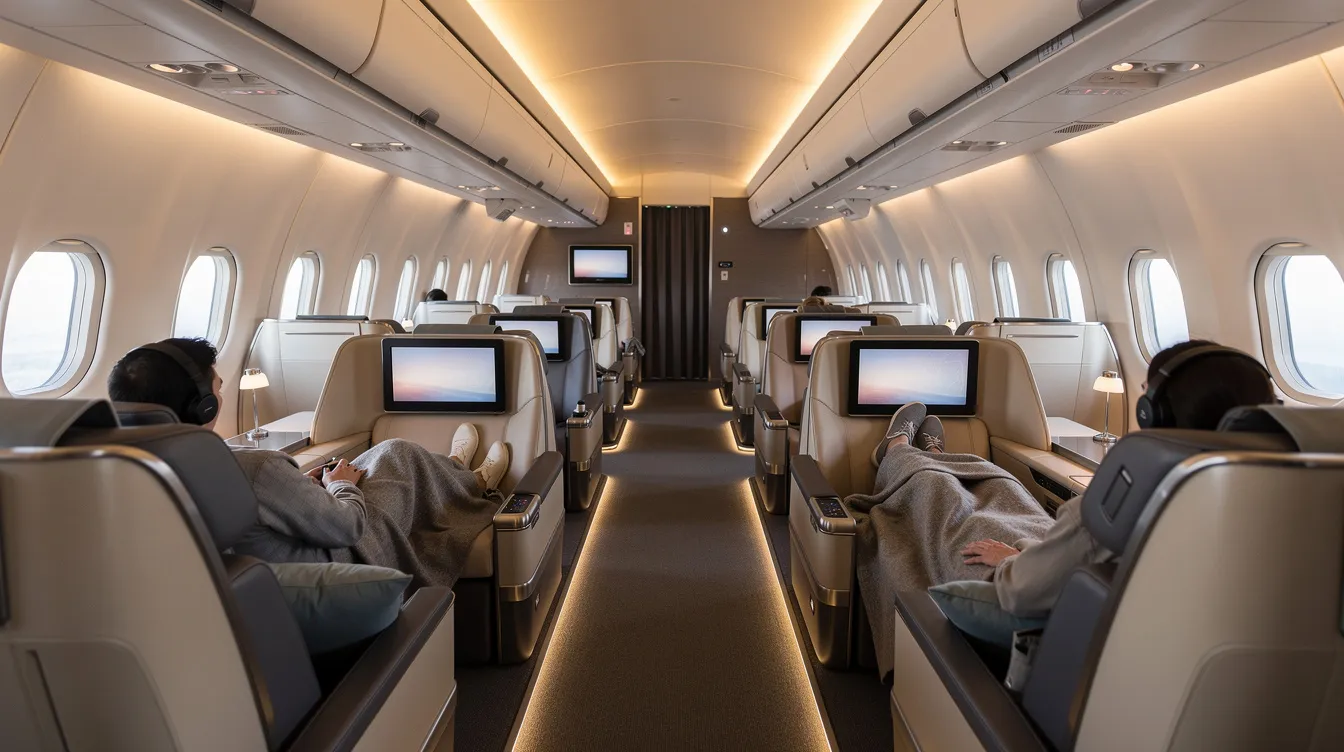
Commercial first class flights evolved as the ultimate in airborne luxury: enclosed suites, gourmet dining, chauffeur service, and exclusive lounges. First class tickets represent the highest tier of service in travel, and that remains true within the airline world. But the world outside the cabin has changed. Time-poor, high-net-worth travelers increasingly find that even the finest first class cabins cannot solve the fundamental inefficiencies of commercial aviation.
Consider a concrete comparison. A round-trip New York–London first-class ticket on a flagship carrier runs roughly $6,000–$12,000 in 2025–2026. A similar-length private flight, funded through a BlackJet 25-hour Jet Card, delivers an entirely different category of control and convenience.
The strategic benefits of private access include:
Door-to-door time savings: arrive 15–20 minutes before departure, not 1.5–2+ hours
Smaller, more convenient airports: depart from Teterboro or Farnborough instead of JFK or Heathrow
No fixed schedules: leave when your meetings end, not when the airline dictates
Total privacy: no shared cabin, no public boarding process, full discretion
This article covers what first class seats actually include, when a first class ticket makes sense, when a Jet Card or private charter is superior, and how to get the best prices for your next trip.
What "First Class" Really Buys You on Commercial Airlines
First class sits at the top of most airline cabin classes, above economy class, premium economy, and business class. But what does it actually deliver?
Key Features of First Class
On long-haul international flights, the full hierarchy runs from economy seats to premium economy, business class, and first class, with the top cabin typically offering:
Wider seats with extra legroom
Fully flat beds
Semi- or fully enclosed suites with 1-2-1 or 1-1-1 layouts
Distinctive class suites with sliding or full-height doors on select aircraft (e.g., Singapore Airlines, Emirates, Air France)
Key inclusions on most carriers:
Priority check-in and boarding
Expedited security lines
Extra free checked luggage
Airport lounge access, often with à la carte dining and showers
Fine dining or upgraded meals
Dedicated flight attendants for personalized service
Price Ranges
Price ranges for international first class flight tickets vary based on route and season. For example:
Los Angeles–Tokyo: first class fares average roughly $23,535 round trip
New York–Dubai: can exceed $20,000
Some routes: up to $18,606
Average first class ticket price across all routes: approximately $1,629 (pulled down by shorter domestic segments)
Domestic vs International Differences
It's worth noting that domestic first class in the US, Canada, and Mexico is often closer to international business class in comfort:
Economy, Business, and First Class Flights: A Clear Comparison
Picture the same New York–San Francisco class flight ticket across three cabins.
Economy Class Overview
Seat pitch: ~31 inches
Minimal recline
Buy-on-board snack
Dense seating, limited recline, minimal service
Productive work nearly impossible
Business Class Overview
Wider seats, often lie flat or angled-flat
Upgraded menus and amenity kits
Superior work and sleep options
About 75% cheaper than first class on comparable routes (typically 3–5x economy pricing)
Many travelers fly business class as their default for overnight international flights
International First Class Overview
More privacy, smaller cabins (often 4–8 suites)
Personalized service (dine-on-demand, boutique amenities)
Caviar courses or on-board showers on limited aircraft types
Fully flat beds, complimentary meals and alcohol as standard
Comparison Table
Feature | Economy Class | Business Class | International First Class |
|---|
Seat Pitch | ~31 inches | Wider, lie flat/angled | Widest, fully flat beds |
Privacy | Minimal | Moderate | High (enclosed suites) |
Meals | Buy-on-board | Upgraded | Gourmet, dine-on-demand |
Lounge Access | No | Yes (often) | Yes (flagship lounges) |
Service | Standard | Enhanced | Personalized, dedicated |
Price (NY–SF Example) | $ | $$$ | $$$$ |
For many major airlines, business class offerings have become the primary premium product, with first class cabins reserved for flagship routes like London–New York, Tokyo–Los Angeles, and Paris–Dubai.
Domestic vs International First Class: What to Expect on Each
Domestic First Class
The term "first class" means very different things on a two-hour domestic flight versus a 14-hour international sector.
2-2 recliner seats
Early boarding
Complimentary drinks and meals (limited meal options compared to international service)
Rarely includes lie-flat seats.
Lounge access may not be included unless you hold elite status or a premium credit card.
Typical routes: Dallas–Los Angeles, Chicago–Cancún
Upgrade is about convenience rather than opulence
Even on premium trains, first class often provides more luggage space and quieter cabins—domestic air first class is comparable in that regard.
Transcontinental Premium Products
On routes like New York–San Francisco on American Airlines or Delta:
International First Class
Enclosed suites with full-height doors
Designer bedding, pajamas, on-demand dining
Sometimes a double bed configuration on select A380s
Luxurious amenities like showers (e.g., Emirates' A380 shower spa)
Private cabins and beds, private suites with closing doors
Airport treatment:
International first class: dedicated immigration lanes, limousine transfers, private terminals in hubs like Frankfurt or Doha
Domestic first class: modest priority lanes and quicker check-in
How Much Do First Class Tickets Really Cost in 2025–2026?
Let's ground this in real numbers.
Fare Comparison Table
Route | Economy (RT) | Business Class (RT) | First Class (RT) | First Class (OW) |
|---|
New York–London | $800–$1,200 | $3,000–$5,000 | $6,000–$12,000 | |
Los Angeles–Tokyo | | | ~$23,535 (avg), $20,000 (deal) | >$12,470 |
Houston–Frankfurt | | | $12,707 | |
New York–London
Economy: ~$800–$1,200
Business class: ~$3,000–$5,000
First class: ~$6,000–$12,000 depending on season and carrier
Los Angeles–Tokyo
First class airfares average roughly $23,535; a "good deal" sits near $20,000
One-way first class fares can exceed $12,470
Houston–Frankfurt
Variables affecting first class flight pricing:
Booking window: purchasing within 2–3 weeks of departure can spike class airfares significantly
Seasonality: peak holidays and major events can push first class tickets to double or triple off-peak rates
Aircraft type: newer suites with enclosed doors and showers command premium pricing, much like how aircraft selection influences NetJets Jet Card cost and other fractional programs.
Carrier and route: pricing strategies vary based on competition, hub constraints, and prestige positioning
What about cheap first class flights? Often what aggregators label as first class flight deals are actually discounted business class seats mislabeled in search results, tactical fare sales, or creative routings through secondary hubs.
For frequent travelers or teams, the math shifts. Repeated first class ticket purchases can rival or exceed the annual cost of a BlackJet 25-hour Jet Card and other private jet membership pricing options, which deliver private cabin exclusivity on every leg—with no unpredictability of commercial class fares.
Finding Cheap First Class Flights: Smart Tactics and Their Limits
Core Commercial Tactics
Fly on flexible travel dates during shoulder seasons (late January, early November for Europe and Asia) when first class airfares drop noticeably.
Consider weekday vs weekend departures; some first class seats are discounted when business traffic is lighter.
Avoid major conventions, holidays, and peak events that inflate demand pricing.
Search Tools and Resources
Use meta-search engines and fare alert services to compare prices across carriers:
Momondo: compares prices from hundreds of travel sites and provides price alerts for first class flights; as of July 2026, Momondo has 11 operators for first class flights.
Skylux Travel: offers 24/7 personal service for travelers and negotiates exclusive offers with airlines.
Google Flights: useful for scanning seat availability and pricing trends across travel dates.
Be aware that some platforms rely on device-personalized advertising and cookies that can influence displayed fares, so clear your browser or use incognito mode when searching.
Compare business class deals against first class on the same route—sometimes the gap is surprisingly small, and mixed-cabin itineraries (one leg first, return business) can reduce costs meaningfully.
Loyalty-Based Strategies
Frequent flyer miles can offset first class ticket costs significantly.
A first class flight can cost 87,000 LifeMiles, and first class tickets can be redeemed for fewer miles than cash value.
Using miles can make first class more affordable, especially when leveraging credit card transfer bonuses or companion certificates.
Last-minute upgrades from business or premium economy using miles or airline bid programs provide another avenue, though availability is never guaranteed.
Limits of These Tactics
Even the best class deals keep you locked to fixed airline timetables, shared spaces, and public terminals. A travel agent can help optimize commercial bookings, but they cannot change the fundamental constraints—which is where BlackJet's private jet card model fundamentally changes the equation.
Business Class vs First Class vs Private Jets: Which Is Right for Your Next Trip?
Scenario A: CEO on New York–London
A CEO traveling New York–London for a board meeting. The schedule is fixed, the route is well served, and several airlines offer flagship first class cabins on this corridor. Here, a first class ticket on Emirates or Air France delivers a superb experience at a fraction of private jet cost—particularly for a solo traveler. Some first class flyers on this route will find it worth flying commercial for the lounge experience and on-board suite alone.
Scenario B: Family or Team Travel
A family of five flying Miami–Aspen for a winter holiday, or an executive team doing a three-city roadshow across Los Angeles, Denver, and Houston in three days. Commercial first class becomes cumbersome: connections, luggage logistics for skis, limited domestic flights to smaller airports. A private jet solves every friction point.
When to fly business class: a business class flight delivers strong value on overnight long-haul routes where sleep and productivity matter but full exclusivity is not essential. Business class seats on carriers like Qatar and Delta One offer near-parity comfort at substantially lower class fares.
When to fly first class: maximum commercial luxury for solo or couple travelers on select routes where the flagship experience matters and timing is flexible. The following airlines consistently deliver standout international first class: Emirates, Singapore Airlines, Air France, and ANA.
When to go private: schedule built around meetings, access to regional airports like Jackson Hole or Teterboro, nonstop routes unavailable on other airlines, and total privacy for deal discussions. On routes like Los Angeles–Jackson Hole, London–Ibiza, or Houston–Napa, direct private class flights on the right types of private jets bypass layovers entirely—saving 2–4 hours per trip. For audience research into your personal situation, audit how many hours you've lost to connections in the past year.
Inside the Cabin: First Class Seats vs Private Jet Cabins
First Class Suites
There's a reason first class passengers describe their suites as "rooms in the sky." Emirates' 777 First features enclosed suites with a personal wardrobe, minibar, and sliding doors. Air France's La Première offers lie-flat beds exceeding six feet in length. Select A380 configurations even feature a double bed for couples. These first class cabins set a high bar.
Private Jet Interiors
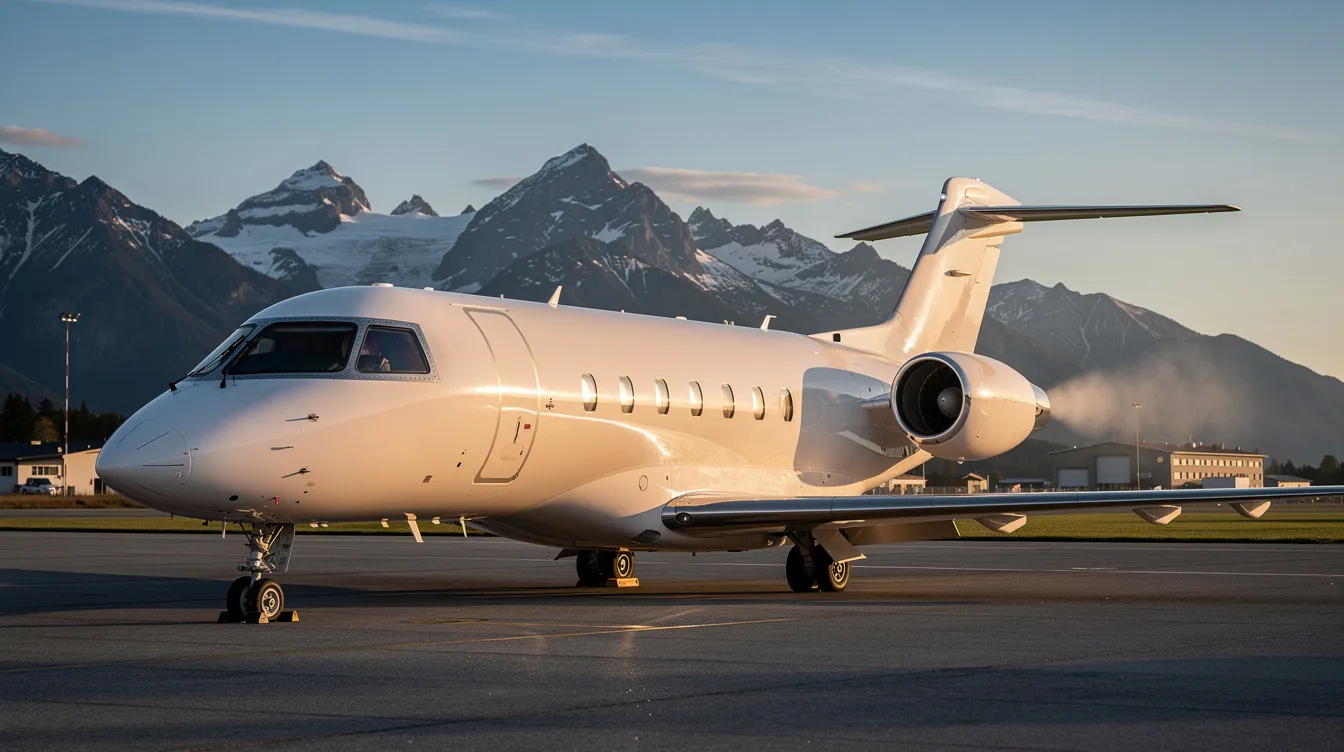
But boarding a midsize or super-midsize private jet reveals a different paradigm entirely. The entire aircraft is yours.
Private jet interiors by cabin size:
Light jets: club-style seating for 4–6 passengers on regional hops—compact but fully private
Midsize and super-midsize jets: full-length divans, conference tables for in-flight meetings, and ample baggage capacity for sports equipment like skis or golf clubs, illustrating how different private jet sizes serve distinct mission profiles
Large-cabin jets: separate lounge and sleeping zones that outperform even the best first-class seats in usable space, with exclusive services tailored to the group, especially on top 16-seat private jet options designed for larger parties
Configurability Differences
The configurability difference is decisive. On a private jet, you move freely, hold meetings in a conference layout, customize catering to dietary requirements or brand guidelines, and arrange the cabin for a deal team or family group. BlackJet clients select their aircraft category in advance with guidance on range, baggage capacity, and onboard connectivity—options that simply don't exist when you buy a single economy class seat upgrade or a class flight ticket on a scheduled airline.
Beyond the Seat: Ground Experience, Safety, and Discretion
Commercial First Class Ground Benefits
For many BlackJet members, the ground side of travel matters as much as in-flight amenities. Security, anonymity, and time efficiency define the experience before wheels ever leave the runway, complemented by the ability for private jets to cruise higher than airlines, as explained in how a private jet flies compared to commercial flights.
Commercial first class ground benefits include:
Priority lanes
Flagship lounges with lounge access to showers and dining
Sometimes chauffeur service between terminal and aircraft
Access to airport lounges that elevate the pre-flight experience
But you still navigate a public terminal, share a boarding process with hundreds of class passengers, and wait for checked bags on the carousel.
Private Jet FBOs
Private jet FBOs operate differently:
Arrive 15–20 minutes before departure
Walk through a discrete side entrance
Your bags go directly from your vehicle to the cabin
No queues, no crowds, no public exposure
Safety and Certification
Safety and certification deserve attention. BlackJet positions itself around rigorous safety standards:
Every operator is "BlackJet Certified" with vetting aligned to ARG/US and Wyvern-style standards
Pilot minimum-hour thresholds
Dedicated maintenance protocols
All of which factor into the broader private jet price list landscape high-net-worth travelers evaluate
Commercial airlines maintain high safety standards too, but scale introduces more variables. For due diligence, high-net-worth travelers increasingly insist on third-party safety audits.
Privacy
Privacy is non-negotiable for many executives:
Sustainability
Sustainability is built in:
BlackJet embeds carbon-neutral operations into every flight at no extra cost, including carbon offsetting and sustainable aviation fuel credits
Commercial airlines typically offer carbon offsetting as an optional add-on, and their services development accepts varying levels of environmental accountability
Cost Efficiency Over a Year: First Class Tickets vs a BlackJet Jet Card
Sample Annual Travel Pattern
Sample annual travel pattern for a small executive team:
24 domestic business or first class flights at $1,000–$2,000 each → $24,000–$48,000
8 longer flights (US–Europe, US–Asia) at $5,000–$12,000 each → $40,000–$96,000
Total commercial spend: easily $64,000–$144,000 per year
Jet Card Cost Comparison
Now map that pattern onto a BlackJet Jet Card:
The critical shift: a single private flight can carry several executives under one Jet Card, versus multiple separate first class ticket purchases. If four colleagues fly together on 10 legs averaging 2.5 hours each, the per-person cost per hour drops dramatically—and the hours never expire in BlackJet's model.
Secondary Savings
Secondary savings compound the advantage:
Fewer overnight hotel stays caused by missed connections or unfavorable commercial schedules
Higher billable or productive hours from eliminating 2–4 hours of airport time per trip
Reduced ground transportation costs when using airports closer to final destinations
Simplified logistics: one booking replaces coordinating multiple first class seats across United Airlines, Alaska Airlines, or other airlines
For organizations flying 15–75 private jet hours annually, the Jet Card becomes not just competitive with repeated commercial first class ticket purchases—it becomes the more strategic allocation of capital, especially once you understand Jet Card pricing structures and how they scale with usage.
How BlackJet Jet Cards Work Compared to Buying First Class Tickets
A Jet Card is a membership that preloads flight hours instead of purchasing one class ticket at a time. It delivers predictable pricing, guaranteed availability, and a fundamentally different booking experience, particularly for travelers comparing the best Jet Cards for frequent flyers.
Core Jet Card Features
25-hour and 50-hour Jet Card options
Multiple aircraft categories: light, midsize, super-midsize, and large cabin within the broader BlackJet 25+ Hour Jet Card offering
Fixed hourly rates with fuel surcharges and taxes included, similar in structure to many 100-hour Jet Card cost programs
Non-expiring hours—unlike many competitors with 12- to 36-month expiry windows
24/7 digital and human support for booking and trip changes
Technology and Booking
BlackJet's mobile platform lets members see aircraft options, ETAs, and route suggestions in real time—a sharp contrast to searching across dozens of class flights on third-party sites or working with a travel agent to find good deals on scattered seat availability.
Flexibility Advantages
Short-notice booking capability, including last-minute flights
Ability to change departure times on the day of travel
Add passengers without re-pricing multiple separate first class seats
The membership ethos matters. Every operator is safety-vetted. Every flight is carbon-neutral by default—not an upsell. Think of it as the class above first class: where better service, absolute privacy, and total schedule control converge.
When a First Class Ticket Still Makes Sense—and When It Doesn't
When First Class Works Well
Commercial first class flights remain a powerful tool in specific scenarios. The key is knowing which scenarios.
You're a solo or couple traveler on well-served flagship routes (New York–Paris, London–Dubai) with flexible timing.
You have expiring miles and want an aspirational journey—using miles makes first class more affordable on a one-off basis.
The in-flight experience itself is the draw: Emirates shower suites, Singapore Suites, Air France La Première
You want to compare a few best jet card programs against your current commercial spend before committing.
When BlackJet is Superior
Multi-city roadshows (Los Angeles–Denver–Houston–Miami in three days) where connecting through commercial hubs loses half a day each way.
Urgent deal closings where departure flexibility is non-negotiable
Routes poorly served by direct commercial class flights—regional airports, ski destinations, resort towns, or larger groups requiring the best private jet for 20 passengers
Team travel where 4–8 colleagues would otherwise each buy separate business class tickets or first class tickets, multiplying cost and coordination complexity, and even larger group movements that might justify the best private jet for 50 passengers
Your personal situation should drive the decision. Audit your last 12–24 months of premium travel spend and time lost to layovers. If the total exceeds $80,000 and you lost more than 50 hours to connections, a Jet Card likely turns those first-class tickets into a more strategic asset.
How to Start Transitioning from First Class to Private Jet Access with BlackJet
Actionable Path
You don't need to abandon commercial first class overnight. The most effective approach layers BlackJet onto your travel mix for the trips where it delivers outsized value.
A simple, actionable path:
Review your upcoming 6–12 months of travel. Identify which legs involve team travel, tight schedules, underserved airports, or repeated first class purchases on domestic flights.
Flag high-value trips. Multi-passenger legs, time-sensitive meetings, or routes where you consistently lose hours to layovers and ground transfers.
Request a BlackJet consultation. Discuss your typical routes—New York–Palm Beach, London–Nice, San Francisco–Boise—trip frequency, preferred airports, and sustainability or safety priorities.
After Joining
After joining, the experience shifts. Instead of hunting for first-class flight deals across flight comparison sites, you use the BlackJet platform or a dedicated support team to request flights in minutes. No sifting through aggregators, no worrying about seat availability or peak-season fare spikes at extra cost.
For travelers who already fly first class and recognize its limits, BlackJet is the natural next step—turning luxury into a repeatable competitive advantage. Explore how a BlackJet Jet Card can reshape the way you travel, one trip at a time.


 Sign up with google
 Sign up with Apple