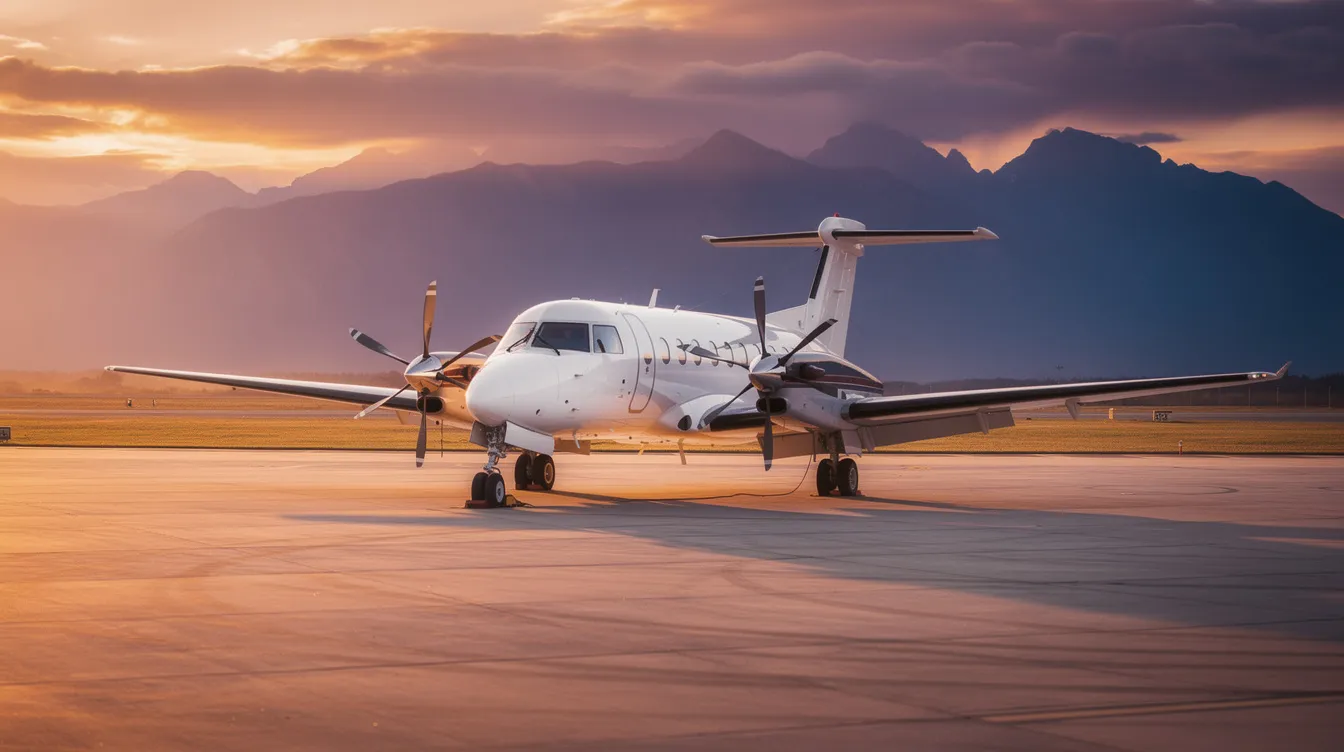
For executives, families, and serious private travelers, the 6-seater aircraft for sale market represents one of aviation's most compelling sweet spots. These planes bridge the gap between commercial premium cabins and large private jets, delivering direct routing, genuine privacy, and meaningful time savings without the capital burden of a heavy jet.
This guide is designed for executives, families, and private travelers considering the purchase or access of a 6-seater aircraft, covering available models, ownership alternatives, and key decision factors.
Why 6-Seater Aircraft Matter For Serious Private Travelers
Six-seater aircraft include single-engine piston planes and twin-engine jets, and they often serve private owners and flight schools as versatile, capable platforms. For the discerning traveler, they unlock something commercial aviation simply cannot: the ability to fly on your schedule, from airports minutes from your door, with only the passengers you choose.
Using business aviation instead of commercial airlines can save more than two hours on typical regional flights after accounting for ground travel, check-in, security, and connections. That margin compounds quickly for anyone flying weekly.
Typical mission profiles for 6-seat aircraft:
Two to four executives on regional business trips (300–800 nm)
A family of five or six on weekend getaways to vacation homes
Owners moving between residences in different states or countries
Corporate teams connecting secondary cities with no direct airline service
Cost comparison at a glance:
Aircraft Category | Typical Acquisition (Used) | Annual Fixed Costs |
|---|
6-seat piston singles | $150,000–$600,000 | $20,000–$60,000 |
6-seat turboprops | $1M–$7M+ | $150,000–$300,000 |
Entry-level light jets | $1.5M–$5M | $250,000–$500,000 |
For travelers who want this cabin comfort and performance without tying up capital or managing maintenance, BlackJet's premium Jet Card programs offer prepaid access to comparable aircraft, shifting complexity away from the customer entirely.
Quick Answer: Best 6-Seater Aircraft For Sale By Mission Type
Before diving into detailed specs, here are concrete recommendations grouped by mission. Various aircraft types in the six-seater category include turboprops and jets, so matching the right plane to your flying profile is essential.
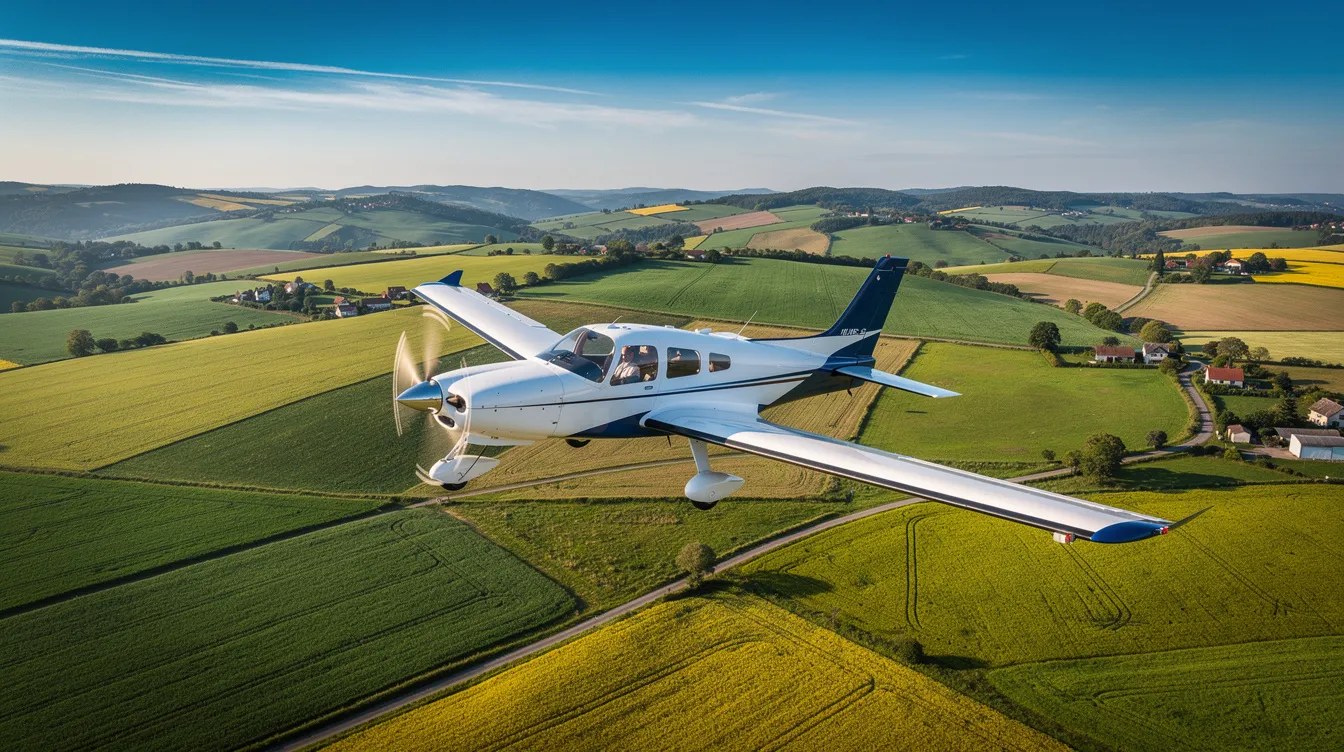
For efficient personal ownership (piston singles):
Beechcraft Bonanza A36/G36 - classic, solid payload, ideal for cross-country owner-pilots
Cessna 206 Stationair - rugged, high useful load, backcountry capable
Piper Cherokee Six / Piper Saratoga - roomy cabin, strong value proposition
For step-up performance and range (turboprops):
Piper Malibu Mirage / M350 - pressurized, turbocharged, ~900–1,000 nm range
Piper Meridian (M500 class) - single-engine turboprop, ~1,000 nm range
TBM 700/850/900 series - cruise speeds approaching 330 knots
Pilatus PC-12 NG - long range, excellent short-field capability
For entry-level private jets:
Cessna Citation Mustang - single-pilot capable, ~340 ktas cruise
Cessna Citation CJ1/CJ1+ - Pro Line 21 avionics, ~380 ktas
Cessna Citation M2 - Garmin G3000 cockpit, ~1,300 nm range
Embraer Phenom 100 - flexible cabin, 380 ktas cruise
Each model is expanded below with price ranges, performance details, and ideal use cases. BlackJet members can request these specific types-or comparable aircraft categories-via our booking platform without owning a single airframe.
Key Factors To Consider Before Buying A 6-Seat Aircraft
Selecting a six-seater aircraft involves analyzing mission profile and useful load before anything else. Think of this as your due diligence checklist before acting on any aircraft for sale listing.
Operational profile:
Determine your typical mission length (300–1,000 nm). If most flights are under two hours, piston singles or pressurized pistons may suffice. Longer regional legs favor turboprops or light jets.
Evaluate runway requirements. Many piston singles need under 3,000 feet; turboprops like the TBM or PC-12 perform well from shorter strips; jets generally require longer, better-maintained runways.
Weight and balance limitations must be considered when calculating aircraft payload-six seats does not always mean six adults with luggage and full fuel.
Cost and ownership:
Total cost of ownership includes acquisition price, fuel, insurance, maintenance costs, hangar fees, training, and avionics upgrades.
The useful load of an aircraft is crucial for understanding capacity for passengers and baggage, especially when comparing models with similar seat counts but different weight allowances.
Operational factors for six-seater purchases include maintenance history and insurance requirements, both of which significantly affect long-term economics.
Safety and technology:
Modern avionics matter: look for Garmin G1000/3000, synthetic vision systems, ADS-B Out (mandated in most U.S. airspace since January 2020), and TAWS B terrain awareness.
Proper training, recurrent checks, and third-party safety ratings matter even for smaller aircraft. Turboprops and light jets often require simulator time and type-specific insurance.
A BlackJet Jet Card can deliver similar cabin sizes and range profiles without capital expenditure, crew management, or maintenance risk-an option worth weighing alongside any purchase.
Top 6-Seat Single Engine Piston Singles For Sale
Piston singles remain popular for good reason: lower acquisition price, simpler systems, and approachable ownership for pilots flying 50–150 hours per year. Six-seater aircraft configurations can range from club seating to forward-facing layouts, so cabin comfort varies meaningfully between models.
Beechcraft Bonanza A36/G36:
The Beechcraft Bonanza A36 has a 285 hp engine with a useful load around 1,400–1,500 lb and a maximum takeoff weight of 3,600 pounds.
Cruise speeds of 175–200 knots suit 500–800 nm missions.
Typical used price for Beechcraft A36 is $100,000–$375,000 for older production years, with late-model G36s equipped with glass cockpit avionics reaching $600,000–$900,000.
Cessna 206 Stationair:
Powered by a 300 hp engine with cargo-friendly rear clamshell doors, the Cessna 206 Stationair has a useful load of 1,750 pounds and offers a maximum range of 730 nm.
Ideal for backcountry strips and operators who need to carry luggage and gear. Cessna 206 has a typical used price of $100,000–$225,000, with later avionics-upgraded examples reaching higher.
Piper Cherokee Six / Piper Saratoga:
The Piper PA-32 Cherokee Six has a useful load of 1,620 pounds, with the Saratoga adding retractable gear and more speed at the cost of slightly higher maintenance.
Generous interior height and a straight aisle make cabin comfort strong for the price class.
Piper Cherokee Six typically costs between $50,000–$175,000, with Saratoga models reaching up to $450,000 for clean, well-equipped examples.
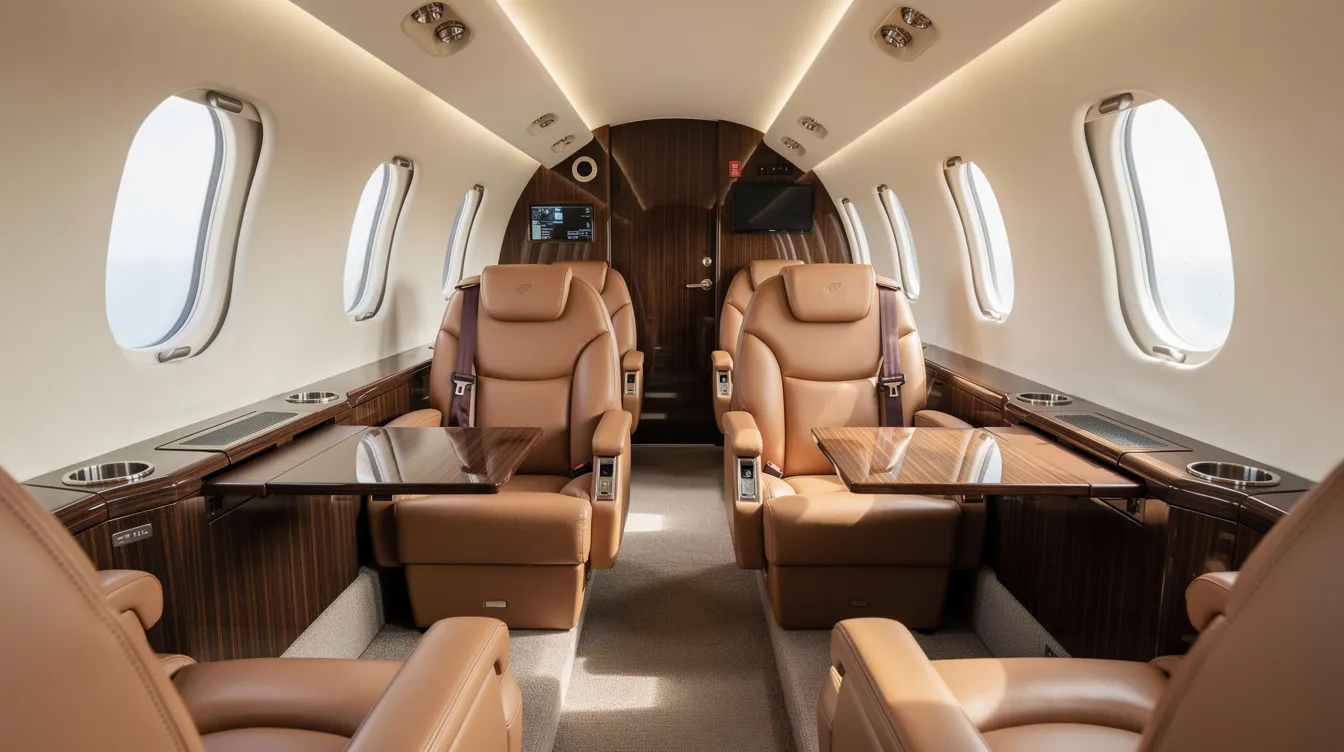
For owners flying beyond 100–150 hours annually, the economics of piston single ownership start to compete unfavorably with charter or Jet Card access-a comparison worth running alongside broader guides to the best small private aircraft for every need before signing any purchase agreement.
Pressurized Singles & Turboprops: 6-Seat Performance Upgrades
Cabin pressurization enhances comfort for flying at higher altitudes in some six-seater aircraft, and when combined with turbine power, the result is a fundamentally different travel experience: higher cruise altitudes above weather, faster block times, and a cabin environment suited to productive business travel.
Piper Malibu Mirage / M350:
The Piper Malibu Mirage features a turbocharged engine with 350 hp, a pressurized cabin, and a typical range near 900–1,000 nm with useful load about 1,400–1,500 lb.
Piper Malibu Mirage's used price ranges from $250,000–$500,000 for 1990s–2000s models, with newer M350 production reaching over $1 million.
An excellent choice for owners stepping up from unpressurized piston singles.
Piper Meridian (M500 class):
Equipped with a Pratt & Whitney PT6A-42A turboprop producing roughly 500 shp, the Piper Meridian has a cruise speed of 260 ktas and a range near 1,000 nm.
Takeoff distance over a 50-foot obstacle is approximately 2,438 feet-practical for many regional airports.
Used prices run $1M–$2M depending on vintage and avionics.
TBM 700/850/900 series:
These high-performance single-engine turboprops cruise at 290–330 knots with range often pushing 1,200–1,700 nm depending on payload and fuel load.
Configured typically for four to six passengers, they serve routes like Dallas–Denver or Paris–Rome with ease.
Resale prices range from about $1.5M to $4M+ based on model year and engine cycles.
Single-engine turbine reliability is strong-the PT6A family has decades of proven service-but insurance requirements are stricter, particularly for IFR and mountain operations. Pilots should factor training costs into any ownership decision.
Twin-Engine 6-Seaters: Piston Twins & Light Turboprops
Some operators still prefer two engines for the perceived redundancy over mountains or water and higher useful loads, though this comes at the cost of more complexity and fuel burn.
Notable piston twins:
Beechcraft B55 Baron: Twin 260 hp engines, useful load around 2,000 lb, often configured for four adults plus two smaller seats or additional baggage. Market values typically $120,000–$350,000.
Piper Turbo Seneca II: Turbocharged engines enabling higher-altitude cruise, club seating option, useful load around 1,700 lb. Used prices are roughly $120,000–$300,000.
Cessna 310R: The Cessna 310R was produced from 1954 to 1980 with over 6,000 units manufactured, making it one of the most prolific light twins. Cessna 310R's typical used price is $75,000–$175,000 for well-equipped examples.
Light turboprops in 6–7 passenger executive layouts:
King Air C90: The King Air C90 was introduced in 1971 with upgraded engines and remains a versatile twin-PT6A platform. Older C90s start around $700,000; later variants reach $3M+.
King Air B200: Larger cabin, useful loads beyond 3,000 lb, market values of $3–5M for newer production models.
Pilatus PC-12 NG: Widely configured as a 6+2 executive interior with long range (~1,850–1,900 nm ferry) and excellent short-field performance. Late-model values often exceed $7.5M.
Many corporate flight departments and high-net-worth individuals opt to access these aircraft through charter or Jet Cards rather than owning, reducing complexity while retaining full capacity for passengers and missions.
Entry-Level 6-Seat Private Jets: Citation Mustang & Alternatives
When speed and altitude become primary-flying above weather and commercial traffic-very light jets and small light jets are the logical next step for executives seeking an exceptional opportunity in private aviation.
Cessna Citation Mustang:
The Citation Mustang received FAA certification in 2006 and quickly became the benchmark entry-level jet. It seats four in a club-configuration aft cabin plus a belted lavatory position, and it is single-pilot certified.
Pratt & Whitney PW615F engines deliver cruise around 340 ktas with max range about 1,000–1,200 nm.
Typical used price band: $1.5–$2.5M for 2007–2017 production years.
Other 6-seat capable light jets:
Cessna Citation CJ1/CJ1+: FJ44-powered, 6–7-seat light jets with Pro Line 21 avionics. Cruise in the high 300 ktas. Used values around $1.5–$4M.
Cessna Citation M2: Garmin G3000 cockpit, six-passenger cabin layouts common, range about 1,300 nm. Pre-owned prices from about $4M upward.
Embraer Phenom 100: Flexible 4–7 seat configuration, 380 ktas cruise, 1,100+ nm range. Values often between $2–$4.5M.
While these private jets offer prestige and performance, many travelers achieve the same cabin category experience via BlackJet's Jet Card, paying only for hours flown on carefully vetted aircraft rather than absorbing depreciation and the full weight of maintenance costs that come with owning a typical $5 million private jet.
Comparing 6-Seat Aircraft To Larger Private Jets & Private Jet Access Models
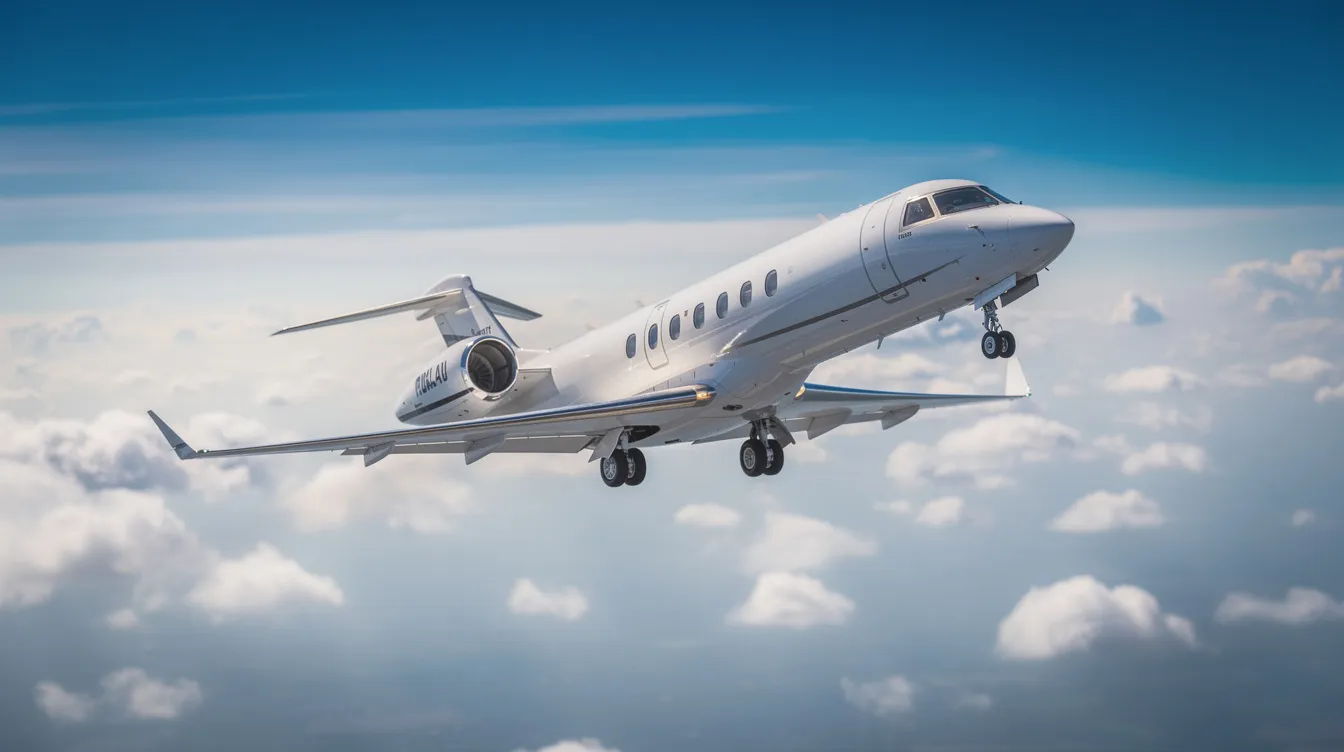
Buyers researching 6-seat aircraft for sale often weigh them alongside larger Cessna Citation models, Challengers, or Gulfstream series aircraft. The trade-offs are straightforward:
Cabin and mission contrast:
6-seat singles and turboprops: optimized for 1–3 hour legs, regional hops, smaller airports, lower direct operating costs
Larger private jets (e.g., midsize jets and above): optimized for 8–14 passengers, long-range flights like New York–Dubai, at acquisition prices starting from $30–50M
Ownership vs. access contrast:
Owner-flown 6-seat piston: highest control, but requires pilot ratings, time investment, personal oversight of maintenance and scheduling
Fully crewed larger jets: highest fixed cost and capital commitment; suitable only for very high utilization across the country or internationally
BlackJet Jet Card: prepaid hours giving guaranteed access to an appropriate aircraft class-from 6-seat turboprops to large-cabin jets-with no asset risk and all safety and sustainability standards built in
Safety, Certification & Technology In 6-Seat Aircraft Operations
Safety standards for small 6-seat aircraft can and should match those of larger private jets, especially when used for business-critical trips. Modern avionics contribute significantly to safety and operational efficiency in aircraft of every size.
Aircraft-level safety:
Essential systems include synthetic vision, TAWS B terrain awareness, weather radar, ADS-B Out/In, and de-icing equipment (FIKI certification) on models like the TBM, Piper Meridian, and King Air series
Maintenance tracking, logbook completeness, and participation in engine programs (e.g., PT6A maintenance programs) directly impact safety and resale value
Operator standards:
Third-party safety ratings-Wyvern, ARG/US, IS-BAO-verify that charter and managed aircraft meet rigorous benchmarks for crew training, simulator sessions, and line checks
Even single-pilot operations in aircraft like the Citation Mustang require recurrent training and proficiency checks
BlackJet's role:
Sustainability & Carbon-Neutral Flying In Small Private Aircraft
Sustainable aviation initiatives focus on carbon-neutral operations and fuel efficiency, and modern high-net-worth travelers increasingly expect environmental responsibility as a baseline, not an optional add-on.
On a per-passenger-mile basis, smaller aircraft (piston or turboprop) carrying 4–6 passengers can be more efficient than large jets on short to medium legs-a PC-12 burning roughly 66 gal/hr with six aboard uses less fuel per person than a jet burning 200–300 gal/hr for the same distance.
Sustainable aviation fuel is growing in availability for turboprops and small jets, though supply still favors larger operators.
Verified carbon offset projects-reforestation, renewable energy, methane capture-balance emissions where SAF is unavailable.
BlackJet makes every Jet Card flight carbon neutral through integrated carbon offsetting at no extra effort for the member. This applies whether the mission is flown in a 6-seat turboprop or a large-cabin jet. Jet Card users can enjoy carbon-neutral flight options as a standard feature, not a surcharge.
Ownership vs Jet Card vs On-Demand Charter: What Makes Financial Sense?
Anyone researching 6-seater aircraft for sale is likely weighing several access strategies. Here is how the math breaks down.
Ownership economics:
At 150–250 flight hours per year, a piston single owner may spend under $400/hr in variable costs-but fixed costs (insurance, hangar, overhaul reserves) push total cost significantly higher
Turboprop ownership adds $150,000–$300,000 in annual fixed costs; light jets often exceed $250,000–$500,000
Tying $1–5M into a depreciating asset carries real liquidity and opportunity cost, especially when compared with the structured economics of fractional jet ownership and its depreciation
Jet Card economics (BlackJet):
Jet card programs offer prepaid access to private jets. Prepaying for 25-hour jet card blocks or 50-hour jet card programs locks in predictable hourly rates with all costs bundled-fuel, crew, landing fees, standard catering
Flexibility to choose cabin class each trip: 6-seat turboprop one day, larger jet for a transcontinental flight the next, all under the same program, supported by transparent jet card pricing structures
Ad-hoc charter:
Under 25–30 hours per year, occasional charter might cost less-but availability at peak times is unpredictable, pricing varies, and sourcing suitable aircraft takes time compared with the predictable jet card cost per hour
For frequent flyers who want the feel of ownership without its operational and financial complexity, a Jet Card is the smart middle ground.
How To Assess A 6-Seat Aircraft Listing: Practical Due Diligence
Whether you are evaluating piston singles, turboprops, or private jets, a disciplined approach to any aircraft for sale listing saves time and capital.
Critical listing details:
Total time on airframe and engines, engine cycles, propeller hours, and whether engines are enrolled in a program. Note the serial number and confirm it matches all logbook entries.
Maintenance logbooks are essential for understanding an aircraft's history and condition. Look for the date and type of last major inspections-annual, 300-hour, 12/24-month checks-and evidence of compliance with Airworthiness Directives and Service Bulletins.
Avionics suite: Garmin G1000 vs. legacy analog cockpit, ADS-B Out compliance, WAAS GPS, autopilot capability.
Configuration and region:
Seating layout (club seating vs. airline-style) and baggage accommodation. Air conditioning and interior upgrades affect resale and comfort.
Location matters: North America, Europe, or coastal bases influence import/export taxes, corrosion risk, and available maintenance.
Independent pre-purchase inspections are recommended before acquiring an aircraft. Engage legal and escrow support for remote purchases. For some buyers, comparing these ownership obligations with structured private jet leasing solutions is a key step. BlackJet's team routinely reviews similar technical and legal aspects when vetting partner aircraft for our network-so members inherit that diligence automatically.
Case Studies: Matching Aircraft To Real-World 6-Seat Missions
Real-world scenarios illustrate how different solutions serve different travelers. Each one compares ownership against flexible access, and understanding overall jet card cost frameworks provides helpful context before committing to any path.
Scenario 1: Midwest Entrepreneur. An owner-pilot entrepreneur flying 400–600 nm trips across the U.S. Midwest 80–120 hours per year evaluates a Beechcraft Bonanza or Piper Saratoga (acquisition ~$300–500K, fixed annual costs ~$50–70K). For missions where weather or schedule demands immediate delivery of performance beyond a piston single, a 25-hour BlackJet 25+ Hour Jet Card supplements ownership affordably-covering trips the airplane cannot.
Scenario 2: London–South of France. A family with homes in London and the South of France, often traveling with four to six passengers and luggage, considers owning a TBM 900 or Piper Meridian based in Europe. The purchase price alone exceeds several million euros, plus EU registry, crew, and hangar fees. Accessing equivalent turboprops and light jets via BlackJet eliminates registry complexity and crew management while preserving cabin comfort for every flight, and a detailed understanding of 100-hour jet card costs helps determine whether extended-use jet cards fit their pattern.
Scenario 3: Corporate New York Team A corporate team needs monthly New York–Chicago (~800 nm) and quarterly New York–Dallas (~1,300 nm) trips for four to six executives. Owning a Cessna Citation Mustang or CJ1 would serve the mission but introduces crew scheduling gaps and overnight maintenance risk. A 50-hour jet card program such as BlackJet's ensures guaranteed availability of an appropriate private jet class year-round, with one owner of the travel decision rather than a fleet of headaches.
FAQs About 6-Seater Aircraft & Private Jet Access
What is the most cost-effective 6-seat aircraft for a new owner-pilot?
A piston single like the Piper Cherokee Six ($50K–$175K), Beechcraft Bonanza A36 ($100K–$375K), or Cessna 206 ($100K–$225K) offers the lowest barrier to entry. These models balance purchase price, simpler systems, and manageable fuel burn for pilots who fly 50–150 hours per year.
How does a Cessna Citation Mustang compare to a Piper Meridian or TBM 700 in real operating costs and speed?
The Citation Mustang cruises faster (~340 ktas vs. 260 ktas for the Meridian) and climbs higher, but burns more jet fuel and carries higher fixed costs, including dual-pilot insurance in many charter operations. Turboprops like the Meridian or TBM operate from shorter runways and often deliver lower variable cost per nautical mile on regional missions.
Can 6-seat aircraft cross the U.S. or Europe nonstop?
Some turboprops can with reduced payload. The PC-12 NG has ferry range near 1,900 nm; TBM 900/960 models push similar distances. Light jets like the CJ1 or M2 manage 1,100–1,300 nm nonstop. Plan for fuel stops, reserves, weather diversions, and payload trade-offs on longer legs.
What safety standards apply to turboprops and small private jets in charter operations?
They must comply with FAA Part 135 (or EASA equivalents), including pilots with appropriate ratings, recurrent training, maintenance programs, and avionics mandates. Third-party auditors like Wyvern and ARG/US verify compliance. BlackJet requires these standards of every operator in our network, and broader analyses of private jet safety and risk consistently show that well-run charter and jet card operations match or exceed commercial benchmarks.
How does a BlackJet Jet Card differ from owning or fractional shares for 6-seat missions?
A Jet Card means prepaid hours with all costs bundled, flexible fleet access per mission, and no depreciation risk. Guides to the best jet cards for frequent flyers underscore how these products prioritize guaranteed availability and transparent pricing. Fractional shares tie you to one specific fleet and still carry ownership risk. Ownership demands managing every detail. BlackJet emphasizes safety, sustainability, and flexibility without capital tie-ups.
Next Steps: Explore 6-Seat Options With BlackJet
Six-seat aircraft- from single-engine piston singles to entry-level private jets-offer strategic advantages in time, privacy, and control that no commercial first-class cabin can replicate. Whether you ultimately decide to buy, lease, or access these aircraft through a Jet Card, the right answer depends on your routes, your passengers, and your appetite for operational complexity, as well as how different jet card pricing models align with your usage.
Speak with a BlackJet advisor to discuss your typical missions, passenger counts, and preferences. We will help determine whether ownership, a Jet Card, or a hybrid approach delivers the best value.
Explore our Jet Card programs - programs typically include 25-hour or 50-hour options for guaranteed access to 6-passenger turboprops and light private jets, carbon-neutral by default. Jet cards provide 24/7 digital booking tools for convenience. Real-time support is included with Jet Card programs.
Every flight meets our rigorous safety and sustainability standards, whether you are flying a 6-seat turboprop or a large-cabin jet across the market.
Elevate your travel - effortlessly. With BlackJet, private flight is not reserved for a few. It is accessible on your terms, with the flexibility to fly the right airplane for every mission and the confidence that safety, sustainability, and service are handled before you ever reach the ramp.
Discover how BlackJet can reshape your travel →


 Sign up with google
 Sign up with Apple