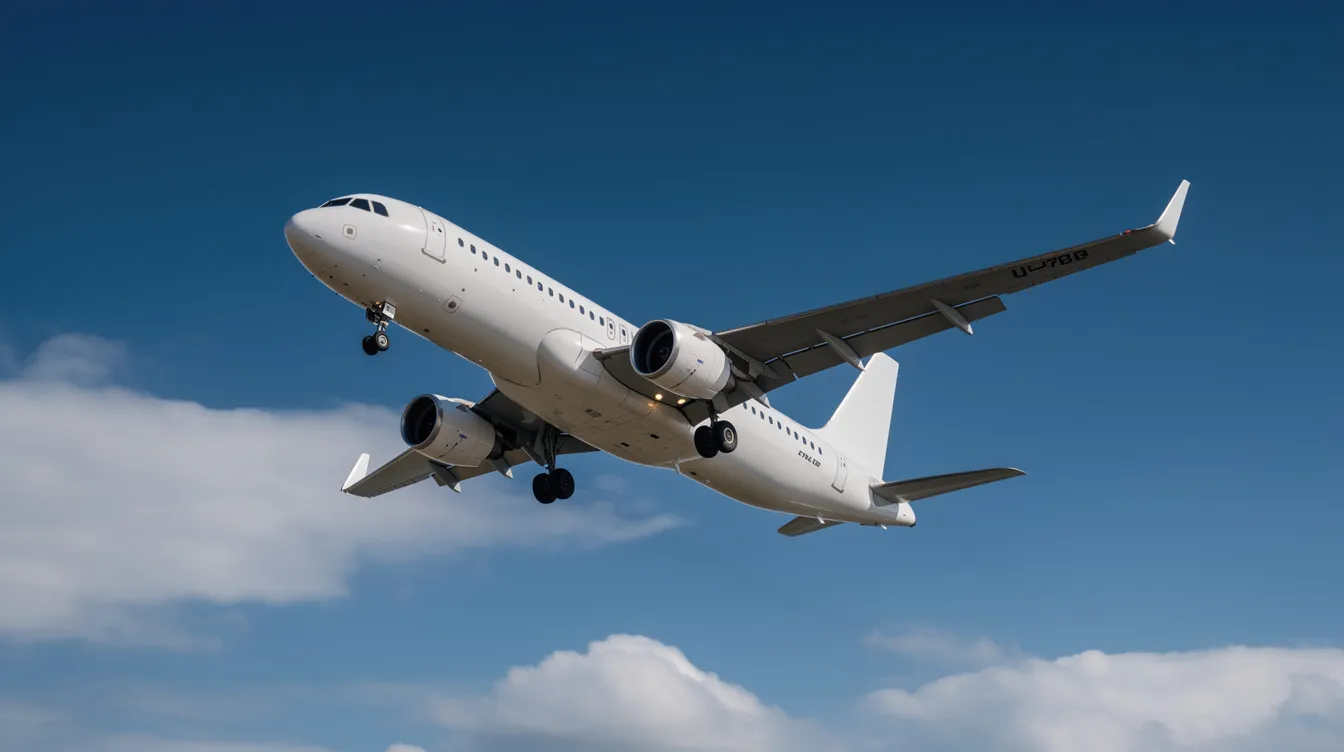
The Boeing 737 is the best-selling commercial jet in aviation history. As a twin-engine, narrow-body jetliner, the 737 family has delivered over 12,615 units as of June 2026, and total orders exceeding 13,000—no other aircraft program comes close to matching its scale. For private travelers, that volume translates into something tangible: proven reliability, a global parts network, and an aircraft that can be configured for everything from a corporate roadshow to a VIP transcontinental mission.
This guide is for private travelers, corporate flight planners, and aviation enthusiasts seeking a comprehensive overview of the Boeing 737’s capabilities and charter options. Understanding the Boeing 737’s versatility and market dominance helps travelers and organizations make informed decisions about group air travel.
Strategic Overview: Why the Boeing 737 Matters for Private & Commercial Aviation
Most BlackJet members think of private aviation as light jets and super-midsize cabins seating 4 to 14. That model works brilliantly for small groups, but it breaks down when 40, 80, or 130 people need to travel together on a synchronized schedule. Chartering a Boeing 737 jet solves that problem with a single aircraft: dedicated terminals, controlled boarding, bespoke departure times, and the ability to carry cargo and personal gear that commercial flight logistics simply cannot accommodate.
The Boeing 737 is a twin-engine, narrow-body jetliner that has undergone four distinct generations of development: the Original series, the Classic series, the Next Generation series, and the fourth-generation 737 MAX. Together, these variants dominate the single-aisle market and serve major operators, including American Airlines, along with governments, the Air Force, and private operators across every continent in the world. The platform also supports military applications beyond commercial service.
Key strategic advantages for charter travelers:
Privacy and schedule control that commercial aviation cannot offer at any price
Cost per seat often lower than commercial business class for groups of 50 or more
Cabin layouts configurable from dense economy to full VIP lounge
Access to primary hubs and well-equipped secondary airports worldwide
Proven safety record backed by decades of regulatory oversight
Key Facts and Milestones: Boeing 737 at a Glance
The Boeing 737 traces its design roots back to 1964, when Boeing began studies for a short-haul complement to the 707 and 727. Early concept work initially envisioned a T-tail layout before Boeing settled on the final underwing-engine configuration. The 737-100 was the first model, launched in 1965, and Lufthansa was its launch customer, ordering 21 units. Boeing's first aircraft in the short-haul single-aisle category made its maiden flight on April 9, 1967, at Boeing Field in Seattle. The type gained FAA certification in December 1967, and Lufthansa introduced the first flight in commercial service in February 1968. United Airlines followed with the 737-200 in April of that year.
Design origin: 1964 concept studies; the fundamental design of the Boeing 737 dates back to the late 1960s
First flight: April 9, 1967 (737-100)
FAA certification: December 1967
Total deliveries: Over 12,615 as of June 2026
Generations: Four main variants spanning nearly six decades of continuous production
Range: Approximately 2,000 to 3,825+ nautical miles depending on variant
Seating: 85 to 230 passengers in airline layouts
Status: The best-selling commercial aircraft program in aviation history, and the backbone of commercial aviation on short- and medium-haul routes
737-100 production: Only 30 units of the 737-100 were produced before Boeing shifted to the longer-fuselage 737-200
Design Evolution: From Original to Fourth-Generation 737 MAX
The Boeing 737 has undergone four distinct generations of development, each defined by specific models:
Original Series: 737-100 and 737-200
Classic Series: 737-300, 737-400, and 737-500
Next Generation (NG) Series: 737-600, 737-700, 737-800, and 737-900ER
737 MAX Series: MAX 7, MAX 8, MAX 9, and MAX 10
All Boeing 737 variants share the same basic fuselage cross-section, a design choice that has allowed airlines to benefit from commonality in training, tooling, and maintenance across four generations. Each generation series introduced progressively improved fuel consumption, range, and avionics in response to rising fuel prices, stricter noise regulations, and evolving airline demands.
Original Series (737-100 / -200) - Late 1960s
The Original Series of the Boeing 737 includes the -100 and -200 models. Originally designed as a short-haul feeder, the 737-100 carried roughly 85 passengers and was powered by Pratt & Whitney JT8D low-bypass turbofan engines. The 737-200 increased fuselage length by 36 inches, boosting capacity and making the variant far more commercially viable. These earlier models featured low ground clearance and limited range—about 1,150 nautical miles for the -100—, but they established the airframe's DNA: twin turbofan engines mounted under its wings, a simple landing gear configuration, and rugged short-field capability.
Classic Series (737-300 / -400 / -500) - 1980s
The Classic Series of the Boeing 737 includes the -300, -400, and -500 models. The generation series brought a transformative change: CFM56-3 high-bypass turbofan engines replaced the JT8D, slashing fuel use and dramatically reducing noise. Seating rose to 110–168 passengers. The redesigned wing and longer fuselage on the -400 helped increase capacity and extended range to roughly 2,000–2,500 nautical miles, opening medium-haul routes that the Originals could not reach.
Next Generation Series (737-600 / -700 / -800 / -900ER) - Late 1990s
The Next Generation series of the Boeing 737 includes the -600, -700, -800, and -900ER models. Entry into service began in 1997 with a wider wingspan, higher fuel capacity, and a modern glass flight deck. The NG series pushed range capability to roughly 3,500 nautical miles for extended-range variants and expanded seating up to 215 passengers, with that passenger growth reflecting further increases in fuselage length across later variants. The 737-800 is the best-selling model of the Next Generation series, with the type capable of carrying up to 189 passengers in a high-density layout.
Fourth Generation: 737 MAX (MAX 7 / 8 / 9 / 10)
The 737 MAX family represents the fourth generation of development. Featuring fuel-efficient LEAP 1B engines, advanced technology winglets, and refined aerodynamics, the MAX series targets a 10–14% reduction in fuel burn compared to the NG series. The 737 MAX series includes four main variants: MAX 7, 8, 9, and 10, covering the smallest variant (MAX 7 at roughly 135–160 two-class seats) to the longest fuselage MAX 10 at up to 210 seats.
Advanced Technology and Engines: CFM56 to LEAP 1B
Engine technology is central to the 737's fuel efficiency, increased range, and environmental footprint. Each generation's powerplant tells the story of how Boeing kept the airframe competitive across decades.
CFM56: The Engine That Transformed the 737
The CFM56-3 on the Classic series replaced the thirsty JT8D and delivered a step-change in fuel burn and noise. Because of the 737's low ground clearance, engineers developed distinctive flattened nacelles to fit the larger-diameter high-bypass engine beneath the wing. The CFM56-7 on the NG series brought further gains: higher bypass ratio, quieter operation, and improved performance at altitude, all of which allowed airlines to operate the 737 on longer sectors with lower operating costs.
LEAP 1B: Exclusive to the 737 MAX
The LEAP 1B engines are the sole powerplant for the 737 MAX family. Built with advanced materials—composite fan blades and ceramic matrix composites—the LEAP-1B engines are 10–12% more efficient than previous engines in the CFM56-7 series. The nacelle design incorporates chevrons that reduce jet noise, contributing to the 737 MAX having a 50% smaller noise footprint than the 737-800.
Lower CO2 per seat across all mission profiles
Reduced NOx emissions compared to CFM56
Fuel-efficient engines that shrink both costs and carbon impact
Noise reductions that ease curfew and community constraints at airports
For large-group charters, choosing a LEAP 1B-powered 737 MAX means lower fuel costs per flight hour and a measurably smaller carbon footprint, directly aligned with BlackJet's carbon-neutral positioning.
Operational Efficiency and the Single Aisle Market
The single-aisle market refers to narrow-body jets like the Boeing 737 and Airbus A320 family that dominate high-frequency, short- to medium-range routes globally. The Boeing 737 is designed for short- to medium-range flights, and its operational simplicity is a quiet advantage for charter reliability.
The 737's low ground clearance allows for operation at airports without jet bridges, simplifying ground handling and enabling service at a wider range of facilities. Its straightforward landing gear design supports quick turnarounds. The Boeing 737 has an established operational ecosystem with extensive parts and maintenance support, and airlines can benefit from a commonality in design across different Boeing 737 models, which reduces training costs for pilots and maintenance crews.
Winglet evolution and fuel savings:
Blended winglets on early NG variants
Split scimitar winglets on later NGs
Advanced technology winglets on the MAX, delivering 3–5.5% fuel savings depending on mission length, by reducing drag at the wing tips during climb and cruise
The Boeing 737 is often compared to the Airbus A320 family in the commercial aviation market, and for good reason: both types compete head-to-head on virtually every metric. The 737 often edges ahead on airport compatibility and breadth of operator support, while the A320neo offers comparable fuel efficiency. For charter operators, the 737's massive global fleet means more availability and competitive pricing.
Cabin Space, Comfort, and the Passenger Experience
The Boeing 737 uses a six-abreast seating arrangement in a 3-3 configuration, and the cabin of the Boeing 737 typically seats between 130 and 230 passengers, depending on variant and layout. But those airline numbers tell only half the story for charter travelers.
The Boeing Sky Interior, introduced on later NG and MAX variants, features sculpted sidewalls, larger pivoting overhead bins, and LED mood lighting that transforms the perceived cabin space. Cabin altitude on newer 737 MAX models is lower than on earlier models, reducing passenger fatigue on flights of four to six hours-a meaningful comfort factor for executive groups or sports teams.
For private charters, cabin space flexibility is the real differentiator:
High-density economy: 150–189 seats for event groups or team travel
Mixed business/economy: Conference-style forward section with economy aft
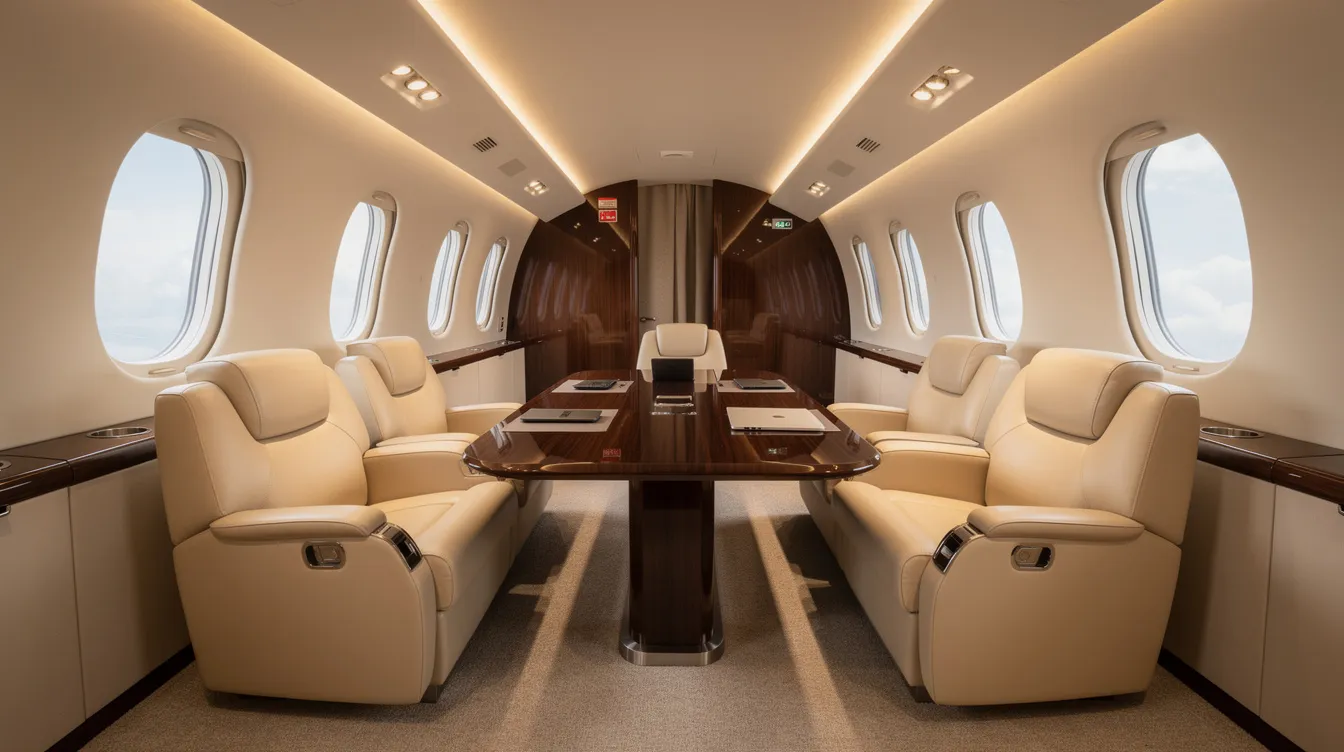
VIP lounge layouts: Club seating, boardroom tables, and quiet zones for 40–80 passengers
Ultra-VIP (BBJ): 20–60 seats with residential interiors
The 737 MAX family offers a maximum passenger capacity of 230 in single-class high-density configuration, but a private charter configuration for 50 passengers transforms the same fuselage into a spacious, productive environment that commercial aviation simply cannot replicate.
Boeing Business Jet (BBJ) and VIP 737 Configurations
The Boeing Business Jet program takes the 737 platform and reimagines it as a large-cabin VIP aircraft. The BBJ1 is derived from the 737-700, the BBJ2 from the 737-800, and the BBJ3 from the 737-900ER, each offering progressively more cabin space and cargo volume.
BBJ1: Approximately 884 square feet of cabin area. The BBJ1 has increased range through extra fuel tanks, enabling nonstop missions of over 5,000 nautical miles
BBJ2: Offers 25% more cabin space than BBJ1, with roughly 1,025 square feet of interior and greater fuel capacity for extended missions
BBJ3: Provides 1,120 square feet of floor space-enough for multiple private rooms, a full dining area, and a conference zone
Range: BBJ variants can exceed 5,000 nautical miles, and the latest BBJ MAX configurations stretch to approximately 6,600 nautical miles with a light passenger load
Comfort systems: The BBJ MAX features a low cabin altitude system for comfort, maintaining cabin pressure equivalent to roughly 6,500 feet even at cruise altitude
Interior options: Private bedrooms, walk-in showers, boardroom seating, forward and aft lounges, ensuite lavatories, and customized branding throughout
Who charters a Boeing Business Jet?
Heads of state, UHNW families traveling with staff, corporate executives on multi-city roadshows, and organizations requiring both range and prestige. A charter Boeing Business Jet can connect New York to the Middle East nonstop, or fly Los Angeles to Tokyo with a single technical stop, carrying 20–40 passengers in residential comfort.
737 MAX: Fourth Generation Innovations and Controversies
The 737 MAX made its first flight in January 2016, gained FAA certification in March 2017, and entered airline service in May 2017 with Malindo Air. The 737 MAX family has received approximately 7,000 firm orders, making it one of the most commercially successful aircraft programs in aviation history.
Technical advances:
LEAP 1B engines delivering 10–12% fuel savings versus NG
Advanced technology winglets reducing drag
Updated flight deck displays and systems
The 737 MAX reduces CO2 emissions by 20% per seat compared to earlier generation series
The 737 MAX 8 has a range of 3,550 nautical miles
Safety history and corrective measures:
The 737 MAX series was grounded globally from March 2019 until December 2020 following two fatal crashes—Lion Air Flight 610 in October 2018 and Ethiopian Airlines Flight 302 in March 2019. The 737 MAX crashes caused 346 fatalities in total. The root cause involved the Maneuvering Characteristics Augmentation System (MCAS), and Boeing subsequently implemented design changes to flight control software, enhanced redundancy, and revised pilot training protocols before regulators recertified the type.
For private charter customers, the practical implication is stricter oversight: every MAX aircraft in service today has undergone mandated inspections, software updates, and pilot simulator training requirements that exceed pre-grounding standards. BlackJet ensures that only operators with fully current certifications, complete maintenance histories, and crews meeting the highest type-rating thresholds are offered for 737 MAX charters.
Sustainability and Fuel Efficiency: 737, SAF, and Carbon-Neutral Travel
Aviation accounts for roughly 2–3% of global CO2 emissions, and for corporate and high-net-worth travelers, the environmental profile of an aircraft is increasingly a factor in decision-making.
The 737 MAX series reduces fuel consumption by 10–12% compared to previous models, driven by LEAP 1B engines, advanced technology winglets, and lighter airframe materials. Boeing's ecoDemonstrator program has tested sustainable aviation fuel (SAF) blends up to 50% on 737 platforms, alongside drag-reducing technologies and noise reduction experiments.
How BlackJet delivers carbon-neutral 737 charters—and how this compares to more economical aircraft choices like those in our overview of the cheapest private aircraft:
Verified carbon offsets on every flight, at no additional cost to the client
Access to SAF where airport infrastructure supports it
Route optimization and payload planning to improve fuel efficiency per mission
Selection of fuel-efficient MAX variants when available
Example: A New York–Los Angeles corporate shuttle on a 737 MAX burning a SAF blend generates significantly lower net emissions per passenger than the equivalent commercial business-class journey when the aircraft is well-utilized, and the group arrives together, on their schedule, from a private terminal.
Private Charter Use Cases: When a Boeing 737 Beats Smaller Jets
While many BlackJet cardholders rely on light and midsize jets for daily travel, the Boeing 737 becomes the right tool when group size or logistical complexity exceeds what smaller aircraft can efficiently handle.
Use cases:
Corporate roadshows: 50 executives visiting four European cities in five days. A VIP-configured 737 with a forward boardroom and aft lounge eliminates hotel-to-airport transfers between segments and keeps the team together
Professional sports teams: 35–80 players plus coaching staff and equipment. The aft fuselage cargo hold can carry cargo and oversized gear, while the cabin is zoned for recovery, meetings, and rest
Multi-family leisure travel: 20–40 passengers flying to a Caribbean destination at 3,000+ nautical miles, requiring both longer range and generous baggage volume
Event charters: 100 guests for a destination wedding or conference, where a single 737 simplifies logistics and reduces per-seat cost below commercial premium fares
Route examples:
Route | Distance | Suitable Variant |
|---|
New York – Miami | ~1,100 nmi | Any 737 NG or MAX |
London – Athens | ~1,300 nmi | 737-800 or MAX 8 |
Dubai – Malé | ~1,900 nmi | 737 MAX 8 or BBJ |
New York – Los Angeles | ~2,150 nmi | 737 MAX 8 or MAX 9 |
London – Dubai | ~3,000 nmi | 737 MAX 7 or BBJ |
For group plane charter missions, a single 737 delivers synchronized arrival, unified branding, and significantly lower cost per seat than booking multiple midsize jets.
BlackJet Jet Cards and Access to Boeing 737 Charters
BlackJet's Jet Card model, available in 25-hour and 50-hour programs, is built around traditional private jets. However, tailored solutions extend to larger aircraft, including Boeing 737 charters when a member's mission demands it.
How it works:
Members contact BlackJet's dedicated flight support team with group size, dates, and route requirements
The team proposes aircraft options-NG, MAX, or BBJ-with transparent pricing and configuration details
Curated operator lists ensure only vetted, certified partners operate the flight
The digital booking platform handles inquiries, itinerary proposals, and real-time coordination
Jet Card versus ad-hoc charter:
Compared to arranging an on-demand charter independently, BlackJet Jet Card members benefit from priority availability, negotiated rate structures, and a single point of contact who understands their preferences, while resources like our guide to Jet Card pricing structures help clarify long-term value. There is no asset risk, no depreciation, and no maintenance obligation—yet access to large aircraft like the Boeing 737 is available when needed.
Safety, Certification, and Maintenance Standards on 737 Charters
For BlackJet, safety on large jets like the 737 is treated with the same rigor as light or midsize private jets. The regulatory framework is, in fact, more extensive.
Regulatory foundations:
FAA or EASA airworthiness certification for every aircraft
Operator approval under Part 121 or equivalent for large-jet commercial operations
Mandatory maintenance programs including compliance with all airworthiness directives
For MAX variants: verified software versions, MCAS updates, and pilot simulator training records
BlackJet's internal standards:
Proprietary operator vetting that goes beyond regulatory minimums
Pilot experience thresholds specific to 737 type ratings
Review of aircraft maintenance logs, modification status, and incident history before any flight is offered
Continuous performance monitoring of partner operators
The 737 family has recorded 529 aviation accidents and 5,779 fatalities across its history-numbers that reflect over five decades of operations by hundreds of airlines in every environment on earth. The hull loss rate for the MAX series is 1.48 per million departures. Context matters: these figures span the most-produced jetliner ever built, and the rate has improved dramatically with each generation, which is essential context for organizations considering whether to buy a Boeing 737 outright rather than charter. BlackJet's role is to ensure that every 737 charter meets the highest current standards, not historical averages.
Cabin Classes and Layout Options on the Boeing 737
Unlike commercial airline fleets with rigid cabin classes, a private or chartered 737 can be configured in virtually any arrangement to match mission profiles.
Common layouts:
Configuration | Seating | Best For |
|---|
High-density economy | 150–189 seats | Large event groups, team travel |
Two class (business + economy) | 100–140 seats | Corporate events with tiered seating |
VIP lounge | 40–80 seats | Executive shuttles, celebrity travel |
Boeing Business Jet | 20–60 seats | UHNW families, heads of state |
Interior features on modern 737 charters include Wi-Fi connectivity, in-seat power, entertainment systems, and dedicated zones. For a five-hour flight, a typical executive group charter might zone the cabin into a forward lounge with club seating, a mid-cabin conference area with a large table, and an aft rest zone with recliners and dimmed lighting, illustrating how flexible charter flights can be compared with scheduled services.
BlackJet collaborates with operators to match configurations precisely to group needs—whether that means boardroom-style seating for a corporate board, equipment storage for a production crew, or family-oriented lounge zones for leisure travel — and can advise when a dedicated private jet for 15 passengers is a better fit than a full 737.
Comparing the Boeing 737 to Smaller Private Jets and Widebodies
Choosing between a Boeing 737 and other aircraft classes comes down to group size, range requirements, budget, and airport access.
737 vs. large-cabin business jets (Gulfstream G700, Bombardier Global 7500):
For 12–18 passengers, a dedicated business jet offers greater intimacy, wider per-seat space, and access to smaller airports, with many travelers favoring the best 16-seat private jets or the best private jet options for 15 passengers in that range. But the moment the group exceeds 20, cost per seat on a single 737 drops sharply, and the cabin volume advantage tilts decisively toward the 737.
737 vs. multiple super-midsize jets:
A group of 50 requiring three super-midsize jets faces coordination complexity, tripled crew costs, and split arrivals. A single 737 eliminates all three problems at a lower combined cost, while those moving smaller leadership teams may prefer one of the best private jets for around 20 passengers.
737 vs. widebody charters (Boeing 767, Airbus A330):
Widebodies offer more cabin space per passenger and longer range but require longer runways, more ground support, and are priced at a higher hourly rate. For regional missions under 3,500 nautical miles, the 737 is more efficient and easier to place at secondary airports, while smaller groups may prioritize the cabin intimacy of top 16-seat private jets.
BlackJet helps clients navigate these trade-offs with transparent modeling of time, cost, and comfort, ensuring the right aircraft class for every mission, whether that is a large 737 charter or one of the best small private aircraft options for more routine trips.
Group Travel Logistics: Airports, Turnarounds, and Ground Handling
Operating a 737 charter is fundamentally different from positioning a light jet. The aircraft requires runway lengths of approximately 5,000–7,000 feet depending on variant, elevation, and temperature. It operates effectively at major hubs and well-equipped secondary airports but cannot access the smallest regional strips that light jets favor.
Turnaround and boarding:
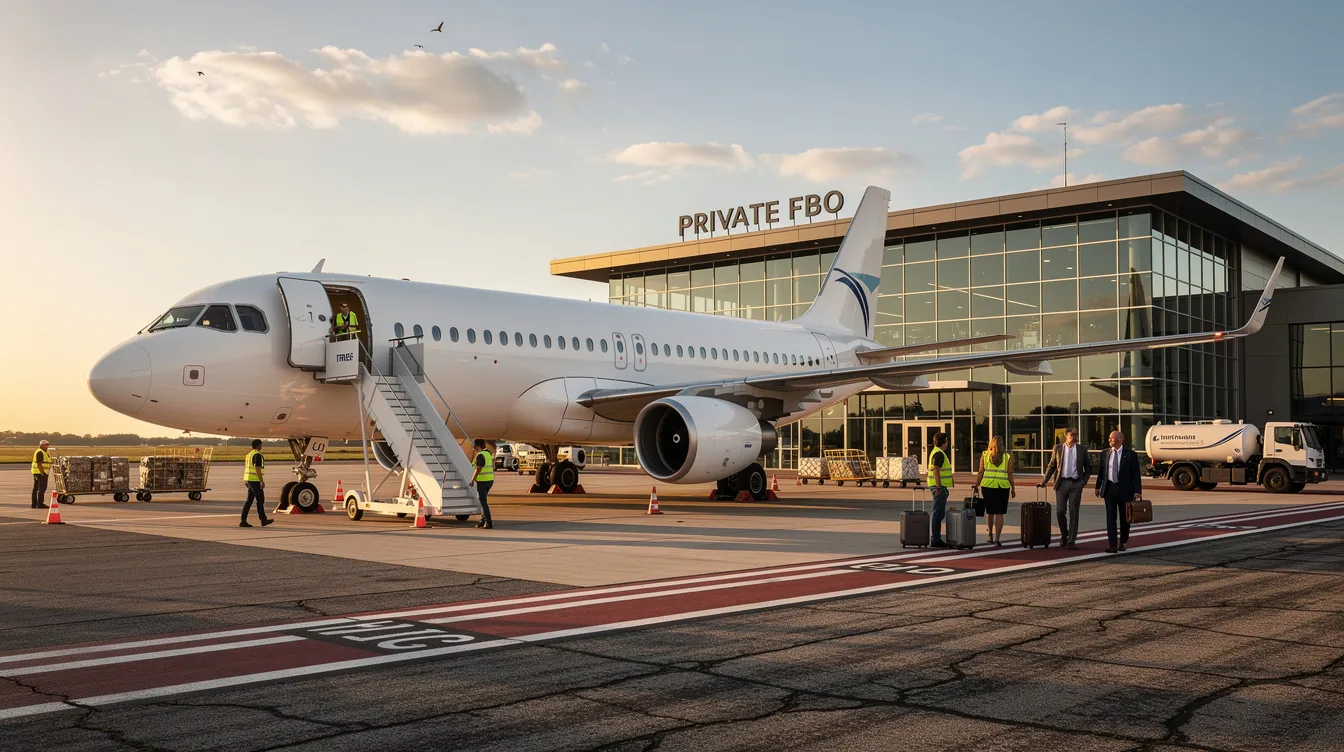
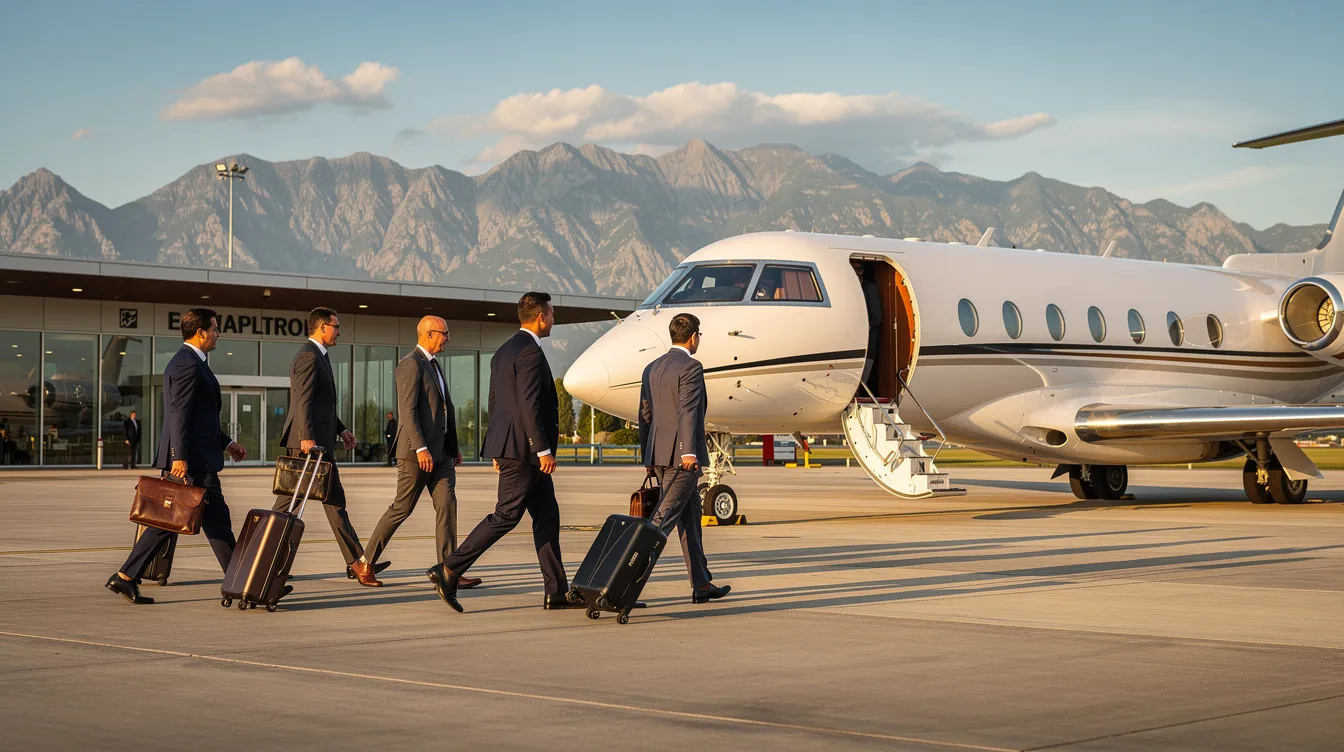
Private terminal or FBO check-in, bypassing commercial queues
Controlled, branding-ready boarding directly from lounge to aircraft
Dedicated security screening if required by jurisdiction
Southwest Airlines-style fast boarding efficiency, but with VIP service standards
BlackJet's ground handling coordination:
Baggage logistics for 100+ passengers with advance manifesting
Catering from preferred suppliers, loaded and ready before boarding
Ground transfers synchronized with aircraft arrival and departure
FBO branding-signage, welcome areas, branded amenities
Example: A Fortune 500 company chartering a 737 to a global conference in Davos. BlackJet coordinates arrival at Zurich, ground transfers to the venue, and a return departure timed to the closing session, with catering, branding, and baggage handled seamlessly for 80 executives.
Financial Considerations: Cost, Utilization, and Value
A Boeing 737's hourly charter cost is higher than a light or midsize jet in absolute terms. Boeing's own marketing materials cite operating costs for BBJ MAX variants at approximately $5,170 to $5,630 per hour. However, the relevant metric for groups is cost per seat, and here the math shifts dramatically.
Cost drivers:
Aircraft type: NG vs. MAX vs. BBJ (VIP configurations cost more per hour)
Sector length and fuel prices
Airport fees and handling charges at origin and destination
Crew overnight costs on multi-day itineraries
Positioning sectors ("dead-heading") if the aircraft must reposition
Value comparison example (illustrative):
For a New York–Dallas corporate shuttle with 60 passengers, chartering a 737 MAX might cost $40,000–$55,000 all-in for the sector-a figure that can be evaluated alongside our broader guide to jet card costs for frequent flyers. That equates to roughly $670–$920 per seat, well below the $2,000–$3,500 per seat cost of 60 individual commercial business-class tickets, before factoring in the time savings, privacy, and brand control that a private charter provides, and how those economics compare to chartering smaller private planes for similar missions.
Jet Card members benefit from negotiated structures and the ability to blend smaller jets for daily travel with occasional 737 charters within a single program relationship—no separate procurement process, no new vendor relationships, and clear visibility into jet card cost per hour across aircraft categories.
Frequently Asked Questions About Boeing 737 Charters with BlackJet
How many passengers can we comfortably take on a Boeing 737 charter?
It depends on the configuration. A standard charter layout seats 130–189 passengers in economy. A VIP or mixed layout accommodates 40–80 in substantial comfort. A Boeing Business Jet carries 20–60 passengers with residential-grade interiors. For detailed seating guidance, see our Boeing 737 seat capacity overview.
What is the typical range of a 737 NG versus a 737 MAX for private missions?
The 737-800 NG offers a range of roughly 3,000–3,500 nautical miles depending on payload. The 737 MAX 8 has a range of 3,550 nautical miles in standard configuration. BBJ MAX variants with auxiliary fuel can fly over 6,000 nautical miles nonstop.
Can we charter a Boeing Business Jet through BlackJet?
Yes. BlackJet maintains relationships with curated operators who operate BBJ1, BBJ2, BBJ3, and BBJ MAX variants. Availability is managed through our dedicated flight support team, with transparent pricing and full configuration details provided during the proposal process.
How does safety oversight differ for large jets like the 737?
Large-jet operations fall under Part 121 or equivalent regulatory frameworks, which impose stricter maintenance intervals, crew training requirements, and operational procedures than Part 135 light-jet operations. BlackJet adds proprietary vetting on top of these standards, reviewing operator records, pilot qualifications, and aircraft maintenance histories before any flight is offered.
How far in advance should we book a 737 charter for a major event?
For standard charter configurations, two to four weeks is typical. For VIP or BBJ layouts with custom interiors, catering, or branding requirements, six to eight weeks is recommended. BlackJet's digital platform allows members to submit inquiries at any time, and our team responds with itinerary proposals within hours.
Are 737 charters carbon-neutral with BlackJet?
Yes. BlackJet ensures every flight is fuel-efficient through fourth-generation offset programs. Where SAF is available, we coordinate its use to reduce lifecycle emissions further. Our commitment to sustainable aviation applies to every aircraft class, including the Boeing 737.
Conclusion: The Enduring Role of the Boeing 737 in Premium Travel
From its maiden flight in 1967 to the fuel-efficient fourth-generation 737 MAX, the Boeing 737 has evolved from a modest short-haul workhorse into the world's most versatile single-aisle platform. Its expansive cabin space in BBJ and VIsolutions—every, combined with the strategic value of carrying 30 to 130+ passengers on a single, synchronized schedule, makes it an aircraft that belongs in any sophisticated travel strategy.
BlackJet offers vetted access to Boeing 737, Boeing Business Jet, and other large-cabin options through flexible Jet Card programs and on-demand solutions—every flight carbon-neutral by default.
For groups: Lower cost per seat than commercial business class, with total privacy and schedule control
For individuals who lead groups: One aircraft, one itinerary, one seamless experience
Discover how integrating Boeing 737 charters into your travel strategy can elevate both efficiency and experience. Explore BlackJet's Jet Card programs and reshape the way your team, family, or organization moves through the world.


 Sign up with google
 Sign up with Apple