
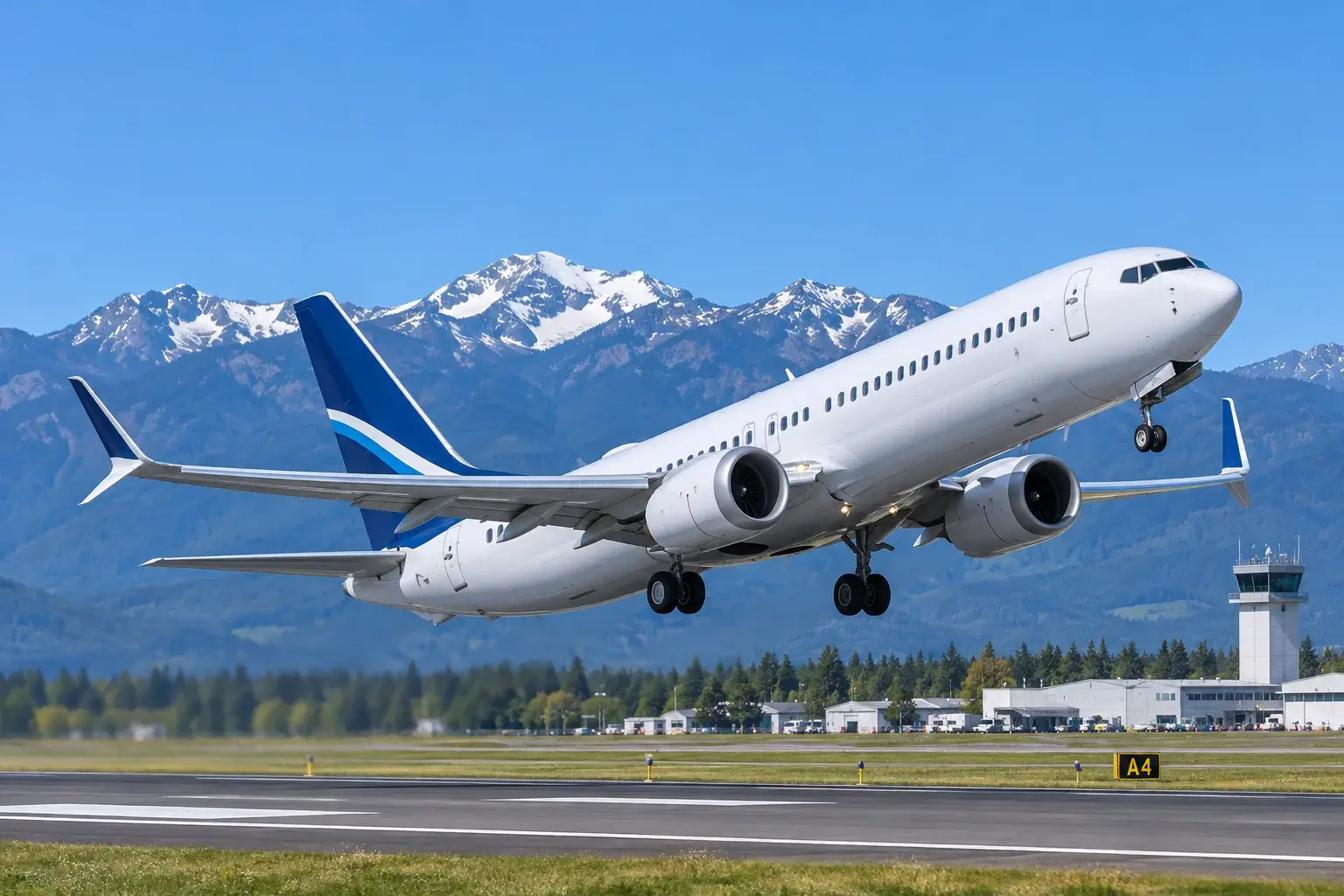
The largest single aisle airplane in Boeing's lineup has finally reached the threshold of commercial service. After years of regulatory delays, technical redesigns, and intense scrutiny, the Boeing 737 MAX 10 is set to reshape how millions of passengers fly across America and beyond in 2027.
Overview: 737 MAX 10 First Flight And Why It Matters In 2027
On June 18, 2021, the Boeing 737 MAX 10 completed its first flight, departing from Boeing's Renton factory in Washington and landing at Boeing Field in Seattle. That flight lasted approximately 2 hours and 31 minutes and initiated a multi-year flight test and certification program that would stretch far longer than anyone expected. Now, in 2027, the aircraft is finally entering widespread commercial service as the largest member of the 737 MAX family.
The MAX 10 was designed from the outset to compete directly with the Airbus A321neo-a competitor that offers up to 244 seats in maximum configuration. Boeing claims the 737 MAX 10 has lower seat costs than competitors, making it a formidable workhorse for airlines like United Airlines, Delta Air Lines, Alaska Airlines, and American Airlines. This article connects the aircraft's first flight and certification journey to how it will reshape premium cabins on US airlines, and why discerning travelers increasingly compare this experience to private jet access through Jet Card programs.
While the MAX 10 enables airlines to expand first class and business offerings, travelers seeking consistent privacy, flexibility, and time savings will often elevate into private aviation solutions through BlackJet’s Jet Card programs.
Key milestones at a glance:
2017: Boeing launched the 737 MAX 10 at the Paris Air Show
June 2021: First flight from Renton to Boeing Field
October 2026: Federal Aviation Administration certified the aircraft
Early 2027: First commercial flights expected
A Certificate Nine Years In The Making: From Launch To First Flight
Boeing Commercial Airplanes unveiled the 737 MAX 10 at the 2017 Paris Air Show, securing over 240 initial orders and positioning it as the stretched, highest-capacity evolution of the MAX family. The 737 MAX family consists of four variants: MAX 7, MAX 8, MAX 9, and MAX 10, with the MAX 10 serving as the flagship for high-density routes.
First Flight Details
The first flight on June 18, 2021, was led by chief pilot Jennifer Henderson and co-pilot Jim Webb. Core objectives included verifying basic handling qualities, systems performance, and landing characteristics. The MAX 10's first flight took place shortly after the 737 MAX program was cleared to return to service following its global grounding-a milestone that carried enormous symbolic weight for Boeing and CEO Stephanie Pope's leadership team.
That maiden flight marked the first time the largest member of the MAX family proved itself in the air. The subsequent test campaign was exhaustive: Boeing logged over 2,000 flight hours for the MAX 10 certification, encompassing envelope expansion flights, high-altitude testing, hot-weather evaluations in August conditions, and validation of the new fuselage stretch and modified landing gear. Certification took nine years from the company's initial launch due to multiple obstacles that few in Seattle or Washington had anticipated.
Overcoming The Long, Winding Road To Certification
The 737 MAX 10's path from first flight to certification was shaped by the earlier 737 MAX grounding and the 2020 Aircraft Certification, Safety, and Accountability Act (ACSAA). The 2020 Aircraft Certification, Safety, and Accountability Act (ACSAA) is a U.S. law that introduced stricter safety and certification requirements for new aircraft types. This legislation, championed in part by Transportation Secretary Sean Duffy's predecessors, demanded enhanced safety assessments and human factors evaluations for every new type certificate.
The major regulatory milestones included:
The grounding of the broader 737 MAX fleet after the 2018–2019 accidents
Introduction of tougher Federal Aviation Administration oversight
The requirement that the MAX 10 be certified to the full extent of the Accountability Act
Technical and Regulatory Challenges
Boeing redesigned the engine anti-ice system due to overheating risks discovered in the LEAP-1B engines during 2021 testing. Rather than pursuing a time-limited exemption, Boeing abandoned that approach after renewed scrutiny in 2024 and completed a full redesign. Additional software issues in the flight management computer (versions U14 and U14.1) surfaced in the coming months of 2026-the FAA deemed them non-safety-critical but still required thorough review.
On October 20, 2026, the FAA issued an amended type certificate. The 737 MAX 10 is the first Boeing aircraft certified under the 2020 ACSAA standards, meaning it underwent more rigorous documentation and safety review than any previous MAX variant. The delays compressed the entry-into-service timeline but produced a more heavily scrutinized aircraft-one that regulators and the manufacturer can hold Boeing accountable for to the highest safety standards.
What Makes The Boeing 737 MAX 10 Different
The Boeing 737 MAX 10 is 43.8 meters long-66 inches longer than the 737-9. It can seat up to 230 passengers in maximum configuration or roughly 204 in a typical two-class layout, with a range of up to 3,100 nautical miles. The aircraft's reinforced structure allows for increased passenger capacity while maintaining single aisle efficiency.
Feature | Specification |
|---|---|
Length | 43.8 meters |
Fuselage stretch vs. MAX 9 | 66 inches |
Max capacity | 230 passengers |
Two-class capacity | ~204 seats |
Range | 3,100 nautical miles |
MTOW | ~197,900 lbs |
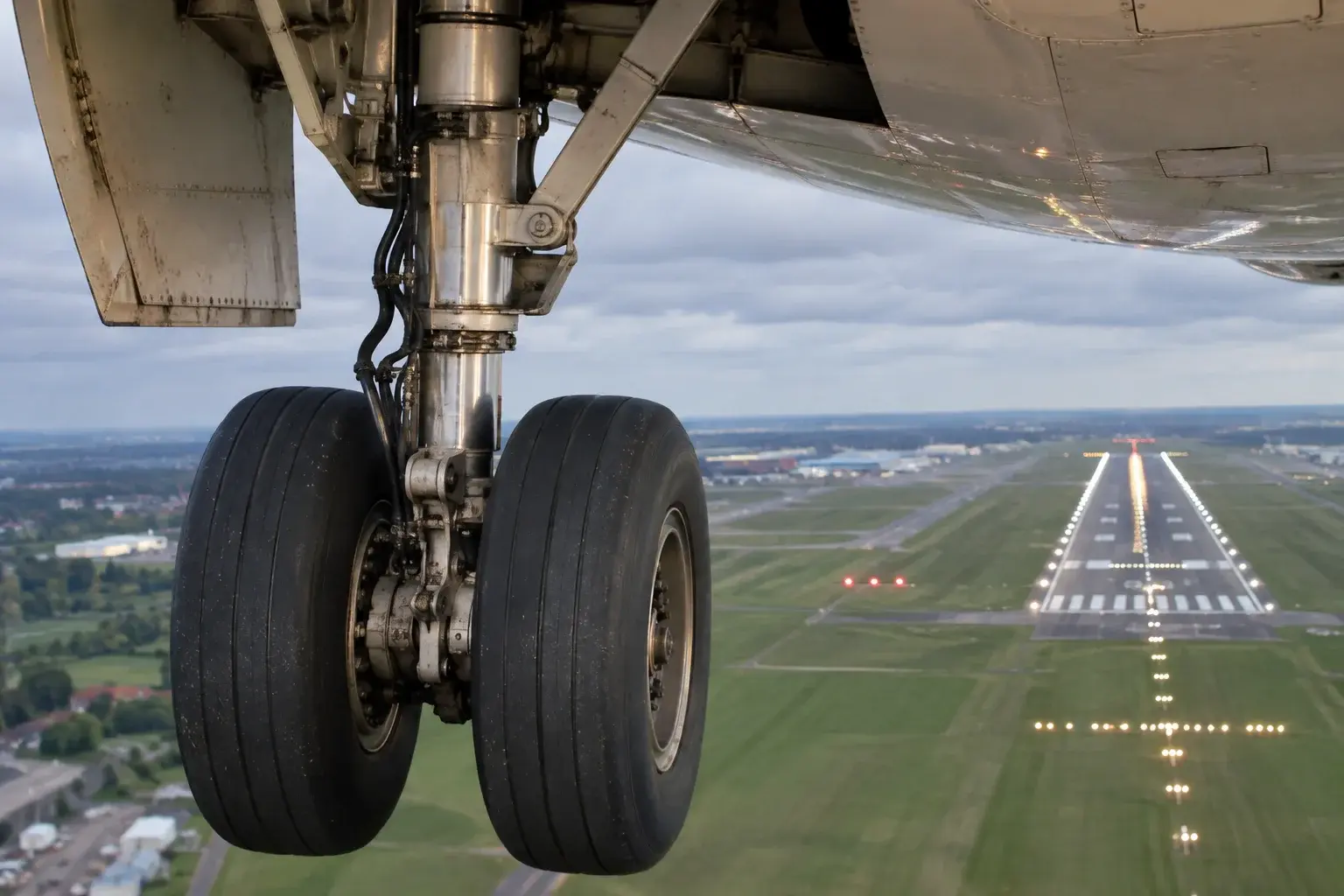
Levered main landing gear | Extends approximately 9.5 inches during takeoff and landing, mitigating tail-strike risk from the longer fuselage while retracting compactly into existing wheel wells. A levered main landing gear is a design that allows the landing gear to extend further during takeoff and landing, reducing the risk of tail strikes on longer aircraft. |
Other structural changes | New mid-exit door and lighter flat aft pressure bulkhead |
The MAX 10 offers greater passenger capacity than the MAX 8 and MAX 9 while maintaining single-aisle efficiency, and the aircraft will provide lower operating costs per seat compared to previous models. The enhanced angle-of-attack sensor monitoring and improved error detection-including the attack sensor upgrades and stick-shaker cutout switch introduced after earlier MAX incidents-represent a significant upgrade in flight control architecture across the fleet.
US Launch Customers: United, Delta, Alaska, American And Their MAX 10 Plans
Boeing has received 1,555 orders for the 737 MAX 10, representing roughly 30% of the total 737 MAX backlog. Commercial deliveries and inaugural passenger flights are expected to begin in early 2027, with Boeing anticipating the first commercial flight will be operated by WestJet in Q1 2027.
United Airlines: Holds the largest order with 167 Boeing 737 MAX 10 aircraft. United Airlines will receive its first 737 MAX 10 in early 2027, deploying planes on high-density domestic and transcontinental routes. The company begins production deliveries as operators prepare their crews and gates.
Delta Air Lines: Ordered 100 MAX 10s in 2022, planned for integration alongside its A321neo fleet. Delta expects delivery in spring 2027, targeting business- and premium-heavy markets where corporate demand dominates.
Alaska Airlines: Has committed to over 105 orders with additional options, making the MAX 10 its primary high-capacity narrowbody and a platform for transcontinental premium layouts as the airline's future fleet anchor.
American Airlines: Has ordered over 115 aircraft, with deliveries expected later in the decade-possibly starting around 2029-as replacements for older narrowbodies across hubs like Dallas/Fort Worth, Charlotte, and Miami.
International Customers: Ryanair (150 orders), Pegasus (100), and Akasa (99) further solidify the MAX 10's global order book among its many customers and competitors in the marketplace.
How The 737 MAX 10 Is Reshaping First Class And Premium Cabins
The 737 MAX 10's certification and entry into service coincide with a broader industry push: US airlines using the type's stretched cabin space to expand first class and premium offerings on business-heavy routes for the first time on this production line.
American Airlines
American Airlines plans to fit many MAX 10s with around 24 first class seats-up from 20 on its larger narrowbodies-paired with Main Cabin Extra and modern inflight entertainment.
Delta Air Lines
Delta Air Lines is expected to configure its MAX 10s with an enlarged Delta First cabin to complement its A321neo service on routes like New York–Los Angeles and Atlanta–Seattle.
Alaska Airlines
Alaska Airlines is taking a distinctive approach, building a dedicated subfleet with lie-flat business or first class seats and a "Premium Reserve" cabin for its most valuable transcontinental passengers.
United Airlines
United, while initially planning 20-seat first class cabins, faces competitive pressure that may lead to an increase in premium seat counts on future deliveries.
Yet even the best commercial first class offerings remain subject to fixed schedules, crowded hubs, and limited privacy, especially when compared against the full spectrum of options outlined in a comprehensive private jet price list. For travelers who demand more, private jets accessed via BlackJet's Jet Cards provide tailored departure times, direct routing, and a fully private cabin-advantages no commercial class can replicate.
Commercial Versus Private: 737 MAX 10 First Flight Era And The Rise Of Jet Cards
By 2027, the 737 MAX 10's entry into service coincides with a measurable shift among high-net-worth individuals and executives from commercial first class toward flexible private jet access, often structured around predictable jet card membership pricing. The question is no longer whether private aviation is worth it-it's when the math tips in its favor.
Consider this scenario: a business executive needs to fly New York to Los Angeles. On a MAX 10 first class seat, factor in a 90-minute pre-departure window, boarding queues, and potential delays at crowded hubs-total door-to-door time easily reaches 8 hours. Using a BlackJet 25 Jet Card or a comparable 25 hour jet card program, that same traveler departs from a private terminal with a 15-minute check-in, boards directly, and arrives in roughly 5 hours door-to-door.
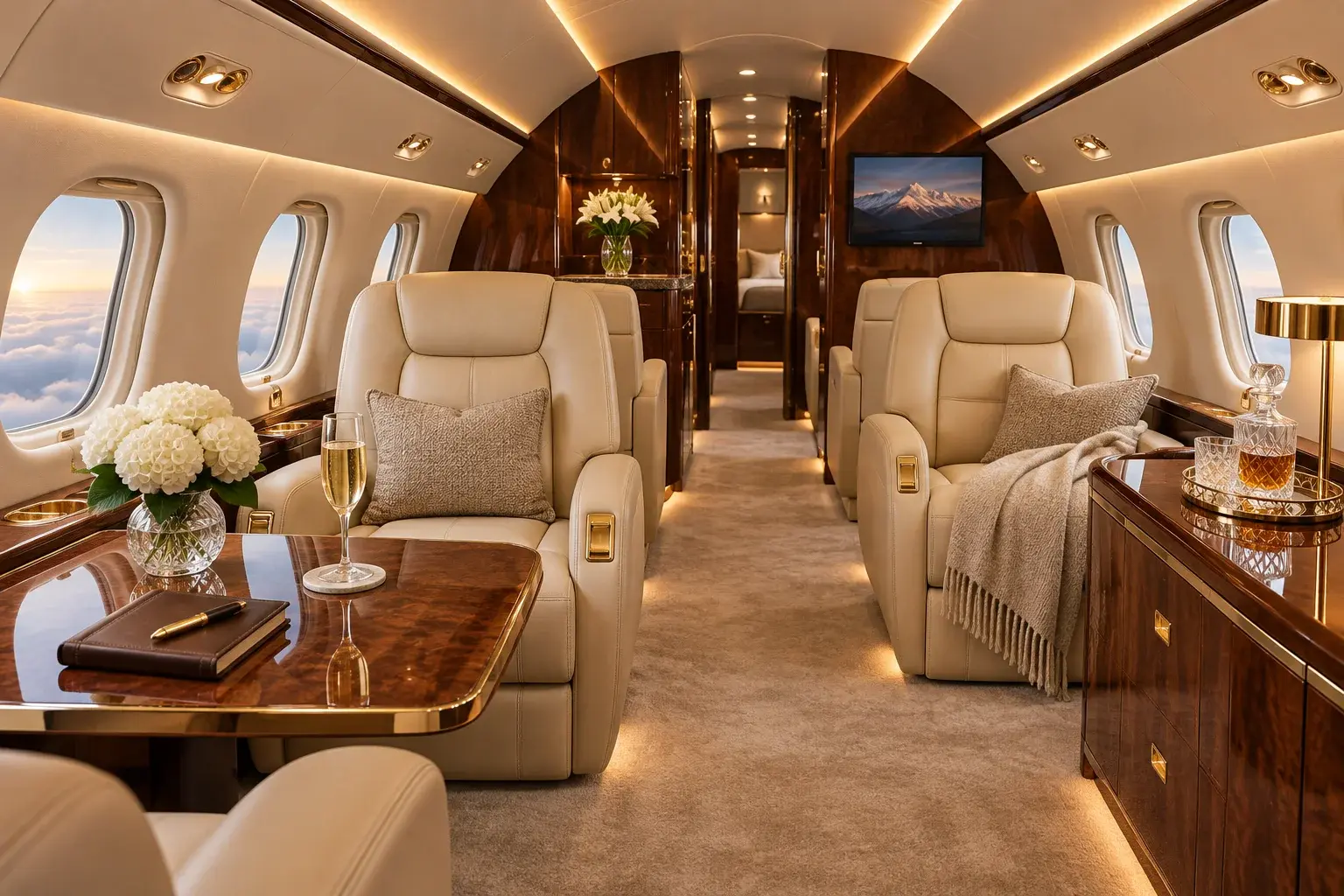
Privacy and productivity compound the advantage, particularly for leadership teams that can justify large-cabin solutions such as 16 seat private jet configurations. MAX 10 first class still means sharing space with 20–24 other premium passengers. A midsize or large-cabin private jet gives a confidential meeting space, connectivity arranged to the client's preferences, and the option to charter precisely the aircraft needed for each mission, including private jets configured for around 20 passengers when group travel is required.
BlackJet's Jet Card model-with prepaid hourly access across 25-hour and 50-hour programs, multiple cabin classes, and predictable costs-makes frequent private travel manageable without the capital commitment of aircraft ownership, especially when you understand the full structure of jet card pricing. Every Jet Card flight is carbon-neutral by default, with verified offsets applied automatically-a notable contrast to many of the most expensive private jet options that may not prioritize sustainability to the same degree.
Safety, Certification And Sustainability: Lessons From The 737 MAX For Private Aviation
The 737 MAX crisis and extended certification of the MAX 10 have heightened public awareness of aviation safety standards. The comment from regulators and industry observers alike is clear: rigorous oversight matters, whether in commercial or private operations.
Part 121 commercial airline oversight is comprehensive, but the charter market remains more fragmented, which is why discerning travelers evaluate the best jet cards for frequent flyers alongside operator credentials before choosing a provider. A curated network like BlackJet's-working only with rigorously audited operators holding certifications such as ARGUS Platinum and Wyvern Wingman-delivers airline-grade or better safety assurance to private travelers, similar in rigor to the standards followed by top private jet companies worldwide.
The parallels are instructive:
Safety: Enhanced angle-of-attack protections and flight control updates on the MAX 10 mirror the advanced crew training and modern avionics that serious private aviation providers demand across their fleets, particularly on the best private jets in the world
Certification discipline: The Federal Aviation Administration's elevated standards under ACSAA reflect the same philosophy BlackJet applies through proprietary operator vetting
Sustainability: The MAX 10 will reduce carbon emissions by approximately 14% compared to older 737 models; private aviation responds with carbon offset programs, sustainable aviation fuel initiatives, and increasingly efficient aircraft with auxiliary fuel tanks optimized for range, even among the cheapest private jet options
BlackJet's sustainability stance ensures every Jet Card flight is carbon-neutral, giving high-end travelers a way to align their mobility with ESG and corporate responsibility goals.
Frequently Asked Questions About The 737 MAX 10 First Flight And Premium Travel Choices
When did the Boeing 737 MAX 10 make its first flight?
The first Boeing 737 MAX 10 flew on June 18, 2021, departing from Boeing's Renton factory and landing at Boeing Field in Seattle. The flight lasted approximately 2 hours and 31 minutes.
When was the 737 MAX 10 certified by the FAA?
The FAA certified the Boeing 737 MAX 10 on October 20, 2026, making it the first aircraft certified under the 2020 ACSAA standards. This means Boeing met enhanced safety and documentation requirements.
When will airlines start commercial MAX 10 flights?
Boeing anticipates the first commercial flight will be operated by WestJet in Q1 2027. United Airlines, Delta Air Lines, Alaska Airlines, and American Airlines are all expected to begin MAX 10 service throughout 2027.
How many passengers can the 737 MAX 10 carry?
Up to 230 in a high-density single-class layout, or approximately 204 in a typical two-class configuration.
How far can the MAX 10 fly?
The aircraft has a range of up to 3,100 nautical miles—sufficient for US transcontinental routes and many regional international flights.
Is first class on a 737 MAX 10 comparable to flying private?
While MAX 10 first class offers improved space and amenities, it still involves shared cabins, fixed schedules, and hub congestion. Private jet travel provides full privacy, flexible departure times, and a bespoke experience that no commercial cabin can match, whether you book entire aircraft or simply buy a seat on a private jet.
How does BlackJet fit if I often fly first class on aircraft like the 737 MAX 10?
BlackJet's Jet Card programs complement commercial travel by providing prepaid private jet hours across multiple cabin classes, rigorous safety standards, and carbon-neutral flights—ideal for trips where time, privacy, or flexibility matter most, particularly for flyers comparing 50 hour jet card cost and value.
How To Elevate Beyond First Class: BlackJet's Invitation
The Boeing 737 MAX 10 first flight in 2021 launched a journey that, by 2027, delivers a high-capacity, premium-leaning narrowbody to the world’s major airlines. It raises the standard for commercial travel, but cannot replicate the flexibility, privacy, and bespoke service of private jets. Explore private jet access through BlackJet’s Jet Card programs, compare Jet Card membership pricing, review private aviation safety standards, and learn about carbon-neutral private flights.
Elevate your travel beyond first class—discover how a BlackJet Jet Card can complement your 737 MAX 10 and other airline flights with truly private, on-demand access. Safety, sustainability, and flexibility built in.