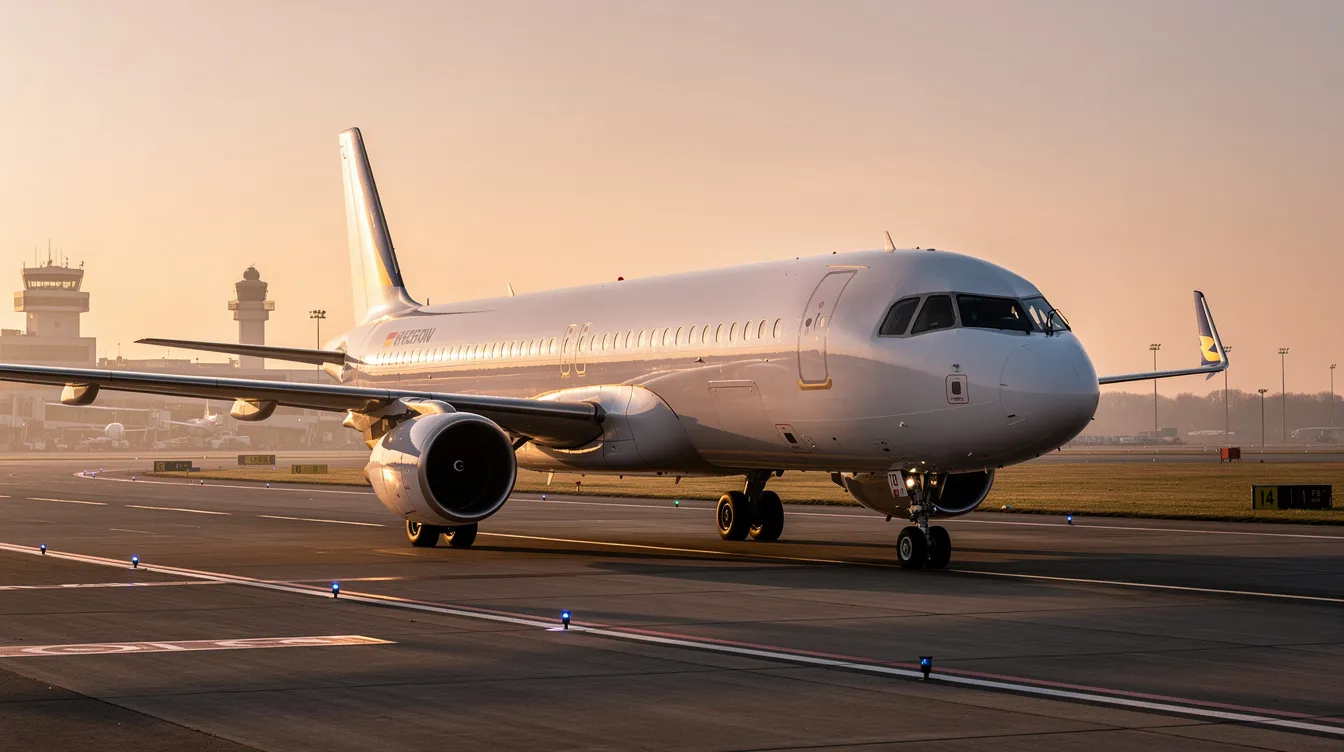
Only two scheduled airlines on Earth configure their entire aircraft with business class seats and nothing else. That scarcity tells you something about how hard the model is to sustain, and how valuable it is when it works. This guide is for frequent business travelers and luxury leisure flyers considering premium air travel options. Understanding these options helps you choose the best premium travel experience for your needs.
The fast answer: what "all business class" really gets you today
As of 2026, there are exactly two all-business-class airlines: La Compagnie, a French carrier running transatlantic routes, and BeOnd, a Maldives-based premium leisure airline connecting resort destinations to Europe and the Middle East. Both operate aircraft configured entirely with business class seats, so every passenger gets the same lie-flat bed, multi-course dining, lounge access, and a quieter cabin with fewer than 80 people onboard.
For frequent business travelers and high-net-worth leisure flyers choosing between premium commercial service and private aviation, that consistency is the main appeal. The seating on all-business-class airlines is more predictable than what you find on mixed-fleet carriers, where the experience can change completely depending on whether you drew a retrofitted 777 or a brand-new A350. All-business-class airlines optimize the cabin for premium comfort from row one to the last seat.
This guide explains what an all-business-class airline is, profiles the only two carriers flying in 2026, compares them with the best business and first-class products and with private jets, and shows when each option makes sense, including where BlackJet Jet Cards fit as an alternative. That matters if you want lie-flat comfort and elevated service on fixed routes but also need to understand where scheduled premium airlines still fall short on privacy, airport choice, and timing.
Is this better than first class and private jets? In comfort, an all-business-class flight surpasses most airline business-class products and rivals some first-class cabins. In control, it falls short of private aviation. Here is the distinction in brief:
All-business-class airlines: Fly fixed routes on shared cabins (e.g., Newark to Paris Orly), with consistent lie-flat seats and premium service, but no schedule flexibility.
Top long-haul Business Class products: Qatar, Singapore, or ANA deliver excellent seats on global networks, but you share the plane with 200+ passengers, and the experience varies by aircraft type.
Private jets (e.g., BlackJet Jet Cards): Provide bespoke routing to secondary airports, full cabin privacy, carbon-neutral flights, and departures timed to your calendar rather than a timetable.
A concrete example: La Compagnie's Newark to Paris Orly flight takes about 7.5 hours. Because Orly is closer to central Paris than Charles de Gaulle, you save 30 to 45 minutes in ground transit. A private jet from Teterboro to Le Bourget cuts another 2 to 3 hours off total door-to-door time by bypassing terminal queues entirely.
What is a business-class-only airline (and how is it different from regular Business Class)?
A business-class-only airline configures its aircraft with business-class seats only. No economy cabin. No premium economy section. No first class suites. The concept is uniform: every passenger gets the same premium tier.
On these flights, every seat offers lie-flat beds on long-haul flights, multi-course gourmet dining, curated wine lists, priority check-in and boarding, increased checked luggage allowances, and business class lounge access at major airports. Business-class-only airlines operate with fewer passengers for a quieter environment, and the crew-to-passenger ratio on these flights is higher than on traditional carriers. All-business airlines often use smaller aircraft than traditional airlines; think 40 to 80 seats in a 2-2 layout on an A321neo or A319, rather than 300+ seats on a widebody.
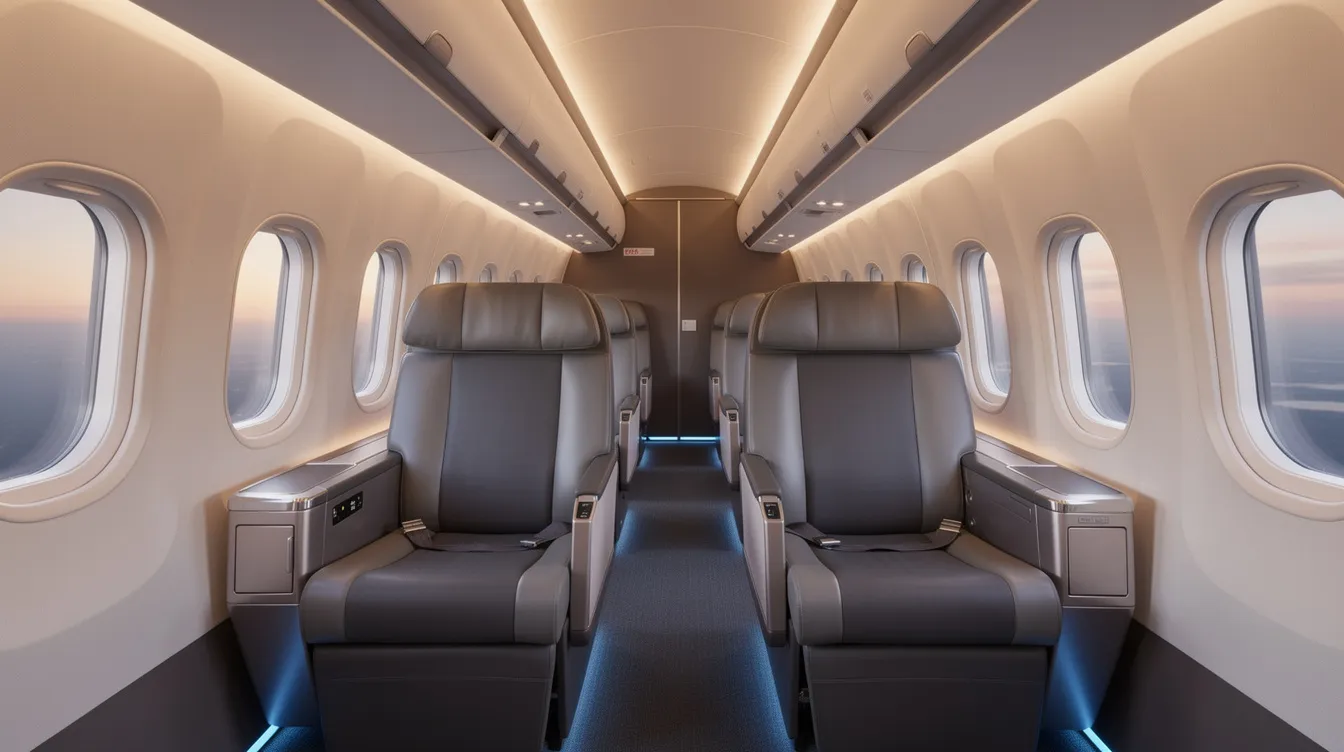
Compare that to standard airline business class on a mixed-fleet carrier, where you share the plane with economy passengers, service varies by route and aircraft, and cabin noise is higher. First class on carriers like Emirates or Singapore offers enclosed suites, onboard showers, and ultra-high crew ratios, but only on select widebody routes. Private jets give you full aircraft control, secondary airport access, and custom schedules.
The idea of a business-class-only airline is not new. Between 2005 and 2015, carriers like Eos Airlines, MAXjet, Silverjet, and OpenSkies tried and failed on transatlantic routes. Singapore Airlines flew the longest all-business-class route to New York until 2013. Qatar Airways launched all-business-class flights between Doha and London in 2014. Scandinavian Airlines operated an all-business-class route from Houston to Stavanger until 2015. Fuel price spikes, recessions, and shrinking corporate travel budgets killed most of these ventures.
The world's only two all-business-class airlines in 2026
Two carriers survived. La Compagnie focuses on transatlantic business traffic between New York and European cities. BeOnd targets resort-bound leisure travelers flying to the Maldives and connected destinations through Dubai and European gateways. Neither operates the way legacy carriers do; both occupy narrow niches where the all-business-class concept still pencils out.
La Compagnie: New York to Paris Orly and beyond in 100% Business Class
La Compagnie has operated all-business-class flights since 2014. Its core all-business-class route runs year-round between Newark (EWR) and Paris Orly (ORY). La Compagnie connects Newark and Paris with 599 round trips annually. La Compagnie focuses on Paris Orly because it is closer to central Paris than Charles de Gaulle, saving time for travelers headed to meetings or hotels in the city center.
Seasonal routes extend the network: Newark to Nice in summer for the French Riviera, and Newark to Milan Malpensa for fashion, design, and corporate travel.
The fleet consists of two Airbus A321neo aircraft, each configured with 76 business class seats in a 2-2 layout. La Compagnie's A321neo jets consume roughly 30% less fuel than older models, and La Compagnie produces at least 20% fewer CO2 emissions than competitors on equivalent routes.
Onboard detail matters here. La Compagnie offers lie-flat seats extending 75 to 76 inches. Passengers enjoy multi-course gourmet dining developed by French and Mediterranean guest chefs. La Compagnie provides high-speed Wi-Fi and 15.6-inch entertainment screens at every seat, along with power outlets, amenity kits with luxury products (Caudalie brand), fine wines curated by experts, and organic selections.
The airport experience includes priority check-in, lounge access at Newark Terminal B (LOUNGE&CO), Paris Orly (Primeclass and Extime lounges), Nice (Levity Lounge), and Milan (Montale's Lounge). All-business-class airlines provide faster boarding and check-in; with only 76 passengers, the boarding process takes a fraction of the time you spend on a widebody.
The limitation: two aircraft means any technical disruption leaves few backup options.
BeOnd: a Maldives-based premium leisure, business-class-only airline
BeOnd is the world's first premium leisure airline, launched in November 2023. Based in Malé, it serves luxury leisure travelers to the Maldives and Dubai, with additional routes to Zurich, Munich, and Milan. Some flights include technical stops in the Gulf due to narrowbody range constraints.
The fleet includes an Airbus A319 with 44 business class seats and an Airbus A321 with 68 seats, both in 2-2 layouts. The cabin is styled to evoke a boutique resort: warm lighting, soft finishes, and leisure-oriented amenities. BeOnd serves multi-course meals and curated drinks in-flight, including champagne, cocktails, and non-alcoholic options.

BeOnd sits between top business class airlines and private jets. It provides a quieter space and higher privacy than a typical widebody, but still operates on fixed schedules through commercial terminals. Flight frequencies are tied to tourist seasons, and there is no direct New York service as of 2026; passengers reach the Maldives via the Middle East or European connections.
How all-business-class compares to top Business Class and First Class
Comparison with Top Business and First Class Products
Picture a New York to Paris journey. On a large network carrier, you check in 3 hours early at JFK, pass through security with hundreds of other passengers, board a 300-seat widebody, and land at CDG. Your business class seat might be a Qsuit,e or it might be a dated recliner, depending on the aircraft that day. On La Compagnie, you check in at Newark with 75 other passengers, board in minutes, sleep in a flat bed, and land at Orly closer to central Paris.
All-business-class airlines primarily serve high-demand business routes and typically offer lower fares than legacy carriers on comparable cabins in many cases. They usually bundle services into the ticket price: lounge access, checked bags, Wi-Fi, gourmet dining, and priority access are included rather than sold as add-ons.
First class on carriers like Emirates (Game Changer suites) or Singapore (A380 Suites) delivers enclosed suites, onboard showers, and caviar service. But first class is available on fewer aircraft and routes each year; many carriers are phasing it out or limiting it to a handful of frames.
The gap between business class and first class has narrowed on competitive routes like New York to London and New York to Tokyo. That trend makes the all-business-class concept more compelling for travelers who want consistent exceptional service without paying first-class premiums.
Still, every all-business-class flight remains a commercial experience: fixed departure times, security lines, standard immigration, and no ability to customize routing. True control over schedule, airports, and full privacy only comes when the aircraft is yours, whether through a full charter or by buying a seat on a private jet via shared and semi-private options.
Premium Air Travel Options:
All-business-class airlines: Primarily serve high-demand business routes, offer consistent lie-flat comfort, bundled premium services, and quieter cabins, but operate on fixed schedules and routes.
Top business class airlines: Provide excellent seats and service on global networks, but the experience can vary by aircraft, and you share the plane with hundreds of passengers.
First class airlines: Deliver the highest level of privacy and luxury (enclosed suites, showers, caviar), but are available on fewer routes and aircraft, often at a significant premium.
Private jets: Offer full control over schedule, routing, airport choice, and privacy, with bespoke service and the ability to bypass commercial terminals entirely.
When all-business-class makes sense (New York, Paris Orly, and European routes)
All-business-class airlines work best for specific traveler profiles and trip types:
Solo executives or couples: With fixed meeting dates between New York and Paris, Nice, or Milan.
Leisure travelers: Who want consistent comfort on a known route without paying for a private charter.
Corporate travel policies: That allow all-business-class fares as a cost-effective upgrade over standard airline business class.
For a planned 3-to-5-day trip with one destination, flying La Compagnie from Newark to Paris Orly delivers lounge access, lie-flat sleep, and a convenient airport, all at a fare that can undercut legacy carrier business class.
The trade-off: all-business-class airlines can have fewer flight frequencies than traditional carriers. With one daily departure or a handful per week, you build your trip around the airline's schedule. A two-aircraft fleet leaves limited room for delays or cancellations.
A practical hybrid approach: use all-business-class airlines for predictable, single-city trips, then switch to private jet access via a Jet Card when itineraries turn multi-stop, last-minute, or involve smaller airports not served by scheduled carriers, using a solid grasp of Jet Card pricing structures to keep budgets predictable.
Why many high performers move from business class airlines to private jets
Transitioning from Business Class Airlines to Private Jets
Private jet access is a strategic tool for travelers whose time carries a measurable cost per hour, especially once you understand the baseline of how much it costs to rent a private jet. The savings are concrete: 2 to 4 hours per leg when you eliminate early check-in, security queues, connections, and the effort of coordinating commercial travel.
Consider a 48-hour scenario. A CEO needs to visit New York, Paris, then Milan in rapid succession. On commercial carriers, that journey requires at least one overnight hotel, separate intra-Europe flights, and coordination across different airlines, all of which are easier to evaluate when you understand the broader private jet price list and access options. On a private jet, the itinerary compresses:
New York Teterboro to Paris Le Bourget: Evening departure, morning arrival.
Paris to Milan Linate: The same afternoon.
Milan to New York: The following evening.
No airport lines. No boarding delays. Departure 15 minutes after arriving at the FBO—benefits that are increasingly attainable thanks to the cheapest private jet options now on the market. Full privacy for sensitive discussions or rest. For 4 to 8 travelers on complex multi-city trips, per-seat cost on a private charter can approach flexible business or first-class fares once you factor in extra hotel nights, ground transfers, and lost working hours; understanding how much it costs to rent a private jet clarifies when these economics work in your favor.
BlackJet's Jet Card model locks in hourly rates and guaranteed access across multiple aircraft types, delivering the convenience of private aviation without the capital burden of ownership.
Inside the BlackJet difference: Jet Cards vs. all-business-class airlines
A BlackJet Jet Card is a prepaid block of flight hours; options include 25-hour and 50-hour cards that draw from vetted operators across light, midsize, and large-cabin jets, and our broader guide to understanding Jet Card cost explains how these blocks are typically priced across the market. One digital platform handles booking, tracking, and 24/7 trip support.
The contrast with business-only airlines breaks down along four lines:
Routing: Airlines fly fixed city pairs like Newark to Paris Orly. BlackJet builds bespoke itineraries to secondary airports and multi-leg trips in a single day.
Schedule: Airlines set the timetable. BlackJet departures align to your calendar, including short-notice changes.
Cabin: Even a 76-seat all-business-class plane is shared with strangers. BlackJet flights carry your group only, and large parties can even consider private jets for up to 50 passengers when they need to move an entire team or event group together.
Safety: BlackJet partners exclusively with operators holding ARG/US, Wyvern, or IS-BAO audits; fewer than 30% of U.S. charter operators meet these standards.
On sustainability: BlackJet flights are carbon-neutral through verified offset projects at no extra cost to the client. Sustainable aviation fuels are partially adopted by some airlines, but full carbon neutrality on every private flight is rare in the industry.
A practical mix: fly La Compagnie for a planned Newark to Paris conference, then activate your BlackJet Jet Card for a last-minute Paris to Zurich to Milan triangle before returning home, all within two days.
How to choose your next premium flight: a practical decision guide
Ask five questions before booking:
Are you flying between hub cities (New York to Paris) or into secondary markets?
How many stops and meetings do you need?
How many people are traveling?
How critical are privacy and confidentiality?
What is your time worth per hour?
Premium Flight Options:
All-business-class airlines: Best when travel is between well-served city pairs, dates are fixed well in advance, and you can adapt to the airline's timetable.
Leading business class airlines: Ideal when you need global coverage and frequent-flyer status across an alliance network.
Private jet access (BlackJet Jet Card): Choose when trips are complex, multi-leg, or last-minute; when group size is 4 or more; or when you need full control over airports, timings, and routes, and want the benefits outlined in the best jet cards for frequent flyers.
Think of premium travel as a portfolio: all-business-class flights for the predictable leg, BlackJet for the moment flexibility and privacy matter most.
Frequently Asked Questions about All Business Class Airlines and Private Jets
What is an all-business-class airline?
An all-business-class airline configures every seat on its aircraft as business class, with no economy or first class sections. Passengers enjoy lie-flat seats, premium dining, lounge access, and a quieter cabin environment.
Which airlines operate all-business-class flights today?
As of 2026, only two airlines operate exclusively all-business-class flights: La Compagnie, focusing on transatlantic routes between New York and Europe, and BeOnd, a Maldives-based premium leisure airline serving resort destinations.
How does flying all-business-class compare to traditional business class?
All-business-class airlines offer a consistent premium experience with fewer passengers, lie-flat seats, and bundled amenities. Traditional business class varies by aircraft and route and shares the cabin with economy passengers.
When should I choose an all-business-class airline over a private jet?
All-business-class airlines suit travelers on fixed routes and schedules who want elevated comfort without the higher cost of private jets. Private jets are better for multi-leg trips, flexible timing, privacy, and access to secondary airports.
What are the main benefits of private jet travel compared to all-business-class airlines?
Private jets offer full control over routing, departure times, and airports, complete privacy, bespoke service, and carbon-neutral flights. They eliminate airport queues and provide flexibility unmatched by scheduled airlines.
Are private jet flights more expensive than all-business-class flights?
Private jet flights typically cost more per seat but can be cost-effective for groups or complex itineraries when factoring in time savings, productivity, and convenience.
How does sustainability compare between all-business-class airlines and private jets?
All-business-class airlines like La Compagnie use fuel-efficient aircraft and sustainable aviation fuels partially. BlackJet offers fully carbon-neutral private jet flights through verified offset projects at no extra cost.
What safety standards apply to private jets and all-business-class airlines?
All-business-class airlines comply with standard FAA/EASA regulations. BlackJet partners only with operators meeting rigorous third-party safety audits such as ARG/US, Wyvern, or IS-BAO, often exceeding commercial standards.
Can I book all-business-class flights and private jets through BlackJet?
BlackJet offers Jet Card programs for private jet access. While it does not sell commercial airline tickets, it can help compare options and integrate private jet travel alongside all-business-class airline flights for a seamless premium travel experience.
How do I decide which premium travel option is best for me?
Consider your route, schedule flexibility, group size, privacy needs, and time value. Use all-business-class airlines for predictable, direct routes and private jets for complex, flexible, or confidential travel requirements.
Conclusion: From Business Class comfort to total control of your travel
All-business-class airlines deliver genuine upgrades over traditional business class. Quiet cabins with fewer than 80 passengers, fully flat beds for every traveler, and consistently premium service from boarding to arrival make La Compagnie and BeOnd stand apart from mixed-fleet carriers. For travelers on predictable routes, these airlines offer an affordable path to elevated flying.
But comfort and control are different things. All-business-class products bring you closer to a private jet experience without crossing the line into full flexibility. Fixed schedules, shared cabins, and standard airport security remain. When your journey demands custom routing, last-minute departures, or complete privacy, private aviation closes the gap.
BlackJet's Jet Card programs provide that bridge: access to private jets tailored to your schedule and routes, rigorous safety oversight through the BlackJet Certified program, carbon-neutral flights on every journey, and always-on digital tools for real-time support, with options like the BlackJet 25+ Hour Jet Card designed for frequent premium travelers. Discover how adding a BlackJet Jet Card alongside your preferred commercial options can move your travel from simply comfortable to fully strategic. Explore BlackJet's Jet Card programs and see what private flight access looks like on your terms.


 Sign up with google
 Sign up with Apple