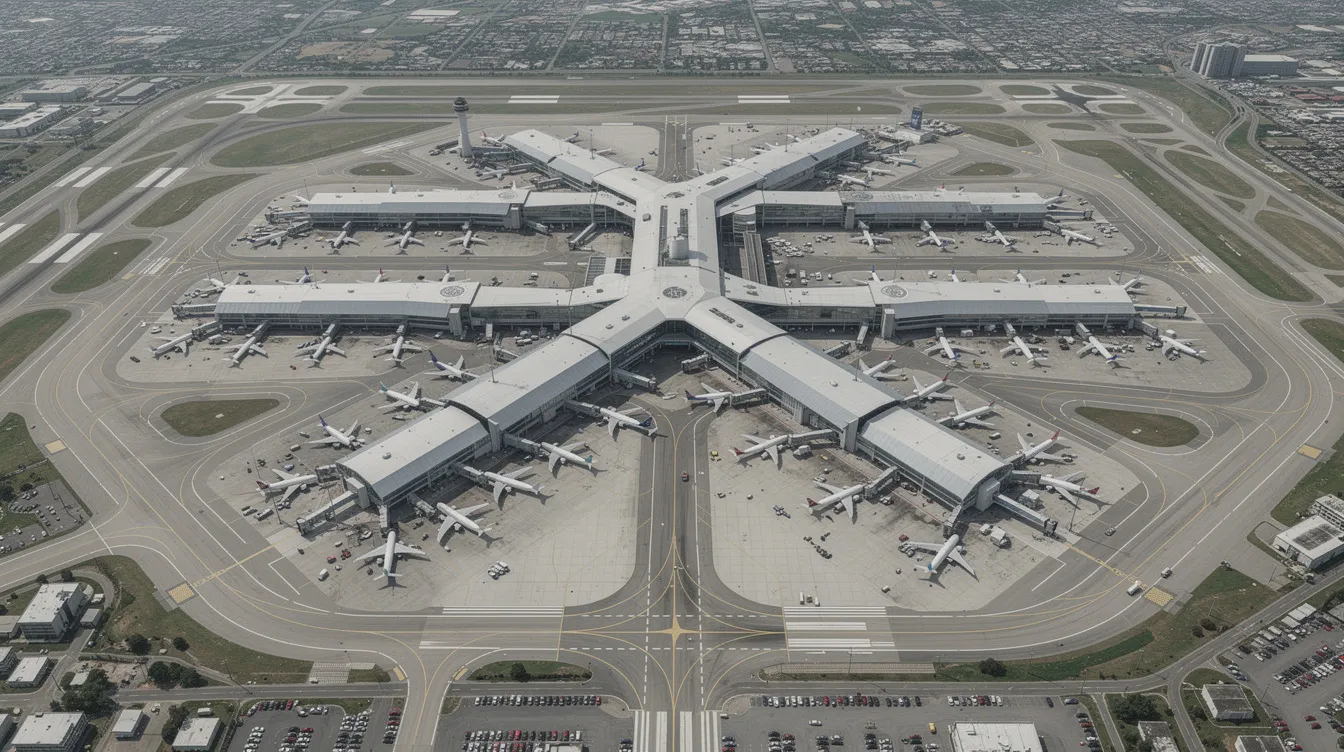
For executives and affluent leisure travelers, the calculus of air travel with American Airlines or private jet access extends well beyond ticket price. This guide is designed for executives, high-net-worth individuals, and frequent travelers evaluating the pros and cons of commercial versus private air travel. We compare American Airlines and private jet access across network, service, technology, safety, sustainability, and loyalty programs, so readers can judge the trade-offs between broad connectivity and rewards on one side and the convenience, privacy, and time savings of private aviation on the other.
American Airlines: Core Facts at a Glance
American Airlines operates nearly 6,800 daily flights to over 350 destinations across 48 countries. It is headquartered in Fort Worth, Texas, and is a founding member of the Oneworld alliance. Major hubs include Dallas-Fort Worth, Charlotte, and Miami. As one of the largest carriers by total flight count and peak daily departures, American Airlines offers extensive domestic and international connectivity.
Key Takeaways
For discerning travelers, American Airlines offers unmatched global reach, a broad cabin class hierarchy, and a robust loyalty program through AAdvantage. Its scale supports extensive connectivity, especially for long-haul international routes, but comes with inherent trade-offs in time, privacy, and flexibility.
Private jet access via BlackJet’s Jet Card programs delivers unparalleled convenience, control, and personalization. By bypassing commercial airport procedures, travelers save hours on each trip, enjoy exclusive cabin environments, and gain access to smaller airports closer to their destinations. Safety and sustainability are integral pillars, with every flight carbon neutral and operators meeting rigorous certification standards.
A blended travel strategy leverages the strengths of both: American Airlines for crossing oceans in premium cabins, and private jets for regional or multi-city itineraries demanding flexibility and privacy. For those seeking to reclaim time and elevate travel experience, integrating private jet access alongside commercial flying offers a powerful advantage.
Explore how BlackJet’s Jet Cards can complement your current travel routine, delivering seamless, safe, and sustainable private aviation access tailored to your lifestyle.
Why high-net-worth travelers compare American Airlines to private jets first
American Airlines operates a fleet of roughly 1,000 mainline aircraft, serves over 350 destinations across 60+ countries, and anchors the oneworld alliance. It is a scale powerhouse designed for millions of passengers. For hub-and-spoke business travel or family holidays on established routes, AA delivers reliable connectivity at competitive fares.
BlackJet offers something structurally different: prepaid jet card hours across vetted private aircraft, on-demand scheduling, and point-to-point routing that bypasses hub delays entirely, underpinned by a suite of premium private jet card programs designed for frequent travelers.
Consider a concrete trip - New York to Dallas. Flying AA means arriving at the airport 90 to 120 minutes early, clearing TSA, boarding via group number, possible gate changes, taxiing, and collecting checked luggage on arrival. Door-to-door, that's roughly six hours or more. The same trip via private jet: arrive at an FBO 20 minutes before departure, board immediately, fly direct, and reach your destination in approximately three and a half hours.
Here is why this comparison matters:
Time control - departure timing, routing, and access to smaller airfields closer to your destination.
Privacy - the entire cabin is reserved for your party, not shared with strangers.
Convenience - no long security queues, no connections, no baggage carousels.
Predictability - fewer disruptions, with hours saved compounding across every flight.
Productivity - hold a confidential conference call or work uninterrupted without seatmates.
American Airlines at a glance: history, scale, and network
American Airlines traces its history to the beginning of commercial aviation in the 1930s. The company is headquartered in Fort Worth, Texas, and operates under American Airlines Group Inc (NASDAQ: AAL). Its market cap signals massive scale and operational reach - though scale alone does not guarantee a premium passenger experience.
AA's mainline fleet stands at over 1,020 Airbus and Boeing aircraft as of April 2026 fleet data, with an average fleet age of approximately 14.5 years.
The American Eagle regional network extends the airline's reach on short-haul routes, feeding passengers into mainline hubs.
Nine major hubs - including Dallas-Fort Worth, Charlotte, Miami, Chicago O'Hare, Phoenix, Los Angeles, JFK, Philadelphia, and Washington DCA - connect U.S. travelers to global business centers.
AA is a founding member of the oneworld alliance, which launched in 1999, linking the carrier to partner airlines on six continents.
As the largest airline in the world by fleet size, AA's network is built for volume - a different proposition than the bespoke access a private aviation solution provides.
Cabin classes, seating, and the reality of flying commercial
Main Cabin and Main Cabin Extra
Main Cabin seats range from 17 to 18.5 inches in width, with a typical pitch of 30 to 32 inches. On a packed A321 or 737, the row ahead reclines into your space, and elbow room is minimal.
Main Cabin Extra bumps pitch to around 34 inches via exit-row or bulkhead seats - a modest improvement.
Basic Economy has restrictions like last group boarding and no upgrades.
Premium Economy
Premium Economy debuted on Boeing 787-9s in late 2016, offering 38-inch pitch, wider leather seats, and enhanced amenities like upgraded dining and priority check-in.
Premium Economy offers two free checked bags and enhanced service.
Flagship Business and First
Flagship Business provides complimentary meals and lounge access, with lie-flat seats on transcontinental and international routes like LAX–JFK or JFK–LHR.
Flagship First offers fully lie-flat seats on select aircraft, representing AA's most premium commercial product - yet you still share the plane with hundreds of other passengers.
Even in first class, the experience involves fixed schedules, shared restrooms, a standardized service flow, and limited control over the cabin environment. Privacy remains finite.
Private Jet Cabin Experience
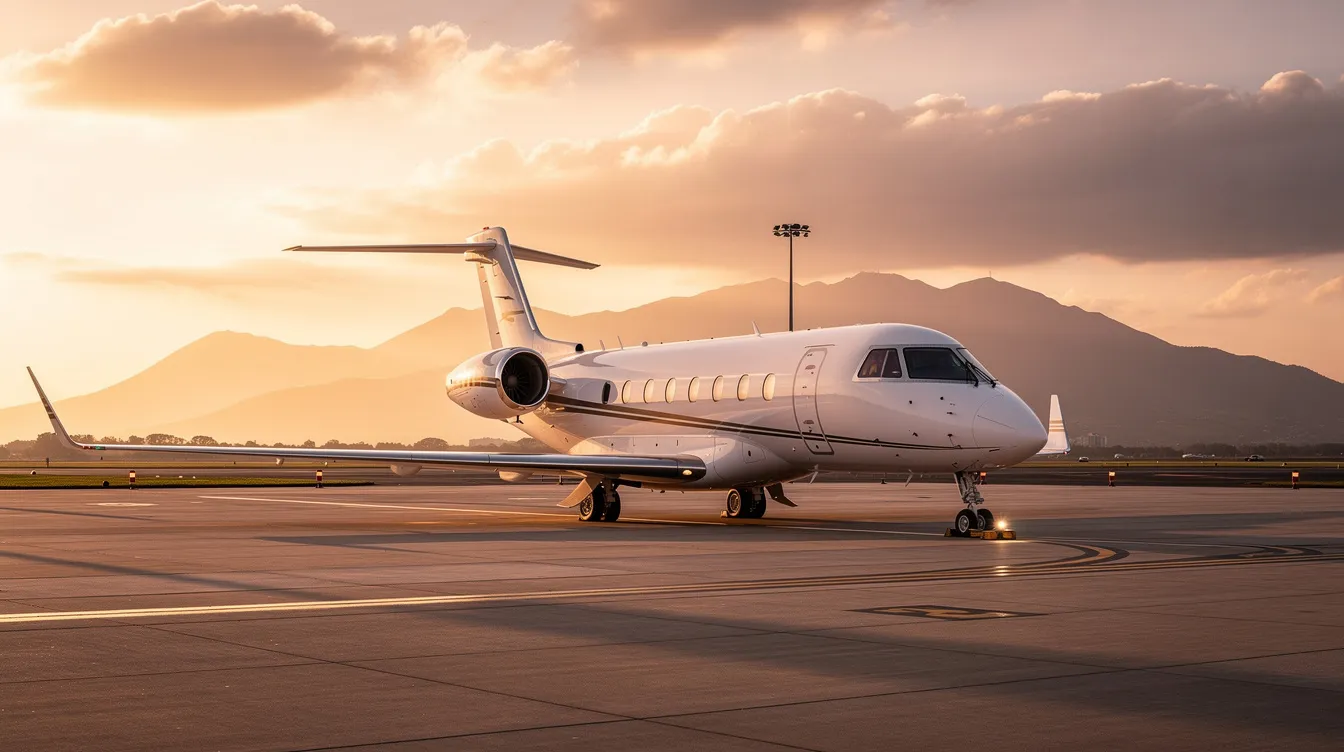
By contrast, BlackJet's aircraft categories - light, midsize, super-midsize, and large cabin - give travelers an entirely different proposition. The whole cabin is yours. You choose the departure time, the airport, and the configuration, matching private jet sizes to each mission profile. There is no new look of surprise when a stranger sits next to you; your party is the only group aboard.
Flight attendant roles, service culture, and personalization
American Airlines Service Model
Every American Airlines flight attendant is trained first and foremost as a safety professional. FAA responsibilities - preflight checks, emergency procedures, compliance protocols - come before hospitality. On a typical narrow-body flight, crew members serve 100 to 200 passengers during compressed service windows.
Union work rules define maximum duty hours and rest periods, meaning staffing is optimized for safety compliance rather than one-on-one attention.
Irregular operations - delays, diversions, weather events - strain even the most experienced crew, reducing the time available to serve individual travelers.
On a full A321 from DFW to LGA, an attendant might interact meaningfully with each premium-cabin passenger for just a few minutes across the entire flight.
Private Jet Service Model
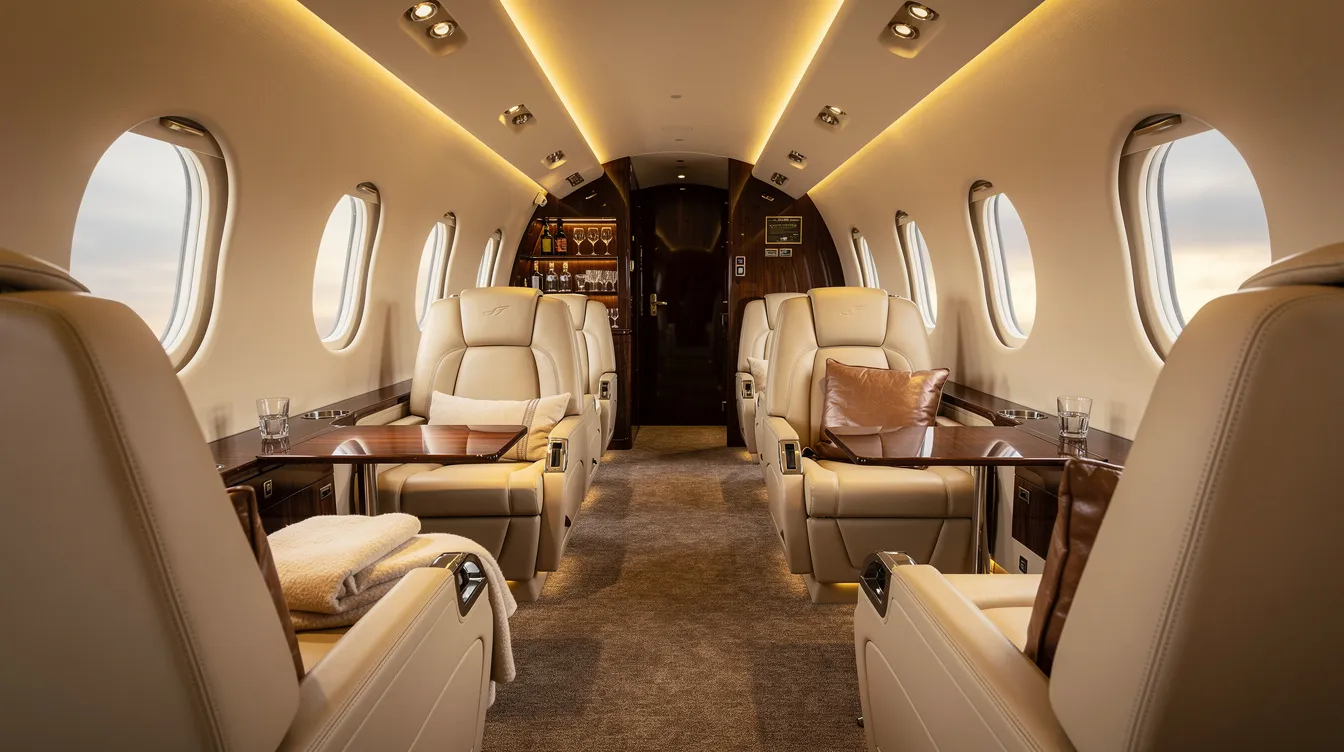
On a private jet covering the same route, the dynamic changes entirely. A party of four to eight has dedicated cabin service, while larger groups can select from top 16-seat private jet options to preserve comfort without sacrificing efficiency. Meals can be timed to your preference - immediately after takeoff or 30 minutes before landing. Confidential board meetings proceed without interruption, and the cabin becomes a mobile office or lounge tailored to your needs.
Personalization and discretion are not add-ons in private aviation; they are the default.
Partner airlines and global reach: oneworld vs private networks
American's membership in the oneworld alliance gives travelers access to partner airlines including British Airways, Japan Airlines, Qantas, Iberia, and Finnair. These partnerships coordinate schedules and fares through specific joint businesses:
Transatlantic - a joint venture with British Airways, Iberia, Finnair, and Aer Lingus.
Transpacific - a joint business with Japan Airlines.
Australia and New Zealand - coordinated service with Qantas.
This reach is impressive on paper, but combining flights across partners can introduce complexity: multiple booking records, differing onboard service standards, variable lounge access rules, and inconsistent branding experiences from one carrier to the next.
BlackJet's operator network takes a different approach. Rather than alliance branding, every operator is vetted against consistent safety and certification standards - ARGUS Platinum or Wyvern Wingman ratings, proprietary criteria for aircraft age and crew training - so the experience stays predictable regardless of which aircraft you fly, and jet card cost structures stay transparent across categories.
A practical blended strategy: fly Flagship Business on AA from London Heathrow to DFW, then connect via a BlackJet private flight from DFW to Aspen - a seamless door-to-slope itinerary that uses each mode where it excels.
Priority boarding, boarding pass procedures, and the time cost of commercial flying
American Airlines Boarding Process
At any major AA hub, the boarding process is a study in organized waiting. Priority boarding is tiered by AAdvantage status, cabin class, and group number. Basic Economy has numerous restrictions, including last group boarding, meaning those passengers board after everyone else has stowed their bags.
Travelers access their boarding pass through the AA app (mobile pass), printed at a kiosk, or issued at the counter - with check-in opening 24 hours before departure. Here is what a typical domestic trip looks like:
Arrive at the airport 90 to 120 minutes before departure.
Check in, drop checked luggage, carry personal items through TSA screening.
Walk to the gate - sometimes a 15-minute trek across the terminal.
Wait for your boarding group to be called; pass your boarding pass to the scanner.
Board the plane, stow bags, wait for pushback and taxi.
Upon landing: taxi, deplane, walk to baggage claim, collect luggage, arrange ground transport.
The total time envelope on a three-hour flight can easily stretch past six hours. Hours lost to process, not flying.
Private Jet Boarding Experience
With BlackJet, the problem of accumulated wait time disappears. You arrive at a private FBO 20 to 30 minutes before departure. There is no security line, no group number, no gate. You board directly, depart on your schedule, and step off at your destination - often at a smaller field located closer to where you actually need to be, while still leveraging strategies to fly private more affordably.
Digital tools: American Airlines app vs BlackJet's tech platform
American Airlines App Features
The American Airlines app is built for scale. It handles millions of daily interactions, and its feature set reflects that ambition:
Track flights in real-time via the app and receive push notifications for delays or gate changes.
Access mobile boarding passes without printing.
Use interactive terminal maps to navigate airports easily.
Select or change seats directly in the app.
Book trips with hotel and car options on a single page.
Save recently viewed trips for quick access.
Use a virtual assistant on the site for common questions by phone, web chat, or online forms.
Access info on baggage, upgrades, and partner-lounge eligibility within the platform, plus videos and guides for navigating the travel experience.
These tools are sophisticated - designed to make commercial flying as easy as possible within the constraints of a mass-market system.
BlackJet Digital Platform
BlackJet's digital platform serves a fundamentally different purpose. Built around individual or corporate accounts rather than millions of daily passengers, it offers:
24/7 online booking
Real-time pricing by aircraft category
Trip customization (catering, ground transport)
Direct access to operational support
The technology is designed to make booking a private jet as seamless as sending a message, whether you charter an entire aircraft or simply buy a seat on a private jet for a specific leg - because when you're paying for premium access, the platform should match.
Safety, incidents, and how standards differ in private aviation
American Airlines Safety and Accessibility
American Airlines has experienced notable historical incidents within the context of operating tens of millions of passengers annually. Flight 191 in 1979 and Flight 587 in 2001 are among the most widely studied in aviation history, and two AA aircraft were involved in the September 11 attacks. These events have been told and examined extensively in safety literature.
More recently, in October 2024, the U.S. DOT fined AA $50 million for violations of disability law - failures to provide dignified care and mishandling thousands of wheelchairs between 2019 and 2023. Pilots' unions have also asked leadership to address maintenance oversight concerns. These are reminders that large systems can struggle to personalize attention at scale.
Major airlines operate under FAA Part 121 regulations, with rigorous maintenance programs and comprehensive crew training. Overall safety standards remain high by global benchmarks.
American Airlines also provides specialized assistance for accessibility and unaccompanied minors, supporting travelers with disabilities and special needs to ensure a safe and comfortable journey.
BlackJet Safety Standards
BlackJet's safety positioning is different in structure. Every aircraft must be BlackJet Certified - operators meet ARGUS Platinum or Wyvern Wingman standards plus proprietary criteria covering aircraft age, crew qualifications, and maintenance records. Fewer flights mean more tailored risk management, and a clearly defined private jet price list and access models help match risk, cost, and control to each traveler.
For high-net-worth travelers, the question is rarely "is flying safe?" It is "who controls the variables?" - schedule, airport choice, co-passengers, security exposure, and the ability to cancel or reroute without friction.
Environmental impact and sustainability: commercial vs carbon-neutral private flights
American Airlines has led improvements in sustainability reporting among U.S. carriers. The numbers tell a complex story:
AA emitted 20,092 Kt of CO2e in 2020, a pandemic-driven low.
Annual emissions increased to 40 million metric tons in 2023 as travel volumes rebounded.
In November 2023, American purchased carbon credits for 10,000 metric tons through its offset initiatives.
The airline aims for net-zero carbon emissions by 2050, investing in newer, more fuel-efficient aircraft and operational efficiencies.
American Airlines received an ESG score of 5.82, a figure that has led within the airline industry.
Per-seat emissions on a full commercial flight can be lower than on a lightly loaded private jet. That is a responsible acknowledgment. But the decision matrix for discerning travelers often includes time, security, and productivity alongside environmental impact.
BlackJet addresses this directly: every flight is carbon-neutral by default, with verified offsets attached to every leg at no additional cost. Where available, sustainable aviation fuel integration is expanding across select hubs, even as clients explore the most affordable private jet options that still meet their sustainability expectations. This allows clients to align luxury travel with ESG goals without sacrificing convenience.
Advantage loyalty program vs Jet Cards: two very different value systems
American Airlines AAdvantage Program
AAdvantage was launched on May 1, 1981, making it one of the oldest frequent-flyer programs in the world. As of 2021, AAdvantage has over 115 million members. The program is built on accumulation: fly more, earn more, unlock higher status.
Members can redeem miles for tickets and upgrades, with one-way redemption starting at 7,500 miles.
Elite tiers (Gold through Executive Platinum) unlock complimentary upgrades, lounge access, and priority boarding.
AAdvantage offers co-branded credit cards for additional benefits, letting travelers earn loyalty points on everyday spending.
A frequent flyer commuting LAX–JFK in Flagship Business might accumulate meaningful status - but still faces the same commercial constraints: sold-out upgrade lists, variable availability, and the gamification of earning written into every interaction.
BlackJet Jet Card Model
BlackJet's Jet Card model works on a different principle. Prepaid 25- or 50-hour blocks provide fixed hourly rates across aircraft categories, guaranteed availability within defined notice periods, and no need to chase status. There are no blackout dates, no waitlists, and no wondering whether your upgrade will clear.
Jet cards appeal to travelers who value certainty over accumulation. You are not paying for the possibility of a better seat - you are purchasing guaranteed access to an entire aircraft whenever you need it, at a known cost, much like the best jet cards for frequent flyers that prioritize predictability and speed over points.
When American Airlines makes sense - and when to choose BlackJet instead
Smart travelers do not pick one mode and abandon the other. They build plans around where each delivers the highest return.
AA is the rational choice when:
You are flying solo on long-haul routes like DFW–Tokyo or MIA–Madrid, where wide-body premium cabins offer excellent value.
Your schedule aligns well with commercial timetables and cost containment matters.
You want to accumulate miles and status across a global alliance network.
BlackJet makes more sense when:
You need to cover multiple cities in 48 hours - say, Chicago to Cleveland to Nashville to Houston for a business roadshow, where small private jets and light cabins can minimize both time on the ground and total trip cost.
A last-minute family weekend to Aspen or the Bahamas demands flexibility no commercial schedule can match.
Privacy is non-negotiable: confidential board meetings, sensitive travel, or simply the desire to find peace at 40,000 feet.
Blended strategy: Use AA's global network to cross oceans in premium cabins, then connect via private jet on regional legs. Today, savvy corporate travel managers think in terms of a "portfolio of access" rather than either/or - and jet cards are the strategic layer above commercial options, supported by transparent jet card pricing guides that make cost per hour and per trip easy to model.
These are the things that separate adequate travel from exceptional travel. You pick the tool that fits the trip.
How to transition from flying American Airlines to integrating Jet Card travel
Most frequent AA flyers - including those with top-tier AAdvantage status - do not abandon commercial flying overnight. They start by supplementing specific segments where commercial service falls short. Here is how to begin:
Review your travel history. Pull the last 12 to 18 months of trip data. Identify routes where delays, connections, or time lost in transit consistently eroded your day. Look for patterns - the segments where you arrive home and feel like the travel was the problem, not the destination- then compare those pain points against jet card cost benchmarks to see where private access could be justified.
Model the time savings. Suppose you fly biweekly between DFW and Vail. Each AA itinerary involves a commercial flight plus a ground transfer plus security plus layovers - roughly six hours each way. Move those legs to direct private flights: approximately two and a half hours each way. Over 12 round trips per year, you reclaim 36 to 48 hours - nearly two full days moved from transit back to your life, and a framework like a 100-hour jet card cost guide can help quantify whether the time you save justifies the investment.
Sign up for a Jet Card. Choose a 25-hour or 50-hour block based on frequency, or explore the BlackJet 25+ Hour Jet Card if you expect your utilization to grow over time. Select the aircraft category that fits your typical mission - light jets for short hops, midsize or super-midsize for longer legs.
Integrate with existing plans. Coordinate with corporate travel policies or family schedules. Use BlackJet's booking platform to manage logistics - catering preferences, ground transport at each end, and special requests, including high-value transactions such as purchasing a private jet with cryptocurrency if ownership becomes the next logical step.
At the end of the day, the goal is not to replace every commercial flight. It is to unlock private access exactly where commercial falls short - and to reclaim the hours that matter most in life's journey, whether through a bespoke program or a well-understood NetJets jet card cost comparison that frames your alternatives.

Frequently Asked Questions (FAQs)
Q1: What is the main difference between American Airlines and private jet access like BlackJet?
American Airlines offers extensive global connectivity through a large fleet and alliance partnerships, ideal for long-haul and international travel. Private jet access through BlackJet provides personalized, on-demand flights with greater flexibility, privacy, and time savings, best suited for regional or multi-city itineraries.
Q2: How does American Airlines’ AAdvantage program compare to BlackJet’s Jet Card?
AAdvantage is a frequent flyer program rewarding miles and elite status for commercial flights, offering upgrades and lounge access. BlackJet’s Jet Card offers prepaid hourly access to private jets with guaranteed availability, no blackout dates, and full control over scheduling, prioritizing certainty over points accumulation.
Q3: What safety standards do private jets under BlackJet follow compared to American Airlines?
BlackJet-certified operators meet rigorous safety certifications such as ARGUS Platinum or Wyvern Wingman, alongside proprietary criteria for aircraft age and crew qualifications. American Airlines operates under FAA Part 121 regulations with comprehensive maintenance and crew training programs. Both maintain high safety standards but differ in operational scale and control.
Q4: Can I integrate private jet travel with my existing American Airlines itinerary?
Yes. Many discerning travelers use American Airlines for long-haul international segments and BlackJet private jets for regional legs, creating seamless door-to-door itineraries that maximize convenience, privacy, and time efficiency.
Q5: How does sustainability compare between American Airlines and BlackJet?
American Airlines is committed to net-zero carbon emissions by 2050 and invests in carbon offsets and fuel-efficient aircraft. BlackJet ensures every private flight is carbon neutral by default through verified offsets, enabling luxury travel aligned with ESG goals without compromising convenience.
Conclusion: Elevate Your Travel Experience with Informed Choices
For discerning travelers, the choice between American Airlines and private jet access is not simply about cost or convenience—it is a strategic decision that shapes how you value time, privacy, and control. American Airlines offers unparalleled global reach and a comprehensive loyalty program, making it an excellent choice for international and long-haul journeys where connectivity and rewards matter.
However, when flexibility, personalized service, and time savings are paramount, BlackJet’s private jet access provides a compelling alternative. With guaranteed availability, bespoke cabin environments, and carbon-neutral flights, private aviation elevates travel from a routine necessity to a seamless extension of your lifestyle.
By thoughtfully integrating both options, travelers can harness the strengths of each—leveraging American Airlines’ extensive network for crossing continents and BlackJet’s Jet Cards for agile, private regional travel. This blended approach ensures you never compromise on efficiency, comfort, or sustainability, while enjoying the full benefits of loyalty programs.
Discover how BlackJet can complement your American Airlines experience and redefine what it means to travel on your terms—effortlessly, safely, and sustainably.


 Sign up with google
 Sign up with Apple