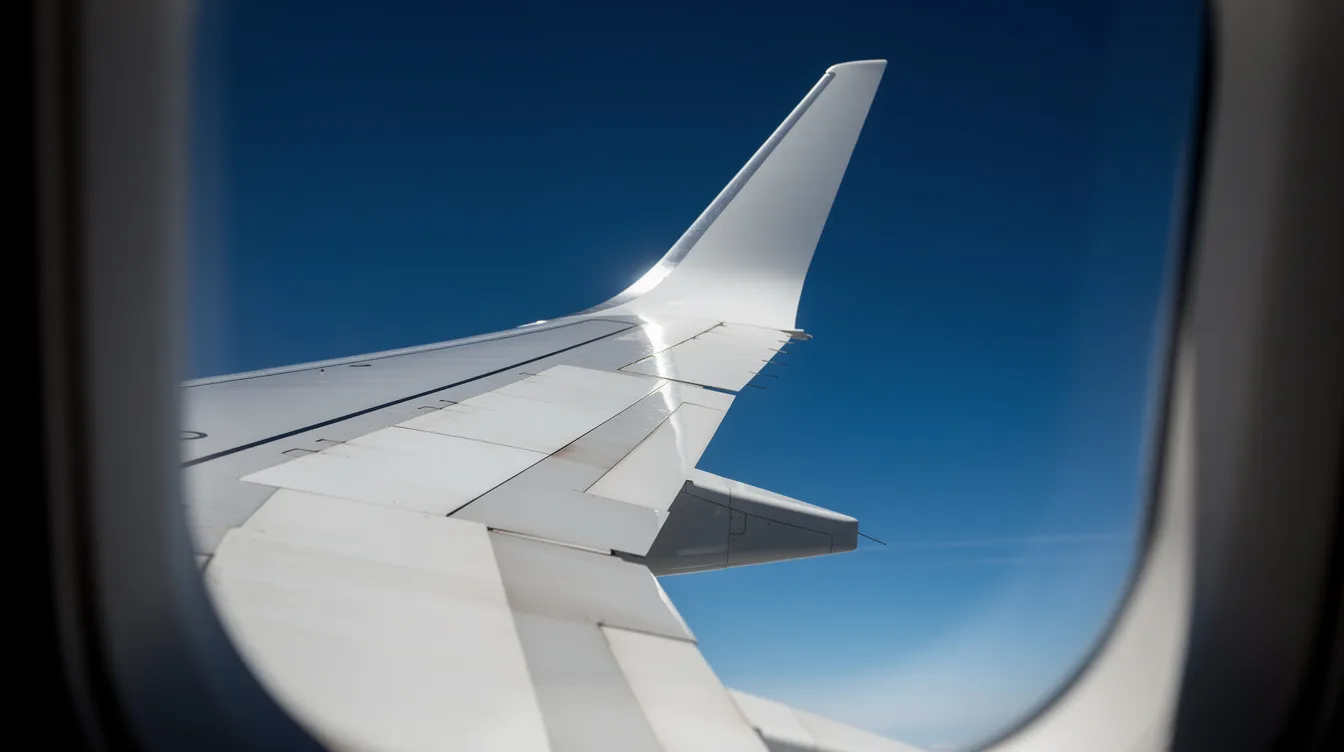
The Boeing 737-800 is the most widely used narrowbody aircraft in commercial aviation. Its winglets—those distinctive upswept surfaces at the wing tips—are far more than cosmetic details. They represent one of the most impactful aerodynamic upgrades in modern airline history, and understanding them reveals a great deal about how aviation balances efficiency, range, and the passenger experience.
Overview: Why Boeing 737‑800 Winglets Matter for Every Traveler
Winglets are vertical or near-vertical extensions mounted at the end of an aircraft wing. Their purpose is straightforward: winglets reduce aerodynamic drag and improve fuel efficiency by managing the turbulent airflow that naturally spills over the wing tips during flight. On the Boeing 737-800, this single modification translates into measurable gains that ripple through every aspect of airline operations.
In the narrowbody market, Boeing faced strong competition from Airbus, and the Boeing 737-800 commonly uses blended and split scimitar winglets. These devices can save fuel burn by 3% to 5% on many missions, extend range on typical short- and medium-haul routes, and reduce carbon emissions proportionally. For airlines operating hundreds of these single-aisle aircraft, even a few percentage points of improvement compound into enormous savings.
Consider the carriers that depend on this plane as their backbone:
American Airlines operates one of the world's largest 737-800 fleets across domestic and regional routes
Southwest Airlines has built its entire model around 737 variants
Ryanair uses the type extensively across Europe in dense economy class configurations
These operators benefit from winglet-driven efficiency in the form of competitive ticket pricing, expanded route options, and improved schedule reliability. Fuel consumption drops, range grows, and the airline gains flexibility it otherwise would not have.
Yet even the most efficient commercial Boeing 737 800 cannot address certain traveler needs. For executives and high-net-worth individuals, the constraints shift from fuel cost per seat to time lost in terminals, limited privacy in a crowded passenger cabin, and the inability to customize departure schedules. BlackJet's private jet model addresses these gaps precisely—offering bespoke service, direct access to thousands of airports, and cabin environments designed around the individual rather than the crowd.
The rest of this post explores the technical details behind Boeing 737-800 winglets, their effect on seating capacity and cabin layouts, and how next-generation winglet technology compares with the efficiency and experience available through private aviation.
Boeing 737‑800 in the Next Generation (NG) Family
The Boeing 737 Next Generation series—comprising the -600, -700, -800, and -900 variants—launched in the late 1990s as a comprehensive redesign of the world's best-selling airliner generation family. The NG series introduced a new wing, updated avionics, a modern glass cockpit, and the CFM56-7 engines, which are 7% more fuel-efficient than their predecessors on the earlier models.
The 737-800 sits in the sweet spot of the NG lineup. It is a stretched version of the 737-700 and was designed to replace the aging 737-400 and 727-200 in airline fleets around the world. The 737-800 first flew on July 31, 1997, and quickly became the dominant member of the NG series.
In terms of seating capacity, the aircraft accommodates approximately 162 passengers in a standard two-class layout, scaling up to 184–189 seats in a dense single-class configuration depending on seat pitch choices.
The NG redesign set the stage for winglet adoption:
The re-engineered wing included structural margins that made adding blended winglets feasible—both as factory-fit options and as retrofits for older airframes
A 737-800 without winglets on a 1,000 nm sector burns roughly 13,386 lbs of fuel; with winglets, that drops to approximately 12,911 lbs—a 3.5% reduction
The 737 MAX engines are expected to be 10–12% more efficient still, but the NG remains the dominant variant in active fleets globally
While 737-800s serve as workhorses for carriers like American Airlines and WestJet, BlackJet leverages a different fleet mix—light, midsize, super-midsize, and large-cabin jets—to provide private access with comparable or better per-passenger efficiency at high load factors. Travelers interested in this model can explore BlackJet premium private jet card programs alongside jet card fleet options to see how these categories map to different mission profiles.
Evolution of Winglets on the Boeing 737
The progression from no winglets to blended winglets to split scimitar winglets on the Boeing 737 represents two decades of incremental aerodynamic refinement on a single airframe.
The timeline runs as follows:
Late 1990s–2000: Boeing, in partnership with Aviation Partners, introduced the blended winglet as an option for NG variants. By 2000, blended winglets were standard on the 737 NG series
2013–2014: The split scimitar winglet received FAA certification for the 737-800 in early 2014, with United Airlines among the first carriers to fly revenue service with them
The underlying aerodynamic principle is consistent across both types. During flight, high-pressure air beneath the wing spills over the wing tips into the lower-pressure region above, creating swirling vortices that generate induced drag. Induced drag is the aerodynamic resistance caused by the creation of lift, and winglets reduce this by managing airflow at the wing tips. Winglets act as vertical fences that smooth this pressure transition, reducing energy lost to vortex formation and effectively increasing the wingspan without requiring a physically longer wing.
It is worth noting that while MAX aircraft use advanced technology winglets with a different design philosophy, this article focuses on the NG Boeing 737 800 and its two primary winglet options. BlackJet's approach mirrors this focus on proven, certified technology—selecting aircraft types with established performance records rather than chasing unproven concepts.
Blended Winglets on the Boeing 737‑800
Blended winglets became widely available on 737-800s around the year 2000 and are instantly recognizable by their smooth, curved upward shape. Unlike older "winglet fence" designs that attached at a sharp angle, the blended type transitions gently from the horizontal wing surface into the vertical winglet—a design choice that minimizes aerodynamic interference at the junction.
Key specifications:
Height: approximately 8 ft (2.4 m) tall
Weight penalty: roughly 380 lbs on provisioned wings, up to 520 lbs on non-provisioned airframes
Fuel savings: the 737-800 features winglets improving fuel efficiency by up to 5% on medium-haul sectors
Range extension: approximately 100–200 nm on typical Boeing 737 routes under favorable conditions
Blended winglets also improve climb performance and overall handling for aircraft operating from challenging airports. At hot-and-high fields where air density reduces engine output, the improved aerodynamics help maintain takeoff margins that would otherwise require payload restrictions.
Many NG 737s were delivered new with blended winglets, which Boeing provided either as standard equipment or as an option depending on the operator and airframe configuration. Others have been retrofitted during heavy maintenance checks-an investment of roughly US$1 million per shipset that typically pays for itself within two to three years at high utilization rates.
Boeing 737-800: Blended Winglets at a Glance
Metric | Without Winglets | With Blended Winglets |
|---|
Fuel burn (1,000 nm sector) | ~13,386 lbs | ~12,911 lbs |
Range improvement | Baseline | +100–200 nm |
Climb gradient | Standard | Improved |
Annual fuel savings | - | ~95,000–130,000 gallons |
Split Scimitar Winglets on the 737‑800
Split scimitar winglets represent the next step in NG winglet evolution. Receiving EASA and FAA approvals around 2013–2014, they build on the blended design by adding a downward-pointing "scimitar" tip and aerodynamic fairings at the wing tip to further reduce induced drag.
The visual difference is unmistakable: where a blended winglet curves smoothly upward, the split scimitar adds a distinct ventral strake pointing downward, giving the wing tip a more aggressive, finished appearance.
Performance improvements over the baseline are substantial:
Split scimitar winglets provide up to 5.5% fuel savings compared to a non-winglet 737-800, with some configurations reaching 7% on optimal sectors
Incremental gains over standard blended winglets are typically 1–2%, which compounds across thousands of annual block hours
Range extends slightly further—approximately 150–250 nm depending on payload and conditions
Adoption has been swift among major operators:
United Airlines was the first U.S. carrier to operate split scimitar winglets in revenue service
Alaska Airlines has retrofitted significant portions of its 737-800 fleet
American Airlines continues upgrading its NG fleet with split scimitar installations
The split scimitar design affects route planning by enabling more efficient transcontinental and over-water sectors while preserving seating capacity. An airline can maintain a dense economy class layout and still reach destinations that might previously have required fuel stops or payload compromises.
Aerodynamic Principles Behind Boeing 737‑800 Winglets
This section is moderately technical but stays accessible. The principles here explain why a relatively small modification at each wing tip produces outsized results.
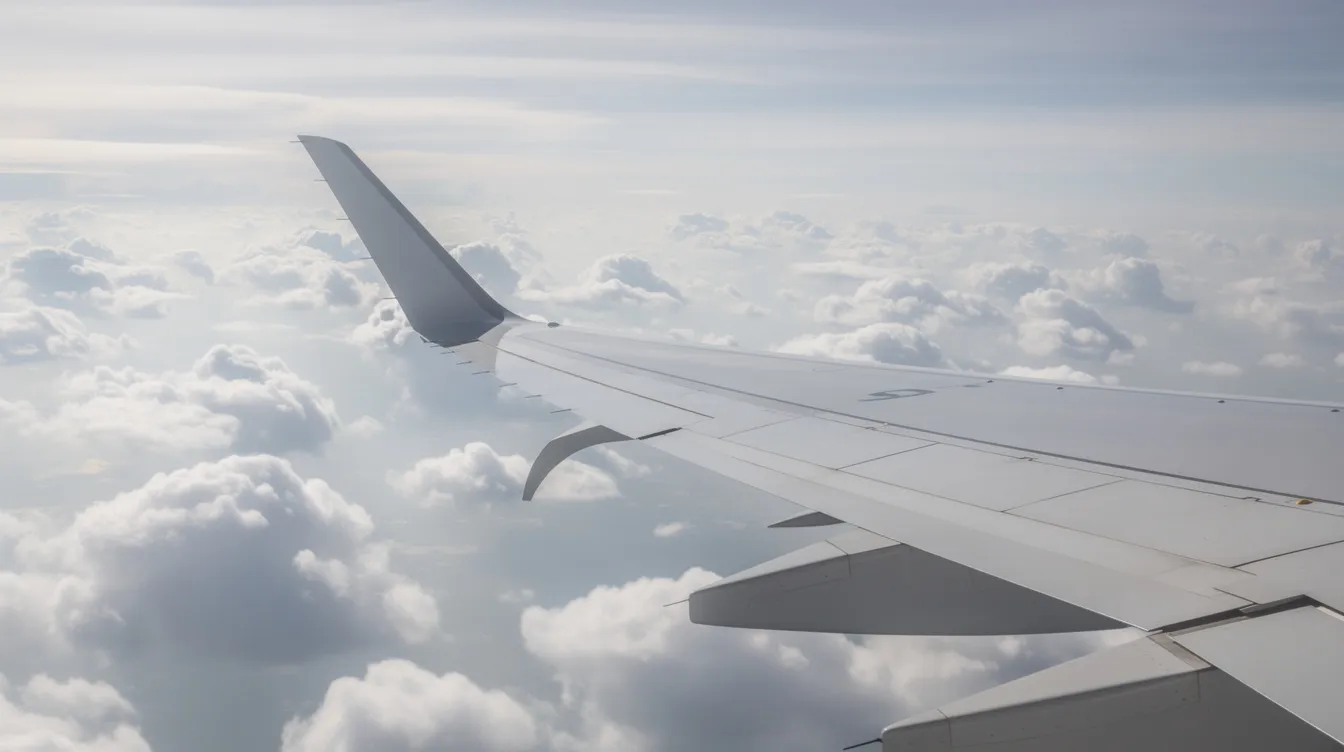
Winglets reduce induced drag by managing airflow at wing tips. During flight, the pressure differential between the wing's upper and lower surfaces causes air to curl around the tip, creating powerful vortices that trail behind the aircraft. These vortices represent wasted energy—energy that could otherwise contribute to forward motion.
Winglets increase the effective wingspan of an aircraft without physically extending the wing beyond airport gate and taxiway limits. By adding a vertical surface at the tip, winglets smooth the pressure transition and weaken the vortex, reducing drag in a way that mimics having a longer wing.
The difference between blended and split scimitar designs comes down to how aggressively they manage this airflow:
Blended winglets redirect a significant portion of the tip vortex energy, improving the lift-to-drag ratio across typical cruise conditions
Split scimitar winglets add additional surfaces (the downward scimitar and fairings) that further diffuse the vortex, squeezing out incremental improvements
Think of it like drafting in motorsport: following closely behind another car, you get pulled into its turbulent wake. Winglets are the aerodynamic equivalent of cleaning up that wake so less energy is lost to turbulence.
These improved aerodynamics connect directly to sustainability. Lower fuel burn per seat in economy class means reduced CO₂ per passenger mile. In private aviation, BlackJet similarly focuses on efficient aircraft types and carbon-neutral offsets, selecting jets that maximize performance per flight hour.
Impact on Range, Fuel Burn & Operating Economics
Fuel Savings and Economics
A high-utilization 737-800 equipped with blended winglets saves approximately 95,000 to 130,000 gallons of fuel per aircraft per year. Split scimitar winglets push those figures higher. The Boeing 737-800 has a maximum takeoff weight of 174,200 pounds, and winglets can enhance operational flexibility by allowing airlines to use more of that weight limit for revenue payload rather than extra fuel.
Winglets can allow for increased payload capability depending on flight conditions—roughly 6,000 lbs of additional payload on certain missions, or the equivalent range extension. Improved climb performance allows better routing, higher initial cruising altitudes, and fewer weight-restricted departures from hot-and-high airports where air density penalizes performance.
How these savings influence economics:
Fuel is typically an airline's highest variable cost; reducing it by 5–7% shifts the viability threshold for marginal routes
Dense economy class configurations become more profitable on longer sectors where fuel penalties previously limited demand
Schedule reliability improves because fuel margin buffers absorb delays and diversions without cascading disruptions
For private jet travelers, the calculus differs. Fewer seats mean higher yield per passenger, and efficiency gains come from operational optimization rather than wingtip devices alone. BlackJet's jet card programs balance comfort, flexibility, and efficiency on a per-trip basis—offering fixed hourly rates that give members predictable costs without the variables that commercial ticket pricing introduces, and resources that explain how jet card pricing and costs work in detail.
Seating Capacity, Cabin Layouts & Winglets
Winglets on a Boeing 737-800 do not change the internal seating capacity directly. The cabin dimensions, the number of rows, and the seat map remain identical whether the aircraft is equipped with winglets or not. The influence is indirect—winglet-improved range and fuel burn allow airlines to make different strategic decisions about how they configure the cabin.
Typical Seating Configurations
A representative Boeing 737-800 layout includes:
12 First Class seats offering more personal space and comfort, typically at 37–38 inch pitch
36 Premium Class seats in the Main Cabin with additional legroom and wider entertainment options
147 Economy seats in the Main Cabin at a standard pitch of 30 inches
The total comes to 195 in this configuration, though many operators settle on different numbers. The Boeing 737-800 seats 162 passengers in a two-class layout as a standard reference point, with all-economy versions reaching up to 189 seats depending on the airline's density strategy.
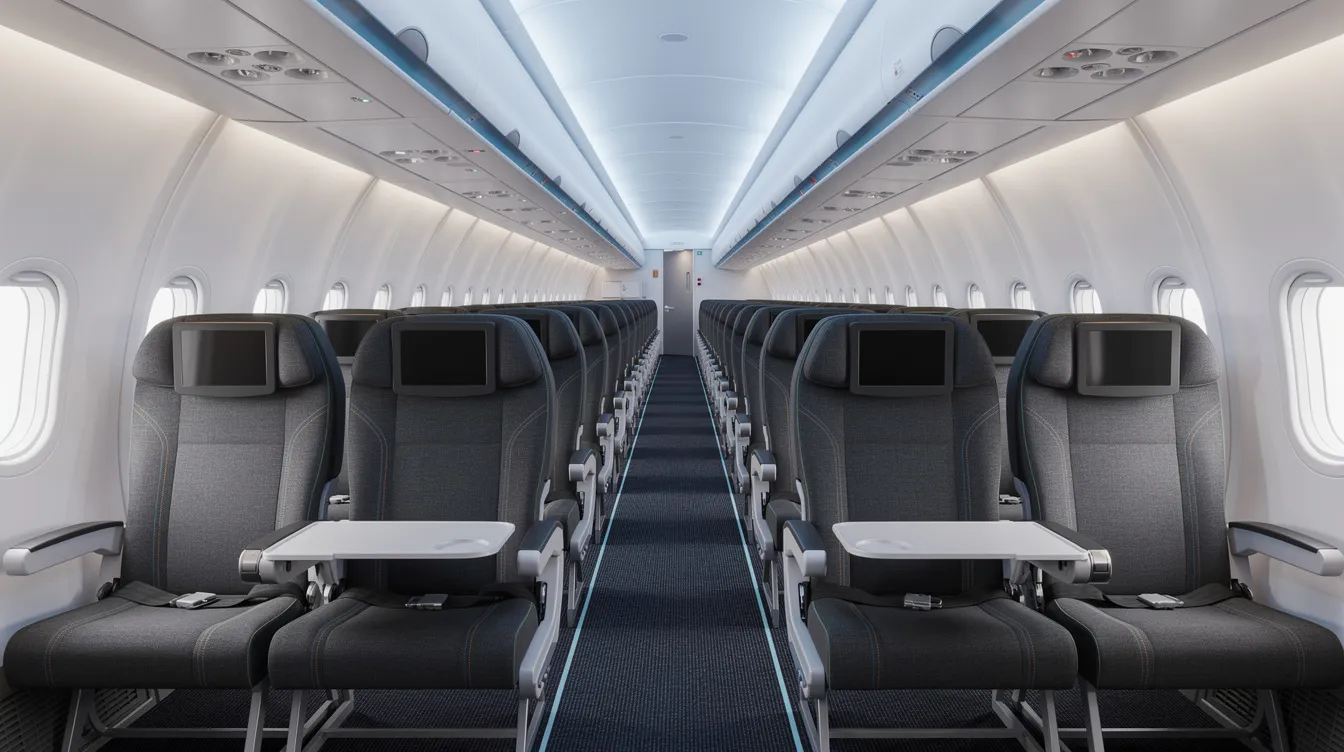
The 737-800 features Boeing's Sky Interior design, which includes larger overhead storage bins, LED mood lighting, and sculpted sidewalls that make the cabin feel more spacious than its physical size suggests. The 737-800 includes larger overhead storage bins that accommodate standard roller bags wheels-first, reducing boarding time and aisle congestion.
Winglet-driven efficiency helps airlines maintain comfortable seat pitches-especially in premium economy or extra-legroom rows—while keeping longer regional sectors profitable. Without that fuel margin, carriers would face pressure to add rows or cut routes.
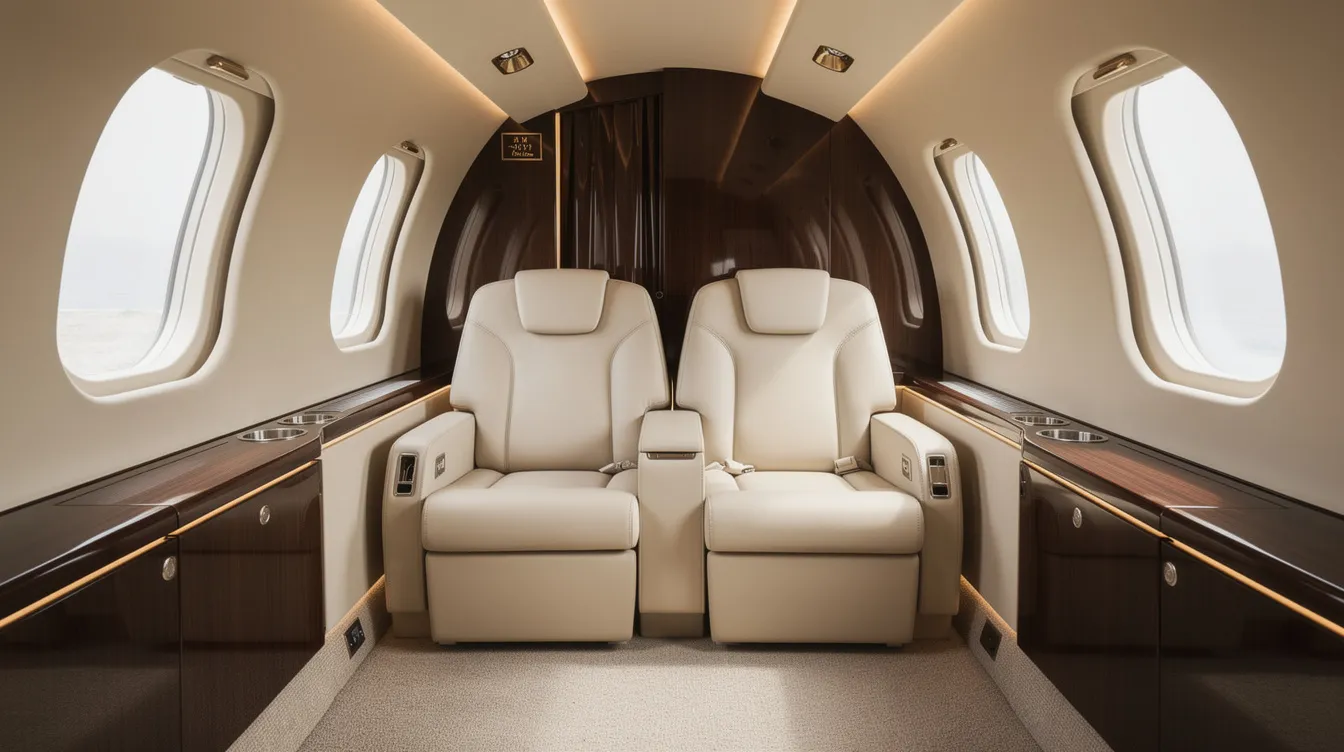
The contrast with private aviation is fundamental. BlackJet partner aircraft offer club seating arrangements, lie-flat options on larger cabins, and privacy that a 6-abreast Boeing 737 layout simply cannot provide, including spacious 16-seat private jet options for larger groups.
Seat Map Examples: American Airlines & Other Major Operators
How do real airlines configure Boeing 737-800 cabins that use blended or split scimitar winglets? The answer varies widely by operator, even on the same airframe.
Airline | First Class | Premium/Main Cabin Extra | Economy | Total Seats | Notes |
|---|
American Airlines | 16 | 30–36 | ~120 | ~172 | "Oasis" config, 37" pitch in First, seatback screens, enhanced Wi-Fi, Main Cabin Extra rows |
Ryanair | 0 | 0 | 189 | 189 | All-economy, maximum density, minimal pitch, no premium class |
Alaska Airlines | 12 | 30 | ~117 | ~159 | Mixed-class, premium cabin, standard economy |
WestJet | 12 | 24 | ~138 | ~174 | Balanced density and comfort, mixed-class layout |
From most window seats near the wing, passengers can easily see the winglets-blended types curve smoothly upward, while split scimitar versions show the distinctive downward extension as well. It is a visual cue that the aircraft is equipped with technology designed to make every flight slightly more efficient.
Passenger Experience: Economy Class vs Private Jet Travel
What does it actually feel like to fly in economy class on a Boeing 737-800 versus traveling privately?
On the Boeing 737-800, a typical economy class experience includes:
Seat width of approximately 17–17.5 inches in a 3-3 configuration
Economy seats have a pitch of 30 inches on many carriers
Shared overhead bins, standardized catering, and boarding queues that can stretch half an hour or longer
Inflight entertainment via seatback screens or streaming to personal devices, plus wi fi on most equipped aircraft
Noise levels that, while reduced by winglets during climb, remain characteristic of a single-aisle aircraft powered by high-bypass turbofans
Winglets subtly improve the experience. They contribute to noise reduction near airports during departure and arrival, and the improved climb performance can mean reaching quieter cruise altitudes more quickly. Better fuel margins can improve on-time performance by providing operational buffers. But winglets cannot address crowding, limited legroom, or the absence of privacy.
BlackJet's private jet offering operates on entirely different terms: direct access to aircraft without terminal queues, quiet cabins configured with club seating rather than 3-3 rows, bespoke catering tailored to individual preferences, and the ability to board minutes before departure, with emerging models like private plane rideshare options making this experience more accessible. For travelers who have already optimized their commercial flying—selecting premium cabins, exit rows, and preferred airlines—private jet access becomes the next strategic step for reclaiming time and discretion.
Safety, Certification & Reliability of Winglet‑Equipped 737‑800s
Both blended and split scimitar winglet designs underwent extensive FAA and EASA testing and certification before entering commercial service. The FAA issued Type Certificate A16WE for the 737-100 on December 15, 1967, establishing the certification lineage that all subsequent 737 variants—including the winglet-equipped 737-800—build upon.
Structural considerations for winglet installation include:
Reinforced wingtip fittings and spar modifications to handle additional aerodynamic loads
Flutter margin analysis and lightning protection verification
Ongoing inspection regimes incorporated into standard maintenance schedules
The 737-800 has a hydro-mechanical flight control system that provides redundancy independent of electronic systems
The Boeing 737-800 has eight emergency exits and is certified for Category II approaches, maintaining full operational capability regardless of winglet configuration. The 737-800 features larger overhead storage bins designed to secure luggage during turbulence, reducing cabin hazards during rough air.
Millions of flight hours on winglet-equipped Boeing 737 aircraft across global fleets have established winglets as standard equipment rather than an exotic modification. The track record is robust.
BlackJet's own safety philosophy mirrors this rigor. Every operator in BlackJet's network undergoes third-party safety audits aligned with standards like ARG/US, Wyvern, and IS-BAO. Pilot experience thresholds, maintenance oversight, and operational standards are non-negotiable—the same discipline that makes winglet-equipped 737 operations reliable at scale, applied at the boutique level of private aviation and reflected in its curation of top private jets that combine luxury and performance.
Sustainability: Winglets, Fuel Efficiency & Carbon‑Neutral Flights
Winglets are among the most visible aerodynamic tools for cutting airline emissions on the Boeing 737 800. Reduced CO₂ emissions result directly from lower fuel burn due to winglets—the relationship is linear. Every gallon of jet fuel burned produces approximately 21.1 pounds of CO₂, so the savings compound rapidly.
On a per-aircraft basis:
A high-utilization 737-800 with split scimitar winglets can reduce emissions by roughly 400–500 tons of CO₂ per year
Across global fleets, Aviation Partners reports that their winglet programs have saved billions of gallons of jet fuel and tens of millions of tons of CO₂ cumulatively
Airlines pair winglets with operational measures to further reduce their footprint: continuous descent approaches that minimize low-altitude fuel waste, optimized cruise altitude selection, lighter cabin materials, and sustainable aviation fuel trials that reduce lifecycle carbon intensity.
BlackJet's commitment to carbon-neutral flights operates on a complementary principle. Carbon offsetting through independently verified projects is included as standard with every jet card membership—not as an optional add-on. Typical offset metrics account for total fuel burned per flight hour, ensuring that the environmental cost is fully addressed, even for travelers choosing more budget-friendly private aircraft options.
Looking forward, today's winglet technology connects to tomorrow's sustainable aviation trends: widespread SAF adoption, hybrid-electric propulsion concepts, lighter composite structures, and potentially adaptive wing surfaces that adjust in real time to flight conditions.
Technology & Tools: How Operators Optimize Winglet Benefits
Winglets are one component in a larger ecosystem of technology and data-driven optimization. The hardware delivers its full potential only when supported by intelligent operational planning.
Airlines use advanced flight planning software to select altitudes, routes, and speed profiles that maximize the Boeing 737-800's winglet efficiency. On any given sector, the optimal cruise altitude may differ by thousands of feet based on winds, temperature, and traffic-and each choice amplifies or diminishes the aerodynamic gains the winglets provide.
Maintenance planning also plays a role:
Winglet surface coatings and paint integrity are monitored to preserve laminar flow characteristics
Structural inspections of winglet attachment fittings are integrated into routine check cycles
Removed or damaged fairings are replaced promptly to avoid drag penalties that erode the improvement winglets were designed to deliver
BlackJet applies a parallel technology philosophy to private aviation. Digital booking platforms give members 24/7 access to schedule flights across multiple aircraft categories. Real-time support teams monitor every flight, and data insights help match clients with the most efficient aircraft for each mission profile, whether they book whole-aircraft charters or individual seats on private jets via shared and empty-leg options. For jet card members, this means the convenience of mobile booking paired with operational rigor—the tech counterpart to the 737's hardware-driven gains.
Choosing Between Premium Airline Seats & Private Jet Access
Consider a scenario: an executive who flies New York to Miami four times a month, a route heavily operated by Boeing 737-800 aircraft. Each commercial trip involves 90 minutes of airport process at each end—security, boarding, taxiing, deplaning, baggage. The flight itself is roughly three hours in a premium cabin with a seat pitch of 36 inches, shared armrests, and limited ability to conduct confidential calls.
Now compare that with a BlackJet jet card flight on a light or midsize jet covering the same distance, potentially using a BlackJet 25+ Hour Jet Card for flexible access:
Factor | Boeing 737-800 Premium Cabin | BlackJet Private Jet |
|---|
Total door-to-door time | ~6.5–7 hours | ~3.5–4 hours |
Privacy | Limited | Complete |
Schedule flexibility | Fixed departures | On-demand within notice period |
Confidential work in-flight | Difficult | Unrestricted |
Airport experience | Terminal queues, crowds | FBO access, minimal wait |
Winglet-equipped 737s have narrowed the efficiency gap with smaller aircraft in fuel terms per seat—but not in experiential or time-saving terms for the individual traveler. Commercial Boeing 737 service makes sense for price-sensitive leisure travel and for routes where demand justifies high-frequency scheduled service. Upgrading to private jet access via BlackJet becomes a strategic choice when the cost of lost time, compromised privacy, and schedule inflexibility exceeds the price difference-and understanding the broader private jet price landscape, costs, and access models can clarify when that tipping point arrives.
Frequently Asked Questions (FAQs) About Boeing 737-800 Winglets
Q1: What are the main benefits of winglets on the Boeing 737-800?A1: Winglets reduce aerodynamic drag, improve fuel efficiency by up to 5.5%, extend aircraft range by 100-250 nautical miles, and enhance climb performance, leading to lower operating costs and reduced carbon emissions.
Q2: How do blended winglets differ from split scimitar winglets?A2 : Blended winglets have a smooth upward curve that reduces drag by redirecting wingtip vortices, while split scimitar winglets add a downward-pointing extension and aerodynamic fairings for further drag reduction and incremental fuel savings.
Q3: Does adding winglets affect the seating capacity inside the Boeing 737-800?A3 : No, winglets do not change the internal cabin layout or seating capacity. They influence operational efficiency, allowing airlines to maintain comfortable seat pitches and longer routes profitably.
Q4: Are winglets standard on all Boeing 737-800 aircraft?A4 : Most Boeing 737-800 Next Generation aircraft come equipped with blended winglets as standard or optional equipment, with many operators retrofitting older aircraft with either blended or split scimitar winglets.
Q5: How do winglets contribute to sustainability in aviation?A5 : By reducing fuel burn, winglets lower CO₂ emissions proportionally. A 737-800 with split scimitar winglets can save up to 500 tons of CO₂ annually, supporting airline and private aviation sustainability goals.
Q6: What safety certifications do winglet-equipped 737-800s hold?A6: Winglet-equipped 737-800s have undergone rigorous FAA and EASA certification. The 737-800 is certified for Category II approaches and includes structural reinforcements to handle winglet loads safely.
Q7: How do winglets affect passenger experience?A7: Winglets help reduce noise during climb and descent phases and improve schedule reliability by enhancing fuel margins, but they do not directly impact cabin comfort or seat features.
Q8: Can winglets be added to existing Boeing 737-800 aircraft?A8 : Yes, many operators retrofit older 737-800s with blended or split scimitar winglets during heavy maintenance checks to gain fuel efficiency benefits.
Q9: How do winglets compare with private jet travel in terms of efficiency?A9 : While winglets improve commercial aircraft efficiency per seat, private jets like those in BlackJet's fleet optimize operational flexibility, privacy, and direct airport access, offering a different value proposition beyond fuel savings.
Q10: Where can I learn more about private jet alternatives to commercial Boeing 737-800 flights?A10: BlackJet offers detailed guides on jet card programs, private jet categories, and cost comparisons, helping travelers evaluate when private jet access becomes a strategic travel solution.
BlackJet Jet Card: A Strategic Alternative to the Boeing 737‑800 Experience
BlackJet's jet card model offers a structured, predictable way to accesprivate jetsts—a fundamentally different proposition from purchasing per-seat commercial tickets on Boeing 737 aircraft, regardless of how efficiently those planes fly.
Core features of the program, which sits within a wider market of jet card pricing structures, costs, and benefits:
Consider two example itineraries where a traveler might currently board a Boeing 737-800:
Los Angeles to Dallas (~1,200 nm): A midsize jet covers this in approximately 2.5 hours with full cabin privacy, versus a 3.5-hour commercial flight plus 3+ hours of airport overhead, a pattern that makes a 100-hour jet card cost analysis particularly relevant for frequent flyers on similar routes
Chicago to Miami (~1,200 nm): A similar distance where BlackJet can access smaller airports closer to final destinations, cutting ground transfer time in half and demonstrating why large groups sometimes compare this with private jets configured for around 20 passengers
The Boeing 737-800-winglets anremainn extraordinary feat of engineering, and it serves as a useful benchmark against private jet charter options for up to 50 passengers when organizations evaluate whole-aircraft solutions for larger groups. It has logged hundreds of millions of hours, connected cities across every continent, and powered the growth of low-cost and full-service carriers alike. But for travelers whose most constrained resource is time rather than ticket price, the equation shifts.
Discover how BlackJet can reshape your travel. Explore membership options or request a tailored comparison between your current commercial travel patterns and a private aviation solution built around your schedule, your privacy, and your standards. If you are benchmarking across providers, resources on NetJets jet card costs and structures, unlimited private jet membership concepts, and the cheapest private jet options for entry-level access can help frame where BlackJet fits in your overall aviation strategy.


 Sign up with google
 Sign up with Apple