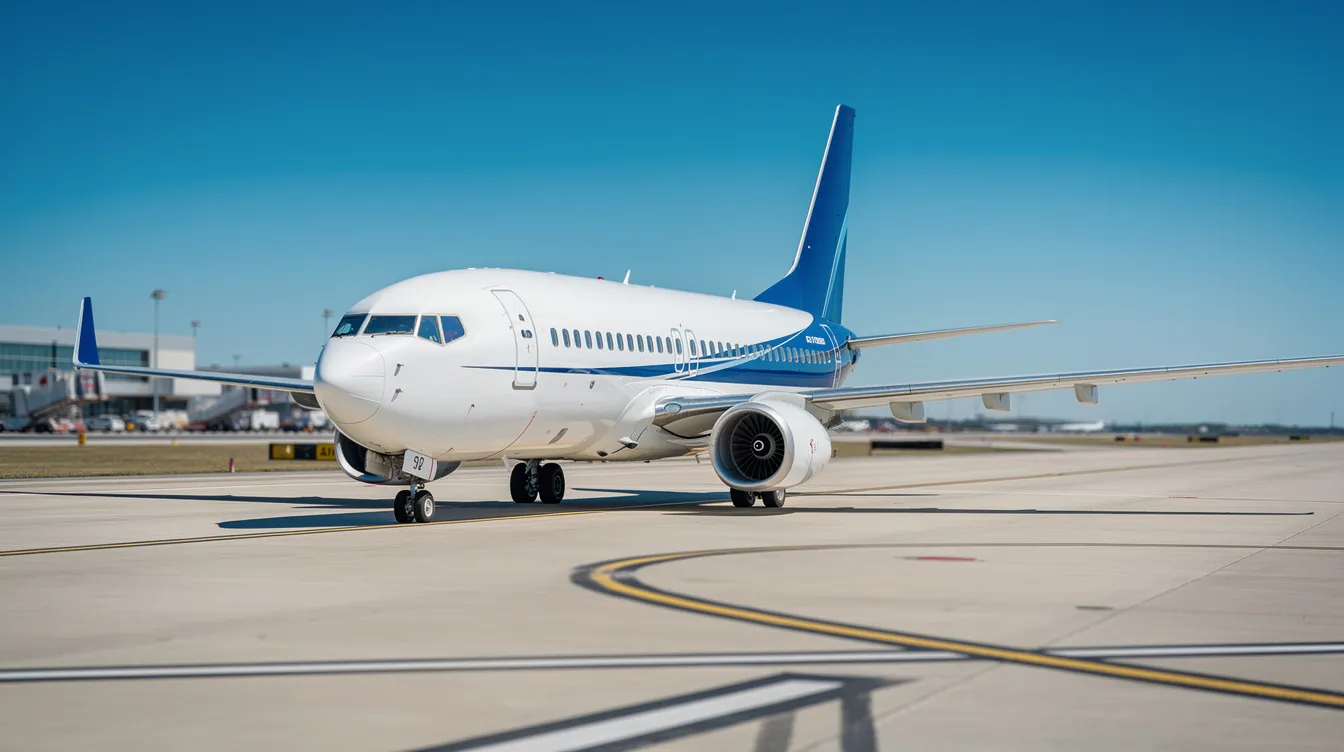
Boeing 737 seat capacity is one of the most consequential numbers in commercial aviation-and one of the least understood by travelers. Whether you fly commercial every week or supplement trunk routes with private jet access, knowing how many seats are packed into the airplane you're boarding tells you more about your comfort, your time, and your options than almost any other specification. This guide breaks down seating capacity across every major 737 variant, explains what drives those numbers, and shows how discerning travelers can use that knowledge to fly smarter.
Quick Overview: Boeing 737 Seating Capacity by Generation
Boeing 737 seating capacity matters because it directly determines legroom, cabin density, cost per ticket, and the overall experience for every passenger who steps on board. For business and corporate travelers accustomed to optimizing every hour of the day, the difference between a 130-seat configuration and a 210-seat high-density layout is not abstract-it shapes how productive, rested, and focused you arrive at your destination.
Boeing 737 passenger capacity ranges from 85 to 230 seats, depending on the generation and configuration. Here is a quick summary:
Original (737-100/200): Boeing Original models seat between 85 and 130 passengers in single-class layouts, reflecting the plane's 1960s-era design.
Classic (737-300/400/500): The Boeing Classic series seats between 110 and 168 passengers, with two-class configurations on the lower end.
Next Generation (737-600/700/800/900): Capacity ranges from roughly 108 to 220 seats, depending on variant and cabin class structure.
737 MAX (MAX 7/8/9/10 and MAX 200): The newest generation pushes capacity from about 126 seats up to 230 in the highest-density MAX 10 layouts.
The Boeing 737 family includes the Original, Classic, Next Generation, and MAX generations, four distinct steps in a development arc that has spanned nearly six decades.
Airlines balance seating capacity against fuel efficiency and ticket pricing on every route. More seats on the same airframe lower the cost per available seat mile, but they also compress legroom and cabin space. For BlackJet members flying light, midsize, or large-cabin private jets with 4 to 16 seats, the calculus is entirely different: the priority shifts to privacy, schedule flexibility, and access to smaller airports that no 737 can reach—making an understanding of different private jet sizes and their ideal use cases especially valuable.
The sections below break down specific 737 variants in detail, covering seat maps, movable armrests, cabin comfort features, and how commercial configurations compare to private jet cabins.
The Boeing 737 Family: Generations and Seating Evolution
The Boeing 737 is the best-selling commercial airplane in history, and its evolution across four generations tells the story of how airlines have pursued more capacity, better fuel efficiency, and longer range while keeping a proven airframe largely intact.
Key milestones in that evolution:
1967: The Original 737-100 enters service, primarily designed for short-haul routes.
Mid-1980s: The Classic generation series (737-300/400/500) arrives with CFM56 engines and stretched fuselage variants.
1997: The next generation series (NG: 737-600/700/800/900) debuts with a redesigned wing, blended winglets, and improved engines.
2017: The 737 Max begins entering service with Leap 1 BB engines, advanced aerodynamics, and further capacity improvements.
Throughout all four generations, one constant has remained: the 148-inch fuselage cross-section and the six-abreast, 3-3 economy layout. Boeing never widened the cabin. Every increase in seating capacity came from lengthening the fuselage, adding rows, or tightening seat pitch and reducing the number of premium-class seats.
The result is a progression from 85 to 115 seats in the earliest 737-100/200 models up to about 230 seats in the densest 737 MAX 10 configurations. Larger models provide higher passenger capacity compared to smaller variants, but the seat width and aisle width remain essentially unchanged.
This stands in contrast to private aviation, where the focus has always been fewer seats, more space per passenger, and bespoke cabin layouts. BlackJet travelers experience this difference every flight, stepping from a commercial plane with 180 seats into a private cabin designed for 8.
Seating Capacity by Major Boeing 737 Variant
Seating capacity figures forBoeingg aircraft are "typical" ranges. Airlines configure their fleets differently based on route demand, revenue strategy, and competitive positioning. Still, the numbers below represent commonly used configurations across the global fleet.
Variant | Single-Class / High-Density | Two-Class / Mixed | Notes |
|---|
737-200 | 97–130 seats | ~100–120 | Original generation |
737-300 | 128–149 seats | ~126 | Classic; replaced by NG-700 |
737-400 | 146–188 seats | ~147–168 | Extended fuselage Classic |
737-500 | 108–132 seats | ~108–120 | Smallest Classic |
737-600 | 108–132 seats | ~110–130 | Smallest NG variant |
737-700 | 126–149 seats | ~126–140 | NG equivalent; the 737-700 is the Next Generation equivalent to the MAX 7 |
Boeing 737 800 | Up to 189 seats | ~162 | Most-produced NG variant |
737-900/900ER | Up to 215–220 seats | ~178–190 | Longest NG; extended range capability |
737 MAX 7 | 126–172 seats | ~138–153 | Boeing 737 MAX 7 seats between 126 and 172 passengers |
737 MAX 8 | 162–210 seats | ~162–189 | Boeing 737 MAX 8 seats between 162 and 210 passengers |
737 MAX 9 | 178–220 seats | ~178–193 | Boeing 737 MAX 9 seats between 178 and 220 passengers |
737 MAX 10 | 188–230 seats | ~188–204 | Boeing 737 MAX 10 seats between 188 and 230 passengers |
The most common variants in commercial service today are the 737-800 and the 737 MAX 8, operated primarily on short- and medium-haul routes worldwide. Carriers like United Airlines, Alaska Airlines, and American Airlines all maintain large 737 fleets.
Boeing Business Jet (BBJ) versions derived from the 737-700/800/900 replace high seating capacity with VIP layouts for 19 to 50 passengers, offering a bridge between commercial airliners and large-group private jets for up to 50 passengers. These are used occasionally in large-group charter or head-of-state scenarios.
By comparison, BlackJet members typically fly private jets carrying 4 to 16 passengers in light, midsize, and large-cabin categories, prioritizing privacy, productivity, and door-to-door speed over the sheer capacity of a commercial 737 through programs like the BlackJet 25+ Hour Jet Card.
Boeing 737-800 Seat Capacity and Cabin Layout
TheBoeingg 737 800 is the workhorse of the next generation family and the single most useful reference point for understanding 737 seating capacity. With 5,220 aircraft ordered as of March 2026, it is by far the most commercially successful member of the NG lineup.
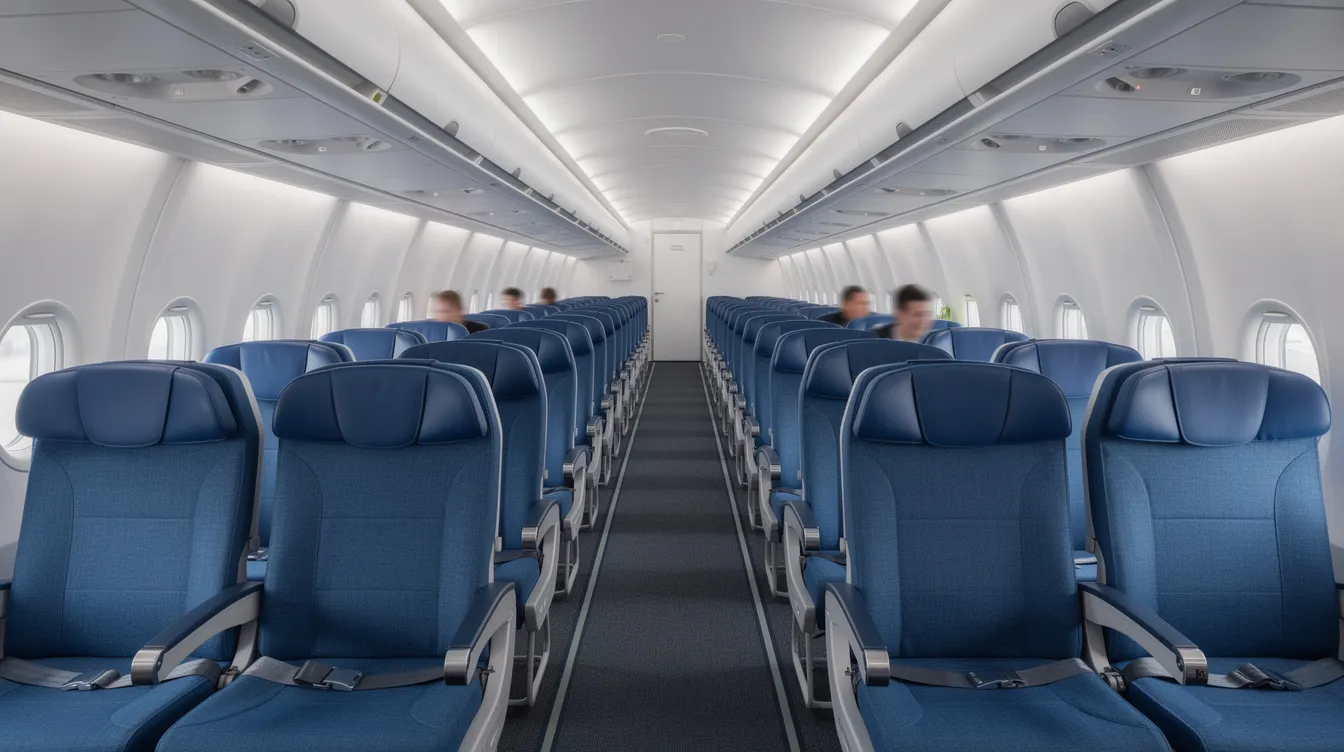
The 737-800 typically seats 162 to 189 passengers. In a standard two-class configuration, the aircraft typically accommodates 162 passengers, usually 12 to 16 in a first or business class section and 144 to 150 in economy. The 737-800 has a maximum seating capacity of 189 in a one-class layout, which is the ceiling low-cost carriers target. The main cabin uses a standard seating configuration of 3-3, and theBoeingg 737-800 can be configured for high-density layouts to increase capacity further within regulatory exit limits.
Key specifications that shape the 737-800 experience:
Engines: CFM56-7B engines producing 24,000 to 27,300 pounds of thrust
Wingspan: 35.8 meters, including winglets, with blended winglets at the wing tips improving aerodynamic efficiency
Range: Approximately 3,115 nautical miles, supporting transcontinental and extended range missions
Maximum takeoff weight: 79,016 kg
Fuel burn: Approximately 4.88 US gallons per seat per hour, compared to the Airbus A320, which typically burns 5.13 US gallons per seat per hour, making the 737-800 the more fuel-efficient option on a per-seat basis
The 737-800 was launched on September 5, 1994, and first flew on July 31, 1997. Hapag-Lloyd Flug received the first 737-800 in April 1998, when the aircraft entered commercial service. The 737-800 replaced the 737-400 and aging 727-200, offering airlines a stretched version with better range and lower operating costs, while VIP and large-cabin operators turned to private jets designed for around 20 passengers for high-end group travel.
Seat pitch in economy generally runs 30 to 32 inches, though some carriers tighten to 28 to 29 inches. Premium cabins offer 37 to 40 inches of pitch with seat width expanding to 20 to 21 inches. Economy seat width sits around 17 to 17.3 inches across the fleet.
The 737-800's fuel capacity and overall fuel efficiency, boosted by its engines and blended winglets, encourage airlines to maximize seating capacity. Every additional seat lowers cost per available seat mile, which is why low-cost carriers push layouts toward the 189-seat ceiling. The trade-off, of course, is passenger comfort.
737 Next Generation Seating Capacity: 737-600, 737-700, 737-800, 737-900
The next generation (NG) family was designed to improve fuel efficiency, range, and seating flexibility over the Classic generation series. Boeing achieved this through a redesigned wing with greater wingspan, new engines, and modernized cabin features-all while preserving the proven 737 airframe.
Capacity ranges across the NG family:
737-600: Approximately 108 to 132 seats. The smallest NG variant is used where route demand is moderate.
737-700: Roughly 126 to 149 seats in mixed-class layouts, with two-class configurations typically settling around 128 to 140. Many airlines operated the 737-700 on regional and short international routes.
737-800: 162 to 189 seats, the most widely deployed NG model. Common two-class configurations seat 162 to 174 passengers.
737-900 and 737-900ER: Boeing 737-900 seats between 178 and 220 passengers. The ER variant added structural changes, extra exit doors, and a flat rear pressure bulkhead to support higher seat counts. United Airlines operates its 737-900ER with 179 seats across three cabins (20 First Class, approximately 42 Economy Plus, and the remainder in economy). Alaska Airlines configures its 737-900ER with 178 total seats: 16 First, 24 Premium, and 138 in the main cabin.
The longer NG fuselages allow airlines to add rows without changing the 3-3 cross-section. On higher-capacity layouts like the 737-900ER, additional overwing exits meet regulatory evacuation requirements. The wing redesign and blended winglets improved fuel efficiency per seat, encouraging carriers to push capacity close to regulatory limits.
Many modern NG aircraft also feature the sky interior with sculpted sidewalls, LED mood lighting, and larger overhead storage bins that improve the perceived cabin space even in dense configurations. Passengers can stream content on a personal device, and many carriers now offer wi fi connectivity on NG flights.
Consider the contrast: a full 189-seat 737-800 or a 215-plus-seat 737-900ER versus a typical 8 to 10-seat midsize private jet. Boarding a commercial 737 means queuing through a terminal, passing through security, and filing through the boarding door on the left side of the aircraft. With BlackJet, passengers board at a private terminal-often within 10 to 15 minutes of arrival-and land at smaller airports closer to their final destination, and anyone can explore how to buy a seat on a private jet to access that experience without committing to full aircraft charter.
737 MAX Seating Capacity and Fuel Efficiency
The development of the 737 MAX family represents Boeing's most aggressive push to improve fuel efficiency and increase capacity on the 737 platform. The MAX 7, 8, 9, and 10 variants, plus the high-density MAX200, began entering service around 2017, powered by Leap-1b engines and featuring advanced split-tip winglets, a refined wing design, and structural weight savings.
Indicative seat counts for each MAX variant:
737 MAX 7: Between 126 and 172 passengers in standard and high-density configurations.
737 MAX 8: Roughly 162 to 189 seats in standard layouts. Boeing 737 MAX 8 seats between 162 and 210 passengers when configured as the MAX 200 high-density variant, with additional exit doors. Ryanair's MAX 200 configuration seats 197 passengers.
737 MAX 9: Approximately 178 to 220 seats, with airlines like Alaska Airlines and United Airlines deploying these on competitive domestic routes.
737 MAX 10: Around 188 to 230 seats in high-density single-class configurations. This is the longest stretched version in the MAX family, with an extended fuselage designed to compete directly with the Airbus A321neo.
The efficiency gains are significant. LEAP-1B engines, advanced winglets, and aerodynamic improvements across the airframe deliver up to 20 percent better fuel efficiency per seat compared to the legacy 737-800. This translates directly into lower emissions per passenger-mile, a meaningful benefit for airlines under increasing pressure to reduce their carbon footprint. The improvements also help carriers achieve a faster cruise speed on many routes, adding scheduling flexibility.
Pilots transitioning to the MAX benefit from type-rating commonality with older NG models, reducing training costs for airlines expanding their fleet. These new aircraft are primarily deployed on high-demand routes where maximizing passengers per flight drives profitability.
For BlackJet customers, the MAX's commercial strengths suggest a clear hybrid strategy: use a 737 MAX business class seat for a true route, say, Los Angeles, Dallas, then connect to a private leg on an 8-seat midsize jet to reach a regional airport near a corporate campus. BlackJet's carbon-neutral flights ensure that the private leg doesn't compromise your sustainability commitments and are supported by premium private jet card and membership programs that standardize costs and access.
Seat Types, Movable Armrests, and Cabin Comfort on the 737
Seating capacity is only part of the equation. Seat design, seat width, and movable armrests significantly influence comfort and accessibility on every flight.
Common seat dimensions across 737 variants:
Economy seat width: Approximately 17 to 17.3 inches between armrests
Economy seat pitch: 30 to 32 inches on most carriers; some premium economy products stretch to 33 to 35 inches
First / Business seat width: 20 to 21 inches with 37 to 40-plus inches of pitch
Airlines adjust padding, recline angle, and seat pitch to create distinct products within the same passenger cabin. Delta's 737-800, for example, offers First Class seats at 20.9 inches wide with approximately 38 inches of pitch, while main cabin seats sit at roughly 31 inches of pitch.
Movable armrests play a surprisingly important role. On most economy seats, aisle-side armrests can be lifted for easier entry and exit, wheelchair transfers, and flexibility for passengers traveling with infants or those who need additional cabin space. Some bulkhead and exit-row seats have fixed armrests with built-in tray tables, which limit usability. Delta's 737-800, for instance, features movable armrest locations in main cabin rows 19 through 33 on seats C and D.
Boeing's Sky Interior standard on many NG retrofits and all MAX aircraft enhances perceived space through sculpted sidewalls, LED mood lighting, and larger overhead storage bins without changing the physical seating capacity. These features reduce fatigue on longer flights and give the cabin a more modern feel.
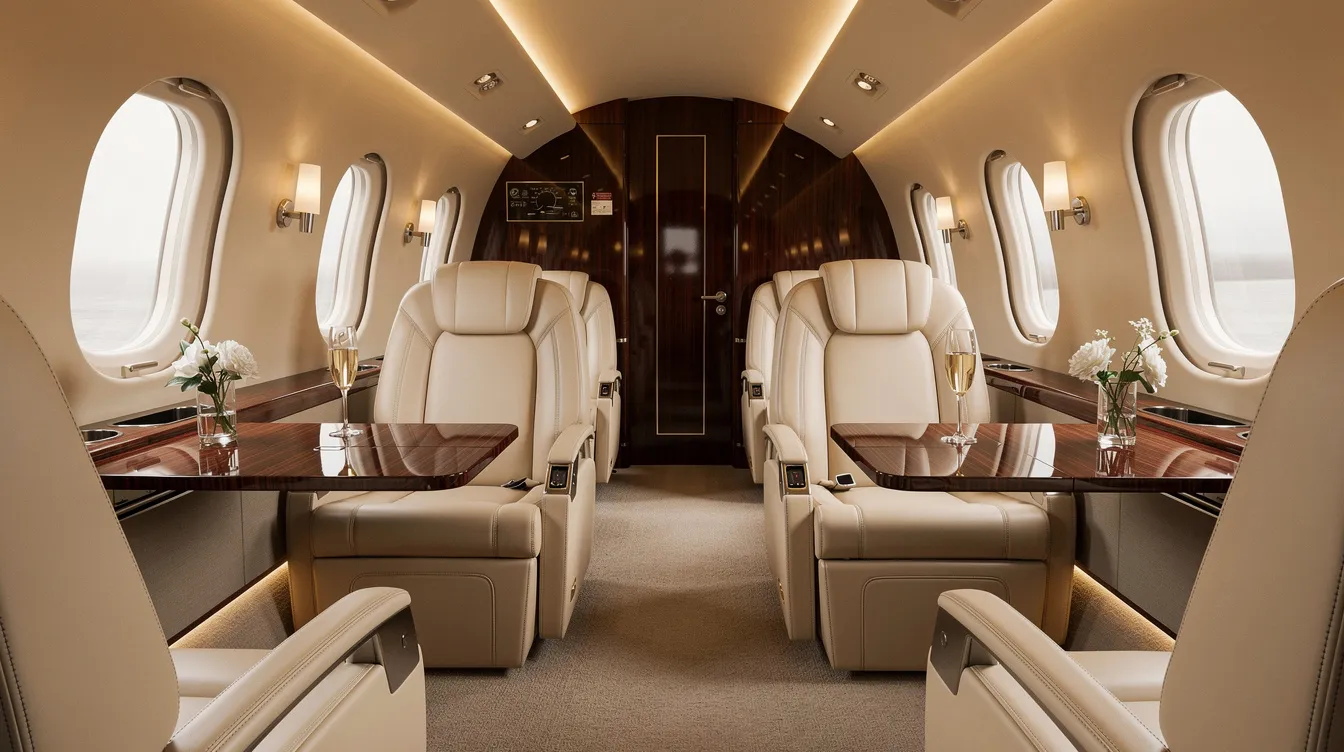
Now contrast this with private jet seating in BlackJet's fleet: club-style swivel seats, individual work tables, divans for resting, and 40 to 60-plus inches of pitch for far fewer passengers. There are no overhead bin battles, no middle seats, and no compromises on space. For travelers who value air travel as productive time rather than transit time, the difference is substantial—and understanding a comprehensive private jet price list and access options helps quantify that value.
Crew, Exit Limits, and How They Shape 737 Seating Capacity
Every 737 variant has a hard ceiling on seating capacity set not by the airline's preference but by regulatory exit limits and emergency evacuation certification. Understanding these constraints explains why you see different seat counts on the same model across different carriers.
Key regulatory factors:
Exit door types and counts: Each 737 is certified with a specific combination of Type I, Type II, and overwing exits. The aircraft must demonstrate that all passengers can evacuate within 90 seconds using half the available exits. Adding seats beyond the certified maximum requires adding exits, which is exactly what Boeing did with the MAX 200 variant and the 737-900ER.
Minimum cabin crew: Many jurisdictions, including the FAA and EASA, require one flight attendant per approximately 50 passenger seats. Moving from a 150-seat to a 200-seat layout means hiring additional crew and increasing per-flight operating costs.
Operational realities: High-density configurations near the certified maximum mean fuller overhead bins, longer boarding and deplaning times, more congested aisles, and a generally more crowded experience on popular routes.
These constraints are invisible on a booking screen but shape every minute of your experience from the moment you board. For customers who value efficiency, BlackJet's private jet operations sidestep all of these issues: low passenger counts, boarding via private FBO terminals, and departure often within 10 to 15 minutes of arrival-no security lines, no gate changes, no bin space anxiety.
Boeing 737 Seating Capacity vs Private Jets: Strategic Choices for Travelers
The decision between a high-capacity Boeing 737 flight and a low-capacity private jet is not about luxury alone-it is a strategic calculation involving time, access, cost, and flexibility.
Commercial 737 flights are optimized around maximizing seating capacity and fuel efficiency per seat. Airlines need to fill 180-plus seats to make routes profitable, and they price accordingly. For trunk routes between major hubs, the economics are hard to beat. Private aviation, on the other hand, optimizes for per-passenger space, schedule control, and access to the 5,000-plus airports in the United States that no commercial 737 can reach.
Sample scenario: A corporate executive flying from New York (JFK) to Chicago (ORD) books a 162-seat 737-800 in first class. She lands at O'Hare, clears the terminal, and then boards a 7-seat midsize jet via BlackJet to reach a regional airport 20 minutes from a manufacturing plant in central Indiana. Total door-to-door time saved versus driving from O'Hare or connecting through a regional carrier: two to three hours.
BlackJet's Jet Card programs-available in 25-hour and 50-hour increments-provide guaranteed access to multiple cabin classes (light, midsize, super-midsize, large) so clients are never locked into the fixed capacity and rigid schedules of a single airplane type, and travelers can compare this with insights from a 50-hour jet card cost and value guide. Dedicated guides to 25-hour jet card features and costs give travelers a clear view of how this model compares to ad hoc charter or ownership. The 24/7 digital booking platform and real-time flight support mean adjustments happen in minutes, not hours.
The comfort gap is measurable: 30 to 31 inches of pitch in a typical 737 economy seat versus 40 to 60-plus inches in a private jet seat, plus the ability to hold private meetings, work without interruption, or rest in a cabin shared with only your chosen companions.
Safety, Sustainability, and Technology: 737 Operations and BlackJet's Standards
The Boeing 737 has one of the strongest safety records in commercial aviation. The 737-800, for instance, has a hull loss rate of 0.17 per million departures-a testament to decades of refinement, redundant systems, and rigorous maintenance standards. Modern 737 NG and MAX aircraft incorporate advanced avionics, including TCAS, EGPWS, and sophisticated flight management systems that support safe operations at scale across global routes.
Fuel efficiency improvements across generations have also driven sustainability benefits. The move from Classic to NG to MAX, through better engines, lighter structures, and aerodynamic refinements, has steadily reduced emissions per seat. When airlines operate these aircraft at high load factors and high seating capacity, per-passenger carbon output drops further. The MAX family's ability to improve fuel efficiency by up to 20 percent over the 737-800 contributes to measurably lower emissions on every flight.
BlackJet builds on this broader aviation safety framework by vetting every partner operator through ARGUS, WYVERN, and proprietary certification checks that often exceed baseline FAA standards for private jet flights. Every aircraft in the network meets or surpasses the safety protocols that commercial carriers apply to their 737 fleet operations, aligning with what discerning flyers seek from the top private jet companies for luxury travel.
On sustainability, BlackJet offers carbon-neutral private flights by default through high-quality carbon offsets and, where available, sustainable aviation fuel partnerships. This gives travelers a way to combine efficient commercial 737 segments with responsible privileges, maintaining both the benefits of scale on trunk routes and the flexibility of private air access without compromising environmental commitments, even when exploring the cheapest private aircraft and budget-friendly private options.
FAQs About Boeing 737 Seat Capacity and Private Jet Alternatives
How many seats are there on a typical Boeing 737?
Boeing 737 passenger capacity ranges from 85 to 230 seats across all generations. Original models seat 85 to 130, Classic variants seat 110 to 168, Next Generation models range from 108 to 220, and the 737 MAX family spans 126 to 230, depending on variant and layout.
What is the seating capacity of a Boeing 737-800?
The 737-800 typically seats 162 to 189 passengers. Two-class configurations commonly seat around 162, while all-economy high-density layouts reach up to 189. The aircraft has a range of approximately 3,115 nautical miles, making it suitable for domestic and medium-haul international routes.
How many passengers can the 737 MAX carry?
The MAX 7 seats 126 to 172 passengers. The MAX 8 accommodates 162 to 210, including the high-density MAX 200 variant. The MAX 9 carries 178 to 220 passengers, and the MAX10, the largest, seats 88 to 230 in its densest configuration.
Are movable armrests standard on 737 seats?
Most economy aisle seats on the 737 have movable armrests that can be lifted for easier entry and exit. However, bulkhead seats and certain exit-row seats often have fixed armrests with integrated tray tables. The availability varies by airline and specific aircraft configuration.
How does a full 737 compare to a private jet in comfort and time savings?
A full 737 offers 30 to 32 inches of seat pitch in economy versus 40 to 60-plus inches on a private jet. Commercial boarding typically takes 30 to 60 minutes, including security; private jet passengers often board and depart within 10 to 15 minutes via dedicated FBO terminals. Private jets also access thousands of smaller airports that 737s cannot serve.
When should I combine a 737 flight with a BlackJet private leg?
Whenever the trunk route between two major hubs is well-served by commercial flying, but your final destination is a smaller city, industrial site, or resort area without direct 737 service. For example, fly commercially from Miami to Atlanta, then use BlackJet to reach a regional airport in the Carolinas, saving hours compared to driving or connecting through a commuter airline.
What is the best option for frequent business travel?
A hybrid strategy works best for most executives. Use high-capacity 737 routes where schedules align, and cost-per-seat makes sense, then rely on BlackJet's Jet Card programs for time-critical legs, hard-to-reach destinations, or situations where privacy and flexibility outweigh the savings of a commercial ticket, taking cues from analyses of the best jet cards for frequent flyers.
Conclusion: Leveraging Boeing 737 Seat Capacity for Smarter Travel Choices. Knowing the range from 85-seat Original models to the 230-seat MAX 10 helps you choose the best flying option for your needs.
Commercial 737 operators optimize for fuel efficiency and seating capacity per flight, spreading fixed costs across as many passengers as possible. BlackJet optimizes for what matters most to discerning travelers: personal time, privacy, safety, and the flexibility to reach any destination on your schedule with smaller-cabin aircraft.
The smartest approach is not choosing one over the other. It is thinking in terms of a network strategy using high-capacity 737 routes where they deliver value, and relying on BlackJet's private jets for time-critical, high-value, or hard-to-reach segments of your itinerary.
Elevate your travel effortlessly. With BlackJet, private flight is accessible on your terms through our Jet Card programs, complete with rigorous safety certification, carbon-neutral performance, and unmatched flexibility. Explore our offerings and discover how refined, strategic travel becomes your new standard.


 Sign up with google
 Sign up with Apple