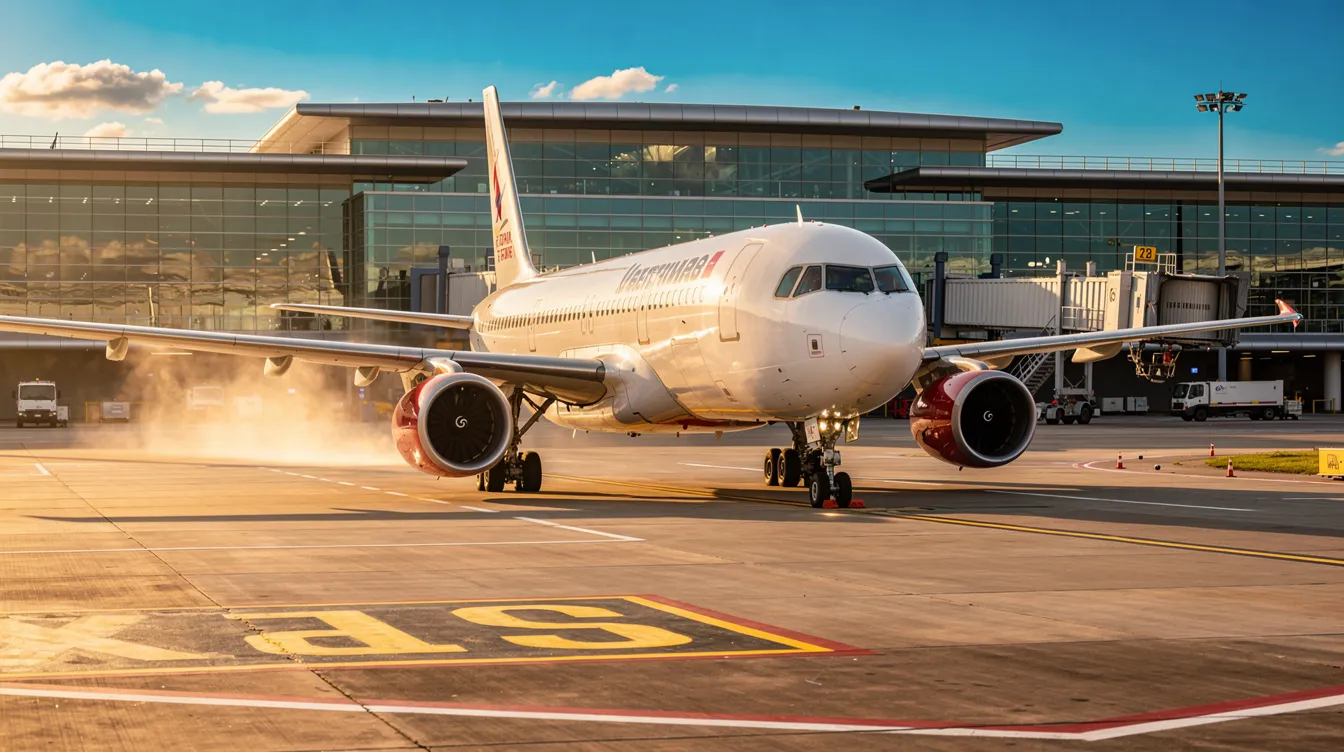
The Boeing 777 is one of the most successful widebody aircraft ever built. Understanding its hourly cost matters for airlines choosing fleet types, governments operating VIP transports, and ultra-high-net-worth individuals weighing private aviation options.
Boeing 777 Operating Cost Per Hour: Quick Answer
Operating a Boeing 777 can cost between $18,000 and $19,000 per flight hour at the lower end for high-utilization airline service. A typical passenger 777-300ER runs roughly $18,000 to $30,000 per block hour depending on fuel prices, labor costs, and route structure. Operational costs for a Boeing 777 vary based on the aircraft's age, fuel prices, and ownership structure.
VIP and private Boeing 777 variants push higher. The average hourly rental rate for a Boeing 777-200LR VIP is $26,000, while bespoke BBJ 777 configurations can exceed $25,000 to $35,000+ per hour due to premium interiors, higher crew ratios, and specialized maintenance.
The main cost drivers, in order of magnitude:
Fuel consumption (40% to 50% of total cost)
Maintenance and engine overhaul reserves
Crew salaries and benefits
Aircraft financing and amortization
Airport, navigation, and overflight charges
Insurance and miscellaneous expenses
For people who want intercontinental capability without the complexity of a widebody, BlackJet's Jet Card model provides access to long-range private jets at far lower hourly costs and zero ownership burden, while smaller missions may be better served by the best small private aircraft.
How Airlines Calculate Boeing 777 Operating Cost Per Hour
Airlines measure cost per "block hour," defined as the time from pushback at the origin gate to arrival at the destination gate. A Boeing 777 in a major airline fleet such as Qatar Airways, Etihad Airways, or Singapore Airlines (the launch customer for the 777-300ER) typically flies 4,500 to 5,500 block hours per year.
The calculation splits into two categories:
Fixed costs: capital payments, insurance, crew base salaries, hangar fees. These accrue whether or not the aircraft is flying.
Variable costs: fuel, landing fees, en-route navigation charges, per-cycle maintenance. These scale with each flight hour.
Airlines divide annual fixed costs by expected flight hours, then add variable costs per hour to reach a blended rate. A 777-300ER configured with 350 to 400 seats in a two-class or triple-class layout can then derive "cost per seat mile" by dividing the hourly cost by seats and distance covered.
FAA data for two-engine widebody cargo aircraft shows total cost per block hour at approximately $12,754, with variable costs accounting for $10,859. Passenger service adds catering, cabin crew, and passenger handling that raise the figure.
For VIP or government-operated 777s flying only 300 to 600 hours per year, the same fixed costs spread across fewer hours, which means the effective hourly cost climbs well above airline benchmarks.
Fuel Consumption: The Biggest Line Item for Boeing 777 Hourly Costs
Fuel represents roughly 40% to 50% of total operating costs for a Boeing 777. Since 2020, jet fuel prices have swung from below $400 per metric tonne to over $900 per tonne, directly reshaping hourly economics.
The Boeing 777 burns roughly 2,800 to 3,000 gallons of jet fuel per hour in cruise. Fuel consumption for the 777 is about 11 metric tonnes per hour. Boeing 777 fuel consumption is impacted by aircraft weight, altitude, and flight conditions.
At a sample jet fuel price of $800 per metric tonne (roughly $2.50 per gallon), jet fuel costs approximately $5,000 to $6,000 per hour. When prices rise toward $3.50 to $4.00 per gallon, fuel cost per hour can reach $8,000 or more. Fuel prices heavily influence the operating expenses of Boeing 777 flights.
Ultra-long-haul missions illustrate the impact. A 16-hour sector between Singapore and London requires contingency fuel loads that increase takeoff weight and burn rate, compounding total fuel spend across the flight.
The aircraft is powered by GE90 or Rolls-Royce Trent engines, both developed for long-range efficiency. Sustainable aviation fuel can reduce lifecycle emissions but adds a 10% to 30% price premium over conventional jet fuel.
For most private travelers, a long-range business jet like a Gulfstream G650 or Bombardier Global 7500 offers similar non-stop capability with fuel burn under one-third that of a 777, which means lower hourly cost and a smaller carbon footprint.
Aircraft Financing and Amortization: Spreading a $150M to $350M Asset Over Time
The purchase price of a Boeing 777 translates into a fixed hourly cost regardless of whether the aircraft is in the air or parked. Leasing or capital costs can add approximately $2,000 to $3,000 per hour to the operating expenses of a Boeing 777, and leasing or ownership expenses persist irrespective of how often the aircraft flies.
Price ranges in the current market:
Variant | Approximate Value (2024-2025) |
|---|
Mid-life 777-200ER | $25M to $50M |
Later-build 777-300ER | $60M to $130M |
Boeing 777-200LR VIP (new) | Average purchase price of $285 million |
BBJ 777-8 | List price approximately $442.8 million |
A concrete example: a $70 million 777-300ER financed over 15 years at 5% interest, flying 4,500 hours per year, produces a capital cost allocation of roughly $3,500 to $5,000 per hour. A VVIP or government 777 flying only 400 to 600 hours per year sees that figure climb past $10,000 to $15,000 per hour because the same money is spread across far fewer hours.
Residual value uncertainty after 2035, as next-generation widebodies and environmental rules tighten, further complicates amortization assumptions. This is one reason BlackJet's premium Jet Card programs are more cost-effective than owning a jet; clients avoid tying up capital and carry no residual risk.
Crew Costs: Pilots, Cabin Crew, and Technical Staff
Widebody aircraft require experienced flight crews. Crew costs for operating a Boeing 777 average around $2,000 per hour. Labor costs include the salaries of the flight and cabin crew plus benefits and related expenses.
Typical 2024 airline pilot compensation for the 777:
Captains: $200,000 to $350,000+ annually; senior captains at U.S. legacy carriers can reach $417 per hour in base pay
First Officers: $120,000 to $220,000 annually; hourly rates from $206 to $285 depending on seniority
Once training, benefits, per diems, and allowances are included, flight deck crew cost runs $600 to $900 per block hour.
Cabin crew on a passenger 777 numbers 10 to 15 on long-haul service. Air France, Lufthansa, and other European carriers staff at similar capacity. The per-hour cabin crew expense typically lands at $700 to $1,500 for major carriers.
In VIP or private 777 operations, specialized staff (chefs, security, flight managers) push total crew cost to $2,500 to $4,000 per hour. Private jets accessed through BlackJet typically operate with 2 pilots and 1 to 2 cabin crew, which is a lower rate that still maintains premium service levels across a wide range of private jet types.
Maintenance, Overhaul, and Reliability for the Boeing 777
Aircraft maintenance costs for a Boeing 777 include airframe checks and engine overhauls. Maintenance costs for a Boeing 777 are typically between $3,000 and $4,000 per hour.
The scheduled maintenance structure:
A-checks: every 400 to 800 flight hours
C-checks: every 18 to 24 months
D-checks (heavy structural): every 6 to 10 years
Engine maintenance reserves for a GE90-class engine run approximately $510 per installed engine per flight hour. With twin engines, that totals about $1,020 per hour for engine reserves alone. A heavy shop visit on a GE90 costs $5 million to $12 million depending on scope and life-limited parts replacement.
Older 777-200ER airframes may carry higher maintenance and corrosion costs but lower capital costs compared to newer 777-300ERs. Cargo-converted and high-cycle aircraft can require additional structural attention, which raises hourly maintenance expenses further.
An IATA industry survey of 37 airlines with 1,666 widebody aircraft found average MRO costs of $1,452 per flight hour for airframe, systems, and scheduled checks alone, excluding heavy overhauls.
Airport, Navigation, and Overflight Charges for the 777
Large widebodies pay higher airport and navigation fees than narrowbodies or private jets, primarily because charges are based on maximum takeoff weight and noise category. Airport and navigation fees can cost about $1,500 per hour for a Boeing 777.
Key fee categories:
Landing and takeoff fees tied to maximum takeoff weight
Passenger-related charges (security, terminal usage)
Parking and gate fees
Overflight and en-route charges billed by air navigation providers across Europe, North America, and Asia
At London Heathrow, a Boeing 777-200ER incurs an NOx emissions charge of approximately £870 (around $1,100 to $1,200) per landing. A fully loaded 777-300ER at a major European hub can pay $5,000 to $15,000 per turn in combined airport fees, depending on time of day and services used. Transatlantic overflight fees add $800 to $2,500 per hour, while regional missions—such as private jet charters in Karachi—incur very different fee structures.
Private jets used by BlackJet members incur lower weight-based charges, often operate at secondary airports with lower fees, and rarely need the large gate infrastructure designed for widebodies, which is reflected in the overall cost to rent a private jet.
Insurance, Catering, Ground Handling, and Other Operating Expenses
Beyond the major line items, a Boeing 777's per-hour cost includes a range of smaller but real expenses. Insurance and miscellaneous costs average around $2,000 per hour for a Boeing 777.
Hull and liability insurance: annual premiums in the high six to low seven figures for scheduled service; roughly $200 to $600 per flight hour
Ground handling: towing, cleaning, refueling support, baggage handling; $3,000 to $10,000 per long-haul turn, which translates to several hundred dollars per hour on long sectors
Catering: standard airline long-haul catering costs per passenger are modest at scale, but VIP 777 catering with private chefs and bespoke menus runs into thousands per sector
Technology and data: satellite connectivity, inflight entertainment updates, EFB subscriptions, and operational software add a constant per-hour expense.
These items easily sum to $1,000 to $3,000 per flight hour, more for VIP or government configurations. Understanding private jet sizes and categories helps match these overhead costs to the right aircraft for each mission.
Typical Boeing 777 Operating Cost Per Hour by Variant
The following table synthesizes all cost components into 2024 to 2025 hourly ranges:
Variant | Airline Use (High Utilization) | VIP / Private / Low Utilization |
|---|
777-200ER (passenger) | $17,000 to $24,000/hr | $25,000 to $32,000/hr |
777-200LR (ultra-long range) | $19,000 to $26,000/hr | $28,000 to $35,000+/hr |
777-300ER (high capacity; ~350-400 seats) | $18,000 to $28,000/hr | $30,000+/hr |
777F (freighter; max payload 103.9 tonnes, range 4,900 nm full load) | $17,000 to $25,000/hr | N/A for most operators |
777 VIP / BBJ 777 | N/A | $25,000 to $35,000+/hr |
The Boeing 777-9 seats approximately 426 passengers, while the Boeing 777-8 has a range of 8,745 nautical miles, and both share the GE9X engine as part of the 777X family designed to replace older variants. The 777F enjoys competitive economics due to high cargo yield per tonne and efficient fuel consumption, and its range significantly exceeds many competing freighters at full-load capability.
Regional labor costs, fleet age, maintenance practices, and fuel hedging strategies push operators toward the lower or upper end of these bands. While the 777 offers outstanding reliability and range, its sheer size and fuel burn make it far more expensive per hour than large cabin private jets for typical business or family trips.
Boeing 777 in Private and VIP Service: Economics Versus Dedicated Private Jets
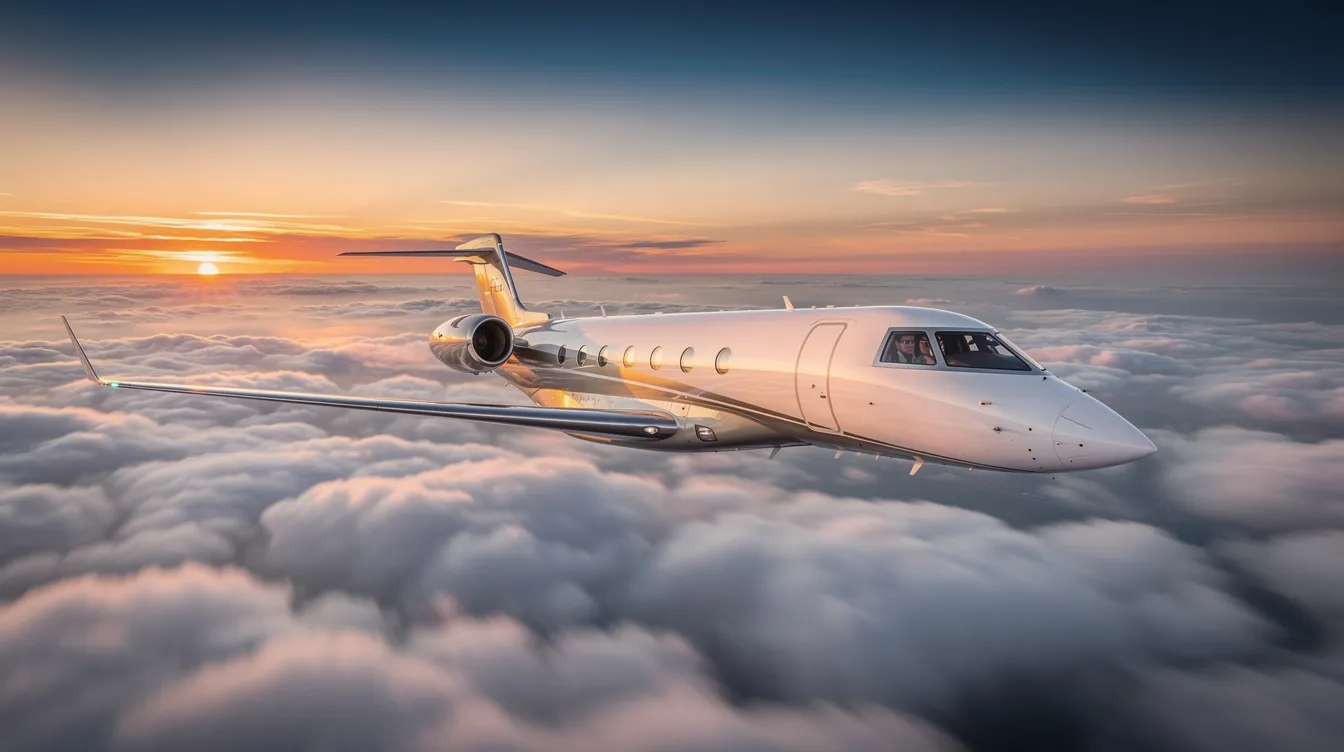
A small number of 777s are configured as VIP or "head of state" aircraft, with multiple private bedrooms, conference rooms, dining salons, and spa bathrooms. These aircraft carry 40 to 80 passengers in extreme comfort versus 300 to 400+ in airline layouts.
BBJ 777X charter rates range from $12,500 to $21,000 per hour. BBJ 777X operating costs range from $12,500 to $21,000 per hour, with fixed annual costs for a 777X at $3 million to $5 million. Annual charter costs for a BBJ 777X could reach $5 to $8 million. Charter pricing depends on routing complexity and interior configuration. Most BBJ 777X units serve governments, limiting commercial charter availability.
These aircraft make sense for governments or organizations that regularly move large delegations across intercontinental distances, and for select private groups needing the best private jet for around 20 passengers. For the world's private travelers who typically fly with 4 to 12 people, they are excessive. For mid-size groups, top 16-seat private jet options often deliver a better balance of capacity and cost.
Modern business jets such as the Gulfstream G700 or Bombardier Global 7500, with ranges above 7,000 nautical miles, deliver similar long-range capability at hourly costs in the $8,000 to $12,000 range. Fuel consumption and airport fees are lower by half or more compared to a Boeing 777.
Consider a scenario: a BlackJet member flying New York to Dubai on a 25-hour Jet Card. Selecting a right-sized ultra-long-range jet through the BlackJet 25+ Hour Jet Card program saves millions per year compared to owning or chartering a 777 for the same route.
BlackJet Jet Card vs Owning or Chartering a Boeing 777 for Long Range Missions
BlackJet offers a strategic alternative for clients attracted to the range and comfort of a 777 but not its operating complexity and cost, often steering them toward the best private jets in the world that deliver similar comfort at a lower hourly burn. Jet card programs offer prepaid access to private jets, and members pay only for hours flown. A 50-hour Jet Card cost guide helps frequent travelers benchmark pricing across providers. Jet card programs provide access to multiple cabin types, from super-midsize to ultra-long range, and can pair even cost-conscious flyers with the cheapest private jet options that still meet mission requirements.
Key advantages over operating a private 777:
No capital outlay of $150 million to $350 million+
No responsibility for crew management, maintenance, regulatory compliance, or insurance negotiation
Ability to choose the right aircraft for each trip instead of flying a half-empty widebody
BlackJet's jet card includes carbon-neutral flights by default, combining high-efficiency small private jets with audited carbon offset programs. All partner operators meet or exceed leading safety standards (Wyvern Wingman, ARGUS Platinum, IS-BAO).
For heavy users, a 100-hour Jet Card cost breakdown can clarify how pre-purchasing hours compares with ad hoc charter. A quick cost comparison to read:
Boeing 777 VIP: $25,000 to $35,000+ per hour
Large/ultra-long range private jet via BlackJet Jet Card: less than half that rate in many mission profiles, with faster ground handling and access to more airports
Frequently Asked Questions About Boeing 777 Operating Cost Per Hour
What is the average fuel consumption per hour of a Boeing 777-300ER? The 777-300ER burns roughly 7.5 to 8.5 metric tonnes per hour in cruise. At $800 per tonne, that translates to $6,000 to $6,800 in fuel cost alone. Posts and comments from industry operators confirm this aligns with real-world data across multiple airlines.
How do Boeing 777 operating costs compare to an Airbus A350 or Boeing 787? The Airbus A350-900 and Boeing 787-9 burn roughly 20% to 25% less fuel per seat than a 777-200ER, primarily because they use composite airframes and newer-generation engines. The 777-300ER offsets some of this through similar capacity and higher seat density, but overall hourly cost for the 777 remains higher in absolute terms.
Can individuals charter a Boeing 777 as a private jet? Yes, but availability is limited. The average hourly rental rate for a 777-200LR VIP is $26,000. Most VIP-configured 777s serve governments, so commercial charter supply is constrained. Expect delivery delays on scheduling due to limited fleet availability.
Does flying a 777 on ultra-long range routes lower cost per seat? Yes, for airlines. Spreading fixed costs and fuel across 350+ seats and 7,000+ nautical miles of distance makes the 777 one of the most efficient money-per-seat options on long-haul routes. For private use with fewer than 30 to 50 passengers, dedicated private jets accessed through BlackJet are more expensive per seat than airline service but far cheaper per hour than a private 777.
How does BlackJet's Jet Card pricing compare to operating a Boeing 777 privately? A 777 VIP runs $25,000 to $35,000+ per hour. BlackJet's Jet Card provides access to ultra-long-range jets at rates that are often less than half that figure, with the added benefit of right-sizing the aircraft to each mission. This is the most practical way for most high-net-worth travelers to fly intercontinentally on their own terms.
When a Boeing 777 Makes Sense and When to Choose Private Jets Instead
Boeing 777's operating cost per hour is high because the aircraft is optimized to carry hundreds of passengers or over 100 tonnes of cargo across intercontinental distances, not for typical private jet missions. Airline hourly costs land in the $18,000 to $30,000 range; VIP and private operations frequently top $25,000 to $35,000+ per hour.
Most corporations, families, and individuals are better served by flexible access to super-midsize and long-range private jets, or even evaluating the best long-range private jets for sale, which provide lie-flat comfort, non-stop capability, and premium service at lower hourly costs and with access to thousands more airports worldwide.
BlackJet delivers Jet Card access to curated private jets for regional and intercontinental trips, with carbon-neutral flights, rigorous safety certifications, and 24/7 technology-enabled booking, while also advising on the cheapest private aircraft options for more budget-conscious travelers. Scale up or down cabin size per trip instead of being locked into a single expensive aircraft.
Explore how BlackJet can replace the need for widebody ownership while delivering the privacy, range, and performance you expect from top-tier private aviation, even if you only need to buy a seat on a private jet instead of chartering the whole aircraft.


 Sign up with google
 Sign up with Apple