The Boeing 747 family redefined what it meant to cross an ocean by air. Boeing's largest plane is the 747-8, the biggest commercial aircraft built in the U.S., measuring 76.3 meters long with a 68.4-meter wingspan and flying today in both passenger and cargo service. For aviation enthusiasts, travelers curious about the world's largest airliners, and business or high-net-worth flyers weighing commercial travel against private alternatives, it remains one of the most impressive feats of aerospace engineering ever produced.
Here is a detailed look at the 747-8, from its history, variants, and technical specifications to how it compares with other large aircraft, the role it still plays in modern aviation, and how the experience of flying this long-haul giant differs from private jet options such as BlackJet. Whether you are interested in aircraft design or choosing the right balance of range, privacy, luxury, and efficiency for your next trip through premium private jet cards and programs, understanding Boeing's largest plane offers useful context for how far air travel has evolved.
Quick answer: What is Boeing's largest plane?
The Boeing 747-8 is Boeing's largest commercial aircraft ever built. At 76.3 meters (250 ft 2 in) in length with a wingspan of 68.4 meters, it is the biggest airplane to roll off an American production line, serving both long-range passenger and heavy cargo operations around the world.
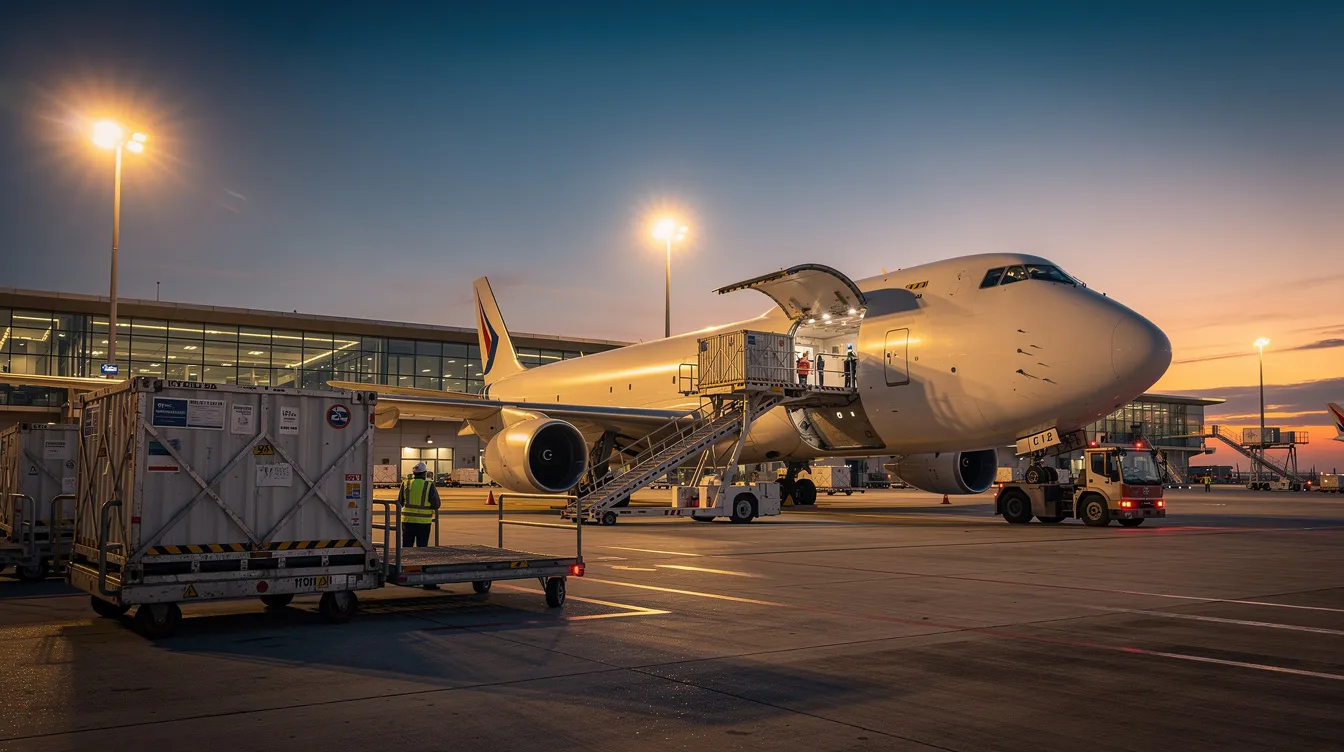
Two variants make up the family. The 747-8 Intercontinental (747-8I) is the largest Boeing passenger aircraft, capable of carrying up to 467 passengers in a high-density layout. The 747-8 Freighter (747-8F) is the largest Boeing cargo aircraft, equipped with a nose-opening cargo door designed for oversized freight. Both belong to the iconic Boeing 747 lineage.
For context, the Airbus A380-800 remains a larger plane overall, with a maximum capacity of 853 passengers and a wider wingspan. But the 747-8 holds the distinction of being the largest commercial aircraft built in the U.S.—and a technological high point for Boeing commercial airplanes before the aviation industry shifted decisively toward efficient twin-engine widebodies.
From Jumbo Jet to giant: A short history of the Boeing 747
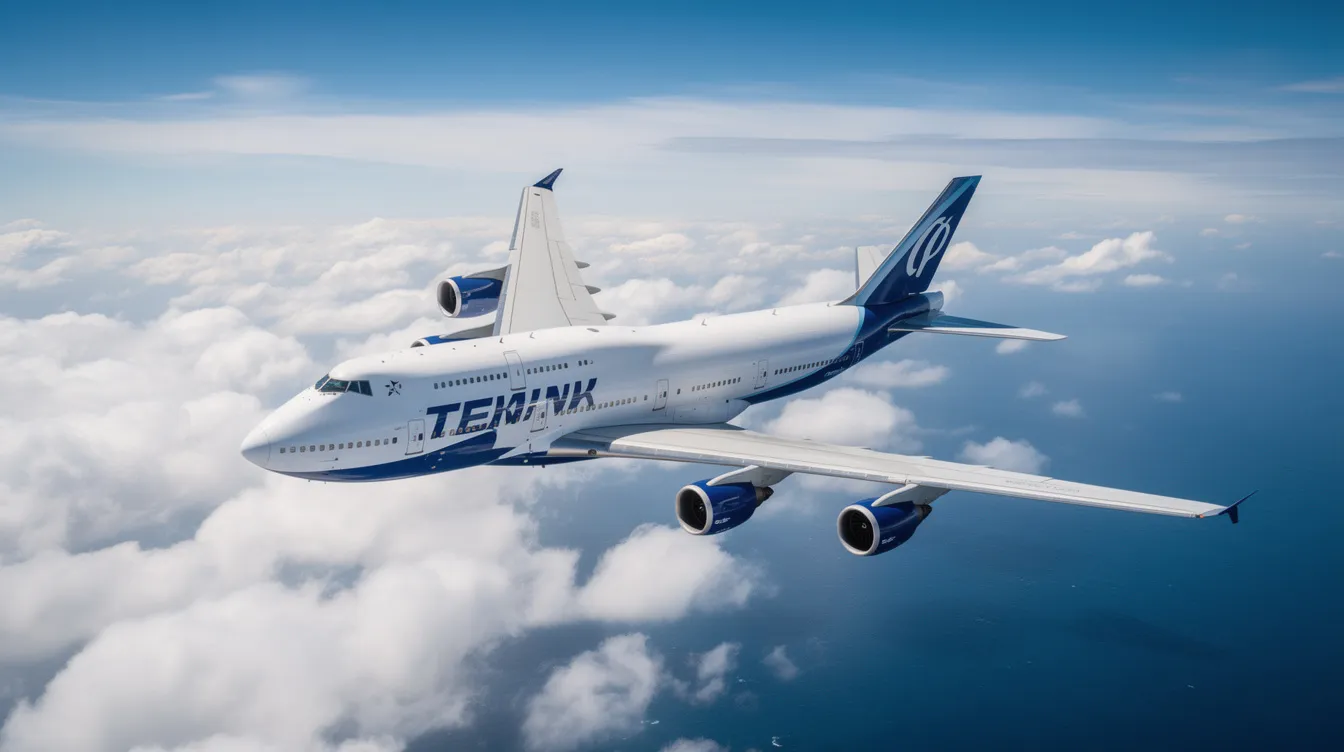
The Boeing 747 was the first twin-aisle commercial aircraft, and it changed long-haul air travel by making it affordable and practical for millions of passengers across the skies. Its iconic raised upper deck—commonly called the "hump" (the iconic raised upper deck of the 747 is called the "hump")—became one of the most recognizable silhouettes in commercial aviation.
The construction of Boeing's Everett facility was initiated specifically to support 747 production, creating one of the largest buildings by volume on earth. From that factory in Everett, Washington, various models rolled out over five decades:
1966: Pan Am places a landmark order, triggering the development of the world's first high-capacity, long-range wide-body airliner.
February 9, 1969: The Boeing 747-100 prototype took off from Paine Field in Everett and later landed safely.
January 22, 1970: The Boeing 747 first flew in commercial service with Pan Am on the New York–London route.
Later variants—the 747-200, 747-300, and 747-400—pushed range, capacity, and fuel efficiency further, making the type a flagship for airlines across North America, Europe, and Asia. One variant, the 747SP, featured a shortened fuselage for ultra-long-range missions. But by the late 1990s, more efficient twin-engine types like the Boeing 777 began to replace earlier 747 models on many routes, setting the stage for the final, largest evolution: the Boeing 747- 8.
Boeing 747-8: Overview of Boeing's largest commercial airplane
The 747-8 represents the third-generation and final evolution of the 747 family. Launched in 2005, it incorporated innovative new technologies derived from the 787 Dreamliner program, making it the most advanced and the largest commercial aircraft ever manufactured in the United States.
Key Features and Innovations
Two main variants:
747-8 Intercontinental (747-8I): A passenger aircraft typically configured for 350–467 passengers depending on airline layout.
747-8 Freighter (747-8F): A dedicated cargo aircraft optimized for volume and payload, featuring a nose door and side cargo door for oversized shipments. The cockpit of the Boeing 747 is located on the second deck to allow freight loading through the nose.
Headline specifications:
Spec | Value |
|---|
Length | 76.3 m (250 ft 2 in) |
Wingspan | 68.4 m (68 ft 4 in) |
Max take-off weight | 442,000 kg (975,000 lb) |
Cruise speed | Mach 0.855 (~920 km/h) |
Engines | Four General Electric GEnx-2B67 turbofans |
The Boeing 747-8 features an advanced wing design with raked wingtips, and it is powered by four General Electric GEnx-2B67 engines that support strong performance while improving efficiency compared to the earlier 747-400's winglets.
Key program dates:
2005: Formal program launched.
February 8, 2010: First flight of the 747-8F from Paine Field.
March 20, 2011: First flight of the 747-8 Intercontinental.
2011–2012: Entered service with Cargolux (freighter) and Lufthansa (passenger).
Flight testing and certification of the 747-8
The 747-8 flight test program was extensive, requiring well over a thousand flight hours before regulators signed off on the design. Multiple test aircraft flown across varied climates and conditions revealed both the airplane's strengths and areas requiring engineering fixes.
December 2009: First engine runs on the initial 747-8F test aircraft on the ground at Everett.
February 2010: High-speed taxi tests and maiden test flight from Paine Field; additional testing conducted at Boeing Field in Seattle.
2010–2011: The aircraft was flown in hot, cold, and high-altitude environments. Testing also took place at multiple airports worldwide.
Notable technical issues discovered during the flight test program included turbulence and buffeting caused by airflow over the landing-gear doors and a structural defect in upper fuselage longerons supplied by an outside manufacturer. Boeing implemented design and production fixes before certification.
Post-certification work focused on propulsion systems refinements, software updates for the General Electric GEnx-2B engines, and aerodynamics improvements to further optimize fuel burn.
Into service, production, and the end of the 747 era
Boeing ramped up 747-8 production in the early 2010s to meet demand primarily from cargo operators and a handful of passenger airlines seeking flagship aircraft for high-demand routes.
October 12, 2011: The first 747-8F was delivered to Cargolux, entering commercial cargo service.
May 2012: The first 747-8 Intercontinental was delivered to Lufthansa. The 747-8 Intercontinental was first delivered in 2012, and Lufthansa commenced scheduled passenger flights from Frankfurt in June of that year.
Mid-decade, Boeing rolled out "Project Ozark" improvements: engine refinements, aerodynamic tweaks such as fairings and flap settings, and structural weight reductions. Lufthansa reported roughly 15% fuel savings over the 747-400 on comparable missions-a meaningful gain in efficiency for an aircraft of this scale.
Yet market headwinds proved difficult. Strong competition from fuel-efficient twin-engine commercial airplanes—the Boeing 777-300ER, the development of the 777X, the 787 Dreamliner, and the Airbus A350—along with rising fuel costs and airlines' preference for point-to-point routes over hub-and-spoke operations, limited demand for a very large four-engine model, even as interest grew in the largest private jets for sale among ultra-long-haul travelers and corporations.
Production rates declined through the late 2010s. The numbers tell the story of an era ending:
1,574 Boeing 747s were built in total across all variants over more than 50 years of production.
Approximately 155 of those were 747-8s.
The final Boeing 747, a 747-8F for Atlas Air, rolled out in December 2022. The last Boeing 747 was delivered in January 2023, closing one of the most consequential chapters in aerospace history.
Inside the Boeing 747-8 Intercontinental
Cabin Experience
The 747-8 Intercontinental is Boeing's flagship long-haul passenger aircraft, and stepping inside reveals why it earned that status. The 747-8 can carry up to 467 passengers in a dense three-class layout, though most operators configure it with more generous seating.
Signature cabin features draw on lessons from the Boeing 787:
A lengthened upper deck with a gentler, curved stairway connecting the two levels.
Larger windows and sculpted sidewalls that create a more open, spacious feel.
LED mood lighting and improved air-filtration and humidity systems designed specifically for passenger comfort on long-haul flights.
Airlines configure the 747-8I to suit their customers. Lufthansa, for example, typically seats 364 passengers across four classes: 8 first-class suites, approximately 80 business-class seats, 32 premium economy seats, and 244 economy seats. The upper deck is frequently reserved for premium business or first-class cabins, offering a quieter environment.
Early design concepts like the "SkyLoft"-a dedicated rest and lounge area-were not adopted for commercial airplanes in favor of additional galleys and storage. However, VIP and government customers often install custom lounges, offices, and bedrooms in their 747-8I interiors, similar in concept to the configurations found on private jets for up to 50 passengers.
March 20, 2011: First flight of the 747-8 Intercontinental.
December 2011: FAA certification, leading to mid-2012 commercial entry with Lufthansa.
Military, VIP and special-mission 747-8 aircraft
While most 747-8 aircraft serve as commercial airplanes for passenger or cargo service, several airframes have been customized for roles far removed from scheduled airline operations.
Government and VIP users:
Governments including Qatar, Kuwait, Oman, Brunei, Morocco, Saudi Arabia, and Egypt operate or have operated VIP-configured 747-8 Intercontinentals.
Interior configurations may include private suites, conference rooms, secure communications centers, and medical facilities-unlike anything found in standard airline service.
The SAOC program:
In April 2024, Sierra Nevada Corporation was contracted to convert five 747-8I airframes into Survivable Airborne Operations Center (SAOC) aircraft for the U.S. Air Force.
These will replace the aging Boeing E-4B "Nightwatch" fleet, serving as hardened airborne command posts during national emergencies. Flight testing activities launched from Dayton, Ohio, with projected completion by September 2026.
By mid-2018, about 110 Boeing 747-8 aircraft were in airline service worldwide. Major operators included Lufthansa for passenger flights, Korean Air for passenger and cargo, and Cargolux for dedicated freight. Special-mission 747-8s are heavily modified with secure communications, defensive systems, and bespoke interior space—they are not part of standard commercial aircraft fleets.
Technical specifications of Boeing's largest passenger aircraft
Below is a summary of the key technical specs for the Boeing 747-8 Intercontinental, the largest passenger aircraft Boeing has ever produced and the heaviest aircraft manufactured in the U.S.
Specification | Boeing 747-8 Intercontinental |
|---|
Length | 76.3 m (250 ft 2 in) |
Wingspan | 68.4 m |
Height | 19.4 m |
Typical three-class capacity | 410–467 passengers |
Maximum take-off weight | 442,000 kg (975,000 pounds) |
Range | Over 8,000 nautical miles (14,815 km) |
Cruise speed | Mach 0.855 |
Engines | Four General Electric GEnx-2B67 turbofans |
This capacity is comparable in headcount to what specialized private jets for around 20 passengers might carry over multiple tailored legs for a corporate roadshow.
Compared with the 747-400, the 747-8 has a longer fuselage, improved fuel burn per seat, and lower emissions. Against large twinjets like the Boeing 777-300ER and the forthcoming 777X, which features folding wingtips for gate compatibility, the 747-8 is physically larger but carries a higher operating cost per seat on most routes. The technological connection between the 747-8 and the 787 Dreamliner program is evident in the wings, engines, and flight-deck avionics.
Boeing 747-8 vs other giants: where it stands
The 747-8 is Boeing's largest commercial aircraft, but it does not hold the title of largest plane ever flown. Here is how it compares with other very large aircraft:
Airbus A380-800: The larger passenger aircraft by wingspan (~79.8 m) and maximum cabin area, with capacity up to 853 passengers in an all-economy configuration. The A380 remains the biggest passenger aircraft in routine airline service.
Antonov An-225 Mriya: The Antonov An-225 is 84 meters long, longer than the 747- 8, and was historically the largest cargo aircraft by length, wingspan, and maximum take-off weight, designed for 250-ton payloads. It was destroyed in 2022. Its smaller sibling, the Antonov An-124, has a maximum take-off weight of 405,000 kg.
Stratolaunch ROC: The ROC aircraft has a wingspan of 117.3 feet, making it the widest aircraft ever flown. It serves as an air-launch platform for space payloads, not as a commercial passenger aircraft.
Within Boeing's own lineup, the 747-8 exceeds both the 777 and 787 families in sheer size, even as those newer twin-engine model designs surpass it in fuel efficiency and economics, much like how some of the top 10 private jets in the world balance range, speed, and cabin comfort against operating cost. Airlines have generally favored large twinjets for most long-haul passenger roles, limiting the 747-8I's deliveries but keeping the 747-8F competitive in niche heavy-cargo markets that demand nose-door loading and high-volume capacity.
Why the 747-8 still matters in today's commercial aviation
Even as production has ended, the 747-8 continues to play a meaningful role in the global fleet and in aviation culture.
Cargo operations: The 747-8F remains one of the world's most capable long-range freighters. Operators use it on high-volume freight corridors between Asia, Europe, and North America. Its nose-door loading capability makes it uniquely suited for oversized cargo that other aircraft simply cannot carry. Reliability and range make it a go-to for time-sensitive logistics.
Passenger service: Airlines like Lufthansa and Korean Air continue to fly the 747-8I on high-demand long-haul routes where premium-cabin demand justifies a very large aircraft. Lufthansa's fleet of approximately 19 passenger 747-8s continues to serve key routes from Frankfurt.
Environmental context: Although less efficient per flight than newer twin-engine widebodies, the 747-8 improved fuel efficiency by about 15% over the 747- 400, a significant gain for the future of large-aircraft operations. Ongoing engine software updates and aerodynamic refinements further optimized fuel burn and emissions.
For aviation enthusiasts and travelers alike, the 747-8 represents the final evolution of the classic "hump-backed" Boeing 747. Flights on it are increasingly rare—and increasingly sought after.
Experiencing Boeing's largest planes vs flying private with BlackJet
Flying on the Boeing 747-8
The Boeing 747-8 is one of the most impressive passenger aircraft ever built. But for high-net-worth travelers, the experience of flying in a large commercial aircraft-even in first class-often falls short of the privacy and control that private aviation provides, which is why many compare the best jet cards for frequent flyers as an alternative.
What travel on a 747-8 typically looks like:
Large, multi-class cabins with hundreds of passengers sharing the same space.
Fixed airline schedules and routes between major hubs.
Security queues, boarding groups, and limited customization of timing, even in the most premium seats.
Flying Private with BlackJet
BlackJet provides Jet Card programs (including 25-hour and 50-hour options) that give members prepaid access to a curated fleet of private jets across cabin classes-from light jets for regional hops to large-cabin aircraft capable of transatlantic missions, following the principles outlined in this guide to understanding jet card cost.
Concrete comparisons:
Time: A New York–London business traveler might spend hours at JFK before boarding a 747-8. A BlackJet member can arrive at a private FBO 20–30 minutes before departure and still take off on schedule, often planned using an advanced private jet flight time calculator for precise routing.
Flexibility: Commercial aircraft follow fixed routes. BlackJet members fly point-to-point, Teterboro to a secondary European field, for instance, without connections, and can even buy a seat on a private jet in certain shared or semi-private configurations when that better suits their plans.
Privacy: Even a first-class suite on a 747-8 shares a cabin with other passengers. A private jet booked through BlackJet is a fully private environment for confidential meetings, family travel, or rest, and can be scaled to larger groups using private jets designed for about 20 passengers.
BlackJet works only with operators meeting strict safety and certification standards, and every flight is carbon-neutral through verified offset and sustainable aviation initiatives-at no extra cost to members, all while helping clients navigate the broader private jet price list landscape to match aircraft and budget.
Safety, sustainability, and technology: Lessons from big jets for private aviation
The Boeing 747-8 embodies decades of progress in commercial aircraft safety, efficiency, and avionics. Modern private aviation increasingly mirrors these standards-and in some cases exceeds them.
Safety:
Aircraft like the 747-8 undergo extensive certification, redundancy testing, and continuous monitoring, setting a benchmark for the entire aviation industry.
BlackJet aligns with this mindset by partnering only with operators meeting top-tier industry safety audits and maintaining strict oversight of pilot experience, maintenance records, and operating procedures, similar to what discerning buyers evaluate when reviewing NetJets jet card costs.
Sustainability:
The 747-8's improved fuel efficiency over earlier 747s reflects the industry's push to reduce emissions on even the largest commercial airplanes.
BlackJet's commitment to carbon-neutral flights means every Jet Card hour flown is offset through accredited projects. Where possible, operators using newer, more efficient aircraft are prioritized to reduce fuel burn per mile, including many of the cheapest private aircraft options that deliver lower operating costs.
Technology:
The 747-8 features advanced flight-deck avionics and flight-management systems derived from newer Boeing designs.
BlackJet applies a similar philosophy through digital booking tools, real-time flight tracking, and data-driven schedule optimization that simplify private jet charter while maintaining transparency on aircraft type, range, and performance, including clear visibility into jet card cost per hour.
Whether flying on Boeing's largest passenger aircraft or via a midsize private jet, informed travelers increasingly demand rigorous safety, environmental responsibility, and modern technology from their aviation providers, and many rely on comprehensive jet card pricing guides to understand how these expectations translate into cost.
Frequently asked questions about Boeing's largest plane
What is Boeing's largest passenger aircraft?
The Boeing 747-8 Intercontinental. At 76.3 meters in length and with a typical capacity of up to 467 passengers, it is the largest passenger aircraft Boeing has ever produced, and the 747-8 is the largest commercial aircraft built in the U.S.
How many Boeing 747 aircraft have been built?
Approximately 1,574 Boeing 747s of all variants were produced between 1968 and 2022, spanning more than half a century of continuous production at Boeing's Everett factory.
Is the Boeing 747-8 still in service?
Yes. Several airlines and cargo operators continue to fly the 747-8F and 747-8I. Lufthansa operates a fleet of passenger 747-8s, while carriers like Cargolux and Atlas Air use the freighter variant. However, some fleets are gradually being retired as more efficient twinjets take over.
How does the 747-8 compare with modern Boeing commercial airplanes like the 777X?
The 747-8 is physically larger, but the 777-9 is a twin-engine wide-body designed for lower fuel burn and operating cost per seat. The 777X also introduces folding wingtips to fit standard airport gates-a feature the 747-8 does not have. For most routes, airlines now favor the economics of twin-engine fleet options.
Can I choose to fly on a Boeing 747 when booking?
Some booking platforms allow filtering by aircraft type, but routes and equipment can change without notice. In private jet charter, you choose your aircraft category and schedule upfront, giving you far more control over the experience.
If I value space and comfort, should I choose a large passenger aircraft or a private jet?
It depends on your priorities. A 747-8 first-class cabin offers an exceptional experience on select long-haul routes. But if you value privacy, schedule flexibility, and seamless door-to-door travel, a BlackJet Jet Card provides a fully private cabin on your terms—with no queues, no connections, and no compromises — and resources like this 100-hour jet card cost guide can help you evaluate longer-term usage.
How BlackJet can reshape your long-haul travel
The Boeing 747-8 represents the pinnacle of large-scale commercial aviation engineering. But for travelers who appreciate that level of ambition and want even more control over their time and privacy, there is another way to fly.
BlackJet's core offerings:
Jet Card programs (25- and 50-hour options) for predictable, prepaid access to private jets—without the complexity or cost of aircraft ownership—with many travelers comparing options using a detailed 50-hour jet card cost guide.
Access to multiple private jet categories (light, midsize, super-midsize, large-cabin) suitable for everything from regional trips to intercontinental flights with range comparable to large commercial aircraft, including models featured in premium UK private jets for sale.
A 24/7 digital booking platform and concierge-level support for itinerary planning, changes, and real-time disruption management.
Two scenarios:
A senior executive flying from New York to London could spend a night in a 747-8 first-class suite or arrange a BlackJet large-cabin jet tailored to their exact departure time, with secure onboard workspace and direct access to a smaller airport minutes from their meetings. A family heading from Los Angeles to Honolulu could navigate a crowded wide-body cabin with hundreds of other passengers, or fly privately, where luggage, pets, and schedules are handled entirely on their terms.
Every BlackJet flight meets strict safety and certification standards. Carbon neutrality is built into the service model-members never pay extra for offsets, even when choosing among the cheapest private jet options for specific missions.
The world's greatest aircraft inspire us. But the most strategic travelers know when to admire engineering from the ground and when to fly on their own terms.
Explore BlackJet's Jet Card programs and discover how private jet access can reshape your next journey.


 Sign up with google
 Sign up with Apple