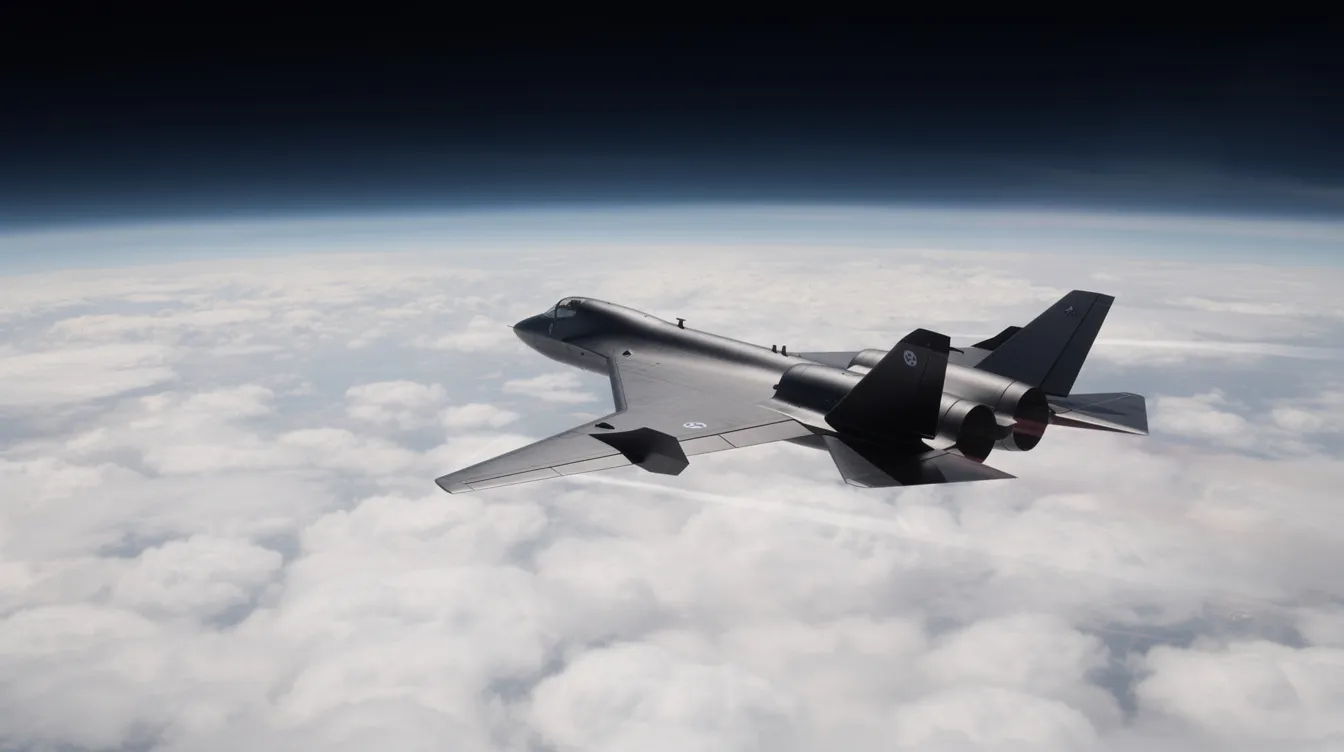
Some aircraft transcend their original purpose. They become cultural icons, engineering marvels, and symbols of human ambition that shape how we think about flight itself. From the matte-black silhouette of the Lockheed SR-71 Blackbird tearing through Cold War skies at Mach 3 to the elegant elliptical wings of the Supermarine Spitfire banking over the English Channel, the coolest planes ever built share something essential: they pushed boundaries that redefined what was possible in aviation.
But this article is not just a museum tour. For the discerning traveler, the story of these aircraft connects directly to the private jets that carry executives across continents today. The same engineering philosophies - speed, range, safety, efficiency - that made legendary airplanes cool now make modern business jets indispensable.
Why "cool planes" matter for serious travelers today
Private aviation is not simply a luxury. It is a strategic tool. Consider what a commercial first-class ticket actually costs in terms of time: arriving two hours early, navigating security, connecting through hub airports, waiting at gates, boarding with hundreds of other passengers. A New York–to–Los Angeles trip in first class consumes roughly ten hours door-to-door. The same trip on a private jet? Closer to seven - and you depart from a terminal where you drive up, step out, and board in minutes.
That time compression is not accidental. It is the direct result of decades of aerospace innovation, much of it pioneered by the beautiful airplanes on this list. High-altitude cruise capability, advanced materials, aerodynamic refinement, and cockpit technology all trace their lineage to military and experimental programs that produced the most celebrated aircraft in aviation history.
The planes that made history didn't just look cool - they solved problems. Modern private jets do the same, just for a different mission.
So what makes a plane "cool"? Four things: design beauty, technical performance, historical legacy, and emotional impact. The best aircraft score on all four. And for BlackJet Jet Card members, these aren't abstract qualities - they translate into the speed, comfort, reliability, and safety built into every flight.
How we define the "coolest plane" (beauty, performance, legacy)
Not every fast plane is cool. Not every beautiful aircraft is legendary. The coolest plane earns that title by excelling across multiple dimensions simultaneously.
Here are the four criteria we use:
Aesthetic beauty - The aircraft's visual form, proportions, and aerodynamic elegance make it unforgettable. Think of the most beautiful aircraft ever built: shapes that look right from every angle.
Technical performance - Speed, altitude ceiling, agility, range, or stealth technology that set new benchmarks for what flight could achieve.
Historical impact - A pivotal role in a war, a record, or a transformation in how people travel. These aircraft changed the world.
Emotional and romantic appeal - The feeling you get watching such a plane fly overhead, hearing its engines, or seeing it in silhouette against the sky.
The SR-71 Blackbird dominates in performance. The Supermarine Spitfire is unmatched in beauty and emotional pull. The Space Shuttle represents ambition on a scale few programs have equaled. Concorde married all four criteria into a single, dramatic shape.
Our list spans combat aircraft, civilian airliners, experimental rocket planes, and space planes. It is curated, not exhaustive - and we encourage you to form your own shortlist of the coolest plane in history.
The Lockheed SR-71 Blackbird – Cold War icon and design masterpiece
The Lockheed SR-71 Blackbird first flew on December 22, 1964, and from that moment, it owned the sky. It remains the fastest air-breathing airplane ever built, with a top speed exceeding Mach 3 - more than 2,190 miles per hour. Its service ceiling topped 85,000 feet, placing it above virtually all threats and most weather.
Kelly Johnson and the Lockheed Skunk Works team designed the aircraft to solve a seemingly impossible problem: fly fast enough and high enough that no Soviet Union air defense could touch it. The result was a plane built largely of titanium, with long chines running the length of the fuselage to reduce drag and radar signature. Its matte-black skin - which gave the Blackbird its name - was engineered to radiate heat, because at Mach 3.2+, surface temperatures reached approximately 400°C.
That heat management is what shaped the aircraft's appearance. Panels were fitted loosely on the ground to allow for thermal expansion in flight. Fuel leaked from seams until the skin heated and sealed. Every element of the SR-71's dramatic shape was dictated by physics - and the result happened to be one of the most beautiful aircraft ever built.
Lockheed built 32 SR-71 Blackbirds during its production run. The aircraft flew reconnaissance missions over Vietnam and during the Cold War, surveying up to 100,000 square miles of territory per hour from altitudes where Soviet bombers and fighters simply could not reach. No SR-71 was ever shot down. The aircraft was retired in 1998 after 30 years of service with the U.S. Air Force.
For modern private air travel, the SR-71's legacy matters. Its materials research - titanium structures, thermal coatings - informs the lightweight composites now used in business jets. Its high-altitude cruise demonstrated that flying above the weather means smoother rides and more predictable schedules. Today's ultra-long-range jets cruise at 51,000 feet; they owe a quiet debt to the Blackbird that proved the advantages of the flight levels above.
Supermarine Spitfire – elliptical-wing elegance
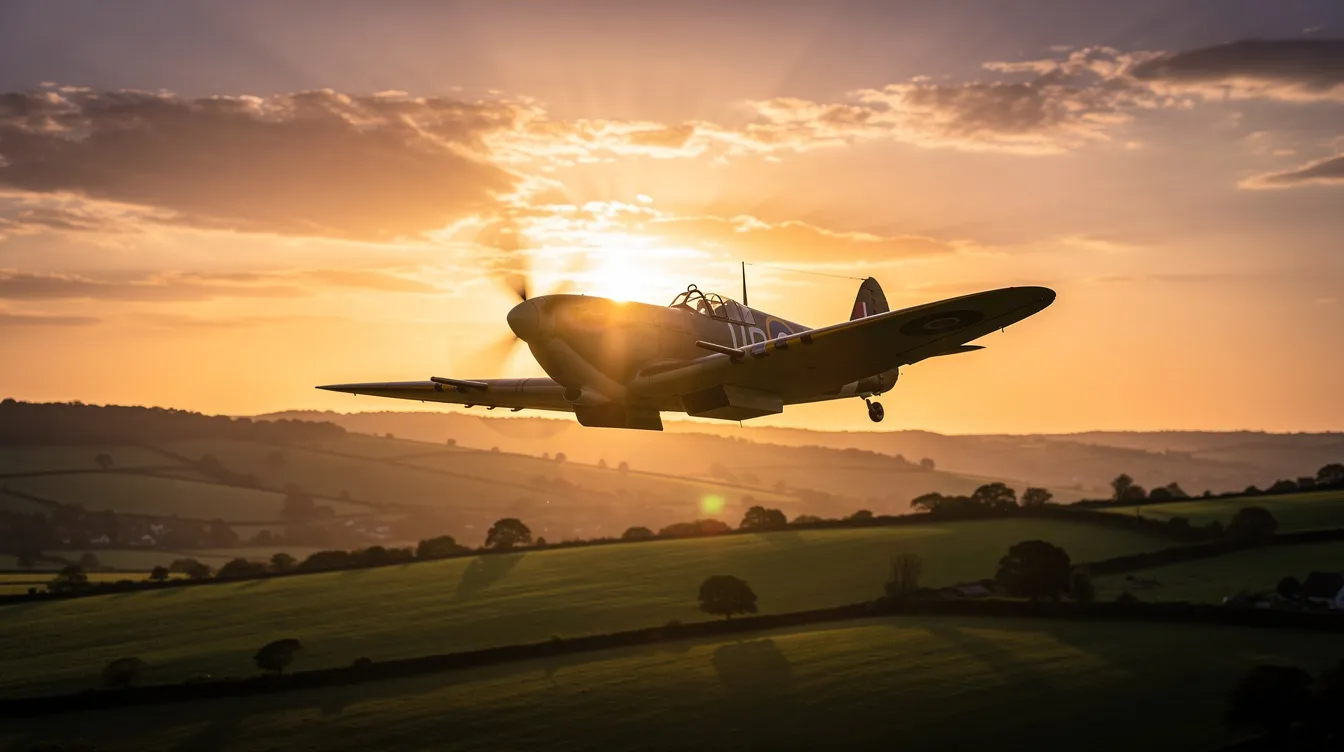
If one pilot could choose any World War II fighter to fly into combat, the answer, more often than not, would be the Supermarine Spitfire. Designed by R.J. Mitchell and first taking to the air in 1936, the Spitfire became the aircraft that held the line during the Battle of Britain in 1940.
Its signature is the elliptical wing - a planform that distributes lift across the entire span to reduce induced drag to near its theoretical minimum. The wing root was thick enough to house landing gear, guns, and ammunition, tapering elegantly toward tips that gave the Spitfire its unmistakable silhouette. This was not decoration. It was aerodynamic engineering that delivered extreme maneuverability and high performance in a single-engine airframe powered by the legendary Rolls-Royce Merlin - a powerful engine that gave the Spitfire its distinctive sound.
The Supermarine Spitfire was used by the Royal Air Force during World War II and saw continuous RAF service across every theater of the conflict. Over 22,000 were built in numerous marks, and the type remains the most recognized fighter of the war.
Modern wing design for business jets still draws on the principles Mitchell refined: efficient lift distribution, minimal drag at cruise, and careful weight management. The Spitfire proved that the most beautiful airplanes are often the most aerodynamically honest - form following function so perfectly that the result looks inevitable.
There is a reason airshow crowds fall silent when a Spitfire appears at sunset. Some aircraft speak to something deeper than specifications. The Spitfire is one of them - among the most beautiful aircraft of any era, military or civilian.
North American P-51 Mustang – beauty with range and purpose
The North American P-51 Mustang was designed in 117 days in 1940 - an almost impossibly fast development cycle that produced an airframe destined to reshape aerial warfare. Early versions used the Allison engine and performed adequately at low altitude. The transformation came when the Mustang was fitted with the Rolls-Royce Merlin engine in 1942, unlocking high-altitude performance that turned the P-51 into the most successful escort fighter of World War II.
What made the difference was range. The P-51 had a laminar-flow wing design for better performance, developed in collaboration with NACA (the precursor to NASA). Combined with internal and external fuel capacity, this American fighter could escort heavy bombers deep into occupied Europe - Berlin and back - protecting missions that previous designs simply could not sustain. The P-51 Mustang helped turn the tide of World War II by breaking the Luftwaffe's ability to defend German airspace.
Aesthetically, the North American P-51 is frequently cited in debates about the most beautiful airplanes of the war: the chin scoop, bubble canopy on later D-models, and clean lines give it a sense of purposeful speed even sitting still. More than 15,000 were built across all variants, and today surviving Mustangs are among the most prized warbirds in the world.
The parallel to modern private aviation is direct. High-net-worth travelers look for the same combination the Mustang delivered: long range without compromise, efficiency without sacrificing performance, and an airframe that looks as good as it flies. Transcontinental and transatlantic flights on business jets demand exactly this balance - and the philosophy that drove the P-51's design remains relevant in every modern type of plane built for serious travel.
Lockheed Constellation – mid-century luxury in the sky
The Lockheed Constellation - affectionately called the "Connie" - was aviation's first true luxury liner. Commissioned by Howard Hughes for TWA in 1939, the Constellation took its first flight in 1943 and entered commercial service in 1945, inaugurating a golden age of air travel that still resonates in aviation history.
Its design hallmarks are unmistakable: a dolphin-shaped fuselage with graceful curves, a triple tail that allowed the aircraft to fit into existing hangars while providing aerodynamic stability, and large porthole windows that flooded the cabin with light. The Lockheed Constellation was, and arguably remains, the most beautiful piston airliner ever built.
Inside, passengers experienced something approaching private-jet-level comfort for the era. Multi-class cabins, dining service, lounges, and sleeping accommodations set standards that later propliners and early jet-age aircraft would struggle to match. The Super Constellation (L-1049) could carry passengers and large loads over ranges exceeding 5,000 miles - remarkable for a propeller-driven aircraft.
The Constellation served major airlines worldwide and was used as a presidential transport. It set early benchmarks for what comfortable long-range flight could feel like, bridging the gap between utilitarian air transport and genuine airborne luxury.
Today's business jets carry that legacy forward. Quiet cabins, pressurized environments, generous windows, and customizable interiors owe something to the Connie's pioneering ambition, especially in larger-cabin airframes like 16-seat private jets and the best private jets in the world. The difference is that BlackJet members access this level of comfort on demand, with none of the scheduling constraints or shared cabins that defined even the golden age.
Concorde – the supersonic sculpture
No aircraft in aviation history combined ambition, beauty, and controversy quite like Concorde. A joint French-British project developed through the 1960s, Concorde's prototype took its first flight on March 2, 1969. Commercial service began in January 1976, and for 27 years, Concorde was the only supersonic commercial passenger aircraft in the world.
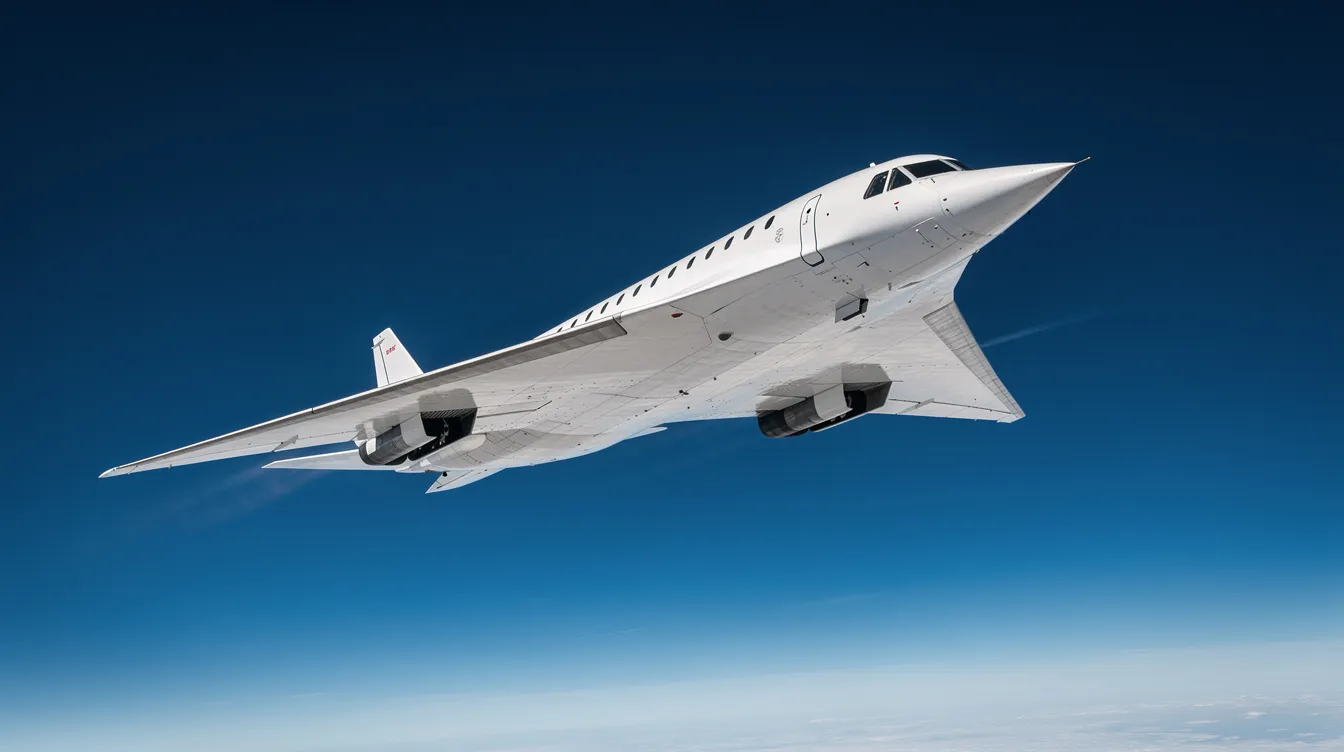
The numbers speak for themselves. Concorde could cruise at Mach 2.04, propelled by four Olympus 593 turbojets - roughly 1,354 miles per hour at altitudes near 60,000 feet. London to New York took about three hours and twenty minutes. The aircraft had a maximum passenger capacity of 128, though most configurations seated around 100 in an all-first-class layout.
Visually, Concorde remains one of the most striking aircraft ever to fly. Its ogival delta wing, slender fuselage, and droop nose - which lowered for landing visibility and raised for supersonic cruise - created a dramatic shape that was instantly recognizable from any angle. The fuselage expanded several inches in flight due to heat, requiring special tolerances and paint formulations. As an engineering marvel, it had few equals.
Yet economics, noise, and fuel burn ultimately grounded it. Concorde's engines consumed enormous quantities of fuel, sonic boom restrictions limited overland routes, and only about 20 aircraft were ever produced. Only British Airways and Air France operated the type commercially. Concorde retired in 2003 after 27 years of service.
The lessons for private aviation are clear. Raw supersonic speeds still inspire awe, but modern business jets prioritize efficiency, sustainability, quiet cabins, and operational flexibility over brute velocity. The jet age taught us that getting there fast matters - but getting there smart matters more.
Lockheed Martin F-22 Raptor – stealth with style
The F-22 Raptor is the aircraft that redefined what a fighter jet could be. A fifth-generation air-superiority fighter, it took its first flight in 1997 and became operational in the mid-2000s. Its high-altitude performance foreshadowed how private jets fly higher than commercial airliners to gain speed, efficiency, and comfort advantages. It is the only fifth-generation air-superiority fighter in full production - or rather, it was: only 187 F-22 Raptors were built before production ended in 2011.
Each F-22 Raptor costs $350 million per unit, making it one of the most expensive combat aircraft ever produced. That price buys extraordinary capability: stealth technology that renders the aircraft nearly invisible to radar, a supercruise capability of Mach 1.85 in level flight without afterburner, thrust vectoring for extreme maneuverability at any speed, and a combat range of 1,600 nautical miles.
Visually, the F-22 manages to look beautiful despite being optimized for stealth. Canted twin tails, trapezoidal wings, and matte-grey radar-absorbent coatings create a shape that is simultaneously aggressive and elegant. Unlike the angular F-117 Nighthawk that preceded it, the Raptor proves that stealth technology and aerodynamic grace can coexist.
Lockheed Martin's lineage - from the SR-71 Blackbird through the F-117 to the F-22 - represents a continuous thread of innovation that benefits more than just military aviation. Advanced composite materials, integrated sensor fusion, and fly-by-wire flight controls developed for these platforms now influence the design of high-performance business jets used in premium private aviation fleets. The Eurofighter Typhoon and the F-35 Lightning II, which integrates stealth and advanced sensor technology into a single platform, followed similar trajectories - but the F-22 remains the benchmark.
Other cool planes that shaped aviation culture
Beyond the headliners, dozens of aircraft have earned a permanent place in the public imagination. Here is a short roundup of planes that deserve mention in any conversation about the coolest plane:
Grumman F-14 Tomcat - The swing-wing Navy fighter whose variable-geometry wings allowed both high-speed intercept and controlled carrier landings. Its pop-culture presence cemented it as one of the most recognizable fighter jets of the Cold War era.
Lockheed F-117 Nighthawk - Built in secret, the Nighthawk is recognized for its stealth technology and angular design principles. Its faceted surfaces looked like nothing else in the skies and changed military doctrine permanently.
Boeing 747 - The jumbo jet that democratized long-haul travel. With its iconic upper-deck hump and enormous capacity for passengers and cargo, the Boeing 747 has been in production for over 50 years, reshaping airline economics and connecting the world.
McDonnell Douglas F-4 Phantom II - A twin-engine, twin-tail powerhouse used by air forces on every continent. Its versatility in air superiority, ground attack, and reconnaissance made it the aviation equivalent of a Swiss Army knife.
Antonov An-225 "Mriya" - The biggest airplane ever built in terms of operational payload. The largest aircraft to fly in regular service, the An-225 could carry large loads that no other plane could match, pushing human awe thresholds with every takeoff.
Douglas DC-3 - Rugged, reliable, and revolutionary. The Douglas DC-3 was produced in over 16,000 units and ushered in the era of durable, profitable air travel. Many are still flying today, more than eight decades after the type entered service.
The Bell X-1 also deserves mention: it became the first aircraft to break the sound barrier in level flight, piloted by Chuck Yeager in 1947 - a moment that opened the door to everything from supersonic speeds in military aviation to the jet engines that power modern business travel.
The Space Shuttle – where plane meets spaceship
The Space Shuttle occupies a category of its own among space planes: part spacecraft, part airplane, and entirely unlike anything else ever built. The program's first orbital flight, STS-1, launched in April 1981. The final mission, STS-135, flew in July 2011. Across 135 missions, the Shuttle deployed the Hubble Space Telescope, constructed the International Space Station, and carried hundreds of astronauts to orbit.
What made the Shuttle relevant to aviation - not just spaceflight - was its return profile. After reentry through a plasma sheath at hypersonic speeds, the orbiter became an unpowered glider. Pilots had one chance to land, with no thrust available for a go-around. The precision required was absolute, and the cockpit systems that enabled it were among the most complex ever engineered.
Modern business jet flight decks are simplified descendants of Shuttle-era complexity: glass cockpits, fly-by-wire controls, and environmental systems that trace their origins to programs where failure was not an option.
The Shuttle was not the most elegant aircraft ever built. But as an engineering marvel that bridged air and space, it pushed materials science, avionics, and crew training to levels that quietly benefit every pilot who flies a modern jet today.
North American X-15 – pushing the edge of possible
The North American X-15 was an experimental rocket plane that operated between 1959 and 1968 - and nothing before or since has matched what it achieved at the boundary between atmosphere and space. The X-15 reached a record speed of Mach 6.70, and its pilots touched altitudes above 350,000 feet, earning astronaut wings in the process.
Launched from a B-52 mother ship at altitude, the X-15 ignited its rocket engine and climbed almost vertically. Landings were unpowered skid touchdowns on dry lakebeds. One pilot flew alone, managing systems designed to operate in conditions where shock waves battered the airframe and conventional aerodynamic controls lost effectiveness.
The data gathered from X-15 flights advanced high-temperature materials, reaction control systems, and hypersonic aerodynamics - knowledge that fed directly into the Space Shuttle program and continues to inform research into future supersonic and hypersonic flight, as seen in the newest generation of private jets. For the aviation world, the X-15 proved that the edge of possible is always worth reaching for.
Cool in the cockpit: technology, avionics, and safety innovations
The cockpit is where cool meets consequential. Every technology innovation that makes a modern private jet safer and more capable traces its ancestry to military and experimental programs.
Fly-by-wire controls - where electronic signals replace mechanical linkages - originated in aircraft like the X-15 and matured through programs including the F-16 and F-22. Today, business jets use fly-by-wire with envelope protection systems that prevent pilots from exceeding safe flight parameters, reducing risk dramatically.
Glass cockpits replaced analog dials with integrated digital displays, giving pilots situational awareness that previous generations could not imagine. Synthetic vision, head-up displays, datalink weather, traffic collision avoidance systems (TCAS), and terrain awareness warning systems (TAWS) all migrated from military programs into the private aviation fleet.
For BlackJet's clientele, "cool" in the cockpit means safer. It means smoother flights because pilots have better information. It means better decision-making in weather and routing. And it means that every flight benefits from the same philosophy that guided the engineers who built the most advanced aircraft ever: redundancy, precision, and relentless attention to detail.
From warbirds to private jets: how cool planes shaped cabin comfort
World War II cockpits were brutal environments: unpressurized, deafeningly loud, freezing at altitude, with no amenities beyond what one pilot could carry in a flight suit. The transition to modern cabin comfort happened in stages, each one building on military research.
Pressurization came first, pioneered in aircraft like the Boeing 307 Stratoliner and refined in the Lockheed Constellation and early jet-age airliners. Oxygen systems, heating zones, and noise reduction followed - all technologies accelerated by wartime necessity.
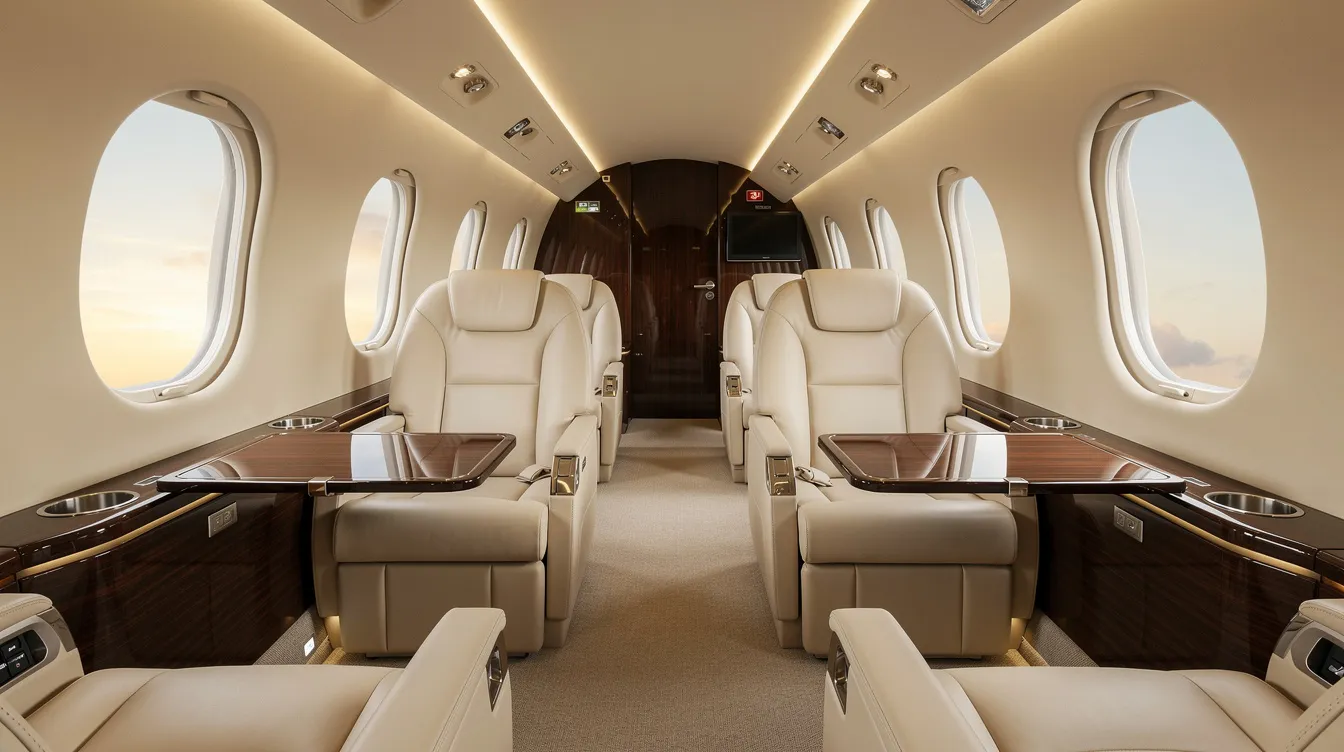
Today's private jets represent the culmination of that evolution. Key features include:
Low cabin altitude - The best large-cabin jets maintain cabin altitudes of approximately 2,840 feet (Gulfstream G700) or 2,691 feet (Bombardier Global 8000) at cruise, far below the FAA maximum of 8,000 feet. Lower cabin altitude means less fatigue and better rest.
Advanced soundproofing - Noise levels in modern cabins are low enough to hold a conversation at normal volume or sleep undisturbed.
Lie-flat seating and full-service galleys - Designed for productivity and rest on long missions.
Air quality - Fresh air exchanged every two to three minutes with advanced filtration systems.
BlackJet leverages multiple aircraft categories so travelers can match the cabin to the mission, drawing on the same logic you would use when comparing private jet sizes or the broader types of private jets available in the market. A light jet handles New York to Miami with speed and simplicity - board in minutes, land at a closer airport, skip the crowds. A large-cabin jet serves New York to London overnight with a full lie-flat bed, workspace, and room to arrive rested. The point is choice, calibrated to purpose.
What makes a modern private jet "cool" to the executive traveler
For the executive traveler, "cool" is not about nostalgia. It is about advantage. The traits that define a cool modern private jet are pragmatic:
Time efficiency - Skip hubs, security lines, and boarding queues. Depart from smaller airports closer to your origin and destination.
Privacy - Control who is on the aircraft. Hold meetings, make calls, or simply rest without an audience.
Reliability - Higher on-time performance than commercial carriers. Pre-flight planning accounts for weather, routing, and contingencies.
Onboard connectivity - High-speed internet, power at every seat, and climate control that adjusts to your preference.
Access - Reach airports that commercial airlines ignore: Teterboro, Van Nuys, Oxford, Le Bourget. Fly direct to destinations that would require connections on scheduled carriers.
Feature | Commercial First Class | Private Jet (Jet Card) |
|---|
Door-to-door time (NYC–LA) | ~9–10 hours | ~6.5–7 hours |
Airport arrival before departure | 2+ hours | 15–20 minutes |
Schedule flexibility | Fixed timetable | On-demand |
Cabin sharing | Shared with 8–20+ passengers | Private |
Secondary airport access | Rarely | Standard |
The cool factor today includes invisible advantages: seamless digital booking, transparent pricing, and tailored in-flight service that commercial carriers cannot replicate at any price point.
BlackJet's Jet Cards – cool access without owning a jet
A BlackJet Jet Card is straightforward: purchase a 25-hour or 50-hour prepaid block of flight time across multiple aircraft categories, and use our guides to the 25-hour jet card, 50-hour jet card cost, and broader jet card pricing structures to benchmark options across the market. No aircraft ownership. No maintenance bills. No hangar fees. No depreciation risk.
Members request flights 24/7 via mobile or web, review real-time aircraft options, and lock in transparent hourly rates. Every flight is operated under rigorous safety and certification standards - the same standards applied whether you are flying a light jet for a two-hour hop or a large-cabin aircraft for a transatlantic crossing.
The contrast with ownership is significant. Owning a jet means carrying the full cost of crew, insurance, maintenance, and hangar space regardless of how often you fly. Ad-hoc charter means negotiating price and availability for every trip, with inconsistent standards. A Jet Card provides guaranteed access, consistent quality, and financial predictability, and the best jet cards for frequent flyers share these traits even when offered by different providers.
Scenario: A technology executive splits time between New York, Los Angeles, and London, with occasional ski weekends in Aspen. Under a single Jet Card, she books a midsize jet for the LA runs, a large-cabin aircraft for London, and a light jet for Aspen - all through the same platform, all meeting the same safety and sustainability standards. Best regards to complexity: she does not need to think about fleet management.
Aircraft categories and matching cool planes to your mission
Not every flight requires the same aircraft, just as the Air Force does not send an F-22 on every sortie. Matching the airframe to the mission is how smart travelers maximize value.
Category | Example Aircraft | Ideal Mission | Range |
|---|
Very light jet | Phenom 100 | Short hops, 2–3 passengers | ~1,200 nm |
Light jet | Phenom 300 | Regional, 4–6 passengers | ~2,000 nm |
Midsize jet | Citation XLS+ | Cross-country, 6–8 passengers | ~2,100 nm |
Super-midsize | Challenger 350 | Transcontinental, 8–10 passengers | ~3,200 nm |
Large-cabin long range | Gulfstream G650 | Transatlantic/transpacific | ~7,000 nm |
BlackJet advisors help members select the right class per trip, ensuring you are never overpaying for capacity you do not need - or underserved on a mission that demands more space and range. That might mean anything from a light jet for a quick hop to a VIP-configured airliner suitable as the best private jet for 50 passengers, or a tailored private jet charter in Karachi for region-specific missions. This tailored matching mirrors how military aviation assigns the right airframe to each objective. A helicopter handles short-range insertion; a long-range jet handles strategic reach. In private aviation, the principle is identical.
Explore the full breakdown of aircraft categories to understand which cabin fits your travel pattern and how strategies to fly private more affordably intersect with aircraft choice, routing, and program structure.
Cool planes and the Air Force: legacy of speed, stealth, and reach
The U.S. Air Force has been the proving ground for many of the technologies that define modern aviation. The SR-71 Blackbird pioneered high-altitude, high-speed reconnaissance. The F-117 Nighthawk introduced stealth to operational warfare. The F-22 Raptor merged stealth with air superiority. The C-130 Hercules demonstrated that range, reliability, and the ability to carry large loads from austere runways could be just as important as speed.
Air Force priorities - range, survivability, mission flexibility - translate directly into civil and business aviation. Composite materials tested under combat stresses now make business jets lighter and stronger. Avionics designed for threat environments now give civilian pilots unprecedented situational awareness at sea level and at altitude, particularly when cruising at the higher altitudes private jets routinely reach. Even jet engines trace their lineage through military turbofan development programs that prioritized thrust, efficiency, and reliability.
Performance and safety testing under extreme conditions ultimately benefits every civilian traveler. The rigorous standards developed for Air Force operations - crew training, maintenance cycles, inspection protocols - set the template for the certification standards that operators in the private aviation industry must meet today.
Every BlackJet flight quietly carries the DNA of these pioneering airframes. The aircraft you fly on may not have stealth coatings or afterburners, but the engineering philosophy behind it was forged in the same skies.
Sustainability: why the coolest planes of the future must be green
Concorde burned fuel at a rate that would be unacceptable by any modern standard. The SR-71 leaked it on the ground. The coolest planes of the past earned their status through performance, not efficiency. That calculus has changed.
Today, sustainability defines what is truly cool in aviation. Sustainable aviation fuel (SAF) can reduce lifecycle carbon emissions by up to 80 percent compared to conventional jet fuel. Aerodynamic refinements, lightweight composite structures, and more efficient engines continue to improve fuel burn per nautical mile. And carbon offset programs - funding certified projects like reforestation and renewable energy development - provide a bridge while the industry transitions to cleaner propulsion.
BlackJet delivers carbon-neutral flights as standard through embedded offset programs, at no extra cost to members. This is not a marketing gesture. It is a recognition that the travelers who care most about how they fly also care about the impact of their flights, even when they look for ways to fly private more cheaply through smarter program selection and routing. For executives and high-net-worth individuals whose brand image and ESG commitments matter, green private jet travel is no longer optional - it is expected.
The coolest planes of the future will be defined not just by how fast they fly, but by how responsibly they do it.
Private aviation safety – the invisible "cool factor" that matters most
Safety is not glamorous. It does not make headlines or viral videos. But it is the single most important factor in private aviation, and it is the trait that connects modern business jets most directly to the engineering rigor of programs like the X-15 and the Space Shuttle.
BlackJet works exclusively with audited, certified operators meeting the highest industry standards. This includes requirements for:
Dual-crew operations on applicable missions
Minimum pilot flight hours and recurrent training
Regular maintenance oversight and documentation
Pre-flight safety briefings, weather analysis, and route planning
These are not differentiators in the way a beautiful cabin or a fast climb rate might be. They are non-negotiable baseline requirements. The same philosophy guided the engineers who designed the SR-71 Blackbird: build for reliability first, and let performance follow.
For members, this translates into concrete reassurance before every flight. Aircraft are vetted. Crews are qualified. Routes are planned with contingencies. The invisible cool factor is knowing that the standards behind your flight are as rigorous as those behind the aircraft ever built for the most demanding missions in aviation history, which is why understanding how safe private jets are in general provides useful context. Learn more about BlackJet's approach to safety.
Digital tools: from mission control to your phone
The SR-71 Blackbird required a ground support infrastructure almost as complex as the aircraft itself: mission planning, weather analysis, tanker coordination, real-time telemetry. Modern private aviation borrows from this mission-control philosophy, but puts it in your pocket.
BlackJet's digital platform enables members to request flights, review aircraft options, confirm bookings, and track itineraries from a mobile device. Real-time flight support means that weather diversions, schedule changes, and ground transfer coordination happen behind the scenes, managed by a team trained to anticipate disruptions before they become problems.
This seamless technology layer transforms private aviation from a luxury into a system - one where the complexity is handled for you, and the experience feels effortless. Just as advanced avionics turned the F-22 into an integrated sensor-and-weapons platform rather than just an airframe, modern digital tools turn a private jet flight into an integrated travel solution rather than just a seat in the air.
Sample "cool" itineraries powered by BlackJet
The overnight London run. A fund manager in Manhattan needs to land at London Luton for a 9 a.m. board meeting. She books a large-cabin jet departing Teterboro at 8 p.m., sleeps in a lie-flat bed for six hours, and arrives rested. Total Jet Card hours used: approximately 7. She is in central London by 8:15 a.m., having skipped Heathrow entirely.
The European art tour. A collector and his partner fly from Geneva to Milan to view a private collection, then continue to Paris for an auction preview, returning to Geneva the same evening. A super-midsize jet handles all three legs efficiently, using airports like Milan Linate and Paris Le Bourget - closer to city centers than their commercial counterparts. Three cities, one day, no checked bags to reclaim.
The last-minute ski weekend. Four friends in Los Angeles decide Thursday evening to fly to Aspen for the weekend. A light jet departs Van Nuys Friday morning, landing at Aspen's Sardy Field - an airport most commercial carriers avoid due to its short runway and mountain approach. They are on the slopes by noon. The return Sunday evening uses the same aircraft class, arriving home before 10 p.m.
Each scenario draws on the themes that run through this entire article: technology, safety, sustainability, and design heritage - all converging in the practical reality of a modern flight.
How to choose your own "coolest plane" – and then fly something inspired by it.
What draws you to a particular aircraft? Raw speed, like the SR-71 Blackbird? Elegant beauty, like the Supermarine Spitfire? Sheer scale, like the Antonov An-225 - the biggest airplane ever to carry cargo operationally? Historical weight, like the North American P-51 or the Space Shuttle?
While most of these legendary airplanes are no longer in frontline service, their design DNA informs today's most advanced private jets. The coolest plane you will actually fly on will likely be a modern, efficient business jet - selected not for nostalgia, but for its precise fit to your mission.
When choosing an aircraft through BlackJet, consider:
How far are you flying? (Range determines aircraft class.)
How many passengers and how much luggage?
How many legs does the trip involve?
What runway lengths are available at your destination?
Do you need a full lie-flat cabin for overnight travel?
These practical questions lead to the right aircraft - and the right aircraft, chosen well, delivers its own kind of cool.
FAQ: coolest planes and modern private aviation
What is considered the coolest plane ever built?
There is no universal winner. The Lockheed SR-71 Blackbird is celebrated for speed and altitude, Concorde for supersonic passenger travel, and the Supermarine Spitfire for its graceful design and role in World War II. The coolest plane depends on whether you value engineering, history, performance, or beauty most.
Why is the de Havilland Mosquito considered a remarkable aircraft?
The de Havilland Mosquito was a fast, versatile World War II aircraft built primarily from wood. Its combination of speed, range, and adaptability made it a standout design and a frequent contender in discussions about aviation’s most impressive aircraft.
Can passengers fly on historic aircraft such as the Spitfire or P-51 Mustang?
A limited number of specialist operators offer warbird experiences, subject to aircraft availability, insurance, and strict operating requirements. These aircraft are not substitutes for modern private jets, which are designed for reliable passenger transport, cabin comfort, and contemporary safety standards.
How does a Jet Card differ from private jet charter?
A Jet Card uses prepaid flight hours and may provide clearer pricing and access to vetted operators across aircraft categories. With ad-hoc charter, travelers arrange and price each trip separately. The best option depends on how often you fly, the routes you use, and the flexibility you need.
How does BlackJet support safety and sustainability?
BlackJet works with vetted operators that meet rigorous safety and certification requirements, including crew and maintenance standards. Its Jet Card programs also include carbon offsets as standard, at no extra cost to members, to support carbon-neutral flights.
Which private jet category is right for my trip?
Light jets can suit short regional flights with a smaller group, while midsize and super-midsize aircraft offer more cabin space and range for longer trips. Large-cabin, long-range jets are typically suited to international journeys. Passenger count, luggage, runway access, and flight distance all inform the choice.
Join BlackJet and make every flight as cool as the aircraft that inspired it
The aircraft on this list represent the greatest achievements in aviation history. They broke records, won wars, connected continents, and pushed the boundaries of physics. They were designed by engineers who refused to accept limitations and flown by pilots who trusted that engineering with their lives.
Modern private aviation carries that heritage forward - not with afterburners or rocket engines, but with precision, safety, sustainability, and an unwavering commitment to the experience of the person in the cabin.
BlackJet's Jet Card programs are built on this foundation, and our broader expertise in jet card cost and value helps members choose the right structure for how they actually fly:
Guaranteed aircraft standards across every flight
Carbon-neutral performance at no extra cost
24/7 digital booking with real-time support
Access to multiple cabin classes matched to your mission
Rigorous safety certification through vetted operators
Explore BlackJet's Jet Card programs or speak with a BlackJet aviation specialist to discover how the legacy of the coolest planes ever built becomes your strategic advantage - every time you fly.
Turn the romance of aviation into a strategic advantage every time you fly.


 Sign up with google
 Sign up with Apple