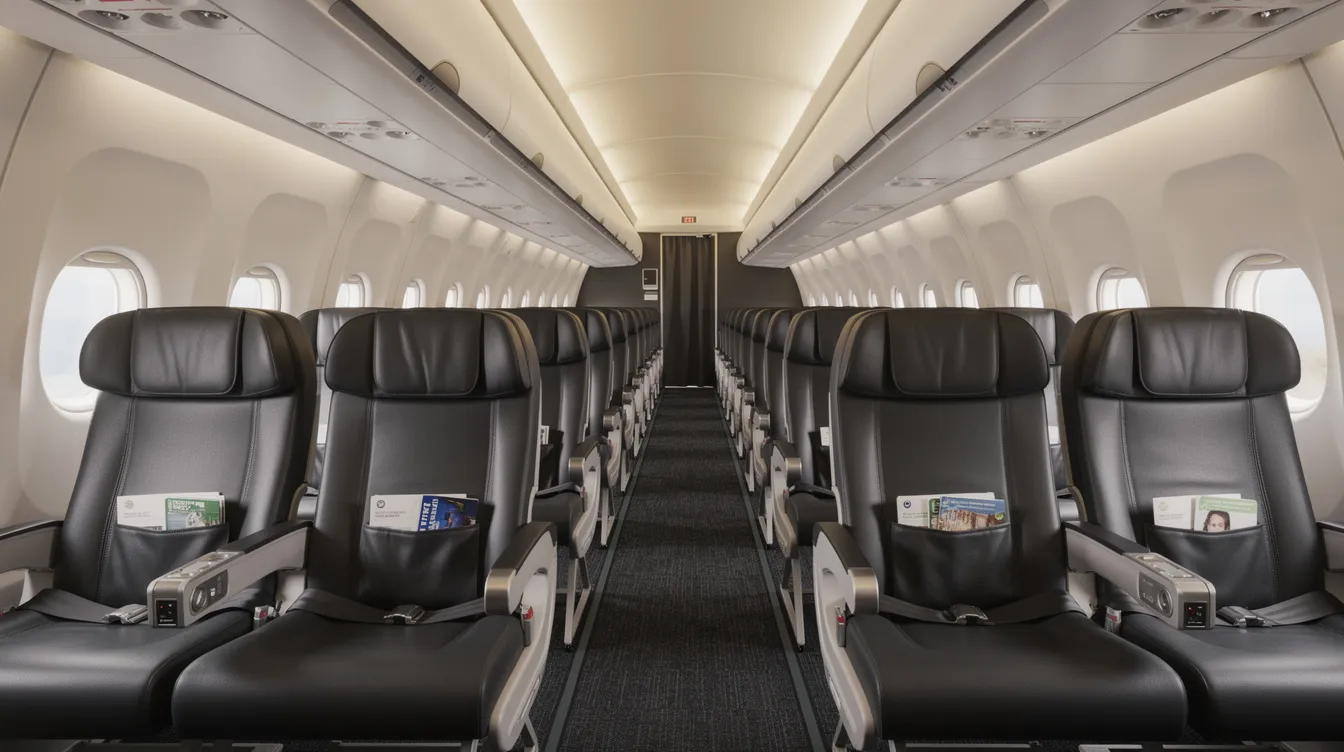
If you've ever pulled up a Delta seat map and found yourself staring at "Seat E," here's the direct answer: Seat E is explicitly the middle seat in Delta's standard 3-3 seating layout on narrow-body aircraft (such as the Boeing 737 and Airbus A321). In this configuration, Seat E is positioned between the aisle (D) and window (F) seats on the right side of the aircraft. This means Seat E in Delta's economy cabin comes with standard seat challenges: limited legroom, no window view, and no direct aisle access, making it one of the less comfortable options for travelers who value space, privacy, or productivity.
For frequent Delta flyers, business travelers, and high-net-worth leisure passengers deciding whether to keep booking commercial cabins or move up to a more flexible alternative, that distinction matters quickly. This guide breaks down where Delta Seat E sits, how its dimensions and comfort compare across cabin classes, how to read seat maps and fare rules before you select it, what it means for safety and in-flight work, and when upgrading—or shifting to a private option such as BlackJet's Jet Card program—can make better use of your travel time.
Key Takeaways
Seat E is always the middle seat in Delta's 3-3 economy cabin layout, positioned between the aisle and window seats.
Delta Comfort+ increases seat pitch to ~34 inches but retains the 3-3 layout, so Seat E remains a middle seat.
Delta First Class eliminates Seat E with a 2-2 configuration—only aisle and window seats are available.
Exit rows and bulkhead positions can improve legroom for Seat E, but may reduce recline or underseat storage.
BlackJet Jet Card programs remove the middle-seat problem entirely, offering customizable cabin configurations, carbon-neutral flights, and no seat compromises.
Why Seat Choice Still Matters for High-Value Travelers
A coast-to-coast round-trip on Delta Main Cabin can absorb 10–14 hours door-to-door once you log security lines, boarding delays, and connections. A similar route on a private jet can cut that by 2–4 hours each way through direct routing and private terminal access, and for some businesses the ability to structure travel this way also opens opportunities to maximize jet card tax deductions. For executives, the difference between sitting in a cramped middle seat and having a tailored cabin layout via a premium private jet card program isn't just comfort—it’s operational efficiency.
Commercial Seating: Fixed Layouts and Limited Flexibility
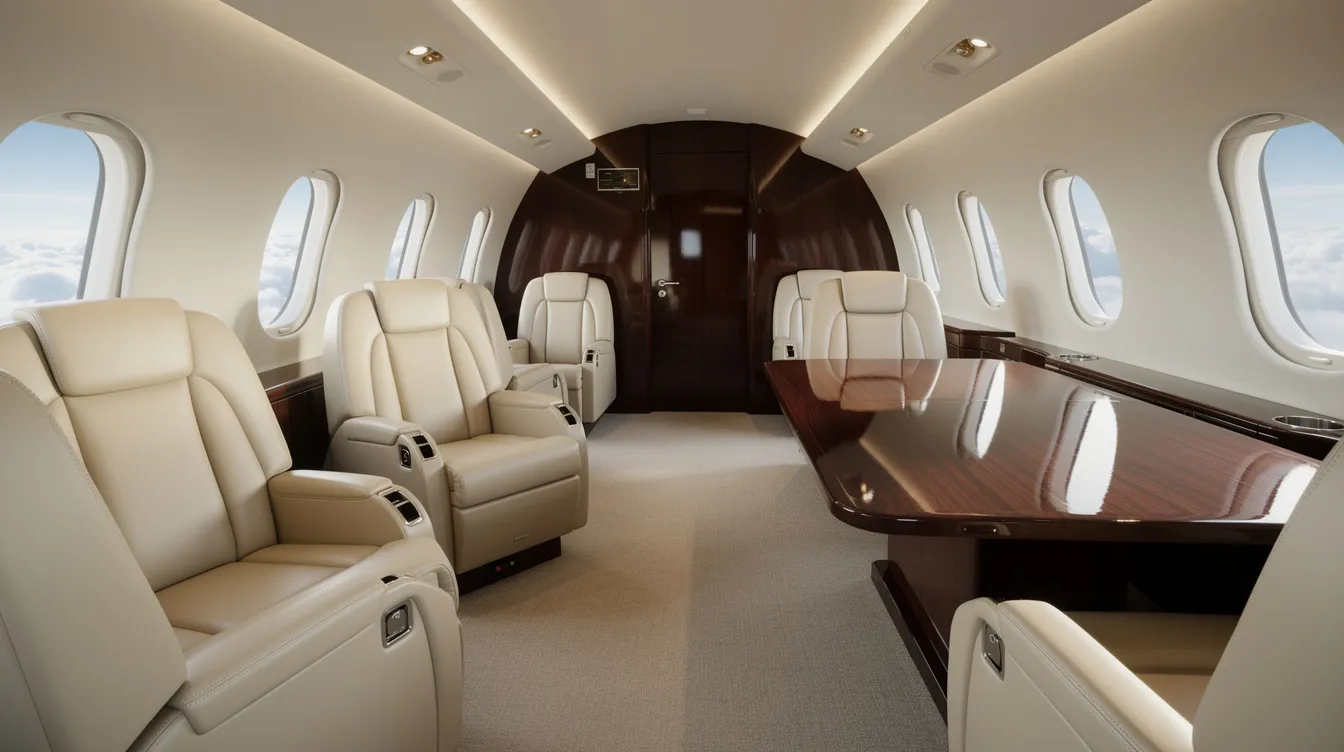
Commercial seating is fixed: rows, letters, pitch, and width are determined by airline yield management, not your needs. BlackJet offers multiple aircraft categories—light, midsize, super-midsize, and large-cabin jets with club seating, conference tables, and sofa-style options—configured around your work or family requirements.
Understanding Delta Seat Letters and Cabin Layouts
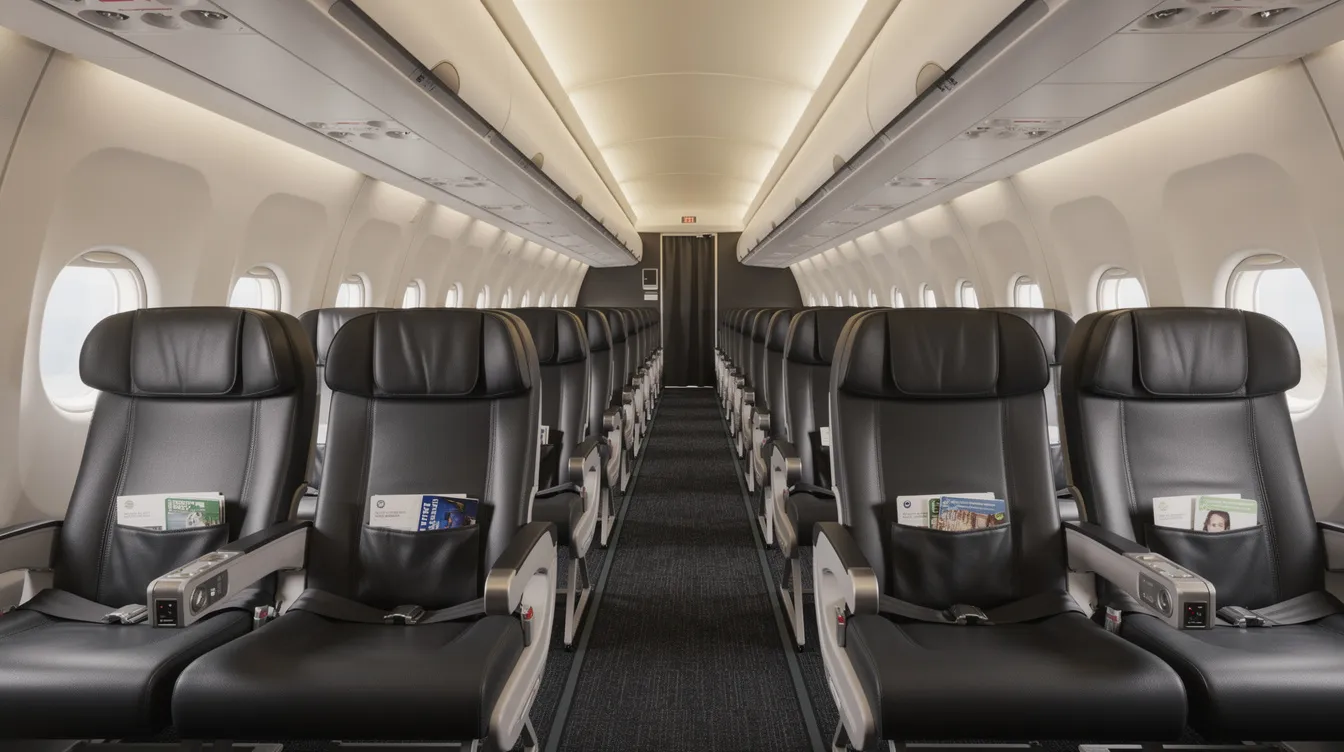
Delta Air Lines uses a 3-3 seating layout on narrow-body aircraft. Picture a row from left to right: A (window), B (middle), C (aisle), then the walkway, then D (aisle), E (middle), F (window). Seat E is always the middle seat on the right side of the aircraft, mirroring B on the left.
In the First Class cabin on 737s, the layout shifts to 2-2 (A/B left, C/D right), meaning there is no E seat at all. Delta's aircraft features may vary by specific service class and aircraft type, so the cabin your E seat falls into—whether Comfort+ or standard economy—changes the experience significantly. Wide-body aircraft like the Airbus A330 or Boeing 767 may use different letter patterns (2-3-2), but E is most consequential in the common 3-3 narrow-body cabin.
Passengers can access Delta Studio on seatback screens for in-flight entertainment, and Wi-Fi is available on eligible flights, though connectivity varies by aircraft, while large corporate or family groups might bypass middle seats entirely by chartering private jets suitable for up to 50 passengers. Power access is available at some seats on Delta E-jet cabins.
Delta Seat E on the Boeing 737: What You Actually Get
The Boeing 737-800 and 737-900ER are Delta's domestic workhorses. On a typical 737-800, you'll find roughly 160 seats: 16 in First Class (2-2), about 36 in Comfort+ (3-3), and approximately 108 in Main Cabin (3-3). Seat E exists only in the 3-3 sections.
Concrete metrics for Seat E in Main Cabin:
Feature | Main Cabin E | Comfort+ E | First Class |
|---|
Pitch | 30-31 inches | 34 inches | 37 inches |
Width | ~17.3 inches | ~17.3 inches | ~21 inches |
Recline | ~3 inches | Slightly more | Full |
Armrest | Shared both sides | Shared both sides | Personal |
On some seat maps, certain E positions fall in exit rows with extra legroom or bulkhead rows with variable space. Always check the interactive seat map for row-specific notes before you select. Checking specific aircraft seat maps during booking confirms exact seat features
Seat E in First Class vs Delta Comfort+ vs Main Cabin
In Delta First on narrow-bodies, the 2-2 configuration means no Seat E exists—only window seats and aisle seats. First Class seats have a pitch of 37 inches, and Delta First Class features 21-inch wide seats, priority boarding, and premium meals, a substantial difference from economy's 17.3-inch width.
Delta Comfort+ seats offer a pitch of 34 inches with earliest boarding as a benefit. Delta Comfort+ provides complimentary premium snacks and free drinks on most routes. But E remains a middle seat with shared armrest space. The difference between 15E in Comfort+ and 24E in Main Cabin is real—better pitch, priority boarding, premium snacks—but the lateral squeeze persists.
For travelers who need genuine privacy and workability, moving to First Class eliminates E, but a private jet with BlackJet eliminates the entire compromise.
Exit Rows, Bulkheads, and the Best Versions of Seat E
Exit rows on Delta Boeing 737 aircraft (often rows 17–18 on the 737-800) can include a Seat E with legroom rivaling Comfort+ pitch. However, these seats often come with limited recline—the forward exit row frequently locks the seat back. Passengers must meet age and fitness criteria to sit there.
Bulkhead Seat E—such as the first row of Comfort+ behind First Class—offers open space ahead but restricted underseat storage during taxi and takeoff.
Comparison Table: Best Versions of Seat E
Seat Type | Legroom | Recline | Underseat Storage | Notes |
|---|
10E (Bulkhead) | More legroom | Standard | None at departure | Wall may intrude at knees |
18E (Exit Row) | Extra legroom | May recline | Tray table in armrest | Must meet exit row requirements |
Last row E | Standard | Sometimes none | Standard | Near the lavatory and galley, possible noise |
Even the best Seat E keeps you in the middle with limited privacy.
How to Read Delta's Seat Map to Evaluate Seat E
Checking specific aircraft seat maps during booking confirms exact seat features. On Delta's site or app, tap "Seats" after selecting a flight to view the interactive seat map. Click individual E seats to review notes like "limited recline," "near lavatory," or "extra legroom."
Look for color coding: Comfort+ seats appear in a different shade from Main Cabin. A traveler flying Atlanta–LAX might evaluate 16E in Comfort+, 19E as Main Cabin Preferred, and 30E as standard economy, using page icons and notes to choose the least-compromised option. Review power outlet availability and cabin refresh status—Delta's fleet is undergoing a major cabin refresh for sustainability and enhanced passenger experience.
Ticket Types, Fare Rules, and Access to Seat E
Delta Main fare types shape your chance of escaping Seat E. Basic Economy often auto-assigns middle seats at check-in, while higher fares let you select an exit row E for a fee. Delta Premium Select includes two free checked bags and better seat selection options but still operates in premium economy configurations where E may appear.
Upgrades via SkyMiles, cash co-pays, or elite status can sometimes move you from Main Cabin Seat E into Comfort+ or First Class. Delta First Class offers priority boarding and premium meals, enhancing the travel experience, yet very frequent travelers may find that a 50 hour jet card cost and value guide better aligns with their need for consistent comfort and flexibility.
But for travelers who frequently find themselves stuck, a BlackJet Jet Card converts repeated upgrade spending into guaranteed private cabin access, and high-frequency flyers may even evaluate a 100 hour jet card cost guide when modeling long-term travel budgets.
Delta Seat E: Comfort and Amenities
At Seat E, you sit with shared armrests on both sides, less control over window shades, and frequent disturbances from neighbors. Passengers can access Delta Studio on seatback screens for in-flight entertainment, and most refreshed aircraft feature ife screens up to 11 inches. Delta offers Wi-Fi on eligible flights, but connectivity varies by aircraft. Power access is available at some seats with USB and AC outlets.
Private Jet Cabin Experience
Contrast this with a BlackJet cabin: individual club seats, divans, conference-style tables, and the freedom to move without disturbing anyone. Custom catering, pre-loaded presentations, and discreet service enhance both comfort and confidentiality—a meaningful difference you simply cannot replicate from a middle seat.
Safety Protocols: Commercial vs Private
Safety Considerations: Exit Rows, Seat E, and Certified Private Aviation
In Delta exit rows containing Seat E, passengers must be at least 15 years old, able to assist in evacuation, and fluent enough to understand crew instructions, whereas private flights for larger groups might instead evaluate the best private jet for around 20 passengers to keep teams together. Non-exit Seat E carries no additional duties.
Private jets undergo rigorous safety inspections before each flight, complying with FAA safety regulations. Many private jets are equipped with advanced safety technology, and pilots typically have thousands of flight hours. Private aviation includes safety certifications for both aircraft and crew, and those evaluating whether private jets are safe will find that reputable operators maintain standards that often exceed commercial requirements. BlackJet works only with operators meeting or exceeding FAA Part 135 standards, verified through independent audits like ARG/US and Wyvern.
Productivity in Seat E vs a BlackJet Cabin
Working from Seat E means limited elbow room, difficulty accessing bags, and frequent interruptions. Discussing sensitive financials or legal strategies is risky in such close quarters—no matter how good the Wi-Fi is.
In a BlackJet cabin, club-seating arrangements and conference tables let executives conduct full meetings or due diligence sessions mid-flight. Consider a CEO in Seat 23E on a transcontinental flight versus using a 25-hour Jet Card on a super-midsize jet—five hours of cramped endurance versus a fully productive board working session. For leaders, consistently flying in seats like E may be false economy, especially when options like the BlackJet 25+ Hour Jet Card provide predictable access to larger cabins.
Delta Seat E on Longer vs Shorter Routes
On short 60–90 minute segments, Seat E discomfort is manageable. Beyond three hours—transcontinental or Caribbean routes—the lack of legroom, privacy, and recline compounds. Enhanced IFE libraries and power outlets help, but they don't solve the core issues of space and privacy.
A New York–Miami hop where Seat 15E might be acceptable is a fundamentally different experience than New York–Los Angeles, where the same traveler would be better served by Delta First or a BlackJet-arranged aircraft, especially if they are exploring the cheapest private aircraft and budget-friendly private options as an alternative to repeated commercial upgrades.
When to Pay More for a Better Seat vs Move to Private Aviation
For sporadic leisure trips or short flights, paying for Comfort+ upgrades from Seat E makes good sense. But when travel frequency climbs—bi-coastal deal-making, executive roadshows, multi-city days—the total cost of repeated upgrades, hotel nights, and lost productivity adds up.
A structured BlackJet Jet Card converts that ad hoc spending into predictable, prepaid access, and those prioritizing aircraft quality may look at rankings of the top private jets in the world to understand cabin and performance benchmarks. Jet cards offer prepaid access to private jets with common programs including 25-hour and 50-hour options. They provide access to multiple cabin types and include 24/7 digital booking tools, real-time support, and safety certification, and travelers should understand jet card cost and private jet membership pricing before committing.
Mobile booking platforms enable 24/7 access to jet services—users can book private jets via mobile apps, receive real-time flight updates, and enjoy 24/7 flight support that enhances the customer experience throughout every journey, even when simply buying a seat on a private jet rather than a whole aircraft. Direct access to FBOs, 15–30 minute pre-flight arrivals, and customized departure times deliver what Seat E never can.
Sustainability: Carbon Footprint of Seat E vs Carbon-Neutral Private Flights
An individual Seat E on a full 737 shares emissions across 160 passengers, but commercial economy isn't automatically greener per mission when factoring in indirect routing and delays. Delta's fleet is undergoing a major cabin refresh for sustainability, including new seats and touchless lavatories.
Private aviation can achieve carbon-neutral flights through verified offset programs, and travelers assessing whether to shift away from Seat E should also understand the broader private jet price list, costs, and access options. Sustainable aviation practices include using biofuels, efficient aircraft, and carbon offset options for travelers. Travelers comparing Seat E to entry-level private options can also explore the cheapest private jet choices and economical private flying to balance cost with sustainability. BlackJet ensures every Jet Card flight is carbon-neutral—covering CO₂ and non-CO₂ emissions at no extra cost—through verified offset partnerships funding reforestation, renewable energy, and carbon reduction technologies.
How BlackJet Jet Cards Solve the "Seat E" Problem Entirely
Jet cards provide prepaid access to private jets across multiple aircraft categories. Programs typically offer 25-hour or 50-hour options, and jet cards include 24/7 digital booking tools for seamless scheduling. They offer real-time support for travelers, and jet card programs ensure safety certification for flights, but understanding jet card cost per hour is critical to evaluating overall value.
Mobile booking platforms enable 24/7 access to jet services—users can book private jets via mobile apps, and mobile platforms provide real-time flight updates and support. Real-time flight support is available 24/7 for travelers, and private aviation companies offer real-time flight updates throughout every journey. Direct access to FBOs, 15–30 minute pre-flight arrivals, and customized departure times deliver what Seat E never can.
Real-World Scenario: From Delta Seat E to a Tailored BlackJet Experience
A senior partner at a private equity firm regularly flew Seat 22E on Delta's 737 between New York and Dallas—four hours of cramped space, overheard conversations, and interrupted spreadsheet work. He estimated two hours per trip lost to boarding delays, discomfort, and recovery. Over 24 annual trips, that totaled roughly 48 lost hours.
After adopting a 25-hour BlackJet Jet Card, he switched to a super-midsize jet with a four-seat club and divan. Real-time support enhances the private jet travel experience he now relies on—private conversations, spread-out work materials, custom catering, and the ability to visit two portfolio companies in a single day. The transformation wasn't about luxury. It was about reclaiming time.
How to Decide: Optimize Seat E or Reshape Your Travel Strategy
The decision comes down to frequency, route length, and what your time is worth. Casual travelers can learn to navigate Delta's seat map intelligently, choose the best available E seat, and occasionally upgrade. Frequent business travelers often gain more by committing to a Jet Card and reframing flight time as an asset, especially once they understand jet card pricing structures, costs, and benefits.
Ask yourself: does your current approach to seats like E align with your broader goals for performance and lifestyle?
Under 10 long segments per year: Optimize within Delta using status, cards, and early selection.
15–30+ segments annually: Explore whether cumulative upgrade costs and lost productivity justify a Jet Card.
High-stakes travel (deals, confidential work, family): Private aviation eliminates the compromises that no amount of seat map maneuvering can fix.

Elevate your travel—seamlessly. With BlackJet, private aviation is no longer exclusive—it’s available on your terms through our Jet Card programs, featuring stringent safety standards, carbon-neutral flights, and unparalleled flexibility. Discover our offerings and experience how elevated, purposeful travel becomes your new norm.
FAQs
Is Delta Seat E always a middle seat?
On most Delta narrow-body aircraft with a 3-3 layout—including the Boeing 737 and many Airbus A321 variants—Seat E is a middle seat between D (aisle) and F (window). In premium cabins like Delta First, the 2-2 layout means no Seat E exists. Always view the specific seat map for your flight, as wide-body configurations may alter letter assignments.
Can Delta Seat E ever be a good choice?
Certain E positions—particularly in exit rows or Delta Comfort+—offer noticeably more legroom and sometimes earlier boarding for overhead bin access. On shorter flights, an exit-row E with extra legroom can be reasonably comfortable. However, even the best E seats lack the lateral space and privacy needed for sensitive work, making them a compromise rather than an ideal option.
How do I avoid being assigned Seat E on Delta flights?
Book early to access more options, select seats during booking rather than at check-in, and avoid Basic Economy fares that restrict seat selection. Holding Medallion status or certain Delta credit cards improves access to preferred and Comfort+ seating. Monitor the seat map regularly—better seats often open closer to departure. Travelers wanting to eliminate middle-seat risk entirely should consider private aviation via programs like BlackJet's Jet Card.
Does Seat E have the same amenities as other Main Cabin seats?
Yes—in both Main Cabin and Comfort+, Seat E offers the same baseline amenities as neighboring seats: Wi-Fi, in-flight entertainment via Delta Studio, and shared power outlets or personal USB ports. The penalty is positional: space, privacy, and freedom of movement. Check your aircraft type and interior version, as older cabins may have smaller screens or fewer charging ports.
How does flying in Seat E compare to using a BlackJet Jet Card?
Seat E is functional but constrained: limited personal space, shared armrests, minimal privacy, and fixed airline schedules. A BlackJet Jet Card offers private jets with customized seating layouts, flexible departure times, and direct routing—turning travel hours into confidential working or resting time. For travelers frequently stuck in cramped middle seats on important trips, a structured, carbon-neutral private jet solution better supports long-term business and lifestyle goals, and resources outlining the best jet cards for frequent flyers can clarify which program model fits best.
Conclusion: Choosing Beyond Seat E for Elevated Travel
While Delta Seat E represents a common middle-seat experience with inherent compromises in space, privacy, and comfort, discerning travelers have options that transcend these limitations. Whether it’s upgrading within Delta’s cabin classes—such as Comfort+ or First Class—or rethinking travel entirely through BlackJet’s Jet Card programs, the choice profoundly impacts productivity, well-being, and efficiency.
For frequent flyers and executives, the incremental benefits of better commercial seats often pale against the transformative value of private jet access: tailored cabin layouts, direct routing, carbon-neutral flights, and seamless real-time support. BlackJet not only removes the middle-seat challenge but also elevates travel into a strategic advantage, turning hours in the air into meaningful, productive time.
Ultimately, evaluating your travel frequency, route demands, and personal priorities will guide you. If your journey extends beyond the constraints of Seat E, consider how premium private aviation can redefine your experience—offering safety, sustainability, and sophistication on your terms.


 Sign up with google
 Sign up with Apple