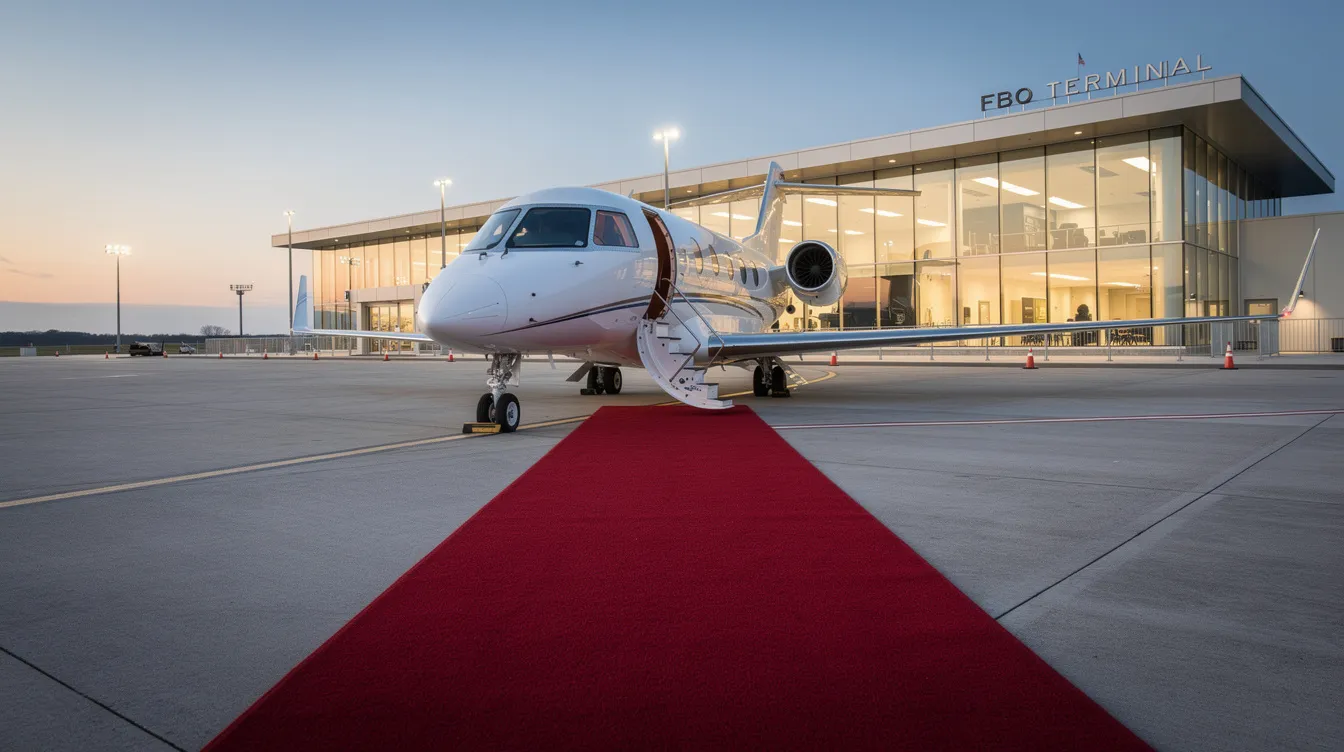
For travelers who fly regional routes across the United States, the aircraft you're assigned can make or break the experience. This guide is for business and leisure travelers considering Delta's Embraer 175 for regional flights, as well as those evaluating private jet alternatives. Choosing the right aircraft can significantly impact comfort, productivity, and travel efficiency on regional routes. The Embraer 175 Delta operates on hundreds of daily departures, and it has quietly earned a reputation as one of the most comfortable regional jets in North American skies. This guide breaks down every detail of the cabin experience, from first-class seats to economy, and examines when flying commercial on the E175 is the right call—and when upgrading to private jet access through a premium private jet card program makes strategic sense.
Overview of the Delta Embraer 175 Experience
Delta operates over 130 Embraer 175s in its regional jet fleet, making it a cornerstone of the airline's domestic network. The aircraft has a typical seating capacity of 70 to 76 passengers across three cabin classes, and it's designed from the ground up for improved passenger comfort. The Embraer 175 typically seats 76 passengers: 12 in First Class (1x2 configuration), 20 in Premium Economy (2x2), and 44 in Economy (2x2). The Embraer 175 has a wider cabin design than older regional jets like the CRJ-200 or CRJ-700, with larger windows, quieter engines, and overhead bins that actually fit standard carry-ons.
The most appreciated feature? The Embraer 175 features no middle seats for passenger comfort, using a 2-2 layout in economy and Comfort+ and a 1-2 configuration in first class. If you've ever been crammed into a CRJ middle seat on a Monday morning commuter flight, the difference is immediately noticeable. Operators like SkyWest Airlines and Republic Airways fly these aircraft under the Delta Connection brand, maintaining Delta-standard interiors and service across the board.
Key takeaways:
12 first-class seats, 20 Comfort+, and up to 44 economy-class seats
No middle seats in any cabin—2-2 throughout economy, 1-2 in first
Quieter ride and larger windows compared to older regional jets
In-flight entertainment varies by frame; wi-fi streaming is the primary model
Complimentary drinks and snacks in first class on most routes
Delta Connection & SkyWest: Who Actually Flies the E175?
When your boarding pass says "Delta," you may actually be flying a partner-operated aircraft. Most Delta Connection Embraer 175 flights are operated by SkyWest Airlines or Republic Airways under contract. The Embraer 175 is compliant with US major-airline pilot union contracts, which is one reason it dominates this segment of the fleet.
Common routes: LAX–SAN (~1 hr), ATL–MSY (~2 hrs), JFK–RDU (~1.5 hrs), MSP–OMA, SLC–BOI
What "Delta Connection" means: Ticketing, branding, and service standards follow Delta Air Lines specifications; the crew and aircraft are provided by the regional partner.
Interior consistency: First class seats, Comfort+ areas, cabin finishes, and service protocols are standardized—so the experience is similar whether SkyWest or Republic is flying
Flight durations: Typically 1–3 hours, feeding major hubs on regional flights
Cabin Layout & Seat Map: Delta Embraer 175 Configurations
The Delta E175 comes in two primary configurations. The V.1 layout seats 76 passengers total: 12 first class, 20 Comfort+ (Premium Economy), and 44 Main Cabin Economy. The V.2 layout reduces economy to 38 seats for a total of 70. The Embraer E175 has 76 seats in total in its most common Delta configuration.
First class: 1x2 seating across four rows—single seats on the A-side, paired seats on the C/D side
Comfort+ and Economy: 2x2 across both sides, eliminating middle seats entirely
Galleys: Front (near first class) and rear (behind economy)
Lavatories: One forward for first class passengers, one or two at the rear for Main Cabin
Exits: Four main exits—two forward near the cockpit, two at the rear
The cabin design of the Embraer 175 allows for a standing height of 6 ft 6 in, making movement through the aisle more comfortable than on many competing regional jets
Use Delta's interactive seat map or third-party tools like SeatGuru to review exact configurations, restricted-recline seats, and exit-row legroom before booking.
First Class Cabin on the Delta E175
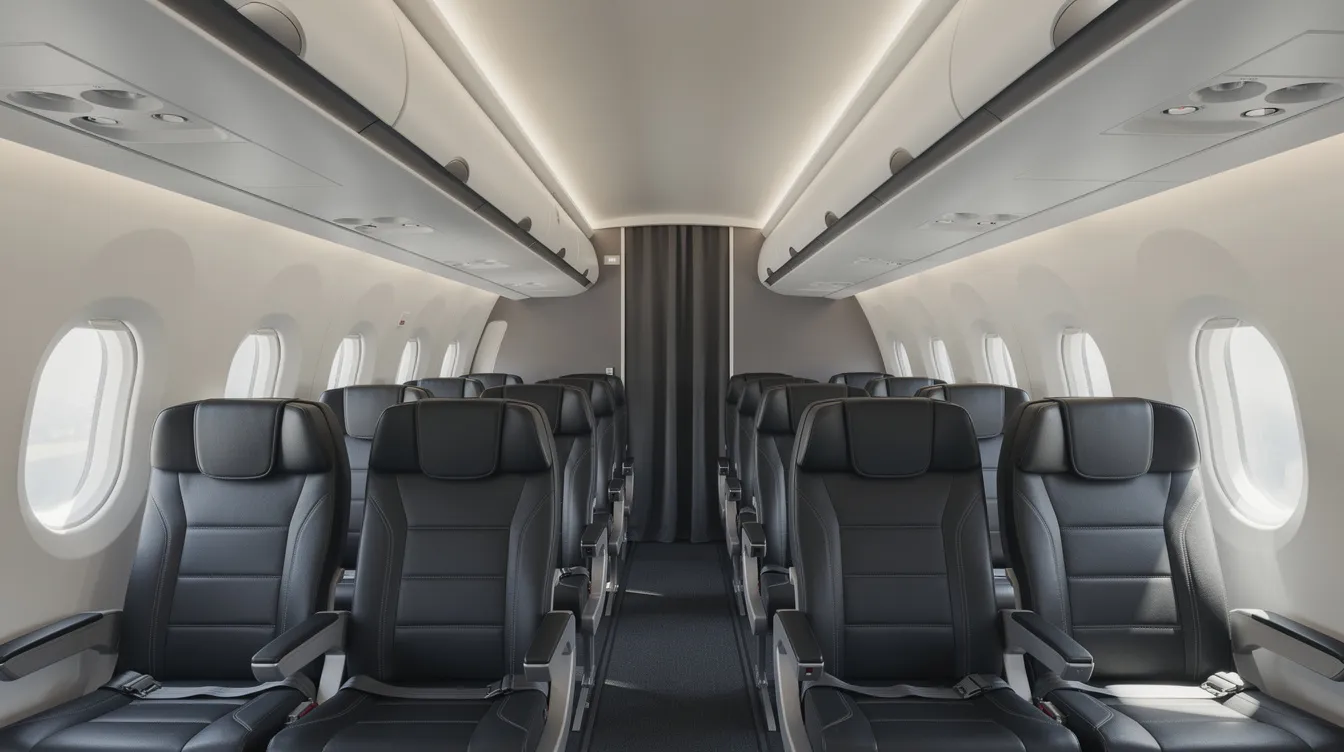
Delta's Embraer E175 first class has 12 seats arranged in a 1x2 seating configuration across four rows. First class on the E175 is described as intimate and sophisticated—closer in feel to a private cabin than the sprawling first class sections on wide-bodies, though obviously more modest in scale.
Seat specs: First class seats have a pitch of 36-37 inches, approximately 20-inch seat width, with adjustable headrests and larger tray tables
Benefits: Earlier boarding, more personal space, complimentary drinks and snacks, and a better crew-to-passenger ratio
Privacy: The single A-side seat is a standout for solo business travelers—no seatmate, more elbow room, and a clear sight line forward
Limitations: Narrow aisle, no lie-flat or suite-style seats, limited storage at bulkhead rows, and limited in-flight entertainment compared to Delta's long-haul fleet
Delta Comfort+ / Premium Economy on the Embraer 175
On E175s, the extra-legroom section is branded Delta Comfort+, though some seat-rating sites label it "Premium Economy." There are 20 Premium Economy seats on the E175, positioned immediately behind first class.
Seat specs: About 34-inch pitch, 18.3-inch width, same 2x2 layout as economy
Perks: Priority boarding group, dedicated overhead bin space, complimentary snacks and alcoholic beverages on many routes
Ideal for: Business day-trippers, frequent flyers on 1- to 3-hour segments, or anyone wondering whether the upcharge is worth it when first class is sold out or priced high
This is the "smart upgrade" for travelers who want more legroom without the full cost of first—a solid middle ground, especially on east coast shuttle routes.
Main Cabin Economy on the Delta Embraer 175
The economy class on the E175 has 44 seats in the standard layout, configured 2x2 with no middle seats. The E175 features a 2x2 seating configuration in economy, which alone sets it apart from many older regional jets.
Seat specs: 30–32-inch pitch, 18.3-inch seat width
Cabin feel: Typically roomier and quieter than the CRJ-200 or CRJ-700, with larger windows and improved overhead bin design
Carry-ons: Most standard 22-inch bags fit in the overhead bins; particularly large roller bags may still be gate-checked on full flights
Best seats: Front of Main Cabin for quick exit, exit rows for extra legroom
Seats to avoid: Last row near the lavatories, seats close to the rear galley where foot traffic and noise are highest
First Class Seats in Detail: Comfort, Storage & Workability
For anyone curious about whether first class on a regional jet is worth it, here's the detail that matters for productivity and comfort:
Recline: Approximately 5 inches of recline; noticeable but not lie-flat
Legroom: 37-inch pitch provides generous leg space, especially in bulkhead Row 1 (though underseat storage is sacrificed there)
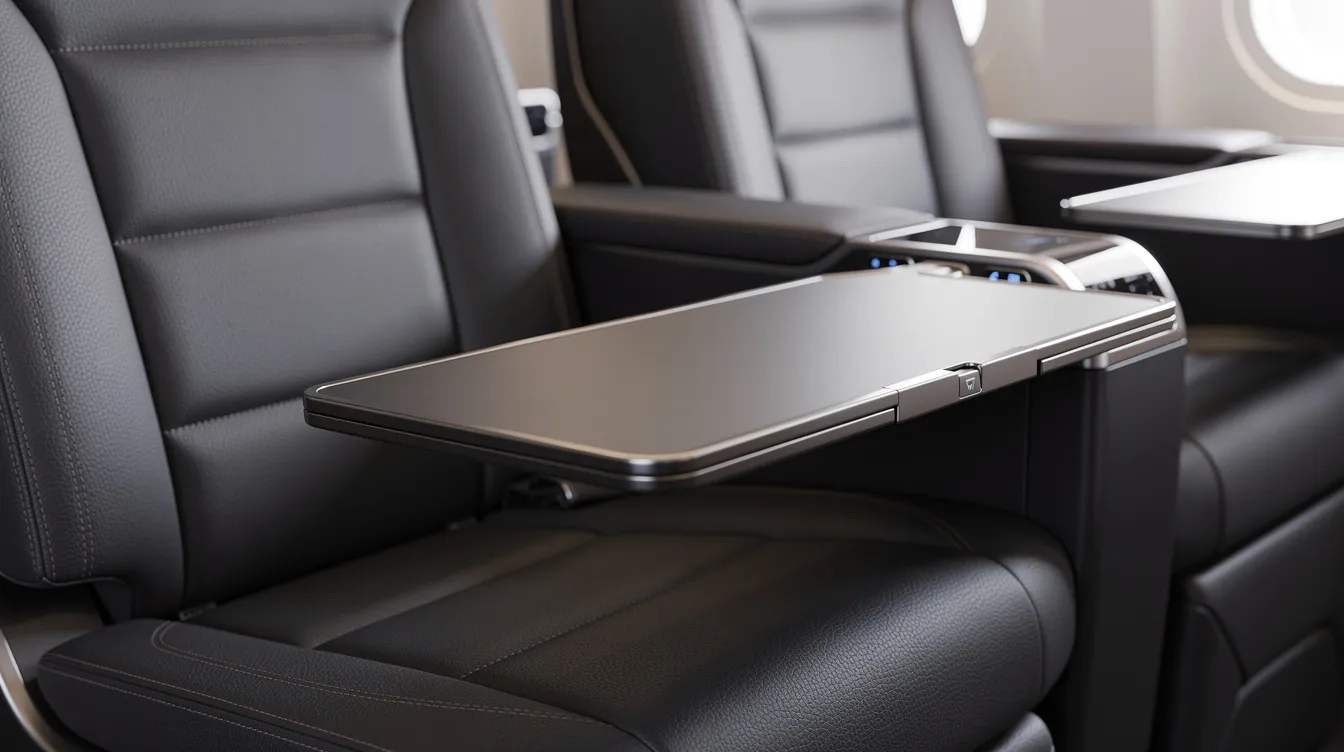
Working: Tray tables are stable enough for a 13–15-inch laptop; the single A-side seat gives you room to spread out without a neighbor.
Storage: A slim briefcase or tote fits at your feet during the cruise; overhead bins on the single-seat side are slightly narrower but generally adequate for a standard bag
Real-world feedback: Some travelers report first class seats on the E175 feel firmer than mainline domestic first; the personalized experience and privacy of the A-side single seats are consistently appreciated
Use case: Picture a first-time business trip—early-morning SAN–LAX hop, 1A seat, laptop open during the brief cruise segment, arriving ready for a 9 a.m. meeting with no wasted time
In Flight Entertainment & Connectivity on the E175
Here's something to be aware of before boarding: in-flight entertainment is not available on many Delta E175 frames in the traditional seatback-screen sense. However, Delta's Embraer 175 features personal video screens for entertainment on select newer or retrofitted aircraft, and the aircraft has satellite TV available for passengers on those equipped frames.
The primary model is streaming via wi-fi: access Delta Studio content on personal devices, with free messaging (iMessage, WhatsApp) where available
Wi-fi performance varies on short regional legs—some routes are too brief for meaningful streaming or VPN work sessions
Practical tips: Download video content or presentations before boarding; carry noise-cancelling headphones; check the specific flight's amenities in the Delta app before you book
On a private jet, by comparison, connectivity is always-on, and the cabin can be tailored to serve as a flying boardroom—a point of comparison worth keeping in mind for travelers who need guaranteed productivity.
Onboard Service: Food, Drinks & Short-Haul Realities
Passengers receive basic drinks and snacks on most routes when flying first class or Comfort+ on the E175. But here's the fun reality of short-haul service: on segments like SAN–LAX (roughly 23 minutes in the air), Delta often cannot complete even a single beverage run, let alone serve a meal.
Sub-1-hour flights: Expect bottled water at boarding and possibly nothing else; service is simply too short
1.5–3-hour flights: First class typically gets a complete snack and drink service; Comfort+ receives a condensed version; economy gets complimentary non-alcoholic beverages
Hot meals: Generally not offered on domestic E175 routes, even in first class—plan to eat in the terminal or lounge beforehand
If you're flying at 6 a.m. Monday departure out of ATL, don't expect a full breakfast spread; a protein bar in your bag is the glad difference between comfort and hunger.
Noise, Ride Quality & Overall Comfort
The Embraer 175 is powered by two General Electric CF34-8E turbofan engines, and it's designed to minimize noise and emissions relative to previous-generation regional jets. The E175 is often preferred for its cabin comfort compared to older regional jets, and for good reason.
Modern sound insulation, updated cabin pressure systems, and the wider fuselage create a smooth, less fatiguing ride—even across multiple legs in a single day.
The impact of seat width (18+ inches in economy, ~20 inches in first) and no middle seats cannot be overstated for perceived comfort.
Best seats for quiet: Rows forward of the wing, away from lavatories and galleys
Compared to a private jet cabin, the E175 is remarkably quiet for its class, though private aviation still offers customization of lighting, temperature, and seating that commercial simply cannot match.
Luggage, Overhead Bins & Gate Check Policies
Unlike earlier regional jets, Delta's E175 can accommodate most standard 22-inch carry-ons in the overhead bins without gate checking
When bins are full, large roller bags are gate-checked; pick-up is either at the jet bridge or baggage claim, depending on your home airport
Smart packing for same-day turns: Bring a slim roller plus a briefcase or tote that fits under the seat; keep essentials accessible to avoid delays at baggage claim
On private jets, luggage rarely needs to be gate-checked and can remain accessible in certain cabin configurations—no line, no wait, no lost bag anxiety
Embraer 175 vs CRJ-700/900 vs Mainline Narrowbodies
A quick comparison for travelers who want to know how the E175 stacks up:
Feature | Embraer 175 | CRJ-700/900 | A320 / 737-800 |
|---|
Seat width (Economy) | ~18.3 in | ~17 in | ~17.5–18 in |
Pitch (Economy) | 30–32 in | 29–31 in | 30–32 in |
Middle Seats | None | Yes (CRJ-900) | Yes |
Overhead Bins | Standard carry-on | Tight fit | Full size |
Cabin Noise | Low | Moderate-High | Low-Moderate |
Frequent flyers consistently prefer the E175 over the CRJ series on regional routes for its wider cabin, quieter ride, and modern interior. Mainline aircraft still win on in-flight entertainment, premium seating options, and wi-fi systems—but on a 90-minute spoke into ATL, the E175 is a fantastic choice.
Safety, Reliability & Fleet Age
The Embraer 175 has an excellent safety record in U.S. operations and is subject to the same FAA regulations and maintenance standards as larger jets. The aircraft utilizes a fly-by-wire flight control system, giving pilots precise, modern flight controls.
Delta's E175 long-wing fleet averages approximately 4 years of age, with the oldest frames around 7 years—among the youngest in regional aviation.
Dual engines, modern avionics, and strict maintenance cycles protect passengers on every flight.
BlackJet applies its own proprietary safety vetting and third-party audits to every operator in its network, meeting or exceeding commercial standards for private jet travel.
Weather & Operational Performance: Where the E175 Excels
Whether it's June Gloom departures out of San Diego or cloudy sea-level arrivals into LAX, the E175 handles low-ceiling coastal operations routinely. The E175 can operate from shorter runways for regional service, making it ideal for secondary airports.
The Embraer 175 has a cruising speed of 545 mph and a maximum range of approximately 1,800 miles—more than enough for coast-to-coast regionals.
As a regional jet optimized for 1–3-hour sectors, the E175 spends proportionally more time climbing and descending, which limits cruise-phase service or streaming but keeps total flight length efficient.
For BlackJet members, private jets can sometimes access alternate airports or flexible departure windows to further minimize weather-related delays.
Typical Routes & Use Cases for Business Travelers
The Embraer 175 has a maximum range of approximately 1,800 miles, covering virtually any regional spoke in Delta's network. Common business-heavy routes include SAT–ATL, RDU–JFK, MCI–MSP, SLC–BOI, and West Coast shuttles like SAN–LAX and SFO–LAX.
Scenario: A corporate traveler boards an E175 in first class at 6:30 a.m. from RDU to JFK for a 10 a.m. meeting. She works from seat 2A during the 90-minute flight, reviews a presentation on her tablet, and arrives at the gate by 8:15 a.m. with time to spare. The complete round-trip costs under $800 in first class.
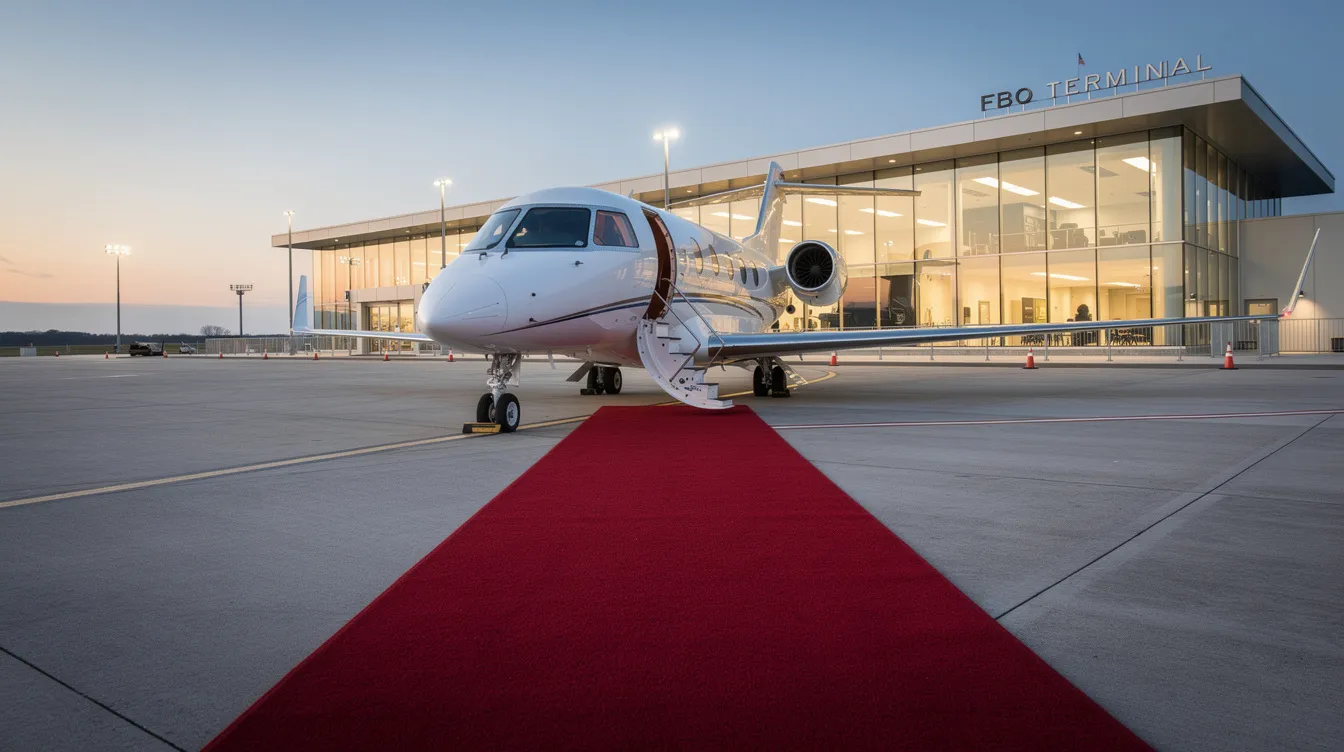
The BlackJet alternative: The same traveler books a light jet through her 25-hour Jet Card within the BlackJet 25+ Hour Jet Card program. She arrives at the FBO 15 minutes before departure, skips security lines, and lands at Teterboro—closer to her Manhattan meeting point. Door-to-door, she saves roughly 2.5 hours each way. The cost is higher per trip, but the ability to control her schedule and connect multiple cities in one day (RDU–TEB–PHL–RDU) makes it strategically superior for high-stakes days.
Comparing Delta First Class vs Private Jet Travel
This isn't an either/or decision for most frequent travelers—it's about knowing when each option serves you best.
Boarding time: Delta first class requires arriving 60–90 minutes early; private jet passengers typically arrive 15–30 minutes before departure
Schedule control: Commercial flights operate on fixed schedules; Jet Card holders choose their departure time
Privacy: E175 first class is intimate but shared; a private jet cabin is yours alone—ideal for confidential calls or deal-team briefings
Cost: First class is cheaper per seat; private becomes competitive when split among 4–8 people or when the value of hours saved justifies the per-hour cost, as explained in our guide to jet card cost per hour
Multi-city days: Connecting LA–San Diego–Phoenix–Vegas in a single day is impractical on fixed airline schedules but routine with a Jet Card, especially when you choose from the best jet cards for frequent flyers
What Is a Jet Card & How It Differs from Airline Loyalty
A Jet Card is prepaid hours on private jets—typically in 25-hour or 50-hour blocks—offering guaranteed availability, fixed hourly rates, and consistent service across multiple aircraft categories, as outlined in our broader guide to jet card costs and benefits.
Airline loyalty comparison: Delta status earns you a spot on the upgrade list, but upgrades on E175 first class are never guaranteed; Jet Card holders are guaranteed a specific cabin class and aircraft type, with predictable budgets informed by a clear private jet price list overview
BlackJet's model: Multiple cabin categories (light, midsize, super-midsize), 24/7 digital booking, real-time human support, and carbon-neutral flights by default, with transparent jet card pricing structures across aircraft types
A Jet Card is particularly powerful for frequent regional flyers who might otherwise stand in line for E175 shuttles every week—it's the sign of a traveler who values time as much as comfort.
Technology & Booking: Delta App vs BlackJet Platform
Delta's app does many things well for E175 travelers: real-time gate information, seat map selection, upgrade lists, mobile boarding passes, and display of aircraft-specific amenities.
BlackJet's digital platform goes further: instant pricing, aircraft selection, trip management, ground transport coordination, and catering preferences—all backed by 24/7 aviation specialists and complemented by guidance on how to buy a seat on a private jet.
The key difference is end-to-end orchestration: BlackJet doesn't just book a flight; it manages the complete journey from driveway to destination, including last-minute schedule shifts and even coordinating private plane rideshare options when appropriate.
For the traveler who values speed and efficiency in booking, both platforms deliver—but BlackJet's tools are built for travelers who expect the plane to work around their schedule, not the other way around.
Sustainability & Carbon Footprint Considerations
The Embraer 175 has enhanced wingtip modifications that improve fuel efficiency by over 6%, making it one of the more efficient regional jets in operation. Delta has public commitments to sustainability, including SAF initiatives and carbon offset programs.
Private jets emit more per seat than commercial aircraft, but BlackJet ensures every flight is carbon neutral via verified offsets, at no extra cost to members, while also highlighting the cheapest private jet options for travelers balancing budget and sustainability.
Multi-city Jet Card itineraries can reduce total ground transport emissions by landing closer to final destinations.
Nuanced point: per-seat emissions are higher on private, but optimized routing plus mandatory offsets can make the overall environmental picture more balanced than raw numbers suggest
Seat Selection Strategy: Best Seats in Each Cabin
First class: 1A or 2A for solo privacy on the single seats side; avoid 4C/4D near the curtain if you hear galley noise as a distraction
Comfort+: Front row of the section for legroom; exit rows where available; avoid seats adjacent to lavatories; larger groups may instead consider 16-seat private jet options when everyone needs to travel together
Economy: Front of Main Cabin for quick exit; window seats slightly ahead of the wing for reduced engine noise and better images of the landscape below, while very large parties might compare private jets for 20 passengers as an alternative
How to read Delta's seat map: Look for icons marking preferred seats, restricted recline, and limited legroom; cross-reference with independent seat rating tools like SeatGuru for a second opinion.
Wi-Fi Quality, Power Outlets & Working In-Flight
Delta's Embraer 175 offers wi-fi for passengers, though quality falls along a spectrum from basic messaging to browsing to full streaming depending on the equipment installed. Passengers can access USB in-seat power on Delta's Embraer 175, though AC outlets are less uniformly available.
Productivity tips: Prepare offline documents before boarding; use the climb and cruise segment for focused 25–40 minute work sprints; carry a power bank as backup
Messaging: Free messaging apps (iMessage, WhatsApp) are often available even when full wi-fi requires purchase, though teams traveling 30–50 strong may be better served by private jets for up to 50 passengers to stay together and connected
On a private jet, power, connectivity, and cabin layout can be tailored to create a flying boardroom—conference tables, individual lighting, and guaranteed high-speed fi connectivity that makes even a 45-minute flight productive
Accessibility & Special Needs on the E175
Priority boarding: Available for passengers needing extra time or assistance
Service animals: Bulkhead areas can accommodate service animals more comfortably; advance notice is recommended
Limitations: The E175's aisle is narrow, lavatories are small, and large mobility devices may not fit inside the cabin; airline staff provide aisle chairs and assistance where possible
Private jet advantage: The ability to pre-brief operators about medical equipment, service animals, or special boarding needs allows for a more tailored, stress-free experience, backed by rigorous standards explained in our guide on private jet safety realities
Model Aircraft & Enthusiast Angle: Delta Connection E175 Collectibles
For those with a passion for aviation history, the Delta Connection Embraer 175 has become a popular subject for scale model collectors. Custom hand-crafted mahogany display models replicate fuselage details, tail numbers, and livery with impressive accuracy.
Production timelines run around 8–10 weeks for personalized pieces, and some hand-crafted mahogany models begin from a solid wood block before carving and finishing, with options for custom stand inscriptions and squadron plaques.
These collectibles make fantastic gifts for pilots, aviation friends, or anyone who appreciates the heritage of modern regional aviation or who is just starting to explore the cheapest private aircraft options for personal flying.
The E175's status as a workhorse aircraft—over 130 in Delta's fleet alone—gives it an iconic point in regional aviation that collectors are glad to preserve in pictures and physical models.
FAQ: Common Questions About the Delta Embraer 175
Is the Embraer 175 comfortable for tall passengers?
Yes. First class offers a 37-inch pitch, and the cabin allows a standing height of 6 ft 6 in. Tall travelers (6'2"–6'5") will find first class generous; economy is tighter, but the 2-2 layout and lack of middle seats help considerably.
Does the Delta E175 have first-class seats on all routes?
Most E175-operated flights include 12 first-class seats. Exceptions are rare, but always confirm via the seat map when booking.
Is there in-flight entertainment on the E175?
Traditional seatback screens are not universal. Most E175s rely on Delta Studio streaming to personal devices via onboard wi-fi. Select newer frames have personal video screens and satellite TV.
Will my carry-on fit in the overhead bin?
Standard 22-inch rollers typically fit. On full flights, oversized bags may be gate-checked. A slim bag that fits under the seat in the upright position is your safest bet.
Delta E175 first class vs private jet charter?
First class offers premium seating at a per-seat price with a fixed schedule. Private jets provide total schedule control, privacy, FBO terminals, and access to airports Delta doesn't serve—at a higher cost that becomes competitive for groups of 4–8. The comparison ultimately comes down to how much your time is worth.
When to Choose Delta's E175 – and When to Upgrade to BlackJet
The Delta Embraer 175 is a genuinely comfortable aircraft for regional flying. For predictable hub-and-spoke commuting, leisure trips under three hours, and situations where cost matters more than time, it's an excellent choice. The model delivers a cabin experience that past generations of regional jets simply couldn't match.
Stick with Delta E175: Regular commuter routes, known schedules, when Comfort+ or first class is available, and priced fairly.
Upgrade to BlackJet: Multi-stop days, tight deal timelines, trips to airports not served by Delta Connection, travel requiring strict privacy, or when you need to protect every hour in a high-stakes day.
Many BlackJet members still fly commercial first class for routine trips—but rely on Jet Cards to unlock schedule control and higher productivity when it matters most.
How to Get Started with BlackJet Jet Cards
Step 1: Initial consultation to review your travel patterns and frequency
Step 2: Choose a Jet Card tier—25-hour, 50-hour, or higher—based on your expected usage
Step 3: Select preferred cabin categories (light, midsize, super-midsize, or large cabin)
Step 4: Complete onboarding, including safety documentation and preference setup (catering, ground transport, sustainability options)
Every BlackJet flight is carbon neutral by default. Every operator is BlackJet Certified. And every member has access to 24/7 aviation specialists who manage the details so you don't have to, including support on maximizing jet card tax deductions.
Explore private jet access for your next regional trip—and discover how a Jet Card can complement your regular Delta schedule, whether you're evaluating a 100-hour jet card cost breakdown, comparing Flexjet jet card pricing, or reviewing NetJets jet card costs.


 Sign up with google
 Sign up with Apple