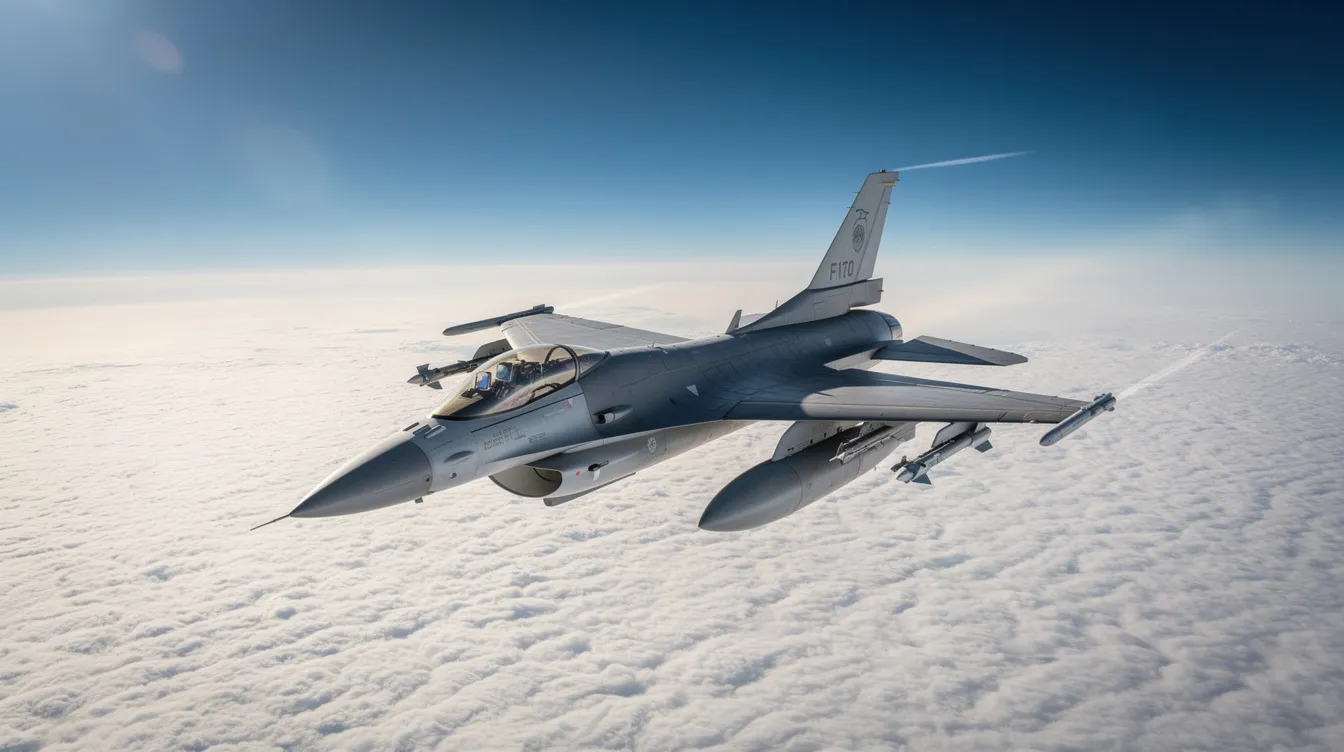
The F-16 Fighting Falcon has a top speed of Mach 2—about 2,414 km/h or 1,500 mph at high altitude under ideal conditions—but that headline figure only tells part of the story. Flown by more than 25 nations, battle-tested across four decades, and continuously upgraded, the F-16 remains one of the most significant fighter aircraft ever built.
For aviation enthusiasts, defense analysts, and private jet travelers or high-net-worth readers comparing aircraft performance at different ends of aviation, this guide explains what shapes the F-16’s real-world speed, how it stacks up against other fighters, and how flight-control technology and combat operating conditions affect what “top speed” actually means. It also connects those lessons to private aviation, where speed, efficiency, service models such as BlackJet’s Jet Card offerings, and sustainable flying matter more than a single maximum-speed number.
F-16 Top Speed at a Glance
The F-16 Fighting Falcon's maximum speed matters because it defines the outer edge of what this fighter can do when chasing or fleeing enemy aircraft, and it provides a useful benchmark against other aircraft in the fourth-generation class. Here is the essential picture:
The F-16 has a top speed of Mach 2, which translates to approximately 2,414 km/h (roughly 1,500 mph) at high altitude under ideal conditions.
The airplane was originally a General Dynamics design-now maintained by Lockheed Martin Corp-optimized for energy maneuverability rather than pure straight-line speed, setting it apart from dedicated interceptors.
For quick context: a commercial airliner cruises at about Mach 0.78–0.85, around 880–926 km/h. The F-16's max speed is more than double that figure.
While many F-16 variants can technically reach Mach 2 in a clean configuration, operational missions in air combat rarely demand sustained flight at absolute maximum speed. Fuel burn, structural loads, and tactical priorities keep most sorties well below that ceiling.
The F-16 Fighting Falcon is designed as a highly maneuverable multirole fighter, meaning its speed is just one dimension of a broader performance envelope that includes agility, sensor capability, and weapons delivery.
What Determines the F-16's Maximum Speed?
"Top speed" is not a single fixed number stamped on an aircraft's specification sheet. It shifts depending on altitude, engine variant, atmospheric conditions, and what the airplane is carrying on any given sortie.
At high altitude, the air is thinner. Less air density means less aerodynamic drag, which allows the F-16 to reach higher true airspeed and Mach numbers. Most quoted Mach 2 figures assume flight above 40,000–50,000 feet.
The performance of an F-16 is affected by external stores and flight conditions. Missiles, bombs, targeting pods, and external fuel tanks all introduce parasitic drag and additional weight, preventing a fully loaded fighter from matching its clean-configuration speed.
Weight affects how quickly the F-16 accelerates and maneuvers. A lighter airframe responds faster to throttle inputs and reaches supersonic speeds sooner; a heavier one requires more thrust just to maintain the same energy state.
Engine type plays a direct role. Early F-16s flew with one Pratt & Whitney F100-PW-200 turbofan; later blocks use the General Electric F110 or improved Pratt & Whitney variants, each with different afterburner thrust ratings that affect acceleration and climb.
F-16 performance depends on weight, altitude, engine thrust, and aerodynamic drag—all interacting simultaneously. The aircraft's maximum speed is influenced by thrust and aerodynamic drag in a continuous balance.
Understanding the difference between indicated airspeed, true airspeed, and Mach number is essential. Indicated airspeed reflects dynamic pressure on the cockpit instruments; true airspeed corrects for altitude and temperature; Mach number compares speed to the local speed of sound, which itself changes with temperature and altitude.
F-16A Top Speed and Early Variants
The F-16A was the first aircraft in the Fighting Falcon lineage, born out of the Lightweight Fighter program of the early 1970s. It prioritized air-to-air agility, low cost, and high thrust-to-weight ratio over heavy avionics or large payloads.
The F-16 entered USAF operational service on 1 October 1980, and the F-16A quickly established its performance credentials. Typical figures for this single-seat model cite a maximum speed around Mach 2.0 at altitude—approximately 2,100–2,400 km/h (1,300–1,500 mph) — with a service ceiling near 50,000 feet.
Early F-16A variants ran on one Pratt & Whitney F100-PW-200 engine producing roughly 23,770 lbf in full afterburner. That thrust level delivered strong acceleration and climb rate, though it didn't dramatically push the airframe's speed ceiling beyond Mach 2 because structural and thermal limits set the boundary.
The F-16A's relatively low weight and clean aerodynamics helped it hit those high speed marks more consistently in testing and air combat training. With fewer heavy avionics boxes and less external equipment, the early airframe had less drag to overcome.
The F-16A's top speed numbers were a key selling point for NATO partners evaluating the fighter in the late 1970s and early 1980s, particularly against Soviet-era threats like the MiG-21 and MiG-23. Compared to later C/D variants, the F-16A carried less but flew lighter-an advantage in pure kinematic performance.
Modern F-16C/D and F-16V: Has Top Speed Changed?
Modern F-16C/D Block 50/52 and the F-16V "Viper" carry substantially more avionics, sensors, and payload capacity than the original F-16A, yet they share broadly similar maximum speed figures.
Official max speed remains around Mach 2 at altitude, but the F-16's top speed is not achievable under typical combat load. Heavier stores, advanced targeting pods, and AESA radar housings add drag that keeps real-world operational speeds lower.
The F-16 family includes different models with varying performance specifications. Block 50/52 aircraft equipped with the F110-GE-129 engine produce approximately 28,000–29,000 lbf in afterburner-substantially more than early F100 variants—but structural and temperature limits cap the safe speed envelope at roughly the same Mach 2 ceiling.
Upgrades such as AESA radar, advanced electronic warfare suites, and helmet-mounted sights enhance combat effectiveness dramatically without significantly increasing absolute top speed. For modern fighters, the ability to detect, track, and engage threats at distance has overtaken raw velocity as the defining advantage.
For these later Fighting Falcon variants, sustained turn rate, climb rate, and sensor fusion matter more in daily operations than squeezing out a few extra knots of top speed. The Viper designation reflects this evolved identity: a mature, highly capable multirole platform.
F-16 in Air Combat: Why Top Speed Isn't Everything
There is a meaningful gap between an aircraft's published maximum speed and its combat effectiveness in actual air combat scenarios. Most engagements unfold at speeds far below Mach 2, and the pilot who manages energy best-not the one who flies fastest in a straight line-tends to win.
Most air-to-air engagements occur at subsonic or transonic speeds, where energy maneuverability and instantaneous turn rate determine outcomes. Turning hard can produce drag and bleed speed in a dogfight, so pilots constantly trade altitude for velocity and vice versa.
The F-16's design emphasizes a high thrust-to-weight ratio and low drag, enabling it to rapidly accelerate, climb, and regain energy after aggressive maneuvers. This is why the aircraft remains competitive against newer platforms.
Situational awareness, radar performance, and air-to-air missiles like the AIM-9 Sidewinder and AIM-120 AMRAAM allow beyond-visual-range engagements where tactical positioning outweighs raw speed. The F-16 can carry a wide variety of air-to-air missiles, giving pilots flexible engagement options. It can deliver weapons with superior accuracy in all weather.
The F-16 has proven itself across multiple conflicts. Israeli F-16s achieved their first air-to-air kill on 28 April 1981, establishing the platform's credibility early. F-16s participated in Operation Desert Storm in 1991, where they flew extensive air-to-ground missions and precision strike sorties against Iraqi infrastructure. The F-16 was involved in the War in Afghanistan starting in 2001, performing both night attack and close air support roles. F-16s were used in the 2006 Lebanon War by the Israeli Air Force for air to surface attack missions. More recently, F-16s shot down a Syrian UAV during the 2026 Iran war, demonstrating enduring relevance across decades of air combat.
In none of these conflicts did pilots routinely need to sustain Mach 2 dashes. The F-16 excelled because its engineers balanced speed and agility, not because it was the fastest plane in the sky.
Fly-by-Wire Controls and Relaxed Stability: Speed with Control
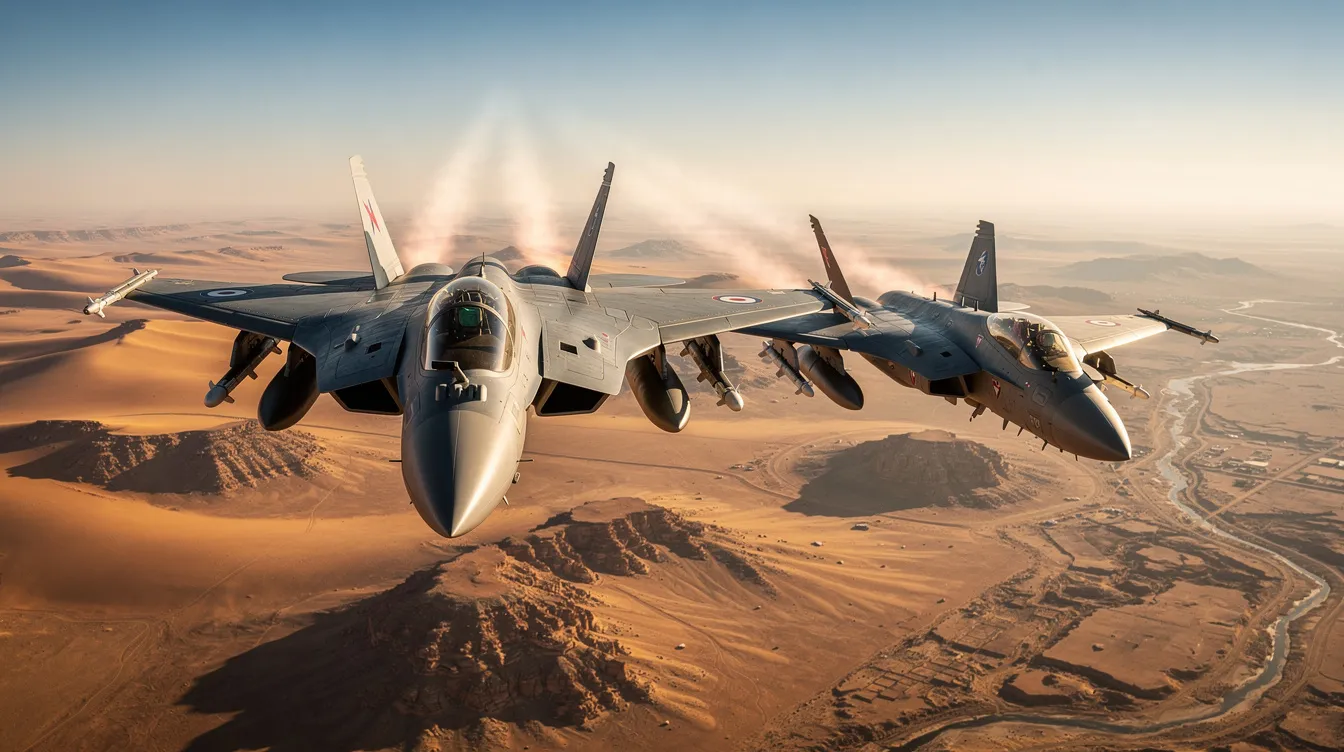
The F-16 was the first aircraft in production to combine relaxed static stability with a fully fly-by-wire flight control system-a pairing that fundamentally changed how fighter aircraft are designed and flown.
Relaxed stability means the airframe is intentionally designed to be slightly aerodynamically unstable in pitch. This reduces trim drag, enabling higher efficiency at both subsonic and supersonic speeds, indirectly supporting a higher useful top speed.
The F-16 features a fly-by-wire control system where the pilot's inputs through the side stick controller are converted into electrical signals, which a quadruplex (four-channel redundant) computer then translates into commands for the flight control surfaces. Without this system, the aircraft would be unflyable.
The fly-by-wire system constantly adjusts control surfaces in real time, allowing safe and stable flight even near the edges of the speed and angle-of-attack envelope. It provides excellent flight control across the entire performance spectrum.
Built-in flight control limiters prevent pilots from exceeding structural boundaries. The F-16 can withstand up to nine G's of force, and the system enforces that limit automatically. Even during aggressive air combat maneuvers at high speed, the fly-by-wire system protects the airframe from dangerous overloads.
The F-16 can pull 9-G turns under light load, a capability directly enabled by the fly-by-wire system's precision. While fly-by-wire does not magically increase maximum Mach number, it allows the airplane to approach high speeds safely and recover quickly from aggressive maneuvers-a critical distinction.
The system also features an instrument landing system integration and angle-of-attack limiters that help both the instructor pilot and student pilot operate safely in the rear cockpit of two-seat variants during training sorties.
Engines Behind the Speed: Powering the F-16
The F-16's speed comes from two main engine families: the Pratt & Whitney F100 series and the General Electric F110 series turbofans. Each has evolved through multiple variants over the aircraft's production life.
Early F-16A/B blocks used the F100-PW-200, producing approximately 23,770 lbf in full afterburner. Later improved performance engines—the F100-PW-229 and F110-GE-129—deliver roughly 28,000–29,000 lbf, a substantial increase that benefits acceleration and climb more than it raises the headline max speed.
Afterburner works by injecting fuel directly into the exhaust stream downstream of the turbine, creating additional combustion that dramatically increases thrust. This is how the F-16 reaches supersonic speeds, but the fuel consumption penalty is severe—several times higher than military power settings.
The F-16 can achieve Mach 1 in level flight within a minute when launching from a standing start with full afterburner, a testament to the engine's raw acceleration capability. Few other aircraft in its class match that transonic punch.
Operationally, pilots manage engine use carefully. Full afterburner is reserved for takeoff, intercepts, and short high-speed segments. Cruise portions of a sortie use military power or below, preserving fuel and reducing thermal stress on the engine and airframe.
Altitude, Drag, and the F-16's Speed Envelope
The F-16's quoted top speed figures—Mach 2 and above-are valid at high altitude, typically above 40,000 feet, where air density is low enough that aerodynamic drag drops substantially.
At low altitude near sea level, dense air dramatically increases drag. Even in a clean configuration, true airspeed will be hundreds of mph lower than at altitude. Clean setups without extra gear allow the F-16 to fly the fastest, but even clean low-level performance is constrained by atmospheric density.
External fuel tanks and bombs add weight and aerodynamic drag to the F-16, reducing both maximum speed and fuel efficiency. A combat-loaded jet with wing-mounted stores and modular countermeasure pods experiences noticeably more parasitic and interference drag.
The concept of "clean" versus "loaded" configuration explains why test data often quotes performance numbers that combat pilots rarely see in practice. Most published F-16 variant specifications assume a clean jet at optimal altitude.
The aircraft has a maximum take-off weight of 16,875 kilograms, and when loaded near that ceiling, performance across the board—speed, climb, turn rate—degrades measurably.
Mission planners trade speed against fuel burn and range, especially on long strike or escort missions. A high-speed ingress might save minutes but cost hundreds of pounds of internal fuel, shortening loiter time over the target area.
F-16 vs Other Fighters: Top Speed Comparisons
Many fourth-generation fighters cluster in similar Mach 2–2.5 maximum speed ranges, but the differences reveal distinct design philosophies.
The F-15E Strike Eagle has a top speed around Mach 2.5, making it notably faster than the F-16 in a straight line. However, the F-15's twin engines, larger airframe, and higher operating cost make it a different category of investment for any air force.
The F/A-18 Super Hornet maxes out near Mach 1.6 to 1.8, slower than the F-16, reflecting its carrier-based design priorities of low-speed handling and structural strength for catapult launches and arrested landings aboard an aircraft carrier.
The F-22 Raptor reaches an unclassified top speed of Mach 2.25 with supercruise capability, while the F-35 Lightning II has a top speed of Mach 1.6-prioritizing stealth and sensor fusion over raw velocity.
The A-10 Thunderbolt II is a subsonic aircraft with a top speed of Mach 0.57, purpose-built for close air support rather than speed. It serves as a reminder that max speed means nothing if the mission demands low-altitude loiter and heavy firepower.
European contemporaries such as the Mirage 2000 (approximately Mach 2) and the Eurofighter Typhoon (Mach 2.0–2.2) sit in similar performance bands. The F-16 is comparable to most fighters in this class.
For NATO and allied air forces-including the Netherlands, Norway, Denmark, and others-the F-16's blend of speed, agility, multirole capability, and relatively low cost outweighed having the absolute fastest airframe. Countries chose the F-16 because it did everything well, not because it did one thing best.
From Lightweight Fighter to Multirole Workhorse
The story begins in the early 1970s, when the US Air Force launched the Lightweight Fighter program to develop a low-cost, high-performance complement to the more expensive F-15. The General Dynamics YF-16 won the flyoff against the Northrop YF-17 and entered development as a production fighter.
The initial emphasis on air-to-air superiority and energy maneuverability shaped the F-16's slim fuselage-about 15 meters in length with a wingspan of about 9.8 meters-and its high top speed. Every design choice prioritized thrust-to-weight ratio and minimal drag.
During the Air Combat Fighter competition, the requirement expanded from pure air-to-air to multirole capability, including air-to-ground missile delivery and precision strike. This shift defined the aircraft's trajectory for decades: a plane that could fly and fight in any role.
The Multinational Staged Improvement Program (MSIP) introduced successive upgrades to avionics, structural and wiring provisions, and systems architecture without fundamentally changing basic speed performance. Each improvement program added capability-better radar, expanded weapons carriage, updated display technology-while preserving the core airframe's speed and agility.
Built-in structural provisions for future upgrades were designed into the airframe from early blocks, enabling wiring provisions and structural modifications that extended the fighter's relevance well into the 2020s. Final assembly lines operated across multiple countries, reflecting the aircraft's global reach.
Even as avionics and weapons evolved, the core design for high-energy maneuvering remained central to the F-16's air combat value. It was the first aircraft to prove that a smaller, lighter plane concept could compete with-and often outperform-larger, more expensive alternatives.
Cockpit, Ergonomics, and High-Speed Flight
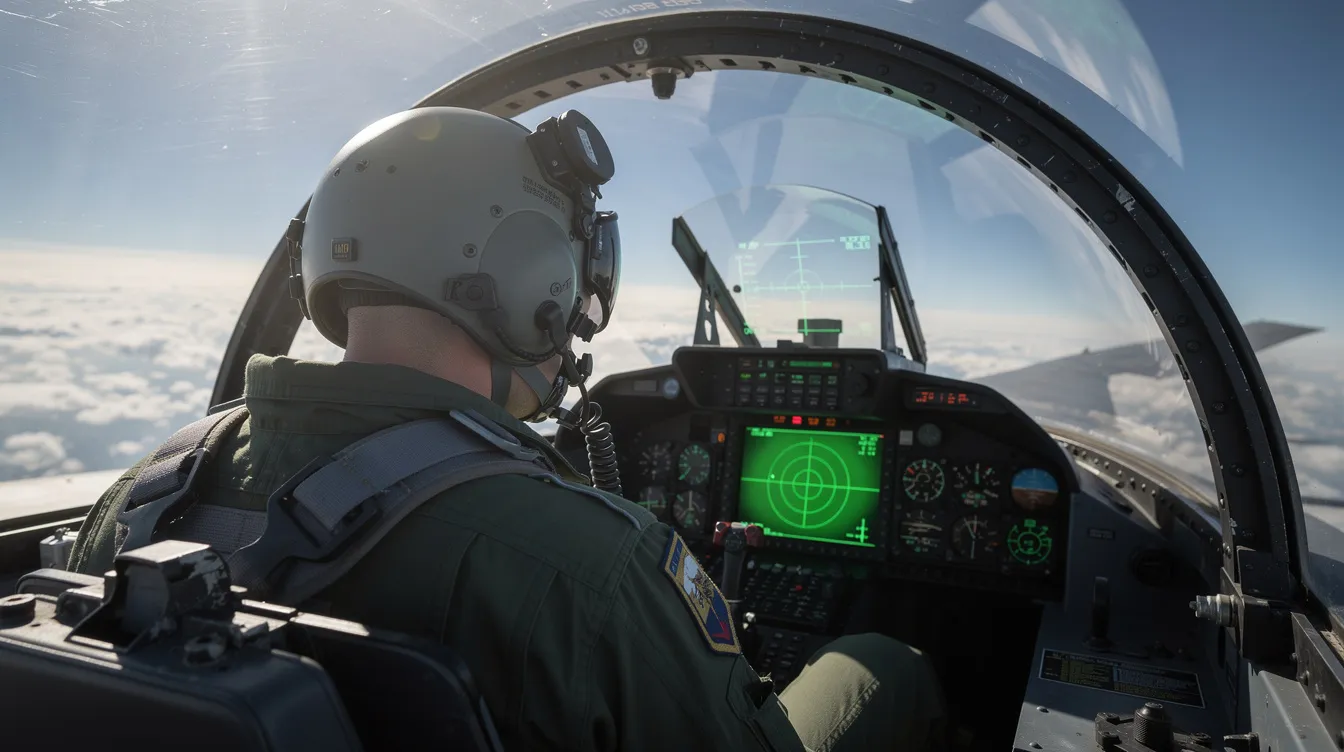
The F-16's frameless bubble canopy provides unmatched 360-degree visibility, critical when tracking other aircraft during high-speed engagements. The pilot's seat is reclined at approximately 30 degrees, increasing g-force tolerance and reducing fatigue during sustained high-g maneuvers.
The side stick controller, positioned on the right console rather than between the pilot's knees, responds to hand pressure rather than large deflections. Combined with the Ha OTAS (Hands-On Throttle-And-Stick) layout, this lets the pilot manage flight, weapons, and sensors without looking down—essential at supersonic speeds where reaction time is compressed.
Early F-16 cockpits featured analog instruments and basic radar displays. Modern variants offer the latest cockpit control technology: glass-cockpit multi-function displays, advanced head-up displays, and helmet-mounted cueing systems that overlay targeting data directly in the pilot's field of vision.
The F-16 has a combat radius exceeding 500 miles, and better ergonomics and information display allow pilots to exploit the aircraft's speed and range safely in both air combat and low-level strike roles. The rear cockpit in two-seat models provides the instructor pilot or weapons systems officer with dedicated controls and displays.
High speed alone is useless without a cockpit that lets the pilot control the aircraft precisely. The F-16's ergonomic design ensures that speed translates into tactical advantage rather than overwhelming the human in the seat.
Range, Fuel, and the Cost of Flying Fast
Flying near top speed-especially at supersonic speeds with afterburner—dramatically increases fuel burn. Specific fuel consumption in afterburner can be several times higher than at military power, slashing combat radius and loiter time in a single sortie.
External fuel tanks extend range but also increase drag and weight, slightly reducing maximum speed and climb performance. Pilots often jettison tanks before entering high-threat areas to restore the airplane's clean-configuration agility.
Typical F-16 combat radius figures vary by variant, payload, and mission profile, but the aircraft consistently delivers range on the order of several hundred nautical miles with a meaningful weapons load. The US Air Force cites a ferry range exceeding 2,000 miles in clean ferry configuration.
High-speed dashes are reserved for specific mission segments: ingress to target areas during a precision strike, egress from high-threat zones, or quick intercepts directed by the Air National Guard or theater command. The rest of the sortie is flown at fuel-efficient speeds.
Mission planners constantly balance speed against endurance. A pilot who arrives at the target fast but has no fuel to return has gained nothing.
Safety, Flight Limits, and Structural Considerations
Published maximum speed is bounded by structural and temperature limits engineered into the airframe to keep both the pilot and the aircraft safe across thousands of flight hours.
The F-16 is designed for 9-g maneuvers and roughly 8,000 structural flight hours. The F-16 can withstand up to nine G's, but staying within prescribed speed and load envelopes is essential to reaching that service life.
Flight control limiters built into the fly-by-wire system prevent overspeed and over-g situations automatically. If a pilot pushes beyond safe parameters, the system intervenes, reducing control surface deflection or limiting throttle authority to protect the airplane.
Thermal constraints matter at high Mach. Skin heating, engine inlet temperatures, and exhaust nozzle stress all increase with speed. The F-16 lacks the specialized heat-resistant materials found in Mach 2.5+ interceptors, so its Mach 2 limit is partly a thermal boundary.
The F-16's long operational history includes accidents and incidents that reinforce why conservative speed limits and rigorous maintenance schedules are enforced. Landing gear inspections, fuselage fatigue monitoring, and flight control surfaces checks are routine.
Maintenance teams closely monitor fatigue accumulation, particularly in aircraft that frequently fly high-g, high-speed profiles. Repeated stress on critical components like wing spars, bulkheads, and engine mounts can accelerate wear if not managed through disciplined inspection cycles.
From Military Speed to Civilian Efficiency: What It Means for Private Aviation
The F-16's Mach 2 top speed dwarfs the typical cruise speeds of business jets, which operate around Mach 0.80–0.90 depending on aircraft type. Even the fastest civilian jets top out near Mach0.92, lesss than half the Fighting Falcon's maximum.
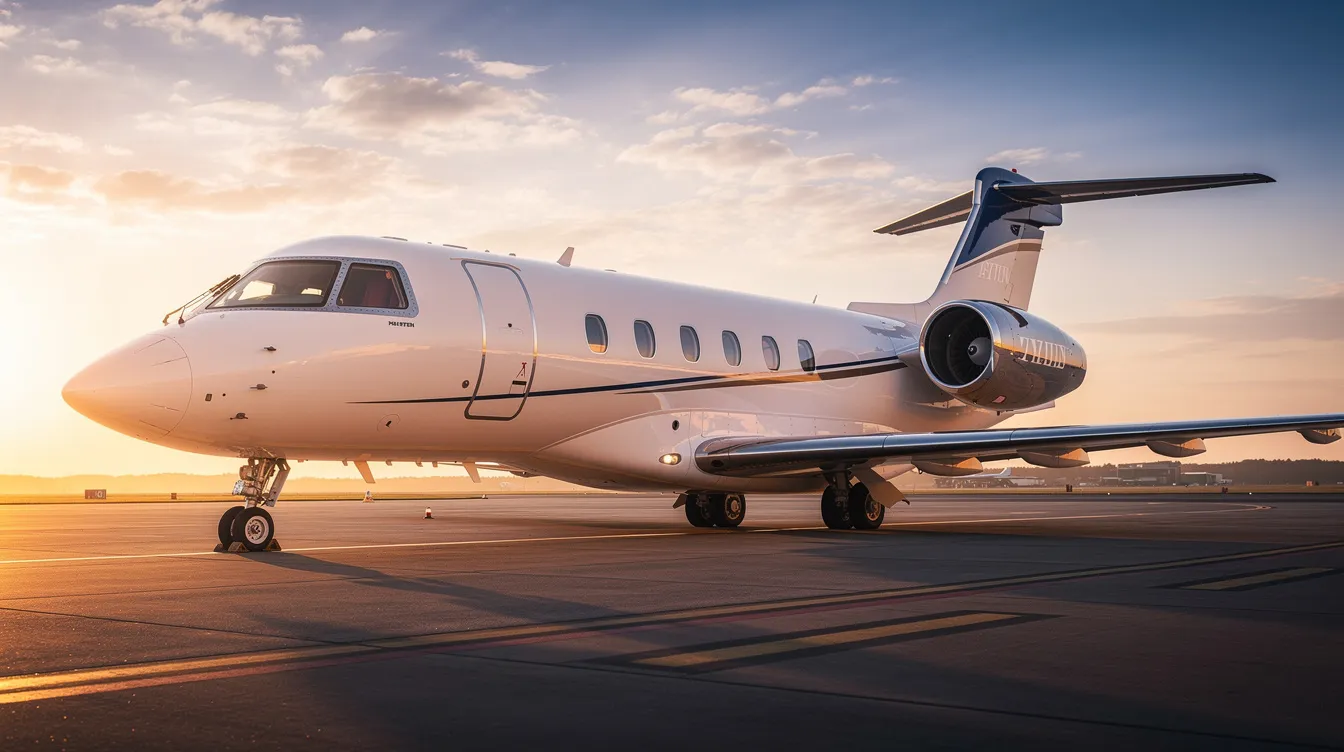
While no private jet matches a frontline fighter aircraft's acceleration or top-end velocity, modern business jets are optimized for a fundamentally different mission: comfort, range, and fuel efficiency at altitude, delivered with quiet cabins and refined aerodynamics.
On common business routes—New York to Miami, London to Geneva, Los Angeles to Aspen—the real time saved comes from avoiding airline schedules, security queues, and airport delays, not from afterburner-driven speed.
Private jets use high-bypass turbofan engines that balance speed with low emissions and cabin noise, priorities that could not be further from an F-16's warfighting role. For the discerning traveler, this is where meaningful velocity lives: not in Mach numbers, but in minutes saved door-to-door.
BlackJet Jet Cards vs Owning a High-Speed Aircraft
While the F-16 symbolizes ultimate air combat performance, high-net-worth travelers need reliability, flexibility, and comfort-not an afterburner. The parallel is instructive: just as the US Air Force invests billions in maintaining fighter fleets, private aircraft ownership demands enormous capital and operational commitment. There is a better model.
A BlackJet Jet Card (available in 25-hour or 50-hour programs) gives members prepaid access to a curated fleet of private jets without the complexity of owning, crewing, or maintaining a personal aircraft, high-speed or otherwise, and encapsulates the broader value of premium private jet cards and Jet Card programs.
Ownership costs for even a modest business jet include acquisition, crew salaries, hangar fees, insurance, maintenance reserves, and depreciation. A Jet Card membership replaces all of that with a predictable, all-in structure. For a detailed breakdown, see Understanding Jet Card Membership Fees.
BlackJet's 24/7 digital booking tools and real-time support let members schedule flights on short notice, at business-optimized speeds, across a network of vetted operators, while some providers even explore unlimited private jet flight memberships for travelers who value maximum flexibility.
Members select aircraft categories-light, midsize, or large-cabin-depending on route length and passenger count, trading a few minutes of cruise speed for superior comfort and productivity, and many evaluate options by comparing Jet Card cost per hour across aircraft types. It is the civilian equivalent of choosing the right force structure for the mission.
Safety Protocols in Private Aviation vs Fighter Operations
F-16 pilots operate under rigorous military standards enforced by the Air Force, but discerning private travelers require equally robust-though differently focused-safety frameworks. In both worlds, safety is non-negotiable.
BlackJet emphasizes proprietary and third-party safety certification, including strict operator vetting, crew experience thresholds, and maintenance oversight, and broader analyses of private jet safety, risks, and realities show how these measures translate into consistently strong safety records. Every operator in the network meets or exceeds standards outlined by Part 135 regulations and industry best practices.
Fighter missions involve low-level, high-speed, high-g profiles that carry inherent combat risk. Private jet charter operates in a risk-managed environment where routes, altitudes, and speeds are chosen for safety and comfort-never for tactical aggression. Learn more about how private aviation manages risk in Are Private Jets Safe?
BlackJet continually monitors weather, NOTAMs, and operational constraints in real time, bringing military-grade attention to detail to civilian travel without any of the combat exposure.
Sustainability and Speed: Carbon-Neutral Private Flights
Fighter aircraft like the F-16 burn fuel aggressively-especially in afterburner, where consumption can spike to several times normal rates. Modern private aviation is moving in the opposite direction, prioritizing sustainability alongside performance.
BlackJet ensures each member flight is carbon neutral through verified carbon offset and insetting programs, at no extra cost or administrative burden to the traveler, aligning with broader trends toward budget-friendly and more sustainable private aircraft options. Every journey carries that commitment automatically.
Optimized routing, modern efficient business jets, and careful fleet selection help minimize fuel burn per passenger compared with both older aircraft and commercial alternatives where passengers may connect through congested hubs. Travelers comparing options can also look at the cheapest private jet choices and other affordable access models to balance sustainability with budget. See Top Benefits of Choosing a Green Private Jet for more on how sustainable aviation is evolving.
Emerging sustainable aviation fuel (SAF) initiatives are gaining traction across the industry, and platforms like BlackJet can help accelerate adoption by aggregating demand from frequent travelers into a meaningful market signal.
Where an F-16 measures success in sorties flown and threats neutralized, private aviation increasingly measures success in miles traveled per ton of carbon—a metric that matters deeply to the next generation of travelers and executives.
Technology in the Cockpit: From F-16 Avionics to BlackJet's Digital Platform
The F-16's avionics evolution-from early analog radars to modern AESA systems, digital flight computers, and fused sensor displays-mirrors how technology transforms industries beyond aviation. What once required an entire ground crew to coordinate now fits on a single multi-function display in the cockpit.
BlackJet's mobile and web booking platform provides instant access to availability, aircraft options, and pricing, giving members the same kind of real-time situational awareness that a modern pilot sees in a fused tactical picture, whether they are comparing the value of chartering a private jet versus other modes of travel or planning regular Jet Card use.
Real-time flight support, status updates, and tailored itineraries give BlackJet members command of their schedule, much as a pilot commands a mission plan; frequent flyers can further refine their strategy by reviewing the best Jet Cards for regular private travelers. The difference is that members make these decisions from a phone, not a cockpit.
Secure digital document handling, preference storage for catering and ground transfers, and integration with corporate calendars ensure that every booking reflects the member's exact requirements, while a solid grasp of Jet Card pricing structures and fees keeps that convenience financially predictable. Smart software, not raw speed, is what elevates everyday travel.
Use Cases: When Speed Truly Matters for the Private Traveler
Consider an executive using a BlackJet Jet Card to fly from New York to London overnight. Departing from a private terminal at Teterboro, she boards within minutes, works during the crossing, and arrives rested for a morning board meeting, saving four to five hours compared to the commercial alternative. The "speed" gain has nothing to do with Mach number and everything to do with process elimination, which is precisely the kind of scenario examined in comprehensive guides to 100-hour Jet Card costs and benefits.
Another scenario: a family planning a last-minute weekend in the Caribbean. Using their BlackJet membership, they depart within hours of deciding, avoid crowded terminals, and maximize time on the ground rather than in transit-precisely the kind of use case a 25-hour Jet Card guide to features and costs is designed to help evaluate. The effective velocity of their trip is defined by how quickly they go from decision to destination.
In both cases, the real advantage mirrors what fighter pilots know intuitively-positioning and timing outweigh raw velocity. Direct routing, no security lines, and rapid boarding deliver a travel experience that commercially scheduled flights simply cannot replicate, especially for travelers who have compared 50-hour Jet Card pricing and value against other access models.
Access to different aircraft classes via BlackJet lets members choose the optimal balance of cruise speed, cabin size, and range for each trip. A light jet handles a two-hour regional hop efficiently; a large-cabin aircraft turns a transatlantic crossing into a productive mobile office, while those flying with bigger groups may look at top 16-seat private jet options for comfort and convenience.

Frequently Asked Questions About F-16 Speed and Private Jet Travel
This FAQ section addresses the most common questions readers have about fighter top speed and how performance concepts translate to private jet travel, including for travelers comparing specific membership providers such as NetJets Jet Card cost and program details.
Is any private jet as fast as an F-16 Fighting Falcon? No. Business jets do not use afterburners and are not designed for supersonic flight. The fastest civilian jets cruise near Mach 0.90–0.92, less than half the F-16's Mach 2 capability. The speed gap reflects entirely different mission requirements.
Does higher top speed always mean faster trips? Not in practice. Airport process times, route directness, scheduling flexibility, and ground transport coordination often contribute more to total travel time than the aircraft's cruise Mach number. A private jet flying at Mach 0.85 from a convenient nearby airport frequently beats a Mach 0.87 commercial flight departing from a congested hub.
How does a Jet Card improve my effective travel speed? BlackJet members bypass commercial bottlenecks-check-in queues, security screening, boarding delays-and access well-positioned aircraft with as little as a few hours' notice. The result is hours saved per trip, compounded across dozens of journeys each year. Learn how Jet Cards work in detail.
Can I charter ex-military jets like an F-16? Regulatory, insurance, and practical constraints make this effectively impossible for civilian travel. Fighter aircraft require specialized maintenance, military-grade fuel infrastructure, and pilot qualifications that do not transfer to the civilian charter world. Certified business aircraft via platforms like BlackJet offer a reliable, comfortable, and legal alternative.
What is the F-16's combat radius, and how does it compare to business jets? The F-16 has a combat radius exceeding 500 miles with a combat load, while most midsize business jets fly nonstop for 2,000–3,500 miles with full passenger cabins-reflecting the difference between a fighter's short, intense sortie and a traveler's need for range and endurance; for larger groups, private jets configured for around 20 passengers extend that range and capacity even further.
Conclusion: From Fighting Falcon Top Speed to Seamless Private Access
The F-16's top speed—aroundMach 2—was a landmark achievement in 1970s fighter design, and it remains impressive today. But modern success in air combat relies more on agility, avionics, tactics, and the pilot's ability to manage energy than on raw velocity. Lockheed Martin continues to evolve the platform, yet the core lesson endures: performance is about the whole system, not a single number-a principle that also guides choices among private jets suited for 30 passengers and group travel.
In private aviation, meaningful "speed" comes from intelligent scheduling, direct routes, and on-demand access via Jet Cards rather than afterburner-driven performance. The executive who saves three hours by skipping a commercial connection has gained something no Mach number can deliver, especially when traveling with larger teams that may require private jets accommodating up to 50 passengers.
BlackJet builds on that principle with safety-focused operators, carbon-neutral flights, advanced digital booking tools, and tailored service for frequent business and leisure travelers, and its 25+ Hour Jet Card program translates those benefits into predictable, fixed-rate access. Every element is designed to give members command of their time-the most valuable resource of all.
Explore BlackJet Jet Card membership to experience a level of strategic, time-saving access to the skies that fighter pilots would recognize—without sacrificing comfort or sustainability.


 Sign up with google
 Sign up with Apple