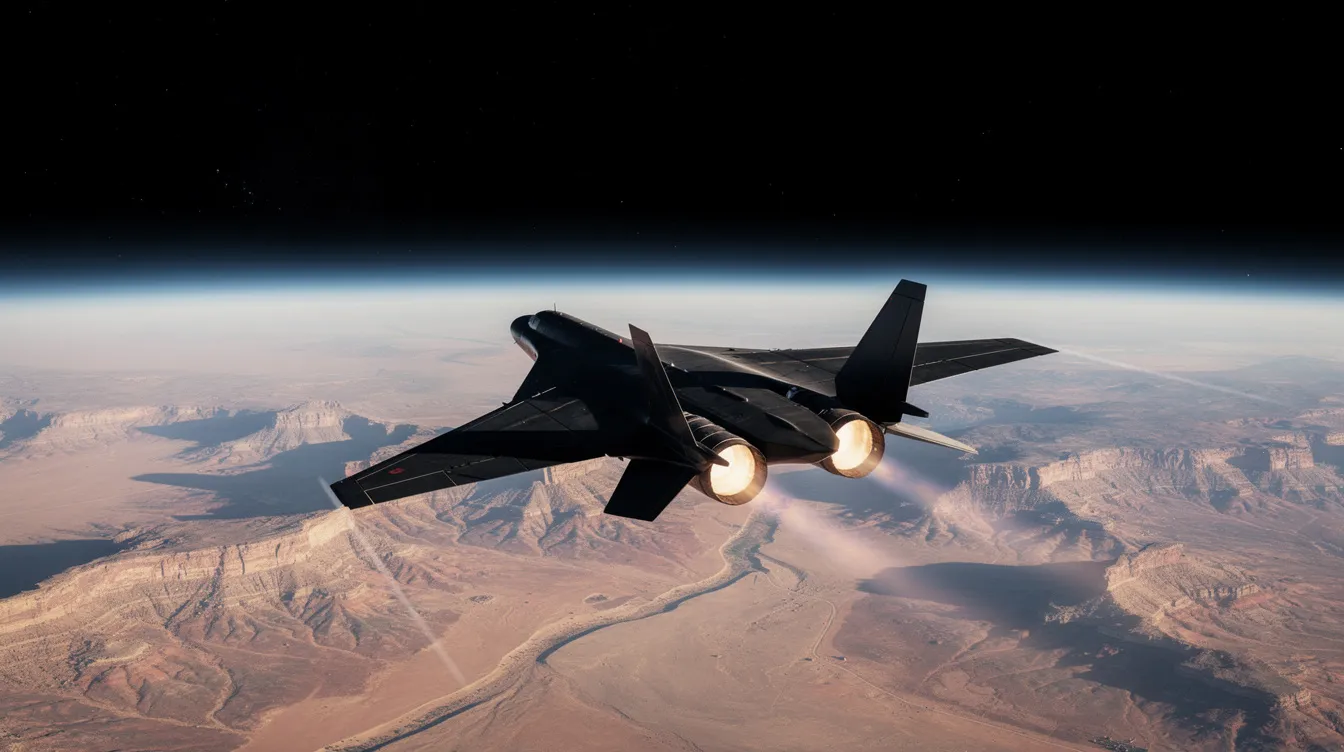
Humanity's obsession with speed has shaped aviation history from the moment the Wright brothers left the ground. Today, the fastest airplane speed record belongs to an unmanned research vehicle that screamed through the upper atmosphere at nearly ten times the speed of sound. But for discerning travelers and aviation enthusiasts alike, the story of speed is far richer than a single number—it spans Cold War reconnaissance aircraft, rocket-powered flights at the edge of space, and the modern private jets that turn raw velocity into real-world time savings.
This article traces the lineage of major speed records, explains how they're defined and measured, profiles the fastest planes ever flown, and connects all of it to the practical advantages high-net-worth travelers unlock through private aviation.
Fast Answer: What Is the Fastest Airplane Speed Record?
The fastest airplane speed record depends on how you define “airplane.” Most speed records differ by whether aircraft are crewed or uncrewed, and by whether they use air-breathing jets or rocket engines. Here are the three headline figures:
The NASA X-43A holds the record for the fastest air-breathing vehicle, reaching Mach 9.6—approximately 7,000 mph—on November 16, 2004, over the Pacific Ocean at around 110,000 feet. This was an unmanned experimental aircraft powered by a supersonic combustion ramjet (scramjet).
The North American X-15 holds the record for the fastest piloted aircraft, achieving Mach 6.72 (about 4,520 mph) on October 3, 1967, piloted by William J. “Pete” Knight at roughly 102,100 feet. Rocket engines rather than air-breathing jets classify the X-15 as a separate category from conventional jet aircraft.
The Lockheed SR-71 Blackbird set the official air-breathing, manned jet aircraft speed record at 3,529.6 km/h (2,193 mph) on July 28, 1976, recognized by the Fédération Aéronautique Internationale (FAI).
Fastest Aircraft Speed Records at a Glance
Aircraft | Record category | Top speed | Record date | Key distinction |
|---|
NASA X-43A | Uncrewed, air-breathing research vehicle | Mach 9.6 (about 7,000 mph) | November 16, 2004 | Scramjet-powered; fastest air-breathing vehicle |
North American X-15 | Piloted, rocket-powered aircraft | Mach 6.72 (about 4,520 mph) | October 3, 1967 | Fastest piloted aircraft |
Lockheed SR-71 Blackbird | Crewed, air-breathing jet | Mach 3.3 (2,193 mph) | July 28, 1976 | FAI-certified speed record for a manned air-breathing jet |
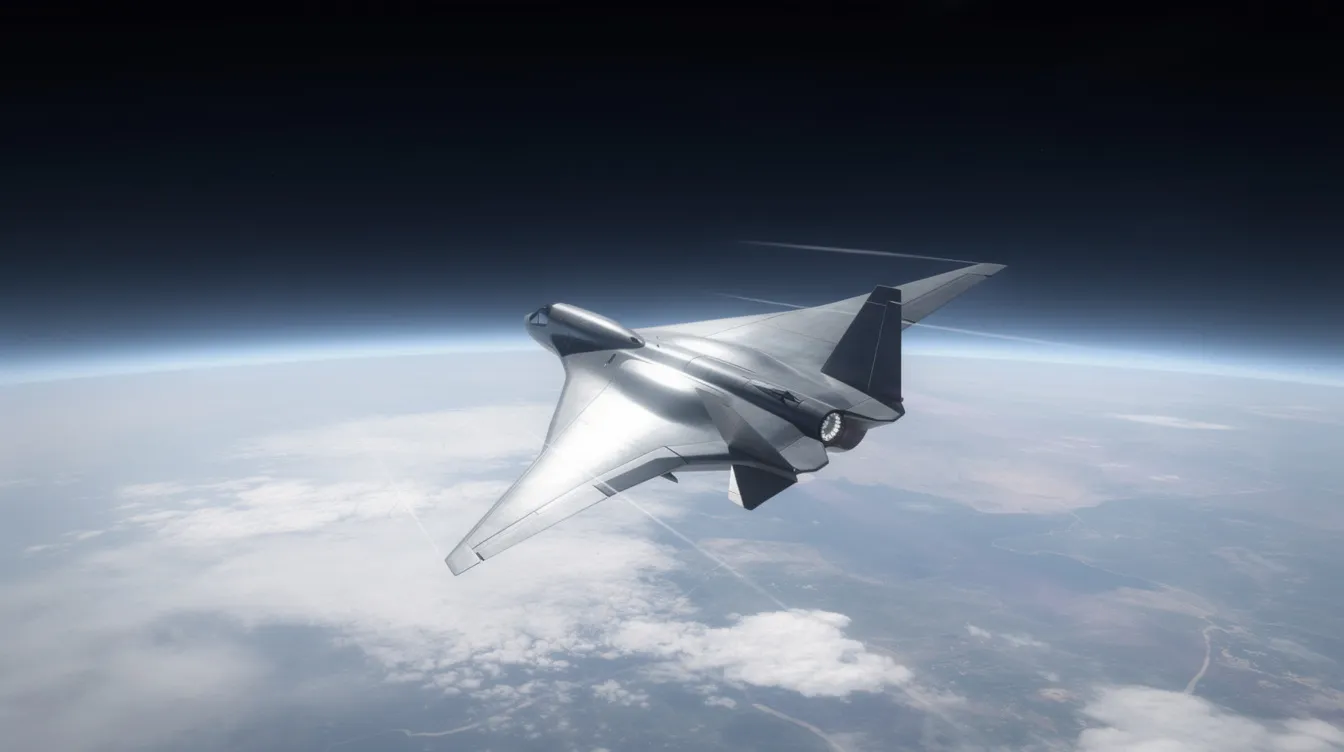
Why Speed Records Still Matter for Modern Travelers
Speed has always been a strategic advantage. In the early twentieth century, record-breaking aircraft compressed days of ocean travel into hours of flight. During the Cold War, faster military aircraft meant the difference between successful intelligence gathering and catastrophe. Today, speed translates into something equally valuable for executives and high-net-worth travelers: time compression. A nonstop private flight that departs on your schedule, from an airport fifteen minutes from your office, can collapse an eight-hour commercial travel day into four hours door-to-door.
The real lesson of aviation history is that raw Mach speed is only part of the equation. Modern private jets cruise at high speed—Mach 0.85 to 0.92—but what creates the genuine advantage is eliminating the hours lost to hub airports, security queues, layovers, and rigid airline schedules. When you fly privately, the fastest plane is the one ready to go when you are.
For the discerning traveler, speed, privacy, and control converge to form a strategic travel advantage:
Direct routing to thousands of smaller airports cuts ground transport time
Flexible departure windows let you act on last-minute opportunities
Consistent high-subsonic cruise speeds across modern business jets deliver reliable timing
No check-in lines, boarding groups, or connection risks
BlackJet translates a century of aviation speed innovation into practical, reliable travel experiences through its premium private jet card programs, giving members access to vetted aircraft and 24/7 support without chasing speed records.
Official Speed Record Categories: How “Fastest Aircraft” Is Defined
The Fédération Aéronautique Internationale (FAI) is the global authority responsible for certifying air speed records. Without FAI recognition, a claimed speed—no matter how impressive—remains unofficial.
Different aircraft records exist for air-breathing jet and rocket-powered vehicles, and the FAI organizes them into carefully defined categories:
Absolute speed record: the fastest verified speed over a measured straight course (typically 15 or 25 km), regardless of propulsion type or aircraft class
Class records: separated by propulsion (turbojet, turbofan, rocket, piston), weight group, and altitude band
Manned vs. unmanned: crewed flights require a human pilot on board; unmanned vehicles like research drones have separate verification processes
Air-breathing vs. rocket-powered: air-breathing engines (turbojets, ramjets, scramjets) draw oxygen from the atmosphere; rockets carry their own oxidizer
Air-breathing jets use engines such as turbojets, ramjets, or scramjets that draw oxygen from the atmosphere for combustion. Rocket-powered vehicles carry their own oxidizer and can operate outside the atmosphere.
Many famous speed claims remain unofficial. For instance, SR-71 pilots have described pushing beyond Mach 3.5 during operational missions, but those speeds were never recorded under FAI-certified conditions with independent observers. Security restrictions during active reconnaissance missions made formal verification impossible.
The Fastest Aircraft Ever Flown: NASA X-43 and Hypersonic Flight
On November 16, 2004, the NASA X-43A tore through the upper atmosphere at Mach 9.6—roughly 7,000 mph—making it the fastest aircraft in the air-breathing category. NASA developed the X-43 for hypersonic research as part of the Hyper-X program, a collaboration between NASA Langley and Dryden Flight Research Centers.
The X-43A was uncrewed and utilized a scramjet for propulsion. Scramjet engines compress incoming air at hypersonic speeds without rotating parts—there are no turbine blades or compressor fans. Instead, the vehicle's extreme speed forces air into the engine at supersonic velocity, where hydrogen fuel ignites in continuous supersonic combustion. This makes the scramjet fundamentally different from conventional turbojets and rocket engines.
Here's what made the X-43A's record flight remarkable:
Date and speed: November 16, 2004, Mach 9.6 (about 7,000 mph)
Altitude: approximately 110,000 feet over the Pacific Ocean
Powered flight duration: roughly 10 seconds of scramjet operation
Launch method: dropped from a B-52 carrier aircraft, then accelerated by a Pegasus booster rocket before scramjet ignition
Research impact: provided critical data on thermal protection, hypersonic aerodynamics, and scramjet combustion dynamics
As the fastest unmanned aircraft ever flown under air-breathing power, the X-43A is not a “plane” in any conventional sense—it has no cockpit, payload capacity, or landing gear. But the data it generated informs concepts that could one day make hypersonic flight a reality for global travel. Hypersonic flight exceeds speeds of Mach 5, and researchers believe it could enable faster global travel and space access.
Fastest Manned Aircraft: North American X-15 and the Edge of Space
On October 3, 1967, Air Force test pilot William J. “Pete” Knight climbed into the cockpit of the North American X-15A-2, dropped away from a B-52 mothership at 45,000 feet, and lit the rocket engine. Minutes later, he was traveling at Mach 6.72—about 4,520 mph—at approximately 102,100 feet above the California desert. It remains the fastest speed ever achieved by a piloted aircraft.
The X-15 was a rocket aircraft, not a jet. Its Reaction Motors XLR99 engine burned anhydrous ammonia and liquid oxygen, producing 57,000 pounds of thrust. This enabled altitudes and speeds far beyond those of air-breathing jets, but the X-15 could fly under its own power for only a few minutes before exhausting its fuel supply.
Between 1959 and 1968, three X-15 airframes completed 199 flights, probing the boundaries between aviation and spaceflight. In later decades, private jets flying up to 51,000 feet would bring some high-altitude advantages into everyday business travel. Notable X-15 pilots included Neil Armstrong, who later became the first person to walk on the moon, and Joe Walker, who flew above 100 kilometers—the internationally recognized edge of space.
The program's contributions to aviation history are hard to overstate:
Speed record: Mach 6.72 (4,520 mph) on October 3, 1967, by Pete Knight
Maximum altitude: 354,200 feet (67 miles), reached by Joe Walker on August 22, 1963
Total flights: 199 research missions over nine years
Legacy: data on hypersonic aerodynamics, extreme heat management, pilot physiology at near-space altitudes, and reentry dynamics influenced the space shuttle and modern reentry vehicles
The North American X-15 remains a singular achievement—a piloted vehicle that flew faster than any manned aircraft before or since, bridging the gap between atmospheric flight and orbital spaceflight.
Fastest Jet Aircraft with Crew: SR-71 Blackbird's Official Speed Record
The Lockheed SR-71 Blackbird is the fastest jet aircraft to carry a human crew under air-breathing power. Built by Lockheed's legendary Skunk Works division, the SR-71 was designed for reconnaissance missions and could cruise at high altitudes, routinely operating above 80,000 feet at speeds exceeding Mach 3.
On July 28, 1976, at Beale Air Force Base in California, Captain Eldon W. Joersz and Major George T. Morgan Jr. flew SR-71 serial number 61-7958 to a world speed record of 3,529.6 km/h (2,193 mph) over a measured 15/25 km straight course. The SR-71 Blackbird achieved speeds of Mach 3.3 at an altitude of approximately 85,069 feet. That FAI-certified record still stands.
What made the SR-71 possible:
Engines: two Pratt & Whitney J58 turbojet/ramjet hybrid powerplants that transitioned from conventional turbojet operation at lower speeds to ram-burning at high speed
Structure: an 85% titanium airframe designed to withstand the heat generated by air friction at Mach 3+, where skin temperatures could exceed 500°F
Mission profile: a reconnaissance aircraft that could survey 100,000 square miles of terrain per hour from above 80,000 feet, relying on speed and altitude to evade surface-to-air missiles
Operational life: the SR-71 flew from 1966 to 1998, conducting intelligence missions during the Cold War and beyond
Pilot accounts add color to the numbers. Brian Shul, an SR-71 pilot, has described moments when the aircraft was pushed beyond its certified top speed during operational flights—possibly exceeding Mach 3.5. But without FAI observers and calibrated instrumentation, those remain unofficial claims. The certified record of Mach 3.3 over a measured course is the figure that stands in the books.
Record-Breaking Fighter Jets and Air Superiority Speed
While experimental aircraft and reconnaissance platforms hold the absolute speed records, fighter jet speed serves the distinct missions of aerial combat, interception, and air superiority. In these aircraft, extreme speed has a tactical purpose: closing distance on enemy aircraft, evading threats, and reaching engagement zones before an adversary can react.
The MiG-25 Foxbat can reach Mach 3.2 (2,190 mph), making it one of the fastest aircraft designed for combat roles. Built by the Soviet Union in the 1960s to counter high-altitude Western bombers and spy planes, the MiG-25 could rival the SR-71's speed, although military pilots were instructed to limit sustained speed to around Mach 2.8 to prevent engine damage.
Other notable record-breaking aircraft in the fighter and interceptor categories:
MiG-31 Foxhound: can achieve Mach 2.83 (1,864 mph), with advanced radar capable of tracking multiple targets simultaneously and conducting beyond-visual-range engagements
F-15 Eagle: can exceed Mach 2.5 (1,650 mph) and has dominated air-to-air combat for decades, with over 100 confirmed kills and zero air-combat losses
F-14 Tomcat: designed for the Navy's carrier-based fleet defense mission, it reaches Mach 2.34 (1,544 mph) and features variable-sweep wings
XB-70 Valkyrie: the experimental bomber could sustain Mach 3.1, demonstrating the potential and demands of high-speed strategic flight
Operational speeds are typically lower than maximum capability. Sustaining Mach 3+ in a MiG-25, for example, would rapidly consume fuel, overheat engine components, and reduce combat range to impractical levels. Fighter pilots balance speed with endurance, maneuverability, and weapons employment.
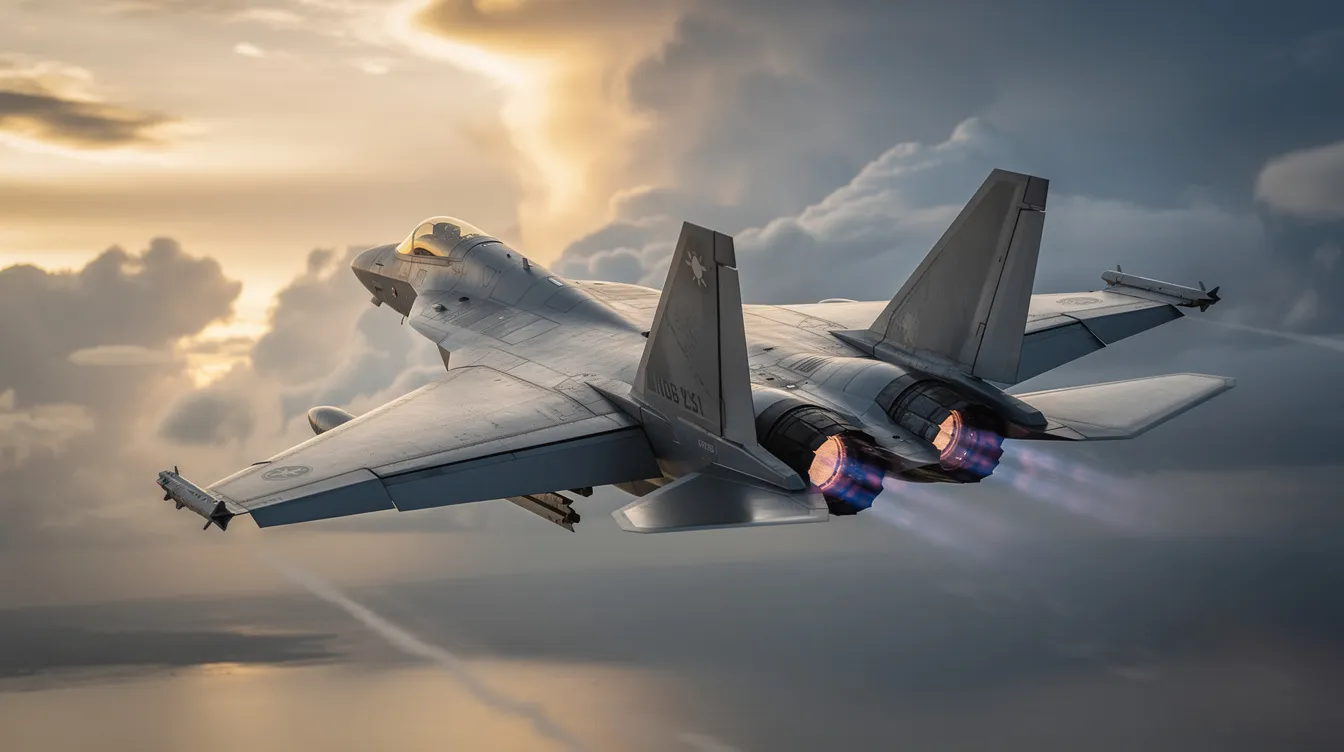
From Supersonic to Hypersonic: Milestones in Aviation History
Aviation history is a story of progressively faster barriers being shattered. Each milestone pushed materials, propulsion, and human physiology into uncharted territory.
On October 14, 1947, Captain Chuck Yeager broke the sound barrier in the Bell X-1, reaching Mach 1.06 in level flight over the Mojave Desert. That first flight past the speed of sound proved controlled supersonic flight was possible—a fact many engineers of the era doubted.
From there, the pace accelerated:
First sustained Mach 2+ fighter: the F-104 Starfighter achieved Mach 2 in the mid-1950s, setting speed records for production military aircraft
First supersonic bomber: the Convair B-58 Hustler became the first aircraft designed from the outset as a supersonic bomber, sustaining Mach 2
XB-70 Valkyrie: this experimental supersonic bomber could sustain Mach 3.1, testing sustained high-speed flight for strategic missions
First supersonic passenger jet: Concorde entered commercial service in 1976, carrying fare-paying passengers at twice the speed of sound
Hypersonic research: the X-15 (Mach 6.72, 1967) and X-43A (Mach 9.6, 2004) moved beyond supersonic into hypersonic speeds, where extreme heat and shock-wave interactions dominate
Each milestone was not just about setting speed records. Materials developed to handle extreme heat at Mach 3 in the SR-71 influenced later aerospace design. Aerodynamic lessons from the X-15 shaped the space shuttle's reentry profile. Modern stealth fighters such as the F-22 Raptor and Su-57 trade some top speed for stealth, sensor fusion, and internal weapons bays, while benefiting from decades of high-speed flight research.
Supersonic Icons: Concorde and Civilian Speed Records
No discussion of speed in aviation history is complete without Concorde, the supersonic passenger jet that redefined commercial aviation. From 1976 to 2003, Concorde carried passengers across the Atlantic at Mach 2.04 (approximately 1,354 mph) at around 60,000 feet, cutting the London-to-New York journey to under four hours.
The aircraft's most celebrated achievement came on February 7, 1996, when it completed the New York-to-London crossing in just 2 hours 52 minutes and 59 seconds, a record recognized by Guinness World Records that still stands.
Concorde was more than a fast airplane—it was a statement. Business leaders, heads of state, and celebrities chose it not just for time savings but for the prestige and exclusivity of supersonic travel. In many ways, Concorde established expectations that today's private aviation clientele carry: speed, comfort, and privacy are strategic advantages.
Concorde retired in 2003, grounded by high operating costs, intense fuel burn, noise regulations restricting supersonic flight over land, and the aftermath of the 2000 crash. Its legacy endures. Companies like Boom Supersonic are developing the Boom Overture, aiming to revive supersonic passenger travel with improved fuel efficiency and sustainability profiles. NASA's X-59 QueSST is testing low-boom supersonic technology that could eventually help lift overland supersonic flight restrictions.
For now, Concorde remains the civilian speed benchmark—and a reminder that faster travel has always commanded a premium.
Rocket Aircraft vs. Air-Breathing Jets: Why the Distinction Matters
Understanding the fastest airplane speed record requires understanding a fundamental engineering distinction: rocket aircraft and air-breathing jets operate on different principles, and mixing them in a single ranking distorts the picture.
An air-breathing engine—whether a turbojet, ramjet, or scramjet—draws oxygen from the surrounding atmosphere. It can only function where there is air to breathe, which limits it to the atmosphere. The SR-71's J58 engines and the X-43A's scramjet both fall into this category.
A rocket engine carries its own oxidizer along with its fuel. This means it can operate in the vacuum of space, but it also means the vehicle must carry all of that mass with it. The X-15's XLR99 rocket engine allowed it to reach near-space altitudes and Mach 6.72, but it could fire for only about 80–120 seconds before its propellant was exhausted.
This distinction matters because it determines what counts as a fair comparison:
Air-breathing records (X-43A at Mach 9.6, SR-71 at Mach 3.3) measure what atmospheric propulsion can achieve
Rocket-powered records (X-15 at Mach 6.72) measure what combined atmospheric and near-space vehicles can do
Spacecraft like the space shuttle are categorized separately because their primary speed is achieved outside the atmosphere
Some World War II rocket planes, such as the Messerschmitt Me 163 Komet, achieved remarkable speeds for their era, but wartime secrecy and lack of standardized verification prevented many figures from becoming formal records.
Many “fastest plane” lists separate rocket aircraft, jet aircraft, and spacecraft for precisely this reason. Each category represents different engineering challenges and achievements.
How Air Speed Records Are Measured and Verified
Setting a speed record is not simply a matter of flying fast and reporting the number. The process requires precise instrumentation, standardized course layouts, and independent verification.
For an FAI-certified speed record, typical requirements include:
A defined course, usually a straight 15 km or 25 km track at a specified altitude band
Calibrated timing equipment and ground-based tracking radar to measure speed over the course
Onboard data recorders capturing airspeed, altitude, air temperature, and engine parameters
Independent FAI-appointed observers who verify conditions, timing, and data integrity
Multiple passes in opposite directions to cancel wind effects and calculate an average speed
The distinction between ground speed and airspeed relative to the surrounding air mass matters enormously. At high altitude, where air temperature and density drop, the local speed of sound changes—meaning the same Mach number corresponds to different speeds in miles per hour at different altitudes.
Many aircraft have achieved higher speeds than their official records suggest. Military operations often involve classified flight data that cannot be submitted for certification. Corporate jet manufacturers publish maximum operating speeds, but these represent certified structural limits rather than one-off test speeds. Cruise speeds listed in brochures are typically lower still, reflecting the most efficient sustained operating condition.
The Role of Fighter Jets in Setting and Chasing Speed Records
Fighter jets have been setting speed records since the earliest days of jet propulsion—not as an end in itself, but as a consequence of their core mission: achieving air superiority.
During the Cold War, the Soviet Union and the United States competed to build faster interceptors. If an enemy aircraft or bomber could be detected on radar at long range, an interceptor needed enough speed to close the distance before the threat reached its target.
The MiG-25 exemplifies this philosophy. Originally designed to counter the XB-70 Valkyrie supersonic bomber and high-altitude reconnaissance aircraft like the SR-71, the Foxbat prioritized straight-line speed and climb rate above all else. Its welded nickel-steel airframe could withstand the thermal stress of Mach 2.8+ flight, and its Tumansky R-15 engines delivered enormous thrust at the cost of fuel efficiency and agility.
In practice, speed served different tactical roles:
Interception: closing rapidly on incoming threats before they could complete their missions
Escape: accelerating away from aerial combat or outrunning surface-to-air missiles when evasive maneuvering alone was insufficient
Reconnaissance: covering large areas quickly to gather intelligence, as MiG-25R variants did over the Middle East during the 1970s
Modern stealth fighters like the F-22 Raptor, J-20, and Su-57 represent a philosophical shift. These aircraft prioritize low radar cross-sections, sensor fusion, and the ability to track multiple targets over raw top speed. Their internal weapons bays reduce drag and signal that air combat has moved from pure speed contests to information dominance.
The fastest fighter for aerial combat is not necessarily the one with the highest Mach number—it is the one that sees first, shoots first, and remains unseen.
Space Shuttle, Reentry Vehicles, and When a “Plane” Becomes a Spacecraft
The space shuttle orbited Earth at approximately Mach 25—roughly 17,500 mph. With wings, a fuselage, and a runway landing, it looks like an airplane. So why isn't it considered the world's fastest aircraft?
The answer lies in where and how it achieved that speed. The shuttle's velocity came from rocket boosters and engines operating outside the atmosphere. Once in orbit, it was traveling in a vacuum, not through air. Its wings served no aerodynamic purpose at orbital speed; they mattered during the unpowered glide back to Earth.
Aviation speed records focus on aircraft that generate lift and thrust within the atmosphere. The shuttle's reentry speed occurred as it was decelerating rather than accelerating. For this reason, the shuttle and similar reentry vehicles—including the X-37B military spaceplane—are excluded from standard “fastest aircraft” lists.
This distinction reinforces an important boundary in aviation history: an aircraft flies through air; a spacecraft travels through space. Some vehicles, like the X-15, blur the line, operating at altitudes where the atmosphere is vanishingly thin. Even so, the X-15's record is classified within the rocket aircraft category rather than alongside spacecraft.
Top Speed vs. Operational Reality: Why Pilots Rarely Fly at Record Speeds
A speed record is a peak achievement, not a cruising condition. The circumstances required to reach record speeds—minimal fuel loads, maximum thrust, ideal altitude, and no external stores—are rarely replicated in normal operations.
Consider the practical penalties of extreme speed:
Fuel burn rises sharply with velocity. An SR-71 consumed roughly 36,000 pounds of fuel per hour at cruise. A MiG-25 at Mach 3.2 could empty its tanks in minutes, and emergency runs at maximum speed risked permanent engine damage.
Thermal stress limits structural life. At Mach 3, air friction heats an aircraft's skin to hundreds of degrees. Materials expand, fatigue, and degrade faster, shortening maintenance intervals.
Range collapses. Faster speeds mean an aircraft covers less total distance before refueling, impractical for many combat missions or long-haul flights.
Reaction time shrinks. At hypersonic speeds, the time available for pilots or systems to respond to threats or navigation changes drops dramatically.
For commercial aviation and private jets, the same physics apply at a more moderate scale. Private jets typically cruise around Mach 0.78 to 0.935, and operators select speeds that optimize trip time, fuel efficiency, comfort, and structural longevity. Flying consistently at a jet's maximum operating Mach wastes fuel and increases maintenance costs for minimal time savings on most routes.
The meaningful measure for travelers is not a jet's maximum speed capability but its sustained, reliable performance across thousands of flights.
Fastest Private Jets: Speed Records in Business Aviation
The fastest private jet category operates in a world far removed from Mach 6 research vehicles, but within business aviation, performance differences are meaningful.
The leading contenders for the title of fastest private jet include:
Private jet | Maximum speed | Typical high-speed cruise | Approximate range | Notes |
|---|
Bombardier Global 8000 | Mach 0.95 | About Mach 0.92 | 8,000 nautical miles | Among the fastest private jets; ultra-long-range cabin |
Gulfstream G700 | Mach 0.935 | About Mach 0.90 | Over 7,750 nautical miles | Large-cabin aircraft with long-range capability |
Gulfstream G800 | Similar speed range to G700 | High-subsonic | Approximately 8,200 nautical miles | Optimized for ultra-long-haul missions |
Cessna Citation X+ | Mach 0.935 | High-subsonic | Model and conditions vary | One of the fastest super-midsize jets; no longer in production |
These aircraft are engineered for sustained high-subsonic cruise, with cabin environments that include lie-flat seating, low cabin altitude, noise suppression, and satellite connectivity. Understanding the broader private jet price landscape helps travelers weigh these capabilities against cost. They won't approach the velocities of the SR-71 or X-15, but on intercontinental routes they can reduce total journey time compared with commercial alternatives.
The difference between Mach 0.85 and Mach 0.92 may seem small on paper, but over a 4,000-nautical-mile flight it can translate to 20–30 minutes saved, depending on routing, winds, and operating conditions. Across dozens of annual flights, that cumulative advantage becomes significant.
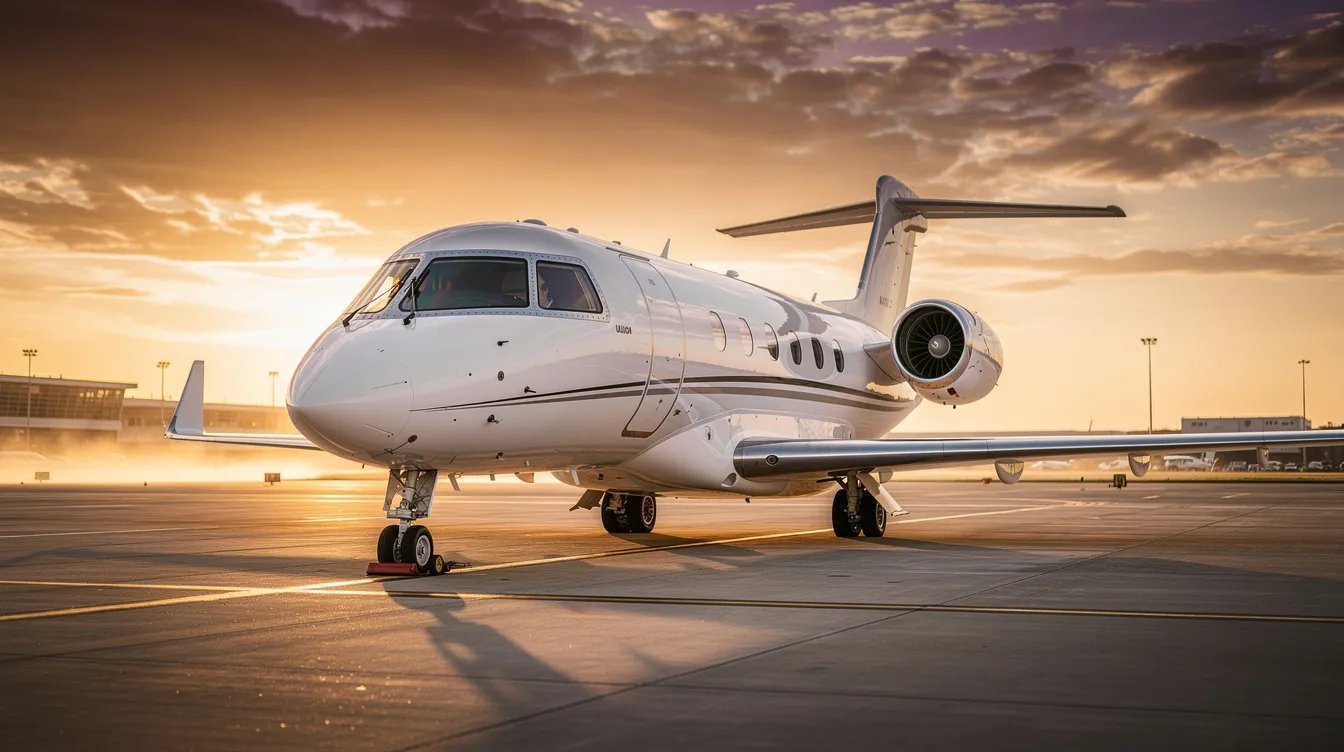
How Private Jets Turn Speed into a Door-to-Door Advantage
For a busy executive, the “fastest plane” is not necessarily the one with the highest Mach number. It's the one that minimizes total door-to-door time—from leaving home or the office to arriving at the final destination.
Consider this comparison for a New York-to-London trip—and how even simply buying a seat on a private jet can transform the experience:
Journey stage | Commercial business class | Private jet via BlackJet |
|---|
Airport arrival | Typically 2+ hours before departure | Often around 15 minutes before departure, subject to airport and operator procedures |
Departure airport | Major hub such as JFK | Convenient regional airport such as Teterboro or White Plains, where suitable |
Flight time | About 7 hours | About 6.5 hours, route and conditions permitting |
Arrival processing | Immigration, baggage, and terminal exit may take 45–60 minutes | Private-terminal handling and customs procedures vary by airport and regulations |
Ground transfer | Often 60–90 minutes to central London | Around 40 minutes from an airport such as Farnborough, traffic permitting |
Illustrative door-to-door total | Approximately 12–14 hours | Approximately 8–9 hours |
That's a potential saving of four to five hours—not from flying faster, but from reducing friction at every stage of the journey. Private jets access thousands of airports that commercial airlines cannot, many closer to business centers and residential areas. There are no connecting flights, baggage carousels, or rigid schedules.
The real-world speed advantage of private aviation comes from:
Departure on the traveler's schedule, not the airline's
Access to 5,000+ airports versus roughly 500 served by major carriers
No security lines, boarding groups, or terminal transfers at the private terminal, subject to required screening
Customs and immigration handled according to the rules and facilities at the arrival airport
Flexible routing that avoids congested airways and hubs when operationally possible
Even on shorter routes—New York to Aspen, London to Nice, Miami to the Bahamas—private jets can turn trips that would require layovers or long drives into direct, seamless flights.
BlackJet Jet Cards: Strategic Speed Without Chasing Records
BlackJet's Jet Card programs are built on a simple premise: prepaid access to high-performance aircraft, with transparent pricing and support when you need it.
With options like the 25-hour and 50-hour Jet Cards and the flexible BlackJet 25+ Hour Jet Card, members prepay for flight time at fixed hourly rates across multiple cabin classes—from light jets for regional hops to ultra-long-range heavy jets for intercontinental missions. This structure can reduce the unpredictability of on-demand charter pricing without the capital burden of aircraft ownership.
What BlackJet's Jet Card model delivers—and what any savvy traveler should look for when evaluating jet card pricing and benefits:
Rapid booking through a 24/7 digital platform, with flight requests via app or web
Access across vetted operators and aircraft types, subject to program terms and availability
Multiple cabin classes tailored to mission length and passenger count
Real-time support from an operations team coordinating details from departure through arrival
Carbon-neutral flights at no extra cost, reflecting BlackJet's commitment to responsible aviation
The connection to record-breaking aircraft is philosophical: just as the SR-71 and X-15 represented the cutting edge of what technology could deliver, BlackJet's Jet Cards represent what private aviation logistics can deliver—consistent, efficient travel without the complexity of ownership.
Safety, Certification, and Why Private Aviation Doesn't Chase Speed Records
In experimental and military aviation, pushing speed envelopes is the mission. In private aviation, the mission is getting clients to their destinations safely, comfortably, and on time. These are fundamentally different objectives, and the safety frameworks reflect that.
Regulatory bodies like the FAA and EASA set strict limits on aircraft operating speeds, structural loads, and maintenance intervals. Every certified private jet has a maximum operating Mach number that provides safety margins below the speed at which aerodynamic or structural problems could occur.
BlackJet works with operators meeting stringent safety criteria, including third-party audit programs like ARGUS and Wyvern. Every aircraft in the network is matched to the mission and operated within established performance limits.
Why record-chasing doesn't belong in private travel:
Extreme speed reduces pilot reaction time and increases the consequences of any system anomaly
Structural stress from sustained high-speed flight accelerates maintenance requirements
Higher speeds limit diversion options if a destination airport closes
Modern avionics, weather radar, and real-time support help pilots optimize routing and altitude for a safe, time-efficient path
For BlackJet members, safety is not an afterthought attached to a speed promise. It's the foundation on which every flight is built.
Mach Number Explained: How We Talk About the Fastest Aircraft
When we describe the fastest aircraft in terms of Mach, we're using a ratio rather than a fixed speed. A Mach number compares an aircraft's velocity to the local speed of sound in the surrounding air. That local speed varies with air temperature and pressure. At sea level on a standard day, the speed of sound is about 761 mph; at 35,000 feet, it drops to roughly 660 mph because the air is much colder.
This is why Mach, rather than miles per hour, is the standard unit for high-speed flight. The same airplane traveling at Mach 0.90 at different altitudes can have different true airspeeds, even though the ratio to the local speed of sound is the same.
The standard speed regimes:
Subsonic: below Mach 0.8—most commercial airliners and many private jets
Transonic: Mach 0.8 to 1.2—where shock waves begin forming on aircraft surfaces
Supersonic: Mach 1 to 5—from the sound barrier through speeds like the SR-71's Mach 3.3
Hypersonic: above Mach 5—the domain of the X-15 and X-43A, where extreme heat dominates design decisions
Understanding Mach numbers helps contextualize every speed record in this article—and explains why a private jet cruising at Mach 0.90 at 45,000 feet travels at roughly 594 mph in true airspeed: fast enough to cross continents efficiently, but within the aircraft's certified operating envelope.
Speed, Sustainability, and the Future of Fast Flight
Velocity comes at an environmental cost. Fuel burn generally rises as speed increases, though the precise relationship varies by aircraft, altitude, and operating conditions. At supersonic and hypersonic speeds, the penalties are steeper, and sonic booms have led to overland restrictions in many jurisdictions. Many travelers therefore consider fuel-efficient private planes that balance speed with sustainability.
This tension between speed and sustainability shapes the future of aviation. Several emerging technologies aim to thread the needle:
Low-boom supersonic airliners: NASA's X-59 QueSST is testing designs intended to reduce sonic-boom intensity
Hypersonic point-to-point concepts: research programs explore scramjet-powered vehicles that could connect distant cities in under two hours, though practical passenger service remains a distant prospect
Sustainable aviation fuel (SAF): blended or synthetic fuels can reduce lifecycle carbon emissions, depending on feedstock and production pathway, and are expected to scale over time
Today, responsible private aviation focuses on what is achievable. BlackJet ensures every flight is carbon neutral at no extra cost to the member through verified carbon offset programs, with sustainable aviation fuel options where available. Choosing efficient cruise speeds, optimizing routing, and reducing unnecessary repositioning flights can also contribute to lower environmental impact.
The future of fast flight will be defined not just by how quickly we can travel, but by how responsibly we can do it.
How BlackJet Uses Technology to Optimize Speed and Itinerary
BlackJet's approach to speed isn't measured in Mach numbers—it's measured in how quickly a member can go from decision to wheels-up, whether through traditional Jet Cards or newer concepts like unlimited private jet membership models.
The company's digital booking platform allows members to request flights via app or web. Rather than days of back-and-forth with brokers, members can use a streamlined process to coordinate available aircraft, routes, and pricing.
Behind every flight, technology plays a critical operational role:
Weather analysis and routing tools identify time-efficient flight paths while accounting for jet streams, weather avoidance, and airspace restrictions
Real-time flight support keeps members informed of changes and helps coordinate ground logistics, customs, and handling
Crew scheduling and operator network integration help minimize delays at departure
Flight tracking gives members and their teams visibility into journey progress and estimated arrival times
This is a different kind of speed record: not how fast an aircraft can theoretically fly, but how little time is wasted between deciding to travel and arriving. For executives who measure their days in decisions rather than hours, that distinction makes all the difference.
Frequently Asked Questions on Speed Records, Fast Jets, and Private Travel
What is the fastest aircraft ever built?
The NASA X-43A holds the record for the fastest air-breathing vehicle, achieving Mach 9.6 on November 16, 2004. The rocket-powered North American X-15 reached Mach 6.72 on October 3, 1967, making it the fastest piloted aircraft. Among crewed, air-breathing jet aircraft, the Lockheed SR-71 Blackbird holds the record at Mach 3.3.
What is the fastest fighter jet?
The MiG-25 Foxbat can reach Mach 3.2 (2,190 mph), making it one of the fastest fighter-interceptor aircraft by top speed. This speed was rarely sustained in practice. The MiG-31 (Mach 2.83) and F-15 Eagle (Mach 2.5) are also among the fastest operational fighters.
How fast do private jets really fly?
Private jets typically cruise around Mach 0.78 to 0.935, depending on aircraft class and optimal cruising altitude, often between 35,000 and 51,000 feet. The fastest models—including the Bombardier Global 8000, Gulfstream G700, and Cessna Citation X+—can reach about Mach 0.935. Most operators choose cruise settings around Mach 0.85 to 0.90 to balance fuel efficiency and range, a factor in comparing jet card cost per flight hour.
Why don't private jets fly at supersonic speeds?
Current rules restrict supersonic flight over most populated land areas because of sonic booms. Fuel burn, structural requirements, and operating costs also make supersonic flight impractical for today's business jets. Future low-boom supersonic designs may eventually change this landscape.
How can a Jet Card make my trip faster without breaking speed records?
A Jet Card can save time through prepaid access, digital booking, private-terminal departures, direct routing, and access to smaller airports. Whether you choose a 50-hour Jet Card solution or another structure, the benefit comes from reducing ground-time friction, not flying at record speed.
Are carbon-neutral private flights possible?
Yes. BlackJet offers carbon-neutral flights at no additional cost to members through verified carbon offset programs and, where available, sustainable aviation fuel. This approach allows travelers to maintain their pace while addressing environmental impact.
Conclusion: From Record-Breaking Aircraft to Effortless, High-Performance Travel
The fastest airplane speed record tells a story of human ambition—from the X-43A's Mach 9.6 scramjet dash to the X-15's rocket-powered flights at the edge of space, and from the SR-71 Blackbird's air-breathing jet record to the MiG-25 and F-15 pushing the limits of fighter performance. Each aircraft advanced our understanding of propulsion, materials, and aerodynamics in ways that continue to influence aviation.
For most travelers, the meaningful speed record is not measured in Mach numbers. It's measured in total journey time—how quickly and seamlessly you move from where you are to where you need to be, with comfort, privacy, and safety intact.
BlackJet brings aviation innovation into practical use for members who value control and time. Through Jet Cards, vetted operators, carbon-neutral flights, and 24/7 digital support, BlackJet helps make every journey efficient and refined.
Elevate your travel—effortlessly. Explore BlackJet's Jet Card programs and discover how private jet access can redefine your personal speed record.


 Sign up with google
 Sign up with Apple