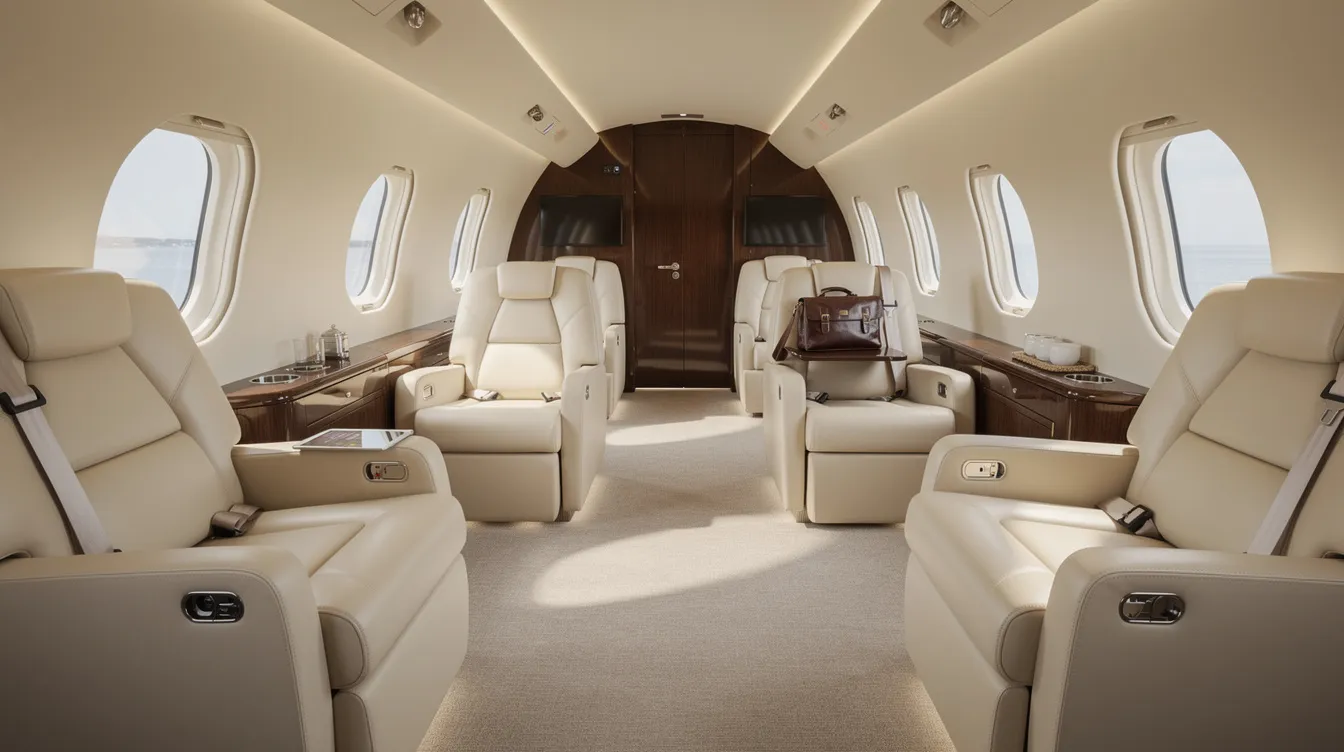
When most people ask how many people fit on a plane, they picture packed commercial cabins with hundreds of passengers. The reality spans a remarkable range—from the Airbus A380 certified for up to 853 passengers in an all-economy configuration to private jets designed for intimate groups of 4 to 19 travelers prioritizing space over density.
Understanding passenger capacity matters for anyone evaluating air travel options. For high-net-worth individuals and corporate executives, the question shifts from “how many passengers can we cram in?” to “how many people should fly together for maximum comfort and productivity?” This distinction shapes why private aviation exists as a strategic advantage rather than a mere luxury.
Key Takeaways
Commercial aircraft capacity varies dramatically by aircraft type and seating configuration—the Airbus A380 can theoretically seat 853 in a high-density configuration, while typical narrow-body aircraft like the Boeing 737 carry 160–189 passengers.
Private jets seat between 4 and 19 passengers in standard configurations, with VIP airliners accommodating 20–75+ when configured for corporate shuttles or government use.
Passenger capacity is limited by aviation authorities through safety certification, maximum takeoff weight constraints, and emergency evacuation requirements—not simply by the number of seats that physically fit.
BlackJet’s Jet Card programs provide flexible access across multiple aircraft categories, allowing members to match group size to the right aircraft without the capital commitment of ownership.
Modern private aviation can be operated sustainably through carbon offset programs, newer fuel-efficient engines, and thoughtful aircraft selection that balances capacity with environmental responsibility.
How Many People Fit on a Plane, Really?
There is no single answer to how many passengers any plane can carry. The same commercial aircraft model can hold vastly different numbers depending on airline layout choices and operational priorities.
Consider the Airbus A380-800: aviation authorities certify it for up to 853 passengers, yet most airlines configure it with 500–615 seats to accommodate business class, first class, and premium economy cabins. Singapore Airlines flies with just 471 seats, while Emirates pushes closer to 615. Meanwhile, a Boeing 737-800 typically carries 160–189 passengers, and private jets like the Gulfstream G600 or Bombardier Global 7500 seat just 14–19 in configurations designed for productivity and rest.
This contrast explains why corporate and high-net-worth travelers often choose fewer seats for more space. A 10-person executive team flying overnight to London on a large-cabin jet with separate meeting space and lie-flat beds arrives in different conditions than the same group scattered across commercial business class on a 300-seat airliner.
Largest Commercial Passenger Planes and Their Capacities
Wide-body aircraft dominate long-haul flights and high-demand routes where airlines need to move hundreds of passengers efficiently. These larger aircraft can carry several hundred people on each departure, though actual seat capacity varies considerably based on cabin layouts and service philosophy.
The following overview covers the largest commercial aircraft in service today, with realistic capacity ranges rather than theoretical maximums that airlines rarely implement.
Airbus A380-800: The High-Capacity Flagship
The Airbus A380 remains the largest passenger aircraft ever built. Singapore Airlines operated the first commercial flight in October 2007, and the double-deck, four-engine design revolutionized long-haul international routes with unprecedented passenger capacity.
Certified for a maximum of 853 passengers based on emergency evacuation testing, real-world airline configurations tell a different story:
Emirates: 615 seats, with 58 business and 557 economy class
Singapore Airlines: 471 seats, including 6 first class, 78 business, 44 premium economy, and 343 economy
British Airways: 469 seats in a three-class layout
Lufthansa: 509 seats with a multi-class configuration
Qatar Airways: 517 seats in a two-class configuration
With a range of approximately 8,000 nautical miles, the A380 serves trunk routes like Dubai–London and Sydney–Dubai. Production ended in 2021 after roughly 251 deliveries, though several airlines continue operating the type on their busiest long-haul international routes.
Boeing 747-8 and Other High-Density Wide-Bodies
The Boeing 747-8 represents the final evolution of the iconic 747 family. First deliveries began in the early 2010s, with production ending in 2023. This larger aircraft can accommodate up to 605 passengers in a two-class configuration and approximately 400 passengers in a three-class layout.
Other aircraft provide substantial capacity for long-range capabilities:
Boeing 777-300ER: Typically accommodates about 550 passengers in a single-class configuration, commonly 350–400 for typical long-haul routes. United Airlines and other carriers deploy this workhorse on transcontinental flights and international services.
Boeing 777-200: Seats between 314 and 396 passengers, depending on the configuration.
Airbus A340-600: Approximately 320–475 seats with four fuel-efficient engines and a range of around 7,900 nautical miles, though many airlines have phased out this type.
Airbus A350-1000: Up to 440 passengers in high-density layout, featuring advanced aerodynamics and more fuel-efficient engines using Rolls-Royce Trent XWB powerplants and carbon-fiber composites.
Airbus A330-300: Typically seats between 250 and 440 passengers, depending on the airline's configuration.
The aviation industry trend favors twin-engine wide-body aircraft like the A350 and Boeing 787 over quad-engine types. These newer designs offer better fuel efficiency while still providing a range of passenger capacities to meet diverse route demands.
Typical Narrow-Body Airliners: Everyday Passenger Numbers
Most people flying today travel on single-aisle narrow-body aircraft. These jets form the backbone of domestic networks and short-haul operations for Delta Air Lines, United Airlines, and carriers worldwide.
Common examples include:
Airbus A320 family (A320neo, A321neo): 150–240 seats depending on fuselage length. Many airlines use the stretched A321neo to maximize passenger capacity on busy domestic routes.
Boeing 737-800/737 MAX 8: Typically 160–189 seats. Low-cost carriers like Ryanair push density toward the upper range, while full-service airlines sacrifice some seats for legroom and advanced amenities.
Boeing 767-400ER: A smaller wide-body with up to 375 seats in dense configuration, used on high-demand transatlantic services where cost-effectiveness matters.
Low-cost carriers optimize these body aircraft for maximum seats, while full-service carriers trade some passenger count for premium economy sections and enhanced passenger comfort.
How Airlines Maximize and Regulate Passenger Capacity
Airlines carefully balance passenger capacity with comfort, safety, and operational needs. Several factors influence how many seats fit on a plane:
Seat Pitch and Legroom: Seat pitch—the distance between a point on one seat and the same point on the seat in front—directly impacts capacity. Reducing seat pitch allows more rows and thus more passengers but decreases legroom and comfort. Over the years, average seat pitch has declined, especially in economy class, affecting passenger comfort.
Cabin Layout and Amenities: Adding larger galleys, more lavatories, or premium seating reduces floor space available for seats, lowering total capacity but enhancing service quality.
Seating Configurations: Airlines adjust seating layouts based on route demands and target demographics. Low-cost carriers often maximize seat density with fewer amenities and less legroom, while full-service airlines prioritize passenger comfort with more space and advanced features.
Safety Regulations and Emergency Exits: Aviation authorities like the FAA dictate maximum seat counts based on the number and size of emergency exits. For example, a 'Type A' wide exit door can typically account for 55 passengers in evacuation scenarios. Aircraft must be certified to evacuate all passengers within 90 seconds using only half the exits, which caps maximum capacity regardless of physical space.
Airline Seat Design and Passenger Comfort
Airline seats are typically arranged in rows running across the airplane's fuselage and are attached to rails underneath the floor, allowing reconfiguration when needed. Most seats are equipped with seatbelts for passenger safety and may include reclining mechanisms to enhance comfort.
Additional features commonly found include:
Trays for eating and reading, either in the seatback or inside armrests.
Power ports for small electrical appliances and headphone jacks for audio entertainment.
Adjustable headrests in all classes on most long-haul aircraft.
Electrically adjustable lumbar support in first-class and business-class seats.
Seats are designed to be lightweight, strong, and fire resistant, balancing safety and comfort. Leather seats are often chosen for their luxurious appearance and ease of cleaning.
Passenger preferences influence seat selection: window seats are favored for views and a wall to lean on, aisle seats allow easier movement without disturbing others, and middle seats are typically booked last due to their lack of advantages.
Private Jets: How Many People Fit on a Private Plane?
Private jet capacity operates on a fundamentally different scale. Rather than measuring in hundreds, private aviation counts passengers in single or low double digits—and deliberately so. The number of passengers matters less than the space each person enjoys.
Private aviation offers a more personalized and exclusive travel experience compared to commercial aviation. While commercial aviation benefits from lower operational costs per passenger due to economies of scale, private jets prioritize flexibility, privacy, and comfort for smaller groups—especially for travelers buying an individual seat on a private jet through modern booking platforms and shared-flight options.
BlackJet clients typically travel in groups of 2–12, with larger aircraft available for extended families or corporate teams. Even the largest business jets max out around 19 passengers, while VIP-configured airliners (based on commercial aircraft designs) can seat 20–75+ in lounge-like layouts, aligning well with jet card solutions for frequent private flyers.
Light Jets (4–8 Passengers)
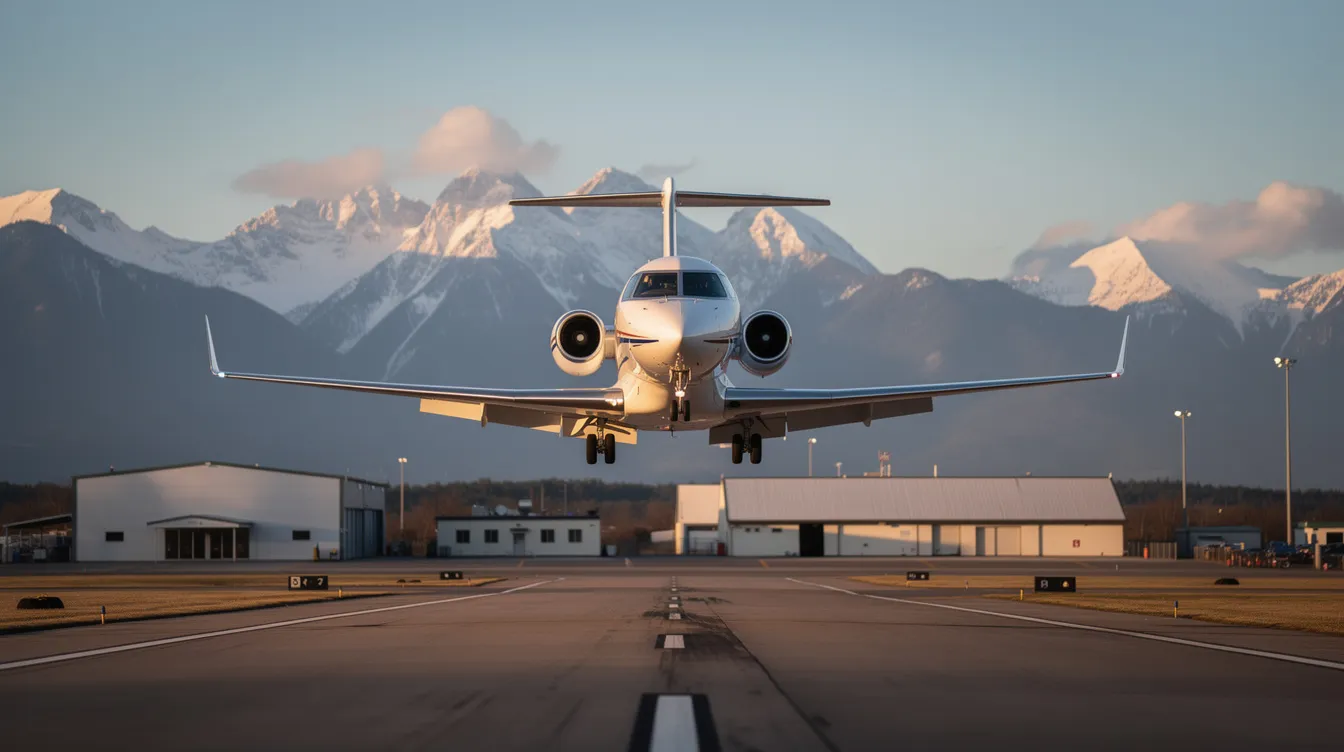
Light jets suit short to medium hops of 2–3 hours, seating 4–8 passengers in club-style configurations with facing seats. These aircraft access shorter runways and smaller airports, eliminating connections through congested hubs.
Representative models include the Embraer Phenom 300 (6–8 passengers, approximately 2,000 nautical miles range), Learjet 75 (8–9 passengers), and Cessna Citation CJ series (5–7 passengers). For a solo traveler, couple, or small team flying New York–Boston or Los Angeles–San Francisco, light jets offer exceptional value and efficiency, especially for those exploring the most affordable private jet options.
Mid-Size and Super Mid-Size Jets (7–12 Passengers)
Stepping up in cabin volume and range, mid-size jets typically carry 7–9 passengers, while super mid-size options accommodate 8–12 passengers and offer transcontinental or early transatlantic capability.
The Cessna Citation X—among the fastest business jets at nearly Mach 0.92 cruise—seats 8–12 passengers for coast-to-coast U.S. flights or European hops. Mid-size options like the Citation Latitude and Hawker 800 series handle similar missions with 7–9 passengers.
These categories prove popular among executives who need flexible city-pair routing without access to the largest cabin classes. A BlackJet member with 6–10 executives flying a same-day round trip for board meetings would typically fall into this category, balancing cost with comfort and nonstop range.
Large and Ultra-Long-Range Jets (10–19 Passengers)
Large-cabin and ultra-long range jets represent the top tier of traditional business jets, seating 10–19 passengers in spacious, multi-zone layouts designed for overnight long-haul flights.
Gulfstream G600: Up to 19 passengers, with a range of 6,500 nautical miles. Notable for nonstop New York–Dubai capability.
Bombardier Global 7500: Seats up to 19 passengers, offers a range of 7,700 nautical miles, and features four distinct cabin zones.
Dassault Falcon 7X/8X: Accommodates 12 to 16 passengers, with a range between 5,950 and 6,450 nautical miles. Known for fly-by-wire technology and shorter runway capability.
For overnight transatlantic or transpacific trips, these jets allow passengers to arrive rested rather than simply transported. Many private flyers find 10–14 people the sweet spot: enough room for a leadership team or extended family while maintaining intimacy and privacy, while larger groups may choose private jets suitable for around 50 passengers.
VIP Airliners and Corporate Shuttles (20–75+ Passengers)
At the far end of private aviation, aircraft originally designed as commercial types—like the Airbus ACJ family or Boeing Business Jets—can be converted into executive configurations.
These VIP airliners range from 20–30 seats in ultra-luxury layouts (featuring bedrooms, conference tables, and full lounges) to 50–75+ seats in high-end corporate shuttle configurations. Governments, sports teams, and multinational corporations use these platforms when moving larger groups with security and privacy requirements.
While BlackJet’s core offering operates within the business jet spectrum, the network can arrange high-capacity VIP or corporate shuttle flights when members need to transport entire leadership teams or client groups.
What Actually Limits How Many People Can Be on a Plane?
Seat capacity isn’t simply about physical space. Safety regulations, weight constraints, range requirements, and service expectations all determine how many passengers can legally and practically fly on any aircraft.
Safety Certification and Emergency Exits
The Federal Aviation Administration, EASA, and other aviation authorities certify maximum seat counts based on evacuation testing—specifically, evacuating a full aircraft in 90 seconds using only half the exits. The Airbus A380’s 853-seat certification derives directly from these tests.
Adding seats requires additional safety equipment: life vests, oxygen masks, and galleys designed for higher passenger loads. Emergency exit count and type directly cap legal passenger capacity regardless of cabin floor space.
BlackJet works exclusively with private jet operators, maintaining rigorous third-party safety audits, ensuring aircraft operate under enhanced standards rather than minimum legal requirements.
Weight, Fuel, and Range Trade-Offs
Every aircraft operates under maximum takeoff weight limits that must account for the empty aircraft, fuel, passengers, and baggage. These elements trade off against each other in practical operations.
A London–Singapore flight may not depart with every possible seat filled if the route requires maximum fuel load. Conversely, a shorter flight can accommodate additional fuel or more passengers at the same weight limit. Private operators often cap the practical passenger count below the certified maximum to preserve range and luggage capacity on long nonstops.
BlackJet’s flight support team advises members when a proposed passenger count or luggage profile might require a refueling stop or larger aircraft type—ensuring seamless travel planning and helping them navigate jet card pricing structures and costs.
Cabin Layout and Comfort Choices
Airlines continually balance seating arrangements against revenue and passenger experience. All-economy configurations maximize seats; two-class or three-class layout options reduce the seat count but increase per-seat yield and satisfaction, similar to how travelers weigh jet card membership costs and benefits when choosing private aviation options.
The contrast with private aviation is stark: a commercial Airbus A320 might carry 180 in economy class. The same airframe configured as a VIP aircraft holds 20–30 lie-flat seats with conference tables and spacious cabin zones. BlackJet clients consistently prioritize the latter approach—fewer passengers, more productivity, and complete privacy.
Choosing the Right Size Plane for Your Group
For most travelers, the practical question isn’t “how many people can fit?” but rather “how many people should fly together on this mission?” The optimal choice balances group size, trip length, luggage requirements, and desired onboard experience.
Matching Group Size to Aircraft Category
Rules of thumb for aircraft selection:
1–4 travelers: Light jet or very light jet for short hops (New York–Boston, London–Geneva)
4–8 travelers: Light or mid-size jet for regional and short transcontinental routes
8–12 travelers: Super mid-size or small, large-cabin jet for cross-country or transatlantic flights
12–19 travelers: Large or ultra-long-range jets with separate zones and lie-flat options
20+ travelers: Corporate shuttle or VIP airliner, depending on the luxury level required
A 10-person executive team flying New York–London overnight would be best served by a large-cabin jet with beds and a separate meeting space—arriving at Heathrow ready for morning meetings rather than recovering from cramped commercial business class.
Comfort, Productivity, and Time Saved vs. Commercial
Consider splitting 8 executives across commercial business class on a 300-seat airliner versus flying together on a 10–12-seat private jet. The private option offers coordinated schedules, confidential discussions during flight, and direct routing to secondary airports closer to final destinations.
Private flyers typically arrive at the airport 20–30 minutes before departure, compared with 2–3 hours for commercial flights. Eliminating check-in queues, security lines, and connections easily saves several hours per trip. For BlackJet members, the per-passenger productivity gain frequently justifies the cost differential—particularly measured against lost billable hours or delayed decision-making.
How BlackJet Jet Cards Simplify Aircraft Sizing
BlackJet’s Jet Card programs—available in 25-hour and 50-hour blocks—provide prepaid access across multiple cabin categories. Members aren’t locked into a single aircraft type.
A member might use a light jet for a quick 2-person day trip, then book a large-cabin jet for a 12-passenger family holiday with a BlackJet 25+ Hour Jet Card, all within the same membership framework. This flexibility eliminates the need to predict travel patterns or commit capital to a single aircraft.
Three pillars support every BlackJet private flight service, much like the core benefits highlighted in the best jet cards for frequent flyers:
Safety: Access to operators with rigorous third-party safety audits and high operational standards
Sustainability: Carbon-neutral flights with emissions automatically offset at no additional cost
Technology: 24/7 digital booking and real-time flight support for aircraft selection in minutes
Complex capacity decisions become seamless, on-demand choices.
Sustainability and Safety: Why Capacity Choices Matter
How many passengers fly on each aircraft has direct implications for per-person emissions, fuel burn, and aviation’s overall environmental profile. While filling a 500-seat commercial aircraft achieves impressive per-seat fuel efficiency, private aviation can operate responsibly by selecting modern aircraft and implementing robust carbon offsetting.
Emissions, Fuel Efficiency, and Seat Density
Aircraft design has advanced dramatically. Newer jets—both commercial and private—are significantly more fuel efficient per seat than previous generations, thanks to advanced technology, including lighter composite materials and more efficient engines.
Higher seat density lowers per-passenger emissions but may reduce passenger comfort. Private jets carry fewer passengers but can offset this through:
Modern fleet selection prioritizing fuel-efficient designs
High load factors within the jet’s category
Verified carbon offset programs neutralizing CO₂ emissions
BlackJet partners with offset providers to ensure carbon-neutral performance for every flight—contributing to sustainability without requiring extra effort from members.
Safety Standards Across Different Aircraft Sizes
Whether an aircraft carries 4 passengers or 400, it must meet strict design, maintenance, and operational safety standards overseen by aviation authorities worldwide. The aviation sector maintains consistent oversight regardless of aircraft size.
Private jets operated by reputable providers are often maintained to standards that equal or exceed major airline requirements, with frequent inspections and highly experienced flight attendants and pilots. BlackJet vets partner operators for safety credentials, including recognized third-party audits, pilot experience minimums (often 1,500+ hours), and modern safety management systems—whether arranging flights in major hubs or private jet charters in Karachi.
Capacity should never increase at the expense of safety. Reputable private aviation providers always prioritize safety over marginal gains in seat capacity.
FAQ
How many people can fit on the biggest commercial plane in regular airline service?
The Airbus A380-800 holds the record as the highest-capacity commercial plane, certified for up to 853 seats in an all-economy configuration. However, most airlines configure it with 500–615 seats because they include first class suites, business class, and premium economy—each requiring more space per passenger. This balance lets airlines like Emirates and Air India offer competitive products while still moving large numbers on high-demand routes.
What is the smallest practical passenger capacity for a private jet?
Very light jets can be configured for as few as 2–4 passengers plus crew. While technically certified for an additional seat or two, many operators limit seating to maintain passenger comfort, aircraft performance, and luggage capacity. For solo travelers, couples, or very small teams on short flights, BlackJet typically recommends light or very light jets where intimacy and efficiency matter most.
Can a private jet carry as many people as a commercial flight if configured differently?
Standard business jets are designed to seat up to about 19 passengers; even with increased seat density, cabin size, and door configurations, capacity remains limited. Only VIP airliners—conversions of commercial aircraft like the ACJ or Boeing Business Jet—can approach airline-like passenger counts, but they’re rarely outfitted densely because their value lies in space and basic amenities rather than seat count. Private aviation is engineered around comfort, not maximum density.
How do airlines decide whether to use a large jet like a 777 or a smaller one like a 737 on a route?
Airlines model expected demand, route length, airport constraints, and operating costs before assigning aircraft. Routes with high, steady demand between major hubs justify larger, long-range aircraft, while thinner or shorter routes are better served by narrow-body aircraft like the A320 or 737. Carriers constantly adjust—upgauging or downgrading—as demand shifts seasonally or economically, just as travelers compare options like NetJets jet card costs and programs when planning private flights.
How does BlackJet help determine the right plane size for my trip?
When members request flights, BlackJet’s digital platform and expert team consider passenger count, route length, airport options, and luggage to recommend an appropriate aircraft category. Members review options—light, mid-size, super mid-size, or large-cabin—with clear indications of typical seating, range, and cabin features before confirming. This ensures you never under- or over-size your aircraft, maintain sufficient range for nonstop travel where practical, and fly carbon-neutral through built-in offsets.
Conclusion: From 4 Seats to 800+ — Choosing What Works for You
Planes can carry anywhere from 4 passengers on a compact light jet to more than 800 on an Airbus A380 in maximum configuration. The right number depends entirely on mission requirements, comfort expectations, and time sensitivity.
Commercial aviation optimizes for cost per seat and for efficiently moving large volumes of passengers. Private aviation optimizes for time saved, privacy, and productivity—using aircraft designed around the passenger experience rather than maximizing passenger capacity.
Several factors determine actual capacity on any flight: safety limits set by aviation authorities, weight and range constraints requiring trade-offs with additional fuel, and cabin layouts reflecting service philosophy. Understanding these constraints helps travelers make informed choices about how—and with whom—they fly.
Elevate your travel—effortlessly. With BlackJet, private flight isn’t reserved for a few. Through Jet Card programs offering rigorous safety, carbon-neutral performance, and unmatched flexibility across aircraft categories, the right-sized jet is always available for your next journey. Explore how BlackJet can reshape the way you travel.


 Sign up with google
 Sign up with Apple