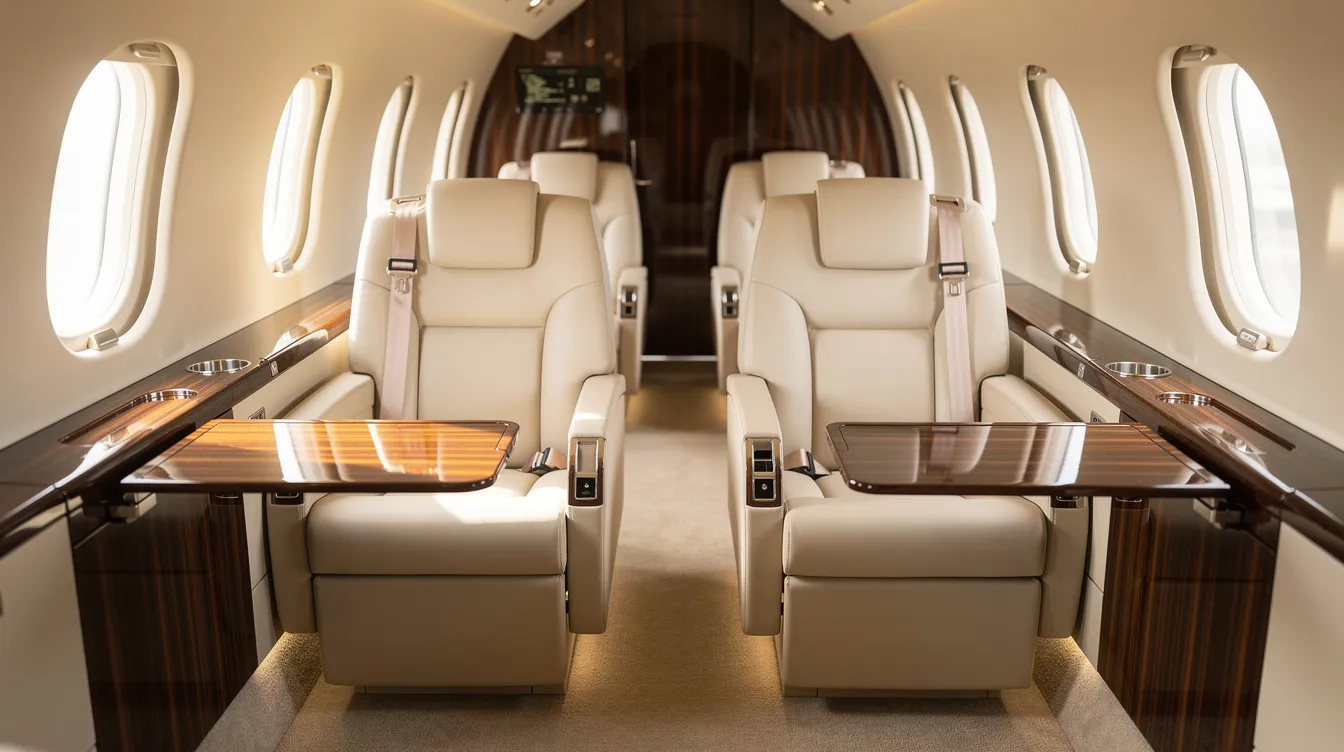
For travelers who expect the highest level of comfort in the sky, the number of first-class seats on a given flight matters more than most people realize. Fewer seats mean more space, more privacy, and more personalized service - but also fiercer competition to secure one. Whether you fly commercial first class on long-haul international routes or are weighing private jet access, understanding how airlines allocate their most exclusive cabin helps you make sharper decisions about your next trip.
Quick Answer: Typical First Class Seat Numbers by Airline and Aircraft
On most flights operated by top airlines with a dedicated first class cabin, you can expect between 4 and 14 first class seats. Here is an overview of what the leading carriers offer on their flagship widebody aircraft:
Airline & Aircraft | First Class Seats | Layout |
|---|
Emirates A380-800 | 14 suites | 1-2-1 (upper deck) |
Emirates 777-300ER "Game Changer." | 6 suites | Fully enclosed |
Singapore Airlines A380 Suites | 6 suites | 1-1 |
Singapore Airlines 777-300ER | 4 seats | 1-2-1 |
Air France 777-300ER La Première | 4 suites | Single row |
Japan Airlines 777-300ER | 8 seats | 1-2-1 |
Lufthansa Allegris 747-8 | 8 suites | 1-1 + center pair |
American Airlines 777-300ER (Flagship First) | 8 seats | 1-2-1 |
First class cabins on commercial flights typically feature between 4 and 12 seats, with standard international first class averaging 8 to 12 seats per aircraft. Some international carriers have private suites with 4 to 8 seats per aircraft, making these cabins far more exclusive than business class sections, which can hold 30 to 76 passengers on the same plane.
It is worth noting that many carriers have phased out first class in favor of larger business class sections. Airlines like Delta, United, and several Asian and European operators now fly new widebodies - including 787s and A350s - without any true first class cabin at all, making seat counts entirely airline-specific.
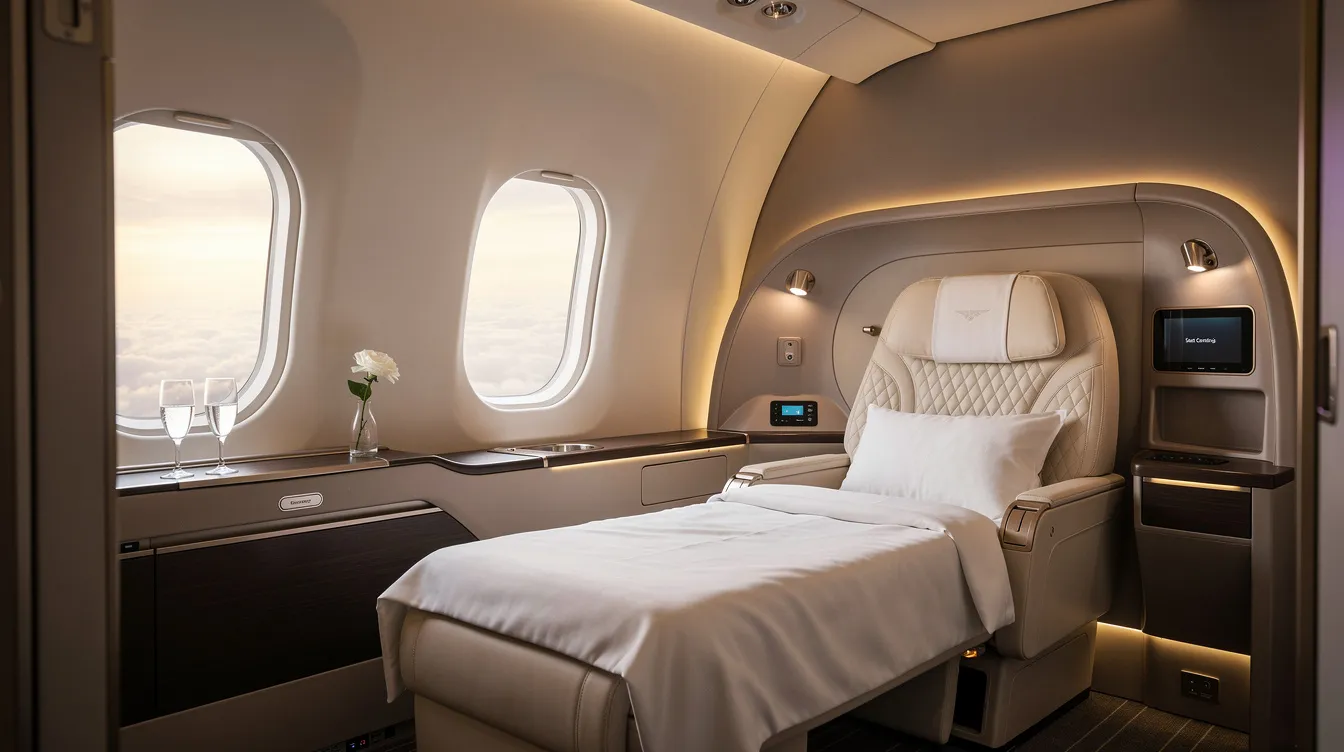
How First Class Cabins Are Configured: From 4-Seat Flagship Cabins to 14-Suite Palaces
The number of first-class seats on a given aircraft is driven by cabin layout, route economics, and how aggressively an airline positions first class versus business class. Airlines configure first class based on market demand rather than aircraft size, which is why you see such variation even within the same plane model.
Common configurations on long-haul international flights include:
1-2-1 layouts with 8–14 seats: Emirates A380 upper deck (14 suites across four rows), or Japan Airlines 777-300ER (8 seats in two rows). These provide direct aisle access for every passenger while maintaining generous suite dimensions.
Ultra-exclusive 1-1 layouts with 4–6 seats: Air France La Première (4 suites in a single row) and Singapore Airlines A380 Suites (6 suites across three rows, with select rows configurable into a double bed for couples).
Legacy 2-2-2 layouts: Increasingly rare and being phased out by airlines refreshing their fleet interiors.
First class cabins usually occupy only the first one to three rows on widebodies. First class seats offer 30–50% more personal space than business class, and first class seats can measure up to 50–100 square feet in size. First class cabins often feature fully enclosed suites for privacy, and many first class seats convert into fully flat beds for comfort.
Cabin Type | Seats | Typical Space Per Passenger |
|---|
Small first cabins (4–6 seats) | 1–2 rows | Maximum privacy, salon-like feel |
Larger first cabins (8–14 seats) | 2–4 rows | Still exclusive, more suite variety |
On narrowbody aircraft used within the U.S. for domestic and transcontinental flights, "first class" may have 12 to 24 seats on narrower-body planes in a 2-2 layout. However, these are closer to premium economy with extra legroom than the suite-style experience found on international flights. First class is usually only found on larger long-haul wide-body jets for the true suite experience.
Why Airlines Keep First Class Seat Counts So Low
First class is designed around yield and exclusivity, not maximum seat density. Here is why airlines keep it intentionally small:
Revenue logic: First class fares on long-haul international flights can cost 2–5 times more than business class, with first class long-haul fares routinely exceeding $10,000 per person one-way. Airlines prefer fewer, higher-yield class seats because low seat counts (4–8) make it easier to keep cabins full on select routes. Every first class suite may occupy the floor space of three to four business class seats, so the revenue per square meter must justify the trade-off.
Passenger experience: Fewer seats support higher crew-to-guest ratios and tailored service from dedicated flight attendants. Spacious suites, separate beds, and features like the onboard shower on the Emirates A380 require substantial floor space per seat. This is why first class cabins are typically smaller than business class cabins - by design.
Many airlines have moved away from traditional first class for business class cabins entirely. When American Airlines, United, or Delta receive new widebodies, they often expand business class rather than installing a first class cabin.
Small first cabins (4–6 seats): Fit inside one row, minimal unsold-seat risk
Large business cabins (40–70 seats): Higher aggregate revenue, broader customer base
First class is available on select long-haul international flights - not all of them, and not on most flights within domestic networks.
Business Class vs First Class Seat Counts and Layouts
Business class is now the default premium cabin on most international flights, while first class is a niche, ultra-premium product offered by a shrinking number of carriers. The difference in class cabins is dramatic:
Airline & Aircraft | First Class Seats | Business Class Seats |
|---|
Emirates A380 | 14 | ~76 |
Japan Airlines 777-300ER | 8 | 49 |
Lufthansa 747-8 | 8 | 80 |
Air France 777-300ER | 4 | ~58 |
Business class seats on long-haul aircraft are almost always lie-flat seats with direct aisle access in a 1-2-1 layout, which has narrowed the physical comfort gap considerably. But first class still wins on space per passenger, privacy, and personalization. First class cabins provide 30–50% more personal space than business class - the difference between a business class cabin that feels like an upscale hotel floor and a first class cabin that feels like a private club.
Business class passengers share their cabin with 40 to 76 other passengers. First class passengers
meals arrive from renowned chefs, to how much attention you receive during the flight.
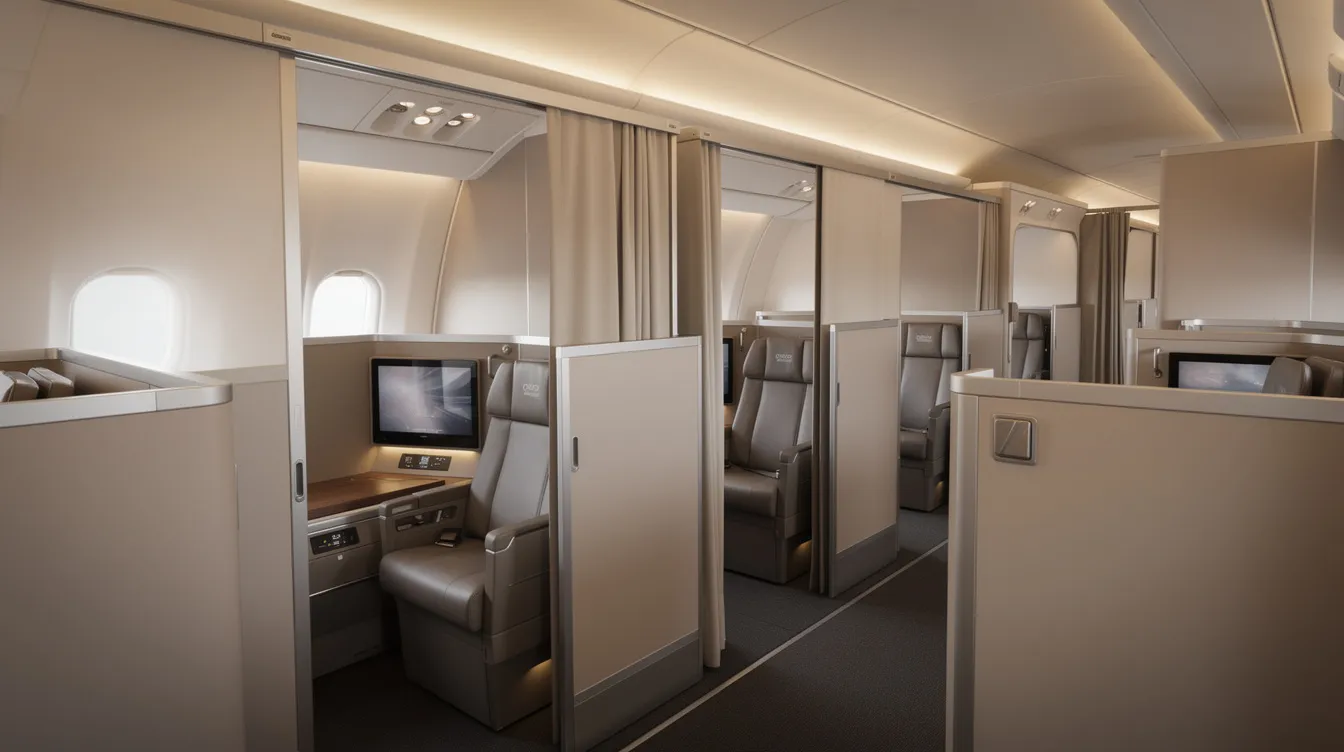
Real-World Examples: How Many First Class Seats on Top Airlines
First class cabins vary dramatically by airline, from four-seat salons to double-digit luxury suites. Here is what the leading carriers actually offer.
Air France La Première: Just 4 first class seats in a single row on select aircraft - specifically the 777-300ER. Each suite is curtain-separated with personalized service for each traveler. First class dining includes meals curated by Michelin-starred chefs, and the cabin provides a level of premium service that justifies first-class fares well above €10,000 one-way.
Emirates: The A380 features 14 first-class suites on the upper deck with a three-room suite concept (suite, shower spa, and onboard bar). The newer 777-300ER "Game Changer" configuration offers 6 fully enclosed suites. First class passengers can board the aircraft before others, access spa treatments, and enjoy complimentary alcoholic and non-alcoholic drinks throughout the flight. Emirates also offers better food programs featuring meals designed by renowned chefs.
Singapore Airlines: The A380 Suites class provides 6 suites in a 1-1 layout, with rows 1 and 2 pairable into a double bed for couples. The 777-300ER carries 4 first-class seats on select international flights. Singapore Airlines is widely considered among the top airlines for first-class service globally.
American Airlines: The legacy 777-300ER Flagship First configuration has 8 seats in a 1-2-1 layout. However, on most new long-haul international routes, Flagship Business is now the top cabin - an example of how many airlines have removed traditional first class.
Japan Airlines: 8 first-class seats on many 777-300ER routes, with spacious seating in a 1-2-1 configuration. Each seat converts to a lie-flat bed of approximately 80 inches, and JAL's first-class service includes meals prepared by renowned chefs.
Other key players: Lufthansa offers 8 first-class seats on its 747-8 fleet, Etihad features its Apartment and three-room suite products on select aircraft, and Cathay Pacific maintains 6 first-class seats on certain long-haul routes. Class passengers on these carriers enjoy the same pattern: very few seats, very high service.
First Class Lounges, Ground Experience, and Seat Availability
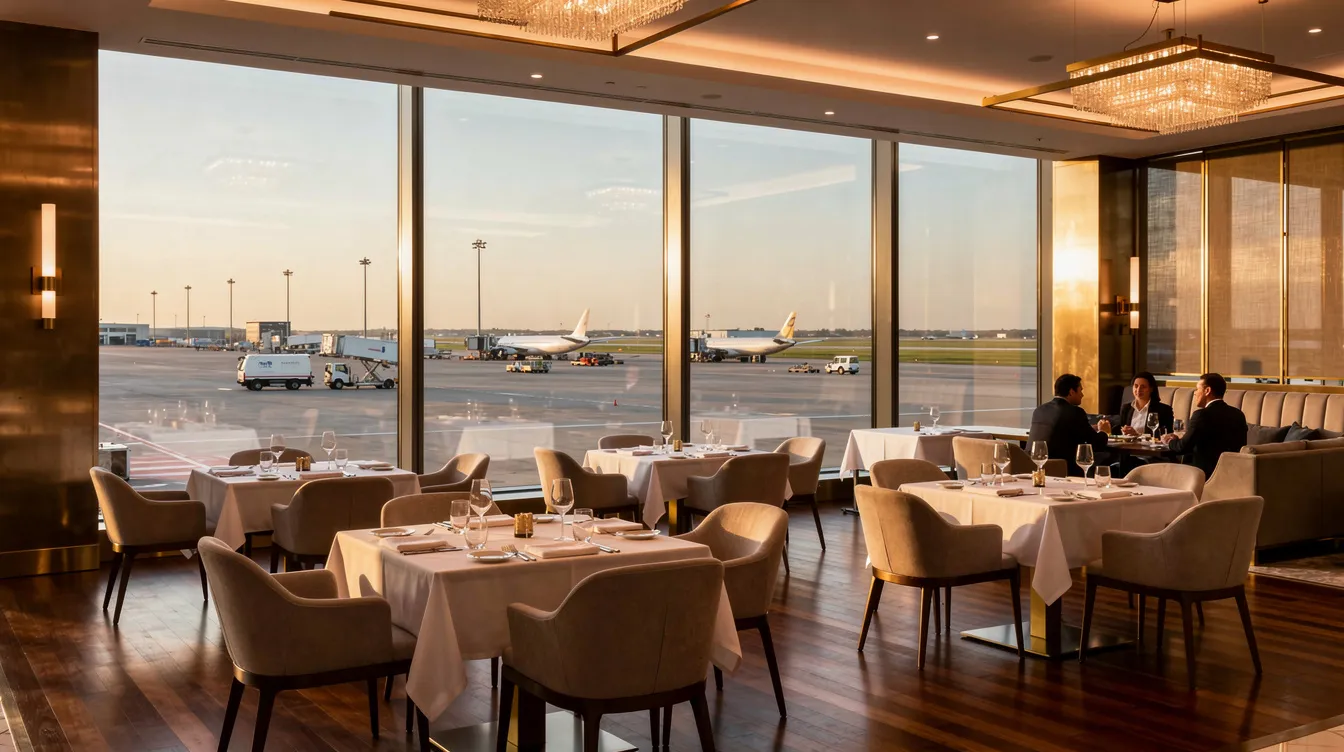
First class is not only about the seat on the aircraft. The limited seat count also controls how many people share ground services, first-class lounges, and lounge access privileges. First class passengers enjoy dedicated check-in and security zones, expedited baggage handling, and private terminal access at select airports.
Smaller first-class cabins translate to more exclusive ground experiences:
Air France's La Première Lounge at Paris CDG serves only a handful of class passengers per departure, with nap rooms, à la carte dining, and spa treatments.
Emirates' first class lounges in Dubai offer fine dining, showers, and quiet rooms for a limited number of guests.
The scarcity matters for booking as well. First class award seats are often limited to one or two per flight, which pushes some travelers toward small private jets for luxury travel, where the entire cabin is theirs. Loyalty program members with large point balances from Amex, Chase, or Citi transfer partners must plan months in advance to secure these seats, while others instead look at the most affordable private jet options to bypass airline constraints. Airlines prioritize paid first-class fares over awards because of the tiny cabin size and high revenue per seat.
Booking strategies for finding first-class seats:
Search flexible dates across a full month
Target routes operated by A380s or 777-300ERs with flagship configurations
Monitor schedule changes - aircraft swaps sometimes open or close first class availability
Check in early and monitor upgrade lists if flying on a premium economy or business ticket
From First Class Seats to Private Jets: When a Jet Card Makes More Sense
Even the most luxurious commercial first-class cabin is limited by a fundamental constraint: you are competing with other passengers for a handful of seats on someone else's schedule. When availability is scarce, timing is inflexible, or your group exceeds two to three people, the calculus shifts toward private aviation.
Consider a scenario: a corporate team needs to fly from New York to London for a board meeting. Securing 4 first class seats on the same flight - especially on a carrier like Air France with only 4 seats total - requires booking months ahead with zero guarantee. A BlackJet Jet Card solves that in a single call, giving you streamlined access to premium private jet card programs without the commitments of full ownership.
How Jet Cards work: BlackJet offers prepaid 25-hour or 50-hour structures that lock in access to private planes across light, midsize, and large cabin categories - without ownership, similar in concept to other 50-hour jet card pricing models. You decide departure times, airports, and routing regardless of how many commercial first-class seats exist on a given route, while benefiting from the predictable costs outlined in comprehensive jet card pricing guides.
Strategic advantages versus commercial first class:
No competition with other passengers for scarce award seats
Direct flights into secondary airports closer to business districts or resorts, with greater flexibility on timing
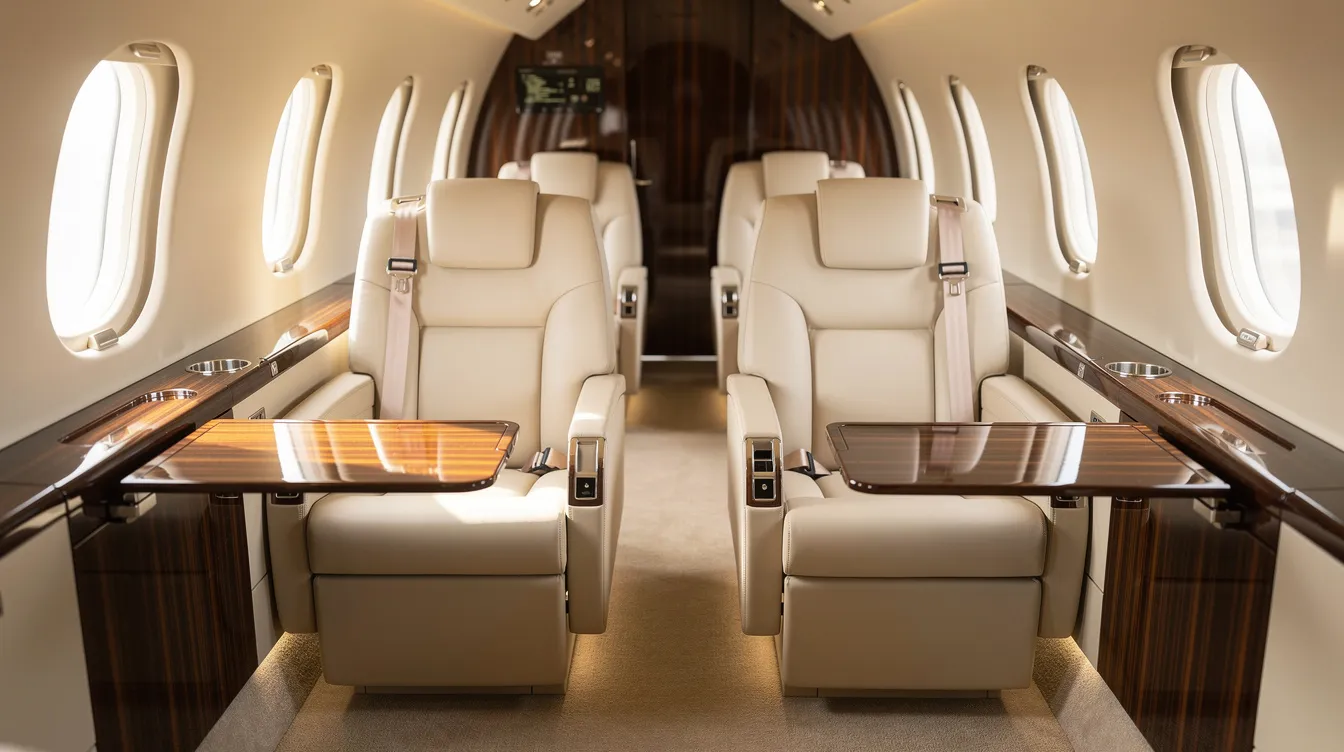
The entire cabin is effectively first class - privacy that even enclosed suites cannot match
BlackJet ensures every journey is carbon neutral at no extra cost, contrasting with commercial flying, where sustainability choices are limited
Rigorous safety certification and technology standards with 24/7 real-time support and proactive flight monitoring
Factor | 4 First Class Seats (Commercial) | 8-Seat Private Jet (BlackJet Jet Card) |
|---|
Cabin control | Shared with the crew and other passengers | The entire aircraft is yours |
Schedule | Fixed airline timetable | You set the departure time |
Airport | Major hubs, long security lines | FBOs at select airports, minutes to boarding |
Availability | 1–2 award seats per flight | Guaranteed access with Jet Card hours |
Sustainability | Airline-dependent | Carbon-neutral as standard |
Choosing Between First Class and Private Jet for Your Next Trip
The number of first-class seats on a given aircraft is only one factor. Schedule control, privacy, ground time, and security often matter more to high-net-worth and corporate travelers who fly frequently.
Choose commercial first class when:
Flying a well-served corridor with strong products (Emirates A380, Singapore Airlines Suites, Air France La Première)
You value airline lounge access, loyalty program benefits, and the experience of flagship airline products
You are traveling solo or as a couple and can secure seats well in advance
Consider a BlackJet Jet Card when:
You need to move teams of 3–8 people, or even larger groups, on 16-seat private jets, without splitting across economy class and business class on separate flights
Same-day multi-city itineraries are required - something airlines cannot match, especially when you factor in the flexible cost structures detailed in a private jet price list overview.
You want guaranteed privacy, flexible departure times, and direct access to smaller airports, choosing from a range of private jet sizes tailored to each mission.
The benefits of private jet travel - from time savings to cabin control - outweigh the appeal of a commercial suite, especially once you understand the different types of private jets available.
Frequently Asked Questions
Is first class worth it compared to business class when seat counts are low but prices are high?
First class seats typically cost 2–5 times more than business class. Whether the premium is justified depends on if the 30–50% extra personal space, superior dining, and the significant privacy—often a mile away from the nearest passenger—align with your travel priorities.
How many first-class seats does a typical commercial flight have versus a private jet cabin?
A commercial first-class cabin accommodates 4–14 seats shared among unrelated passengers. In contrast, midsize or large-cabin private jets seat 6–14 passengers, with the whole aircraft reserved exclusively for your group. The top private jets offer configurations that rival or even exceed the comfort of airline suites.
Can private jets match or surpass long-haul first-class comfort?
For flights under 6–8 hours, absolutely. On ultra-long-haul international flights (12+ hours), the finest airline suites with lie-flat beds remain difficult to beat, but large-cabin jets with bed configurations come very close—especially when chartering private jets that can accommodate around 20 passengers, eliminating airport delays.
The number of first-class seats available is limited and decreasing as many airlines consolidate premium seating into business class. However, your options expand considerably when considering the range of private jets available, from the best small private aircraft to large-cabin jets accommodating up to 50 passengers.
Conclusion: Elevate Your Travel Experience with Informed Choices
Understanding how many seats are in first class reveals more than just numbers—it highlights the exclusivity, comfort, and strategic value of this premium cabin. With typically only 4 to 14 seats per flight, first class offers unparalleled privacy, personalized service, and spacious suites that redefine luxury air travel. However, the shrinking availability of first class on many routes and aircraft means discerning travelers must weigh the benefits against the flexibility and privacy of private jet access.
For those prioritizing ultimate control over schedule, space, and sustainability, private jet programs like BlackJet’s Jet Card offer a compelling alternative, and comparing the best jet cards for frequent flyers can help refine that choice. These programs provide guaranteed access to entire aircraft with carbon-neutral flights, seamless booking technology, and rigorous safety standards—delivering a travel experience that surpasses even the finest first-class cabins, while maintaining the high safety levels outlined in dedicated guides on whether private jets are safe.
Whether choosing the refined elegance of commercial first class or the bespoke freedom of private aviation, your next journey should reflect your unique demands for comfort, efficiency, and exclusivity, including whether you simply want to buy a seat on a private jet rather than an entire aircraft. Explore how BlackJet can elevate your travel beyond traditional boundaries and unlock a new standard of premier access in the sky, whether through informed decisions about private jet pricing and options or even exploring UK private jets for sale if ownership aligns with your needs.


 Sign up with google
 Sign up with Apple