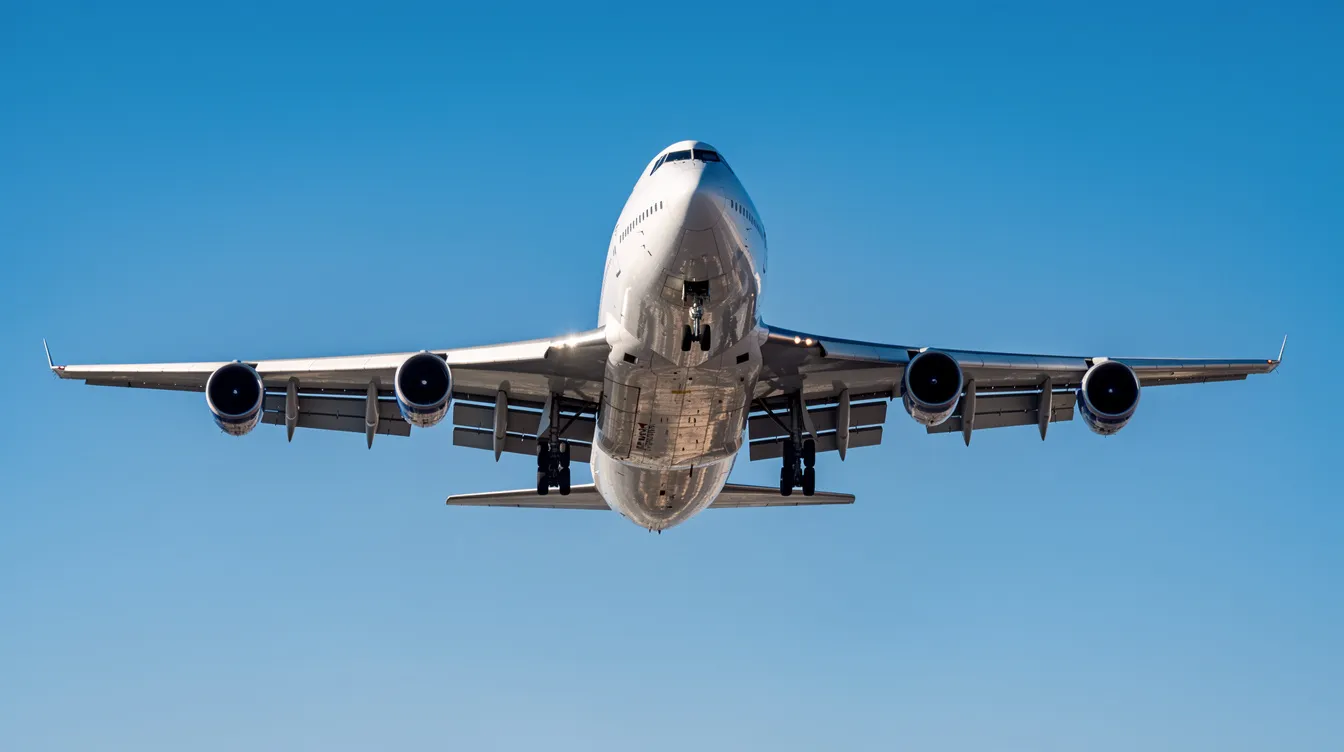
Few aircraft have shaped the world of aviation quite like the Boeing 747. With its distinctive raised cockpit design, four engines, and a fuselage wide enough to redefine long-haul travel, the "Queen of the Skies" remains an engineering benchmark more than five decades after its debut. But how much does a 747 weigh, exactly? The answer depends on the model, the configuration, and what you mean by "weight." Below, we break down the numbers, explain what they mean, and connect the dots to how modern private aviation delivers intercontinental range without the scale of a jumbo jet.
Quick answer: How much does a 747 weigh?
The most direct answer starts with the most recognizable model. The typical operating empty weight of a Boeing 747-400 is about 412,300 lbs (roughly 187,000 kg). Its maximum takeoff weight reaches up to 910,000 lbs (approximately 412,000 kg) in the extended-range configuration. The heaviest variant ever built, the 747-8, pushes that ceiling even further: the Boeing 747 has a maximum takeoff weight of 987,000 pounds (about 447,700 kg).
Here is how major variants compare at a glance:
747SP - Empty weight ~325,000–337,000 lbs (~148,000–153,000 kg); MTOW ~630,000 to 696,000 lbs (~286,000–316,000 kg)
747-400 - Empty weight ~412,300 lbs (~187,000 kg); MTOW ~875,000–910,000 lbs (~397,000–413,000 kg)
747-8I (passenger) - Empty weight ~485,300 lbs (~220,100 kg); MTOW ~987,000 lbs (~447,700 kg)
To make those numbers intuitive, imagine this: a fully loaded 747-8 at MTOW is the equivalent of roughly 35 London double-decker buses lined up bumper to bumper, or more than four fully loaded Boeing 737-800s stacked together.
It is worth noting that these figures refer to certified maximum takeoff weight - the highest weight at which the plane is approved to leave the runway. The actual weight on any given flight will be lower, shaped by how much fuel the crew loads, how many passengers are on board, and how much cargo sits in the hold.
A few definitions to keep in mind:
Empty weight (manufacturer's empty weight): the bare airframe with engines and fixed equipment, but no fuel, passengers, or cargo.
Operating Empty Weight (OEW): the empty structure of the aircraft with crew, fluids, and equipment included, but still no payload or usable fuel.
Maximum takeoff weight (MTOW): the highest certified weight at which the aircraft may safely take off, encompassing OEW plus all fuel and payload.
Why does any of this matter beyond trivia? Because weight is the single variable that determines range, fuel burn, runway length requirements, and climb performance. Understanding it helps explain why airlines choose certain aircraft for certain routes, and ultimately why private travelers benefit from choosing the right aircraft category - something BlackJet's jet card programs are designed to simplify.
2 Understanding Boeing 747 weight and empty weight: key definitions and concepts
Aviation uses precise weight categories to protect structural integrity, guarantee performance margins, and satisfy government regulatory standards enforced by bodies like the FAA. Misunderstanding - or miscalculating - any of these categories can compromise safety, which is why every operator verifies weight data before departure.
Manufacturer's empty weight is the starting point: the airframe, engines, hydraulics, avionics, wiring, and all permanently installed equipment. For a 747-400, assume this baseline sits around 178,000–180,000 kg before you add anything that moves or flows.
Operating Empty Weight (OEW) builds on that baseline by adding the flight crew, required operational fluids (engine oil, hydraulic fluid, unusable fuel trapped in lines), and standard equipment like galleys and lavatories. For the 747-400, OEW lands at approximately 412,300 lbs (about 187,000 kg). This is the weight of the plane when it is ready to fly, but before a single passenger boards or a drop of usable fuel enters the tanks.
Payload is everything the aircraft carries for revenue: passengers, their luggage, and any freight or cargo stowed below or on the main deck in freighter configurations. A fully configured 747-8F freighter, for example, can carry a maximum payload of around 308,000 lbs (~140,000 kg).
Fuel load is the usable jet fuel pumped into the wing tanks, center-wing tank, and any auxiliary tanks. On a standard 747-400, fuel capacity is approximately 57,285 US gallons (~216,840 liters). That fuel weighs roughly 384,000 lbs (~174,000 kg) when the tanks are topped off.
Maximum takeoff weight is the ceiling that ties everything together. For a 747-400, MTOW is approximately 875,000–910,000 lbs depending on the subvariant. Every flight must stay at or below this certified limit.
A simplified example of how actual takeoff weight is calculated on a hypothetical transatlantic flight:
OEW: ~187,000 kg
Fuel loaded: ~150,000 kg (not full tanks, since the route doesn't require it)
Payload: ~50,000 kg (passengers, bags, belly cargo)
Actual takeoff weight: ~387,000 kg - safely under the 747-400's MTOW of ~397,000 kg
When a plane is heavier, it needs more runway to reach the speed required to generate enough lift, it burns more fuel per nautical mile, and it may be restricted to lower cruise altitudes until fuel is burned off. Pilots, dispatchers, and flight planners weigh every variable.
Weight and balance calculations are integral to preflight safety procedures, functionally similar in principle to the verification successful steps that BlackJet crews and partner operators follow on every private jet movement - scaled differently, but equally rigorous.
How different Boeing 747 variants compare in weight
The term "Boeing 747" actually refers to a family of aircraft spanning several variants developed over more than five decades. Boeing developed the original 747 in the late 1960s, and the plane made its first test flight on February 9, 1969. It was the first wide-body aircraft produced, and its production run reshaped commercial aviation permanently. By 2015, Boeing produced over 1,500 Boeing 747 aircraft across all models.
Here is how the major variants stack up:
747-100 - The original model, manufactured at Boeing's Everett, Washington facility. MTOW: approximately 735,000 lbs. This was the aircraft that Pan Am introduced into service on January 22, 1970, launching the era of mass long-haul travel.
747SP ("Special Performance") - A shortened fuselage variant built for ultra-long-range routes. MTOW: 630,000 to 696,000 lbs. Operators like Iran Air and Pan Am used the SP to connect city pairs that the standard 747-100 couldn't reach nonstop. Its lighter weight and special performance profile made it capable of routes previously beyond reach for wide-bodies.
747-200 - A higher-capacity evolution with more powerful engines and a reinforced structure. The 747-200 can reach a maximum takeoff weight of 833,000 pounds. Airlines like Lufthansa and many cargo operators relied heavily on this model.
747-300 / Stretched Upper Deck - The stretched upper deck variant added extra seating capacity on the upper deck without significantly lengthening the fuselage, an efficient way to boost revenue per flight.
747-400 - The most widely operated passenger variant. MTOW: up to 910,000 lbs. Its wingspan of approximately 211 feet (including winglets) and four main landing gears, each with four wheels, gave it the structural capability to handle heavier loads and longer ranges - typically around 7,260 nautical miles with a full passenger load.
747-8I / 747-8F - The final chapter. The 747-8 is 250 feet 2 inches long, making it the longest variant and the longest commercial aircraft Boeing ever built. Its OEW is around 485,300 lbs, and its MTOW reaches 987,000 lbs. The 747's wings have a high sweep angle of 37.5°, a design feature carried across generations that helps the aircraft cruise efficiently at speeds around Mach 0.855.
The 747's upper deck can be configured for lounges or seating, a feature that airlines have displayed in everything from first-class suites to onboard bars, depending on the carrier and era.
For context, the Airbus A380-800 - the only plane that eventually surpassed the 747 in passenger capacity - carries an MTOW of approximately 1,267,600 lbs (~575,000 kg) and an empty weight of roughly 610,700 lbs (~277,000 kg). Even the heaviest 747-8 is lighter than the A380 on both measures, which is one reason the 747-8 posts lower operating costs per seat in certain configurations, with Boeing claiming roughly 13% less fuel burn per seat compared to the A380.
While 747s shaped long-haul commercial history, modern private aviation - including the fleet partners BlackJet works with - often uses more efficient twin-engine aircraft in super-midsize and large-cabin categories, achieving comparable nonstop ranges with a fraction of the weight and fuel demand.
4 How much can a 747 carry? Maximum takeoff weight and maximum capacity explained
The question "how much does a 747 weigh?" naturally leads to a follow-up: how much can it actually carry? The answer, whether measured in passengers, cargo, or fuel, is staggering, especially when compared with private charter options like the best private jets for 50 passengers that offer similar airliner-scale capabilities for tailored group travel.
Passenger capacity varies by configuration. A standard 747-400 in a typical three-class layout carries around 366 to 416 passengers. The 747-8I in a high-density, single-class layout can seat up to approximately 467. The 747 held the passenger capacity record for 37 years until the Airbus A380 entered service - a testament to the plane's original ambition. Maximum capacity in evacuation-certified configurations has historically pushed even higher, though airlines rarely approach those numbers in revenue service.
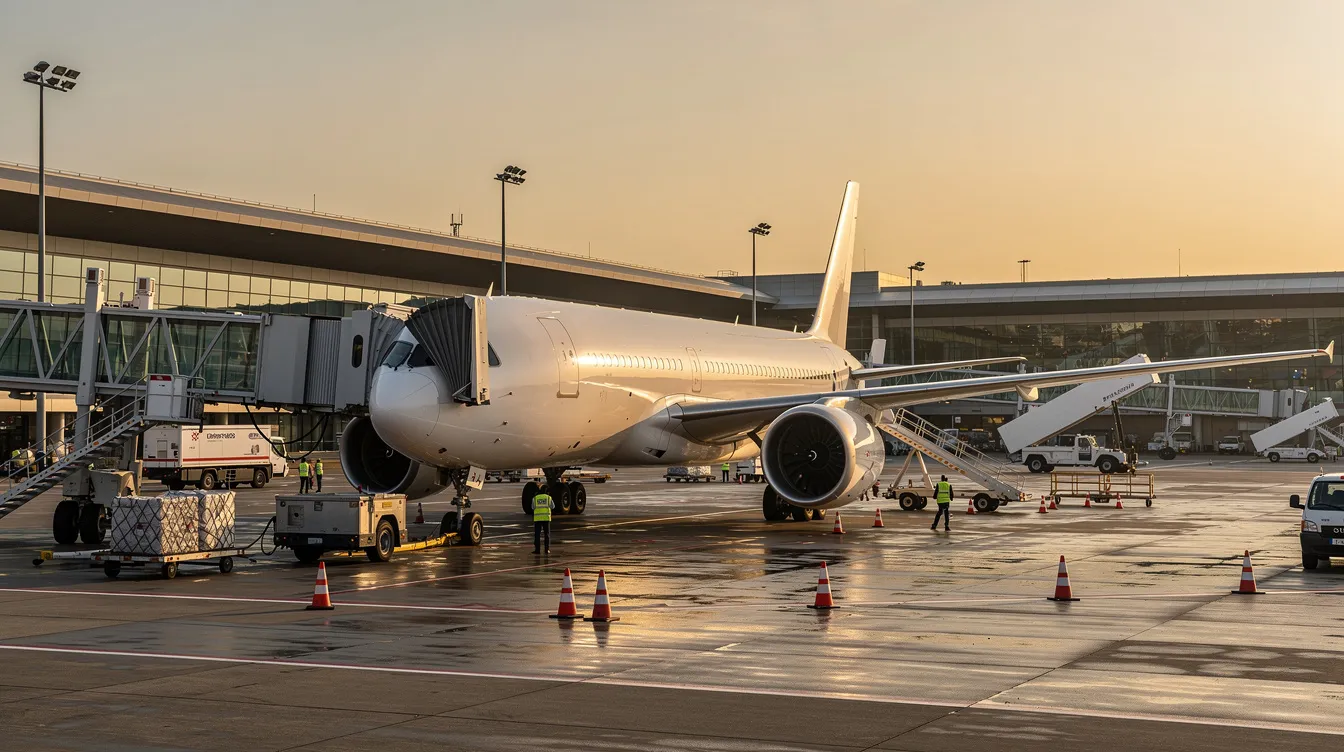
Cargo and freight capacity is where the 747 freighter truly earns its keep. The 747-8F can carry a maximum payload of roughly 134,000 kg (about 295,000 lbs). To put that in human-scale terms, that is the estimated equivalent of around 78 BMW 3 Series sedans loaded into the fuselage through the front cargo door and side cargo door. Freighter variants feature reinforced floors, wider door openings, and a nose that can swing open - the hinged front section is one of the most recognizable features of any freight aircraft on an airport ramp.
Fuel capacity and the weight trade-off are inseparable from payload planning. A 747-400 holds approximately 216,840 liters (~57,285 US gallons) of usable fuel in standard configuration, with ER variants adding auxiliary tanks for even greater range. That fuel weight competes directly with cargo and passengers within the MTOW envelope:
On ultra-long routes, fuller fuel tanks reduce the allowable payload.
On shorter routes, airlines and cargo operators can maximize passenger or freight loads because less fuel is needed.
This trade-off is a constant calculation for dispatchers. It explains, for instance, why a cargo carrier might accept less freight on a transpacific leg but fill the plane completely on a domestic repositioning flight.
While no private client needs 400-plus seats, the same weight-planning principles govern large-cabin jets that BlackJet members may use for missions like New York to London, Dubai to Geneva, or Los Angeles to Honolulu. The physics of lift, fuel, and payload don't change - only the scale does, whether you are flying a compact large-cabin jet or a VIP airliner configured as the best private jet solution for 20 passengers.
From the Queen of the Skies to private cabins: what 747 weight teaches private fliers
The Boeing 747 earned its nickname as the Queen of the Skies by demonstrating that an aircraft capable of crossing oceans could also carry hundreds of people in relative comfort. It remains a useful benchmark for understanding scale. But for today's high-net-worth traveler, scale is rarely the point. Precision, privacy, and control are.
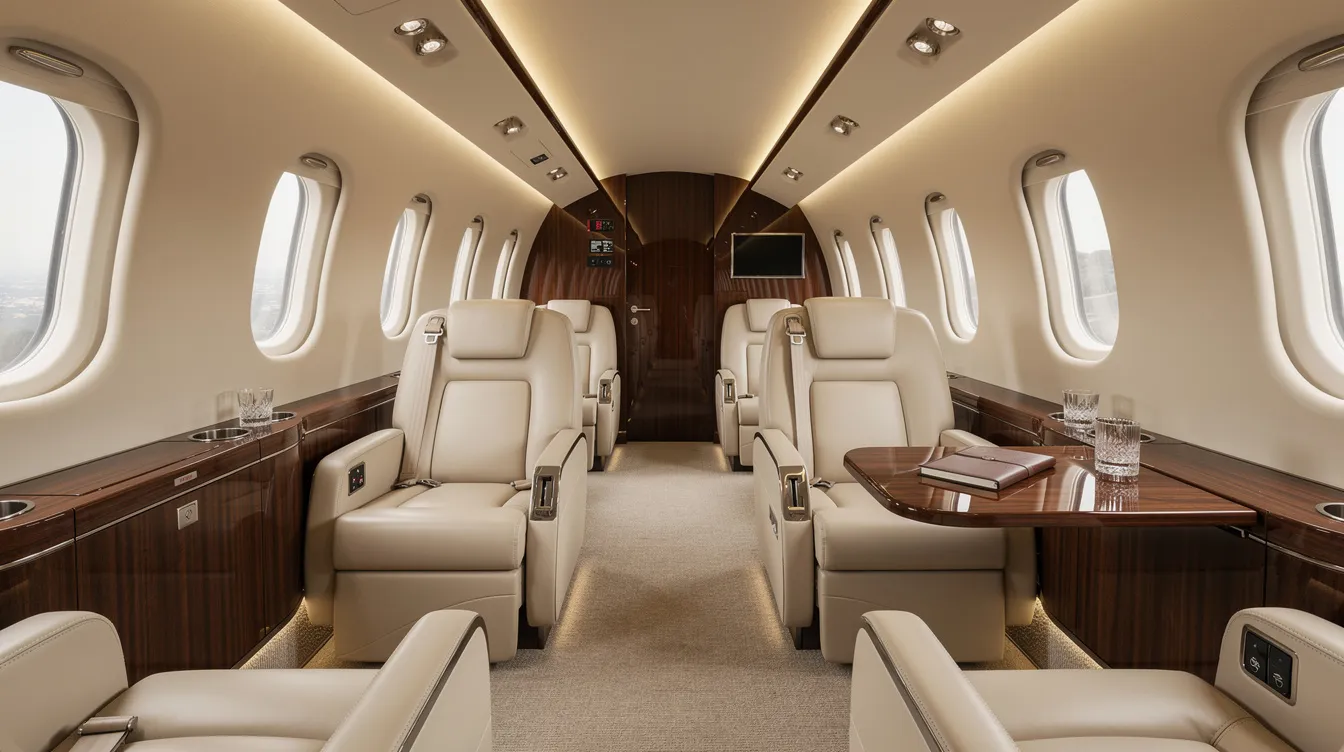
Consider how aircraft weight shapes the cabin experience. A 747 in dense economy configuration might allocate 30–32 inches of pitch per seat and pack passengers shoulder to shoulder across ten-abreast rows. A large-cabin private jet seating 14 to 16 passengers takes a fundamentally different approach: much of the weight budget that would go toward hundreds of economy seats instead goes toward lie-flat seating, full galley service, spacious lavatories, and generous baggage allowances, similar to many of the best private jets for around 15 passengers used for global missions. The per-passenger weight allocation on a private jet is far higher, and that is precisely the point.
Imagine a BlackJet member flying a transatlantic business trip on a Bombardier Global 7500 or similar long-range private jet. The aircraft's MTOW is roughly 100,000 to 115,000 lbs - a fraction of a 747's - yet it offers nonstop range exceeding 7,000 nautical miles for a small group of 10 to 14 travelers, similar in capability to many of the best long-range private jets for sale on the market today. Luggage, catering, even pets travel on the same aircraft, all factored into the performance envelope without the complexity of managing 400 passengers and 200 tons of fuel.
Unlike scheduled 747 services where you are waiting at a hub gate alongside hundreds of other passengers, private aviation lets you tailor every variable: departure time, airport selection, passenger count, and onboard amenities. The efficiency isn't about cramming more people onto a plane - it's about delivering the right experience for the mission, which starts with choosing among different private jet sizes and categories to match your group and route.
BlackJet's jet card model - available in 25-hour and 50-hour programs - gives clients guaranteed access to appropriate aircraft categories, from light jets for short hops to long-range large cabins for intercontinental flights, without ever needing to think about the complex weight planning happening behind the scenes, whether they are comparing 25-hour solutions or exploring a 50-hour jet card cost breakdown for more intensive travel patterns. For many first-time users, a 25-hour jet card guide is a helpful reference point for what to expect from entry-level memberships. Travelers comparing membership options can benefit from understanding overall jet card cost and pricing structures.
All of this planning, from weight and balance to route selection and performance calculations, is handled by certified operators and BlackJet's 24/7 real-time support team, making the experience effortless for the traveler.
Safety, security verification, and performance: why weight calculations matter
Whether it is a 747 jumbo jet or a midsize private aircraft, rigorous safety and security protocols start long before the wheels leave the ground. Weight is not just a number on a spec sheet - it is a critical input that determines whether a flight can be conducted safely.
The preflight process on any certified commercial or private flight includes detailed weight and balance calculations, performance planning for the expected runway length and weather conditions, fuel planning with required reserves, and thorough crew briefings. If weight data is incorrect - say a miscounted cargo manifest or an underestimated fuel load - the consequences can erode safety margins during takeoff, climb, or landing. The FAA and international regulators hold operators responsible for getting these numbers right on every single departure.
The concept of performing security verification extends beyond the physical aircraft into the digital world. When you visit a website to book travel, the page may ask you to confirm you are human before proceeding. This is because modern platforms must protect against malicious bots that can overwhelm booking systems, scrape pricing data, or compromise user accounts. If you have ever encountered a respond ray id confirmation or a brief bot check before reaching a booking page, that is the security service working exactly as intended - and a verification successful message simply means you are cleared to proceed.
Many aviation and travel website platforms use automated security verification tools (CAPTCHAs, challenge pages, or similar checks) to prevent unauthorized bot traffic and protect member data. These brief interruptions are a standard and expected part of the digital experience.
BlackJet's proprietary digital platform uses modern security verification tools to protect member accounts, trip data, and payment information. On the operational side, partnered operators follow industry-leading safety standards - including ARGUS Platinum or Gold ratings, Wyvern Wingman certification, and IS-BAO stages where applicable. Every operator verifies that weight, balance, fuel, and performance data are correct before a flight is released.
For BlackJet clients, all of these weight, balance, and safety checks run quietly in the background. Your role is to focus on the meeting, the vacation, or the family moment at the other end of the flight - not on whether the center of gravity is within limits.
BlackJet jet cards vs flying on a 747: time, comfort, and control
Traditional 747 travel represents the pinnacle of mass scheduled aviation - a model built for volume, operated on fixed timetables, and accessed through crowded airport hubs. BlackJet's jet cards represent something fundamentally different: tailored, on-demand access for individuals and small groups who value their time as much as their destination, even when they are exploring more affordable private jet options as an entry point into private aviation.
The contrasts are displayed clearly when you compare the two experiences side by side:
Time saved: skip long check-in queues, hub connections, and extended security lines. Private terminals at thousands of airports mean you can arrive minutes before departure.
Airport access: a 747 requires major international airports with runways long enough to handle nearly a million pounds of aircraft. A private jet can operate from smaller, more convenient airports closer to your home or meeting site.
Cabin privacy: instead of sharing space with hundreds of passengers in a cabin configured for maximum capacity, you fly in a fully private cabin with your chosen companions.
Flexibility: no fixed schedule. You choose when you fly, and if plans change, your trip adapts with you.
BlackJet's jet card programs work on a straightforward model: prepaid flight hours (25-hour or 50-hour options), access to multiple cabin classes, and fixed or capped hourly rates that eliminate pricing surprises, mirroring many of the structures outlined in broader jet card pricing guides. You are not buying a plane or committing to a single aircraft type - you are buying access to the right aircraft for each mission, and the broader BlackJet private jet card platform is designed to keep that experience simple and transparent.
Technology is central to the experience. BlackJet's digital platform provides 24/7 booking tools, real-time flight support, and transparent pricing - all accessible from a single page on your phone or desktop. Compare that with the lack of schedule flexibility on commercial 747 routes and the complexity of rebooking a missed connection at a busy hub.
On sustainability: BlackJet ensures every flight is carbon-neutral through verified carbon offset programs, while also prioritizing modern, fuel-efficient aircraft - a notable evolution from the fuel-hungry 747 era, where a single transatlantic flight could burn upward of 150,000 liters of jet fuel. For many travelers, these sustainability benefits are weighed alongside overall private jet price and access options when deciding how to fly.
If you appreciate the engineering marvel of the Boeing 747 but prefer private control over your schedule, a jet card can replicate intercontinental capability on a more personal, efficient scale.
FAQ: Boeing 747 weight and private jet travel
How much does a 747 weigh empty?
The typical operating empty weight of a Boeing 747-400 is about 412,300 lbs (~187,000 kg). The 747-8, the heaviest variant, has an OEW of approximately 485,300 lbs (~220,100 kg). These figures include the airframe, engines, crew, and operational fluids but no fuel or payload.
What is the maximum takeoff weight of a 747-400 and 747-8?
The 747-400's maximum takeoff weight is 910,000 pounds in its extended-range configuration. The 747-8 has a maximum takeoff weight of 987,000 pounds, making it the heaviest certified variant in the family.
How many passengers can a 747 carry at maximum capacity?
A 747-400 in a standard three-class layout seats approximately 366 to 416 passengers. The 747-8I can carry up to roughly 467 in a high-density configuration. The 747 held the world record for passenger capacity for 37 years.
Is a 747 heavier than an Airbus A380?
No. The A380-800 has a higher MTOW of approximately 1,267,600 lbs (~575,000 kg) and an empty weight of about 610,700 lbs (~277,000 kg). Both figures exceed the 747-8's corresponding numbers, making the A380 the heavier aircraft.
Why do airlines retire 747s?
Airlines have phased out most passenger 747s due to high fuel consumption from four engines, elevated maintenance costs on aging airframes, and the superior economics of modern twin-engine aircraft like the Boeing 777X and Airbus A350. Freighter variants remain in active service because their cargo door configurations and nose-loading capability are difficult to replicate.
How long is a 747?
The 747-8 is 250 feet 2 inches long, the longest variant in the family. Earlier models like the 747-400 measure approximately 231 feet. The wingspan on a 747-400 with winglets is about 211 feet.
Do private jets weigh less but fly as far as a 747?
Yes, in many cases. A Bombardier Global 7500, for instance, has an MTOW of roughly 104,800 lbs - about one-ninth of a 747-8's - yet it offers a nonstop range exceeding 7,700 nautical miles. It won't carry 400 passengers, but for groups of 10 to 14, it delivers comparable intercontinental reach. Learn more about private jets with the longest range.
How can I get long-range capability without flying on a jumbo jet?
BlackJet's jet card programs provide access to large-cabin, long-range aircraft capable of nonstop transatlantic and transpacific missions - without the crowds, fixed schedules, or hub connections of commercial aviation. Explore BlackJet's jet card options to find the right program for your travel profile.
Conclusion: from iconic jumbo jets to finely tuned private travel
The Boeing 747 remains one of the most important aircraft in the history of aviation - responsible for democratizing long-haul travel and proving that a plane weighing close to a million pounds at takeoff could cross oceans reliably, day after day. Every photo of a 747 lifting off captures a remarkable balance of power, engineering, and ambition.
Understanding aircraft weight and maximum capacity helps explain why route networks, operating costs, and aircraft choices look the way they do in both commercial and private aviation. The development of the 747 laid the foundation for everything that followed.
But today's discerning traveler increasingly values precision, flexibility, and privacy over sheer size. BlackJet leverages modern, efficient aircraft categories - from light jets for regional posts to long-range flagships for global missions - combining the intercontinental reach pioneered by the 747 with a far more personal experience.
The company continues to refine how private aviation serves frequent and high-net-worth travelers through its speed of booking, safety certification, and carbon-neutral commitment. If the 747 proved that the world could shrink, BlackJet proves it can shrink on your terms.
Discover how BlackJet can reshape your next international journey.


 Sign up with google
 Sign up with Apple