Few questions trigger anxiety in travelers quite like this one. The answer, grounded in decades of data from the world's leading aviation authorities, is far more reassuring than most people expect. In this article, we break down the real numbers behind commercial airplane crashes, explain why your perception of risk is almost certainly inflated, and show how safety systems-both in commercial and private aviation-make flying the safest way to cover long distances.
Quick Answer: How Often Does a Commercial Plane Actually Crash?
Fatal commercial airplane crashes are extraordinarily rare. Fatal accidents on major scheduled commercial flights are extremely uncommon, and the average probability of injury or death on a commercial flight is close to zero.
Here are the numbers that matter:
The global all-accident rate for commercial aviation is roughly 1.32 per million flights, according to IATA's 2025 Safety Report. That means roughly one incident of any kind-including non-catastrophic events like runway excursions or hard landings-for every 760,000 flights.
The fatal accident rate is far lower still: approximately 0.11 per million departures in 2025, or roughly one fatal crash for every 9 million flights.
Your odds of dying on any single commercial flight sit around 1 in 13.7 million, based on recent analyses of U.S. passenger data.
In 2025, airlines flew nearly 5 billion passengers on approximately 38 million flights worldwide. The vast majority of countries experienced zero aviation fatalities.
These figures apply specifically to scheduled commercial flights-large airline operations on published routes. They do not include general aviation, owner-flown private aircraft, or recreational flying, which carry materially different risk profiles.
The drive to the international airport remains, statistically, the most dangerous part of any trip involving a commercial airliner.
Why Public Perception of Commercial Airplane Crashes Is So Distorted
A plane crash generates wall-to-wall global coverage. The tens of thousands of flights that land safely the same day generate none. This asymmetry creates a powerful distortion in how we assess risk.
Psychologists call this availability bias: rare but vivid events are easier to recall, so we overestimate their frequency. A single aviation accident dominates news cycles for weeks, while the roughly 100,000 safe commercial flights that operate every day remain invisible.
Consider the contrast. Malaysia Airlines Flight MH370 and MH17 in 2014 produced months of global media saturation. Yet in the same decade, scheduled airlines completed hundreds of millions of flights with no passenger fatalities in most years. Commercial aviation had zero passenger fatalities in 2017 and 2023, facts that received a fraction of the attention.
Streaming documentaries, dramatized recreations, and social media amplification further reinforce anxiety. The result: many travelers perceive air travel as far riskier than it actually is, even as aviation accident statistics improve year after year.
For BlackJet's clients, understanding true commercial aviation risk provides essential context. It frames the real question: not whether flying is safe, but how different modes of flying compare.
Brief History of Commercial Aviation Accidents and Safety Improvements
Aviation history began with risk. The first powered-flight fatality occurred in 1908 when Lieutenant Thomas Selfridge died during a trial flight with Orville Wright. That event and the many air accidents that followed in the early decades catalyzed a culture of safety investigation that defines the aviation industry today.
Key regulatory milestones reshaped civil aviation:
1926 Air Commerce Act - Introduced federal oversight of civil aviation in the U.S., including pilot licensing and aircraft certification.
1938 Civil Aeronautics Act - Created a dedicated agency for aviation safety and route oversight.
1958 Federal Aviation Act - Established the Federal Aviation Administration (FAA), consolidating navigation, safety, and airport regulation under one authority.
1967 - The National Transportation Safety Board (NTSB) was formed to independently investigate transportation accidents, including all civil aviation accidents.
Each generation of technology raised the bar: jet engines replaced unreliable piston engines, radar-based air traffic control replaced visual separation, and weather forecasting evolved from guesswork to precision.
Landmark commercial aircraft accidents drove specific reforms. The Tenerife disaster of 1977-the deadliest aviation disaster in aviation history, involving two Pan Am Flight and KLM Boeing 747s-led to standardized communication phraseology and improved runway safety protocols. Air France 447 in 2009 prompted redesigned pitot tube systems, improved pilot training for unreliable airspeed situations, and enhanced cockpit automation philosophy.
Modern private aviation, including BlackJet's charter operations, benefits directly from this same global safety culture and its continuous refinement.
How Often Do Commercial Plane Crashes Happen Today? (By the Numbers)
The long-term trend is unmistakable: plane crashes occur less and less frequently relative to the volume of air traffic, even as global flight numbers hit record highs.
Recent global data for scheduled commercial flights:
2022: ~39 total accidents among ~32 million flights. Five fatal accidents, 158 fatalities. Fatal accident rate ~0.16 per million flights.
2023: Only one fatal accident globally. In 2023, U.S. commercial flights recorded zero passenger fatalities. Fatality risk dropped to approximately 0.03 per million flights.
2024: 40.6 million flights. Seven fatal accidents, 244 onboard fatalities. All-accident rate of 1.13 per million flights.
2025: ~38.7 million flights. Eight fatal accidents, 394 fatalities. Fatal accident rate under ICAO metrics improved to ~0.11 per million departures.
Fatal accidents are a small fraction of total incidents in commercial aviation. The vast majority of aviation incidents involve non-fatal events: tail strikes, landing gear malfunctions, runway excursions. These are serious incidents worthy of investigation, but they rarely result in passenger injuries, let alone fatalities.
The occasional spike in annual fatalities-often driven by a single large-aircraft event, as in 2024 when the Jeju Air crash in South Korea pushed the yearly total higher-does not reverse the downward trend. Commercial aviation is exceptionally safe, and the data confirms it decade after decade.
Commercial Aviation vs. General Aviation: Don't Confuse the Numbers
When you read a headline about airplane crashes, the statistic almost certainly blends very different categories of flight. Understanding those categories is critical.
Scheduled commercial flights: Airlines operating published routes with large, turbine-powered aircraft under strict regulatory frameworks (FAA Part 121 in the U.S.).
Charter operations: On-demand flights under Part 135 or equivalent, ranging from single-pilot light aircraft to professionally crewed business jets.
General aviation: Everything else-owner-flown private planes, flight schools, recreational flying, experimental aircraft.
General aviation accounts for 78% of all aviation crashes. General aviation aircraft are involved in 78% of all crashes despite representing a much smaller share of total flight hours. In 2023, U.S. general aviation recorded 1,097 total accidents and 186 fatal crashes. Private planes experience 1,000 to 1,200 accidents annually in the U.S.
The rate comparison is stark:
Category | Fatal Accident Rate (per 100,000 flight hours) |
|---|
Part 121 Commercial Airlines | ~0.01 |
Part 135 Charter (all types) | ~0.2 |
General Aviation | ~2.3 |
General aviation has a fatal accident rate of 2.3 per 100,000 flight hours, roughly 230 times higher than scheduled commercial airlines.
Professionally crewed private jets, like those used by BlackJet, sit far closer to the commercial airline end of that spectrum. For a deeper look at why small planes crash so often, the distinction between owner-flown general aviation aircraft and professionally operated business jets is essential.
Discerning travelers should always check whether a "plane crash" statistic refers to commercial flying, charter, or general aviation before drawing conclusions.
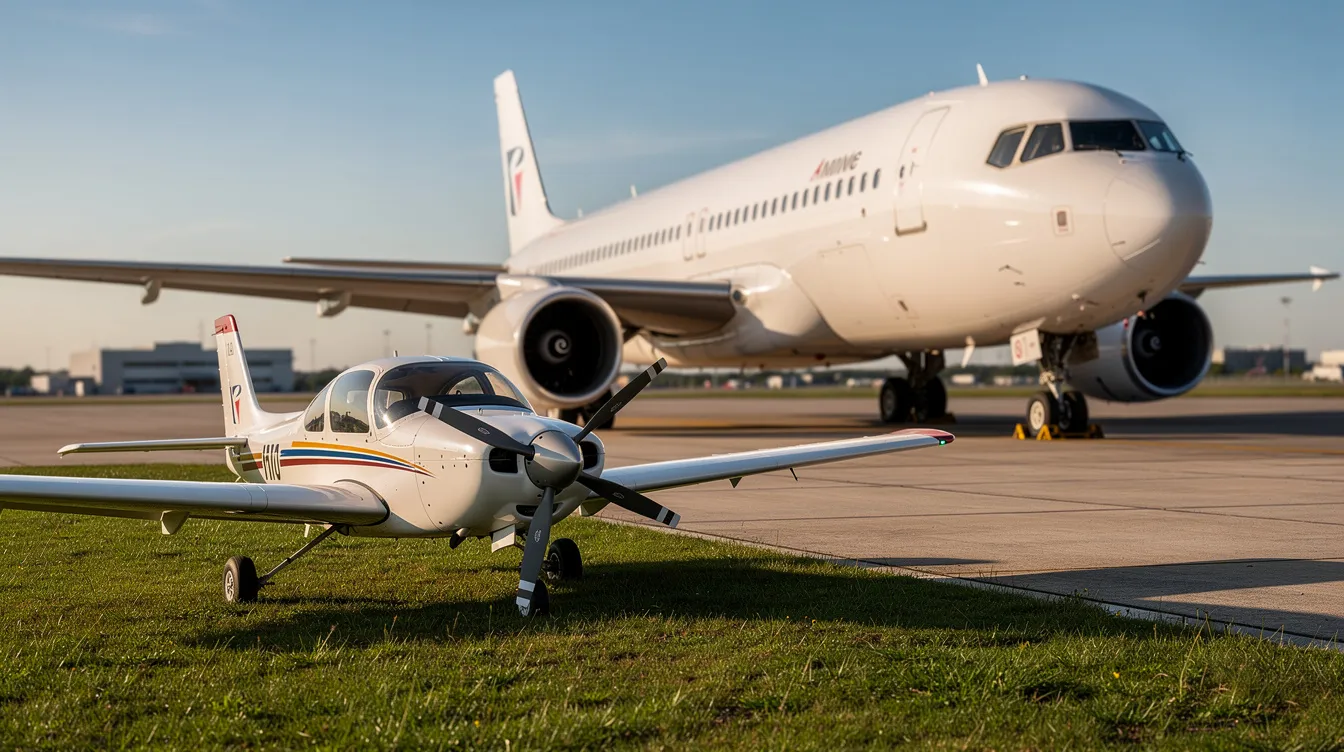
How Rare Are Fatal Commercial Airplane Crashes Compared to Driving?
The comparison is not close. Statistical studies indicate that flying is safer per mile than traveling by car-dramatically so.
U.S. road deaths: Approximately 40,000 motor vehicle fatalities per year. Driving has a lifetime risk of death of 1 in 93 to 95.
Commercial aviation fatalities: In most recent years, U.S. scheduled commercial airlines recorded zero fatalities. The lifetime odds of dying in a commercial airplane accident are approximately 1 in 11 million.
Air travel is 95 times safer than automobile travel per mile.
Per passenger-mile, commercial airline travel has the lowest fatality rate of any major transport mode-lower than trains, buses, and ferries.
For a BlackJet client flying regularly between financial centers like New York, London, or Dubai, the incremental risk from frequent air travel-whether commercial or on a professionally managed private jet-remains vanishingly small compared to the car accident risk of a daily commute. The most dangerous segment of any journey is almost always the ground transportation on either end.
Common Causes of Commercial Aviation Accidents
Modern aircraft accident investigation reveals that catastrophic outcomes almost never stem from a single failure. Instead, accidents emerge from a chain of events where human factors, technical problems, environmental conditions, and organizational gaps interact.
Primary categories for commercial and civil aviation accidents:
Human factors: Pilot error, crew coordination failures, and decision-making lapses remain the most significant contributors. Pilot error contributes to 70–80% of general aviation accidents. In commercial aviation, examples include loss of situational awareness and controlled flight into terrain (CFIT).
Mechanical failure: Involved in about 18% of general aviation accidents. For commercial aircraft, redundant systems mean single-point engine failure or landing gear malfunction rarely leads to fatal crashes. Flight crews are trained to manage these scenarios and land safely.
Adverse weather conditions cause approximately 11% of private aviation accidents. Windshear, icing, and turbulence pose risks, particularly during approach and departure phases.
External events: Bird strikes, in-flight fire, airport infrastructure issues, airspace conflicts and, tragically, pilot suicide or sabotage. Airport facilities contributed to 16% of accidents in 2025.
Commercial aircraft are designed with layers of redundancy precisely because the aviation industry assumes individual components will eventually fail. The goal is to ensure that no single mechanical failure leads to a catastrophic outcome.
BlackJet works only with operators who implement airline-style training and safety management systems to address these same risk categories-a standard explored in depth in our guide to private jet card safety protocols.
When Do Commercial Aviation Accidents Most Often Occur?
Not all phases of flight carry equal risk. The data is clear: nearly half of all aviation crashes occur during landing or takeoff. Landing is the most dangerous phase for private aviation accidents as well.
Risk by flight phase:
Takeoff and initial climb: High engine power, rapidly changing configuration, proximity to terrain, and complex air traffic controller coordination make this a concentrated risk window.
Approach and landing: The highest-workload phase. Rapidly changing weather, precision alignment requirements, and the transition from instrument to visual flight compress decision-making time.
Cruise: By far the safest phase. Aircraft are at altitude, speeds are stable, workload is lower, and pilots have time to respond to anomalies.
Modern commercial aviation procedures and pilot training focus heavily on these high-risk phases. Recurrent simulator sessions specifically drill approach failures, engine-out scenarios on takeoff, and go-around procedures. Business jet crews operating under commercial standards-as BlackJet requires-follow similarly structured procedures for these critical minutes.
Global Aviation Safety Systems That Make Crashes So Rare
The rarity of commercial airplane crashes is not luck. It is the product of layered global infrastructure that aviation safety incorporates-many layers including redundancy, regulation, and technological safeguards working simultaneously.
Key systems:
GADSS (Global Aeronautical Distress and Safety System): Commercial aircraft must report their position every 15 minutes. The GADSS requires new aircraft to have data broadcast systems for continuous tracking-a direct response to the loss of Malaysia Airlines Flight MH370.
ADS-B** (Automatic Dependent Surveillance-Broadcast)**: Aircraft broadcast GPS-derived position, speed, and altitude in real time, improving surveillance for air traffic control even in remote and oceanic areas.
TCAS (Traffic Collision Avoidance System) provides air traffic controllers and flight crews with automated collision warnings and resolution advisories.
GPWS/TAWS (Ground Proximity Warning / Terrain Awareness Systems): Prevents controlled flight into terrain by alerting crews to dangerous proximity to the ground.
ACARS: Transmits real-time aircraft systems data, enabling predictive maintenance and operational awareness.
Regulatory oversight from ICAO (global standards), the Federal Aviation Administration (U.S.), and EASA (Europe) ensures these systems are mandated, maintained, and continuously improved. The FAA oversees the safety and regulation of civil aviation across all U.S. operations.
Many of these same systems and standards apply to commercial charter aircraft used by BlackJet's partner operators, ensuring that private flights benefit from the same technological backbone as major airlines.
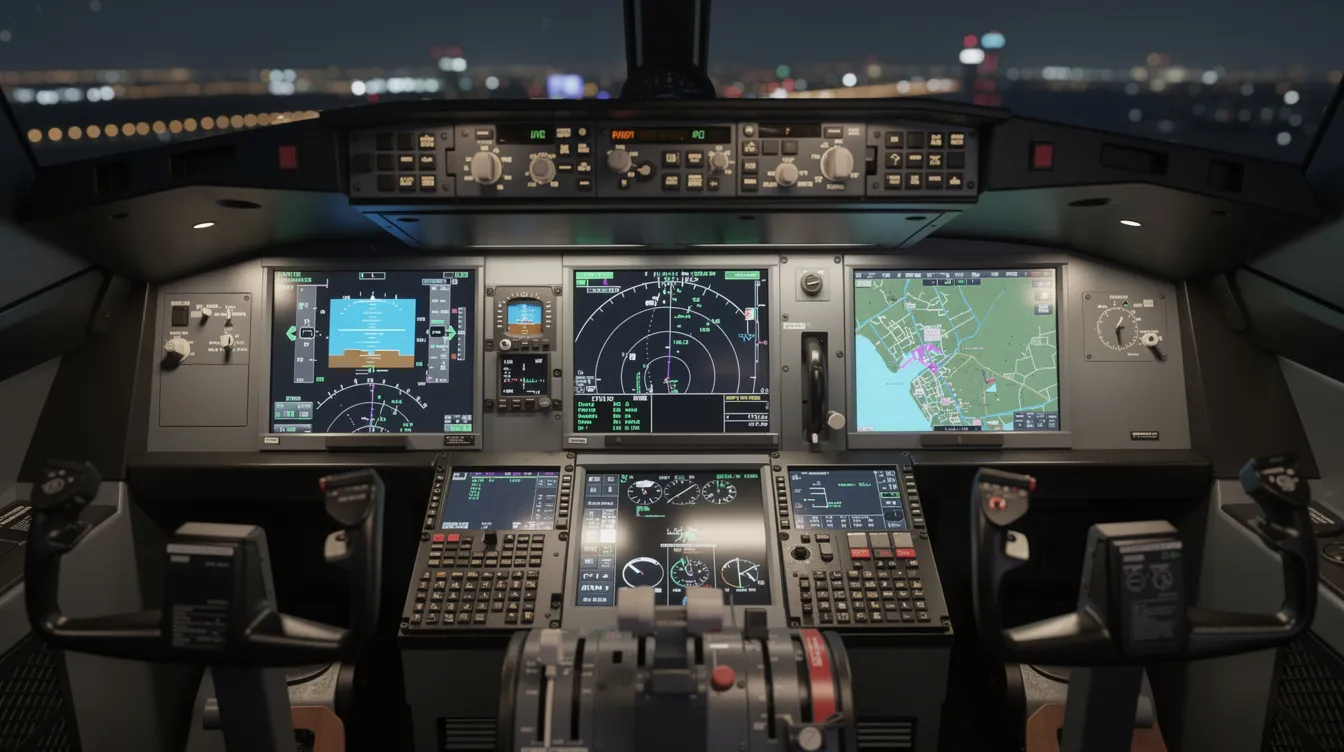
Who Investigates Commercial Aviation Accidents and Why It Matters
Independent investigation is the engine that drives continuous improvement in flight safety. Every serious aviation incident produces actionable lessons-and, critically, mandatory changes.
Key investigation agencies:
NTSB (U.S.): The NTSB investigates all aviation accidents in the U.S., from major airline flight disasters to general aviation incidents. Its independence from the FAA ensures objectivity.
BEA (France), AAIB (UK), and BFU (Germany) serve similar roles in their jurisdictions and frequently involve multiple parties in investigations involving aircraft manufactured or operated across borders.
ICAO Annex 13: ICAO sets international standards for aviation accident investigations, establishing rules for data sharing, evidence preservation, and the publication of safety recommendations.
The typical aircraft accident investigation process includes securing the crash site, recovering the flight data recorder (FDR) and cockpit voice recorder (CVR), analyzing maintenance records, crew members' training logs, weather data, and manufacturing history. Root cause analysis is systematic and layered.
Each major commercial aviation accident leads to concrete changes: new pilot training modules, design modifications, revised procedures. The Tenerife disaster changed cockpit communication worldwide. Azerbaijan Airlines Flight and the Jeju Air Flight incident in South Korea in recent years prompted renewed focus on runway safety and approach procedures at Muan International Airport and other facilities.
Business jet operators aligned with commercial standards adopt lessons from airline accident investigations into their own safety management systems-a practice BlackJet requires of its partners.
Key Commercial Aviation Accident Statistics: Recent Years in Context
A decade of data tells a consistent story: commercial airline crashes are declining relative to flight volume, even as air travel grows to record levels.
Summary of global scheduled commercial aviation:
The total fatalities due to aviation accidents since 1970 are 83,772-a number that spans over five decades. Annual fatalities have dropped sharply even as passenger volumes have grown more than tenfold.
In 2024, the NTSB reported approximately 1,415 total aviation accidents across all categories in the U.S.-the overwhelming majority in general aviation, not commercial airlines.
The five-year fatal accident rate has improved substantially over recent years, with the rolling average continuing its downward trajectory through 2025.
Commercial aviation had zero passenger fatalities in 2017 and 2023, demonstrating that entire calendar years can pass without a single scheduled airline passenger death globally.
In years where major fatal crashes did occur, such as the Korean Air Flight incidents of the 1990s or the second deadliest aviation accident events that involved multiple parties, ICAO data shows the long-term trend was not reversed. It simply highlights how a single large event can temporarily shift annual totals.
Commercial aviation now routinely handles billions of passenger journeys annually with extraordinarily few fatal outcomes. Commercial aviation has a fatal accident rate of 0.01 per 100,000 flight hours.
How Commercial vs. Private Jet Safety Compares
For travelers who regularly choose between first-class commercial airline travel and private jets, the safety comparison deserves precision rather than assumptions.
Scheduled commercial airlines (Part 121) maintain the lowest aviation accident rates in the industry, driven by scale, system redundancy, and intense regulatory oversight. But professionally operated business jets under commercial standards (Part 135 or equivalent) achieve accident rates far closer to airlines than to owner-flown general aviation aircraft.
Approximate fatal accident rates:
Operation Type | Fatal Accidents per 100,000 Hours |
|---|
Part 121 (Scheduled Airlines) | ~0.01 |
Part 135 (Certified Charter) | ~0.2 |
General Aviation (Owner-Flown) | ~2.3 |
The gap between certified charter and general aviation is enormous. Private pilots operating general aviation aircraft face roughly 10 times the risk of a professionally crewed charter operation.
BlackJet's model-Jet Card access to vetted operators, two-pilot crews, and modern turbine aircraft-positions clients at the safest end of private aviation, aligning with our broader focus on premium private jet card programs. For executives and high-net-worth travelers, this kind of professionally managed private jet travel is a strategic upgrade from ad hoc chartering or informal arrangements with unknown operators. For a comprehensive look at the data, see our guide on safety in the skies and how private jets handle turbulence compared to airlines.
What Airlines and Charter Operators Do Every Day to Prevent Crashes
Safety is not a certification earned once and forgotten. It is an active, daily discipline practiced across every level of commercial and charter operations.
Pilot training: Recurrent simulator checks every 6–12 months, type ratings on specific aircraft category models, line checks, and crew resource management (CRM) training ensure that flight crews maintain sharp decision-making under pressure. CRM specifically addresses the human factors that contribute to aviation incidents.
Maintenance regimes: Commercial aircraft undergo A/B/C/D checks on strict schedules. Predictive maintenance, driven by real-time engine and systems data transmitted via ACARS, catches potential issues before they become problems. Reputable maintenance providers follow manufacturer and regulatory standards without exception.
Safety management systems (SMS): Confidential incident reporting programs encourage crew members and ground staff to report hazards and near-misses without fear of punishment. These reports feed trend analysis that identifies emerging risks before they cause serious incidents.
Leading private jet operators working with BlackJet adopt airline-style SMS, third-party safety audits from organizations like ARGUS and Wyvern, and IS-BAO certification, standards comparable to those upheld by top private jet companies worldwide. This is why commercial airplane crashes and professionally managed charter accidents remain so rare despite high flight volumes.
What Passengers Can Do to Improve Their Own Odds (Even Though Risk Is Tiny)
While commercial airplane crashes are incredibly rare, small actions can improve individual survivability in any aircraft incident.
Pay attention to the safety briefing. Even experienced travelers benefit from knowing the specific exit configuration of each aircraft type.
Count rows to the nearest exit. In reduced visibility (smoke, darkness), tactile counting is faster than visual scanning.
Keep your seatbelt fastened whenever seated. Turbulence injuries are the most common cause of serious injuries on flights that otherwise operate normally.
Follow crew instructions immediately during evacuation. FAA regulations require that aircraft can be fully evacuated within 90 seconds. That standard depends entirely on passenger cooperation.
Dress for survival, not just comfort. Closed-toe shoes and natural-fiber clothing offer better protection in an emergency landing scenario.
For private flights, smaller cabins and fewer passengers make safety communication even more direct. On a BlackJet flight, your crew provides a personalized briefing tailored to the specific aircraft and route-something that simply isn't possible on a 200-seat commercial airliner, and you may benefit from higher private jet cruising altitudes that can reduce turbulence and delays.
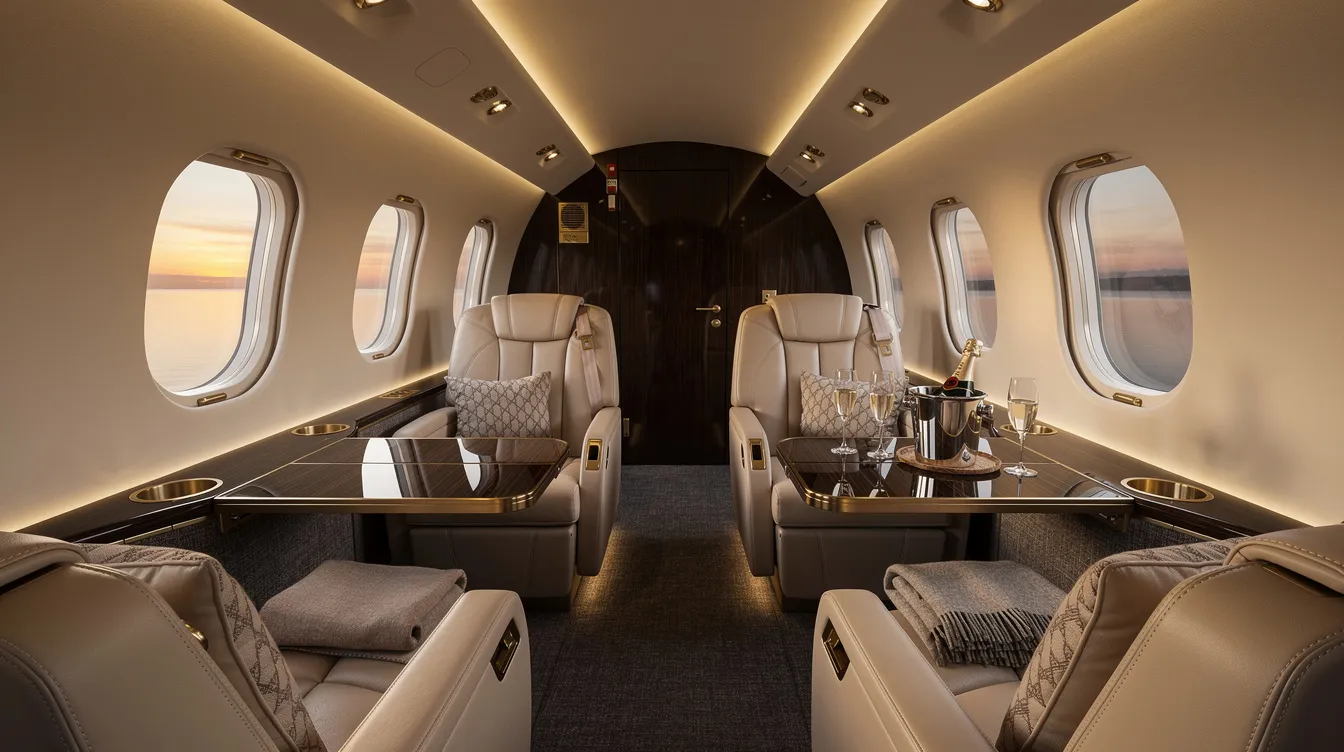
How BlackJet Approaches Aviation Safety in Private Travel
BlackJet clients expect commercial-grade aircraft safety paired with the convenience, privacy, and efficiency of private jet travel, whether they’re flying solo or booking a private jet for 50 passengers. That expectation defines every operational decision.
Operator vetting: BlackJet requires Part 135 or equivalent commercial certification from every partner operator, whether they’re based in New York, London, Dubai, or operating private jet charters in Karachi. We prioritize two-pilot crews, insist on modern turbine business jets, and verify alignment with third-party safety standards, including ARGUS, Wyvern, and IS-BAO, whether you’re chartering a super-midsize jet or a large private jet for 20 passengers.
Centralized safety data: BlackJet's digital platform consolidates aircraft age, operator history, crew qualifications, and maintenance records-eliminating the guesswork that can accompany informal chartering.
A practical example: A business executive books a New York-to-London trip using a 25-hour Jet Card from the BlackJet 25+ Hour Jet Card program. The flight is operated on a carbon-neutral, modern super-midsize jet with a fully briefed two-pilot crew. Six crew members and operations staff have reviewed the route, weather, and aircraft status before departure. The client boards knowing that every layer of commercial-grade safety has been applied-without sacrificing a minute to commercial terminal queues.
BlackJet treats safety-alongside privacy, flexibility, and sustainability-as a fundamental value proposition. It is not an add-on or a marketing line. It is the foundation on which everything else is built, regardless of which type of private jet best fits your trip.
Sustainability and Safety: How Carbon-Neutral Flights Fit into the Picture
For many high-net-worth travelers, sustainable aviation is now inseparable from the broader conversation about responsibility and safety.
Safety and sustainability initiatives complement rather than compete with each other. Aircraft and operations must meet the same rigorous aviation safety requirements regardless of fuel type or offset program. Environmental measures do not dilute technical or operational standards.
BlackJet ensures carbon-neutral private flights for Jet Card members through high-quality carbon offset programs and, where available, sustainable aviation fuel (SAF) partnerships, even when clients opt for more affordable private aircraft options. Every flight meets the same safety certification-the carbon-neutral commitment is layered on top, never in place of operational rigor.
Industry bodies like IATA are pushing simultaneously for lower emissions and continued improvements in aviation safety standards. For BlackJet clients, this means that flying responsibly and flying safely are not competing priorities-they are parallel commitments.
Commercial Plane Crash Statistics in a Broader Risk Context
When we place commercial aviation accidents alongside other risks that affluent travelers routinely accept, the perspective shifts further.
A car crash during the daily commute carries orders-of-magnitude greater risk per mile than any commercial or professionally managed private flight.
Recreational activities like skiing, boating, and cycling each carry per-hour fatality rates that exceed commercial air travel by wide margins.
Global aviation accident statistics have improved even as passenger volumes and air travel miles have grown dramatically since the 1970s.
Ongoing technological advances-better avionics, automation, data analytics, and real-time monitoring-are expected to push accident rates even lower. The aviation industry has not reached a plateau; the curve continues downward.
BlackJet's offering allows clients to enjoy the rarefied benefits of private travel-time savings, privacy, and control of schedule while staying firmly on the lowest rungs of the risk ladder, including through innovative private plane rideshare options.
FAQ: How Often Do Commercial Planes Crash and Related Questions
How many commercial airplane crashes happen per year worldwide?
In 2025, IATA recorded 51 total accidents across approximately 38.7 million commercial flights-a rate of about 1.32 per million flights. Only 8 of those were fatal, and annual fatality counts can be skewed by single major events such as the Jeju Air crash in South Korea. Most involved non-fatal events such as runway excursions, tail strikes, or landing gear issues.
When was the last fatal commercial airline crash in the U.S.?
The last fatal crash involving a large U.S. scheduled carrier (Part 121) was Colgan Air Flight 3407 in 2009. Since then, U.S. scheduled airlines have maintained an extraordinary safety record, including years like 2017 and 2023 with zero passenger fatalities.
Do commercial airplane crashes usually result in total loss of life?
No. Many air crashes are survivable. NTSB data over the 2001�2017 period indicates that approximately 94% of recorded aviation incidents had a 100% survival rate. Fatal crashes involving a commercial airliner with total loss of life are the rare exception, not the rule.
How do commercial aviation and private jet accident rates really compare?
Scheduled airlines have the lowest rates at roughly 0.01 fatal accidents per 100,000 flight hours. Certified Part 135 charter operators average around 0.2, still far safer than general aviation at 2.3. The gap between a professionally crewed private jet and an owner-flown general aviation aircraft is significant.
Are charter operations more dangerous than major airlines?
It depends entirely on the operator. Reputable, certified charter operators-such as BlackJet's partners-maintain safety standards approaching those of scheduled airlines: two-pilot crews, modern aircraft, SMS programs, and third-party audits. Lightly regulated or informal private flights carry materially higher risk.
Does flying frequently meaningfully increase my risk?
Marginally, in absolute terms, but the base rate is so low that even a frequent flyer taking 200 flights per year faces far less cumulative risk than a daily car commuter. The flights involved in a frequent traveler's annual schedule represent a statistically negligible increase in personal risk.
Both commercial airline travel and professionally managed private aviation enjoy historically low accident rates thanks to decades of global safety efforts.
Conclusion: Interpreting How Often Commercial Planes Crash and Choosing How You Fly
Fatal commercial airplane crashes are among the rarest catastrophic events in modern life. The data is unambiguous: robust regulation, advanced technology, rigorous pilot training, and systematic learning from every aviation accident have made commercial flying the safest form of long-distance transportation ever devised.
For most travelers, the risk of a car accident on the drive to the airport dwarfs the risk of anything happening in the air. Air crashes make headlines precisely because they are so uncommon.
For travelers who want airline-grade aviation safety combined with the time efficiency, privacy, and customization of private jets, BlackJet exists to close that gap. Our Jet Card programs deliver commercially certified, carbon-neutral private flights operated by vetted crews on modern aircraft-every time.
Explore BlackJet's Jet Card options or speak with a specialist to design a safer, more efficient private travel strategy that complements-or replaces-commercial flights where it makes sense.


 Sign up with google
 Sign up with Apple